Mississippi Answer to Complaint for Injunction
Understanding this form
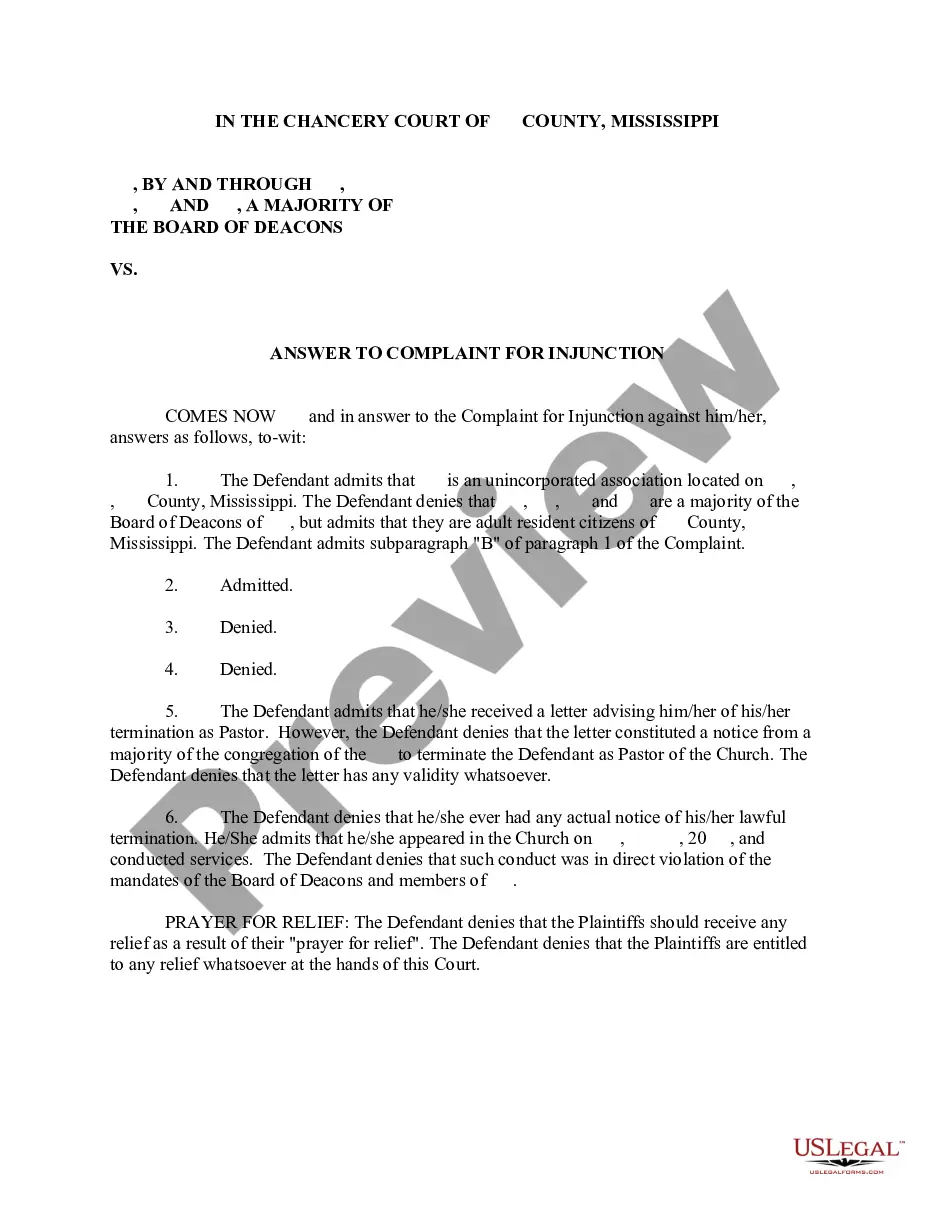
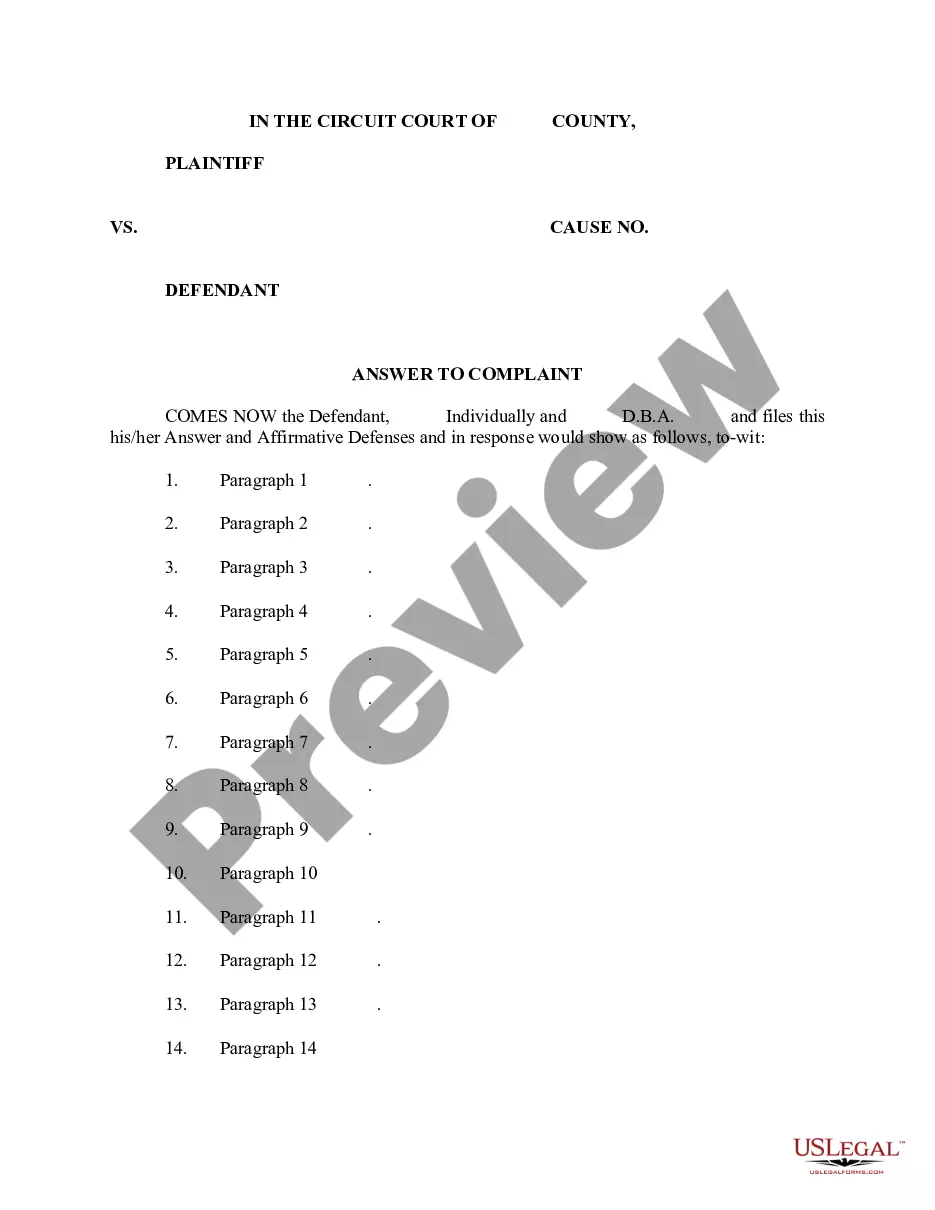
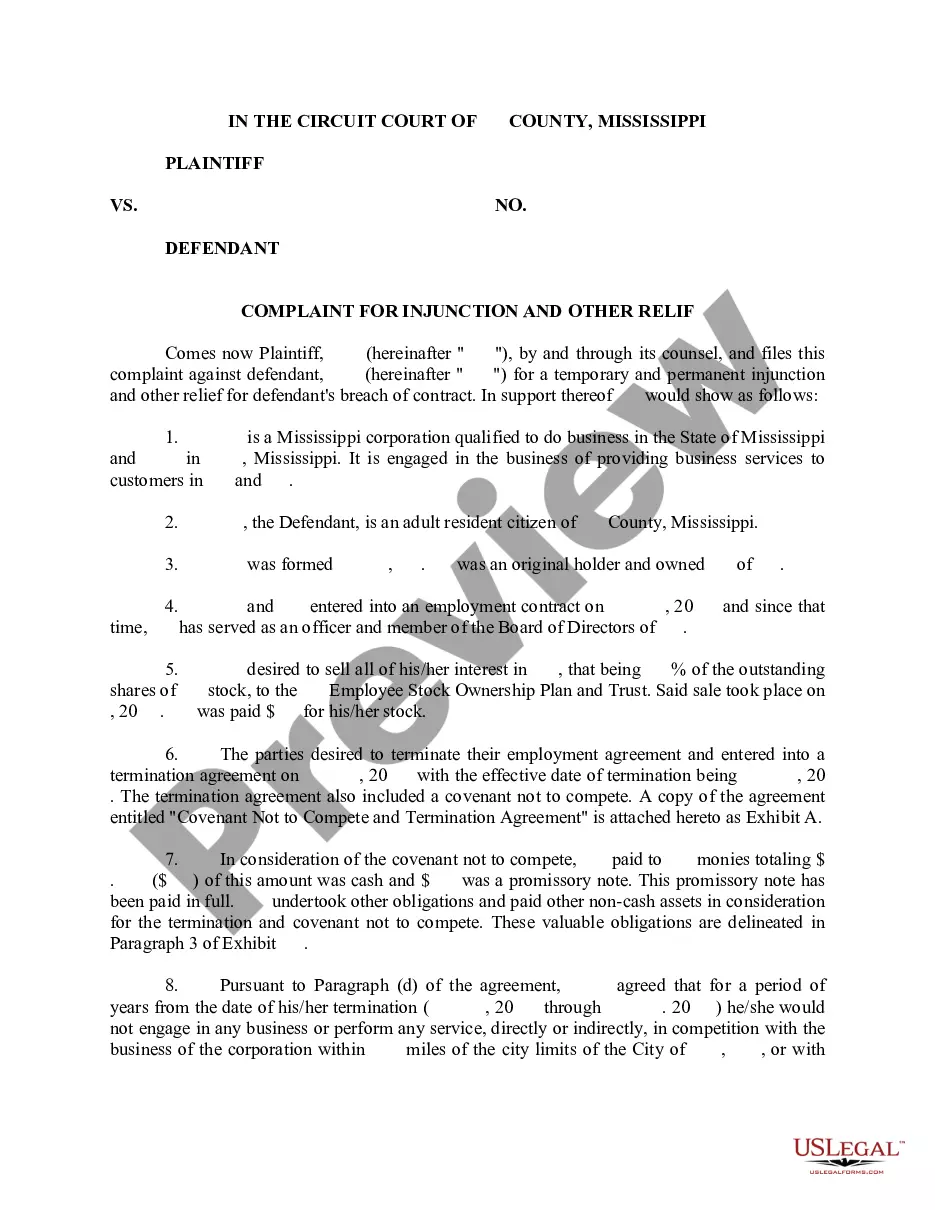
The Answer to Complaint for Injunction is a legal document used by a defendant in response to a plaintiff's request for an injunction. This form differs from other legal responses by specifically addressing the allegations made in the complaint regarding actions such as a pastor's termination from a church. It allows the defendant to formally contest the claims and seek dismissal of the complaint based on the provided legal grounds.
What’s included in this form
- Admittance of receipt of the termination letter
- Denying validity of the termination notice from the majority of the congregation
- Denial of actual notice of lawful termination
- Prayer for relief stating that plaintiffs are not entitled to any relief
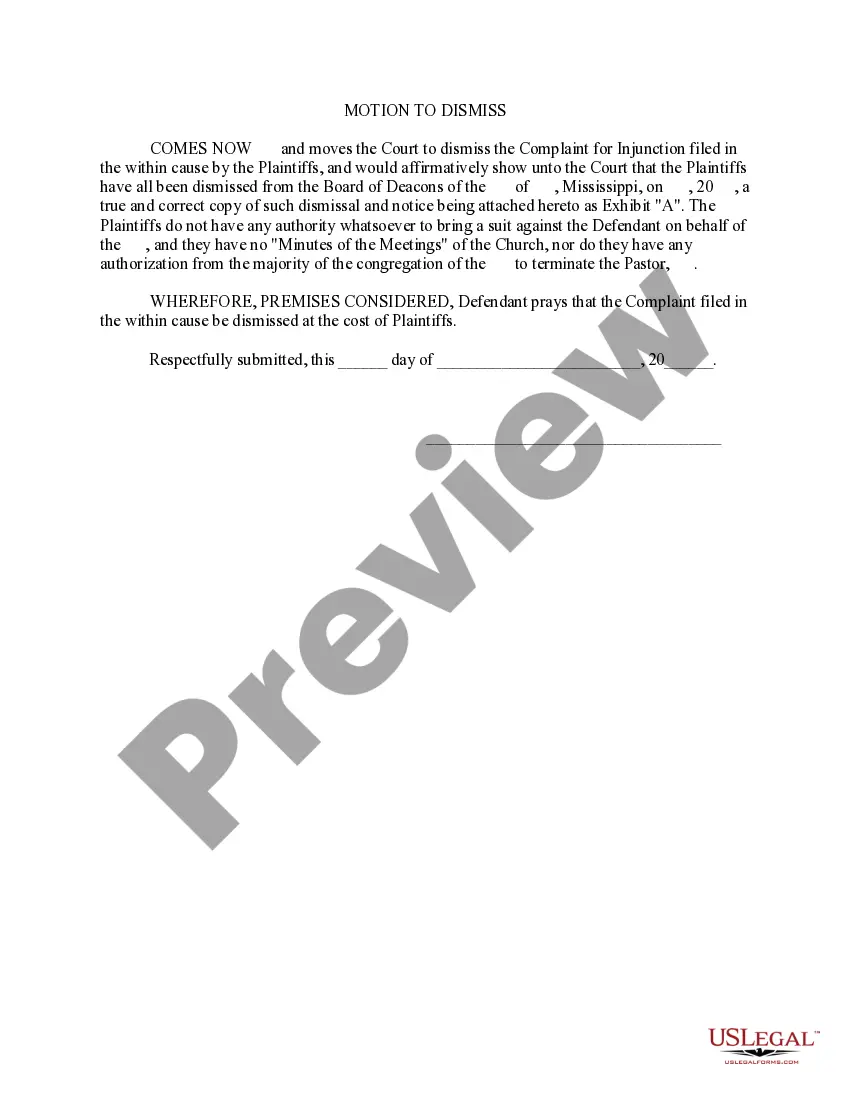
- Motion to dismiss the complaint, citing dismissal of the plaintiffs from the Board of Deacons

Situations where this form applies
This form is necessary when a defendant needs to reply to a complaint for an injunction filed against them, particularly in cases involving disputes within religious organizations, such as the termination of a pastor. It is used when the defendant believes the claims made by the plaintiffs are without merit and wishes to formally respond in court.
Who needs this form
- Individuals who have been named as defendants in a complaint for injunction against a religious organization.
- Pastors or church leaders facing termination disputes.
- Members of a church seeking to contest the legitimacy of a termination notice based on congregation votes.
How to prepare this document
- Identify the parties involved and their roles in the case.
- Clearly state your admissions and denials of the claims made in the complaint.
- Articulate reasons for denying the validity of the complaint, citing evidence or supporting documents.
- Complete the prayer for relief, specifically stating your request for dismissal of the complaint.
- Sign and date the form to formalize your response.
Does this document require notarization?
Notarization is generally not required for this form. However, certain states or situations might demand it. You can complete notarization online through US Legal Forms, powered by Notarize, using a verified video call available anytime.
Get your form ready online
Our built-in tools help you complete, sign, share, and store your documents in one place.
Make edits, fill in missing information, and update formatting in US Legal Forms—just like you would in MS Word.
Download a copy, print it, send it by email, or mail it via USPS—whatever works best for your next step.
Sign and collect signatures with our SignNow integration. Send to multiple recipients, set reminders, and more. Go Premium to unlock E-Sign.
If this form requires notarization, complete it online through a secure video call—no need to meet a notary in person or wait for an appointment.
We protect your documents and personal data by following strict security and privacy standards.

Make edits, fill in missing information, and update formatting in US Legal Forms—just like you would in MS Word.

Download a copy, print it, send it by email, or mail it via USPS—whatever works best for your next step.

Sign and collect signatures with our SignNow integration. Send to multiple recipients, set reminders, and more. Go Premium to unlock E-Sign.

If this form requires notarization, complete it online through a secure video call—no need to meet a notary in person or wait for an appointment.

We protect your documents and personal data by following strict security and privacy standards.
Typical mistakes to avoid
- Failing to admit or deny each allegation specifically.
- Not providing evidence or documentation to support denials.
- Overlooking local laws related to responses to injunctions.
- Submitting the form late, missing the required deadline for responses.
Why complete this form online
- Convenience of downloading and completing the form at your own pace.
- Easy access to templates drafted by licensed attorneys.
- Ability to edit and customize the form as needed.
- Reliability in using a document that conforms to state laws and regulations.
Looking for another form?


Form popularity
FAQ
Provide the name of the court at the top of the Answer. You can find the information on the summons. List the name of the plaintiff on the left side. Write the case number on the right side of the Answer. Address the Judge and discuss your side of the case. Ask the judge to dismiss the case.
Can Someone Refuse to Be Served Papers? No, in California a person cannot refuse to accept service. If we can identify a person on whom legal service can be made either personally or by sub-service and they refuse to accept the documents, we can absolutely still serve them.
If you do not respond, the court may make orders about your children without taking into account your wishes. Even if you do not respond, go to the court hearing and participate in any mediation that the court orders if you want to have any input in the court's decision about custody and visitation of your children.
There are basically 3 stages to a civil appeal in Mississippi. First, you file your notice of appeal and other preliminary documents. Critically, you MUST file your notice of appeal within 30 days of the trial court's final judgment. In some cases, you should file a post-trial motion within 10 days of the judgment.
You can file an answer or a general denial. Filing an answer. You can file a motion In certain situations, you can respond to the lawsuit by filing a motion (a request) that usually tells the court that the plaintiff made a mistake in the lawsuit. Talk to a lawyer!
Generally, you have 30 days AFTER the date you are served to file a response with the court. The 30 days include weekend days and court holidays. If the last day falls on a day that the court is closed, you have until the next day that the court is open.
Fill out your court forms. Have your forms reviewed. Make at least 2 copies of all your forms. File your forms with the court clerk. Serve your papers on the other parent. File your Proof of Service. Go to your court hearing.
If you don't file a response 30 days after you were served, the Plaintiff can file a form called Request for Default.The Plaintiff will win the case. Then, the Plaintiff can enforce the judgment against you. This can mean getting money from you by garnishing your paycheck or putting a lien on your house or car.
You can file an answer or a general denial. Filing an answer. You can file a motion In certain situations, you can respond to the lawsuit by filing a motion (a request) that usually tells the court that the plaintiff made a mistake in the lawsuit. Talk to a lawyer!