Mississippi Defendant's Motion for Payment of Back Pay Wages and for other Relief
About this form
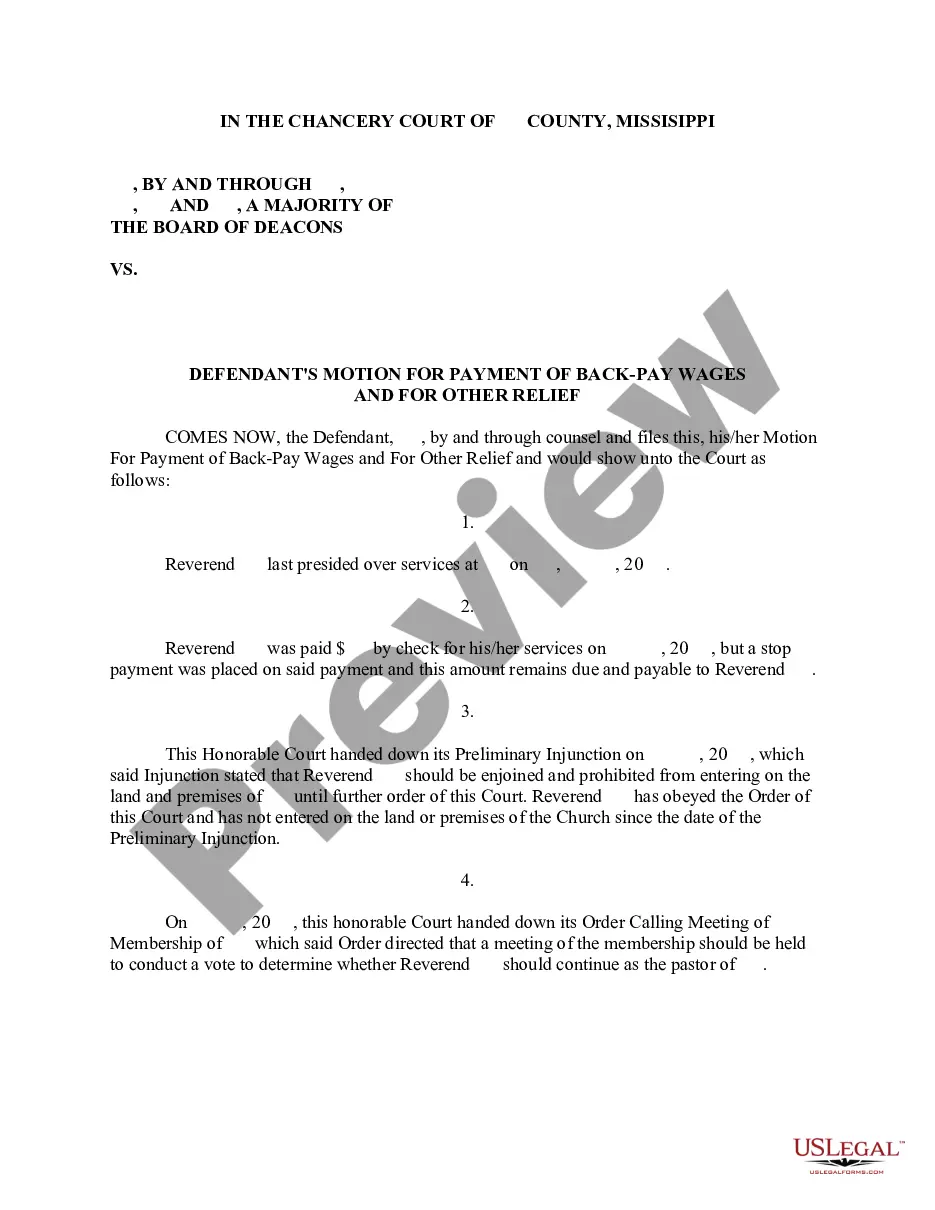
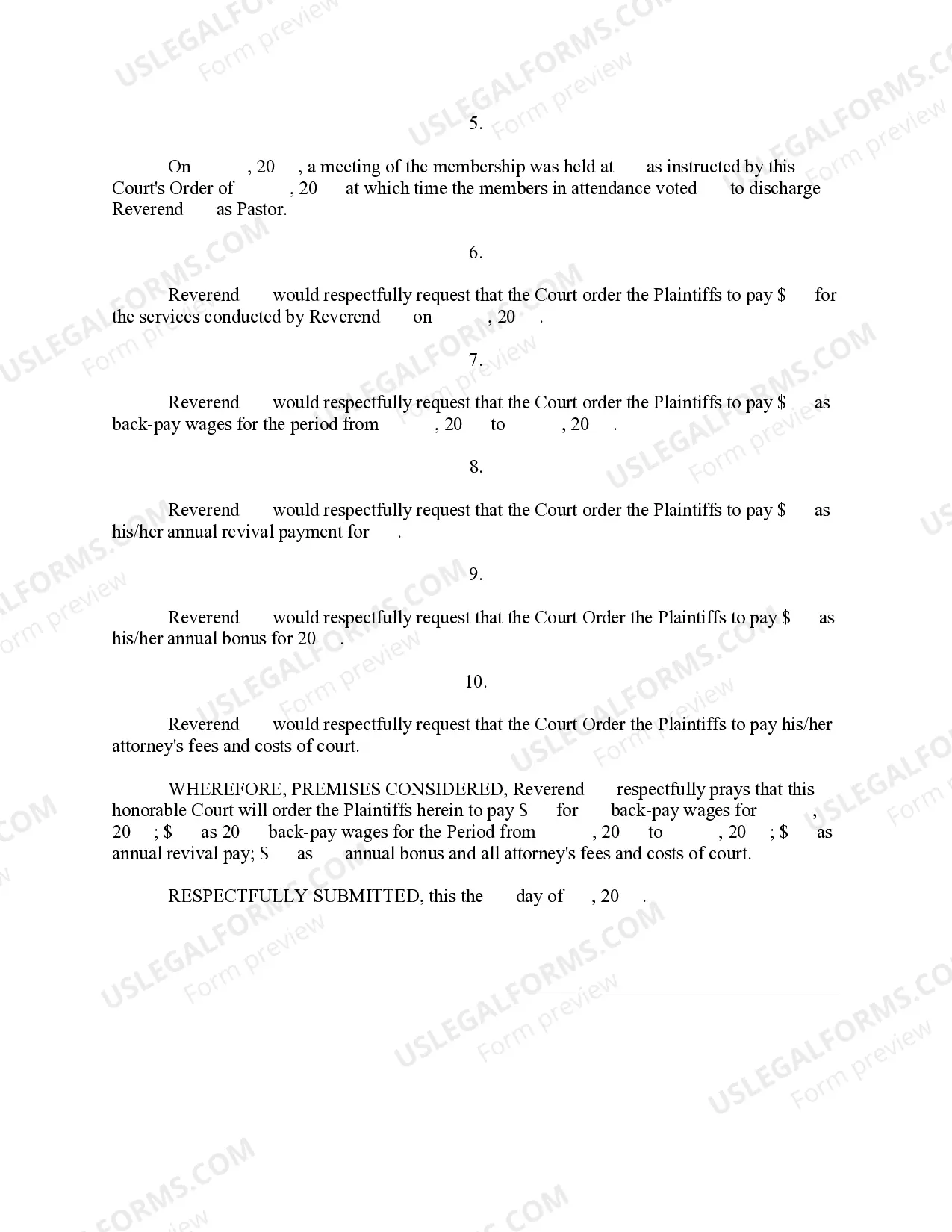
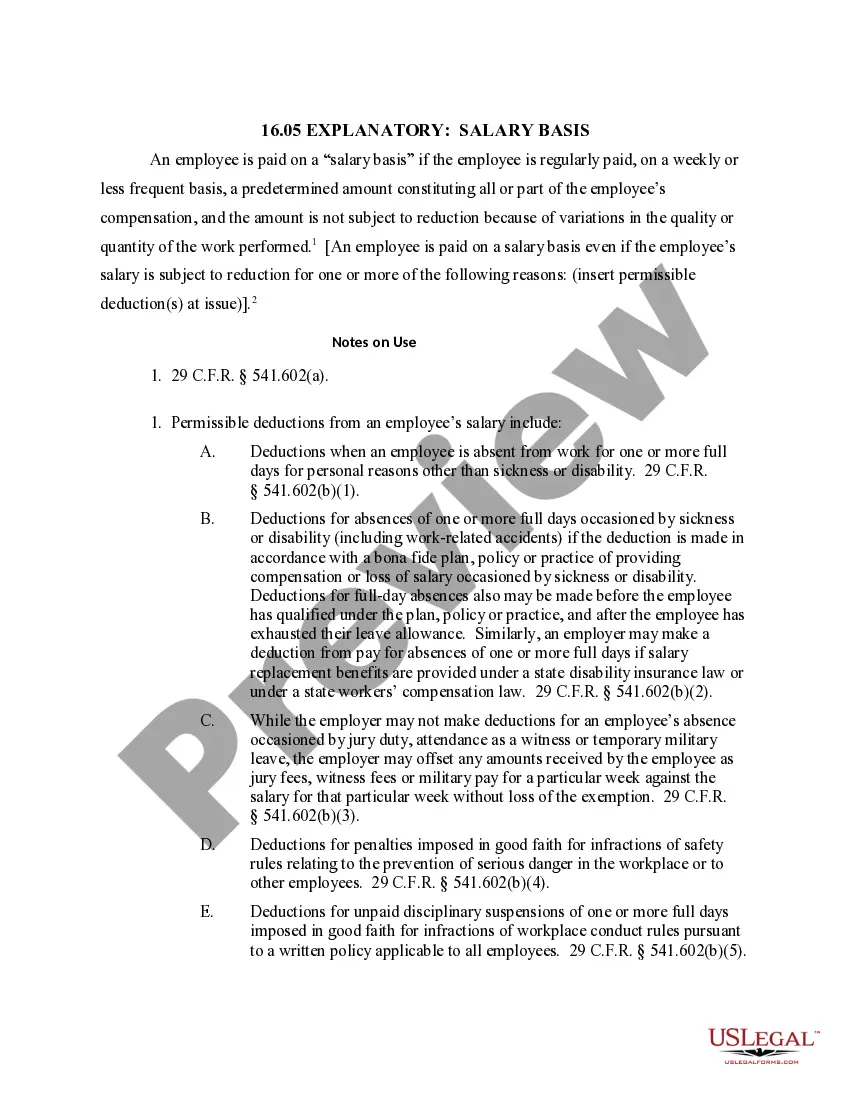
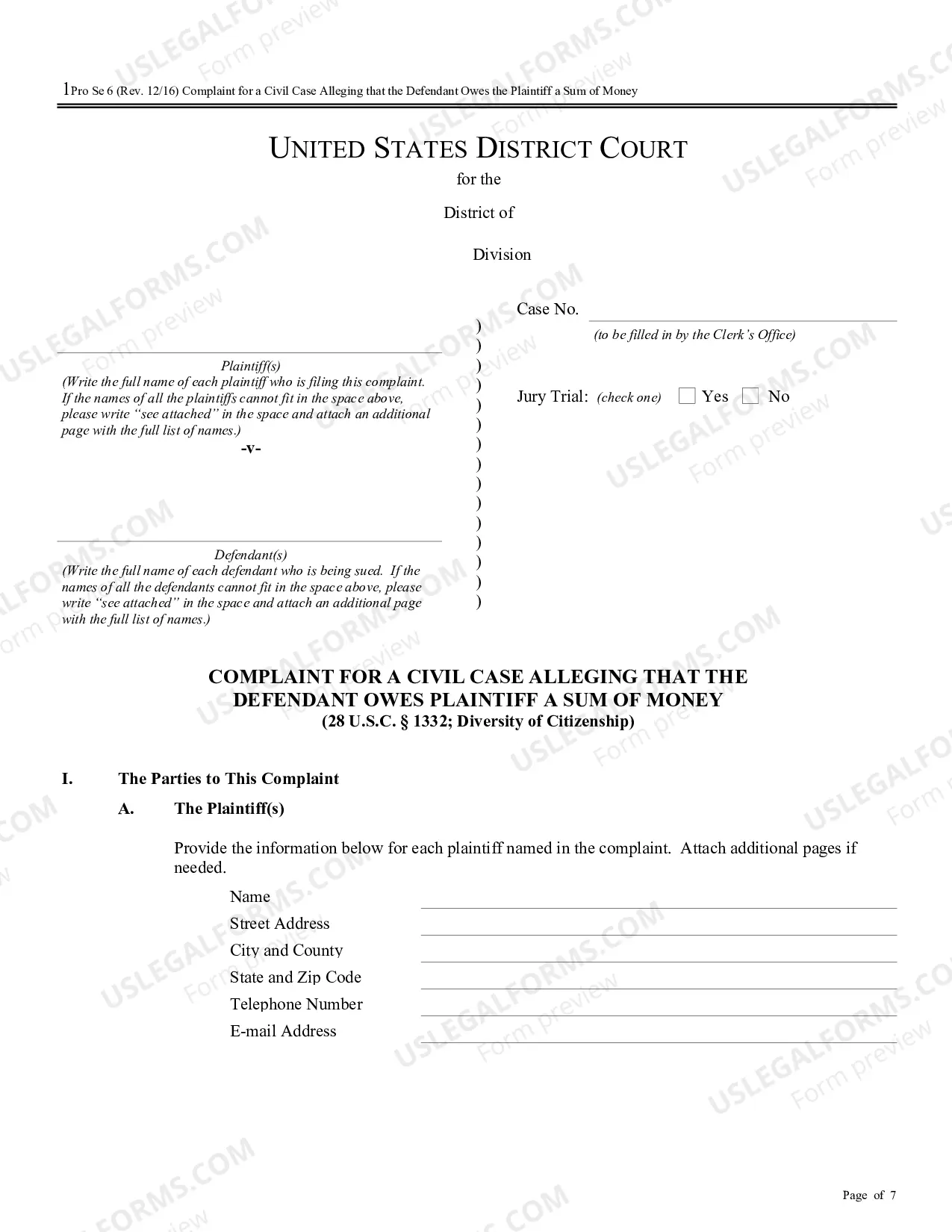
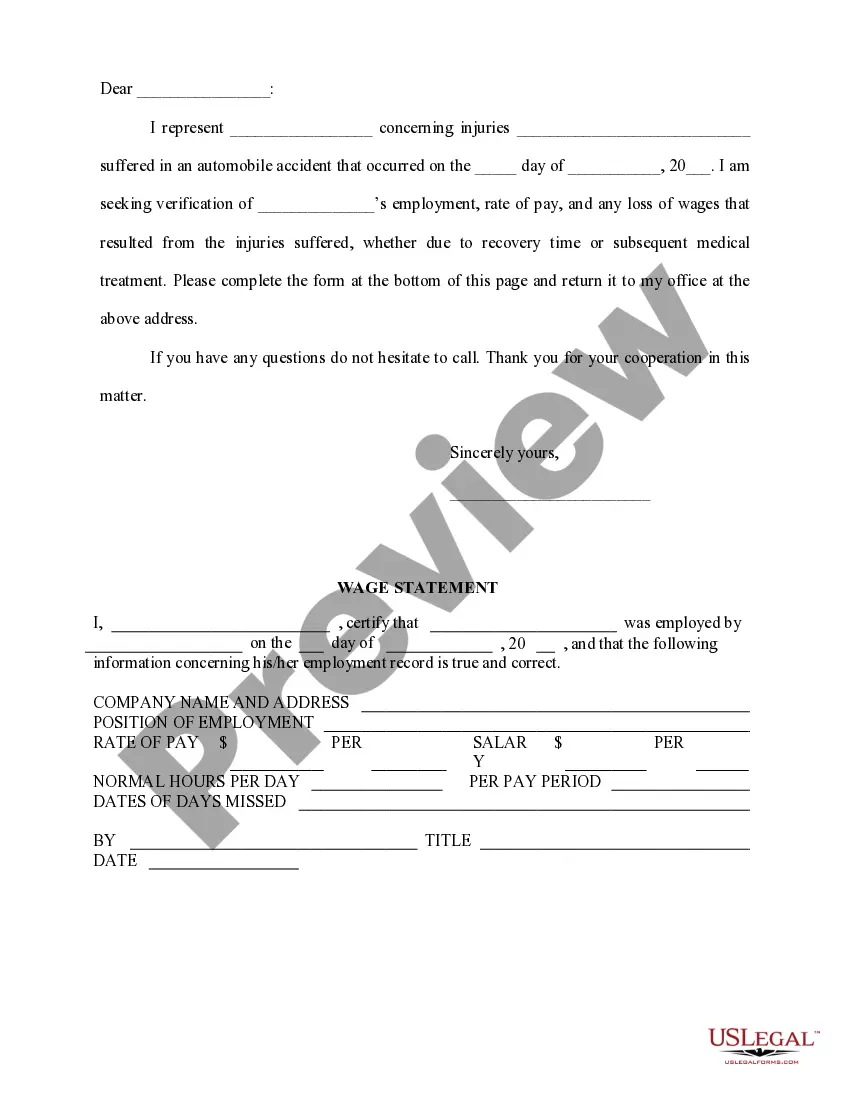
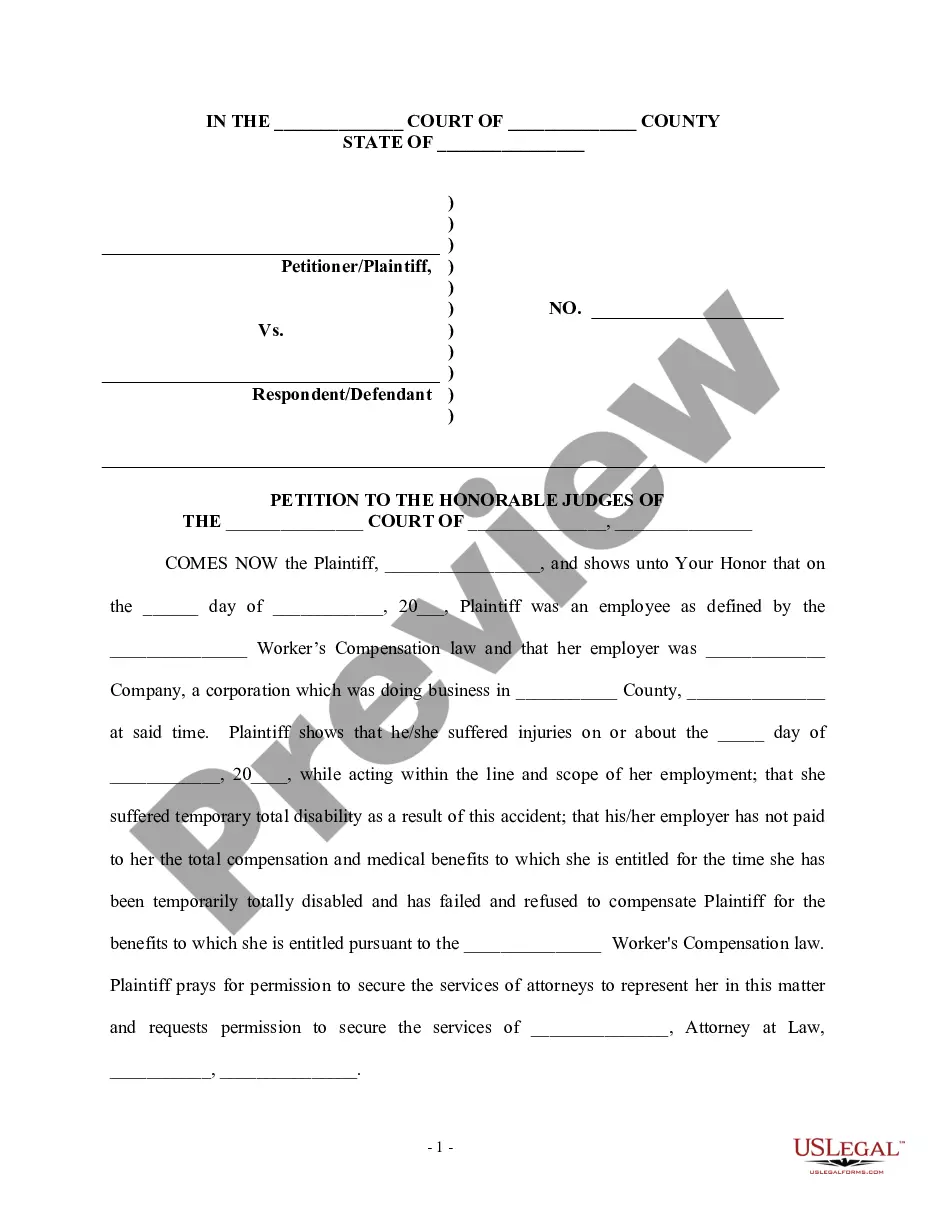
The Defendant's Motion for Payment of Back Pay Wages and for other Relief is a legal document used to formally request that a court order payment of owed wages, particularly for services rendered as a Pastor. This motion is distinct from other motions as it specifically addresses back pay and related compensations, asserting that the Defendant has complied with all court orders and injunctions prior to filing.
Form components explained
- Identification of the parties involved, including the Defendant and the Plaintiffs.
- Details on the last date of service by the Reverend and payment history.
- Reference to relevant court injunctions and orders affecting the Reverend's service.
- Specifications of the requested back pay amounts for specific periods and services.
- Request for compensation covering attorney fees and costs of court.
Common use cases
This form should be utilized when a Defendant, particularly someone serving as a Pastor, seeks to recover unpaid wages or other financial compensations after a termination or suspension of service as dictated by a court's prior injunction. It is essential when maintaining legal compliance while ensuring the rightful payment for services rendered.
Intended users of this form
- Defendants in legal disputes regarding unpaid wages.
- Individuals who have served in a pastoral role and have been subject to court orders.
- Legal representatives supporting a Defendant in claiming back pay and additional relief.
How to complete this form
- Identify the parties involved, filling in the names of the Defendant and the Plaintiffs accurately.
- Provide the date of the last service and the details of any payments issued.
- Summarize relevant court orders and injunctions, ensuring to include critical dates.
- Clearly state the amounts of back pay requested for specific periods and any additional compensations.
- Include a request for attorney fees and sign the document with the date of submission.
Notarization requirements for this form
In most cases, this form does not require notarization. However, some jurisdictions or signing circumstances might. US Legal Forms offers online notarization powered by Notarize, accessible 24/7 for a quick, remote process.
Get your form ready online
Our built-in tools help you complete, sign, share, and store your documents in one place.
Make edits, fill in missing information, and update formatting in US Legal Forms—just like you would in MS Word.
Download a copy, print it, send it by email, or mail it via USPS—whatever works best for your next step.
Sign and collect signatures with our SignNow integration. Send to multiple recipients, set reminders, and more. Go Premium to unlock E-Sign.
If this form requires notarization, complete it online through a secure video call—no need to meet a notary in person or wait for an appointment.
We protect your documents and personal data by following strict security and privacy standards.

Make edits, fill in missing information, and update formatting in US Legal Forms—just like you would in MS Word.

Download a copy, print it, send it by email, or mail it via USPS—whatever works best for your next step.

Sign and collect signatures with our SignNow integration. Send to multiple recipients, set reminders, and more. Go Premium to unlock E-Sign.

If this form requires notarization, complete it online through a secure video call—no need to meet a notary in person or wait for an appointment.

We protect your documents and personal data by following strict security and privacy standards.
Common mistakes
- Failing to provide adequate details about payments already made and outstanding amounts.
- Not referencing all relevant court orders and injunctions correctly.
- Leaving out signatures or dates, which can invalidate the motion.
Why use this form online
- Convenience of downloading and filling out from anywhere.
- Editability allows for customization to suit individual cases.
- Reliability ensured through professionally drafted templates by licensed attorneys.
Looking for another form?

Form popularity
FAQ
If you are owed back pay or unpaid wages in California, you can file a lawsuit to recover the amount owed, including interest and any penalties. Talk to your California wage and hour law lawyer about your case and how to make your employer pay for the work you were never compensated for.
Employees in California may be entitled to back pay anytime their wages and benefits are lost due to wrongful practices by their employer. Most employees receive back pay awards as a result of wrongful termination caused by workplace harassment or hostile work environment.
Retroactive, or retro, pay is money due to an employee for work already performed but paid at a lower rate. Most commonly, it is linked to late performance appraisals, in which the employee received a pay increase that took effect in a prior pay period.
Retro pay, or retroactive pay, is compensation you owe an employee for work performed during a previous pay period. Retro pay differs from back pay.Back pay is when you owe employee wages that you didn't pay at all, whereas retro pay is when you paid an employee less than what you should have.
There is an important time limit for court claims: you only have 6 years from the date that the amount became due and payable to you to claim in a court for unpaid entitlements. If you do not take action in a court to recover the unpaid wages or entitlements during that time, you will lose the right to claim entirely.
Back pay is a payment for work that an employee previously completed but never received payment for at all. One more thing to note: Retroactive pay can be mandated. Courts can order a business to issue retroactive pay in the event of things like: Discrimination.
Usually, a claimant will receive their backpay (or the first installment of their backpay) within 60 days of being approved. But it doesn't always work out that way. Sometimes the backpay comes very quickly. In fact, backpay is sometimes deposited to a bank account before an award notice is even sent.
If you are owed back pay or unpaid wages in California, you can file a lawsuit to recover the amount owed, including interest and any penalties. Talk to your California wage and hour law lawyer about your case and how to make your employer pay for the work you were never compensated for.
What are the Federal Regulations Regarding Retroactive Pay? According to the Department of Labor Wage and Hour Division, employees must be paid each pay period and no later than 12 days from the end of the pay period.