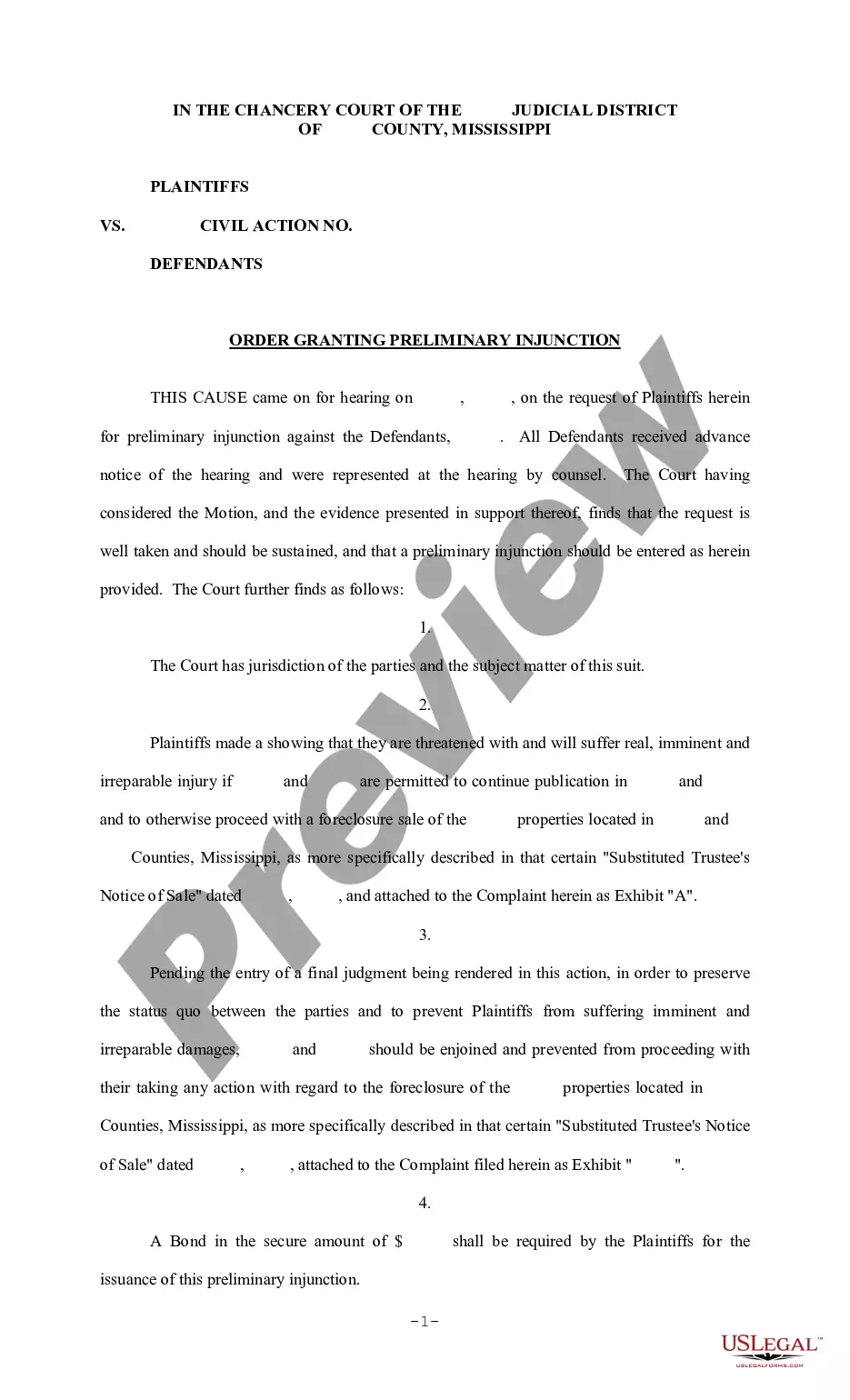
Mississippi Agreed Order Granting Permanent Injunctive Relief
Overview of this form
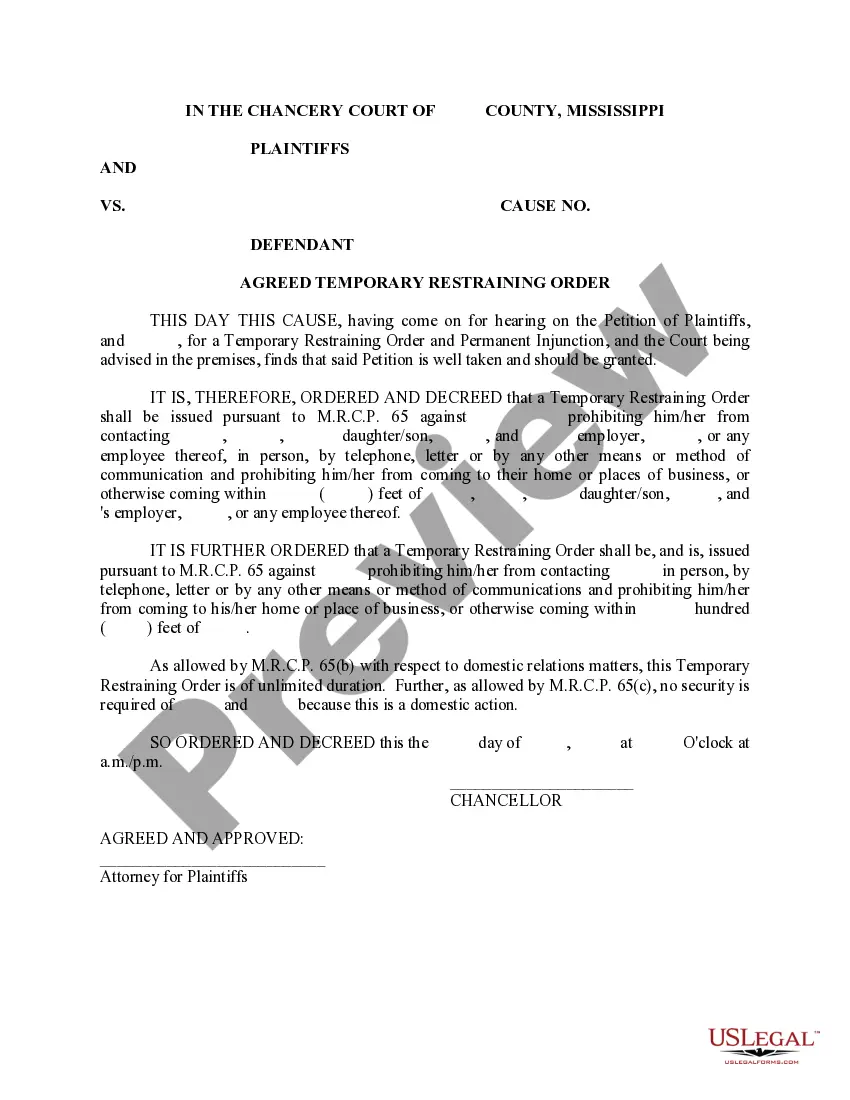
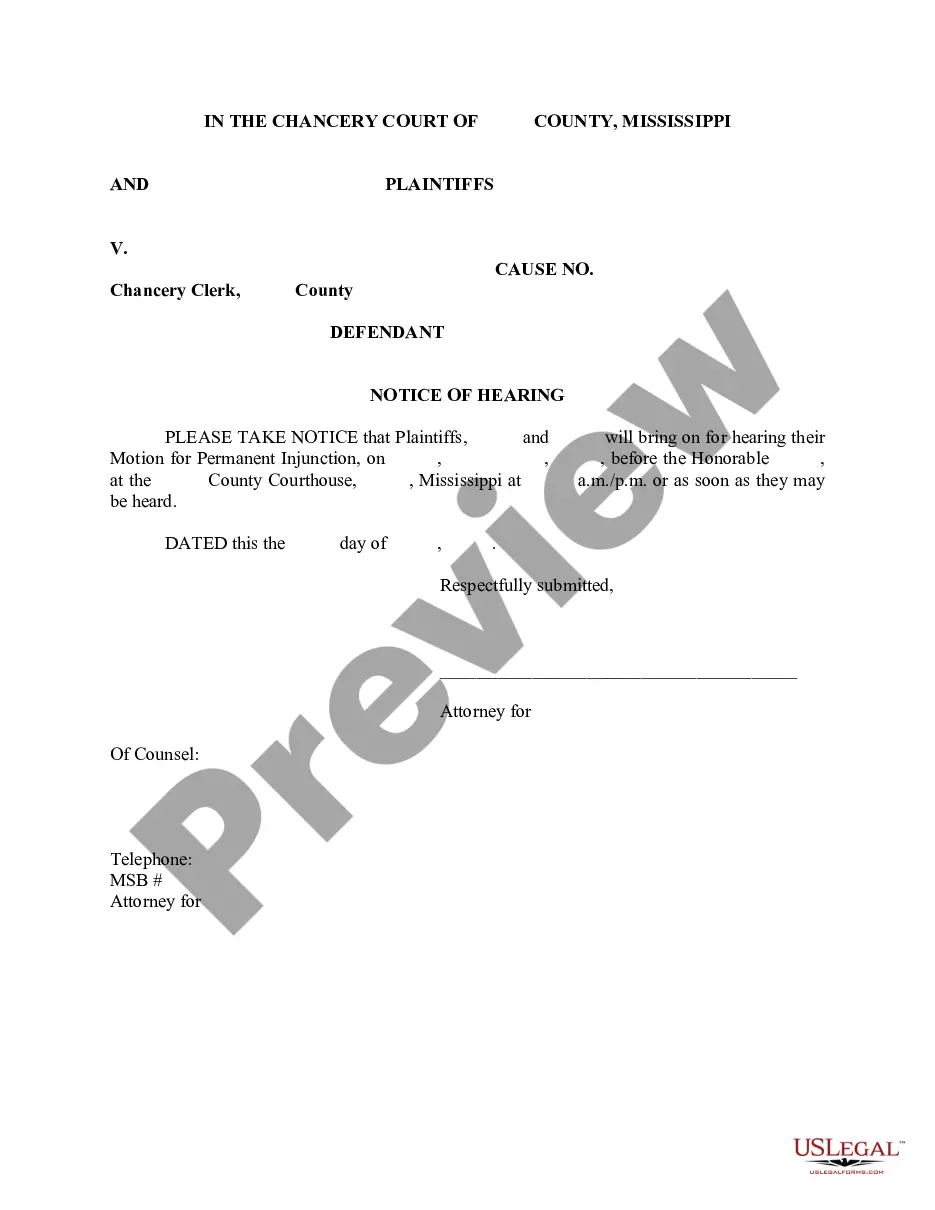
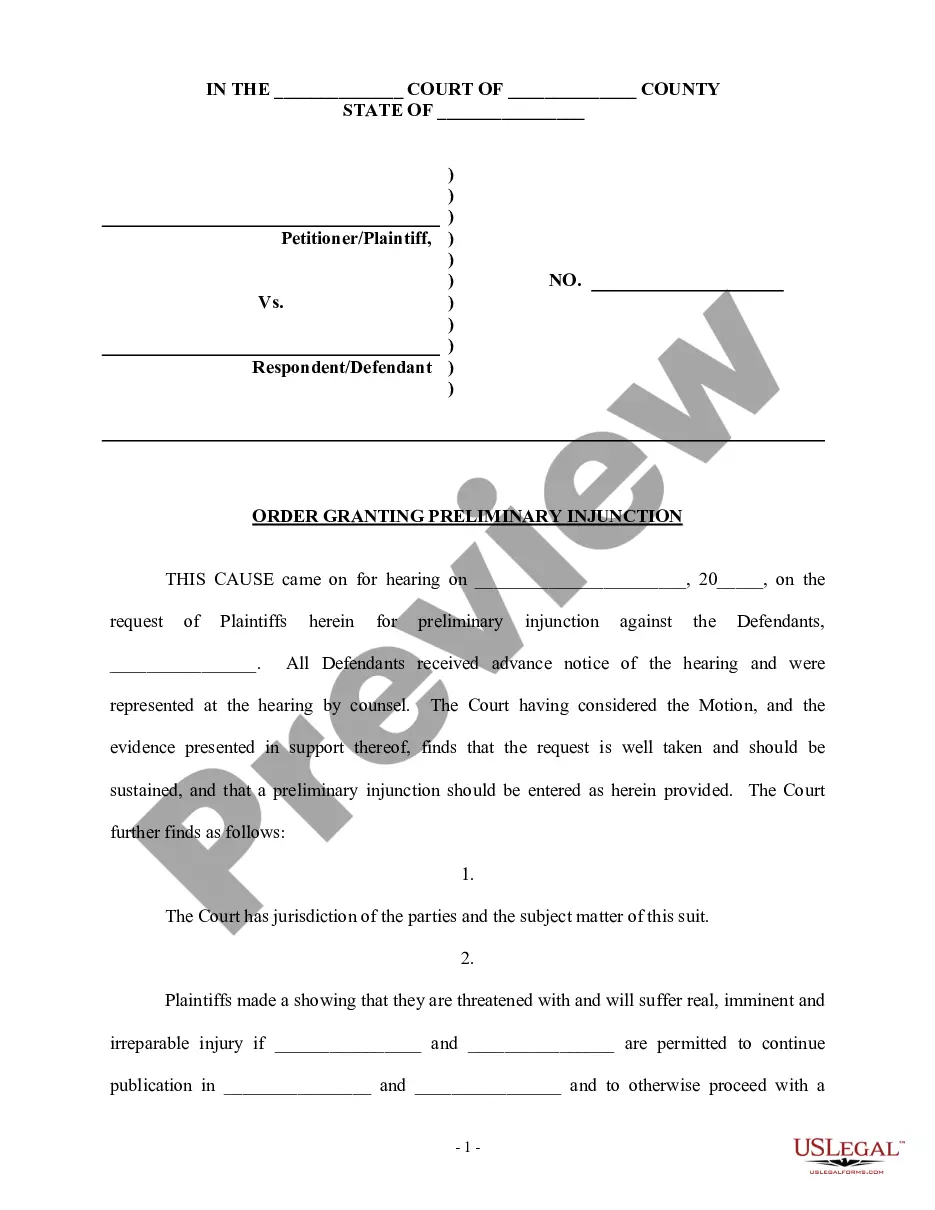
The Agreed Order Granting Permanent Injunctive Relief is a legal document that specifies a court's decision to grant permanent injunctive relief based on an agreement between involved parties. This form is crucial when parties have reached a consensus to stop certain actions or behaviors permanently, distinguishing it from temporary restraining orders that only provide short-term solutions.
Main sections of this form
- Title of the document clarifying it as an agreed order.
- Identifying parties involved in the case.
- Specific terms and conditions of the permanent injunction.
- Date of the order and any relevant hearings.
- Signatures from all parties agreeing to the injunction.
When to use this form
This form should be used in situations where two or more parties have reached an agreement regarding specific actions that need to be permanently halted. Typical scenarios include disputes involving property rights, breaches of contract, or situations of harassment. The agreed order ensures that the terms of this agreement are enforceable by the court.
Intended users of this form
This form is intended for:
- Individuals engaged in legal disputes where an injunction is necessary.
- Parties who have mutually agreed on terms to prevent future actions.
- Attorneys representing clients in civil cases requiring permanent relief.
Instructions for completing this form
- Identify all parties involved in the case and their roles.
- Clearly state the terms of the injunction, including prohibited actions.
- Include the date of any agreement or relevant court hearings.
- Gather signatures from all parties to confirm agreement to the injunction.
- Submit the completed form to the appropriate court for approval.
Does this document require notarization?
This form does not typically require notarization unless specified by local law. However, having the signatures notarized may provide an additional layer of verification and security.
Get your form ready online
Our built-in tools help you complete, sign, share, and store your documents in one place.
Make edits, fill in missing information, and update formatting in US Legal Forms—just like you would in MS Word.
Download a copy, print it, send it by email, or mail it via USPS—whatever works best for your next step.
Sign and collect signatures with our SignNow integration. Send to multiple recipients, set reminders, and more. Go Premium to unlock E-Sign.
If this form requires notarization, complete it online through a secure video call—no need to meet a notary in person or wait for an appointment.
We protect your documents and personal data by following strict security and privacy standards.

Make edits, fill in missing information, and update formatting in US Legal Forms—just like you would in MS Word.

Download a copy, print it, send it by email, or mail it via USPS—whatever works best for your next step.

Sign and collect signatures with our SignNow integration. Send to multiple recipients, set reminders, and more. Go Premium to unlock E-Sign.

If this form requires notarization, complete it online through a secure video call—no need to meet a notary in person or wait for an appointment.

We protect your documents and personal data by following strict security and privacy standards.
Typical mistakes to avoid
- Failing to include all necessary parties in the agreement.
- Not clearly specifying the actions that constitute a violation of the injunction.
- Omitting signatures, which may render the document invalid.
- Not adhering to state-specific filing procedures.
Benefits of using this form online
- Convenient access to download and fill out the form at your own pace.
- Editable templates allow for easy customization to fit your specific needs.
- Reliable guidance based on templates drafted by licensed attorneys.
Legal use & context
- Permanently enjoining a party from engaging in activities that breach an agreement is legally binding once approved by a court.
- The injunction serves as a protective measure against potential harm caused by one party's actions.
- Failure to comply with the injunction may result in legal consequences, including contempt of court.
Summary of main points
- The Agreed Order Granting Permanent Injunctive Relief is essential for enforcing mutual agreements in legal disputes.
- Completing the form correctly can prevent future conflicts and ensures court enforceability.
- Be aware of state-specific requirements to ensure compliance with local laws.
Looking for another form?
Form popularity
FAQ
A court order that a person or entity take certain actions or refrain from certain activities. A permanent injunction is typically issued once a lawsuit over the underlying activity is resolved, as distinguished from a preliminary injunction, which is issued while the lawsuit is pending.
Preliminary injunctions generally last until the end of the lawsuit. Permanent Injunctions: At the end of a court case, if the judge agrees that there is an ongoing threat, he or she may issue a permanent injunction prohibiting the threatened action indefinitely.
Temporary restraining orders usually last between 20 and 25 days, until the court hearing date. When you go to court for the hearing that was scheduled for your TRO, the judge may issue a permanent restraining order. They are not really permanent because they usually last up to 5 years.
Definition: An injunction is a court order requiring a person to do or cease doing a specific action.Choosing whether to grant temporary injunctive relief is up to the discretion of the court. Permanent injunctions are issued as a final judgment in a case, where monetary damages will not suffice.
A court order that a person or entity take certain actions or refrain from certain activities. A permanent injunction is typically issued once a lawsuit over the underlying activity is resolved, as distinguished from a preliminary injunction, which is issued while the lawsuit is pending.
Injunctive relief, also known as an injunction, is a remedy which restrains a party from doing certain acts or requires a party to act in a certain way. It is generally only available when there is no other remedy at law and irreparable harm will result if the relief is not granted.
How do I get an injunction dismissed? After an injunction is granted, the respondent can file a motion to dismiss based on a change in circumstances. In other words, you must prove that the situation surrounding the injunction no longer exists and that keeping the mandate would be detrimental to both parties.
Injunctions can last a week, a month, 6 months, a year, 2 years, 5 years, or forever. How long an injunction lasts is really up to the judge. An injunction can last any amount of time.
Definition: An injunction is a court order requiring a person to do or cease doing a specific action.Choosing whether to grant temporary injunctive relief is up to the discretion of the court. Permanent injunctions are issued as a final judgment in a case, where monetary damages will not suffice.