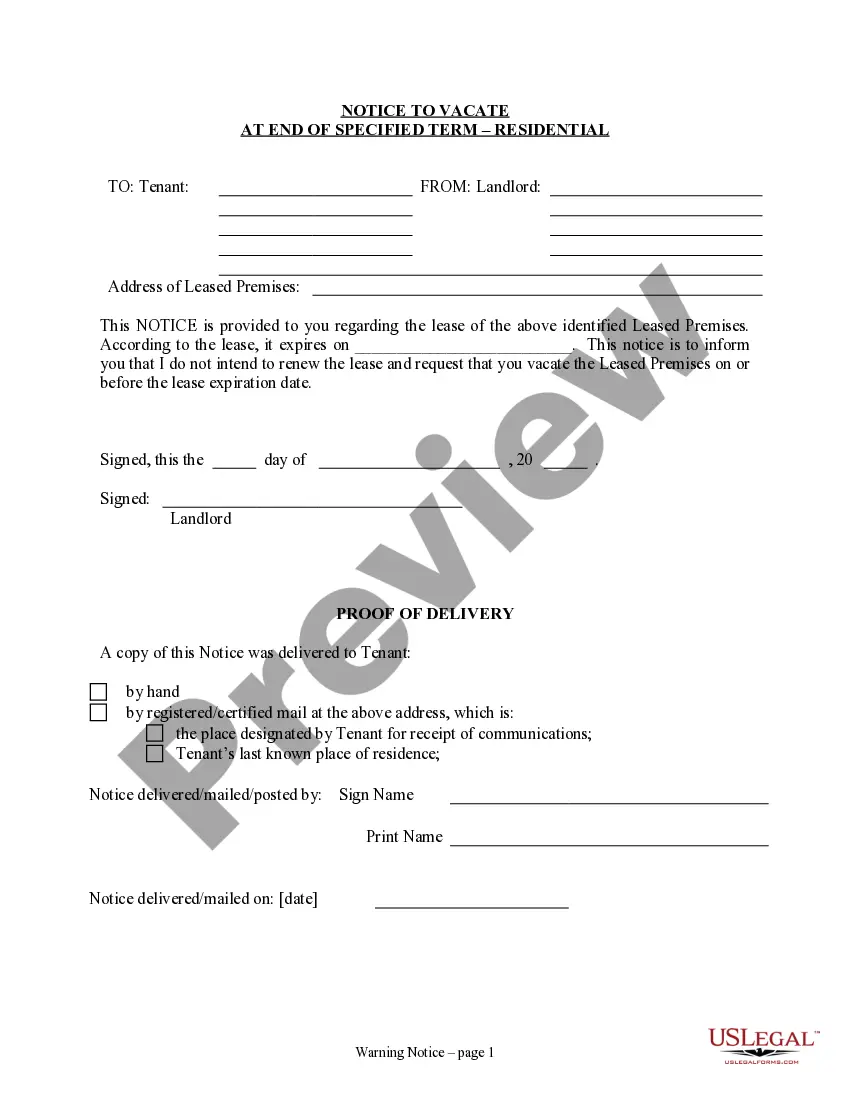
North Carolina Notice of Intent Not to Renew at End of Specified Term from Landlord to Tenant for Residential Property
Description
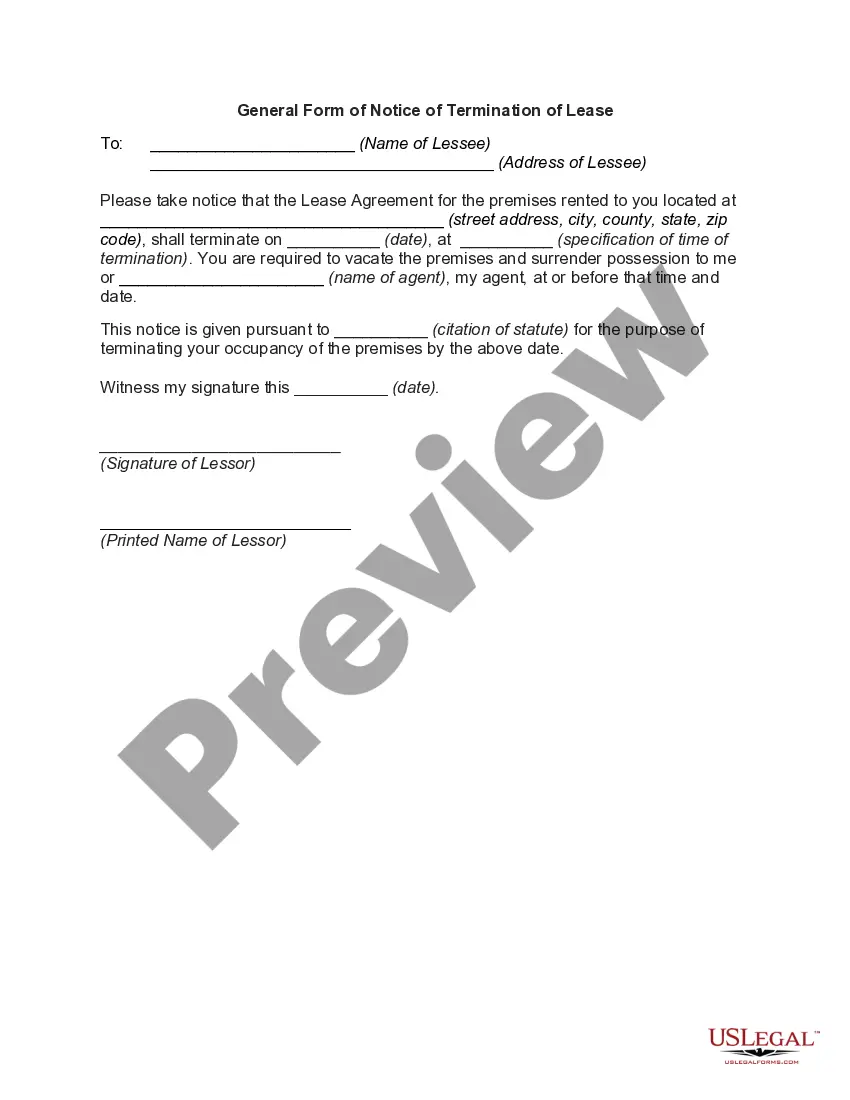
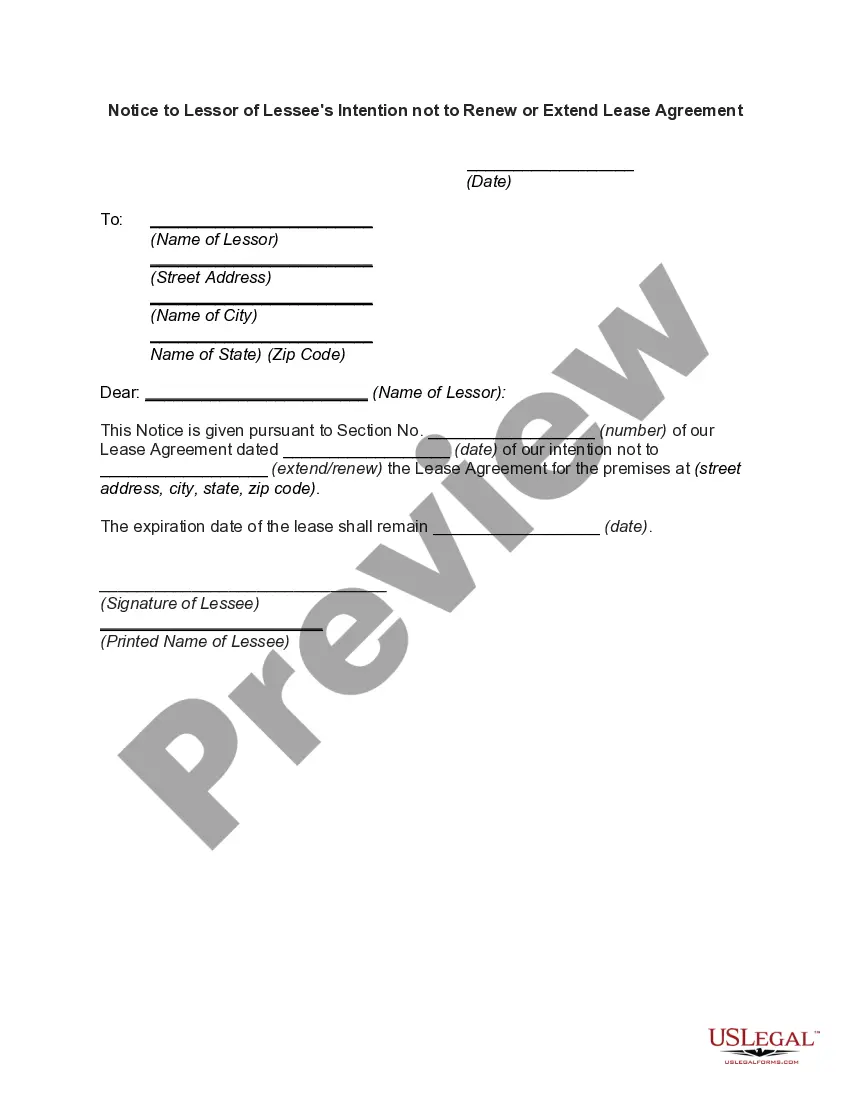
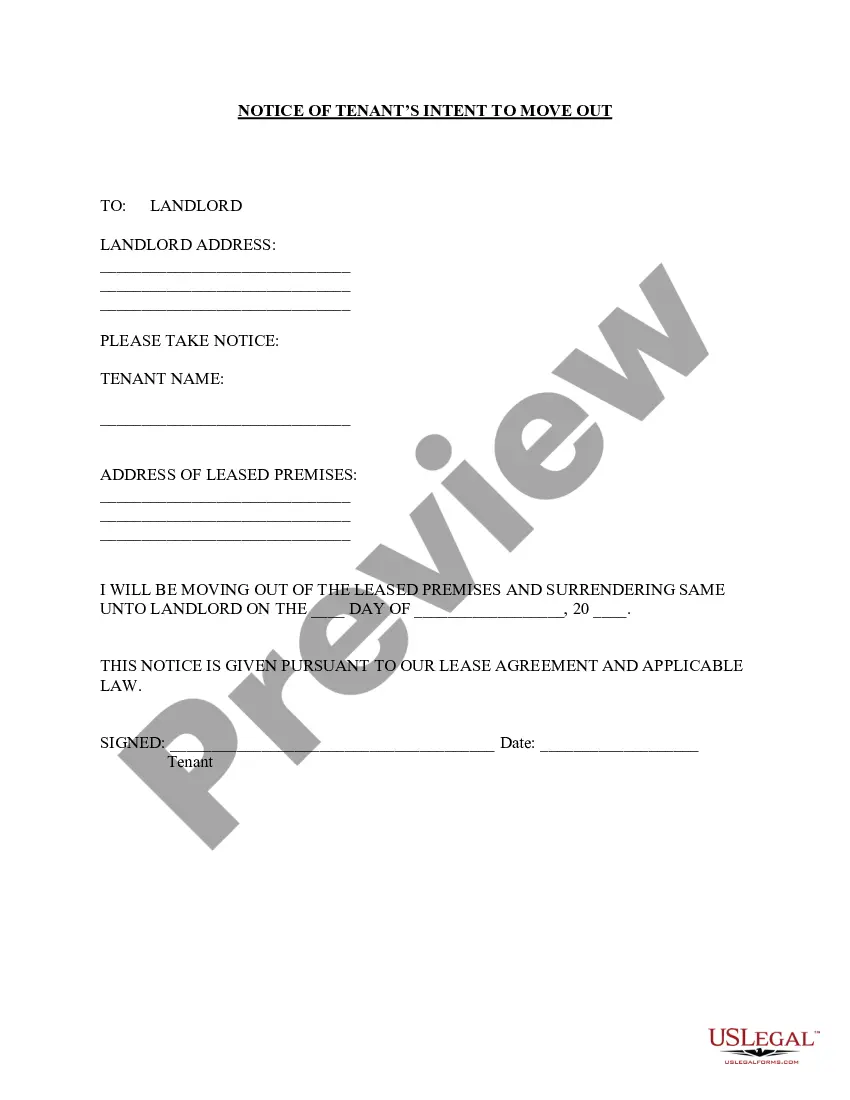
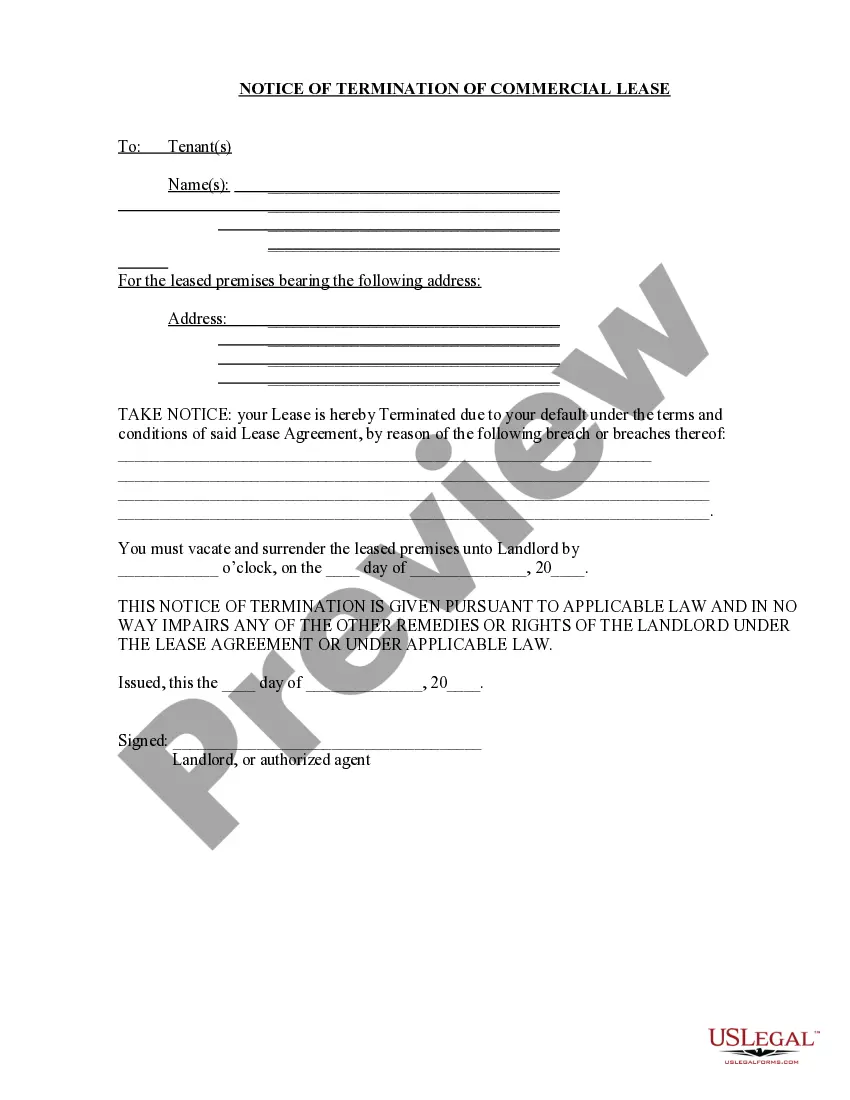



How to fill out North Carolina Notice Of Intent Not To Renew At End Of Specified Term From Landlord To Tenant For Residential Property?
Avoid expensive lawyers and find the North Carolina Notice of Intent Not to Renew at End of Specified Term from Landlord to Tenant for Residential Property you want at a reasonable price on the US Legal Forms website. Use our simple groups function to find and download legal and tax files. Go through their descriptions and preview them prior to downloading. Additionally, US Legal Forms provides users with step-by-step tips on how to obtain and complete each form.
US Legal Forms clients merely have to log in and download the particular document they need to their My Forms tab. Those, who haven’t got a subscription yet must stick to the guidelines below:
- Ensure the North Carolina Notice of Intent Not to Renew at End of Specified Term from Landlord to Tenant for Residential Property is eligible for use where you live.
- If available, read the description and make use of the Preview option just before downloading the templates.
- If you’re sure the document is right for you, click Buy Now.
- If the form is wrong, use the search engine to find the right one.
- Next, create your account and select a subscription plan.
- Pay by credit card or PayPal.
- Choose to download the form in PDF or DOCX.
- Click Download and find your form in the My Forms tab. Feel free to save the form to your gadget or print it out.
Right after downloading, you are able to fill out the North Carolina Notice of Intent Not to Renew at End of Specified Term from Landlord to Tenant for Residential Property manually or an editing software. Print it out and reuse the form multiple times. Do more for less with US Legal Forms!
Form popularity
FAQ
Many landlords will be curious about the North Carolina eviction timeline as they start the process. Usually, the process takes about three to four weeks. You have to wait for the 10 day notice period, followed by the 7-day court summons period. Then, the tenant has up to 10 days to move out.
The landlord must give at least 7 days notice. Show to Prospective Tenants: reasonable notice - the landlord can access the premises a reasonable number of times during the 14 days before the end of the tenancy agreement to show the premises to prospective tenants.
In North Carolina, nonpayment of rent is the most common ground for eviction. In this case, you are required to give the tenant a 10-day "notice to quit." The notice informs the tenant that they need to pay the rent due within 10 days. Otherwise, they will be evicted.
Notice Requirements for North Carolina Landlords A landlord can simply give you a written notice to move, allowing you seven days as required by North Carolina law and specifying the date on which your tenancy will end.
Can An Apartment Refuse To Renew A Lease? In most states, it is up to the property owner and manager to determine whether or not they want to extend their lease agreement with a tenant. If they do not want to continue to rent to that tenant for some reason, it is within their rights to do so.
North Carolina law says that your landlord must keep your housing fit and safe. It also says that you, the tenant, must pay your rent, keep your home clean, and not damage your home. To make the law work, both the tenant and the landlord must do their part.
When you rent a property from a landlord it becomes your home. They should only enter the property without you being present, if you have given permission for them to do so, or in a genuine emergency.
Your landlord or their representatives may be allowed reasonable access to carry out inspections or repairs, but must first get your permission. According to Section 11, from The Landlord and Tenant Act 1985, your landlord needs to give you at least 24 hour notice before they come around and visit for any reason.
In short, nothing in the CARES Act or Governor Cooper's Order prohibits evictions for reasons other than late payment or nonpayment of rent, such as evictions related to health, safety, or criminal activity. These types of evictions by a landlord would not violate the Order.