North Carolina Custodial Trustee's Receipt and Acceptance
About this form
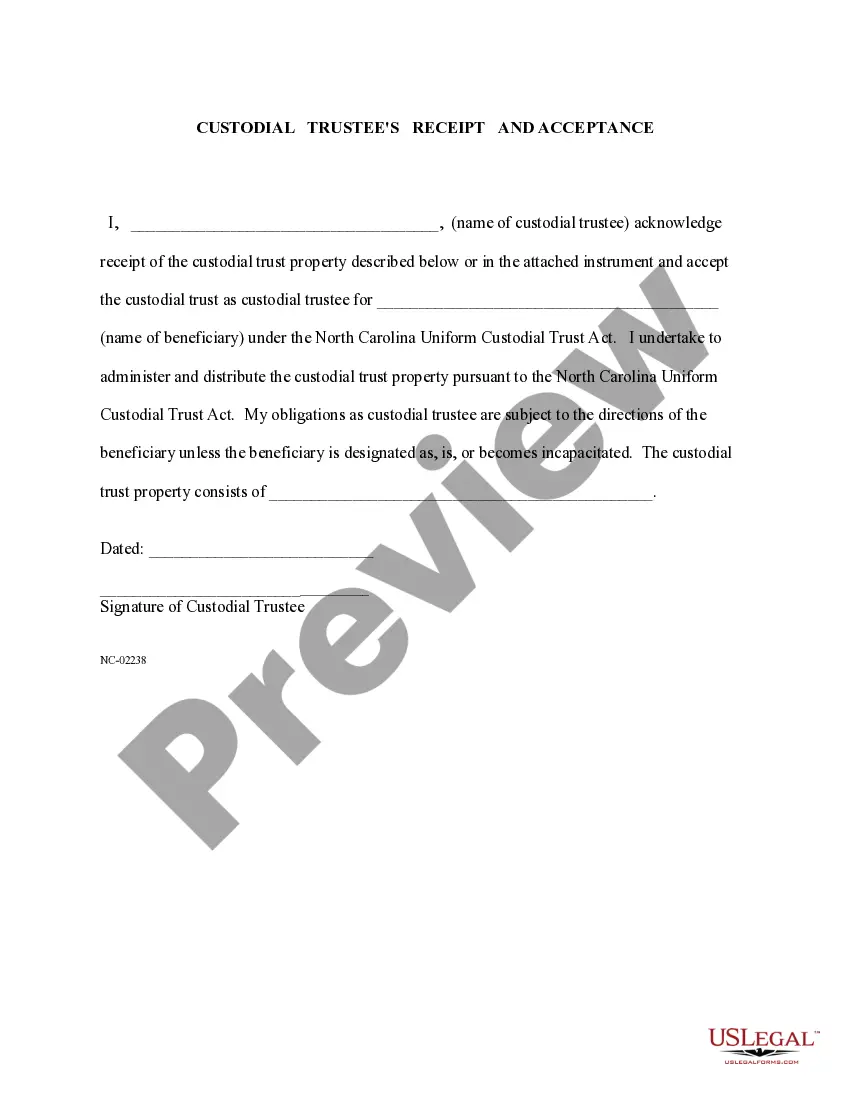
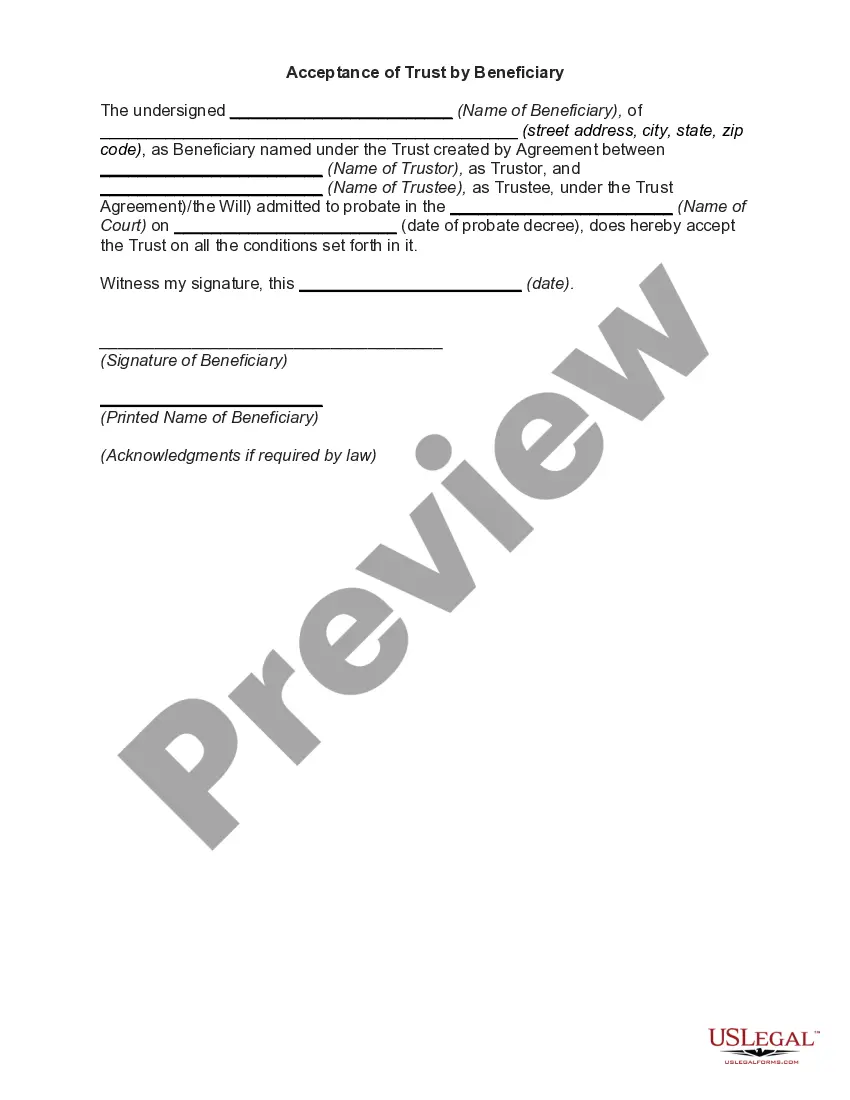
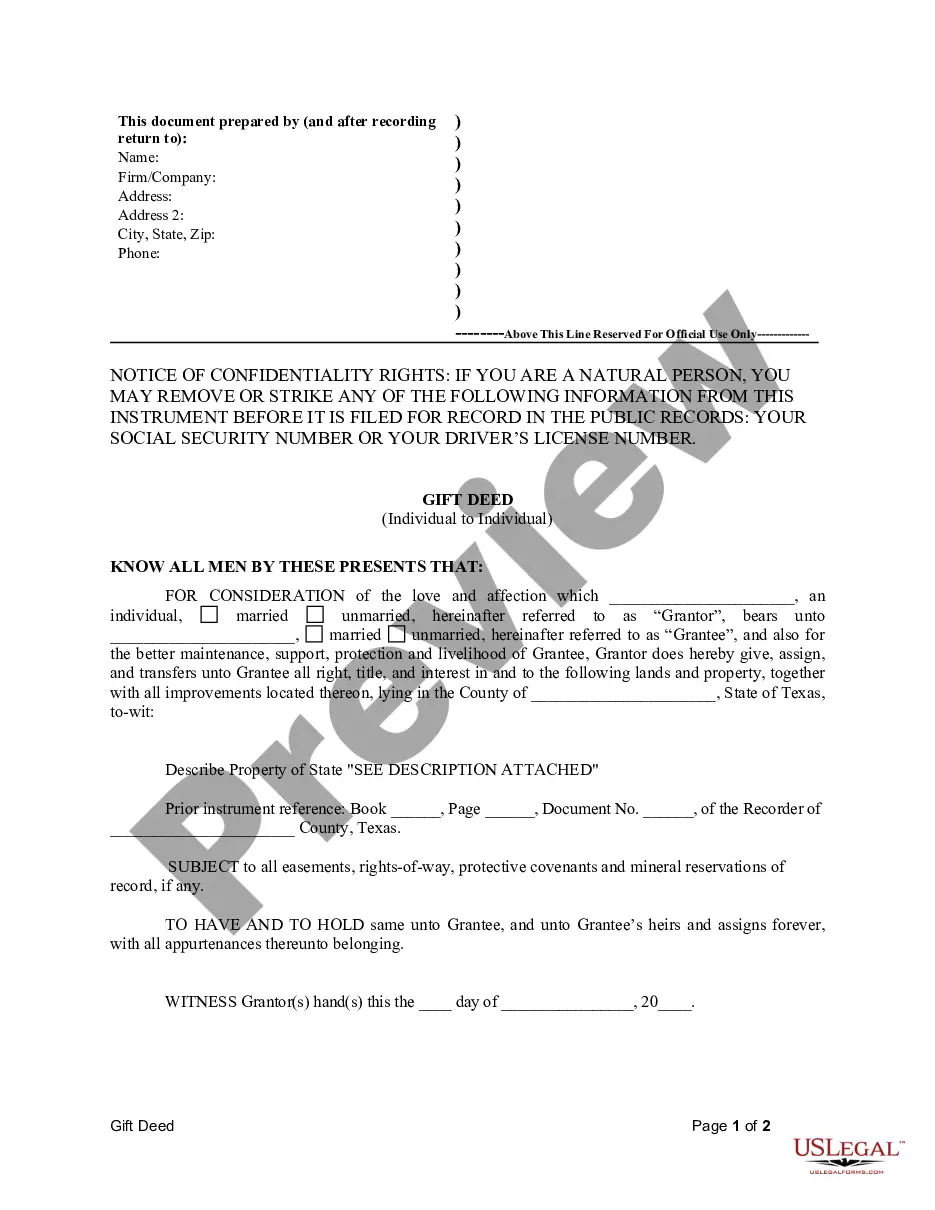
The Custodial Trustee's Receipt and Acceptance is a legal document used by custodial trustees to acknowledge the receipt of trust property. This form is crucial in estate planning as it records the acceptance of a custodial trust on behalf of a beneficiary. Unlike other trust-related forms, this document specifically serves to confirm that the trustee has received property to manage according to the North Carolina Uniform Custodial Trust Act.
What’s included in this form
- Identification of the custodial trustee and beneficiary.
- Description of the custodial trust property being received.
- Signature of the custodial trustee to validate the receipt.
- Date of formal acceptance of the trust.
- Reference to the North Carolina Uniform Custodial Trust Act emphasizing legal obligations.

Common use cases
This form is used in situations where a custodial trustee has been appointed to manage assets for a beneficiary, typically a minor or incapacitated person. It's necessary when the trustee receives property to be held in a custodial trust, and it must be filed with the appropriate court to formalize the custody arrangement. It is particularly relevant in estate planning or family law scenarios.
Who should use this form
- Custodial trustees representing the interests of beneficiaries.
- Individuals managing assets for minors or incapacitated beneficiaries.
- Family members involved in estate planning activities.
- Legal professionals advising clients on trust management.
Completing this form step by step
- Identify and enter the name of the custodial trustee at the top of the form.
- Provide the name of the beneficiary for whom the trust is being established.
- Clearly describe the custodial trust property being received.
- Date the document to confirm when the receipt and acceptance take place.
- Sign the document to certify the acceptance of the custodial trust responsibilities.
Notarization guidance
This form does not typically require notarization to be legally valid. However, some jurisdictions or document types may still require it. US Legal Forms provides secure online notarization powered by Notarize, available 24/7 for added convenience.
Get your form ready online
Our built-in tools help you complete, sign, share, and store your documents in one place.
Make edits, fill in missing information, and update formatting in US Legal Forms—just like you would in MS Word.
Download a copy, print it, send it by email, or mail it via USPS—whatever works best for your next step.
Sign and collect signatures with our SignNow integration. Send to multiple recipients, set reminders, and more. Go Premium to unlock E-Sign.
If this form requires notarization, complete it online through a secure video call—no need to meet a notary in person or wait for an appointment.
We protect your documents and personal data by following strict security and privacy standards.

Make edits, fill in missing information, and update formatting in US Legal Forms—just like you would in MS Word.

Download a copy, print it, send it by email, or mail it via USPS—whatever works best for your next step.

Sign and collect signatures with our SignNow integration. Send to multiple recipients, set reminders, and more. Go Premium to unlock E-Sign.

If this form requires notarization, complete it online through a secure video call—no need to meet a notary in person or wait for an appointment.

We protect your documents and personal data by following strict security and privacy standards.
Common mistakes
- Failing to identify the correct trustee or beneficiary.
- Omitting details of the custodial trust property.
- Not dating the form, which may lead to legal ambiguities.
- Neglecting to sign the form, rendering it invalid.
Benefits of using this form online
- Convenient access to a professionally drafted legal document.
- Easy download in Word or Rich Text formats for flexibility in editing.
- Immediate fulfillment of legal requirements without waiting for paper forms.
- Reliable templates that comply with legal standards.
Looking for another form?


Form popularity
FAQ
What age can a child decide which parent to live with in NC? 200bThere is no magic age number when a child can decide who to live with under North Carolina law. When a child turns age 18 and becomes an adult they can choose to live wherever they want, but before then a judge can dictate where that child must live.
Judges decide child custody based on the best interests of the child. This decision can include many factors, such as the parents' living arrangements, each parent's ability to care for the child, the child's relationship with each parent, and any other factors affecting the welfare of the child.
Judges decide child custody based on the best interests of the child. This decision can include many factors, such as the parents' living arrangements, each parent's ability to care for the child, the child's relationship with each parent, and any other factors affecting the welfare of the child.
A trial court can award equal custody to both parties, or grant one party primary custody and the other visitation privileges. In actuality, North Carolina judges rarely award a 50/50 split of time that a child resides with each parent.
Under North Carolina law, you have those rights as a father. In fact, unless you voluntary give them up, or a court orders otherwise, your rights as a parent are equal to those of the mother. You may even be entitled to receive child support payments from the mother.