Sample Warrant Purchase Agreement between The Wiser Oil Company and Wise Investment Company, LLC
About this form
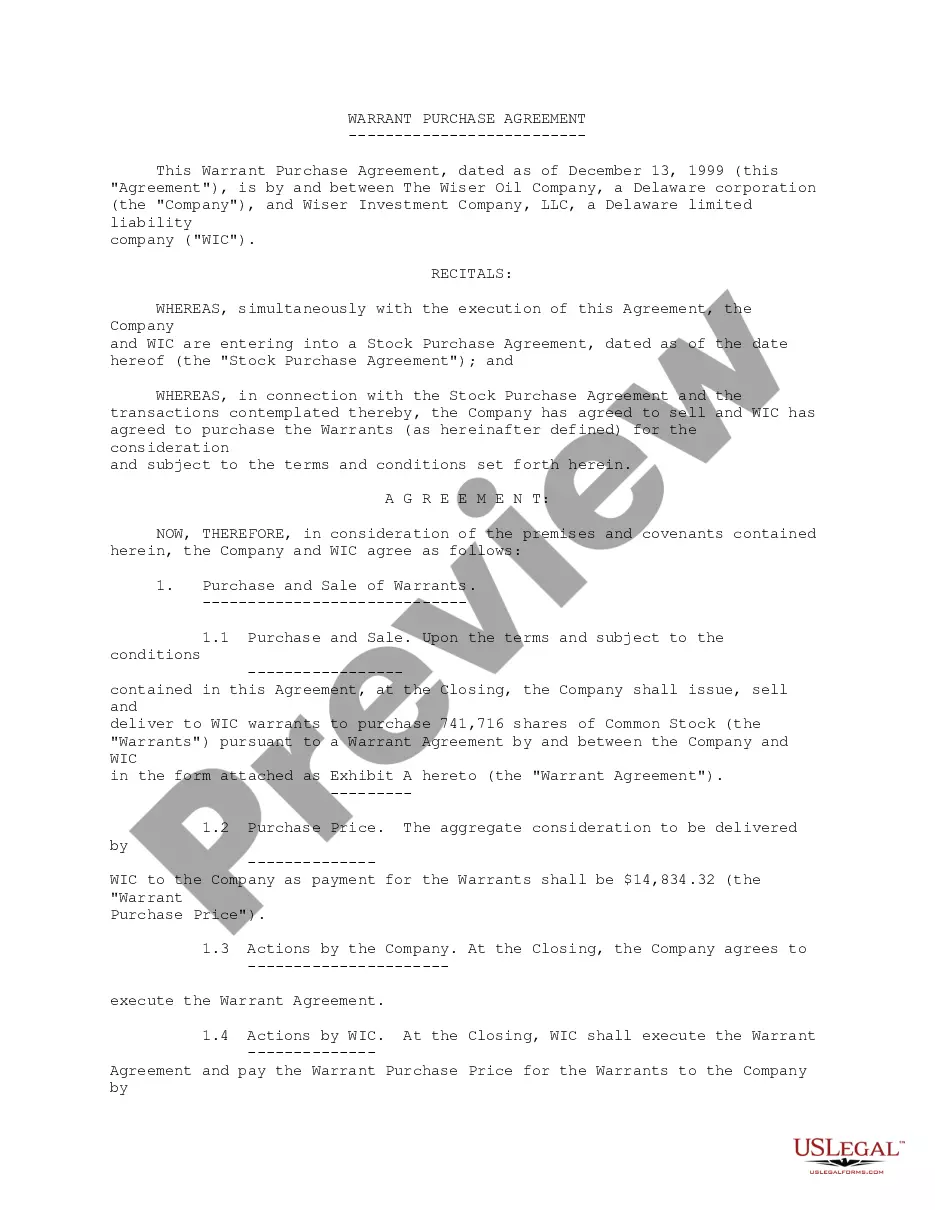
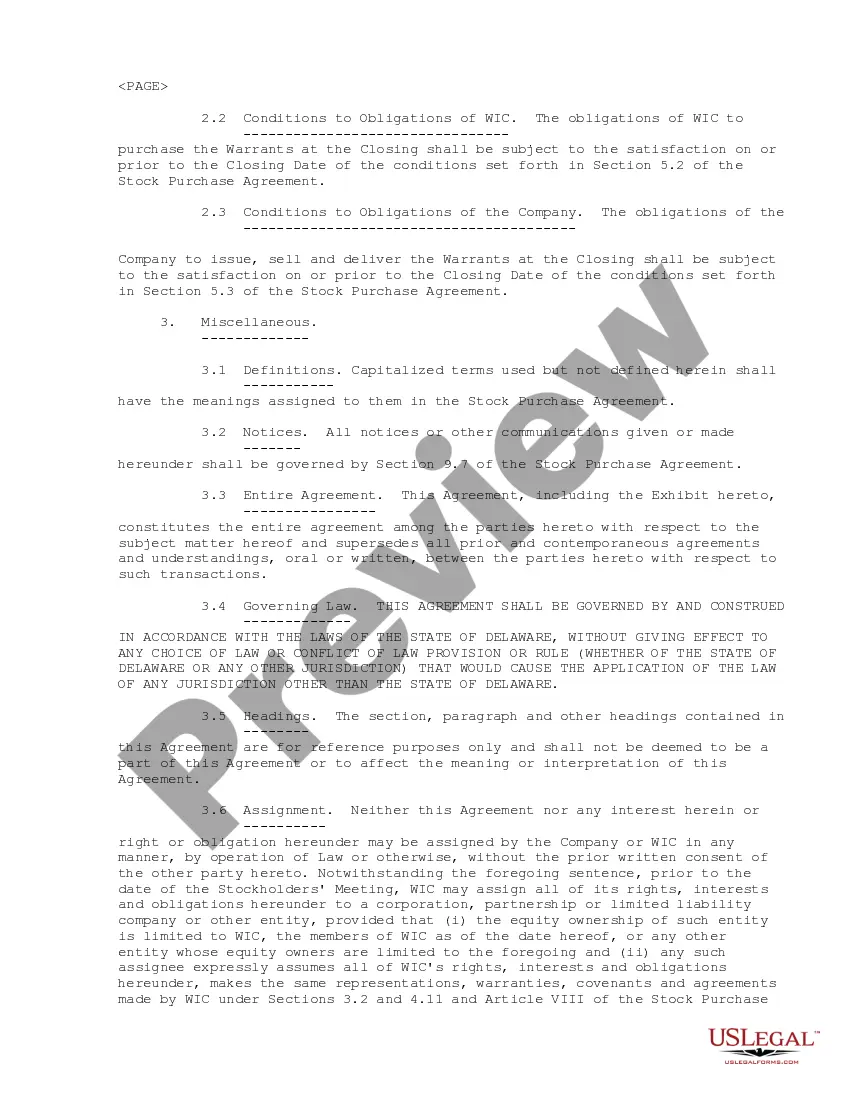
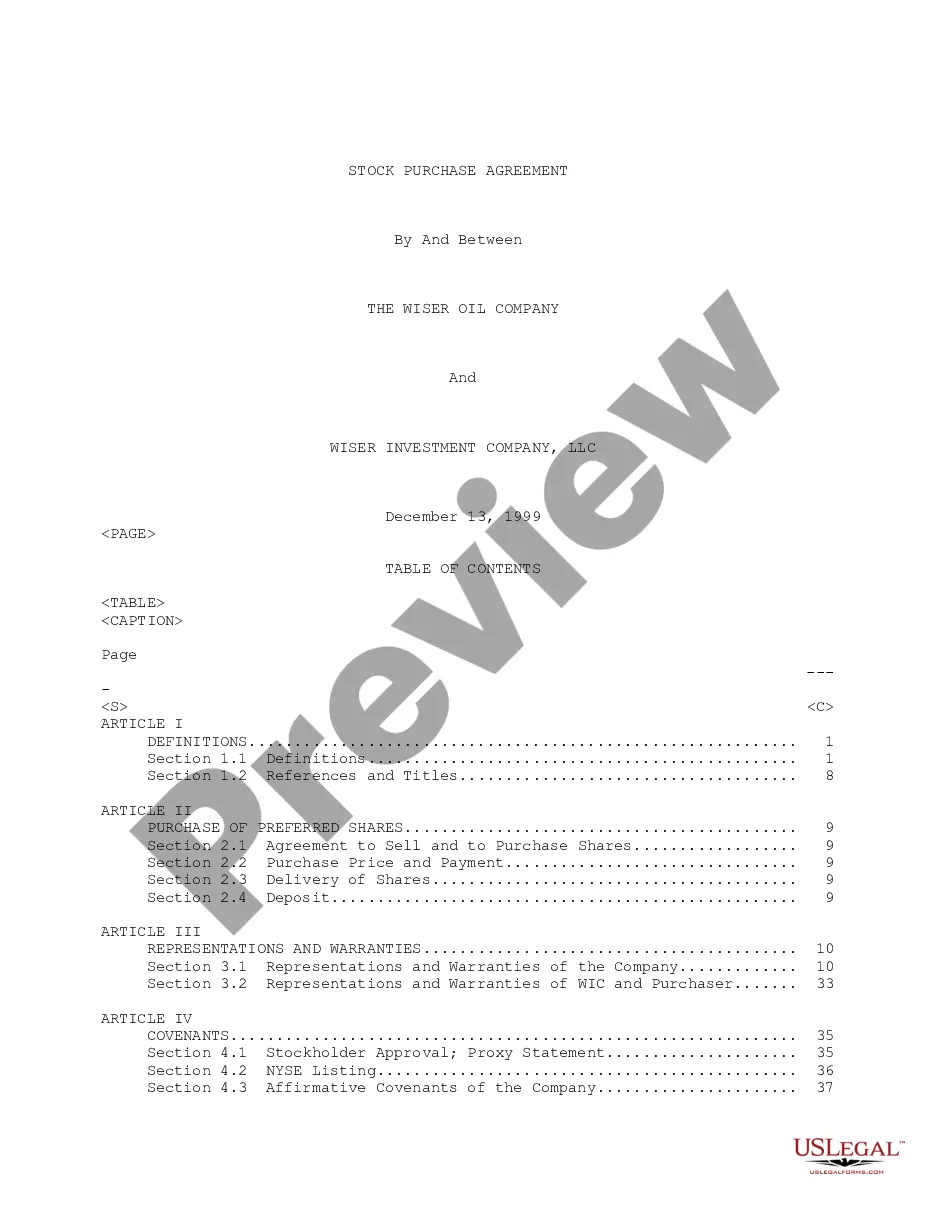
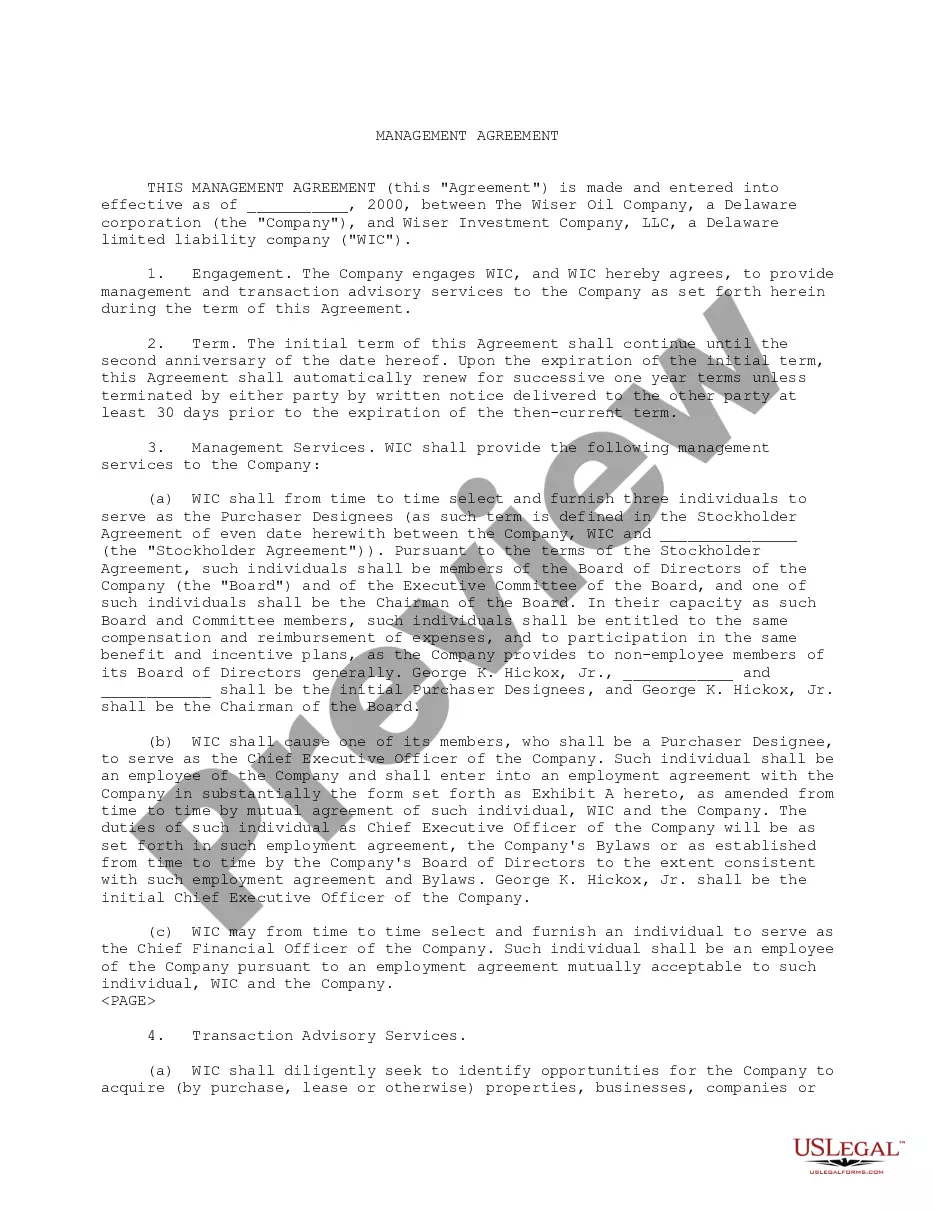
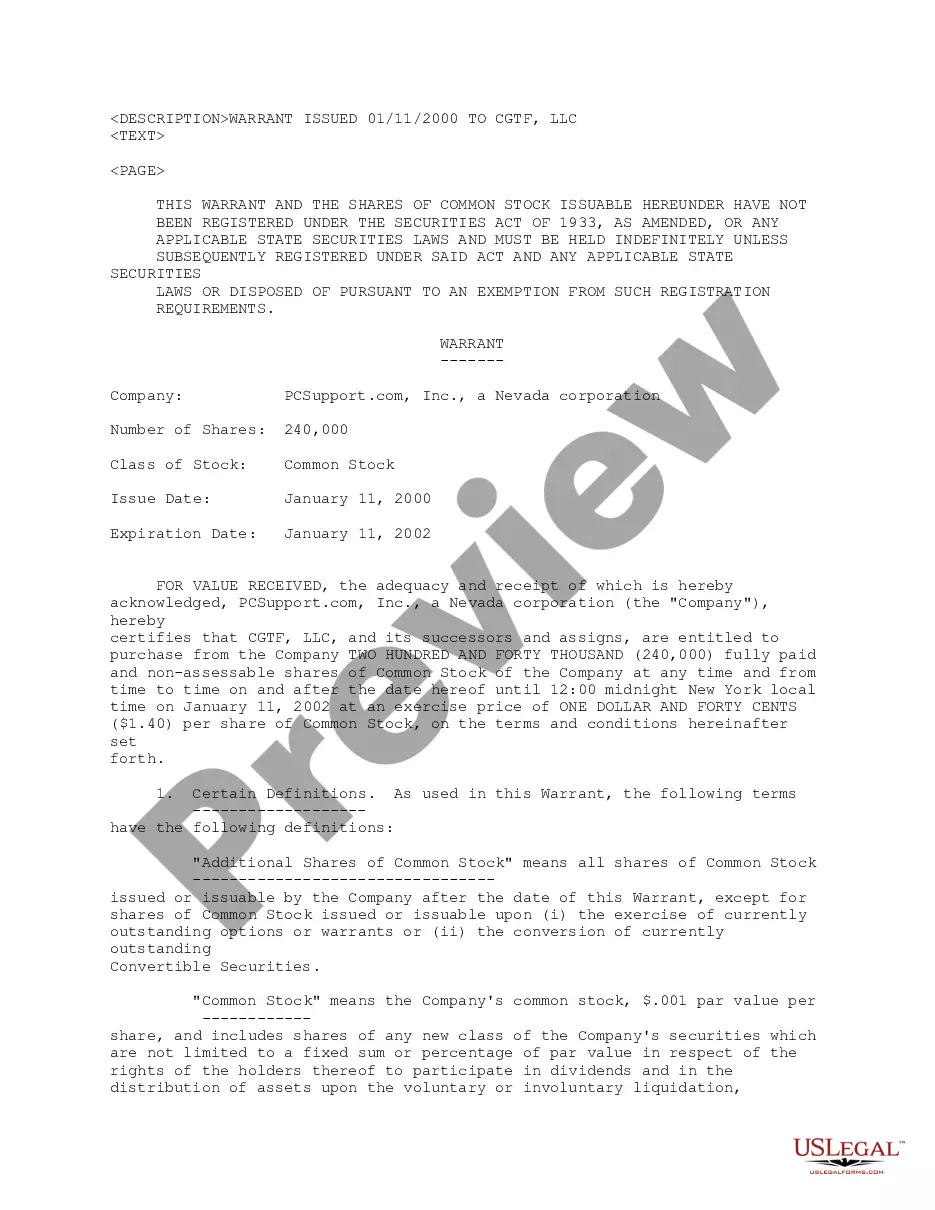
This Warrant Purchase Agreement is a legal document establishing the terms under which The Wiser Oil Company agrees to sell warrants to purchase shares of common stock to Wise Investment Company, LLC. Distinct from other agreements, this form specifically addresses the purchase of warrants, outlining the purchase price, obligations of both parties, and conditions that must be met prior to the transaction. It serves as a crucial instrument in facilitating investments in warrants and securities.
Key parts of this document
- Purchase and Sale of Warrants: Details the issuing and selling of warrants to Wise Investment Company.
- Purchase Price: Specifies the total consideration for the purchase of the warrants.
- Conditions: Outlines the conditions that must be satisfied before the warrant transaction can close.
- Miscellaneous Provisions: Includes various legal clauses such as governing law, notices, and amendments.
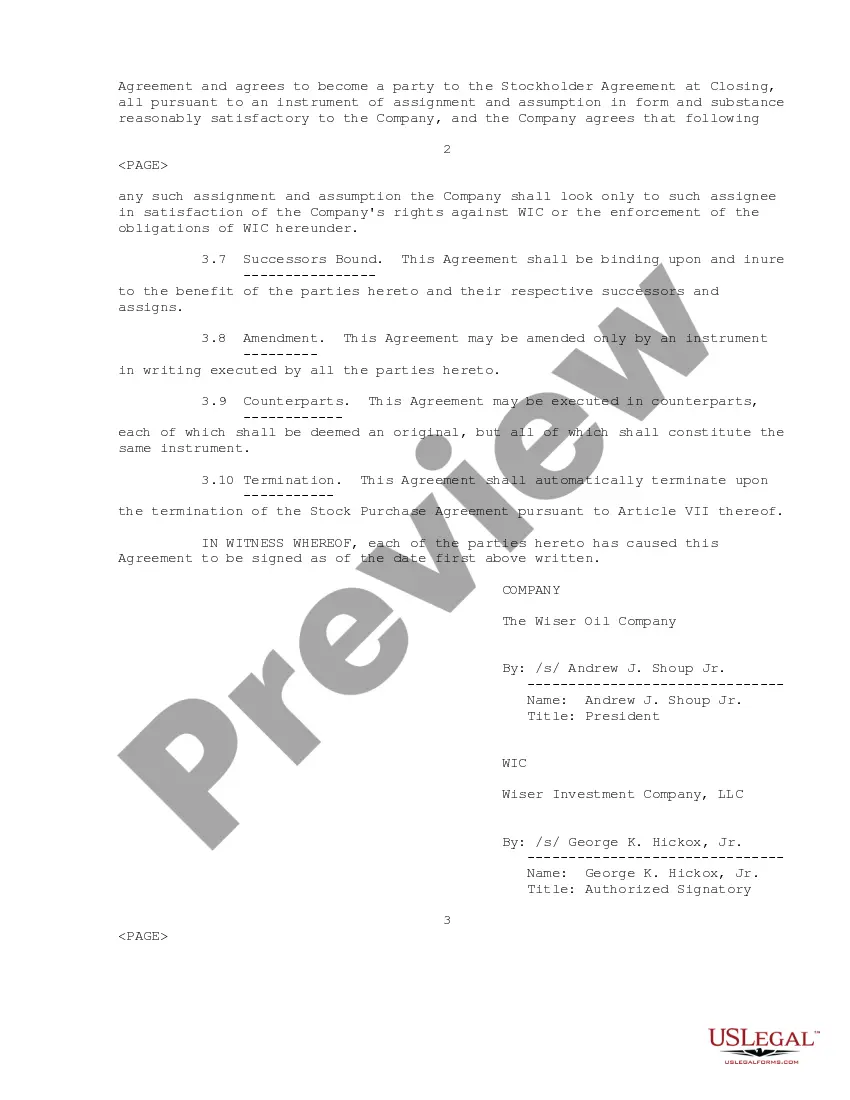
- Signatures: Ensures that both parties formally agree to the terms set forth in the agreement.
Common use cases
This form is necessary when a company (The Wiser Oil Company) is engaging in a transaction to sell warrants to an investor (Wise Investment Company, LLC). Use this agreement when both parties have agreed on the transaction terms and are ready to formalize the sale of warrants as part of their investment dealings.
Who should use this form
This form is suitable for:
- Corporations looking to issue warrants to potential investors.
- Investment companies or entities wanting to purchase warrants as part of their investment strategy.
- Legal professionals facilitating the sale of warrants in compliance with corporate governance standards.
How to prepare this document
- Identify the parties involved: Clearly state the names and details of The Wiser Oil Company and Wise Investment Company, LLC.
- Specify the number of warrants being purchased: Indicate the total number of shares that can be bought under the warrants.
- Enter the purchase price: Clearly define the financial consideration agreed upon for the transaction.
- Outline closing conditions: Include the necessary conditions that must be fulfilled prior to the closing of the agreement.
- Sign the agreement: Ensure that both parties' representatives sign and date the document to finalize the agreement.
Is notarization required?
This form does not typically require notarization to be legally valid. However, some jurisdictions or document types may still require it. US Legal Forms provides secure online notarization powered by Notarize, available 24/7 for added convenience.
Get your form ready online
Our built-in tools help you complete, sign, share, and store your documents in one place.
Make edits, fill in missing information, and update formatting in US Legal Forms—just like you would in MS Word.
Download a copy, print it, send it by email, or mail it via USPS—whatever works best for your next step.
Sign and collect signatures with our SignNow integration. Send to multiple recipients, set reminders, and more. Go Premium to unlock E-Sign.
If this form requires notarization, complete it online through a secure video call—no need to meet a notary in person or wait for an appointment.
We protect your documents and personal data by following strict security and privacy standards.

Make edits, fill in missing information, and update formatting in US Legal Forms—just like you would in MS Word.

Download a copy, print it, send it by email, or mail it via USPS—whatever works best for your next step.

Sign and collect signatures with our SignNow integration. Send to multiple recipients, set reminders, and more. Go Premium to unlock E-Sign.

If this form requires notarization, complete it online through a secure video call—no need to meet a notary in person or wait for an appointment.

We protect your documents and personal data by following strict security and privacy standards.
Avoid these common issues
- Failing to check if all conditions are satisfied before the closing date.
- Not including specific terms related to the rights associated with the warrants.
- Omitting signatures or failing to have the agreement witnessed if required by law.
Why complete this form online
- Convenience of instant access to the form for download and printing.
- Editability allows customization for specific transaction details.
- Reliability from licensed attorneys ensuring the document meets legal standards.
Legal use & context
- This form is legally binding and can be enforced in a court of law, provided both parties adhere to its terms.
- It is essential to ensure that all statutory requirements are fulfilled to avoid disputes about the validity of the warrants.
- Warrants represent a right to purchase shares; thus, clear definitions in the Agreement are critical to prevent ambiguity.
What to keep in mind
- This Warrant Purchase Agreement formalizes the sale of warrants between specified parties.
- Attention to detail is crucial in entering the purchase price and conditions for closing.
- Both parties should review all terms and legal obligations before signing the agreement.
Looking for another form?

Form popularity
FAQ
Gather information on all the owners/members who will want to be part of the LLC. Search for and choose a unique business name for your investment LLC. Provide an official address. Assign a Registered Agent for the LLC. File Articles of Organization to officially form your LLC.
Limited liability companies (LLCs) are business entities authorized by each state's laws. LLCs are popular for many reasons, including ease of creation and protection for the members' (or owners') personal assets. Generally speaking, you can create an LLC for any legitimate reason, including investing.
One of the most common reasons to use an LLC for investing is to invest in real estate. An LLC will protect you from potential liabilities that arise, as well as provide a framework for dividing up the investment ownership of the property.
An investment LLC allows a group of people to invest together. It is not necessarily an investment in a business; it can be used for other things like real estate. An LLC is a flexible entity with some of the same characteristics of a corporation, and also of a partnership.
You can invest without owning a single stock or bond. Owning a limited liability company (LLC) is a popular way to hold ownership stakes in a family business or startup. There are unique benefits and protections afforded to LLC owners which make it easy to understand why they are so highly favored.
Using An LLC For Real Estate Investments One of the most common reasons to use an LLC for investing is to invest in real estate. An LLC will protect you from potential liabilities that arise, as well as provide a framework for dividing up the investment ownership of the property.
If you invest in an LLC taxed as either a partnership or an S corporation, you will be taxed on the LLC's income even if no cash is distributed to you to pay the tax. In other words, investing in an LLC can unnecessarily complicate your personal tax situation.
By default, single-owner LLCs are taxed as sole proprietorships, but LLCs can choose to be taxed as S-Corps or C-Corps, which may benefit some businesses by reducing their employment taxes (Medicare and Social Security taxes).