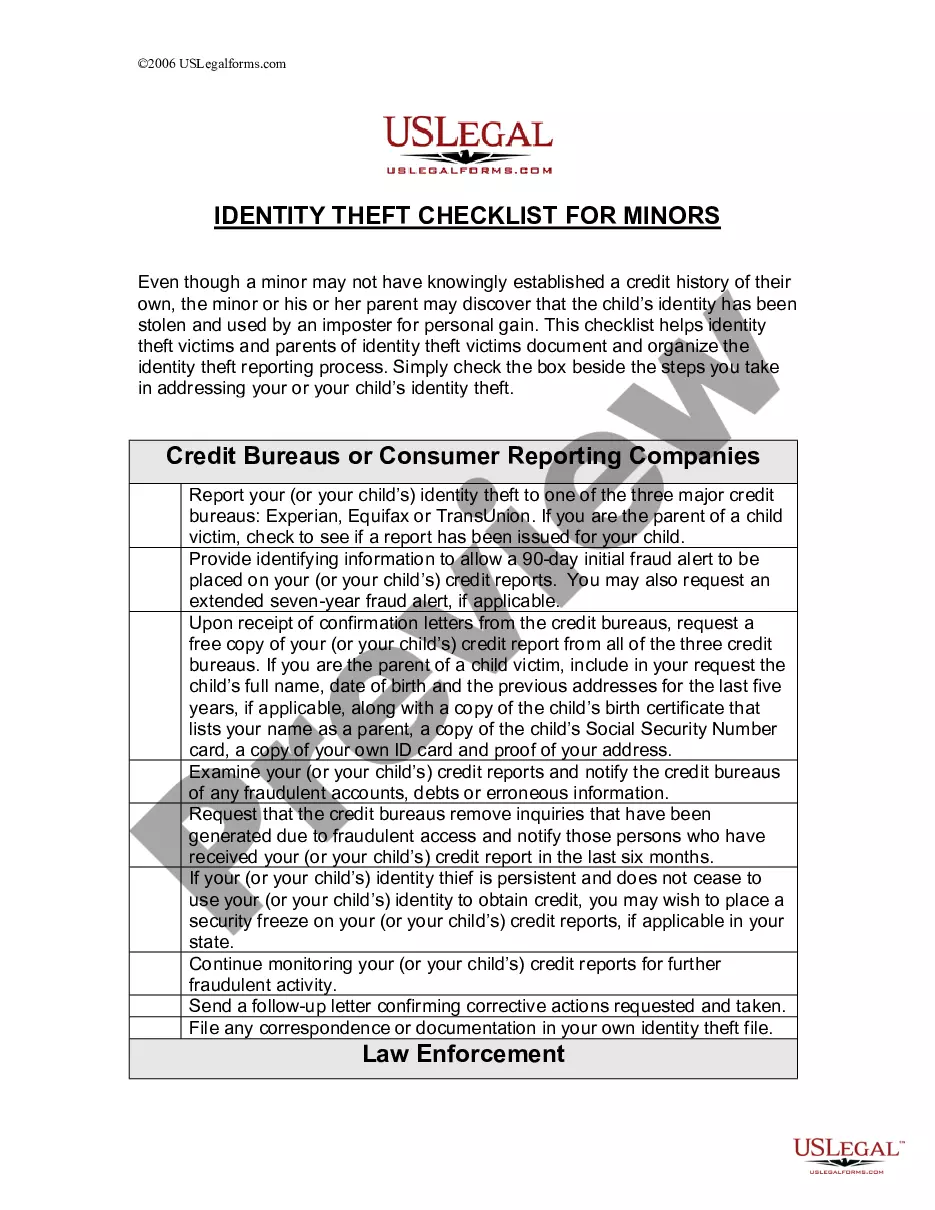
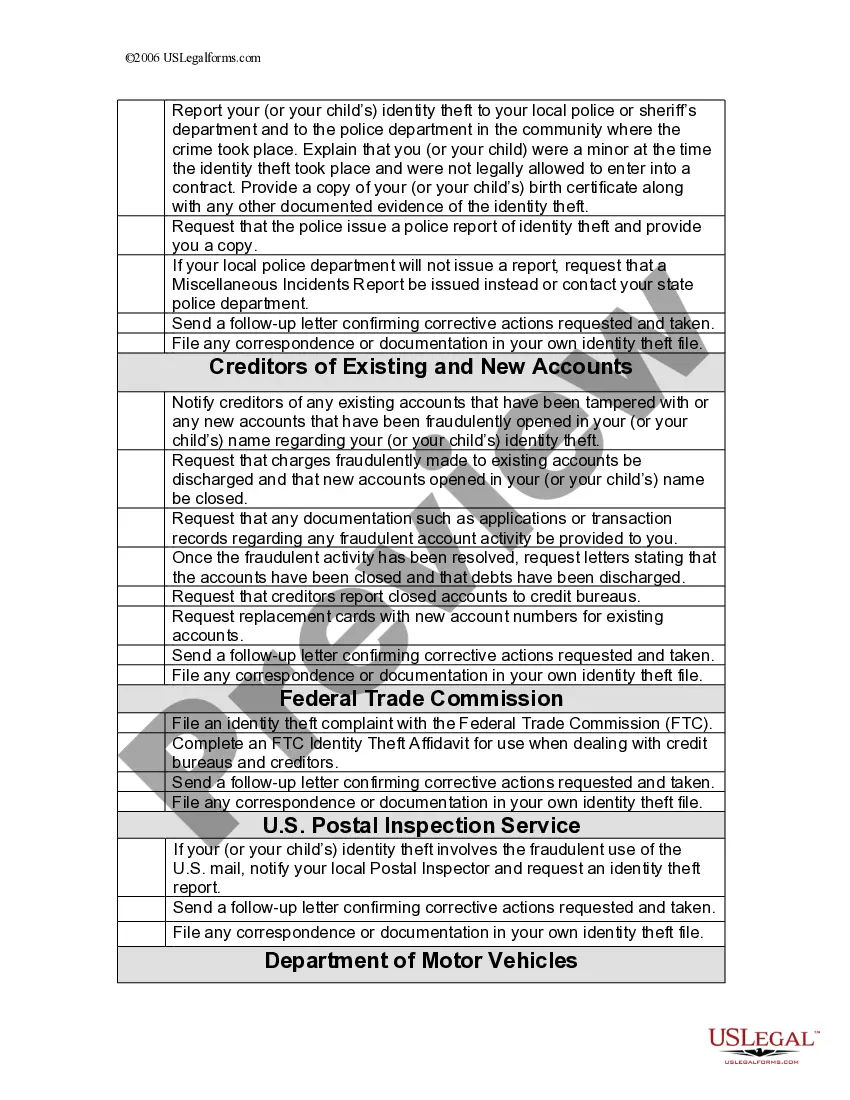
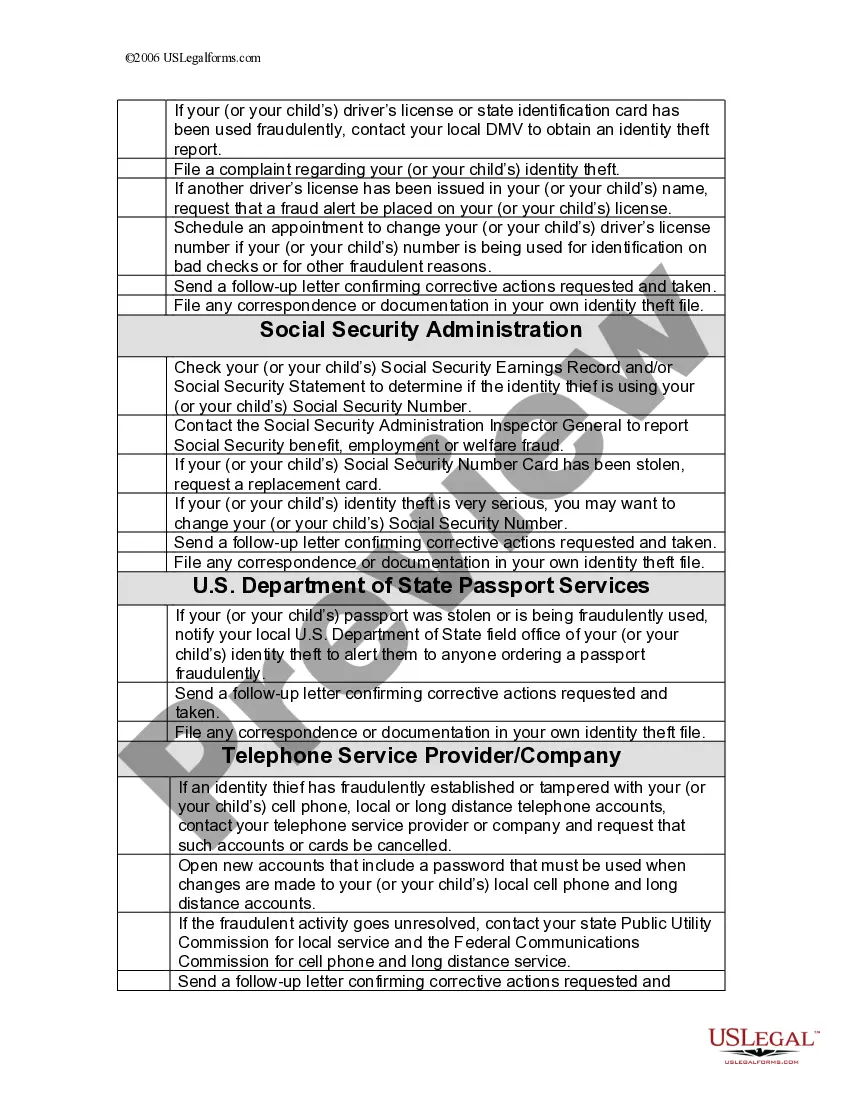
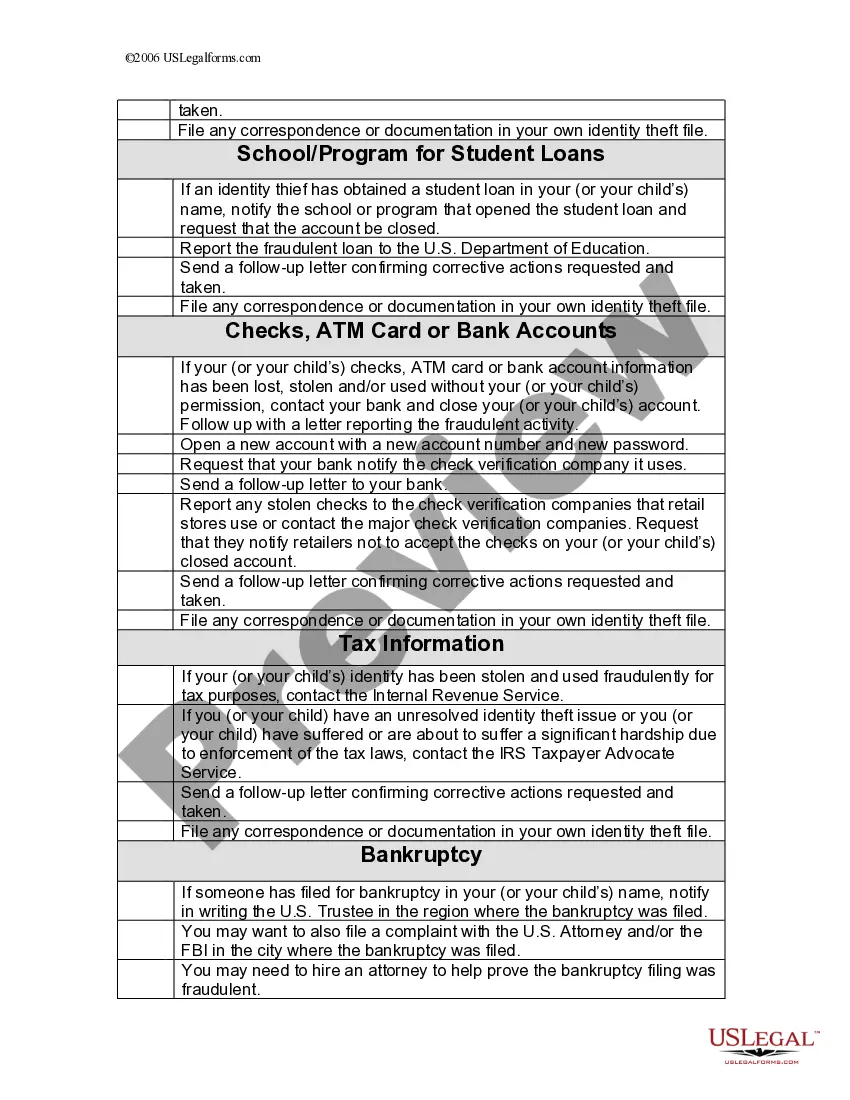
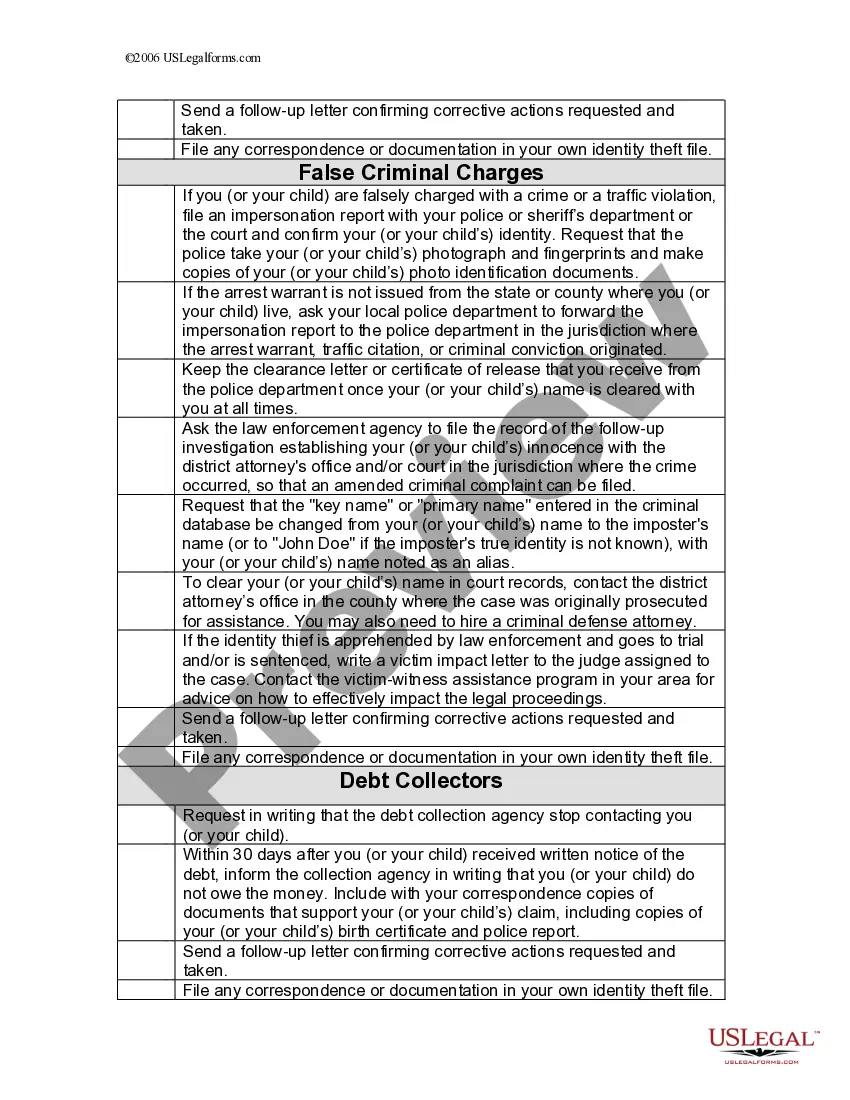
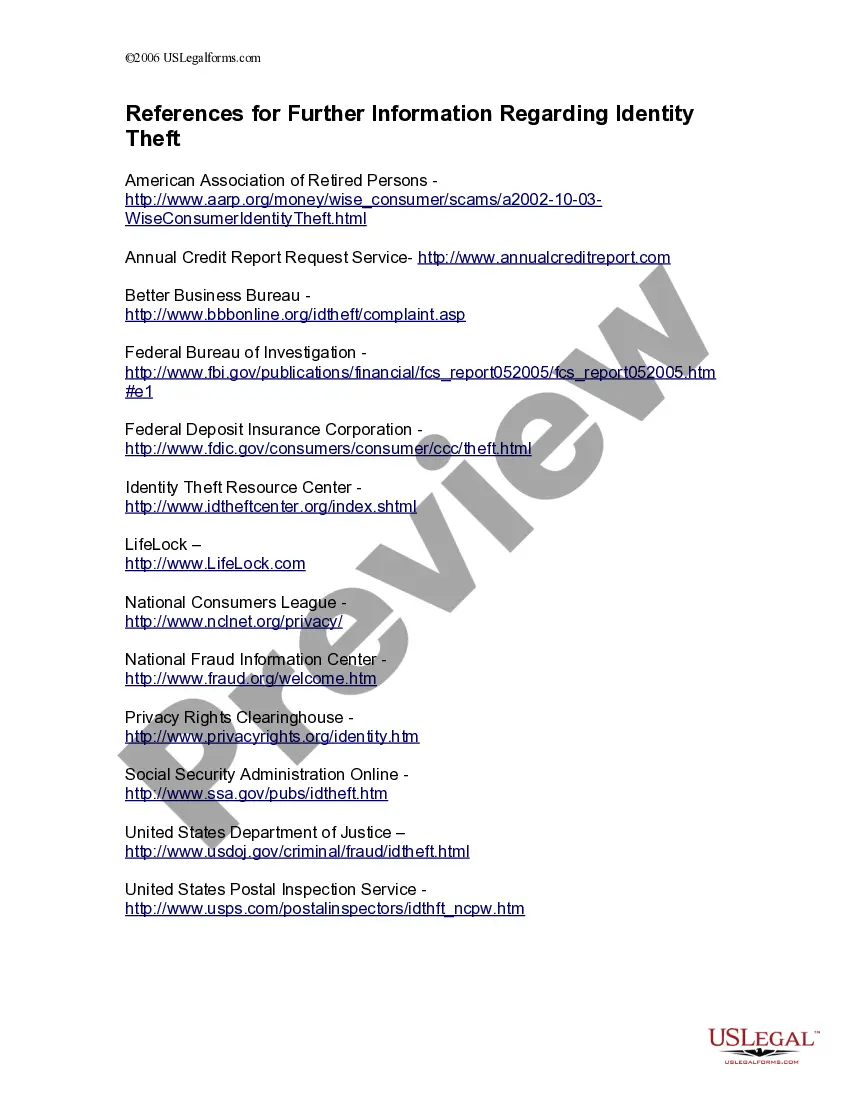
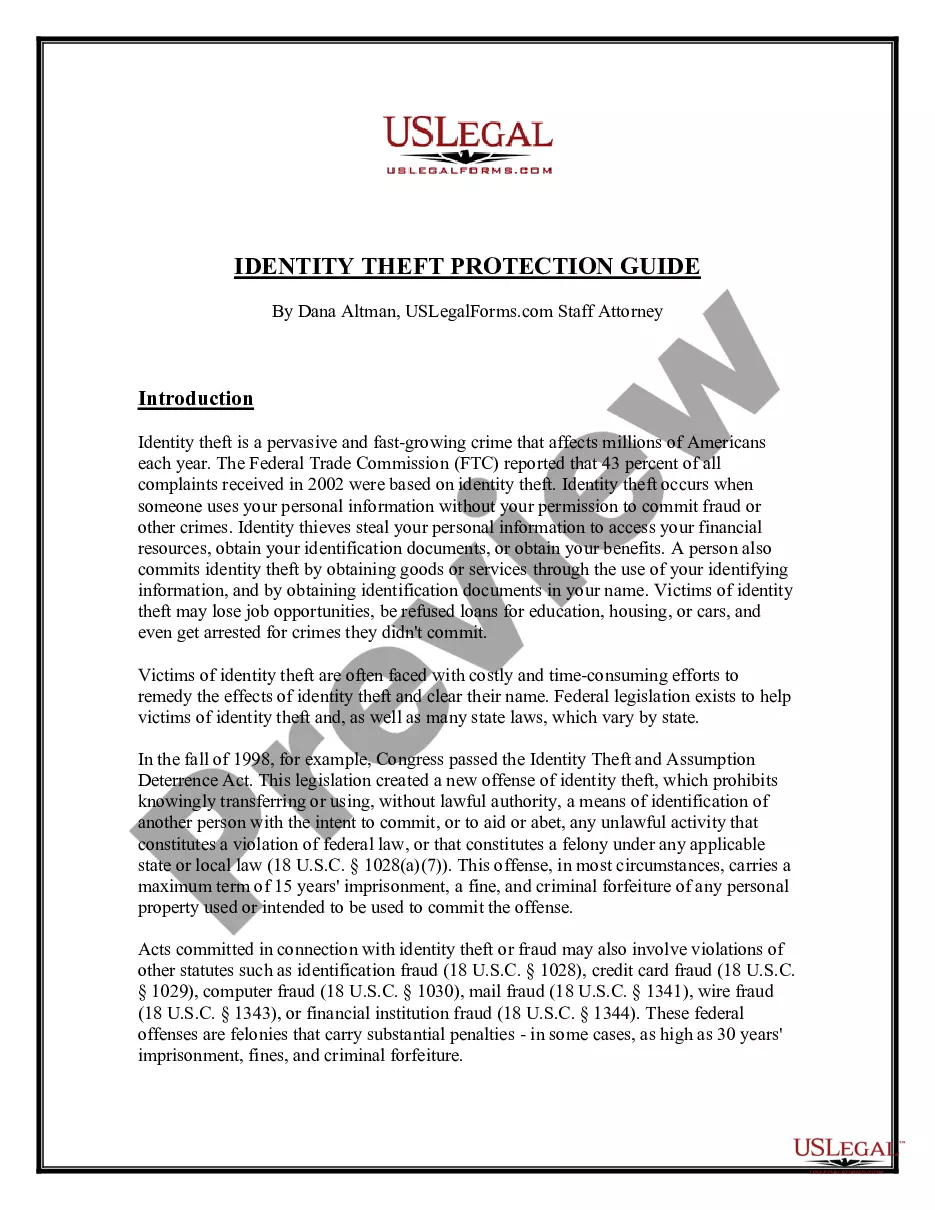
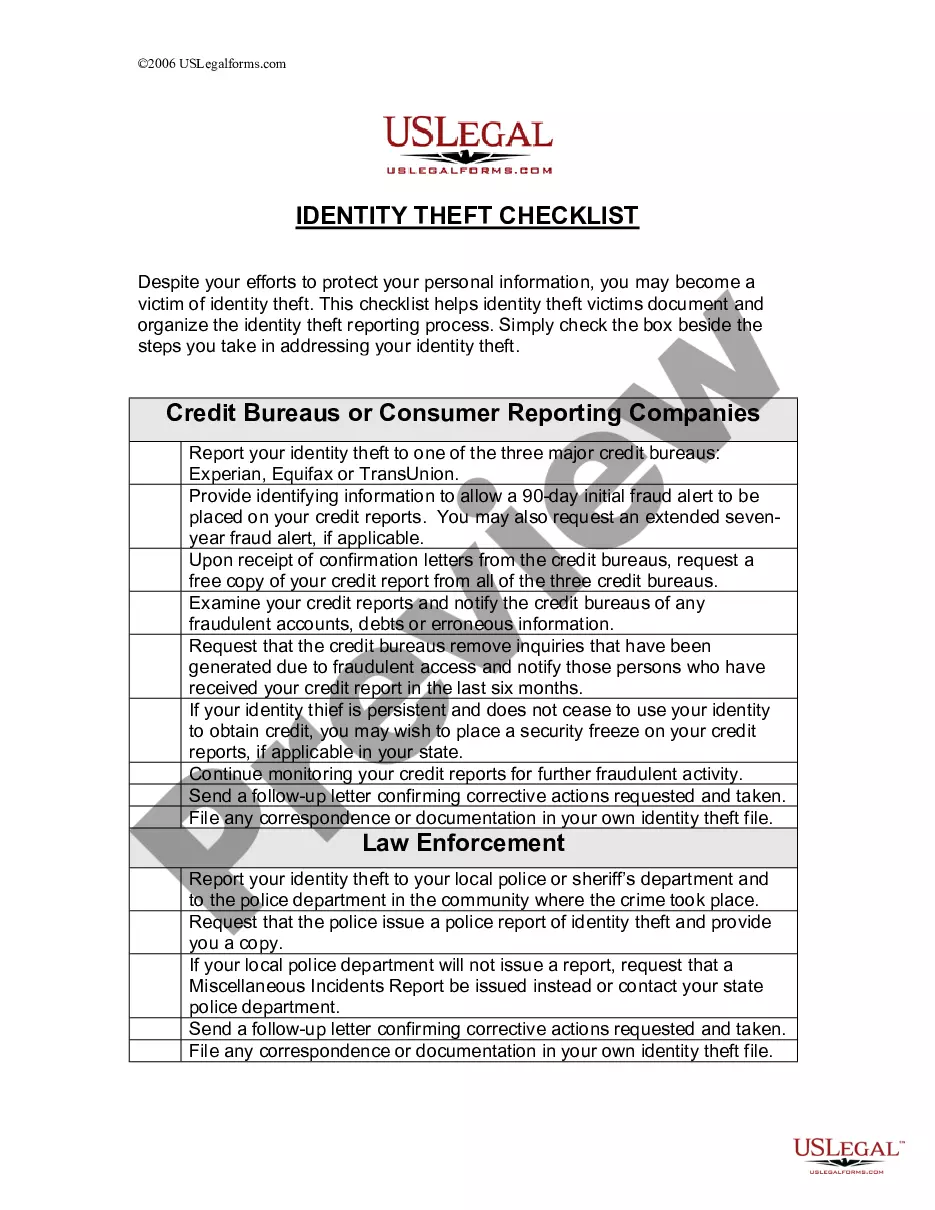
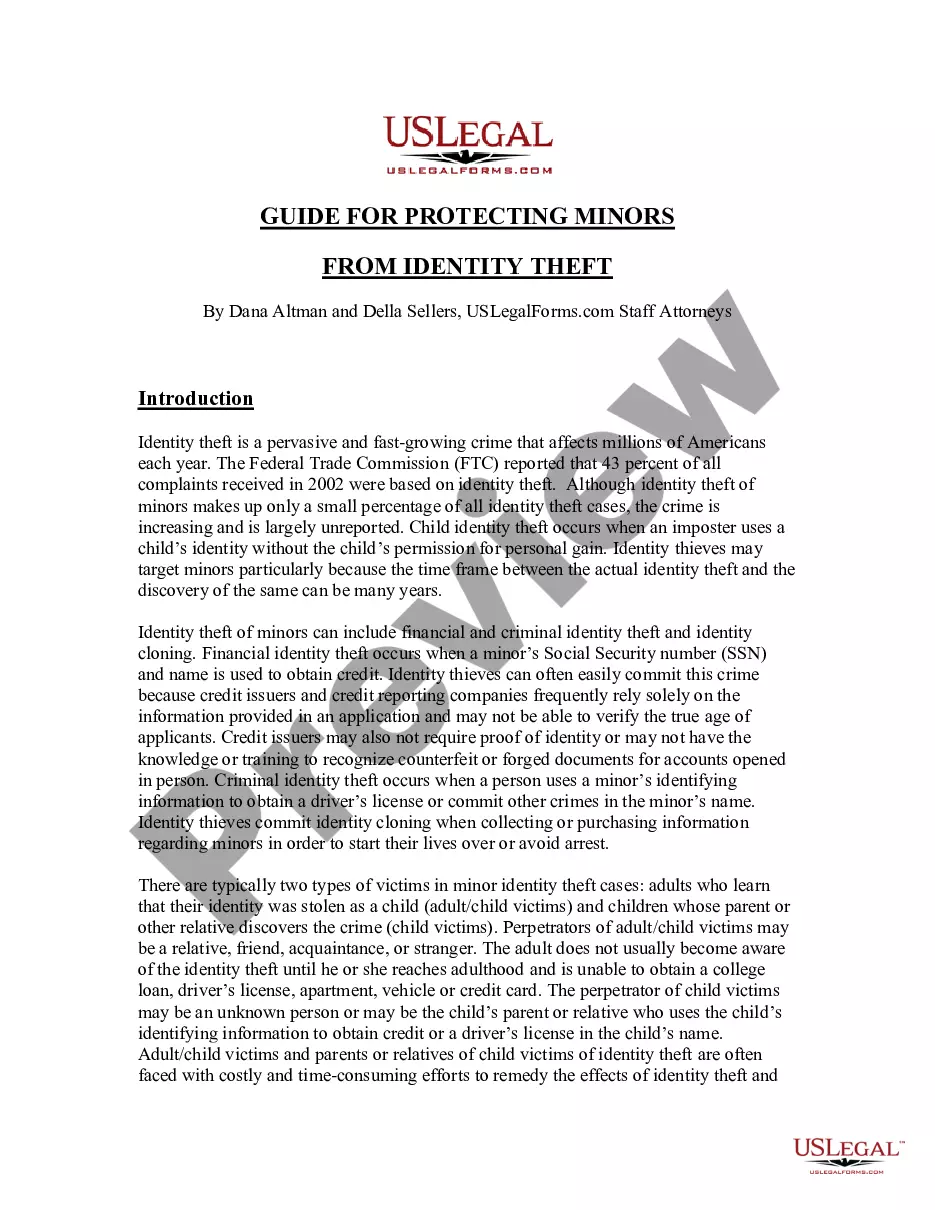
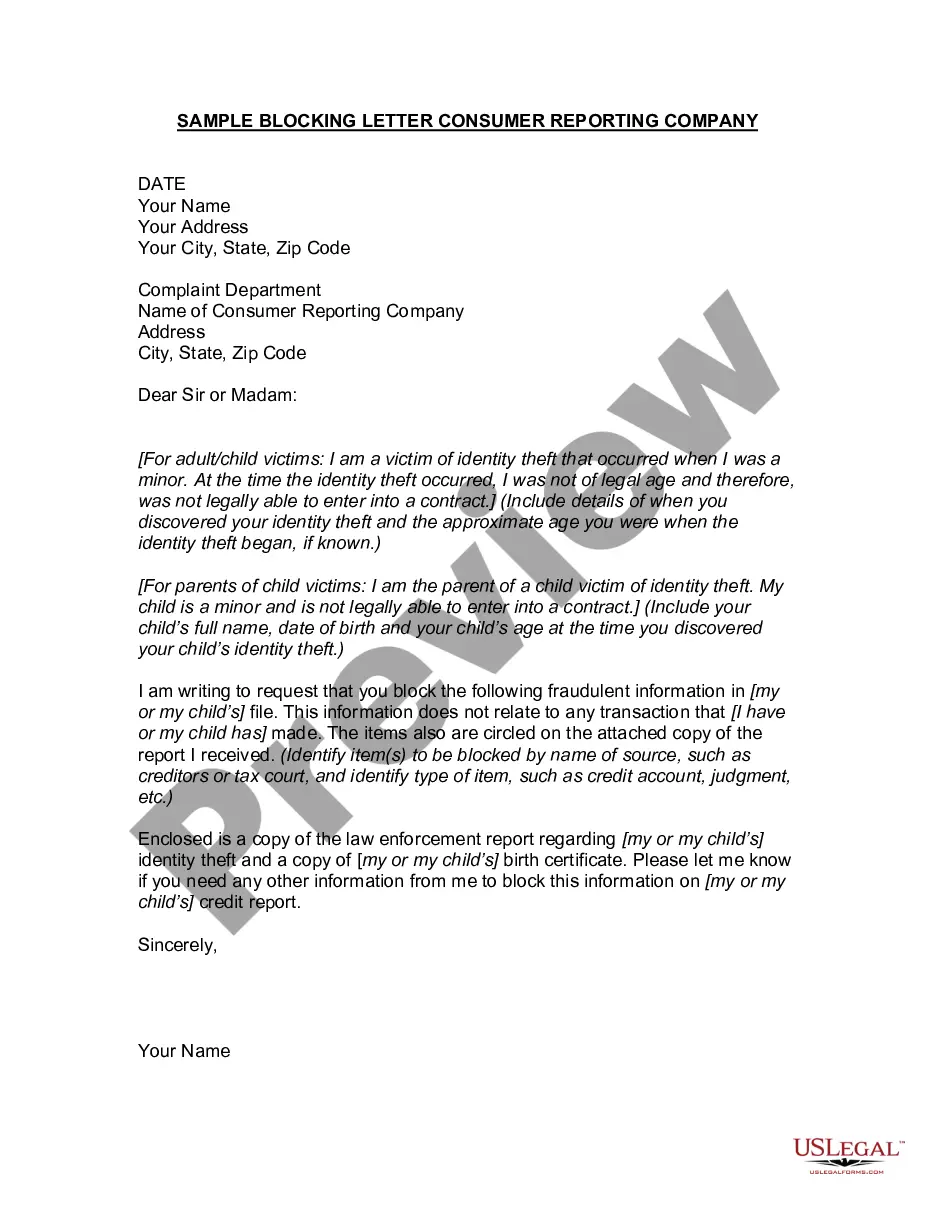
Montana Identity Theft Checklist for Minors
Description

Get your form ready online
Our built-in tools help you complete, sign, share, and store your documents in one place.
Make edits, fill in missing information, and update formatting in US Legal Forms—just like you would in MS Word.
Download a copy, print it, send it by email, or mail it via USPS—whatever works best for your next step.
Sign and collect signatures with our SignNow integration. Send to multiple recipients, set reminders, and more. Go Premium to unlock E-Sign.
If this form requires notarization, complete it online through a secure video call—no need to meet a notary in person or wait for an appointment.
We protect your documents and personal data by following strict security and privacy standards.

Make edits, fill in missing information, and update formatting in US Legal Forms—just like you would in MS Word.

Download a copy, print it, send it by email, or mail it via USPS—whatever works best for your next step.

Sign and collect signatures with our SignNow integration. Send to multiple recipients, set reminders, and more. Go Premium to unlock E-Sign.

If this form requires notarization, complete it online through a secure video call—no need to meet a notary in person or wait for an appointment.

We protect your documents and personal data by following strict security and privacy standards.
Looking for another form?
How to fill out Identity Theft Checklist For Minors?
Selecting the correct authorized document template can be a challenge. Clearly, there is an array of designs available on the internet, but how do you find the legal form you require? Use the US Legal Forms website. The platform offers thousands of templates, including the Montana Identity Theft Checklist for Minors, which can be utilized for both business and personal purposes. All documents are verified by experts and comply with state and federal regulations.
If you are already a registered user, Log In to your account and then click the Download button to access the Montana Identity Theft Checklist for Minors. Use your account to review the legal forms you may have previously obtained. Visit the My documents section of your account and download another copy of the document you need.
If you are a new user of US Legal Forms, here are some simple steps you should follow: First, ensure you have chosen the correct form for your specific city/region. You can view the form using the Preview button and check the form description to confirm that it is suitable for you. If the form does not meet your requirements, use the Search field to find the correct form. Once you are confident that the form is appropriate, click the Get now button to obtain the form. Select the pricing option you prefer and enter the necessary information. Create your account and process the order using your PayPal account or credit card. Choose the document format and download the authorized document template to your device. Complete, edit, print, and sign the acquired Montana Identity Theft Checklist for Minors.
US Legal Forms is your go-to resource for accessing a wide array of legal documents tailored to meet your requirements.
- US Legal Forms is the largest collection of legal forms where you can find numerous document templates.
- Leverage the service to obtain professionally-crafted documents that adhere to state regulations.
- Ensure accuracy by reviewing the document details before finalizing your order.
- Utilize the search functionality for efficient navigation through the available forms.
- Maintain your account information for easy access to previously downloaded forms.
- Stay updated with the latest legal templates and forms for your needs.
Form popularity
FAQ
Warning signs of identity theft Bills for items you did not buy. Debt collection calls for accounts you did not open. Information on your credit report for accounts you did not open. Denials of loan applications. Mail stops coming to, or is missing from, your mailbox.
Warning signs of identity theft Bills for items you did not buy. Debt collection calls for accounts you did not open. Information on your credit report for accounts you did not open. Denials of loan applications. Mail stops coming to, or is missing from, your mailbox.
Check your bills, accounts and statements regularly. Some criminals may start by making small debit or credit card charges in hopes you won't notice. If you see a charge you don't recognize, contact your bank or financial institution. Check your credit reports from both nationwide credit bureaus regularly.
If you are a victim of identity theft, file a complaint with the Federal Trade Commission (FTC) or call 1-877-ID-THEFT.
You should review your bank account statements regularly; if you see unknown purchases, that could be a sign that your identity has been stolen. Check credit reports. Similarly, monitor your credit reports from all three credit-reporting bureaus for any unknown accounts or inaccurate information.
Contact the Internal Revenue Service (IRS) at 1-800-908-4490 or visit them online, if you believe someone is using your SSN to work, get your tax refund, or other abuses involving taxes. Order free credit reports annually from the three major credit bureaus (Equifax, Experian, and TransUnion).
File a report with your local police department. Place a fraud alert on your credit report. ... Consumer Reporting Agencies (CRA's) Close the accounts that you know or believe have been tampered with or opened fraudulently. ... Report the theft to the Federal Trade Commission. ... File a police report.
If you think you have been a victim of identity theft, there are a few things you should do: Record. Keep a record of all interactions, correspondence and what was said. Contact police. Contact your local police and file a police report. Fill out an Identity Theft Statement. ... Contact ID theft services.