Tennessee Assumption Agreement with Release Of Liability
Overview of this form
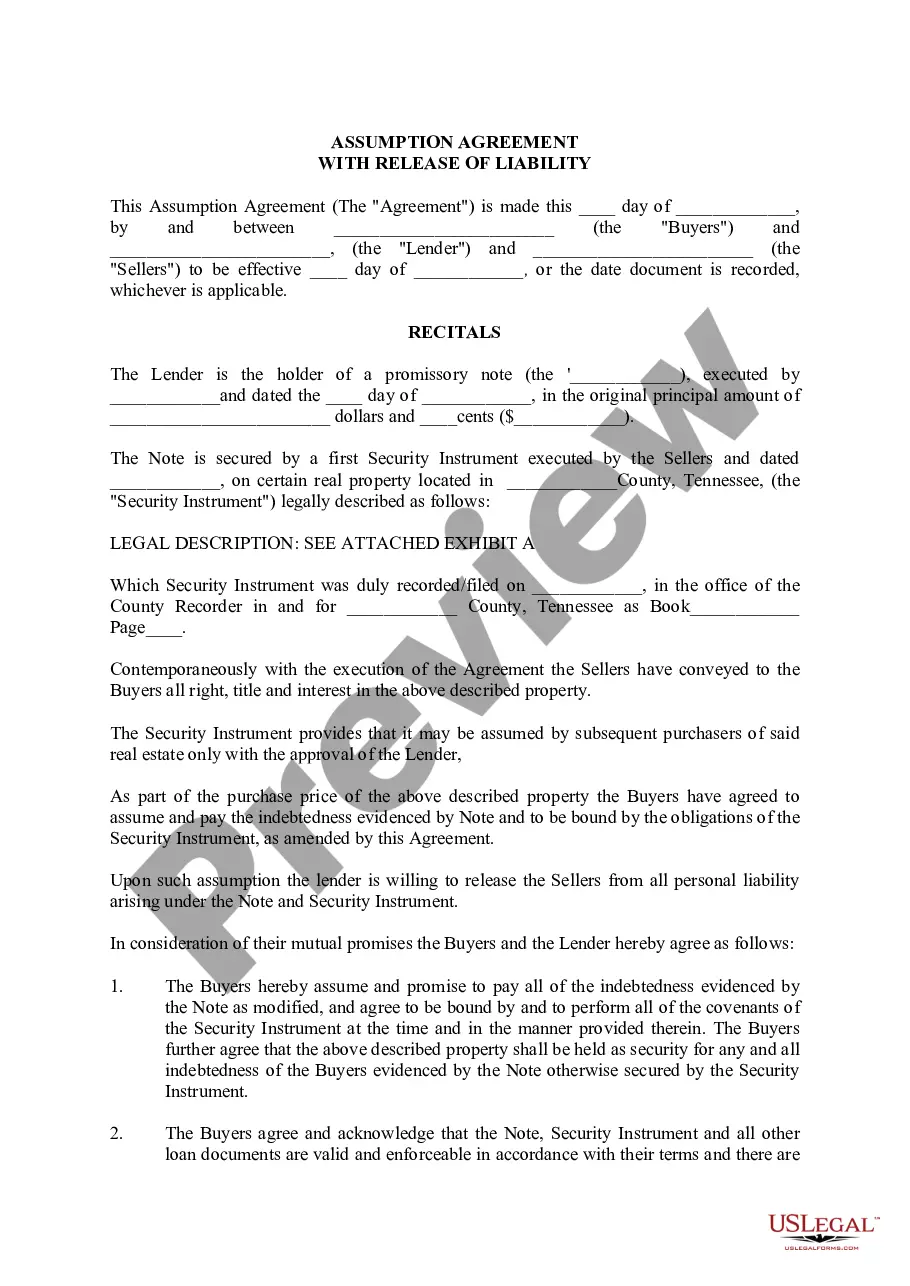
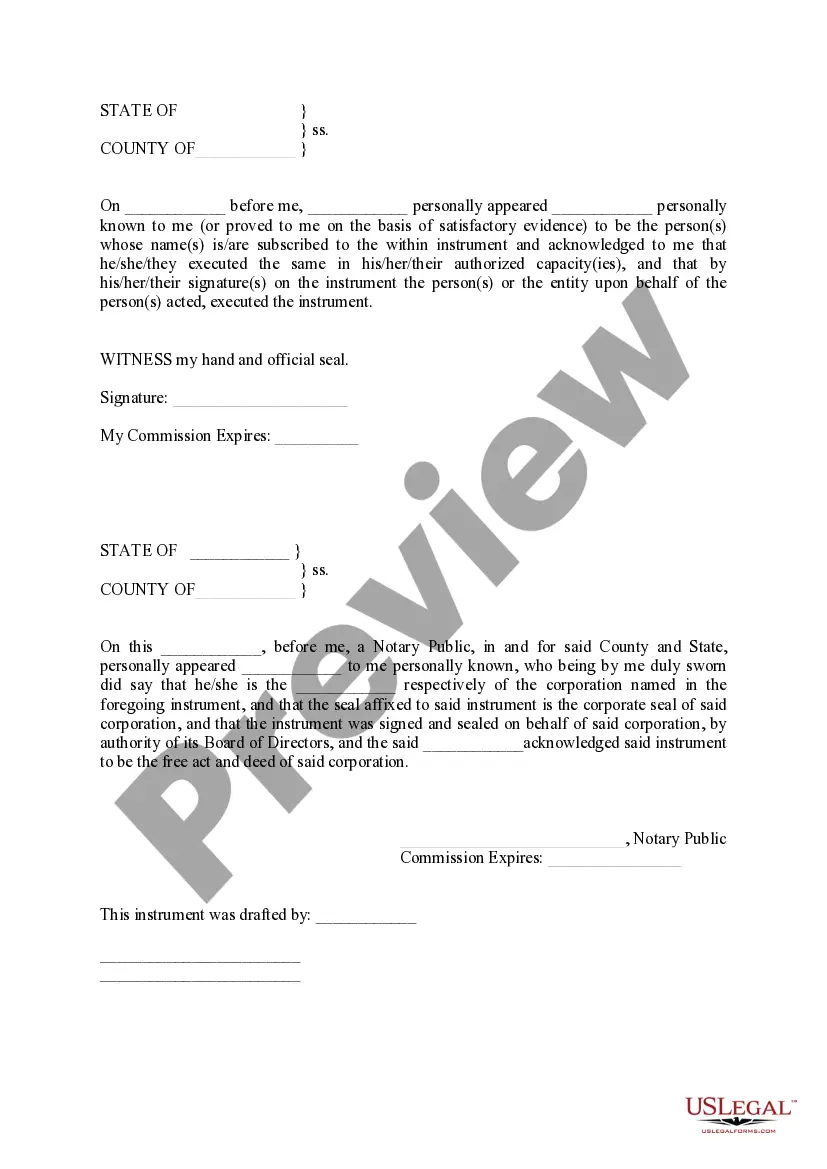
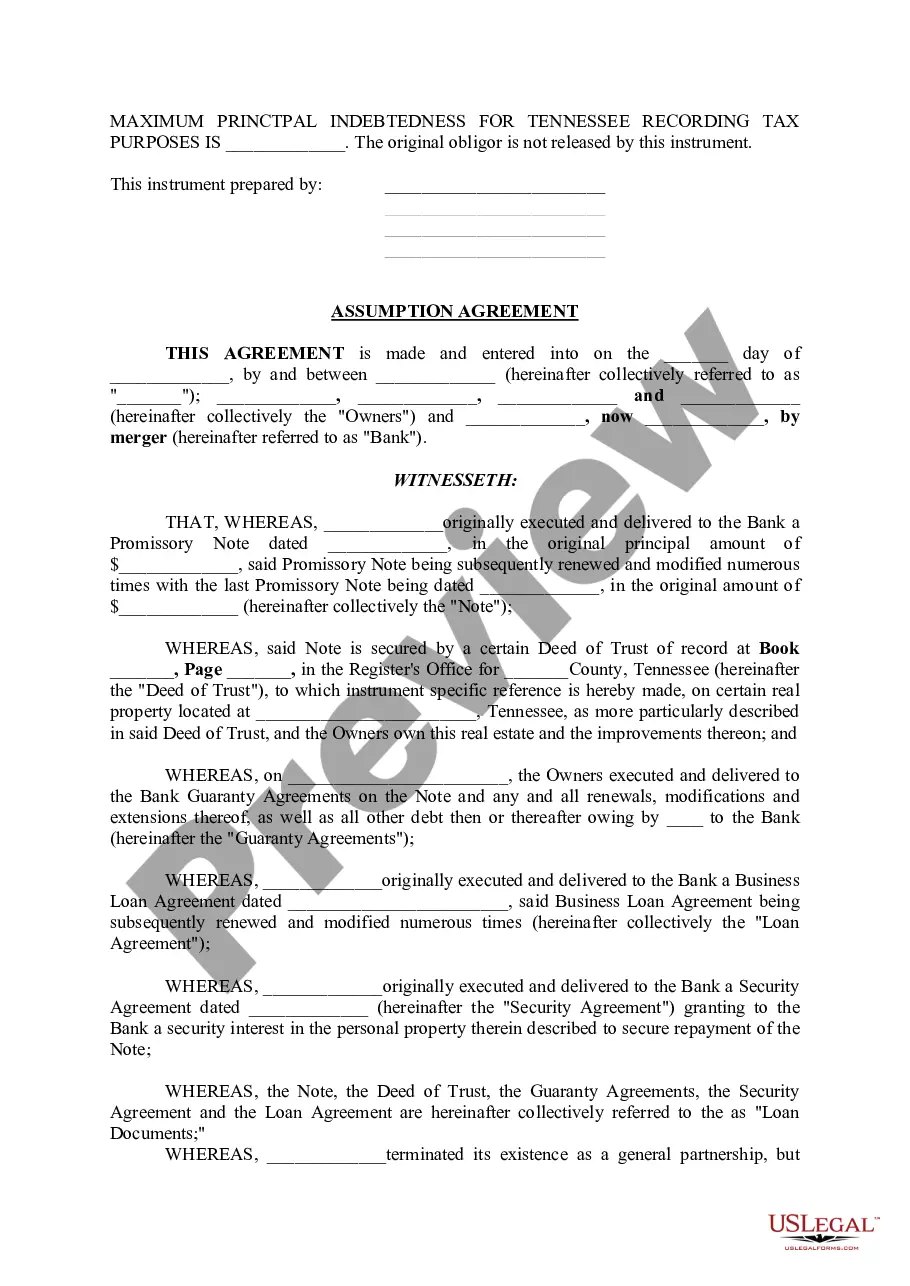
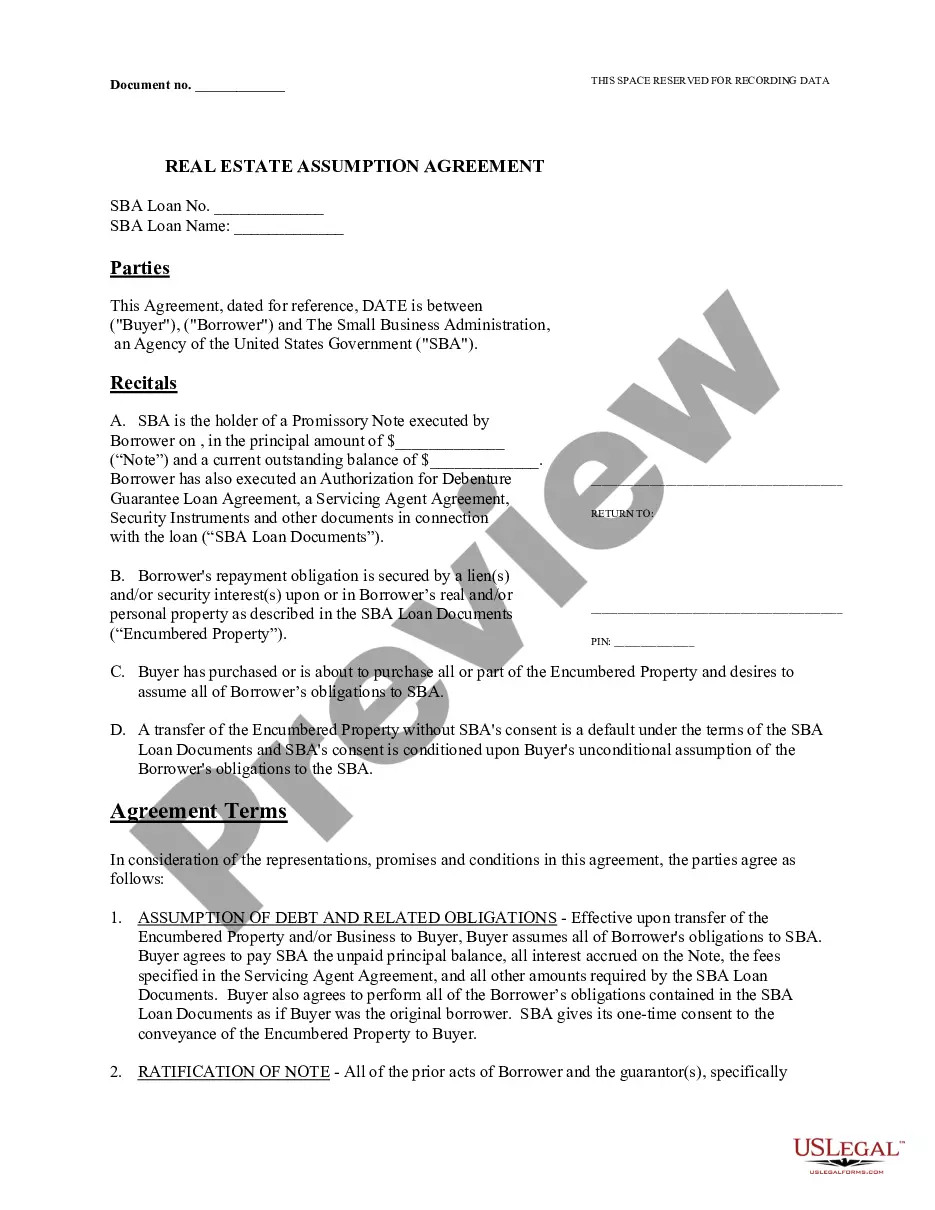
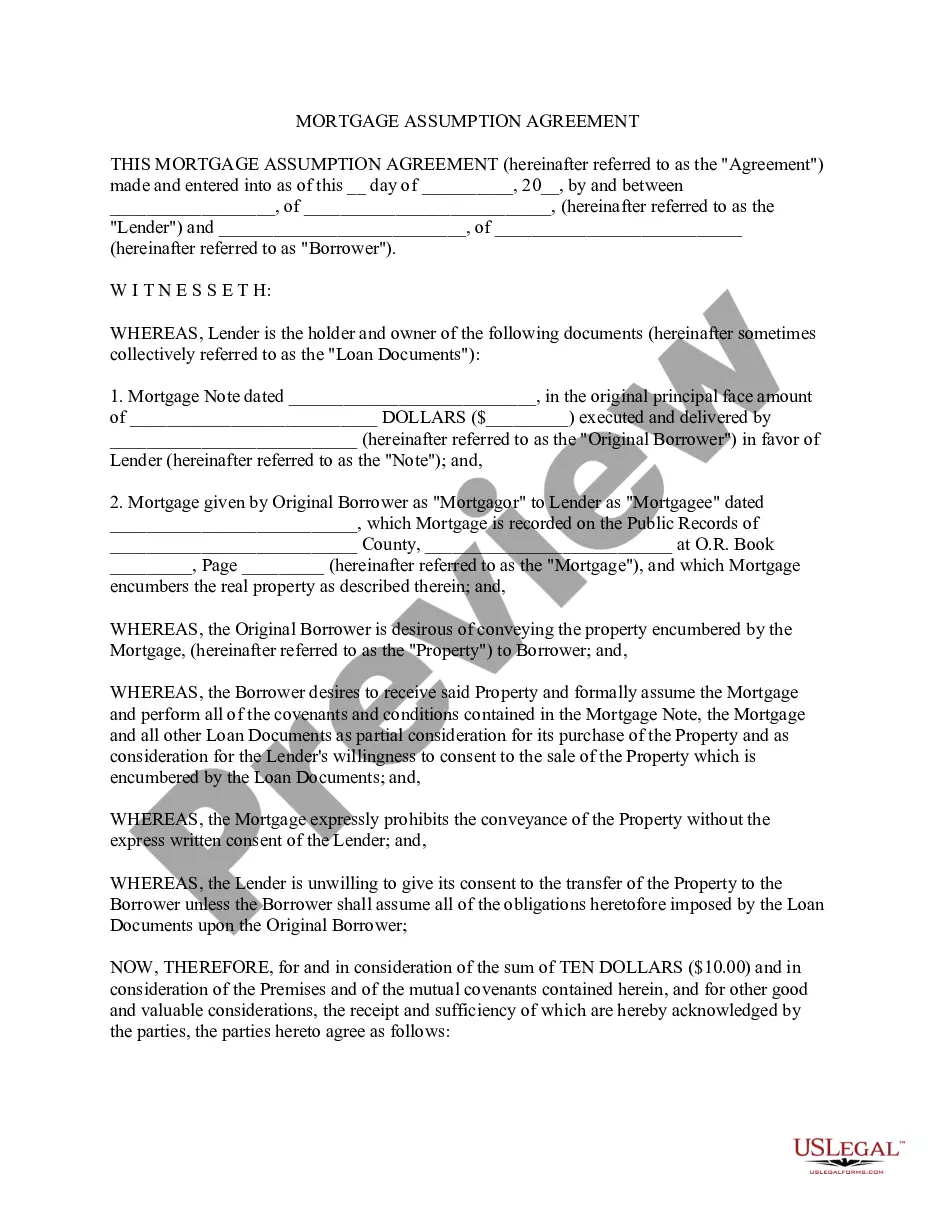
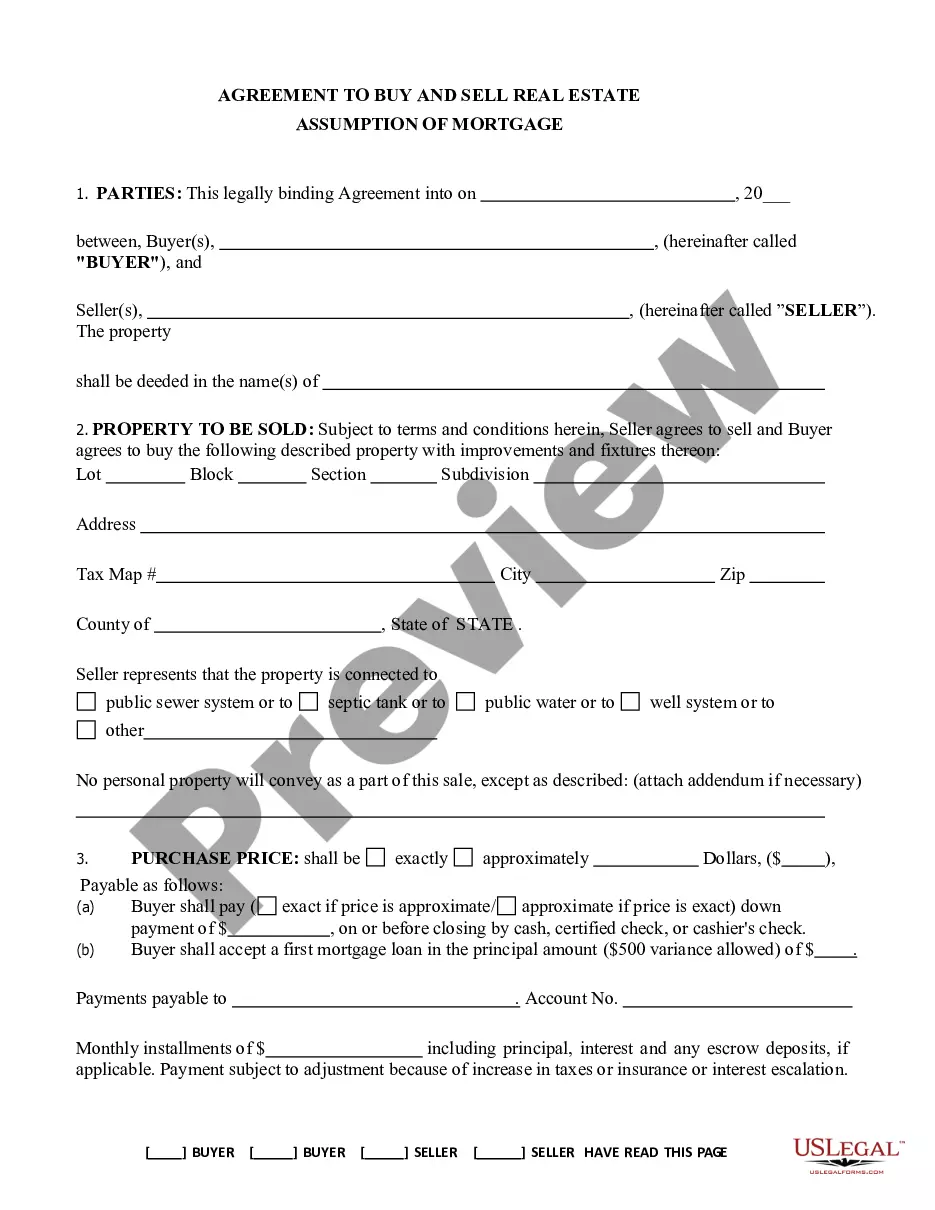
The Assumption Agreement with Release of Liability is a legal document that allows buyers to assume the obligations of a security instrument, such as a mortgage, originally held by the sellers. This agreement not only outlines the responsibilities of the new owners but also releases the original mortgagors from liability on the note, thereby protecting them from future claims related to the property. This form is essential for transactions where the buyer is taking over an existing loan secured by the property, ensuring a smooth transfer of obligations and rights.
Key components of this form
- Date of the agreement and effective date.
- Identification of the buyers, sellers, and lender.
- Details of the promissory note and security instrument.
- Buyer's assumption of all obligations under the note and security instrument.
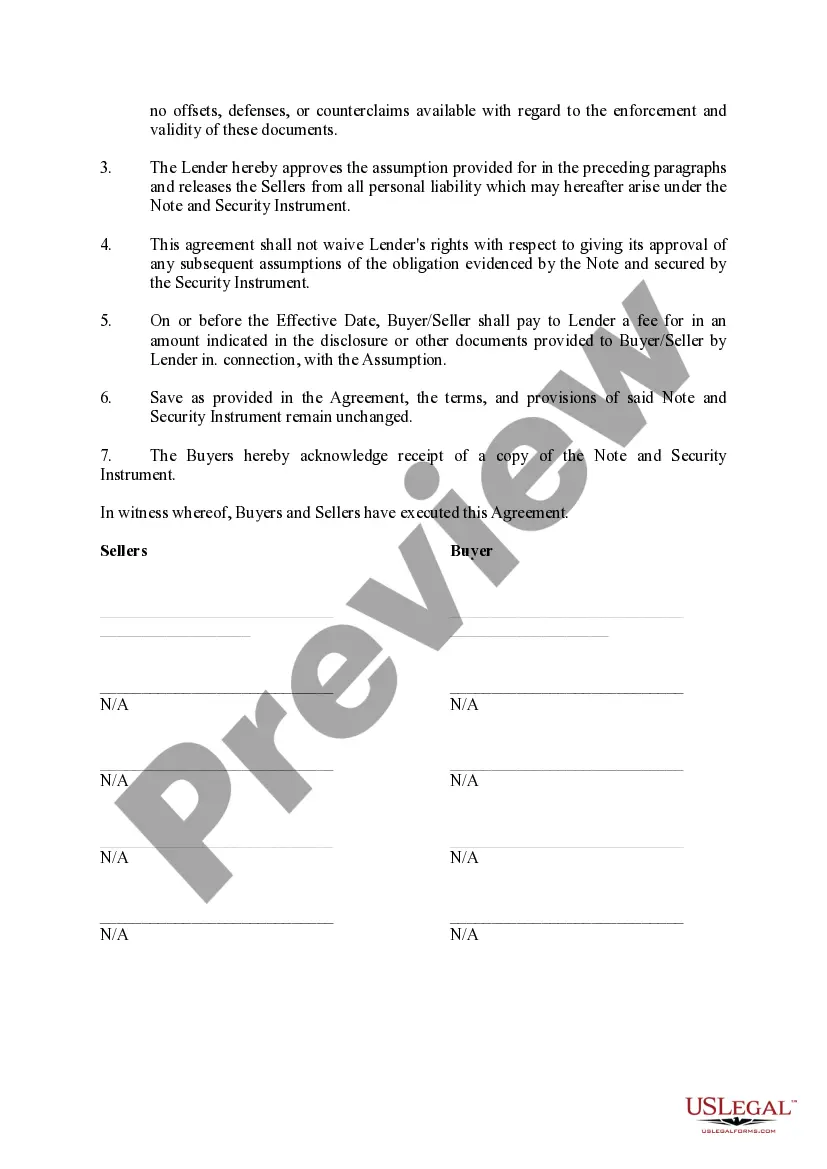
- Lender's release of the sellers from future personal liability.
- Acknowledgment of the validity of loan documents.
- Fee payment requirement from buyer/seller to lender.
When to use this document
This form is used during real estate transactions where a buyer agrees to purchase a property that has an existing mortgage. It is particularly relevant when the buyer wants to assume the mortgage obligations without requiring the seller to repay the loan. This agreement is beneficial when the mortgage terms are favorable and the buyer prefers not to obtain new financing.
Who this form is for
- Individuals or entities (such as corporations) buying real estate and assuming an existing mortgage.
- Sellers who want to transfer their mortgage obligations to a new buyer.
- Lenders who need to approve the assumption and release of liability for sellers.
Completing this form step by step
- Identify the parties involved: buyers, sellers, and lender.
- Fill in the dates relevant to the agreement and the effectiveness of the document.
- Detail the promissory note information, including the principal amount and date.
- Specify the property being transferred and attach the legal description.
- Ensure all parties acknowledge and sign the agreement.
Is notarization required?
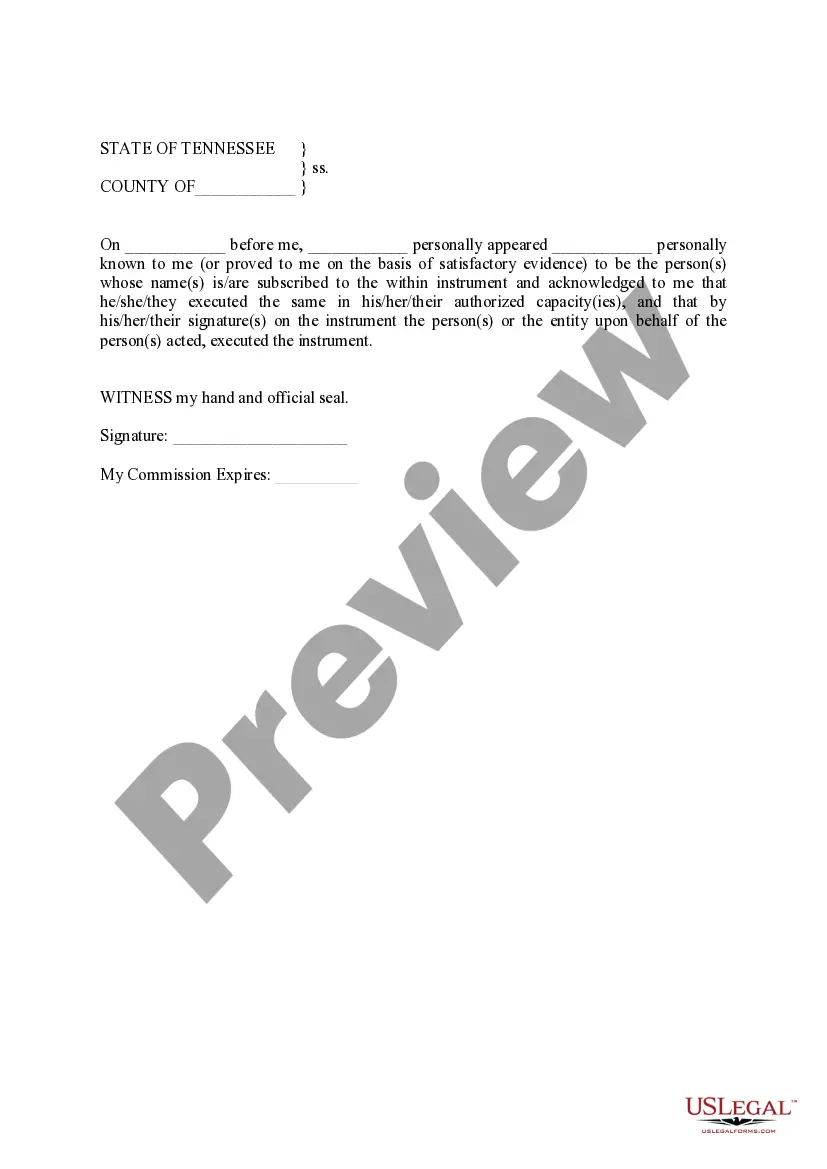
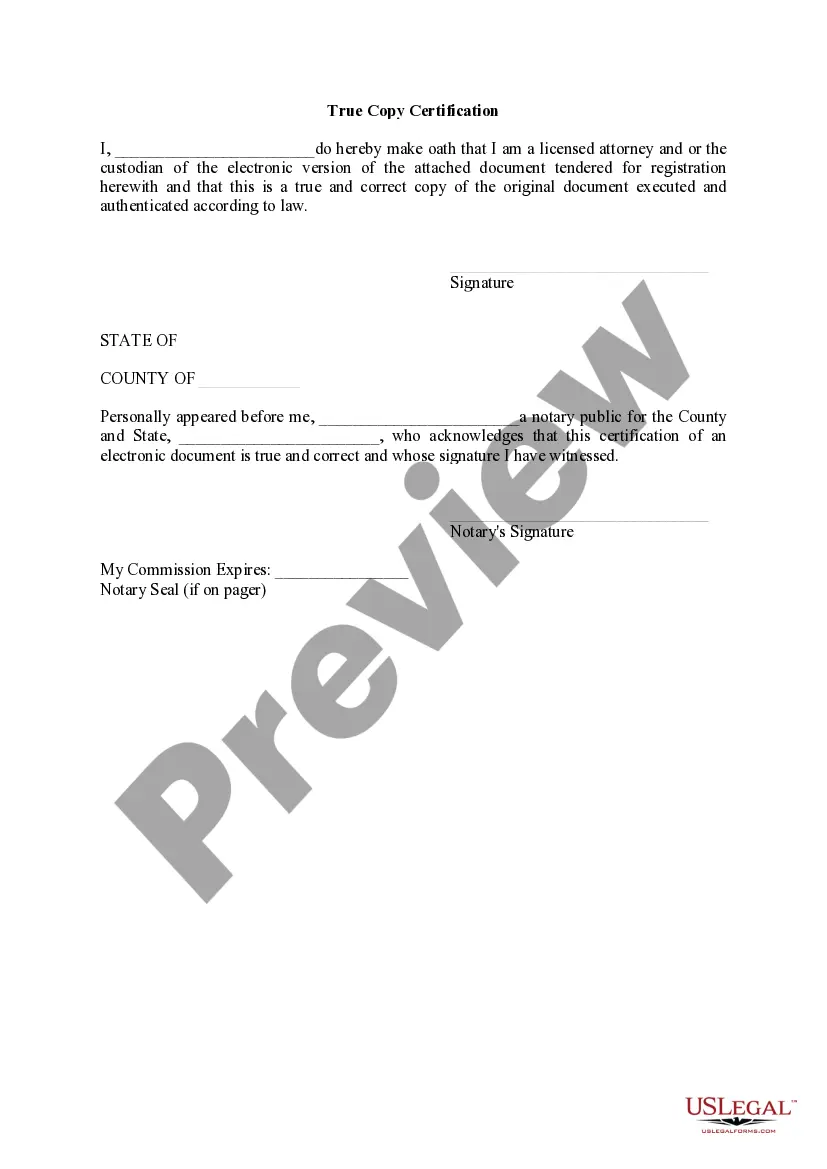
This form does not typically require notarization unless specified by local law. However, affixing notarization might be recommended depending on lender requirements or for enhanced legal validation of the agreement.
Get your form ready online
Our built-in tools help you complete, sign, share, and store your documents in one place.
Make edits, fill in missing information, and update formatting in US Legal Forms—just like you would in MS Word.
Download a copy, print it, send it by email, or mail it via USPS—whatever works best for your next step.
Sign and collect signatures with our SignNow integration. Send to multiple recipients, set reminders, and more. Go Premium to unlock E-Sign.
If this form requires notarization, complete it online through a secure video call—no need to meet a notary in person or wait for an appointment.
We protect your documents and personal data by following strict security and privacy standards.

Make edits, fill in missing information, and update formatting in US Legal Forms—just like you would in MS Word.

Download a copy, print it, send it by email, or mail it via USPS—whatever works best for your next step.

Sign and collect signatures with our SignNow integration. Send to multiple recipients, set reminders, and more. Go Premium to unlock E-Sign.

If this form requires notarization, complete it online through a secure video call—no need to meet a notary in person or wait for an appointment.

We protect your documents and personal data by following strict security and privacy standards.
Common mistakes to avoid
- Failing to obtain lender approval for the assumption.
- Not including complete property descriptions or legal exhibits.
- Leaving out essential dates or signatures, rendering the form incomplete.
Benefits of using this form online
- Convenience of downloading and completing the form at your own pace.
- Editable document allows customization as per your specific needs.
- Access to reliable templates created by licensed attorneys.
Looking for another form?
Form popularity
FAQ
A liability waiver, or release of liability, is a legal document that a company or organization has you sign in order to protect them from being sued in the event that you are injured.
In California, a liability waiver must be clear, unambiguous, and explicit. In other words, waivers cannot be printed in faded ink, in small font, on the back of a paper, or in an otherwise ambiguous form. If the waiver that you sign is not represented clearly, it may not hold up in the event of a lawsuit.
Enforceability of Hold Harmless Agreements The general answer is yes, that these documents signing away your right to sue for negligence are legally enforceable.
A hold harmless agreement protects business owners from being sued when someone suffers damage, bodily injury, or financial loss on business property or while a service is being provided.
A Hold Harmless Agreement is a legal agreement that states that one party will not hold another party liable for risk, often physical risk or damage. The Hold Harmless Clause can be one-way (unilateral) or two-way (reciprocal) agreements and can be signed before or after an activity takes place.
By signing a broad form hold harmless agreement you are possibly exposing your company to uninsurable risk. Contractual Liability Coverage for sole or gross negligent acts of your client is excluded is y most liability policies.As with all contracts, it is best to have legal counsel review prior to signing.
This form of a Release Agreement, Indemnity Agreement and Hold Harmless Agreement releases a party from certain specified liabilities. Releases are used to transfer risk from one party to another and protect against the released party or reimburse the released party for damage, injury, or loss.
In many cases, the waiver is not enforceable.If you've been injured due to negligent actions, you can sue even if you signed a waiver. Winning a lawsuit concerning negligence is not uncommon. Many celebrities have sued for negligence even though they signed documents stating they understood the risks.
What Is a Hold Harmless Clause? The hold harmless clause is a statement in a legal contract that absolves one or both parties in a contract of legal liability for any injuries or damage suffered by the party signing the contract.This clause is also known as a hold harmless provision.