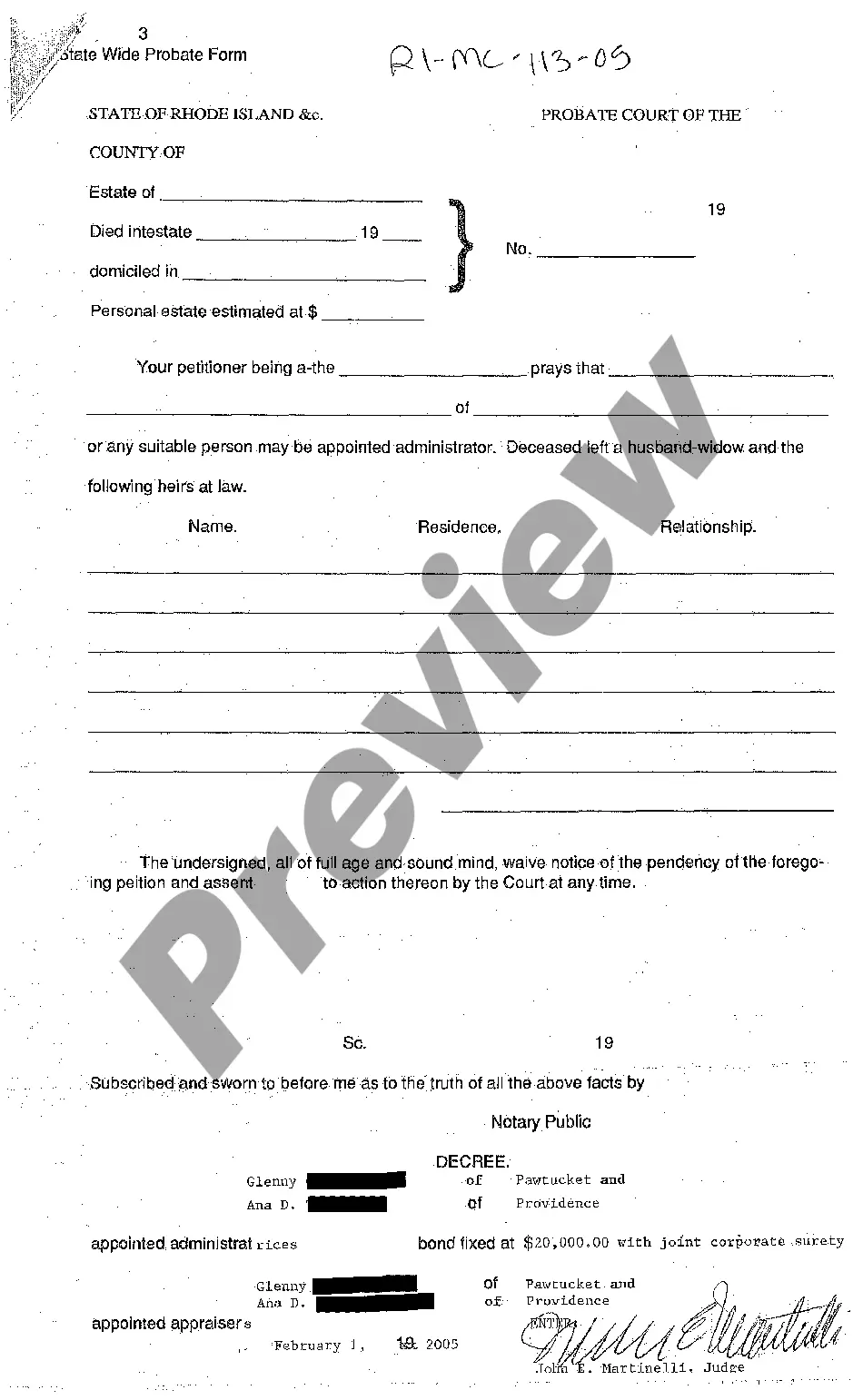
Mortgage Assumption Agreement
What this document covers
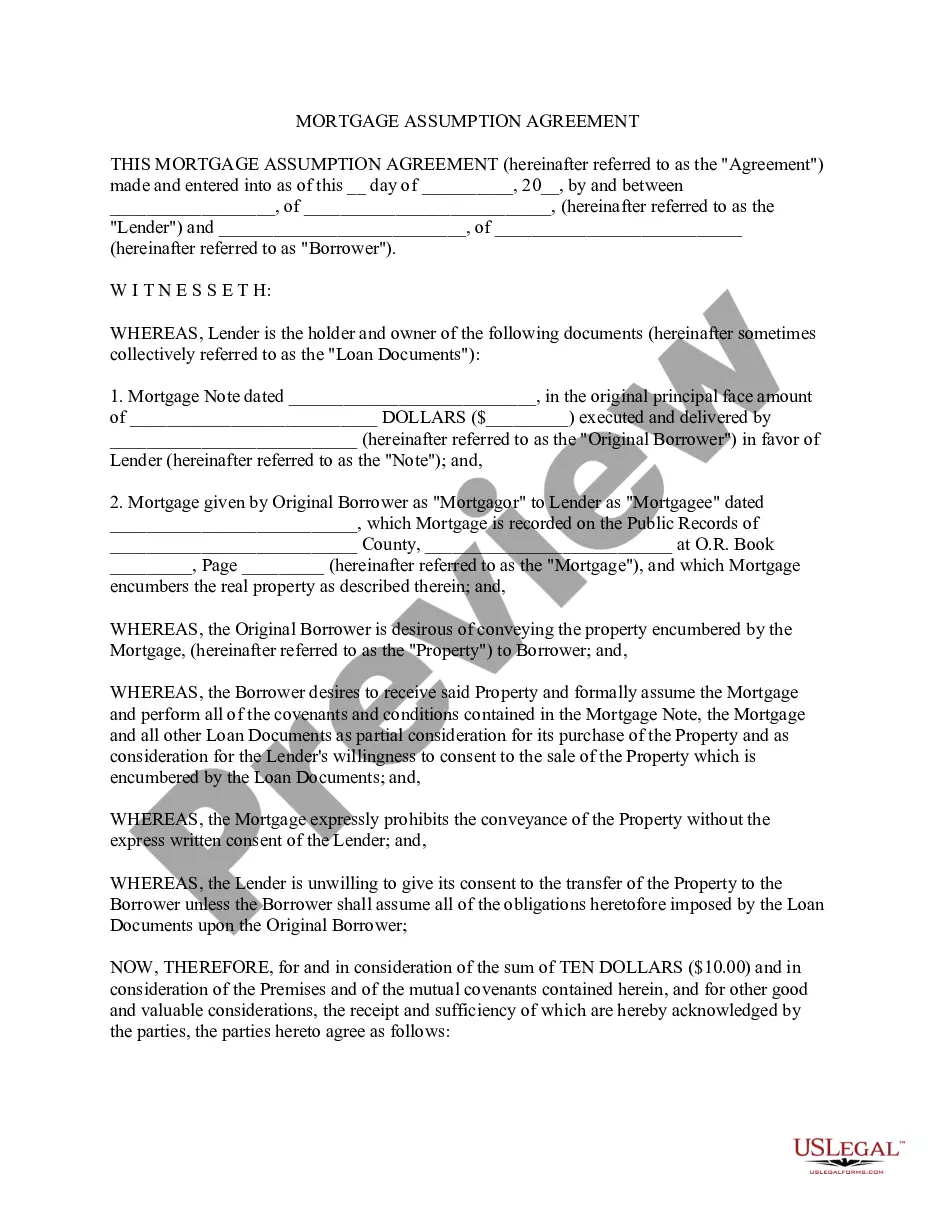
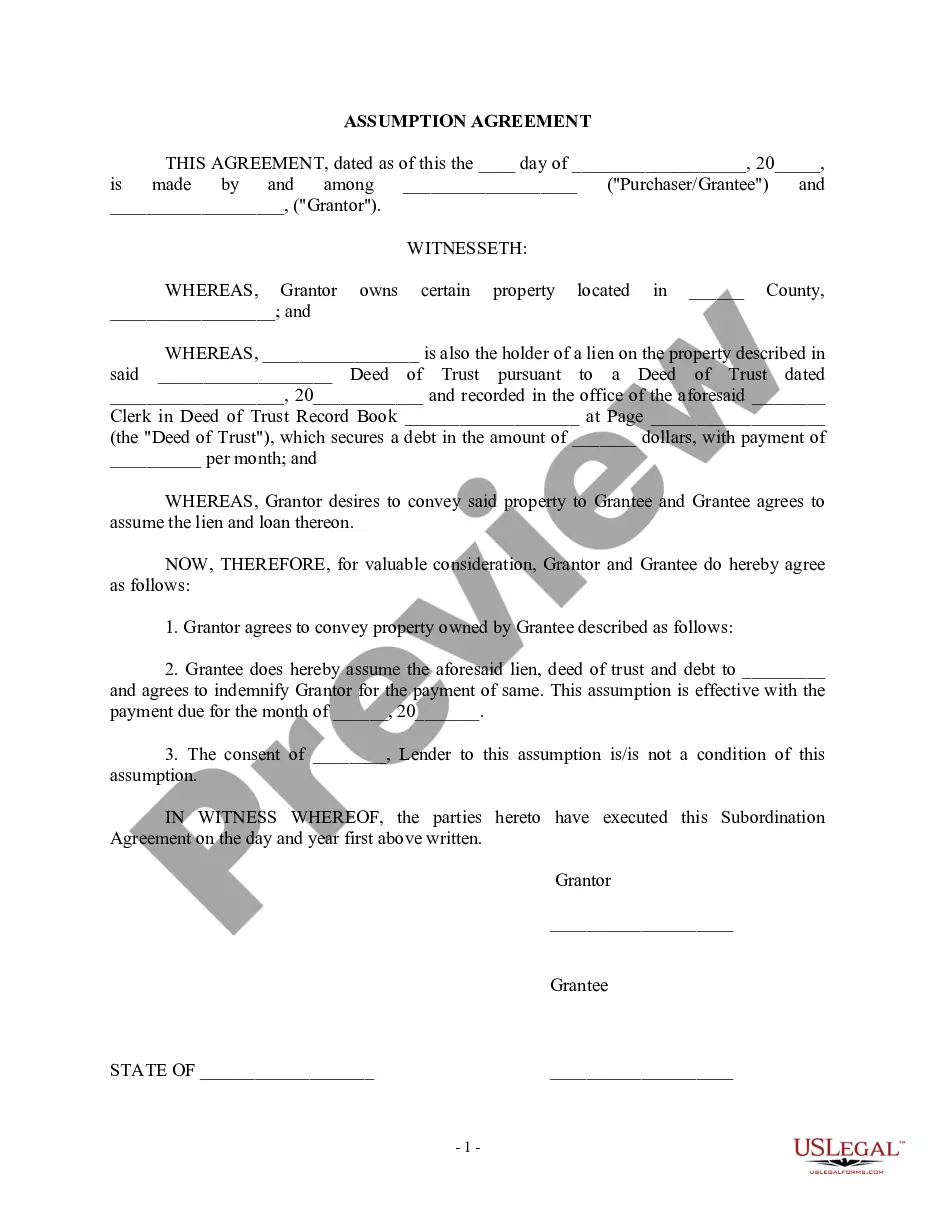
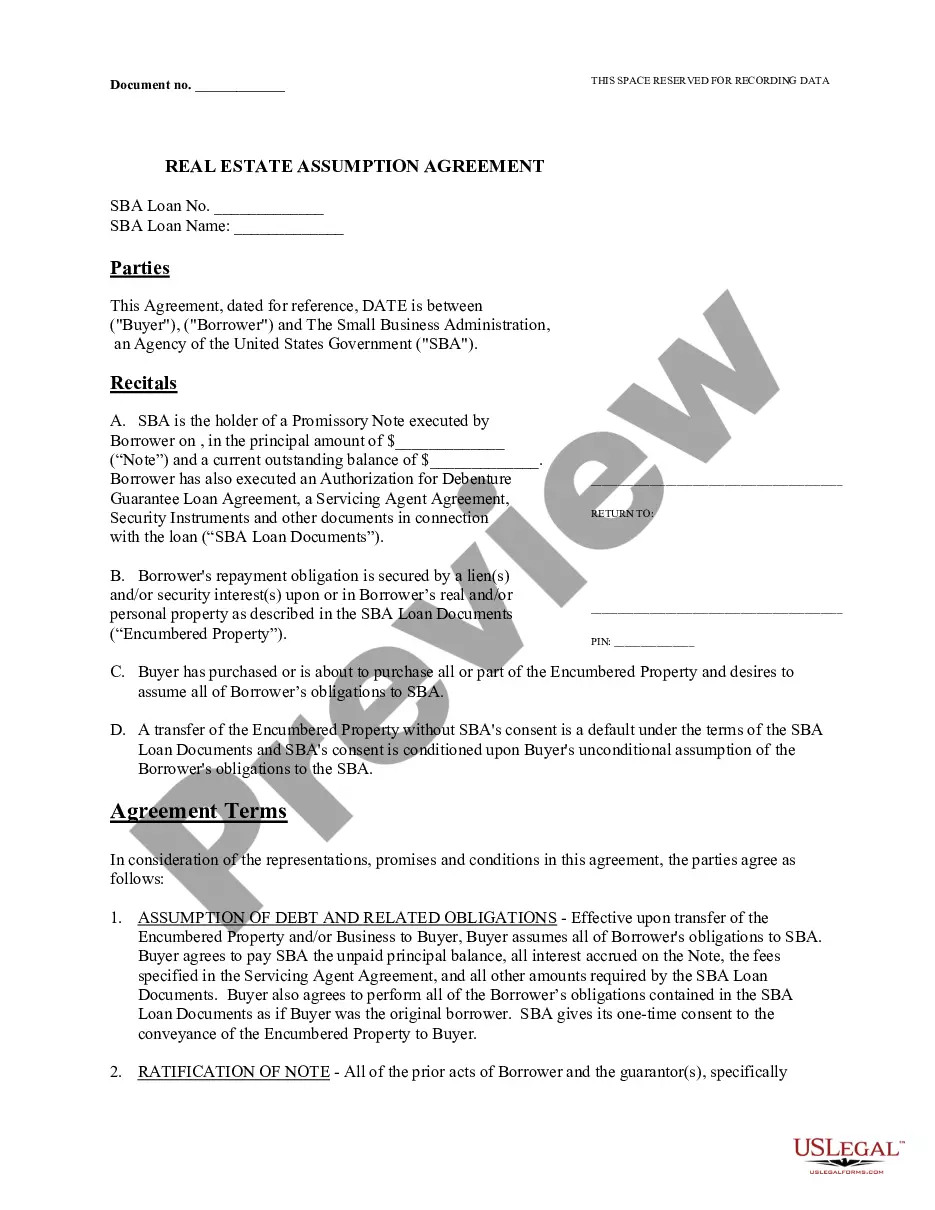
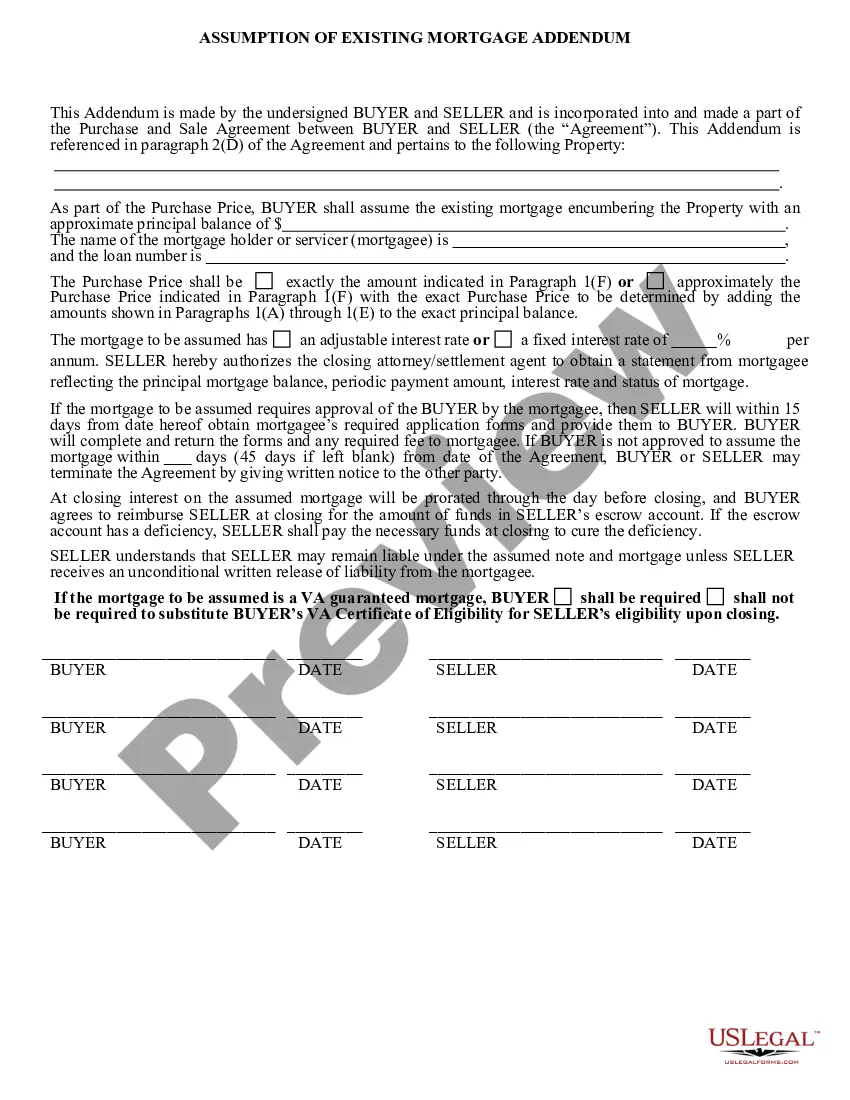
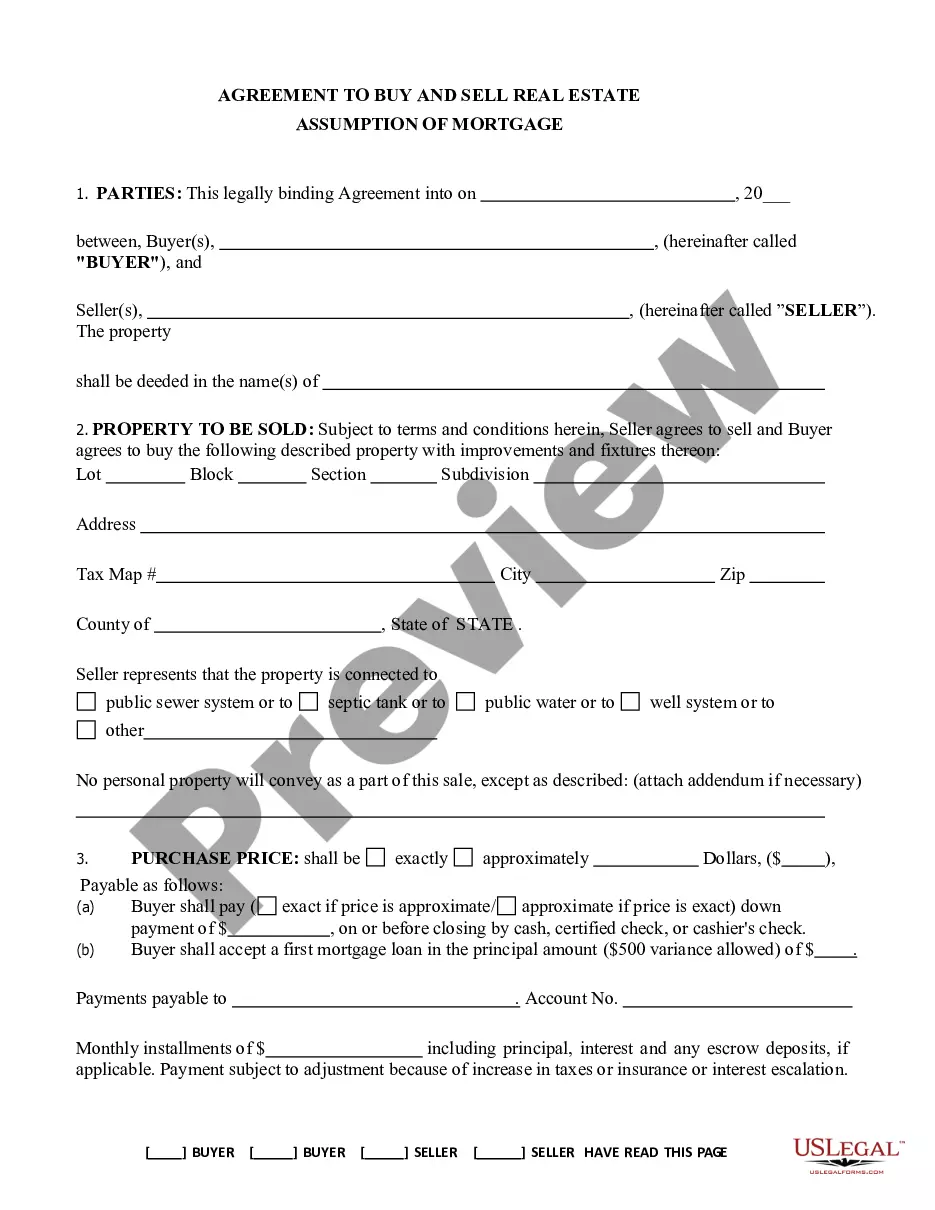
The Mortgage Assumption Agreement is a legal document that allows a Borrower to formally take over the mortgage obligations from the Original Borrower. This agreement is essential in situations where property ownership is transferred, ensuring that the new Borrower assumes the financial responsibilities outlined in the existing mortgage and loan agreements. Unlike other real estate documents, this agreement specifically focuses on the transfer of mortgage obligations, making it a critical component in real estate transactions involving existing loans.
What’s included in this form
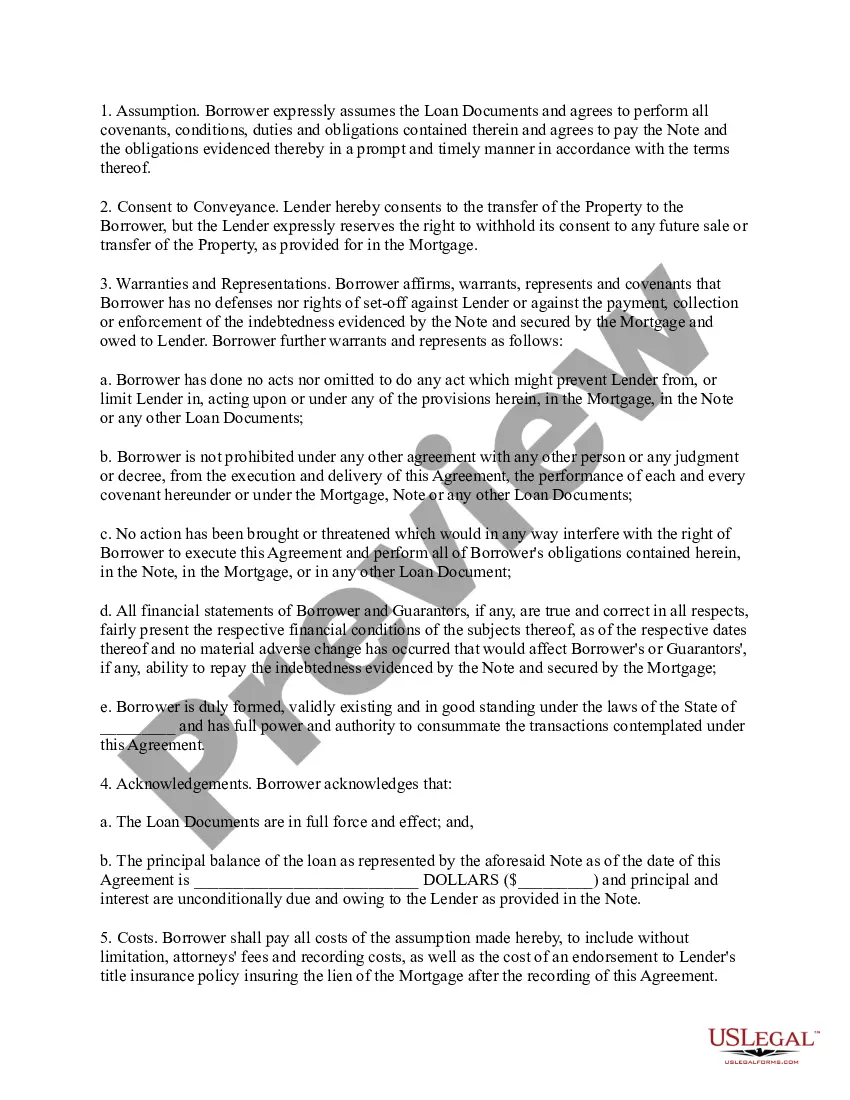
- Assumption clause detailing the Borrowerâs obligation to perform under the Loan Documents.
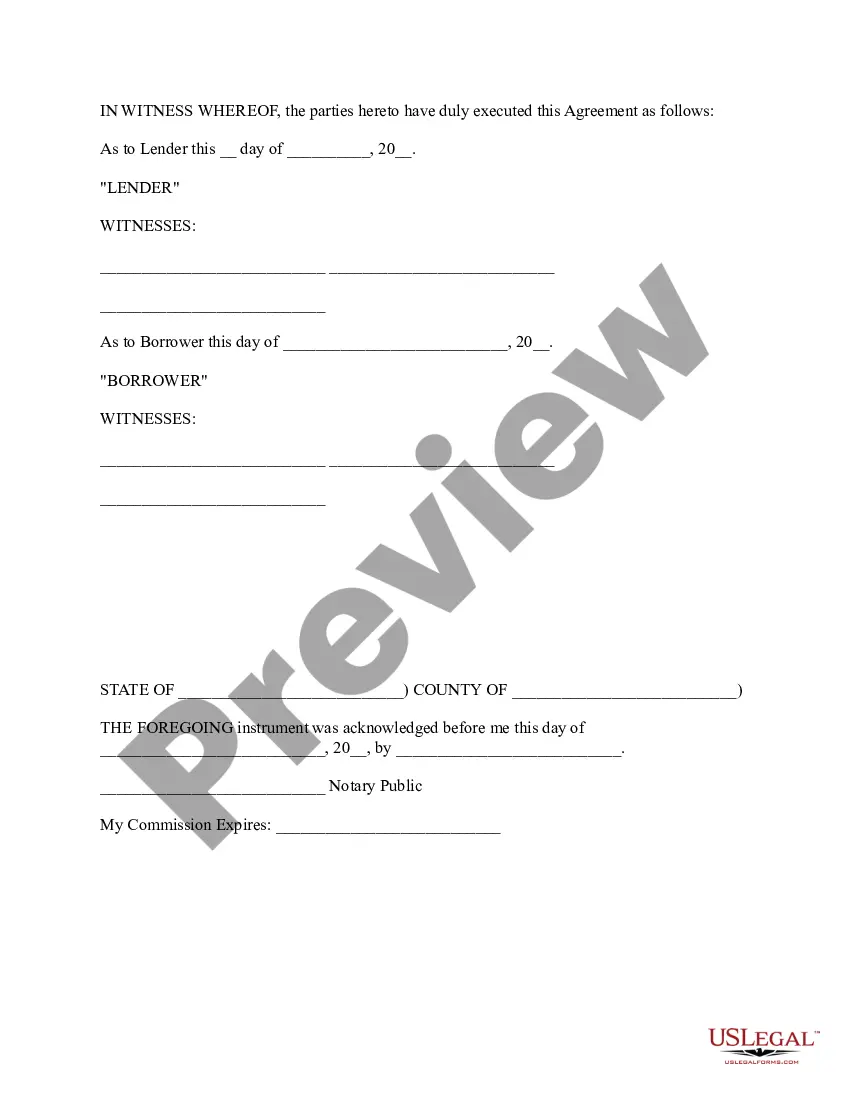
- Consent to conveyance allowing for the transfer of property from the Original Borrower to the Borrower.
- Warranties and representations by the Borrower regarding their financial status and authority.
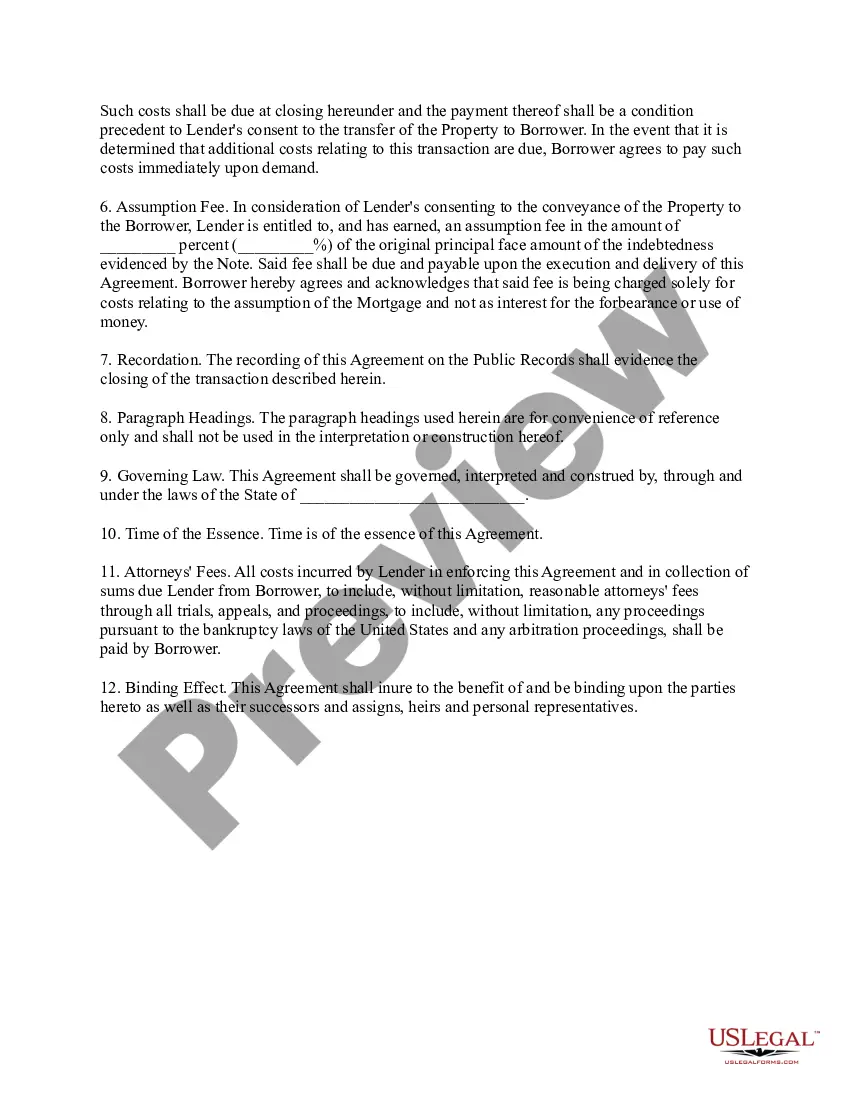
- Cost provisions, including assumption fees and costs associated with the transaction.
- Recordation information for documenting the agreement in public records.
Situations where this form applies
This form should be used when a property is being sold or transferred, and the buyer intends to assume the existing mortgage from the original owner. It is particularly relevant in real estate transactions where the mortgage contains a due-on-sale clause requiring lender consent for the assumption. Utilizing this agreement helps protect the lender's interests while facilitating the transfer of ownership and responsibility.
Intended users of this form
- Individuals who are purchasing property that has an existing mortgage.
- Current property owners looking to transfer their mortgage obligations to a new Borrower.
- Lenders who require assurance that the new Borrower will assume the original loan terms.
- Real estate agents facilitating transactions involving mortgage assumptions.
Instructions for completing this form
- Identify the parties involved: Enter the names and addresses of the Lender and Borrower.
- Specify the property details: Include all necessary information regarding the property being transferred.
- Complete the assumption details: Fill in the original mortgage information and outstanding balance.
- Enter the applicable fees: Clearly state any assumption fees applicable to the transaction.
- Sign and date the form: Ensure all parties sign the agreement in the presence of witnesses, if necessary.
Does this form need to be notarized?
This form does not typically require notarization unless specified by local law. However, having the document notarized can enhance its legal validity and reduce the risk of disputes in the future. Always check state-specific regulations regarding notarization requirements.
Get your form ready online
Our built-in tools help you complete, sign, share, and store your documents in one place.
Make edits, fill in missing information, and update formatting in US Legal Forms—just like you would in MS Word.
Download a copy, print it, send it by email, or mail it via USPS—whatever works best for your next step.
Sign and collect signatures with our SignNow integration. Send to multiple recipients, set reminders, and more. Go Premium to unlock E-Sign.
If this form requires notarization, complete it online through a secure video call—no need to meet a notary in person or wait for an appointment.
We protect your documents and personal data by following strict security and privacy standards.

Make edits, fill in missing information, and update formatting in US Legal Forms—just like you would in MS Word.

Download a copy, print it, send it by email, or mail it via USPS—whatever works best for your next step.

Sign and collect signatures with our SignNow integration. Send to multiple recipients, set reminders, and more. Go Premium to unlock E-Sign.

If this form requires notarization, complete it online through a secure video call—no need to meet a notary in person or wait for an appointment.

We protect your documents and personal data by following strict security and privacy standards.
Typical mistakes to avoid
- Failing to include proper property details may lead to legal complications.
- Not obtaining lender consent before transferring property can violate mortgage terms.
- Neglecting to sign or witness the document may render it unenforceable.
- Leaving out details regarding fees or costs associated with the assumption.
Benefits of completing this form online
- Convenience of accessing and completing the form at any time from your device.
- Editable fields allow for easy customization per specific transaction needs.
- Reliable templates drafted by licensed attorneys ensure legal compliance and effectiveness.
Looking for another form?
Form popularity
FAQ
In order for you to assume a mortgage, your lender has to first give you the green light. That means meeting the same requirements that you'd need to meet for a typical mortgage, such as having a good enough credit score and a low DTI ratio.
Advantages. If the assumable interest rate is lower than current market rates, the buyer saves money straight away. There are also fewer closing costs associated with assuming a mortgage. This can save money for the seller as well as the buyer.
The assumption fee is the charge paid by the buyer who assumes a mortgage on a property. This fee most commonly occurs when someone buys a property that has not been completely paid off to the bank yet.
The disadvantages of assumable mortgage are as follows: Assuming a mortgage may require the buyer to pay a significant amount as a down payment.One of the significant disadvantages of assumable mortgages is that there are strict income and credit requirements for this loan type.
A loan assumption agreement is an agreement between a lender, original borrower, and a new borrower, where the new borrower agrees to assume responsibility for the debt owed by original borrower. These agreements are commonly seen in mortgages and real estate.
When a buyer buys property and assumes a mortgage, the buyer becomes primarily liable for the debt and the seller becomes secondarily liable for the debt. "Assume" means the buyer takes on liability, and the seller is no longer primarily liable. "Subject to" means the seller is not released from responsibility.
Lenders must approve an assumable mortgage. If done without approval, sellers run the risk of having to pay the full remaining balance upfront. Sellers also risk buyers missing payments, which can negatively impact their credit score.
Loan assumption can be a powerful enticement for these buyers as they shop for houses, because it would allow them to pay lower interest rates even as the housing market becomes more expensive.