Montana Full Reconveyance
What is this form?
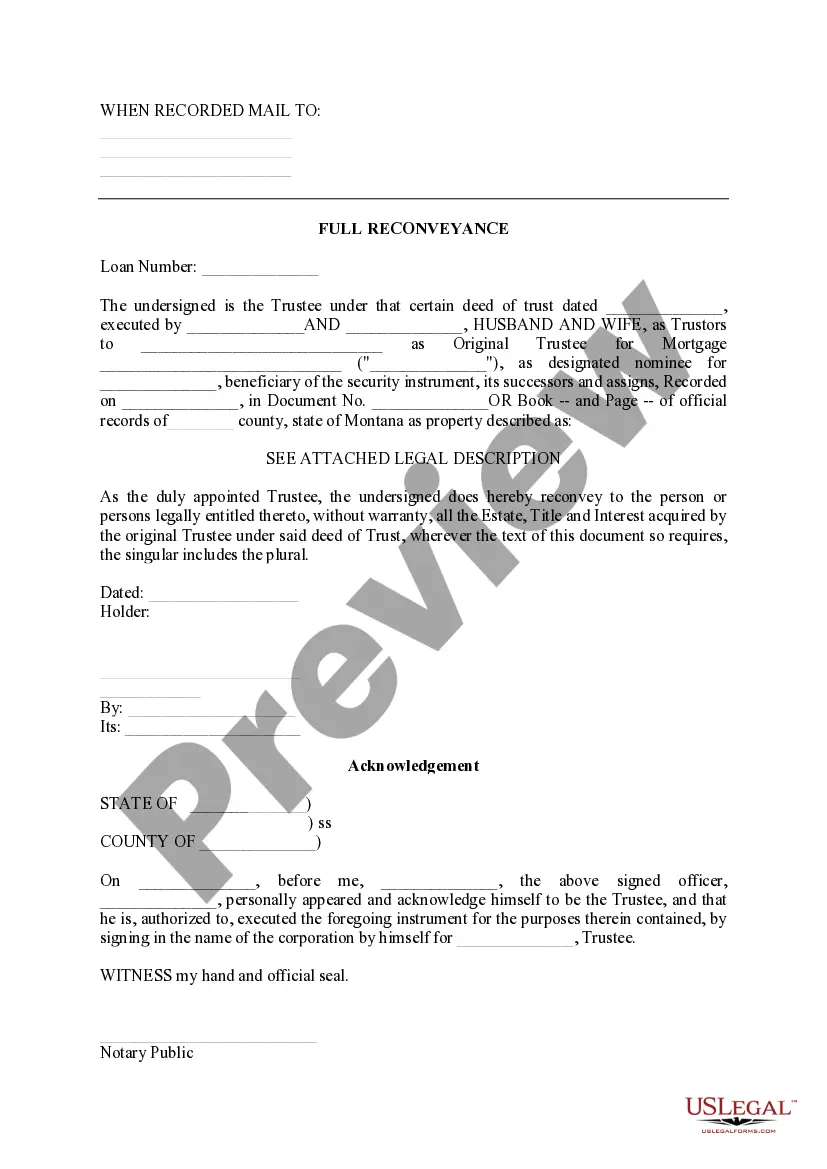
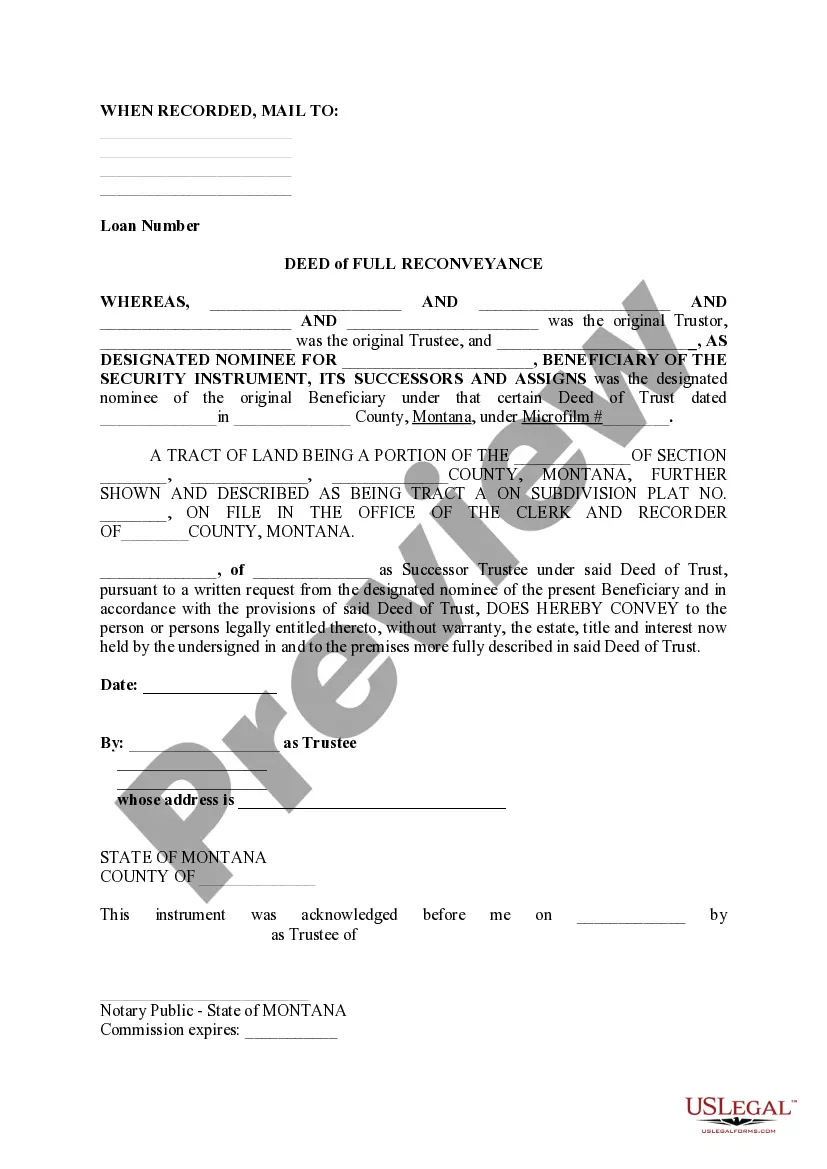
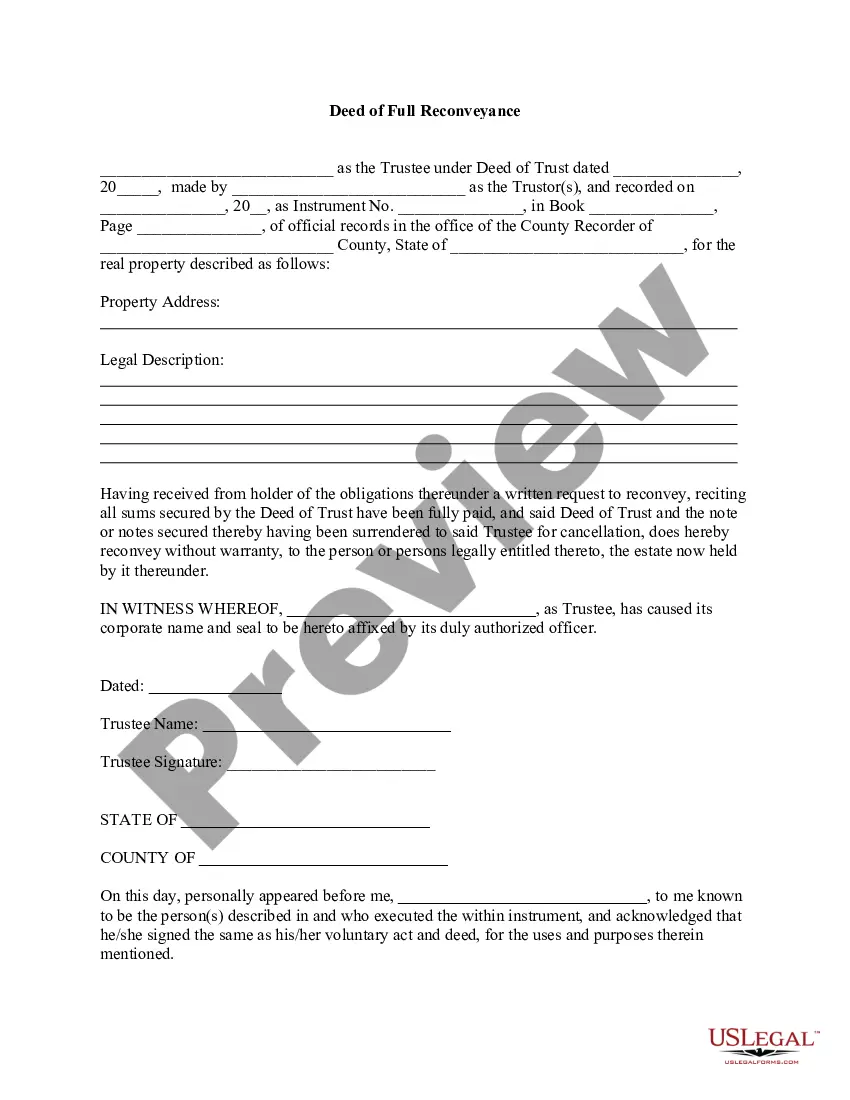
The Full Reconveyance form is a legal document that officially releases a property from a deed of trust after the underlying debt has been fully satisfied. It serves to confirm that the loan secured by the trust deed has been paid in full and allows the former borrowers to regain ownership without any encumbrances. This form is essential for borrowers who want to ensure that their property is free from the lien associated with the completed loan, differing from documents like a Satisfaction of Mortgage which may have distinct legal implications depending on the state's requirements.
Form components explained
- Loan Number: Identifies the specific loan that has been paid off.
- Trustee Information: States the name and details of the trustee who holds the power to reconvey the property.
- Property Description: Clearly describes the property being reconveyed, often including a legal description as an attachment.
- Signatures: Requires signatures from the trustee to verify the reconveyance of the property.
- Acknowledgement: Contains a notary section to validate the identity of the parties signing.
Common use cases
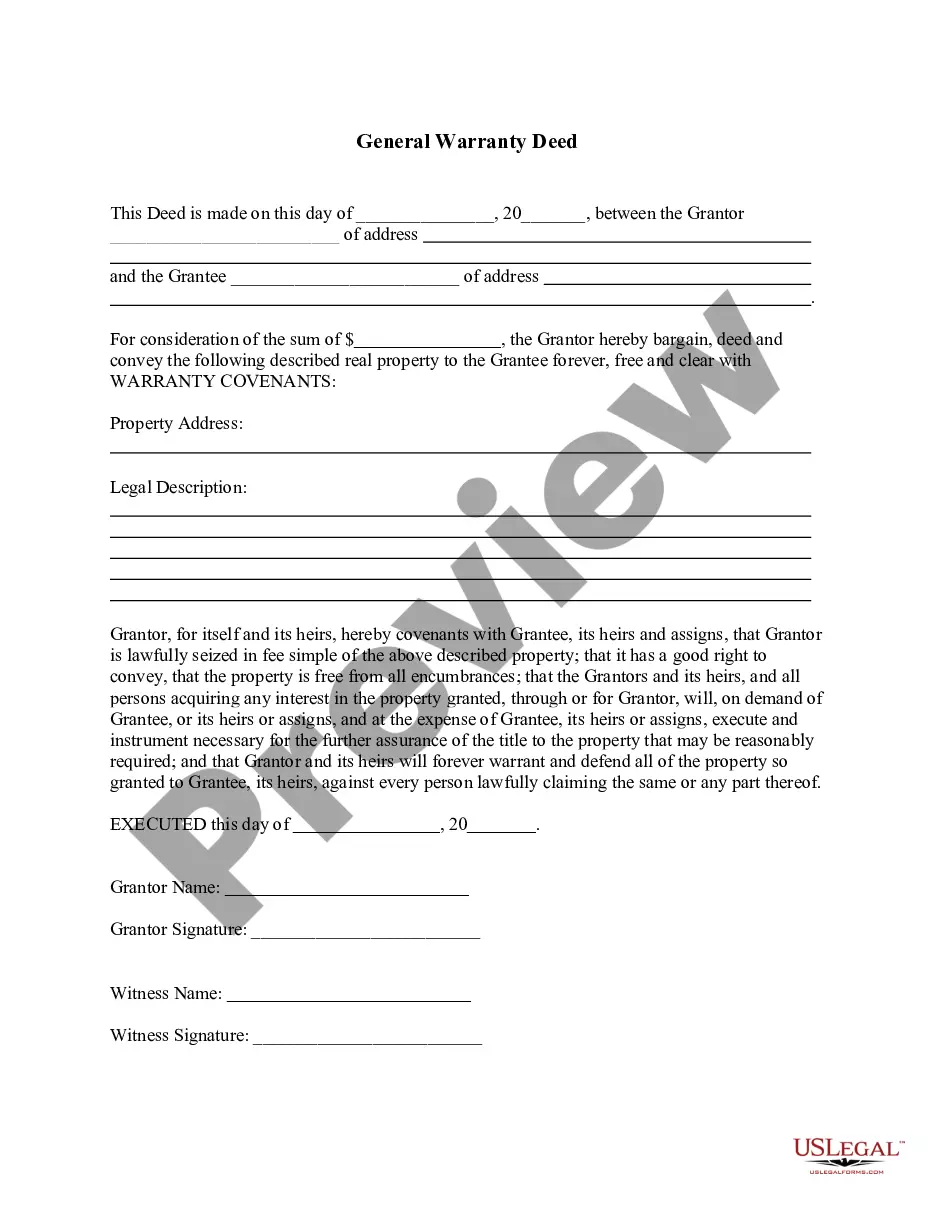
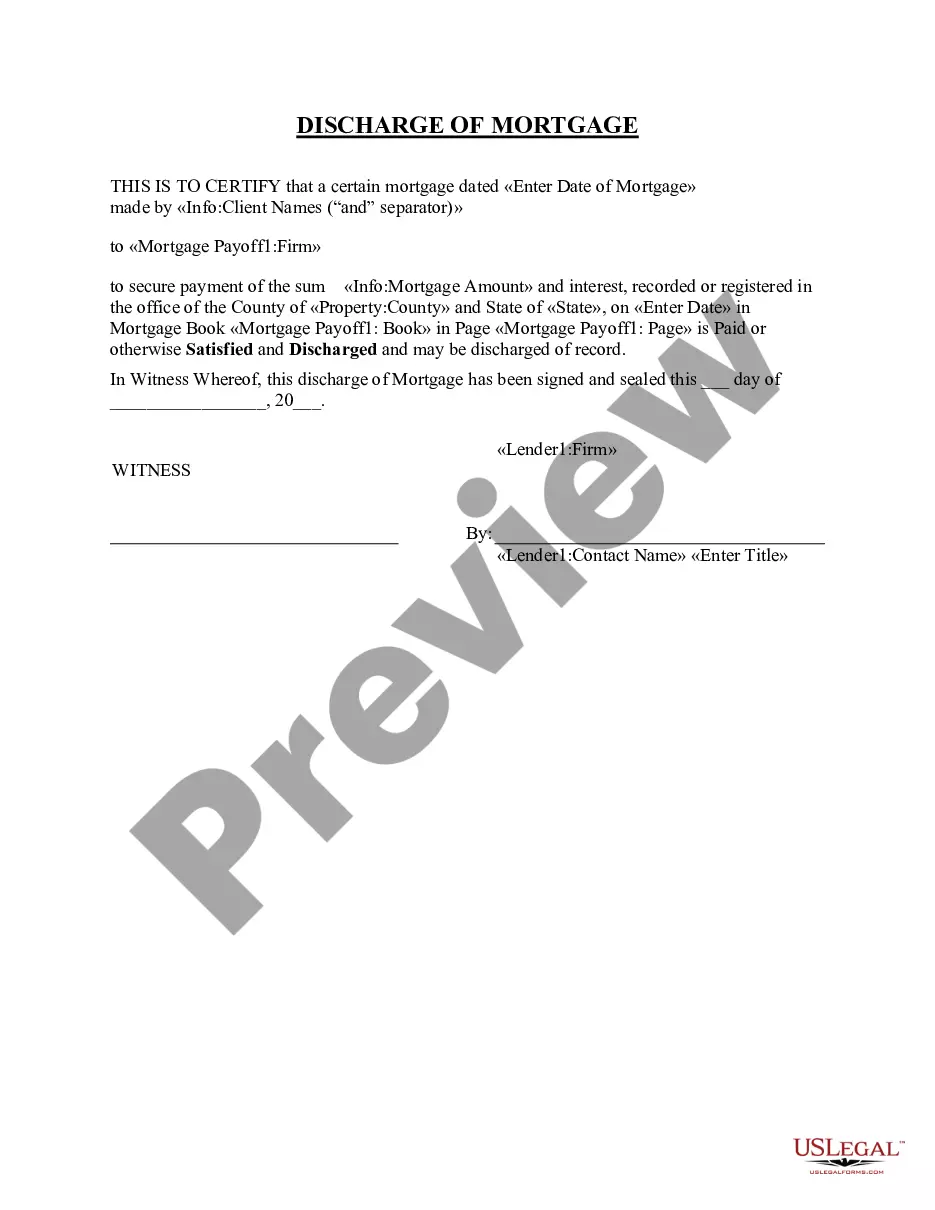
This form should be used when a borrower has fully paid their mortgage or deed of trust and is seeking to clear the property title. Scenarios include completing payments on a home loan, refinancing without any remaining obligations, or any situation in which the lender or their representative has satisfied the provisions of the deed of trust. It is a crucial step in ensuring that the property is free of any financial liens, thus allowing for clear ownership and easier transfer or sale in the future.
Who this form is for
- Homeowners who have fully paid off their mortgage or deed of trust.
- Trustees acting on behalf of a lender or financial institution that has received full payment.
- Individuals involved in real estate transactions who need to clear title for future sales or refinancing.
How to prepare this document
- Enter the loan number associated with the deed of trust.
- Provide the names of the Trustors (borrowers) and the original trustee.
- Specify the completion date of the deed of trust as well as the recording information.
- Include a legal description of the property being reconveyed, attaching as necessary.
- The trustee must sign, date, and print their name to verify the reconveyance.
- Ensure the form is notarized as required by law.
Notarization guidance
Yes, this form must be notarized to be legally valid. Notarization verifies the identity of the signer, ensuring the integrity and legality of the document. US Legal Forms offers integrated online notarization, providing a secure video call with a notary public, making the process easy and efficient without the need for travel.
Get your form ready online
Our built-in tools help you complete, sign, share, and store your documents in one place.
Make edits, fill in missing information, and update formatting in US Legal Forms—just like you would in MS Word.
Download a copy, print it, send it by email, or mail it via USPS—whatever works best for your next step.
Sign and collect signatures with our SignNow integration. Send to multiple recipients, set reminders, and more. Go Premium to unlock E-Sign.
If this form requires notarization, complete it online through a secure video call—no need to meet a notary in person or wait for an appointment.
We protect your documents and personal data by following strict security and privacy standards.

Make edits, fill in missing information, and update formatting in US Legal Forms—just like you would in MS Word.

Download a copy, print it, send it by email, or mail it via USPS—whatever works best for your next step.

Sign and collect signatures with our SignNow integration. Send to multiple recipients, set reminders, and more. Go Premium to unlock E-Sign.

If this form requires notarization, complete it online through a secure video call—no need to meet a notary in person or wait for an appointment.

We protect your documents and personal data by following strict security and privacy standards.
Mistakes to watch out for
- Failing to include a full legal description of the property.
- Not providing the correct loan number, leading to confusion in identifying the deed of trust.
- Neglecting to obtain notarization, which can invalidate the form in some jurisdictions.
- Incomplete or incorrect signatures from the trustee.
Why use this form online
- Convenient access: Downloadable format allows for easy completion from home.
- Editability: Users can fill out the form at their convenience, ensuring accuracy.
- Reliability: Forms prepared by licensed attorneys to ensure compliance with legal standards.
Looking for another form?

Form popularity
FAQ
When a deed of trust/mortgage is paid in full, you can record a Full Reconveyance from the trustee stating publicly that the loan has been paid. The Full Reconveyance Form. is completed and signed by the trustee, whose signature must be notarized.
A mortgage holder issues a deed of reconveyance to indicate that the borrower has been released from the mortgage debt. The deed transfers the property title from the lender, also called the beneficiary, to the borrower. This document is most commonly used when a mortgage has been paid in full.
In order to clear the Deed of Trust from the title to the property, a Deed of Reconveyance must be recorded with the Country Recorder or Recorder of Deeds. If the Trustee/Beneficiary fails to record a satisfaction within the set time limits, the Trustee/Beneficiary may be responsible for damages as set out by statute.
How do you file a Deed of Reconveyance? A Deed of Reconveyance should be filed with your local county recorder or recorder of deeds once it has been signed by a notary public (such as an attorney). Once the document has been filed, the debt that was registered to the property will be considered paid off.
California Civil Code section 2941 (b)(1) requires the beneficiary, upon payoff, to execute and deliver to the trustee the original note, deed of trust, request for a full reconveyance2026. The trustee then executes and records the full reconveyance within 21 days of receipt of the documents from the beneficiary,
In order to clear the Deed of Trust from the title to the property, a Deed of Reconveyance must be recorded with the Country Recorder or Recorder of Deeds. If the Trustee/Beneficiary fails to record a satisfaction within the set time limits, the Trustee/Beneficiary may be responsible for damages as set out by statute.
A reconveyance is the official transfer of the property title after the mortgage has been paid in full. The processing time can vary based on the county in which the property is located and can take up to three months. You will need to contact your county for questions on their specific processing time.
A mortgage holder issues a deed of reconveyance to indicate that the borrower has been released from the mortgage debt. The deed transfers the property title from the lender, also called the beneficiary, to the borrower. This document is most commonly used when a mortgage has been paid in full.
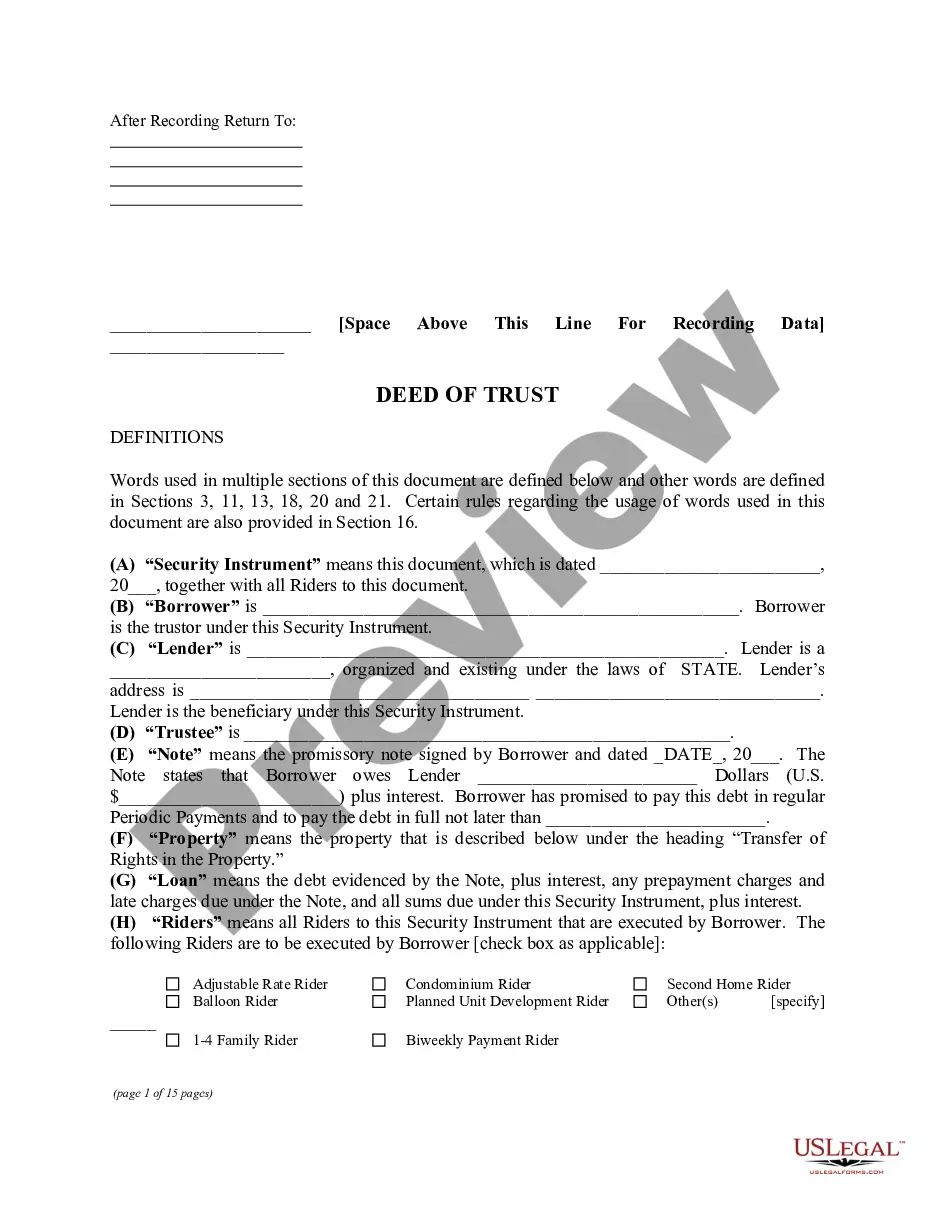
When you are ready to sign a deed of trust, the parties will need to sign in the presence of a notary public.The deed of trust must then be recorded with the county where the property is located, and each of the parties (the trustor, trustee, and lender) should keep a copy of the recorded document.