Montana Deed of Full Reconveyance
What this document covers
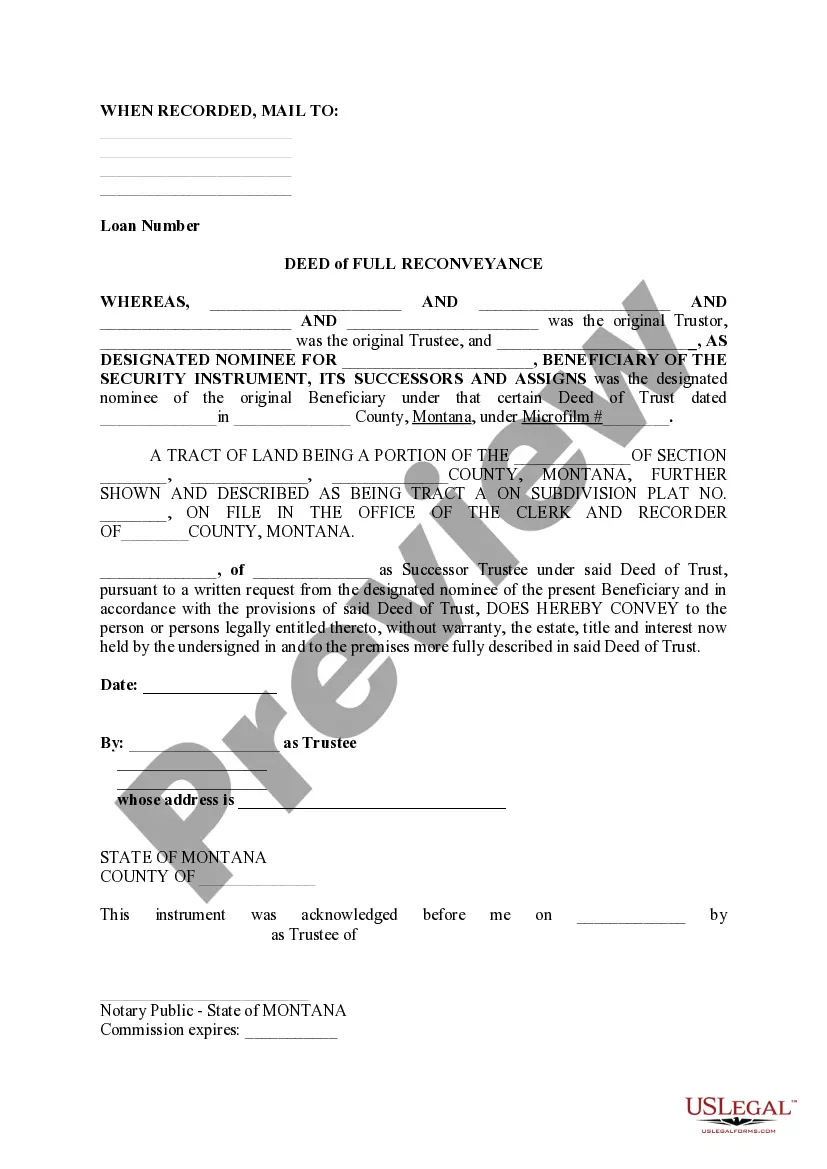
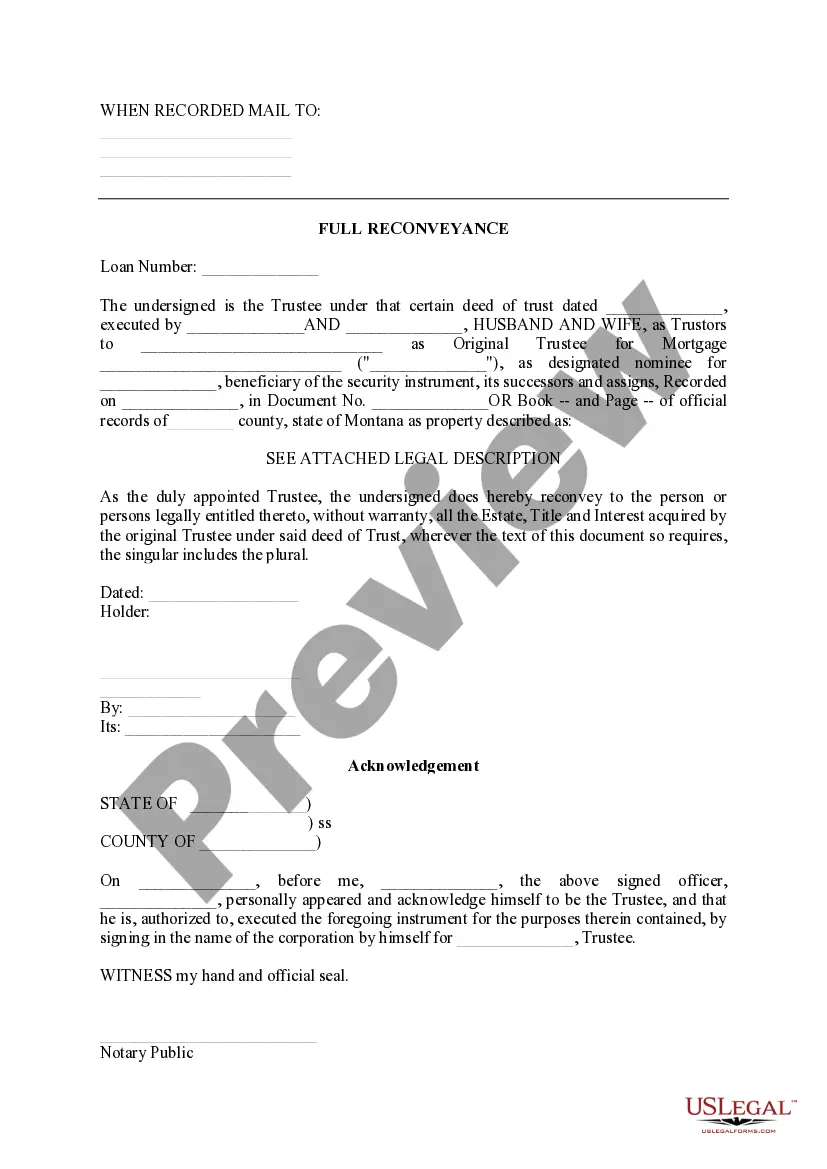
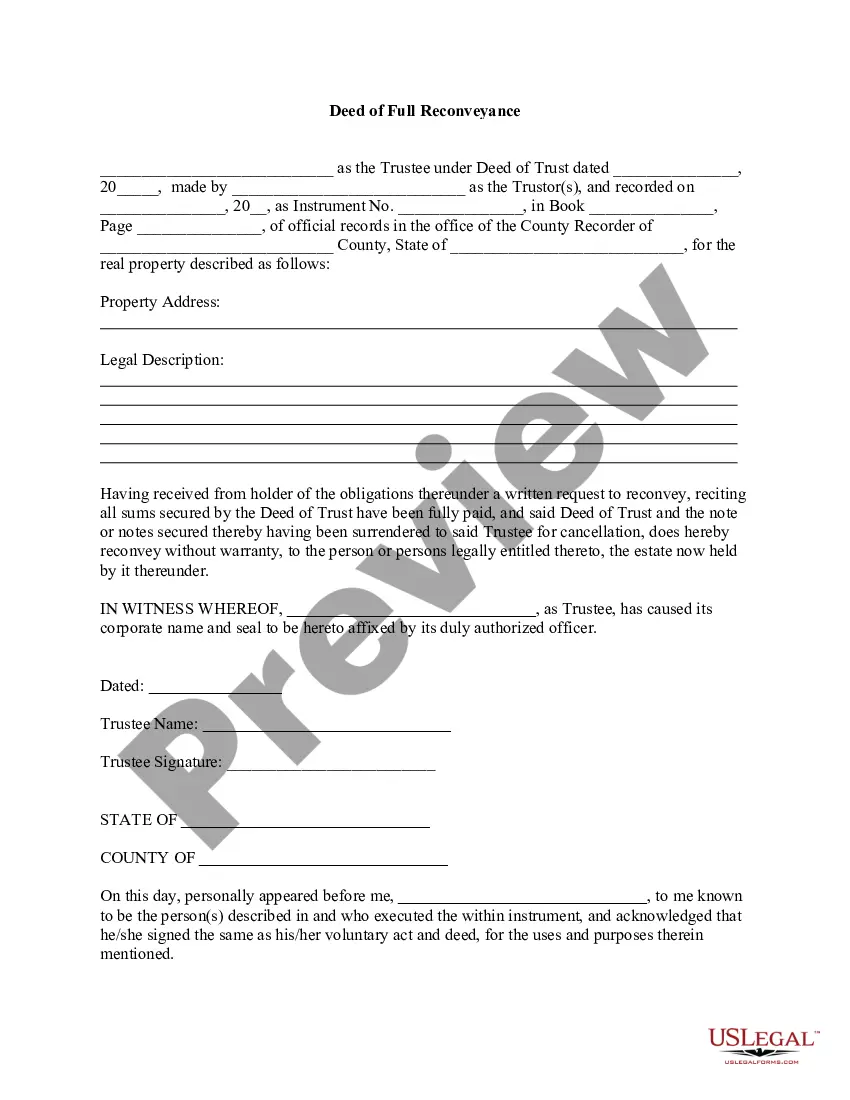
The Deed of Full Reconveyance is a legal document used in Montana to signify the release of a deed of trust. It indicates that the borrower has fulfilled their obligations, thereby transferring property back to the borrower from the trustee. This form differs from other reconveyances by focusing specifically on the satisfaction of a deed of trust, ensuring clarity in the property ownership transfer process.
Form components explained
- Identification of the original trustor, trustee, and beneficiary.
- Details of the property being reconveyed, including a legal description.
- Date of the original deed of trust and microfilm reference.
- Signature lines for the trustee and acknowledgment by a notary public.

When this form is needed
This form is necessary when a borrower has paid off their mortgage or fulfilled the terms of their loan agreement, and they need to formalize the return of property ownership. It is especially crucial when the legal title to the property must be cleared for future financial transactions, such as selling or refinancing the property.
Intended users of this form
This Deed of Full Reconveyance is intended for:
- Property owners who have paid off their mortgage or line of credit secured by a deed of trust.
- Trustees acting on behalf of the lender or beneficiary who need to convey the property back to the trustor.
- Legal representatives assisting clients in the real estate transaction processes.
Completing this form step by step
- Identify all parties involved, including the original trustor, trustee, and beneficiary.
- Enter the date of the original deed of trust and include the microfilm reference number.
- Provide a detailed legal description of the property being reconveyed.
- Ensure the form is signed by the trustee who is acting on behalf of the beneficiary.
- Have the signature acknowledged by a notary public to validate the document.
Does this document require notarization?
Yes, this form must be notarized to be legally valid. Notarization provides an additional layer of security, ensuring the authenticity of the signatures. US Legal Forms offers integrated online notarization services, allowing you to complete this step conveniently and securely.
Get your form ready online
Our built-in tools help you complete, sign, share, and store your documents in one place.
Make edits, fill in missing information, and update formatting in US Legal Forms—just like you would in MS Word.
Download a copy, print it, send it by email, or mail it via USPS—whatever works best for your next step.
Sign and collect signatures with our SignNow integration. Send to multiple recipients, set reminders, and more. Go Premium to unlock E-Sign.
If this form requires notarization, complete it online through a secure video call—no need to meet a notary in person or wait for an appointment.
We protect your documents and personal data by following strict security and privacy standards.

Make edits, fill in missing information, and update formatting in US Legal Forms—just like you would in MS Word.

Download a copy, print it, send it by email, or mail it via USPS—whatever works best for your next step.

Sign and collect signatures with our SignNow integration. Send to multiple recipients, set reminders, and more. Go Premium to unlock E-Sign.

If this form requires notarization, complete it online through a secure video call—no need to meet a notary in person or wait for an appointment.

We protect your documents and personal data by following strict security and privacy standards.
Common mistakes
- Failing to provide accurate property descriptions, which can lead to legal complications.
- Not notifying all relevant parties or including them in the document.
- Neglecting to have the form notarized, which is essential for it to be legally binding.
Why complete this form online
- Easy access to lawfully prepared forms that save time and reduce errors.
- Editable templates allow for customization to match specific needs.
- Secure and reliable formats that ensure compliance with legal requirements.
Looking for another form?
Form popularity
FAQ
A reconveyance is the official transfer of the property title after the mortgage has been paid in full. The processing time can vary based on the county in which the property is located and can take up to three months. You will need to contact your county for questions on their specific processing time.
In order to clear the Deed of Trust from the title to the property, a Deed of Reconveyance must be recorded with the Country Recorder or Recorder of Deeds. If the Trustee/Beneficiary fails to record a satisfaction within the set time limits, the Trustee/Beneficiary may be responsible for damages as set out by statute.
How do you file a Deed of Reconveyance? A Deed of Reconveyance should be filed with your local county recorder or recorder of deeds once it has been signed by a notary public (such as an attorney). Once the document has been filed, the debt that was registered to the property will be considered paid off.
When a deed of trust/mortgage is paid in full, you can record a Full Reconveyance from the trustee stating publicly that the loan has been paid. The Full Reconveyance Form. is completed and signed by the trustee, whose signature must be notarized.
When you are ready to sign a deed of trust, the parties will need to sign in the presence of a notary public.The deed of trust must then be recorded with the county where the property is located, and each of the parties (the trustor, trustee, and lender) should keep a copy of the recorded document.
The property's title remains in the trust until the loan is paid off, or satisfied, then it is released from the trust. To complete the release, the lender prepares a deed of reconveyance. This document states that the conditions of the loan have been met and you have no further financial obligations to the lender.
A document known as a substitution of trustee and full reconveyance identifies the person who has the authority to reconvey the property and remove the lien.Once the document is registered, it establishes the borrower as the sole owner of the property, which is now free and clear of the previous mortgage.
In order to clear the Deed of Trust from the title to the property, a Deed of Reconveyance must be recorded with the Country Recorder or Recorder of Deeds. If the Trustee/Beneficiary fails to record a satisfaction within the set time limits, the Trustee/Beneficiary may be responsible for damages as set out by statute.
A mortgage holder issues a deed of reconveyance to indicate that the borrower has been released from the mortgage debt. The deed transfers the property title from the lender, also called the beneficiary, to the borrower. This document is most commonly used when a mortgage has been paid in full.