Indiana Apartment Rules and Regulations
About this form
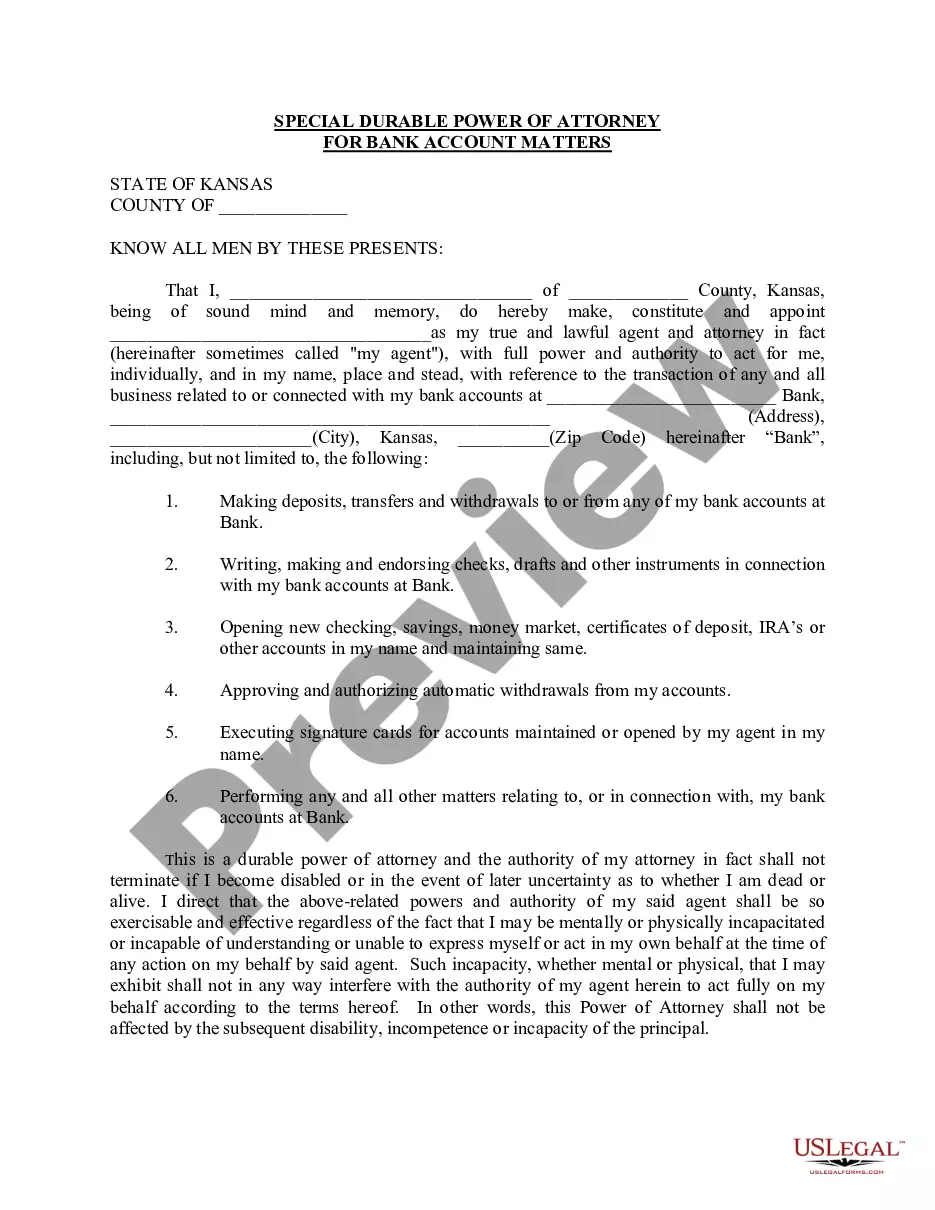
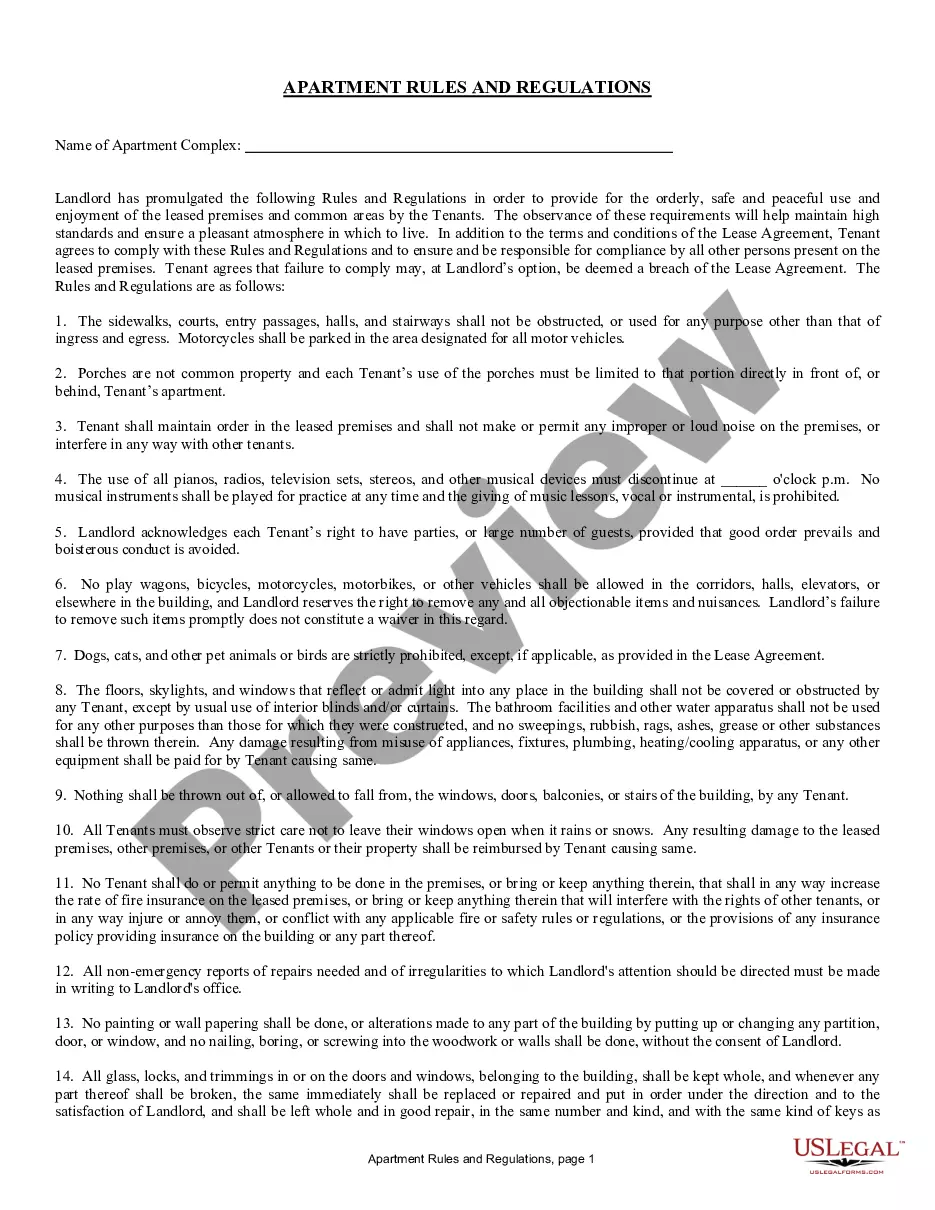
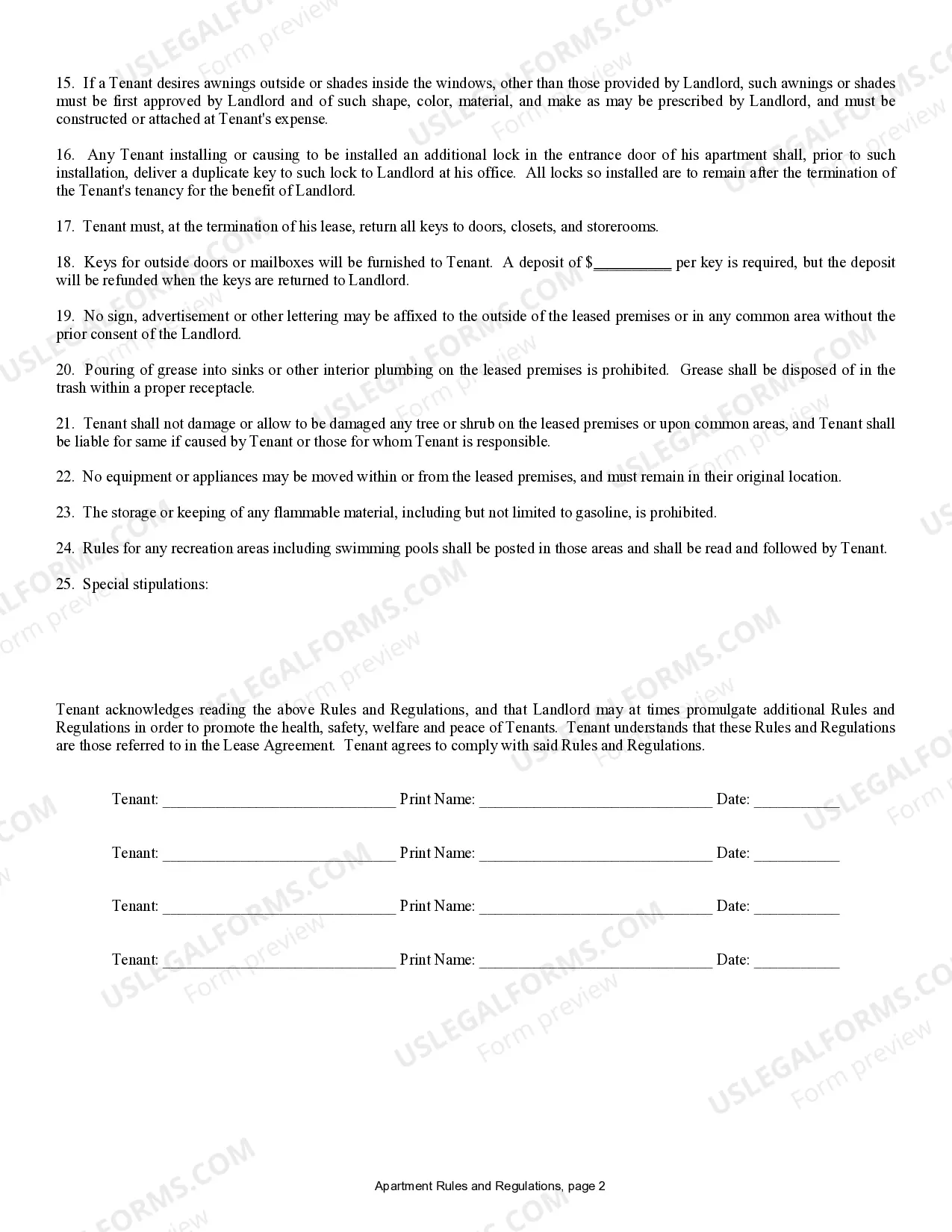
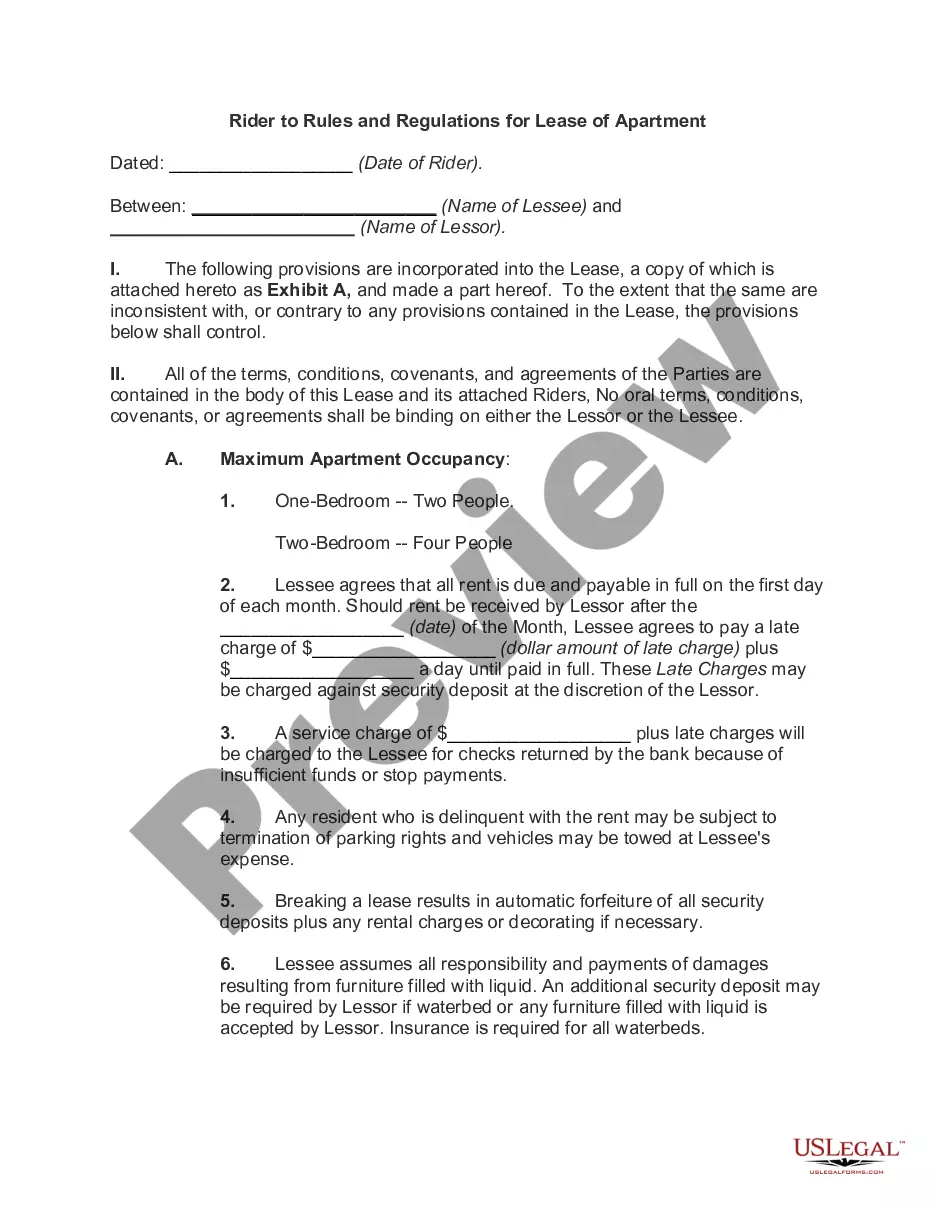
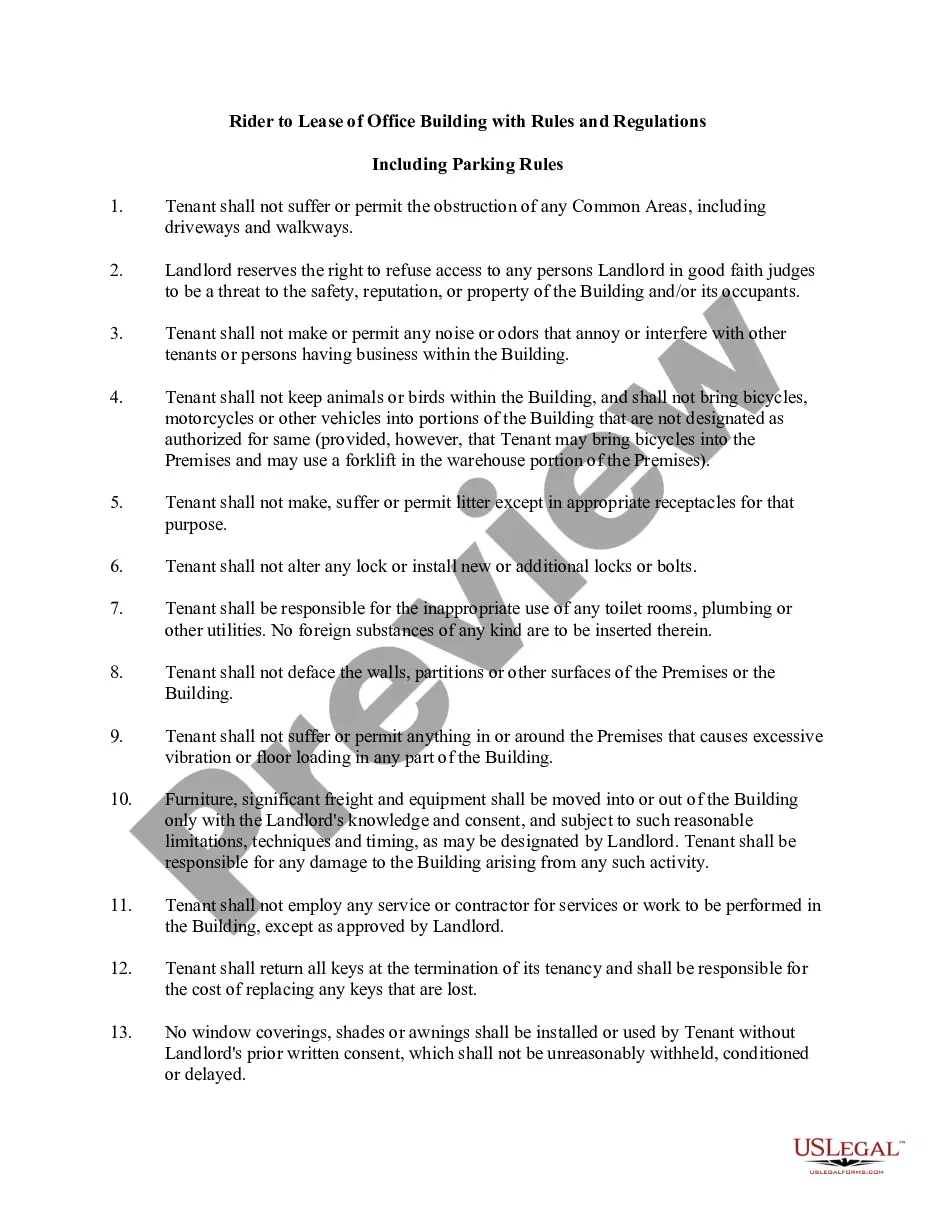
The Apartment Rules and Regulations form outlines the specific rules tenants must follow in an apartment complex. These regulations supplement the general lease agreement, ensuring a harmonious living environment by addressing issues not typically covered in the lease. This form is essential for maintaining order and setting clear expectations for tenant behavior and property maintenance within the apartment community.
Main sections of this form
- Name of the apartment complex
- Landlord's rules and regulations regarding behavior and maintenance
- Provisions for noise control and parties
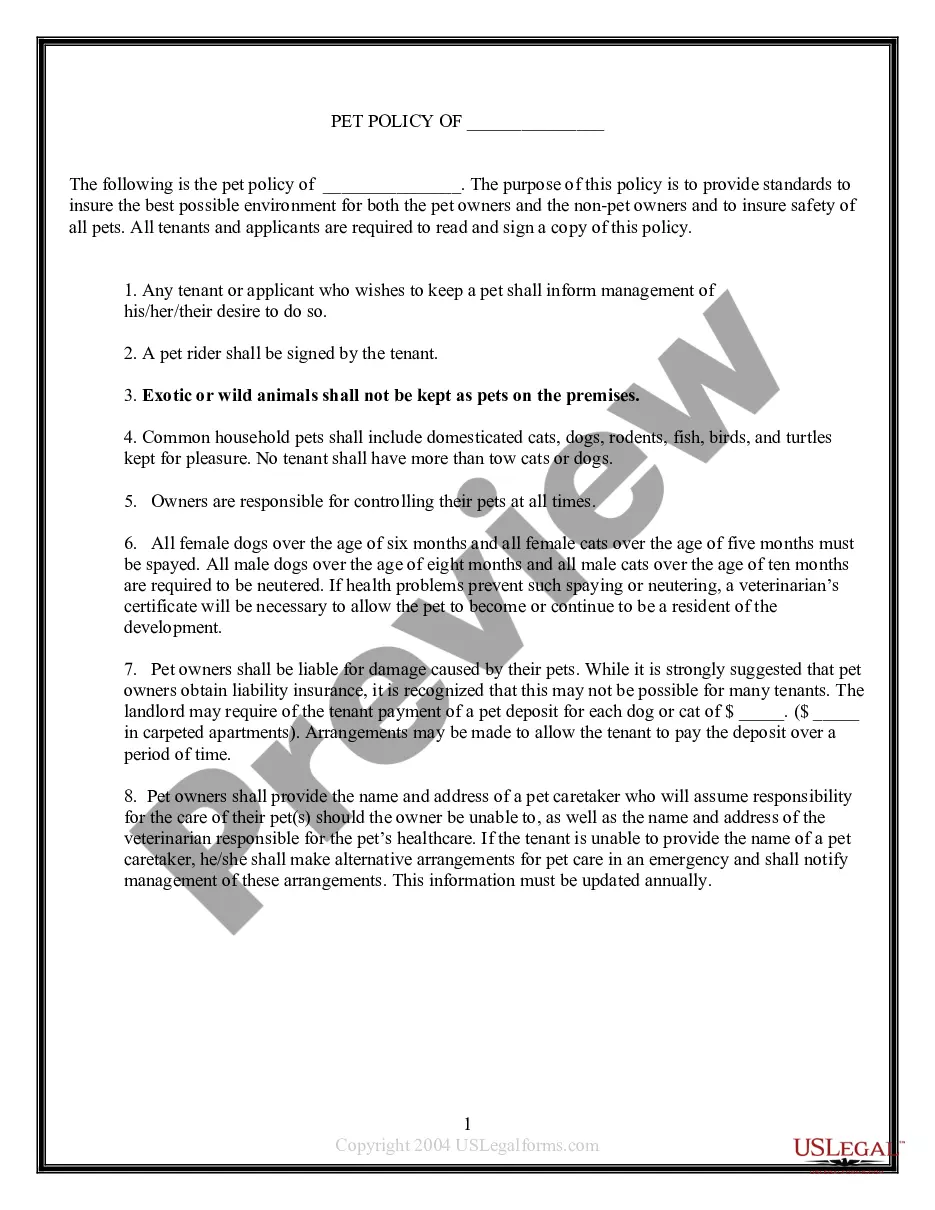
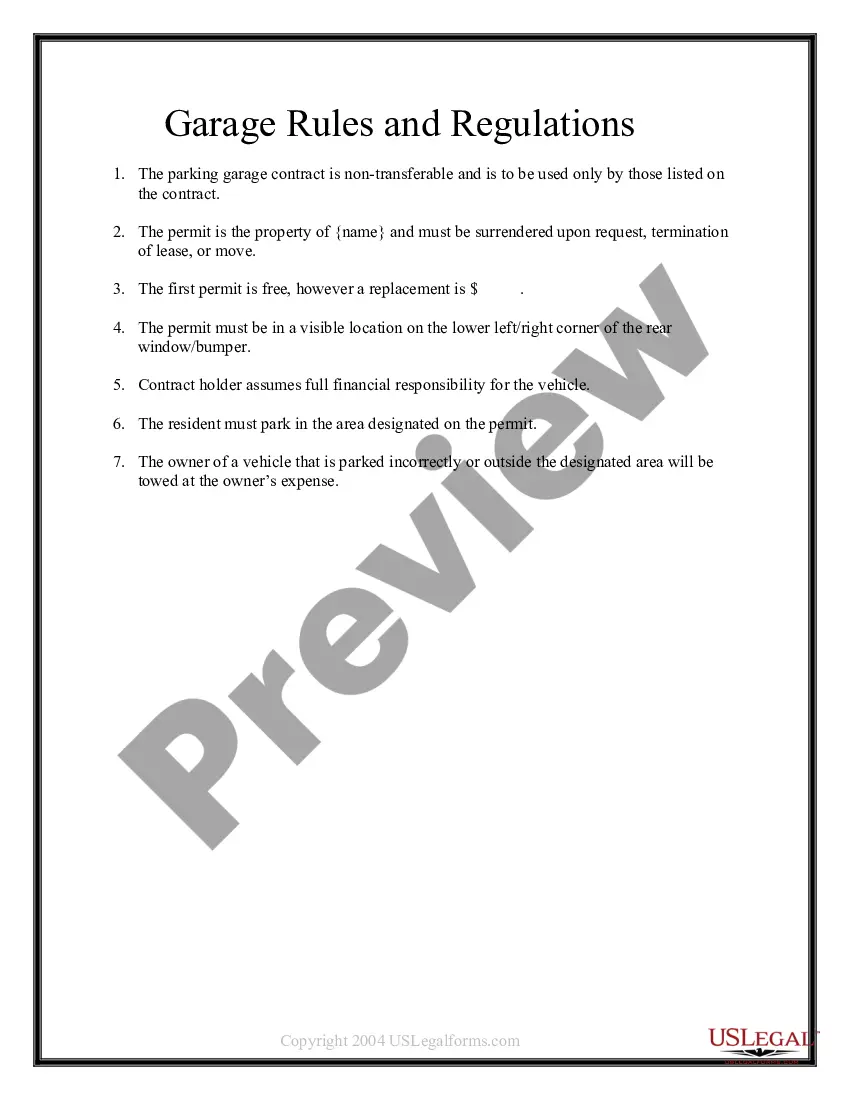
- Guidelines for pets, parking, and common areas
- Requirements for reporting repairs
- Conditions for returning keys and deposits
Situations where this form applies
This form should be used by landlords and property managers who want to establish clear rules for tenants living in an apartment complex. It is also useful when tenants need to understand their responsibilities related to community living, especially regarding noise, property maintenance, and conduct within shared spaces.
Who needs this form
- Landlords and property managers seeking to define tenant responsibilities
- Tenants wanting to be informed of their obligations within the rental property
- Real estate professionals involved in leasing agreements
How to prepare this document
- Enter the name of the apartment complex at the top of the form.
- Review and customize the rules and regulations as needed.
- Include specific times for noise restrictions and identify designated areas for parking.
- Ensure all tenants acknowledge and sign the form where indicated.
- Distribute copies to all tenants and keep a signed copy for your records.
Does this form need to be notarized?
This form does not typically require notarization unless specified by local law. Always check state requirements for specific notarization needs.
Get your form ready online
Our built-in tools help you complete, sign, share, and store your documents in one place.
Make edits, fill in missing information, and update formatting in US Legal Forms—just like you would in MS Word.
Download a copy, print it, send it by email, or mail it via USPS—whatever works best for your next step.
Sign and collect signatures with our SignNow integration. Send to multiple recipients, set reminders, and more. Go Premium to unlock E-Sign.
If this form requires notarization, complete it online through a secure video call—no need to meet a notary in person or wait for an appointment.
We protect your documents and personal data by following strict security and privacy standards.

Make edits, fill in missing information, and update formatting in US Legal Forms—just like you would in MS Word.

Download a copy, print it, send it by email, or mail it via USPS—whatever works best for your next step.

Sign and collect signatures with our SignNow integration. Send to multiple recipients, set reminders, and more. Go Premium to unlock E-Sign.

If this form requires notarization, complete it online through a secure video call—no need to meet a notary in person or wait for an appointment.

We protect your documents and personal data by following strict security and privacy standards.
Avoid these common issues
- Failing to have all tenants sign the document.
- Not providing clear definitions for rules resulting in confusion.
- Ignoring local laws that might affect the validity of certain rules.
Benefits of using this form online
- Convenient access that allows landlords to customize rules easily.
- Editability ensures that rules can be updated as needed.
- Reliability of professionally drafted templates ensuring legal compliance.
- These regulations help establish a legal framework within which tenants must operate, making it easier to address violations.
- They add to the enforceability of lease agreements by clearly outlining tenant responsibilities.
- Proper completion and signatures can provide evidence in case of legal disputes regarding tenant behavior.
Key takeaways
- The Apartment Rules and Regulations form ensures tenants understand their responsibilities.
- Establishing clear rules helps foster a positive living environment.
- This form is an important companion to the Apartment Lease Agreement.
Looking for another form?



Form popularity
FAQ
Renters' rights in Indiana include the right to a safe living environment, the right to privacy, and the right to receive proper notice before eviction. These rights are part of the broader Indiana Apartment Rules and Regulations that protect tenants. Knowing your rights empowers you as a renter and helps you advocate for yourself.
In Indiana, tenants have the right to put rent money towards repairs in the event a landlord hasn't made repairs within a reasonable time. Tenants also have the right to terminate a lease agreement when premises become uninhabitable.
This includes keeping the property clean, safe and habitable. The landlord must adhere to all building codes, perform necessary repairs, maintain common areas, keep all vital services, such as plumbing, electricity, and heat, in good working order, must provide proper trash receptacles and must supply running water.
In Indiana, tenants have the right to put rent money towards repairs in the event a landlord hasn't made repairs within a reasonable time. Tenants also have the right to terminate a lease agreement when premises become uninhabitable.Some rental units may use federal or state subsidies to reduce the cost of housing.
Unlike some states, Indiana does not have a law that lets tenants withhold rent or make repairs and deduct it from the rent. Generally, if you do not pay rent, you could be evicted.
Under section 11 of the Landlord and Tenant Act 1985, the landlord is responsible to: keep the structure and exterior of the property in good repair, including drains, gutters and external pipes. keep installations for the supply of water, gas, electricity and sanitation in good repair and proper working order.
Complying with all state and local health and building codes. Maintaining structural components and a reasonably weather-protected unit. Providing the necessary heat, electric, and hot and cold water facilities. Making any requested repairs promptly.
Repairs. Your landlord is always responsible for repairs to: the property's structure and exterior. basins, sinks, baths and other sanitary fittings including pipes and drains.
Yes, a landlord can evict you if there is no lease.However, a landlord generally must provide notice of terminating your tenancy. (Evicting you means starting eviction proceedings if you fail to comply with the notice. A landlord cannot legally evict you without a court order, whether or not you have a lease.)
Fundamental responsibilities of landlords include: providing and maintaining the property in a clean and reasonable standard; giving proper receipts and maintaining records of all transactions pertaining to the tenancy; paying council rates and taxes; maintaining locks to ensure the property's security; and lodging the