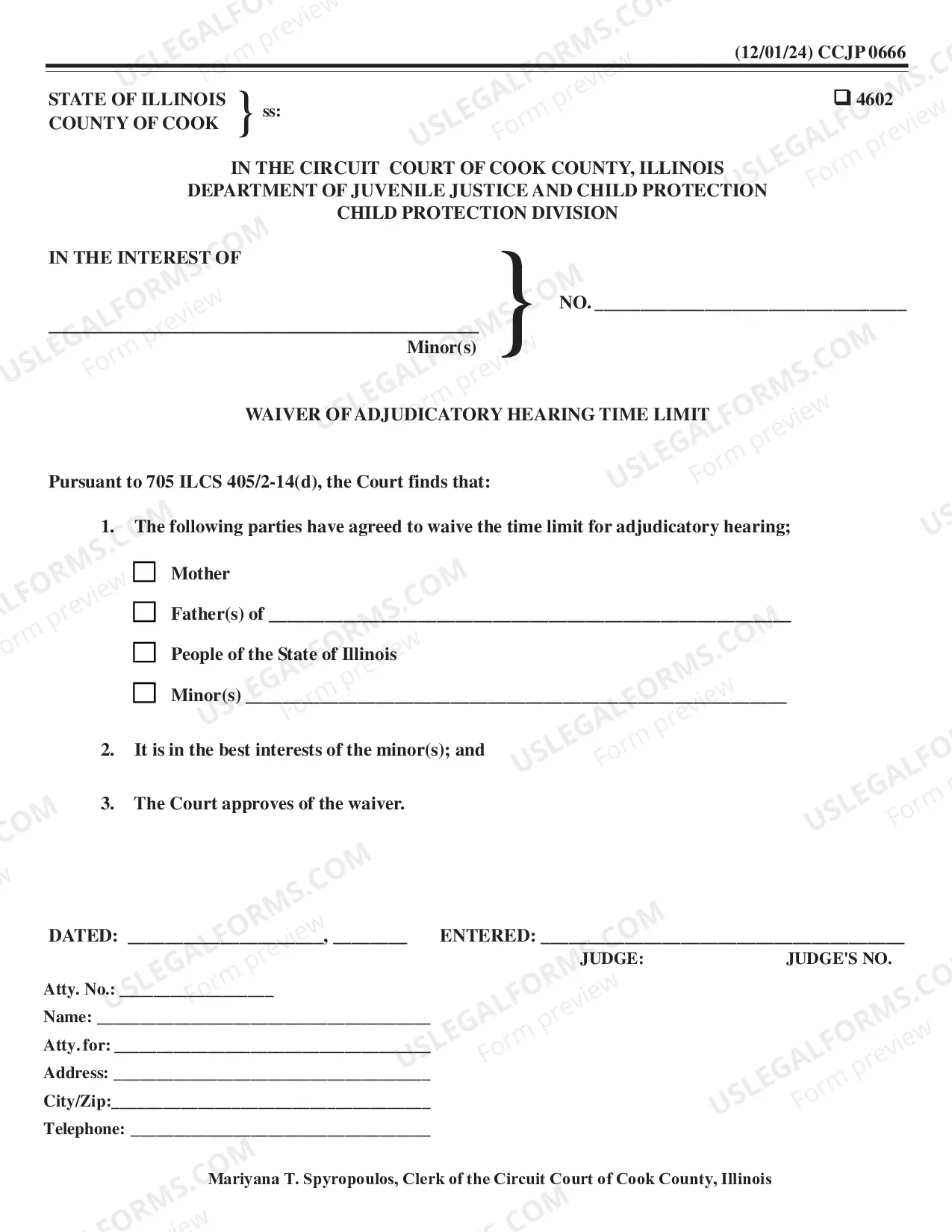
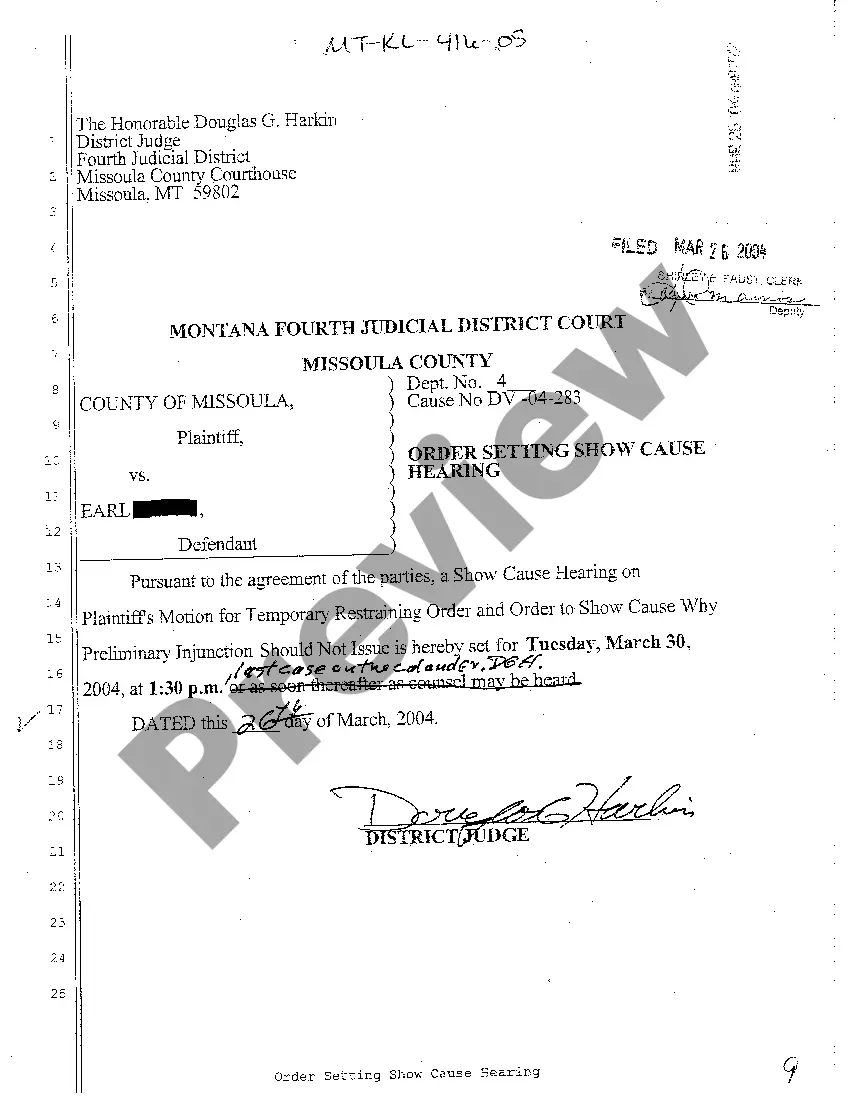
Montana Order Setting Show Cause Hearing
Description
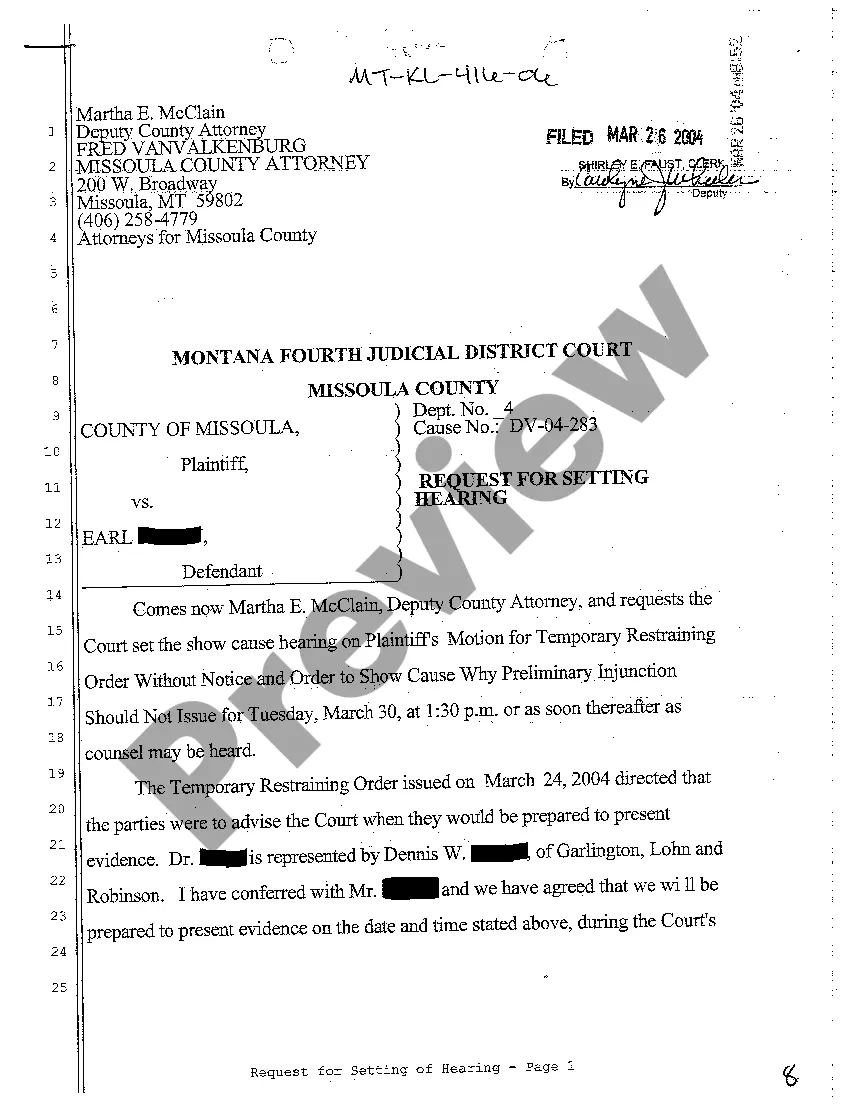
How to fill out Montana Order Setting Show Cause Hearing?
Obtain a printable Montana Order Setting Show Cause Hearing with just a few clicks in the most extensive collection of legal e-documents.
Discover, download, and print expertly prepared and verified templates on the US Legal Forms website. US Legal Forms has been the leading provider of affordable legal and tax documents for US citizens and residents online since 1997.
Utilize US Legal Forms to access 85,000 professionally drafted, state-specific documents.
- Users with an existing subscription must Log In directly to their US Legal Forms account, download the Montana Order Setting Show Cause Hearing, and locate it stored in the My documents tab.
- Users without a subscription should adhere to the guidelines below.
- Ensure your document aligns with your state's regulations.
- If possible, read the form's description to gain additional insights.
- If available, examine the form to see more details.
- Once you confirm the document satisfies your requirements, click Buy Now.
- Establish a personal account.
- Select a plan.
- Proceed with payment via PayPal or credit card.
- Download the document in Word or PDF format.
- After downloading your Montana Order Setting Show Cause Hearing, you can fill it out in any online editor or print it out for manual completion.
Form popularity
FAQ
An order to show cause is a type of court order that requires one or more of the parties to a case to justify, explain, or prove something to the court. Courts commonly use orders to show cause when the judge needs more information before deciding whether or not to issue an order requested by one of the parties.
A response to an order to show cause typically requires you to show up in-person to the hearing. You can provide an answer to the order and state why you object to the order being issued.
A motion is the standard way to seek certain forms of relief from a court. An Order to Show Cause is often a quicker way to seek the same relief. It usually has some provision which directs you to do something or to refrain from doing something...
If the judge finds that you are in contempt, the judge might order you to let the other parent make up the missed parenting time or visits. The judge can also order you to pay the other parent's court costs or lawyer's fee.
It's basically an order directing a party to appear in court and explain why that party took (or failed to take) some action, or why the court should or should not grant the requested relief.The main objective of the show cause hearing is to get the party who is not following the court's order to do so.
You will need to bring the other copy with you to the Show Cause hearing. File the original Petition for Contempt, Supporting Affidavit, Order to Show Cause, and Contempt Citation with the Clerk of District Court in the county where your original Parenting Plan was filed, or in the county where you live.
Civil vs Criminal Contempt An action to essentially punish the person who does not comply with a court order is called a contempt action.A civil contempt action seeks to compel compliance with a court order before punishment occurs; a criminal contempt action can impose jail time for failure to obey.
If one parent does not follow the custody and visitation court order.File an action for contempt with the court. In contempt actions, you ask the court to enforce the order and make a finding that the other parent willfully disobeyed the court order. This is very complicated and can have serious consequences.
Fill out your court forms. Have your forms reviewed. Make at least 2 copies of all your forms. File your forms with the court clerk. Serve your papers on the other parent. File your Proof of Service. Go to your court hearing.