Montana Quitclaim Deed of Mineral Interests
Overview of this form
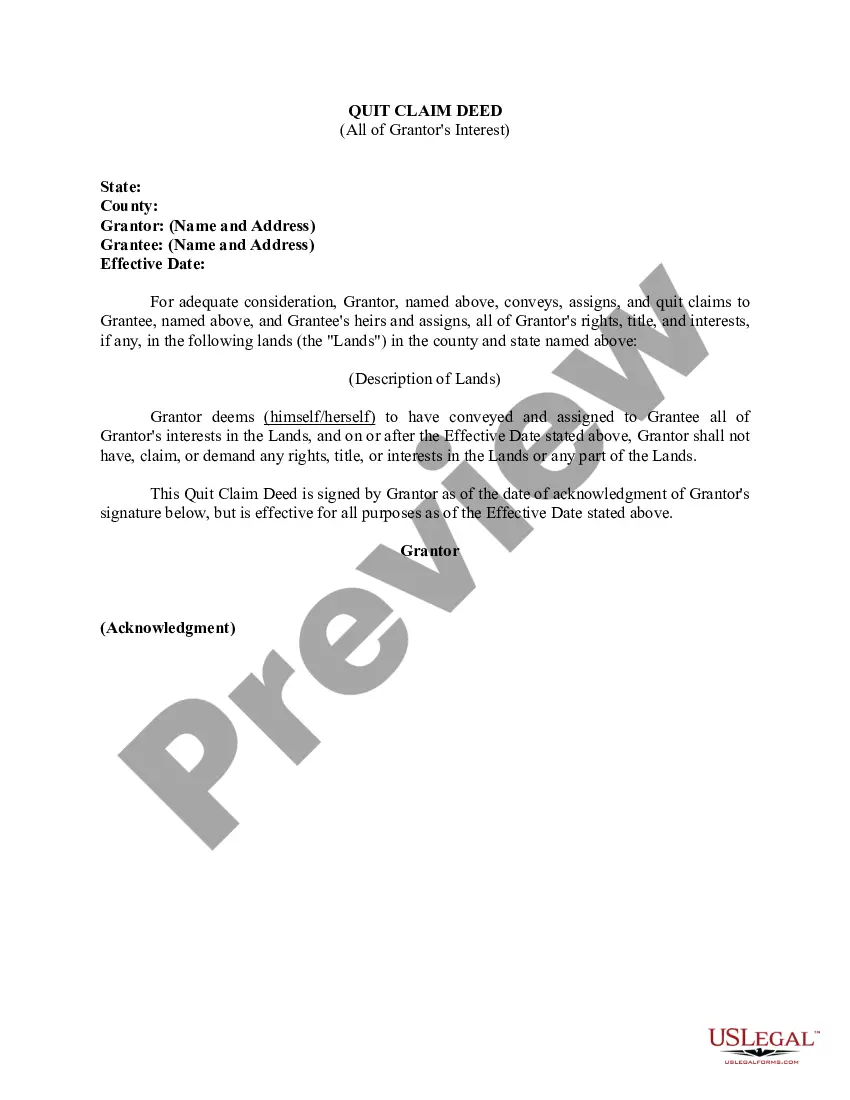
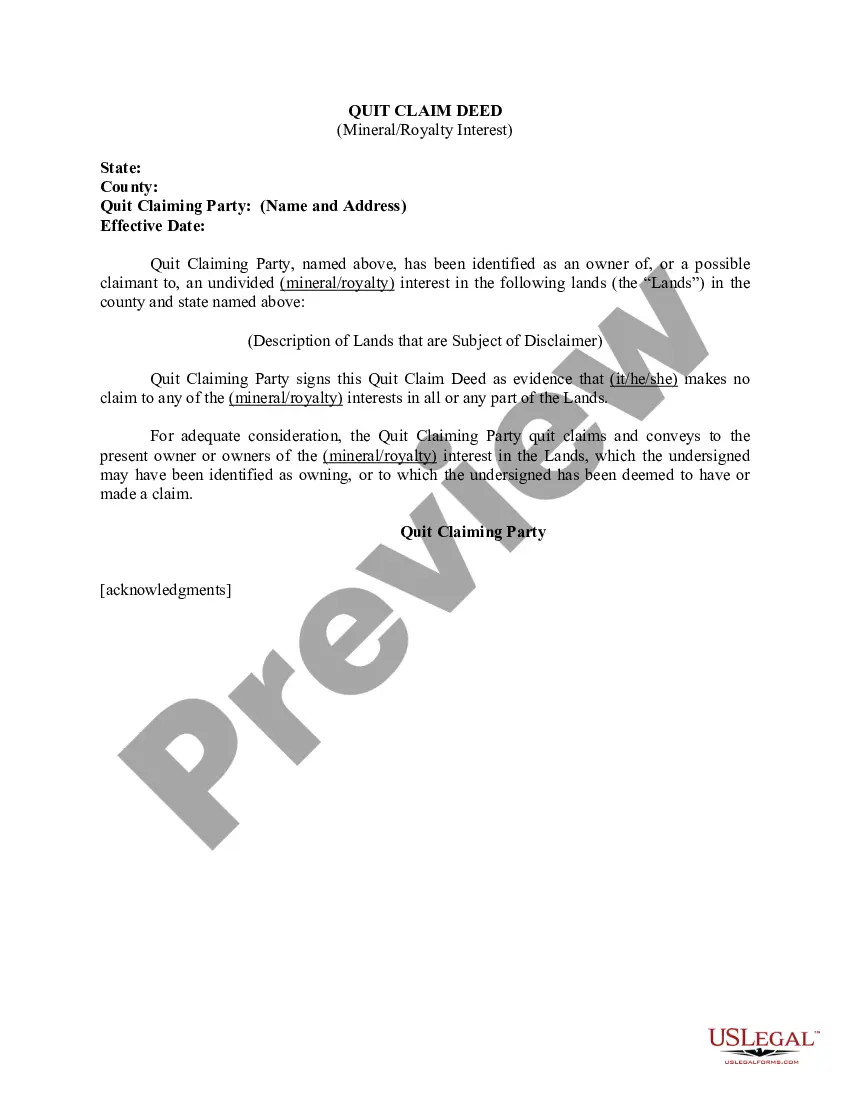
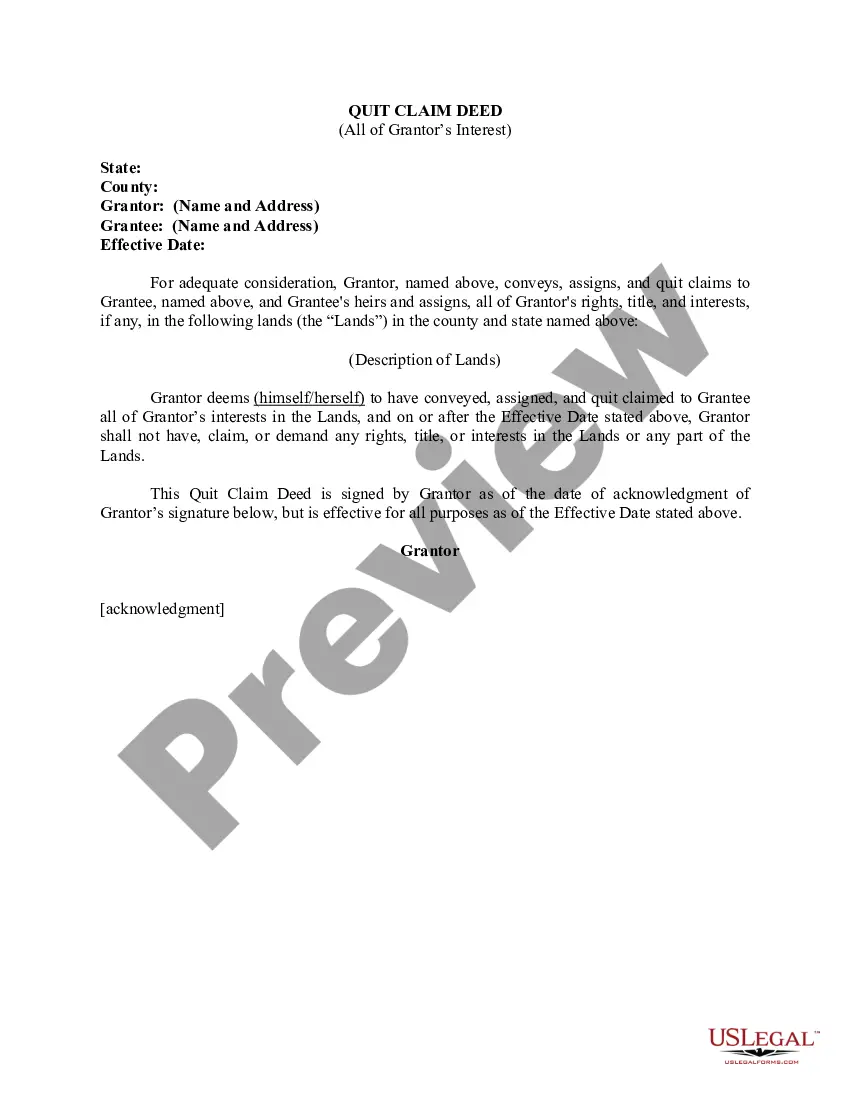
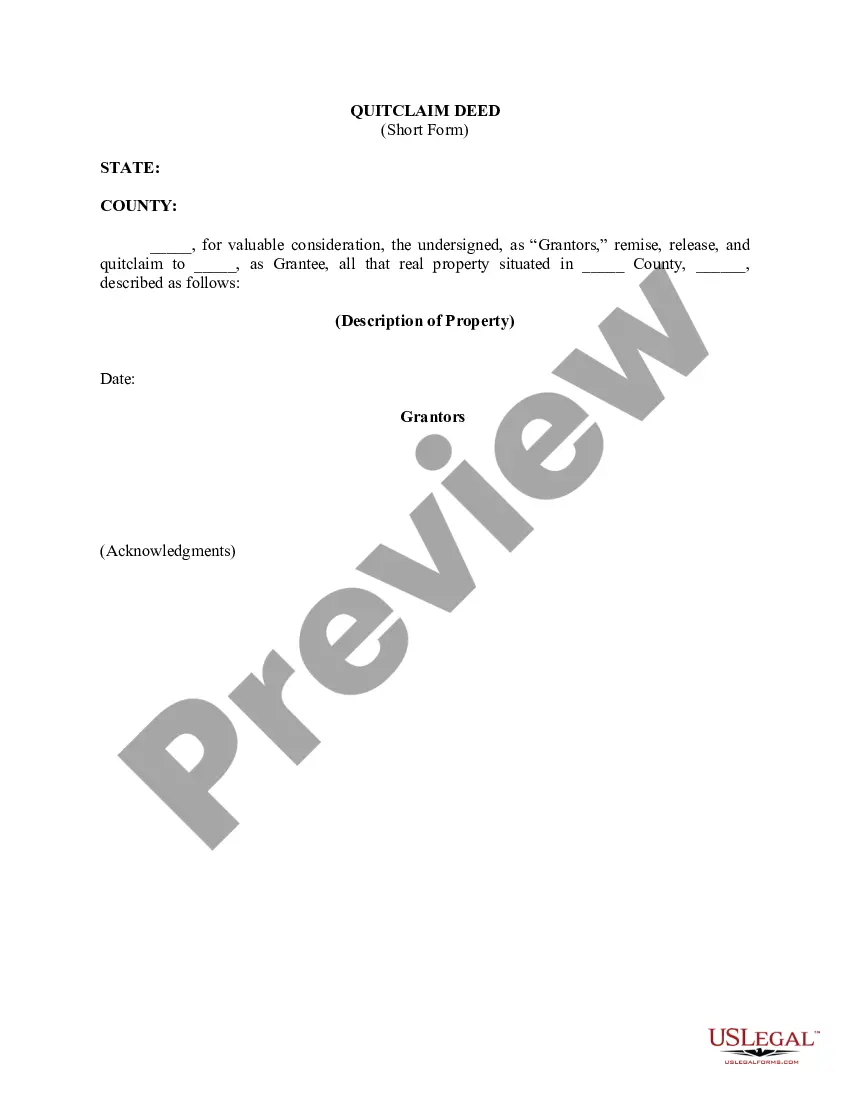
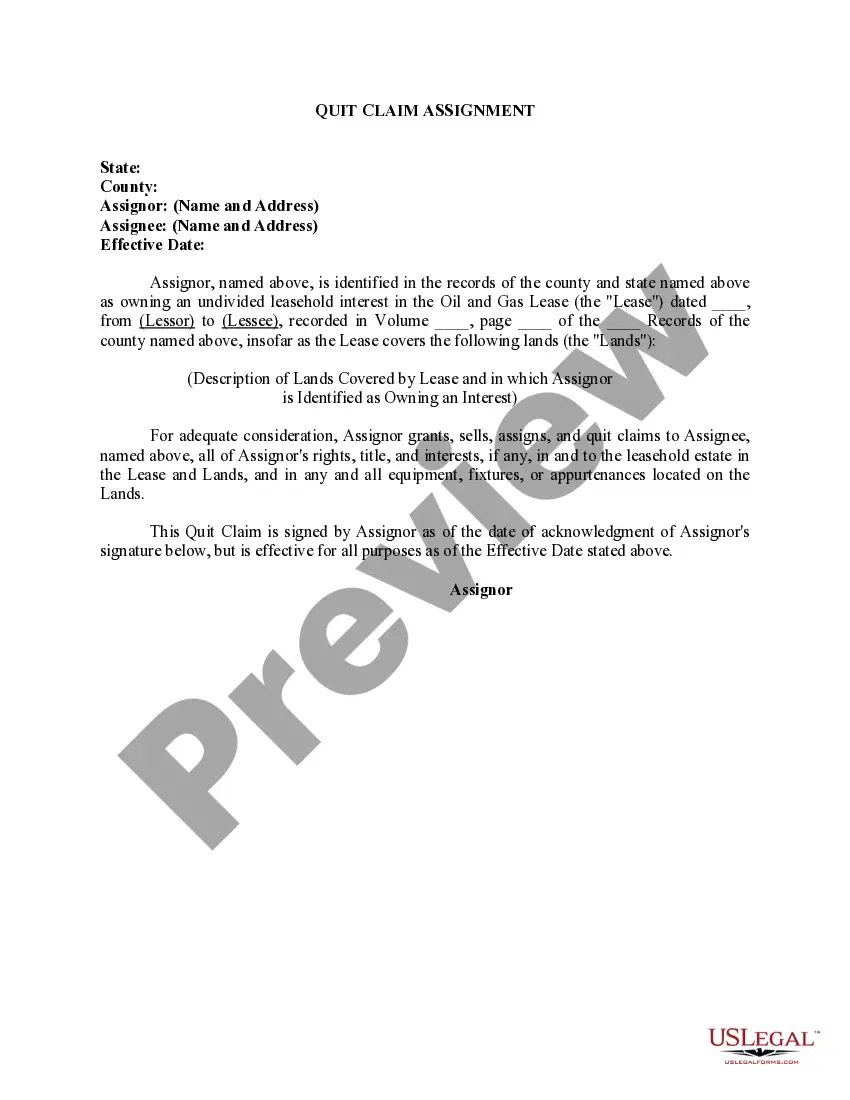
The Quitclaim Deed of Mineral Interests is a legal document used to transfer mineral rights from one individual (the Grantor) to another individual (the Grantee). This form allows the Grantor to convey their interest without guaranteeing that the title is clear or free of claims. Unlike other deeds, a quitclaim deed does not provide warranties regarding the ownership of the mineral interests being transferred. It is essential for anyone looking to transfer their mineral interests quickly and without extensive legal formalities.
Key components of this form
- Parties involved: Identifies the Grantor and Grantee.
- Property description: Detailed description of the mineral interests being conveyed.
- Conveyance clause: States that the Grantor quitclaims their interest to the Grantee.
- Signatures: Requires the signatures of the Grantor and, in some cases, witnesses or notary public.
- State compliance: Affirms adherence to applicable state laws regarding mineral interests.


Situations where this form applies
This form is commonly used when an individual wants to transfer their mineral rights to another person, whether as a gift, sale, or part of an estate settlement. Users may find it useful in transactions involving real estate development or when acquiring or relinquishing rights to oil, gas, or other valuable minerals.
Who needs this form
- Individuals looking to transfer their mineral interests.
- Heirs or beneficiaries involved in estate planning or settlement.
- Property owners engaging in real estate transactions related to mineral rights.
- Anyone needing to formalize the transfer of mineral rights without legal complications.
How to prepare this document
- Identify the parties: Enter the names and addresses of the Grantor and Grantee.
- Specify the property: Provide a clear description of the mineral interests being transferred.
- Enter the date: Fill in the date of the transfer to ensure proper record-keeping.
- Sign the deed: The Grantor must sign the document, and it may need to be witnessed or notarized.
- File the deed: Submit the completed Quitclaim Deed to the appropriate state or county office for recording.
Notarization requirements for this form
To make this form legally binding, it must be notarized. Our online notarization service, powered by Notarize, lets you verify and sign documents remotely through an encrypted video session.
Get your form ready online
Our built-in tools help you complete, sign, share, and store your documents in one place.
Make edits, fill in missing information, and update formatting in US Legal Forms—just like you would in MS Word.
Download a copy, print it, send it by email, or mail it via USPS—whatever works best for your next step.
Sign and collect signatures with our SignNow integration. Send to multiple recipients, set reminders, and more. Go Premium to unlock E-Sign.
If this form requires notarization, complete it online through a secure video call—no need to meet a notary in person or wait for an appointment.
We protect your documents and personal data by following strict security and privacy standards.

Make edits, fill in missing information, and update formatting in US Legal Forms—just like you would in MS Word.

Download a copy, print it, send it by email, or mail it via USPS—whatever works best for your next step.

Sign and collect signatures with our SignNow integration. Send to multiple recipients, set reminders, and more. Go Premium to unlock E-Sign.

If this form requires notarization, complete it online through a secure video call—no need to meet a notary in person or wait for an appointment.

We protect your documents and personal data by following strict security and privacy standards.
Common mistakes
- Failing to accurately describe the mineral interests being transferred.
- Not including the necessary signatures or witnesses.
- Forgetting to record the deed after completion.
- Leaving out pertinent information about the Grantor or Grantee.
Why complete this form online
- Convenience: Access the form and complete it from the comfort of your home.
- Editability: Make necessary changes easily before finalizing the document.
- Reliability: Ensure compliance with state laws when using professionally drafted forms.
Looking for another form?

Form popularity
FAQ
V. to transfer title (official ownership) to real property (or an interest in real property) from one (grantor) to another (grantee) by a written deed (or an equivalent document such as a judgment of distribution which conveys real property from an estate).
It's usually a very straightforward transaction, but it's possible for a quitclaim deed to be challenged. If a quitclaim deed is challenged in court, the issue becomes whether the property was legally transferred and if the grantor had the legal right to transfer the property.
Recording This form must be filed with the County Clerk and Recorder's Office in the jurisdiction where the land is located (See County Website List). Signing (§ 70-21-203) A quit claim deed that is filed in Montana must be witnessed by a Notary Public upon the signature(s) of the Grantor(s).
1. You're buying the least amount of protection of any deed. Also called a non-warranty deed, a quitclaim deed conveys whatever interest the grantor currently has in the property if any. The grantor only "remises, releases, and quitclaims" their interest in the property to the grantee.
The drawback, quite simply, is that quitclaim deeds offer the grantee/recipient no protection or guarantees whatsoever about the property or their ownership of it. Maybe the grantor did not own the property at all, or maybe they only had partial ownership.
Quitclaim deeds do not rid the grantor of tax obligations.However, once a grantee accepts a clear title on the property, they inherit the responsibility of paying the newly acquired property taxes. The grantor no longer is obligated to pay future taxes on the property.
Mineral rights are often sold separately from the land they are on. You may have title to the mineral rights on a property you own, or a previous owner may have sold or leased them in which case, they may not be yours to sell. But there is no need to abandon the idea of monetizing your mineral reserves!
A quitclaim deed transfers the owner's entire interest in the property to the person receiving the property but it only transfers what he actually owns, so if two people jointly own the property and one of them quitclaims his interest to his brother, he can only transfer his half of the ownership.
If the quitclaim deed requires the signature of all co-owners, the deed is invalid unless all co-owners have signed it and the deed is then delivered to the grantee.If one individual owns real estate and desires to add a co-owner such as a spouse, a quitclaim deed might be used.