Montana Plumbing Contract for Contractor
What is this form?
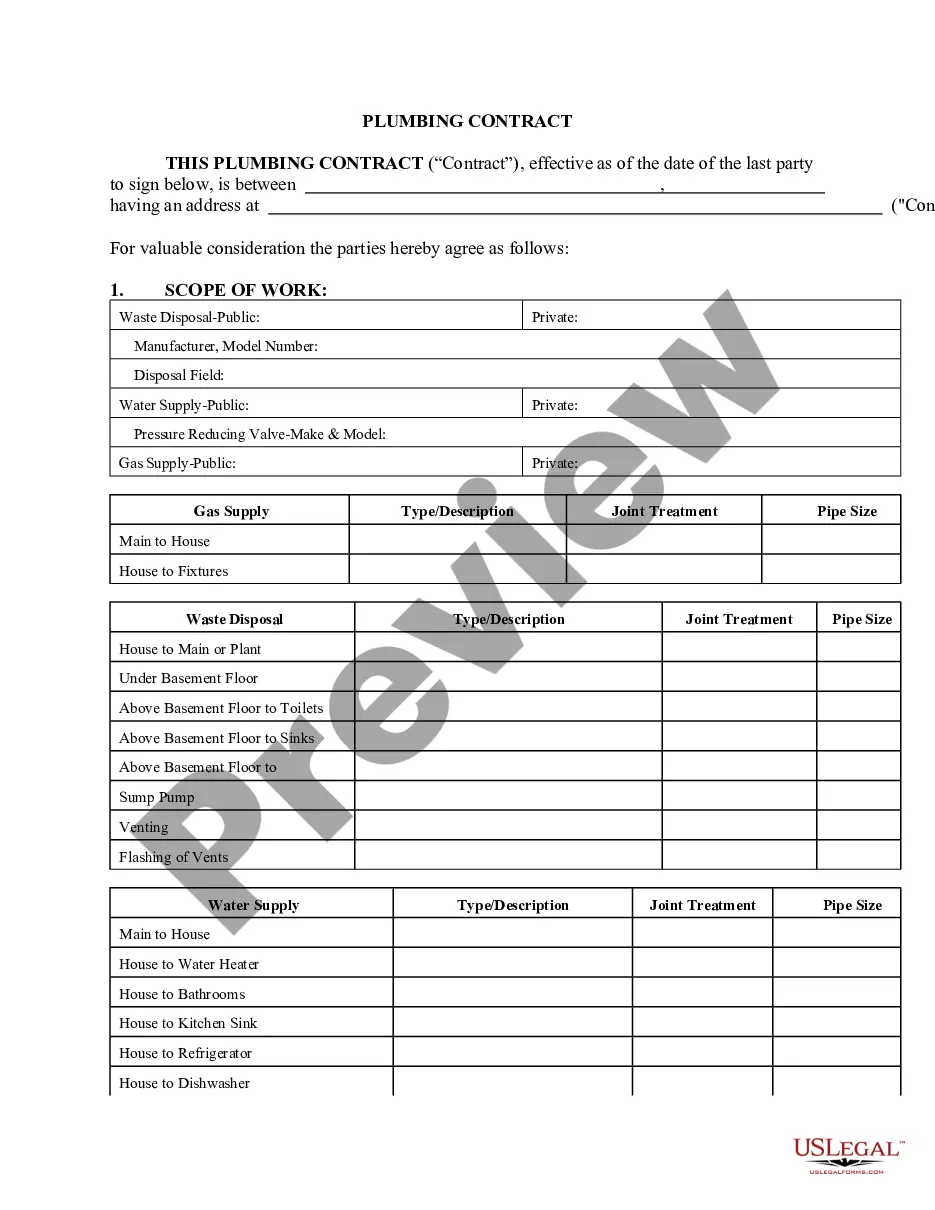
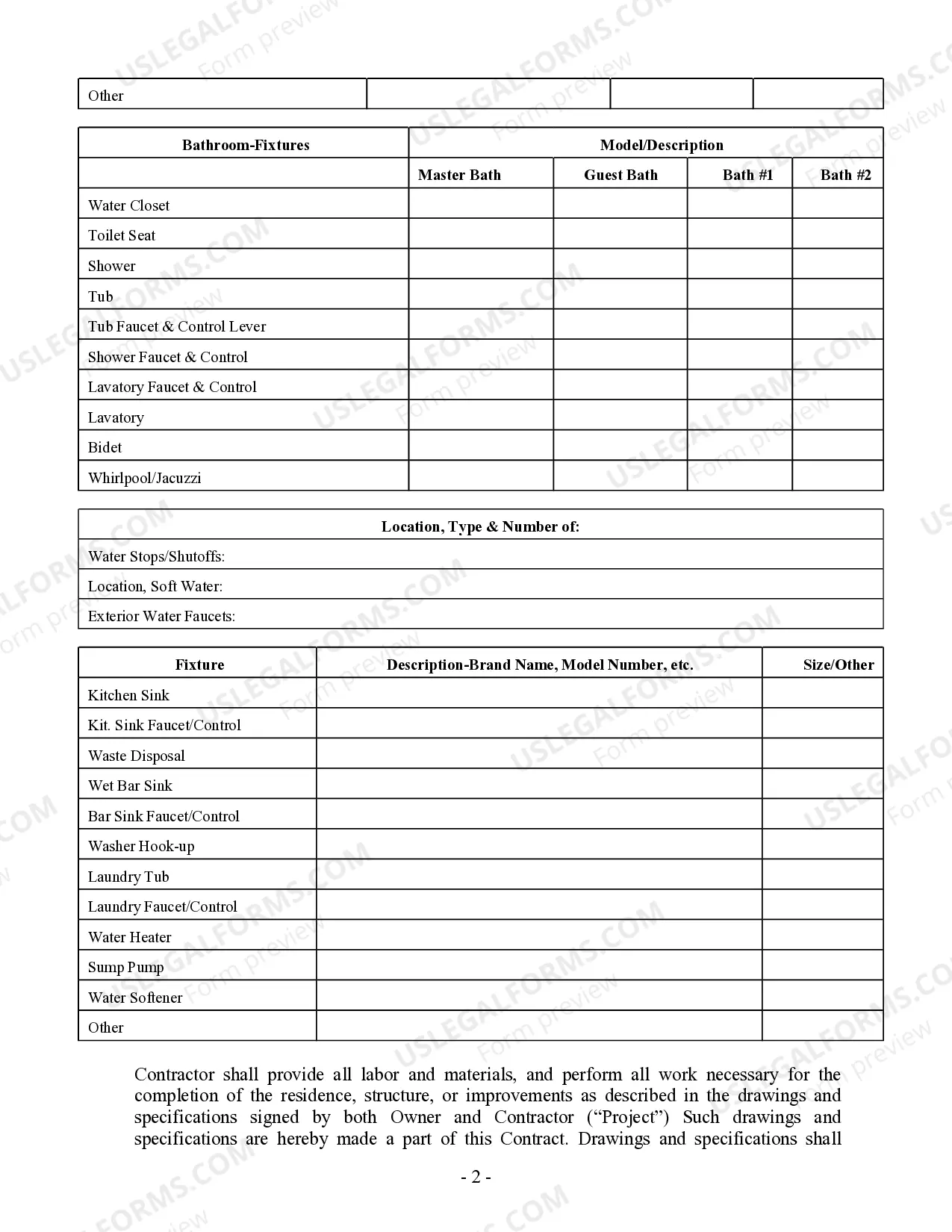
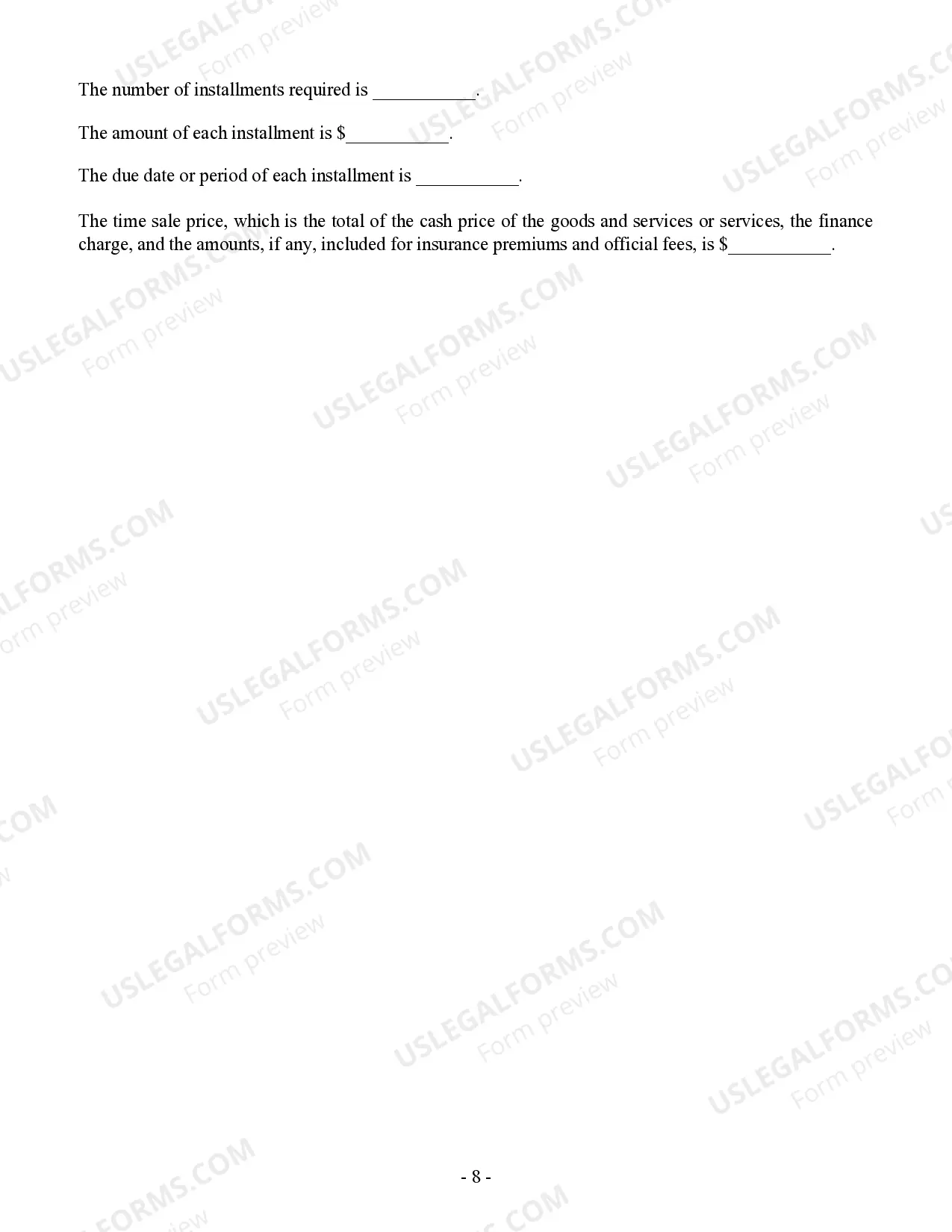
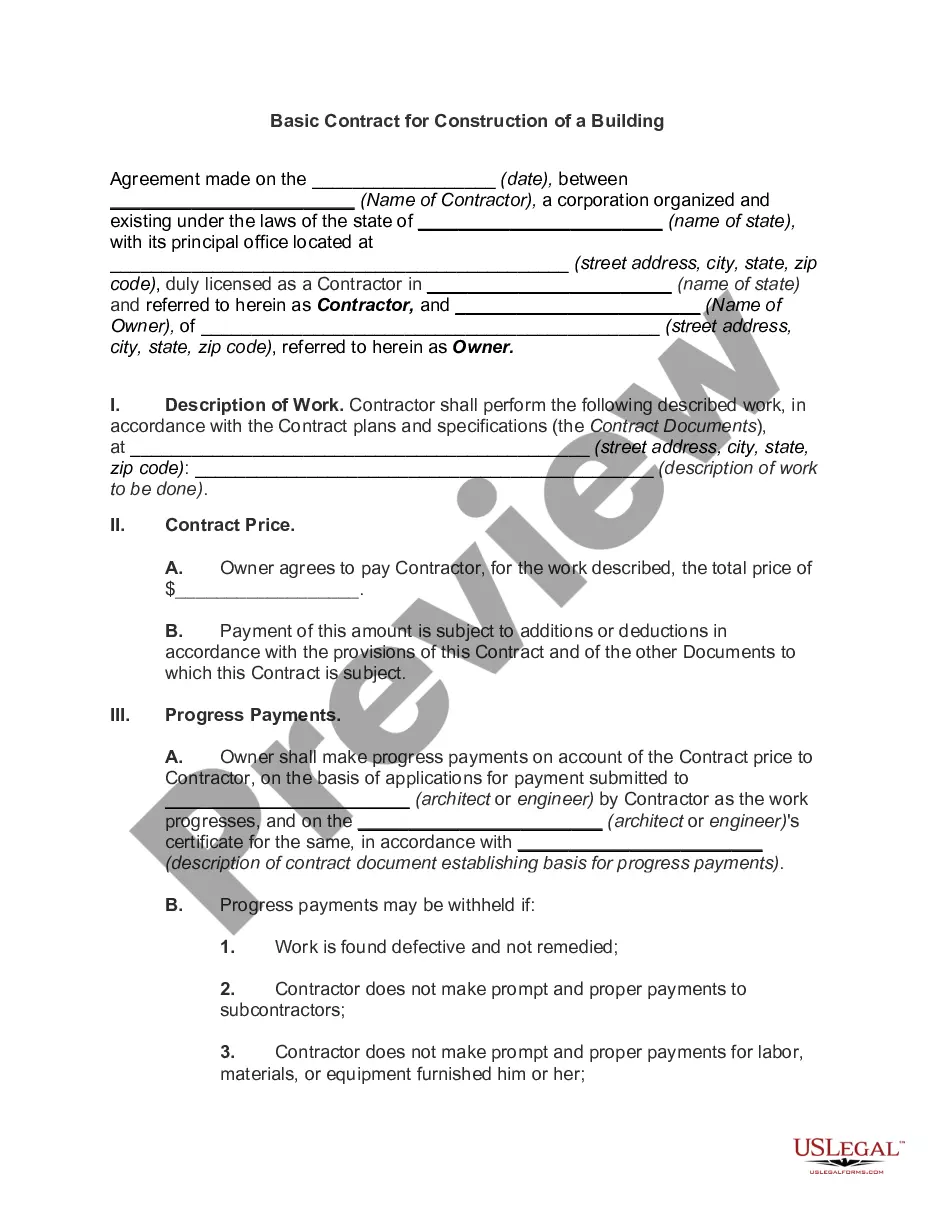
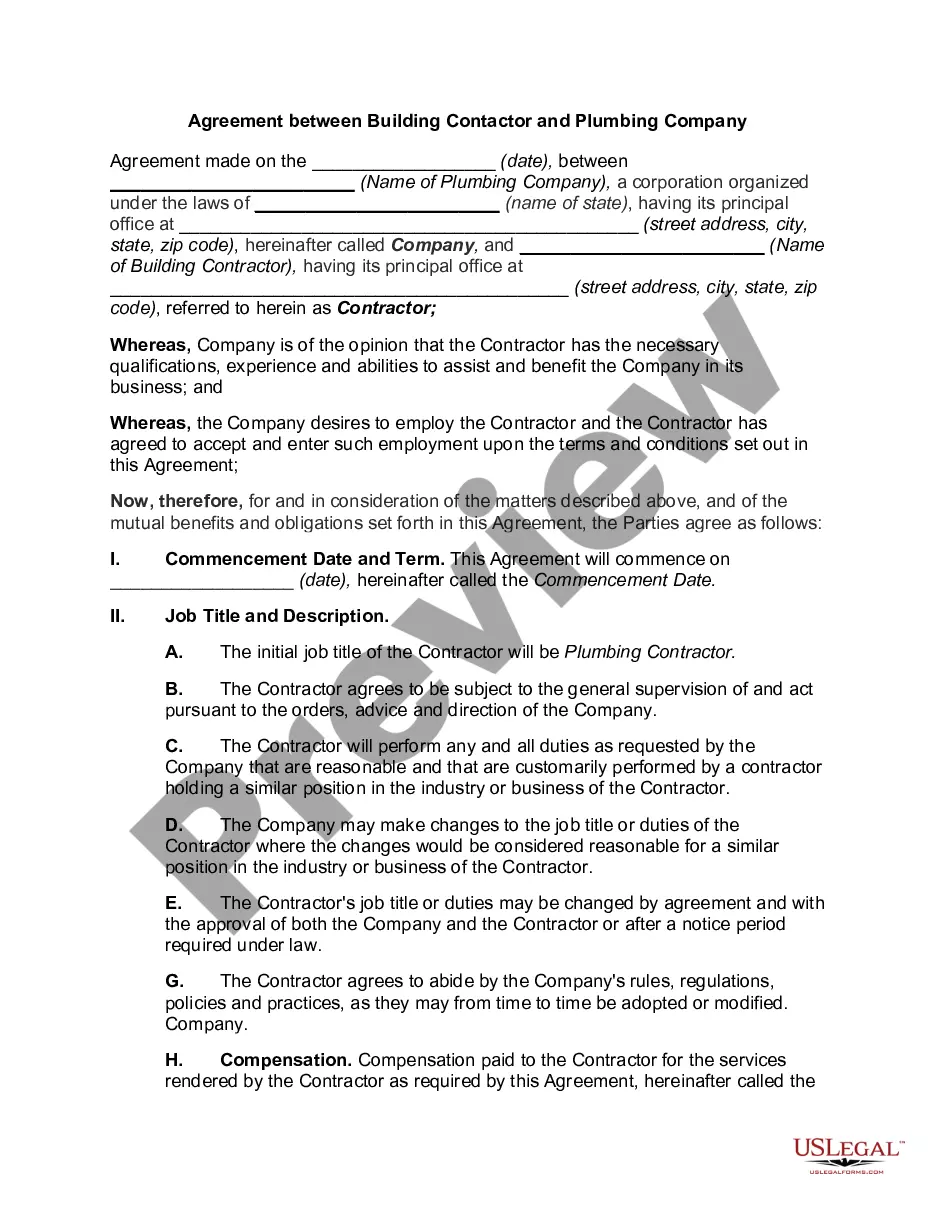
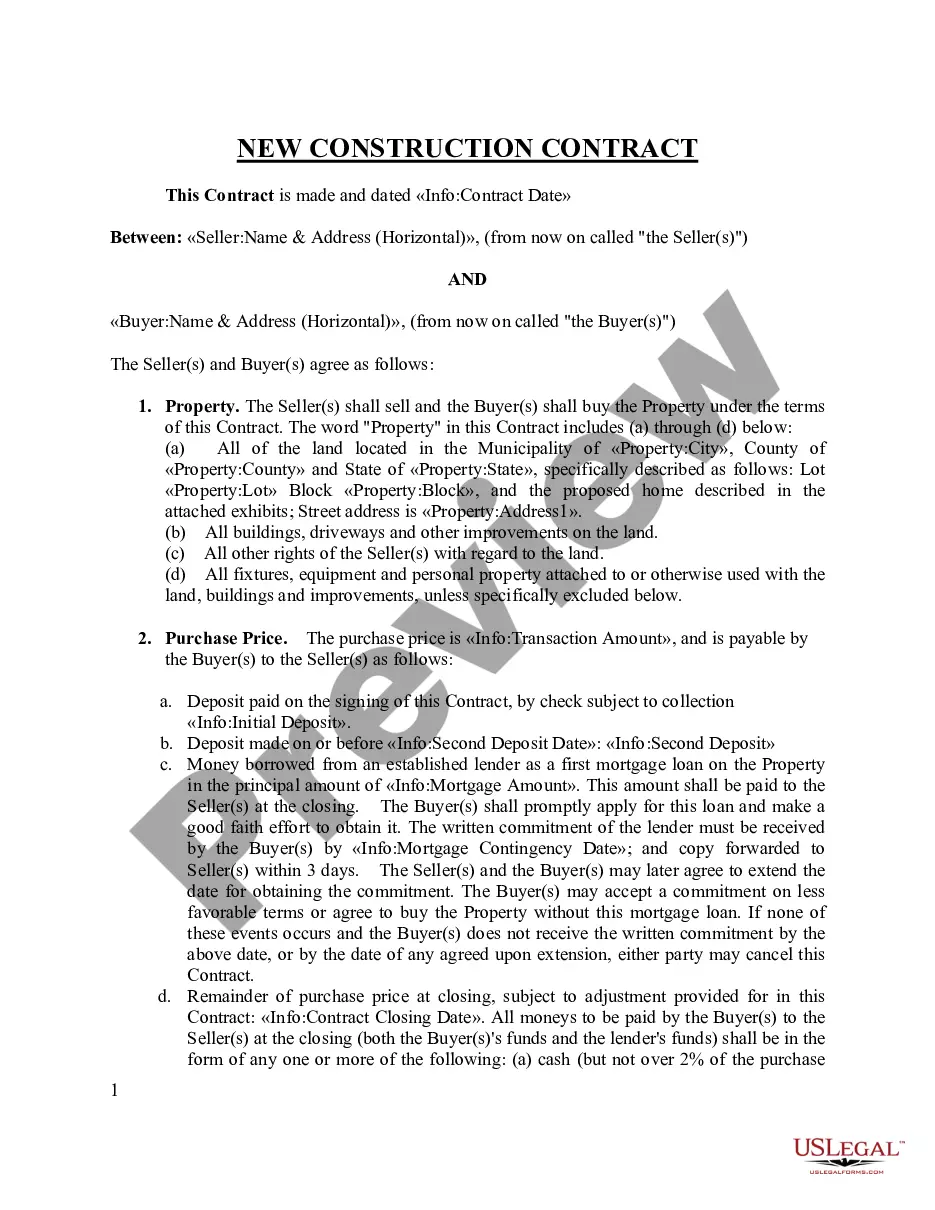
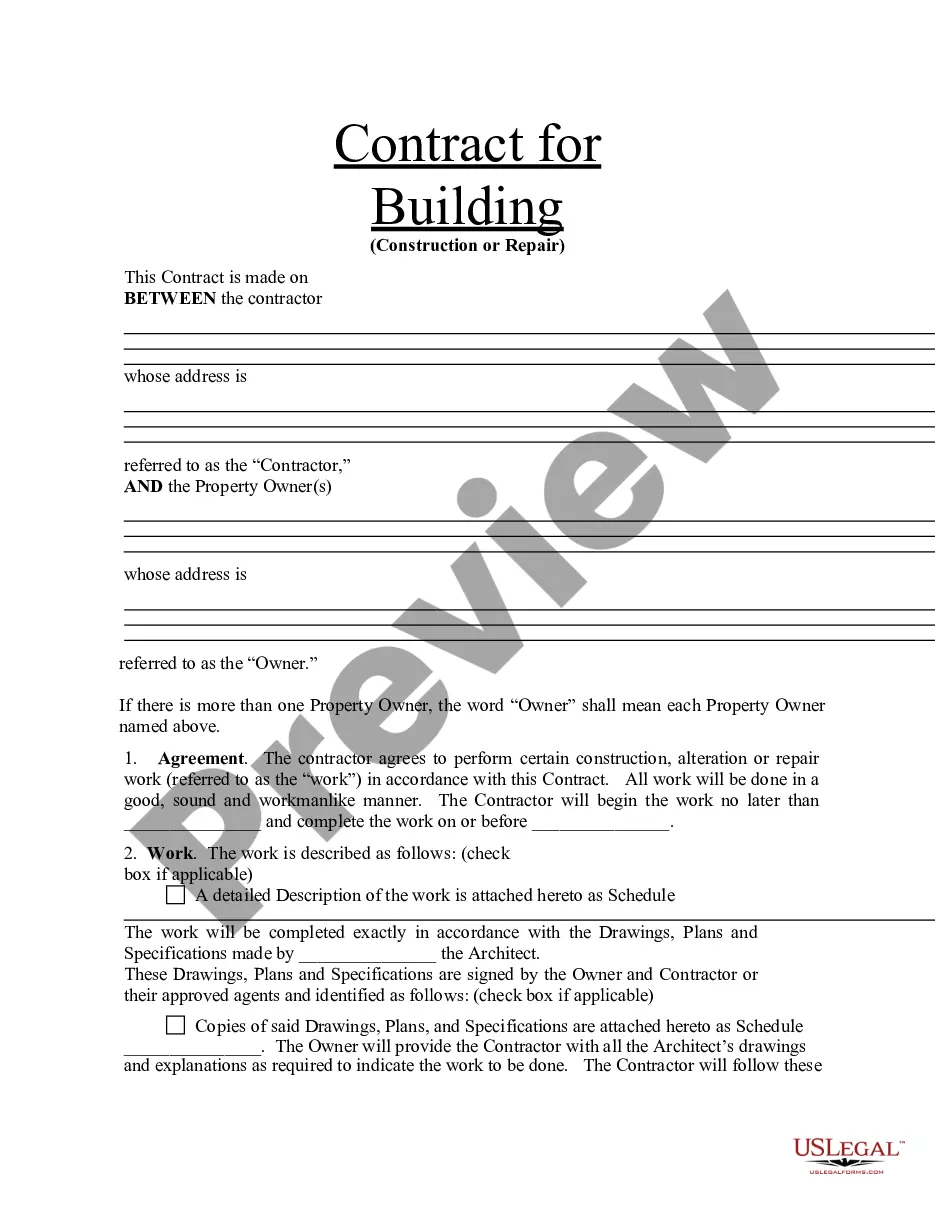
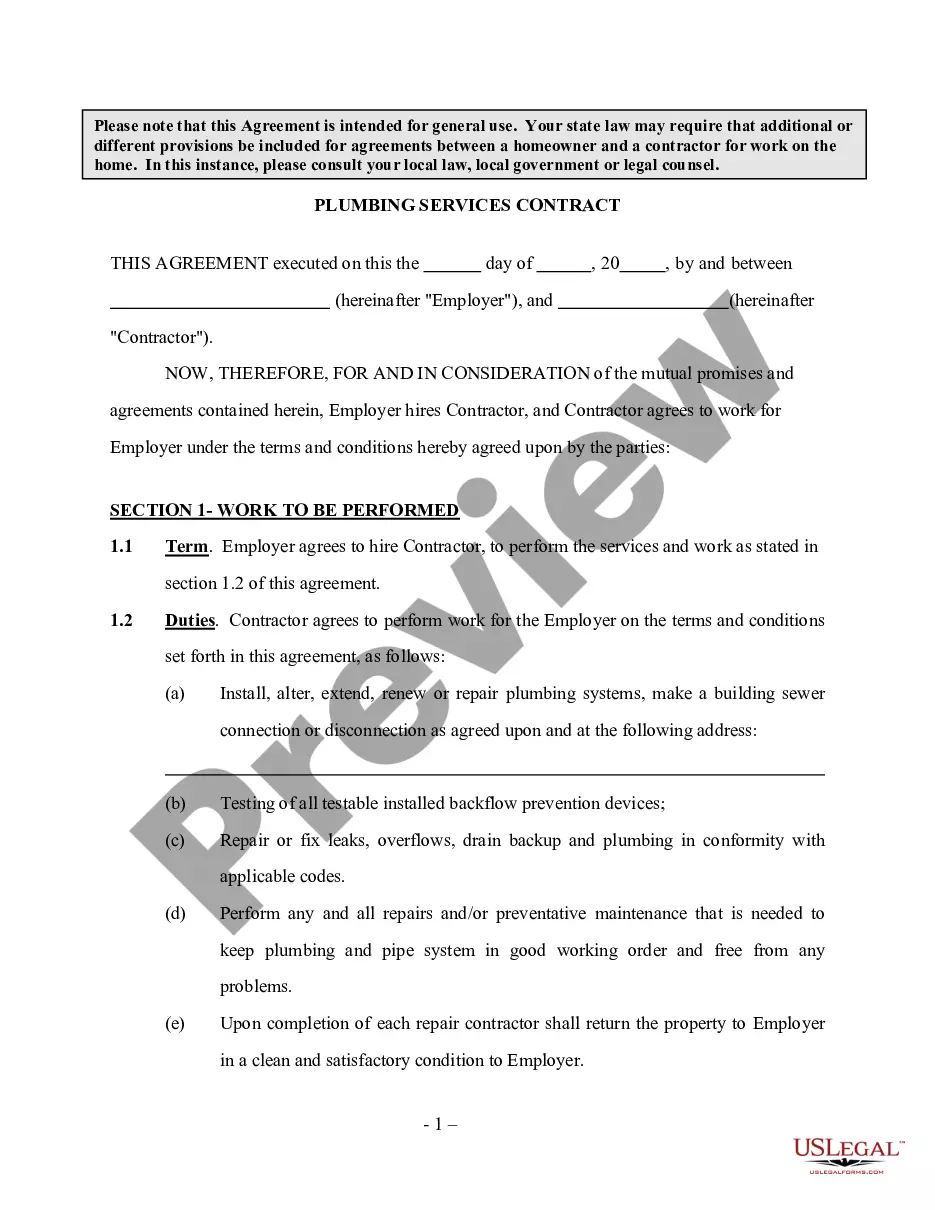
The Plumbing Contract for Contractor is a legal document that outlines the agreement between plumbing contractors and property owners. This form is specifically tailored to either a cost plus or fixed fee payment arrangement, detailing critical aspects like project scope, payment terms, and responsibilities concerning permits and insurance. It differs from other contracts by providing a comprehensive framework designed to meet the requirements of the State of Montana.
Key components of this form
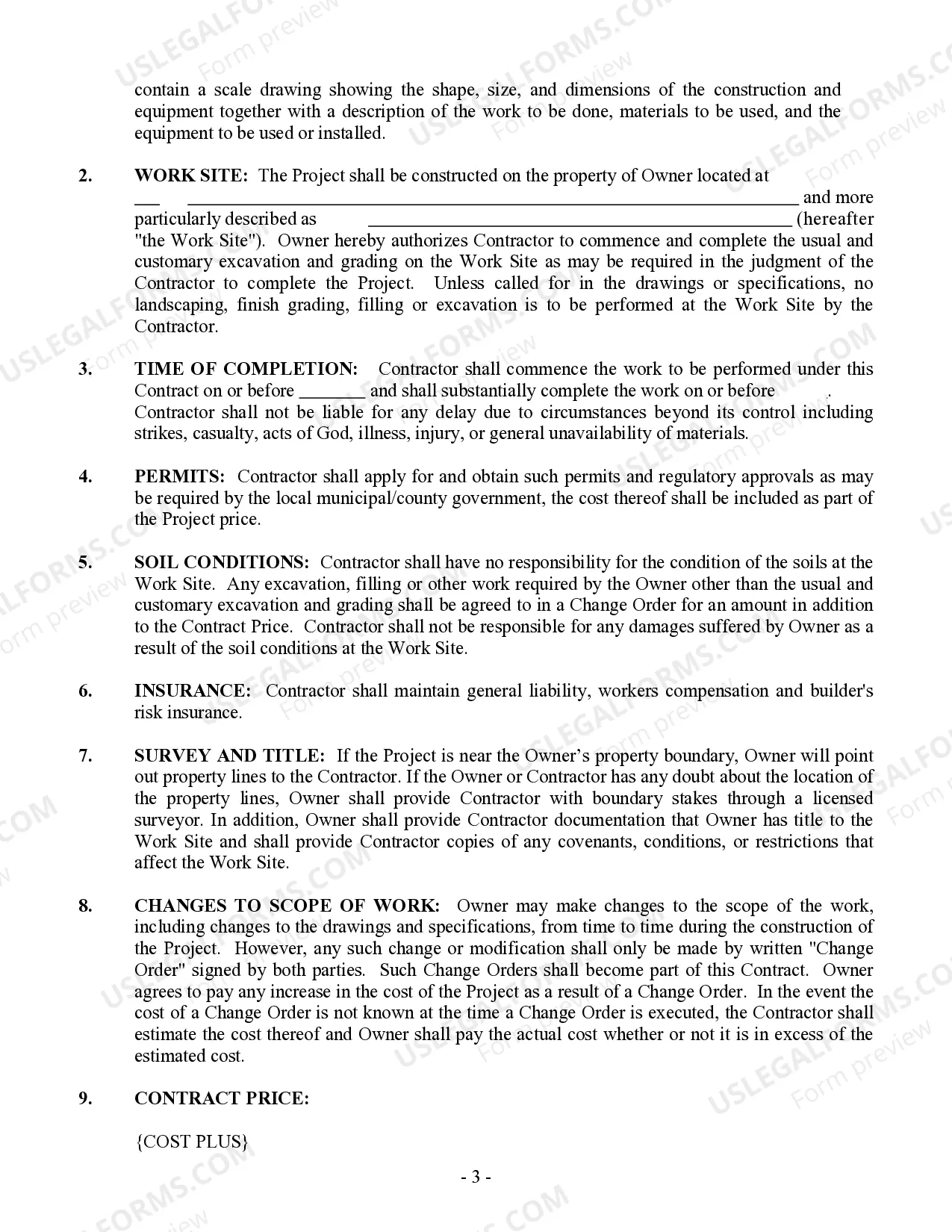
- Work site details: Specifies the location of the plumbing project.
- Permits: Outlines the contractor's responsibility to obtain necessary permits.
- Soil conditions: Clarifies the contractor's non-responsibility for site soil issues.
- Insurance: Mandates the contractor to maintain specific insurance types.
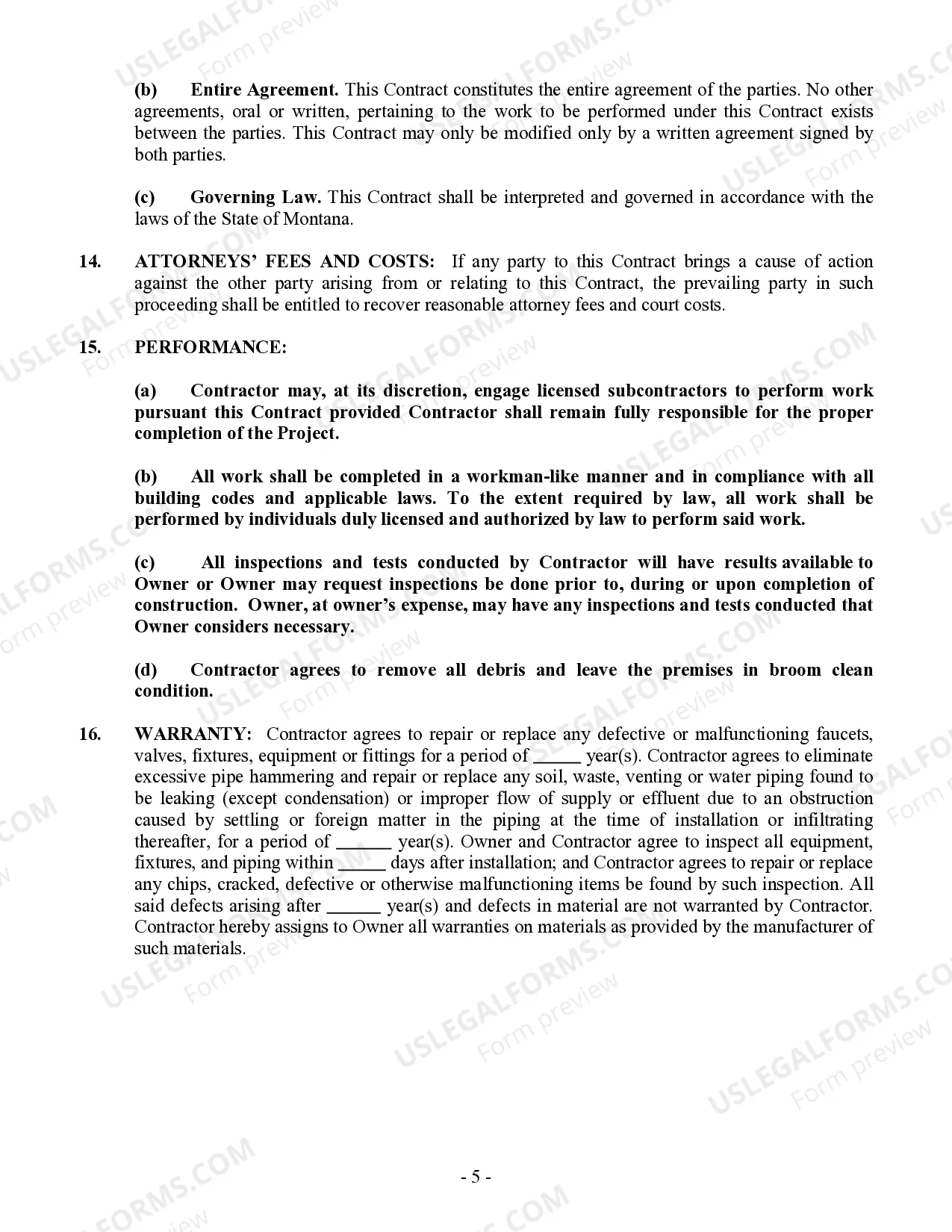
- Change orders: Describes how modifications to the project scope can be handled.
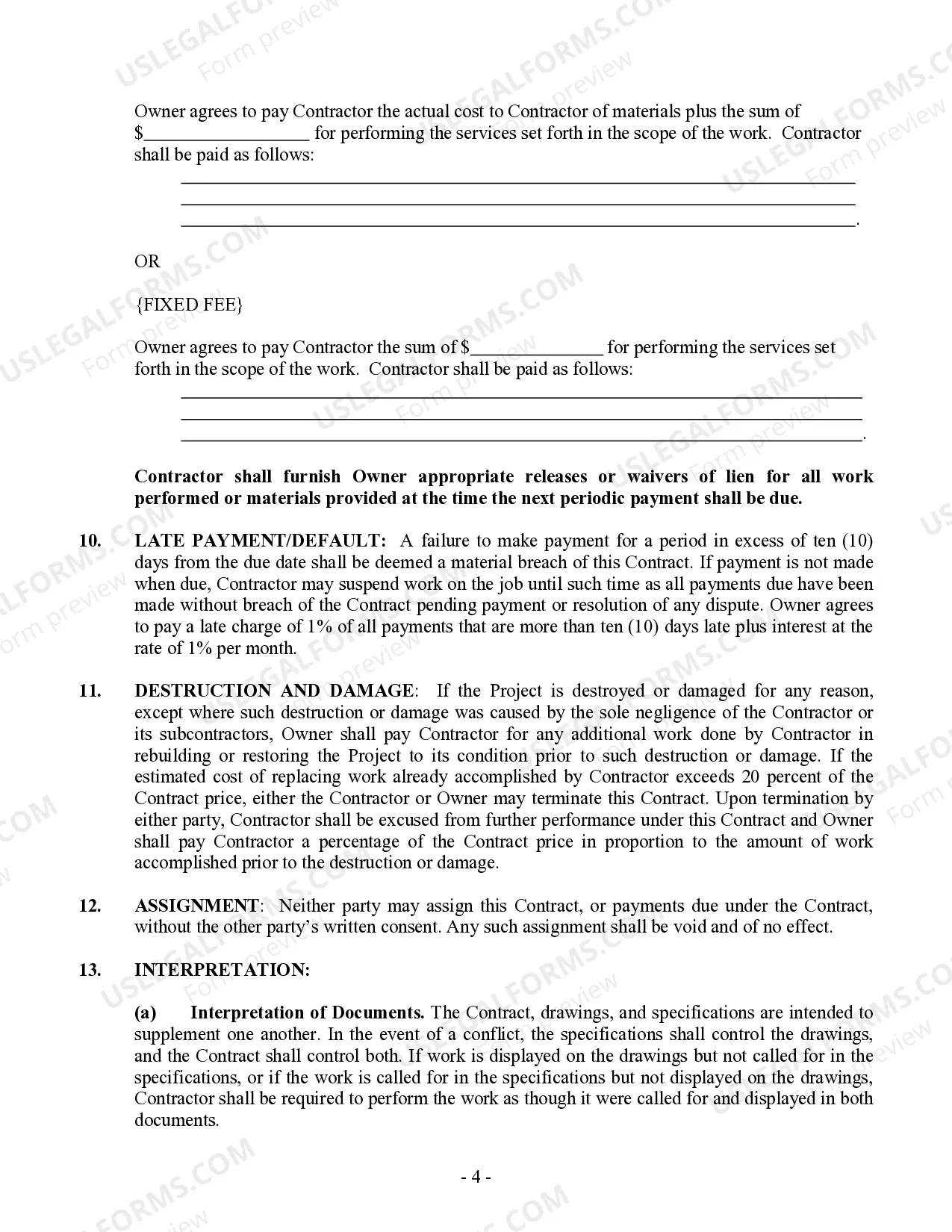
- Payment terms: Defines conditions for default and late payments.
Common use cases
This Plumbing Contract for Contractor should be used when a plumbing contractor and property owner enter into an agreement for plumbing work. It is essential for outlining expectations and protecting both parties in various scenarios, such as renovation projects, new construction, or repairs requiring plumbing services.
Who can use this document
- Property owners hiring plumbing contractors to perform work.
- Plumbing contractors seeking to establish clear terms with clients.
- Individuals or businesses involved in construction projects requiring plumbing services.
Instructions for completing this form
- Identify the parties involved: Enter the names and addresses of the contractor and property owner.
- Specify the work site: Provide the exact location where the plumbing work will take place.
- Detail the project scope: Clearly outline the services to be rendered.
- Enter payment terms: Define whether the payment will be on a cost plus or fixed fee basis.
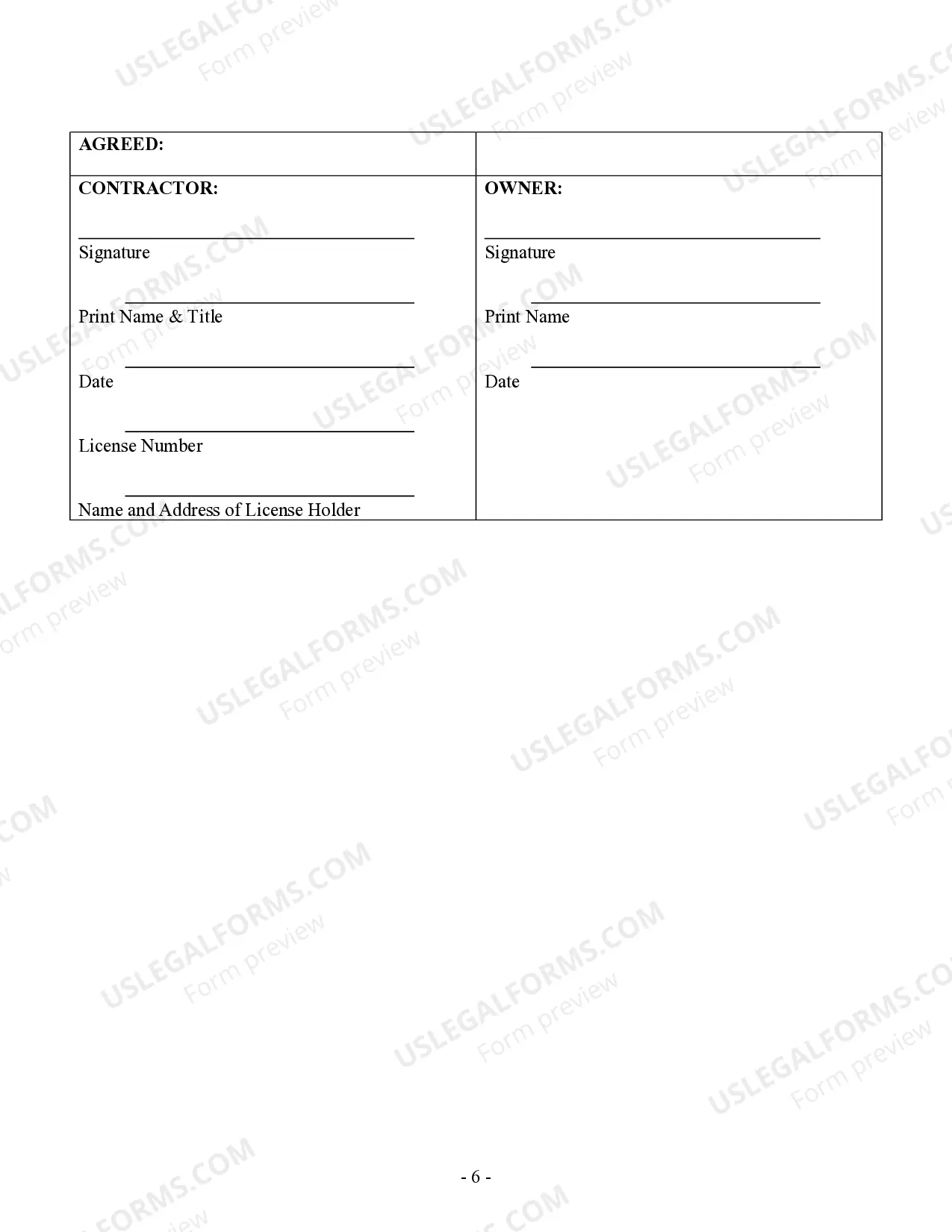
- Sign and date: Ensure both parties sign the contract and provide the date of agreement.
Notarization requirements for this form
This form does not typically require notarization unless specified by local law. Always check local requirements to ensure compliance.
Get your form ready online
Our built-in tools help you complete, sign, share, and store your documents in one place.
Make edits, fill in missing information, and update formatting in US Legal Forms—just like you would in MS Word.
Download a copy, print it, send it by email, or mail it via USPS—whatever works best for your next step.
Sign and collect signatures with our SignNow integration. Send to multiple recipients, set reminders, and more. Go Premium to unlock E-Sign.
If this form requires notarization, complete it online through a secure video call—no need to meet a notary in person or wait for an appointment.
We protect your documents and personal data by following strict security and privacy standards.

Make edits, fill in missing information, and update formatting in US Legal Forms—just like you would in MS Word.

Download a copy, print it, send it by email, or mail it via USPS—whatever works best for your next step.

Sign and collect signatures with our SignNow integration. Send to multiple recipients, set reminders, and more. Go Premium to unlock E-Sign.

If this form requires notarization, complete it online through a secure video call—no need to meet a notary in person or wait for an appointment.

We protect your documents and personal data by following strict security and privacy standards.
Common mistakes to avoid
- Failing to specify the work site accurately.
- Omitting details about permits and responsibility for procurement.
- Neglecting to document changes to the project in writing.
- Not addressing payment terms or late fees clearly.
Benefits of completing this form online
- Convenience of immediate access and download.
- Editability to customize terms specific to your project.
- Reliability of having a document drafted by licensed attorneys.
Main things to remember
- The Plumbing Contract for Contractor is essential for formalizing plumbing service agreements.
- It covers critical aspects like payment terms, change orders, and insurance requirements.
- Using this form helps prevent disputes and clarifies the responsibilities of each party.
Looking for another form?
Form popularity
FAQ
To set yourself up as a self-employed taxpayer with the IRS, you simply start paying estimated taxes (on Form 1040-ES, Estimated Tax for Individuals) and file Schedule C, Profit or Loss From Business, and Schedule SE, Self-Employment Tax, with your Form 1040 tax return each April.
First, prove you independently own a business. Get a Montana Tax Identification Number with the Montana Department of Revenue. Then fill out an independent contractor exemption certification. Fill out and mail in the application form.
Simply put, being an independent contractor is one way to be self-employed. Being self-employed means that you earn money but don't work as an employee for someone else.An independent contractor is someone who provides a service on a contractual basis.
ICEC are services that are used to evaluate whether a specific company or worker for a particular assignment meets the legal requirements to perform as an independent contractor.
1. Not Having a Written Contract.The taxing, labor and employment, and insurance authorities expect a written contract that states that the worker is an independent contractor and will be paid as such with no tax withholding, no benefits, etc.
The general rule is that an individual is an independent contractor if the payer has the right to control or direct only the result of the work and not what will be done and how it will be done. The earnings of a person who is working as an independent contractor are subject to Self-Employment Tax.
Montana law requires construction contractors with employees, corporations or manager-managed limited liability companies in the construction industry to register, which is the same as a license.
Independent contractor's licenses First, prove you independently own a business. Get a Montana Tax Identification Number with the Montana Department of Revenue. Then fill out an independent contractor exemption certification. You can also choose to purchase a self-elected workers' compensation insurance plan.