Mississippi Roadway and Street Easement
Overview of this form
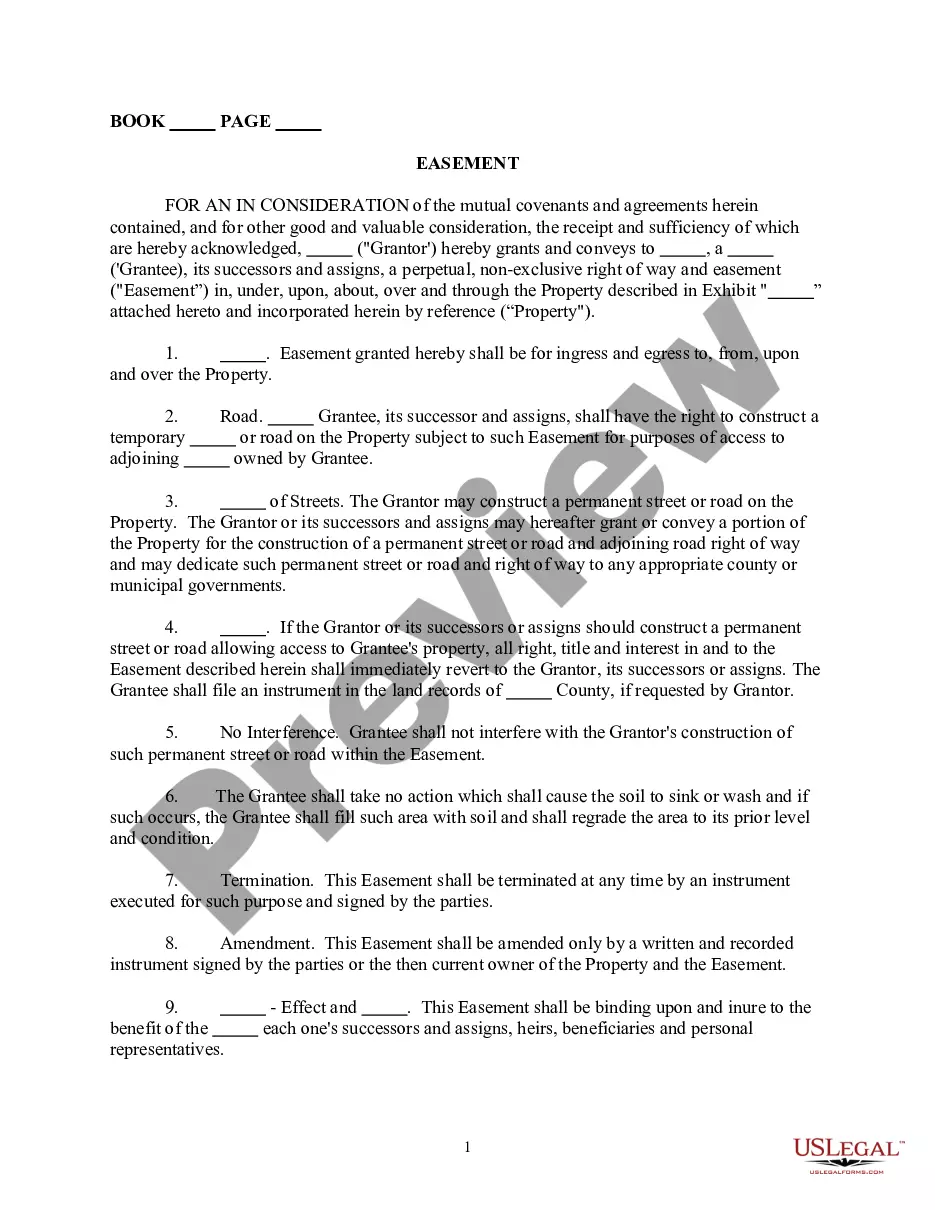
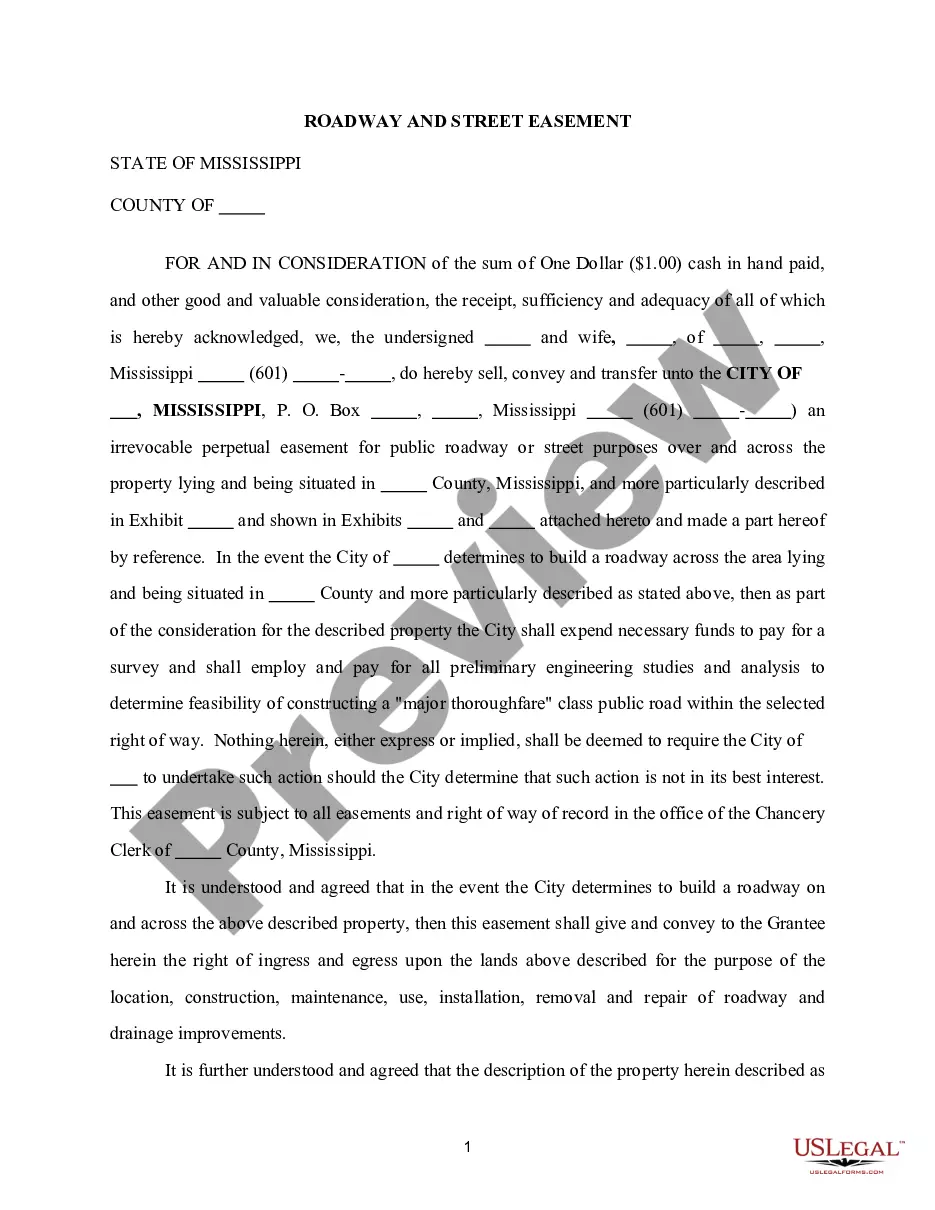
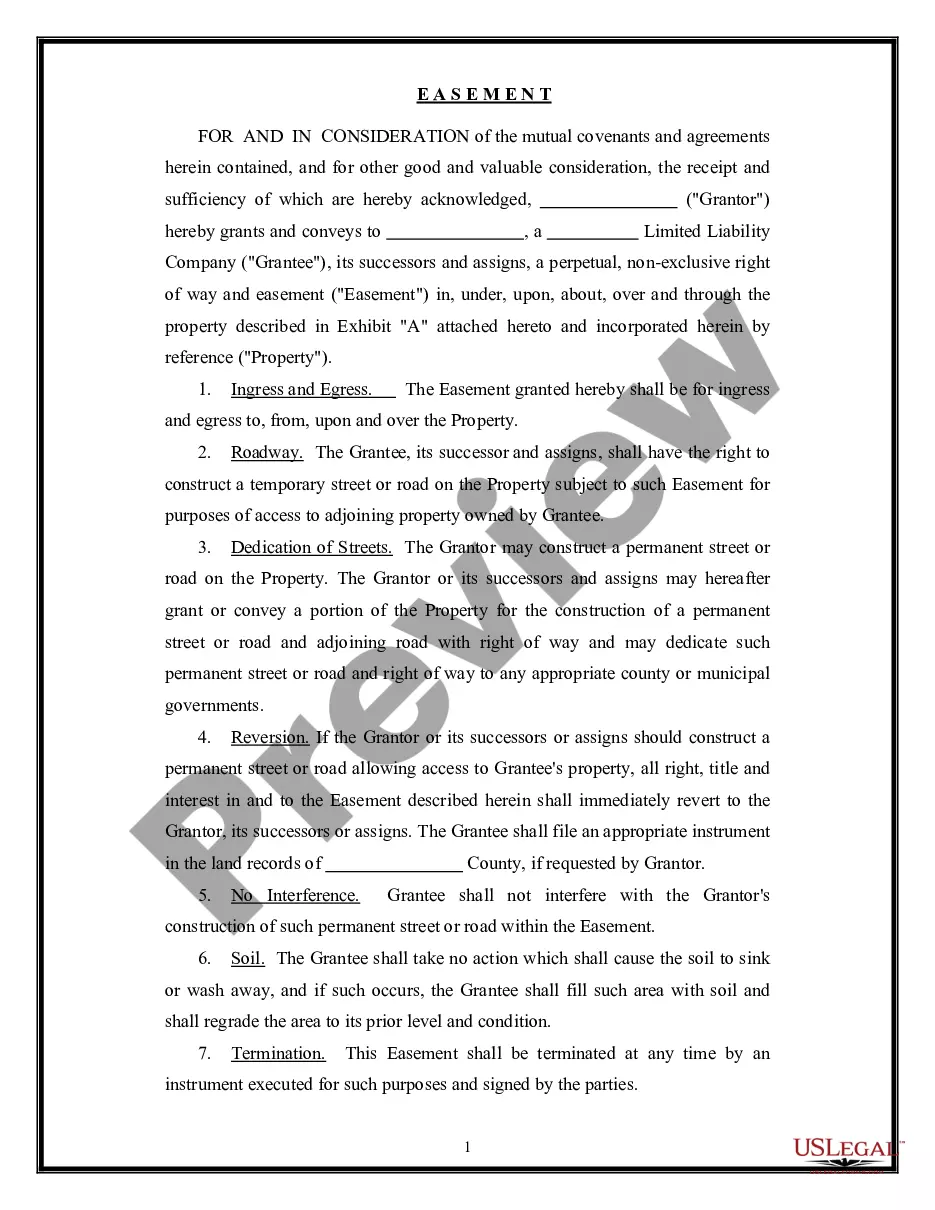
The Roadway and Street Easement is a legal document that grants a perpetual, non-exclusive right of way for the construction of a street or road on someone else's property. This form differs from related easement agreements by specifically focusing on streets and roadways, ensuring that individuals or entities have legal access to build and maintain these thoroughfares without interfering with the property ownerâs rights.
Main sections of this form
- No interference clause: Ensures the grantee does not disrupt the grantor's construction of the road or street.
- Soil maintenance clause: Requires the grantee to prevent soil erosion and restore the area if damage occurs.
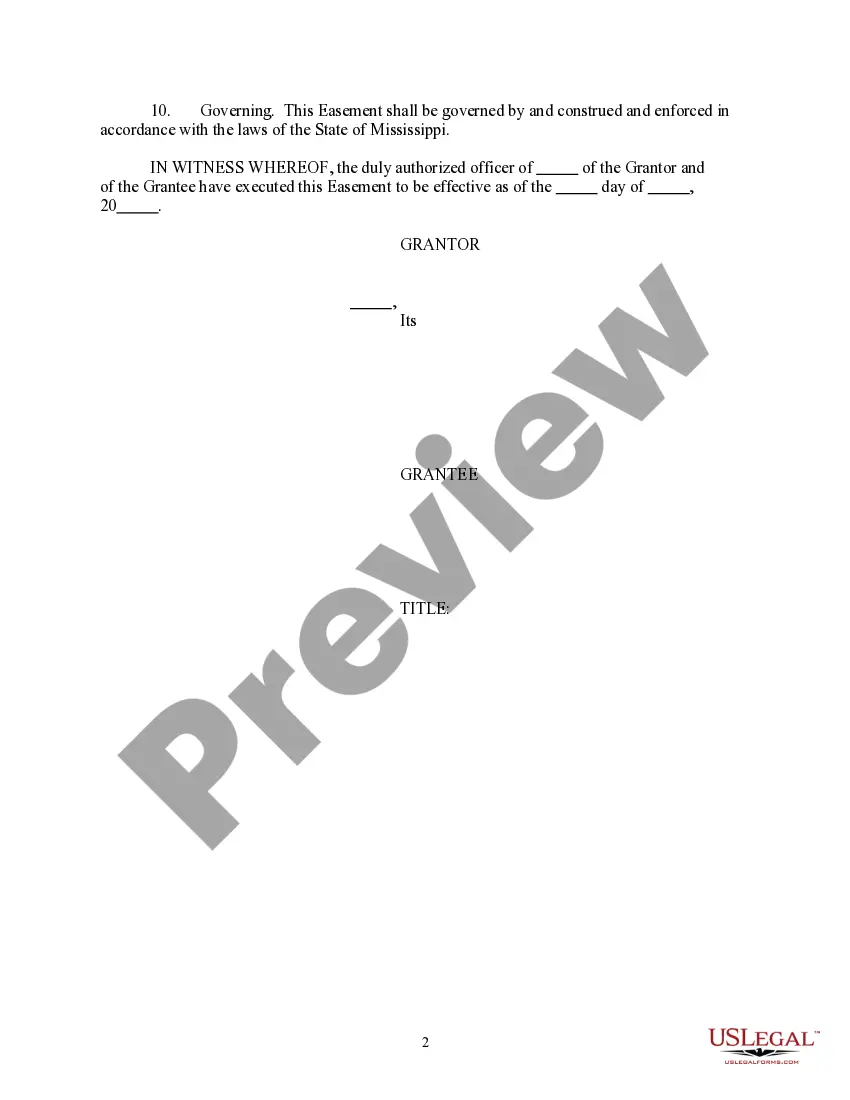
- Termination clause: Describes the process by which the easement can be terminated by mutual agreement of the parties involved.

When to use this form
You should use the Roadway and Street Easement when you need to grant permission for the construction and maintenance of a roadway on another partyâs property. This form is commonly used by property owners who want to allow access for road construction, developers who need to facilitate transportation infrastructure, and utility companies that require road access for their services.
Intended users of this form
- Property owners granting access for roadway construction.
- Developers needing to establish roadways on adjacent property.
- Utility companies requiring easements for service lines.
- Homeowners associations establishing shared roads within communities.
How to complete this form
- Identify the parties involved: Confirm the names of the grantor (property owner) and grantee (individual or business receiving the easement).
- Specify the property: Describe the property where the easement will be established, including boundaries and relevant locations.
- Detail the easement terms: Clearly state the purpose of the easement and any conditions attached, such as maintenance obligations.
- Address the termination clause: Include the conditions under which the easement can be terminated.
- Obtain signatures: Ensure all parties sign the document to make it legally binding.
Notarization requirements for this form
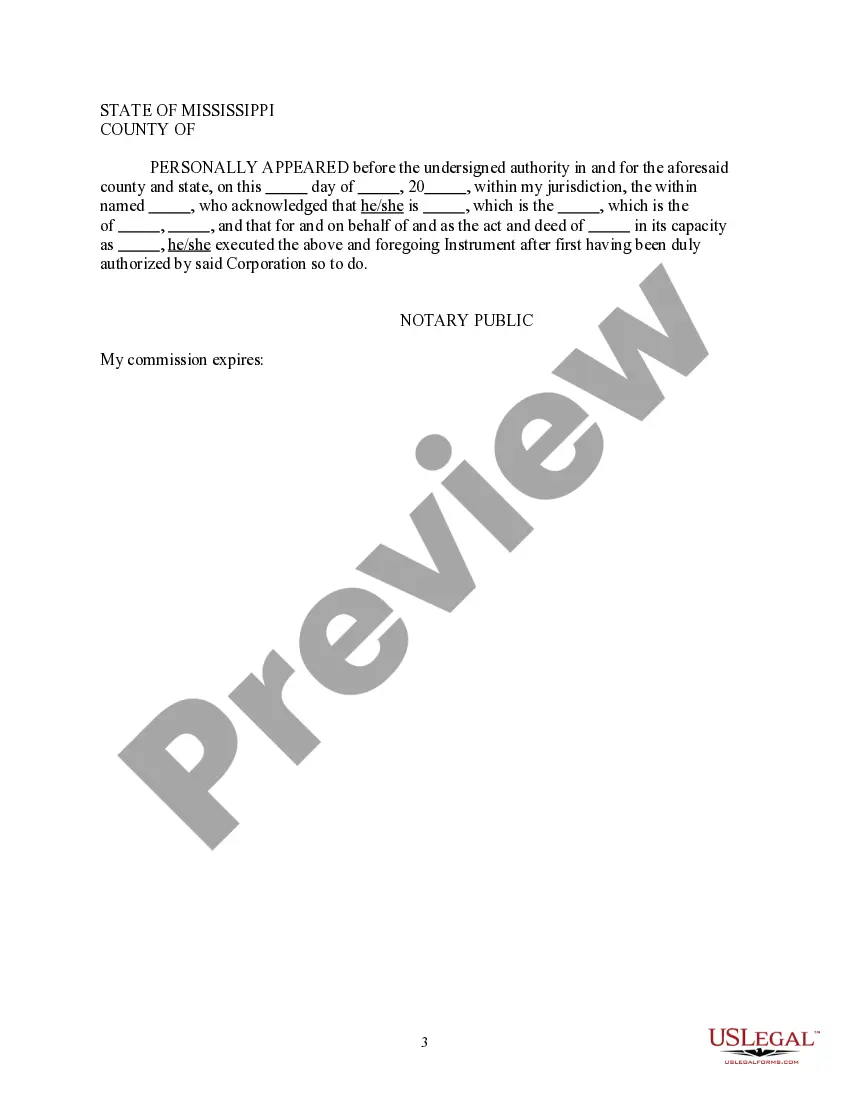
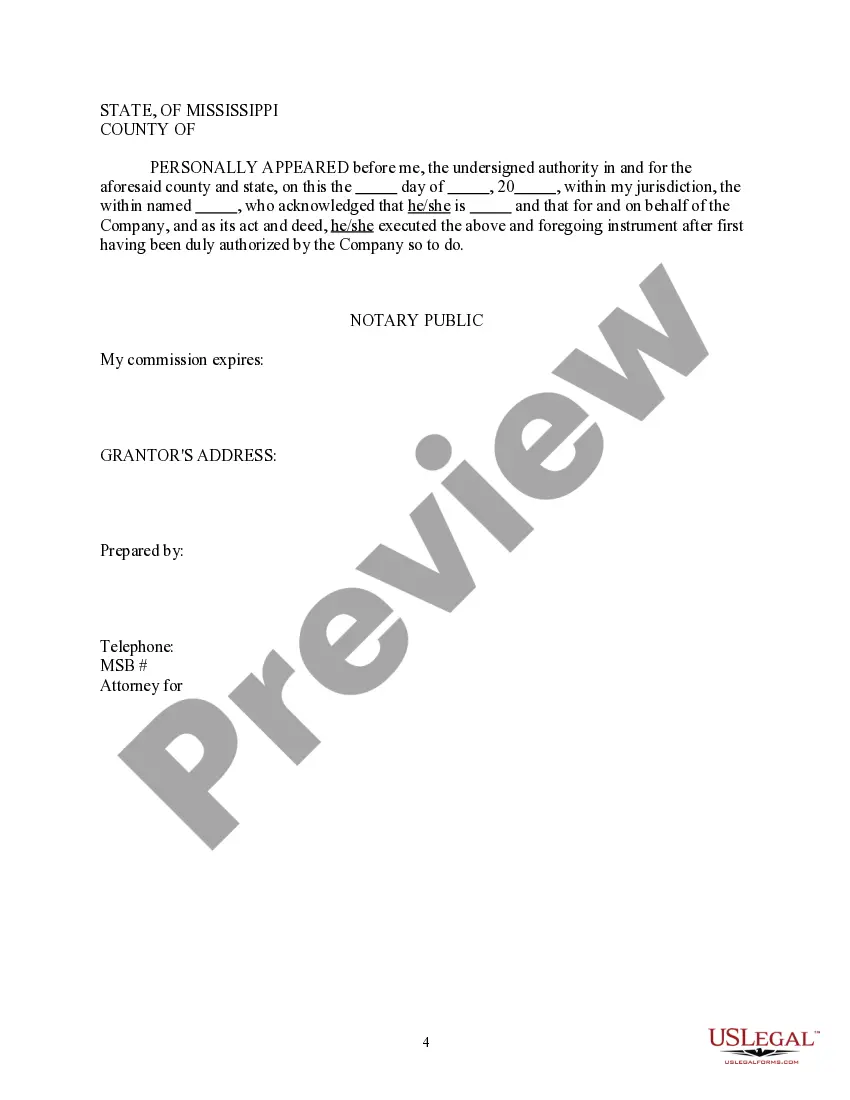
This form does not typically require notarization unless specified by local law. However, obtaining notarization can add an extra layer of authenticity and may be recommended for legal validity.
Get your form ready online
Our built-in tools help you complete, sign, share, and store your documents in one place.
Make edits, fill in missing information, and update formatting in US Legal Forms—just like you would in MS Word.
Download a copy, print it, send it by email, or mail it via USPS—whatever works best for your next step.
Sign and collect signatures with our SignNow integration. Send to multiple recipients, set reminders, and more. Go Premium to unlock E-Sign.
If this form requires notarization, complete it online through a secure video call—no need to meet a notary in person or wait for an appointment.
We protect your documents and personal data by following strict security and privacy standards.

Make edits, fill in missing information, and update formatting in US Legal Forms—just like you would in MS Word.

Download a copy, print it, send it by email, or mail it via USPS—whatever works best for your next step.

Sign and collect signatures with our SignNow integration. Send to multiple recipients, set reminders, and more. Go Premium to unlock E-Sign.

If this form requires notarization, complete it online through a secure video call—no need to meet a notary in person or wait for an appointment.

We protect your documents and personal data by following strict security and privacy standards.
Common mistakes to avoid
- Failing to accurately describe the property boundaries can lead to disputes.
- Not specifying maintenance responsibilities may result in property damage.
- Missing signatures from one or more parties can invalidate the easement.
Benefits of completing this form online
- Convenience: Download and fill out the form at your convenience without visiting a lawyer's office.
- Editable: Easily modify the form to fit specific needs before finalizing the agreement.
- Reliable: Prepared by licensed attorneys to ensure compliance with legal standards.
Legal use & context
- Easements provide a legal interest in property and should be clearly articulated to prevent future disputes.
- The rights granted by an easement do not transfer ownership of the property but allow specific usage.
- Understanding the limitations of easements is crucial as they may have restrictions based on zoning laws or local regulations.
Key takeaways
- The Roadway and Street Easement allows for necessary access to construct and maintain roads on private property.
- Clearly outlining the terms and conditions helps prevent legal conflicts in the future.
- Online access to this form streamlines the process of obtaining easements for all parties involved.
Looking for another form?
Form popularity
FAQ
An easement owner cannot claim another party has trespassed on their easement, because trespass involves interference with the plaintiff's exclusive possession. Easement holders do not have a right to exclusive possession. They may claim nuisance, but only if the interference is substantial and unreasonable.
An access easement is a right to pass over someone else's property for you guessed it access. A private road also provides access to one's land.Generally, only a limited number of people may use an access easement.
Benefits the owner of adjacent land. The easement is thus appurtenant to the holder's land. The benefited land is called the dominant tenementThe land that benefits from an easement., and the burdened landthat is, the land subject to the easementis called the servient tenement.
The party gaining the benefit of the easement is the dominant estate (or dominant tenement), while the party granting the benefit or suffering the burden is the servient estate (or servient tenement). For example, the owner of parcel A holds an easement to use a driveway on parcel B to gain access to A's house.
Easement holders have the right to use the land to their enjoyment as long as it does not place an unreasonable burden on the servient estate. Landowners have the right to make whatever use of the land as long as it doesn't unduly affect the easement.
If an authority has an easement registered over your land, they have the right to access the easement to maintain or repair the easement land or their equipment on the land.
A road easement gives you the right to access a part of someone else's property to enter and exit your own. They are commonly given to property owners with landlocked property, which means they would be unable to reach their property without a road easement.