Texas Release of Vendor's Lien
What is this form?
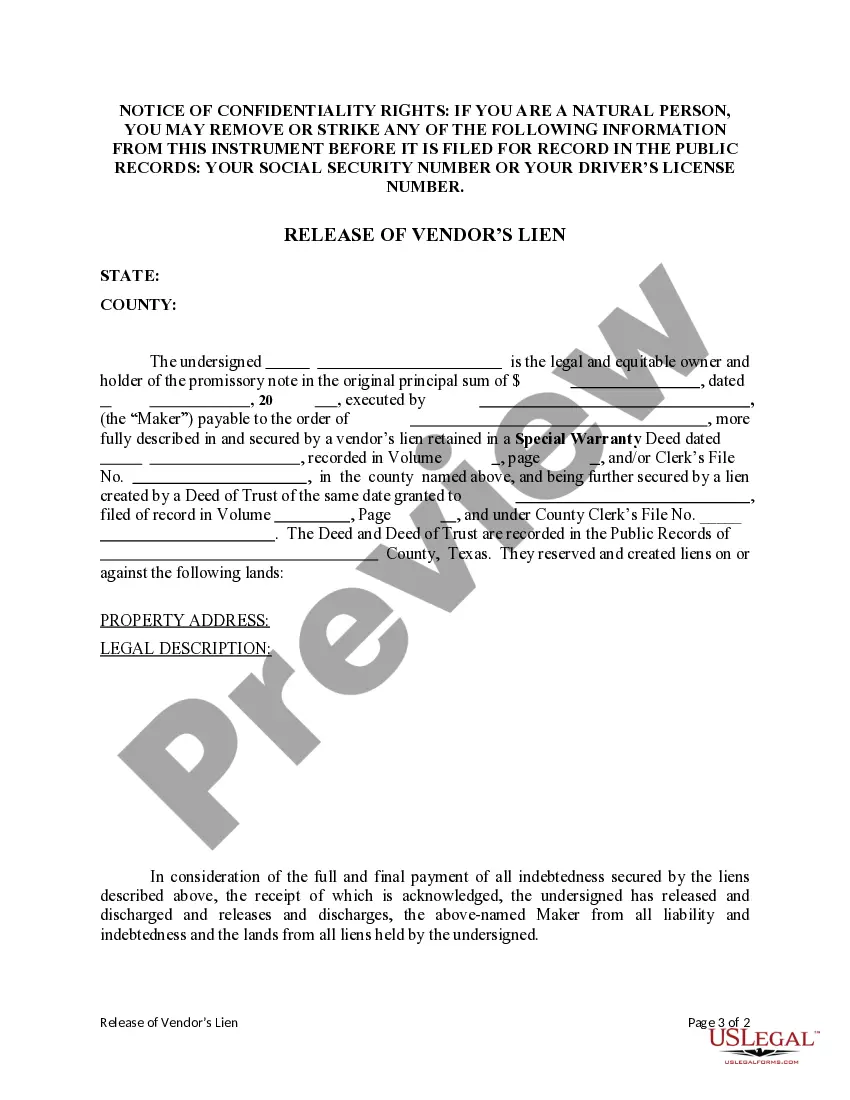
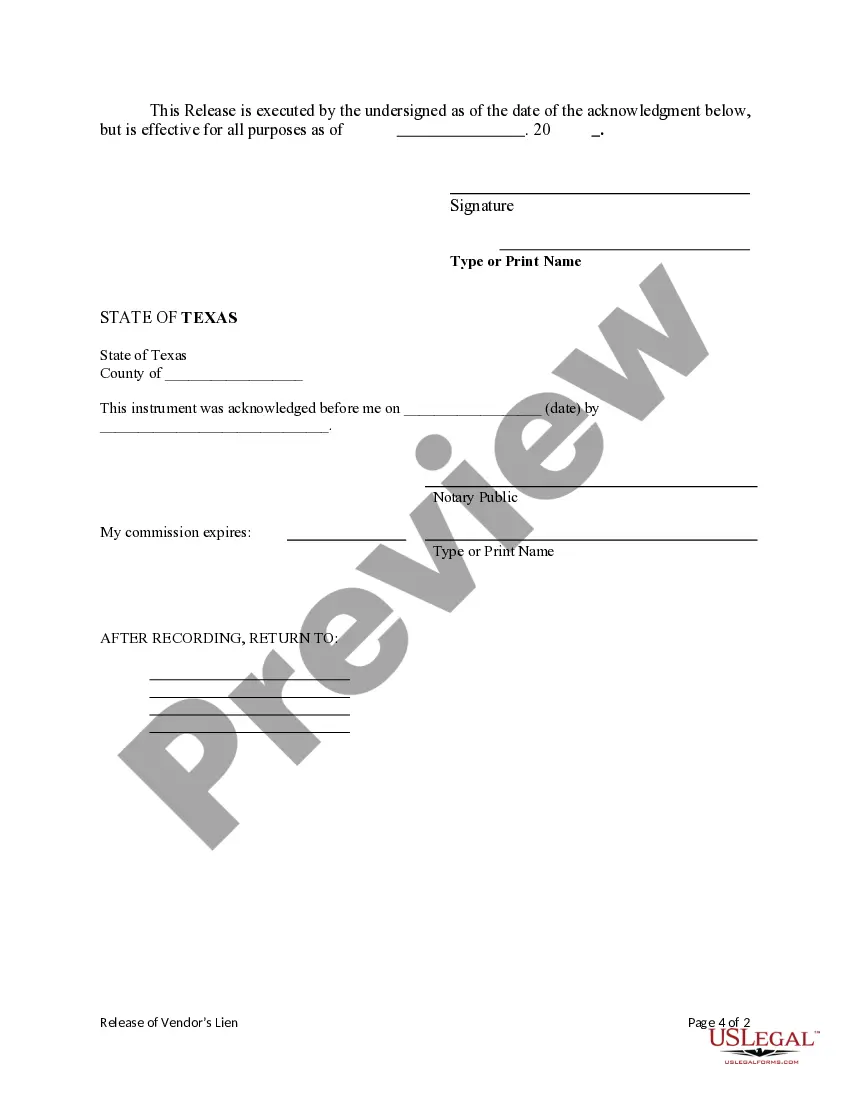
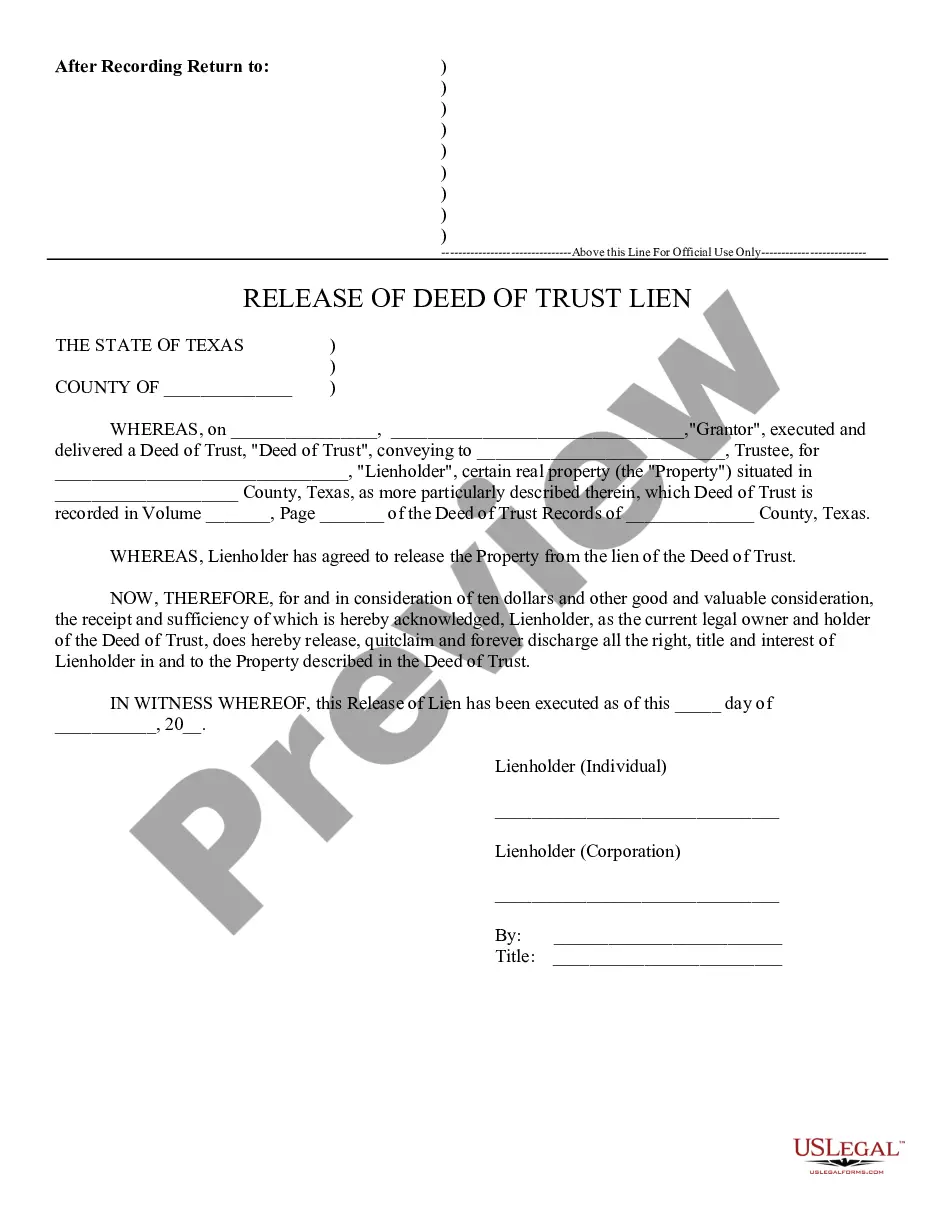
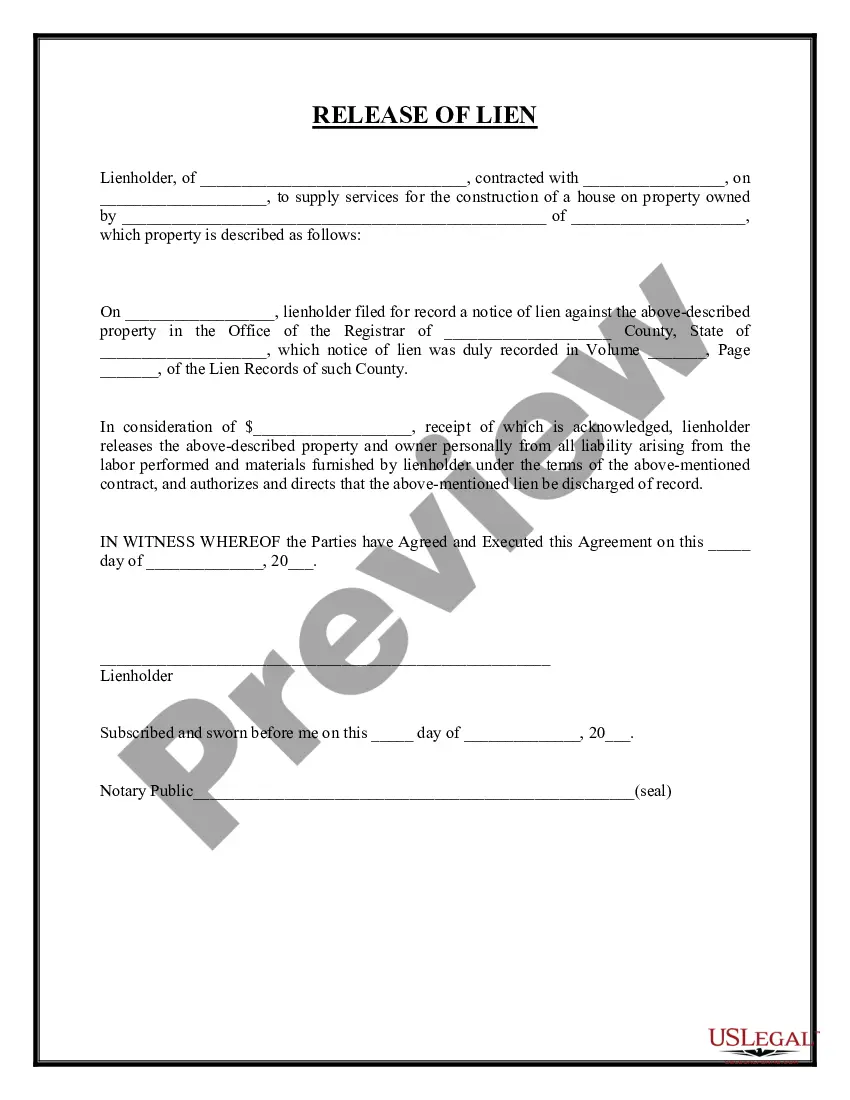
The Release of Vendor's Lien form is a legal document that allows the lienholder to officially release their claim on a property. This form is crucial when a vendor's lien has been satisfied, ensuring that the property is cleared of any financial encumbrances related to the deed of trust. Unlike similar forms, this release specifically focuses on vendor liens, distinguishing it from general lien releases applicable to other types of claims.
Key components of this form
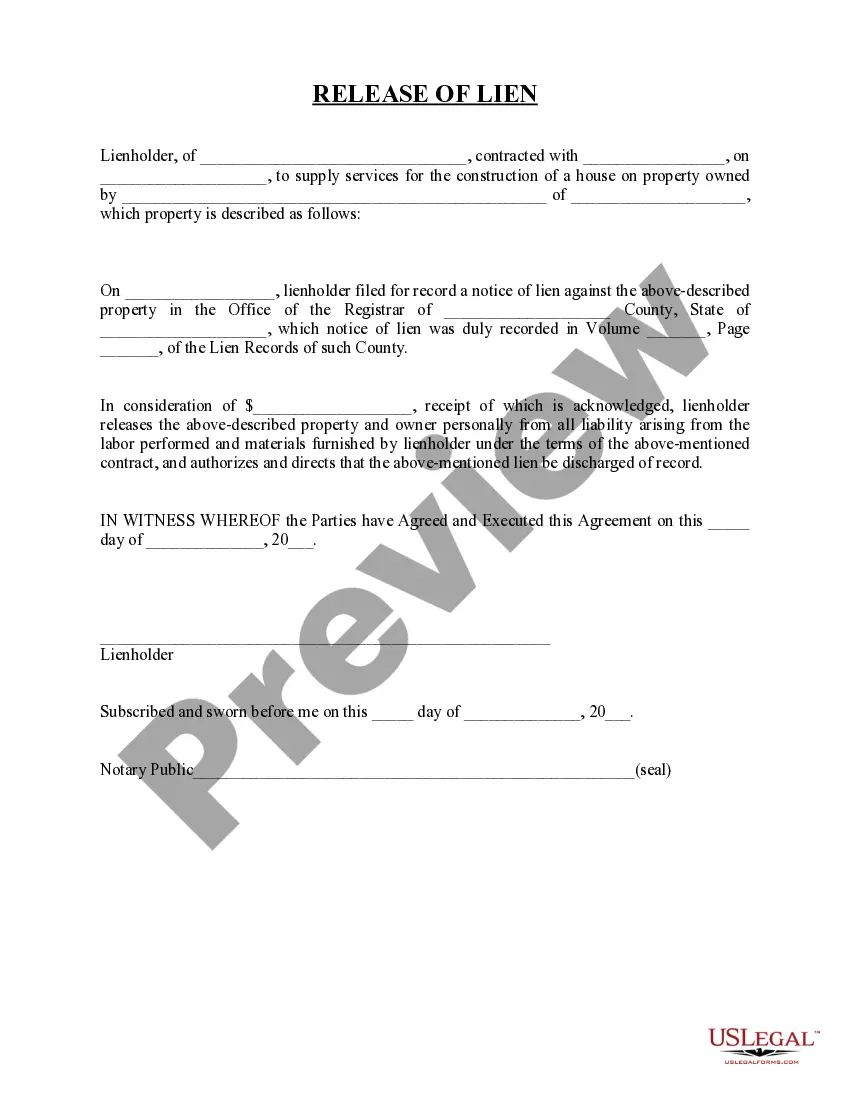
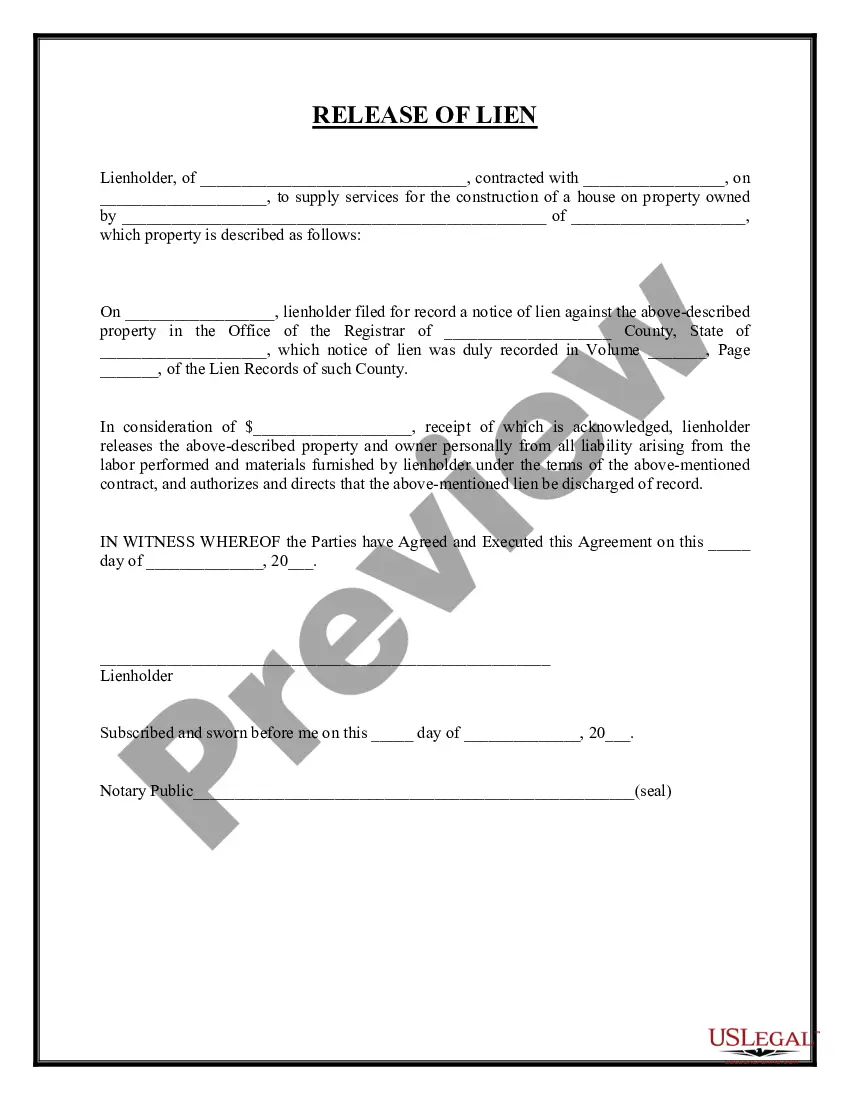
- Identification of the lienholder and property owner.
- Description of the property being released from lien.
- Statement regarding the satisfaction of the lien.
- Signatures of the lienholder and witnesses, if necessary.
- Date of the release to document the transaction timeline.
When to use this form
This form is needed when a vendor has accepted payment and wishes to discharge their lien on a property. Common scenarios include the completion of a sale or financing agreement where the vendor's claim on the property must be released to allow for the transfer of ownership or clear the title. It is essential in real estate transactions to ensure that the property is free from encumbrances before proceeding.
Who this form is for
This form is intended for:
- Property owners who have settled their debts with a vendor.
- Vendors or lienholders who are releasing their claim on a property.
- Real estate professionals involved in property transactions.
How to prepare this document
- Identify the parties involved, including the lienholder and property owner.
- Specify the property by providing a full legal description.
- State that the lien has been satisfied to clarify the intent of the release.
- Sign and date the form, ensuring all required signatures are included.
- If necessary, have the document witnessed or notarized, as state law dictates.
Notarization guidance
This form does not typically require notarization unless specified by local law. It is always advisable to check state-specific regulations to ensure compliance.
Get your form ready online
Our built-in tools help you complete, sign, share, and store your documents in one place.
Make edits, fill in missing information, and update formatting in US Legal Forms—just like you would in MS Word.
Download a copy, print it, send it by email, or mail it via USPS—whatever works best for your next step.
Sign and collect signatures with our SignNow integration. Send to multiple recipients, set reminders, and more. Go Premium to unlock E-Sign.
If this form requires notarization, complete it online through a secure video call—no need to meet a notary in person or wait for an appointment.
We protect your documents and personal data by following strict security and privacy standards.

Make edits, fill in missing information, and update formatting in US Legal Forms—just like you would in MS Word.

Download a copy, print it, send it by email, or mail it via USPS—whatever works best for your next step.

Sign and collect signatures with our SignNow integration. Send to multiple recipients, set reminders, and more. Go Premium to unlock E-Sign.

If this form requires notarization, complete it online through a secure video call—no need to meet a notary in person or wait for an appointment.

We protect your documents and personal data by following strict security and privacy standards.
Mistakes to watch out for
- Failing to provide a complete legal description of the property.
- Not obtaining all required signatures before submitting the form.
- Neglecting to date the form, which can lead to disputes about the timing of the release.
Why complete this form online
- Convenience of completing and downloading the form from anywhere.
- Editability allows you to enter specific information easily.
- Access to attorney-drafted templates ensures that the document meets legal standards.
Quick recap
- The Release of Vendor's Lien is crucial for clearing property titles.
- Ensure all proper details are filled out to avoid issues.
- Always consider state laws that may impact the use of this form.
Looking for another form?


Form popularity
FAQ
A vendor's lien is a lien in favor of the "vendor" or the seller of real estate. When a warranty deed contains a vendor's lien, the buyer agrees to allow the seller to seize the property until the property is paid for in full.
The subcontractor would file a lien waiver before a lien is filed. By doing so, the subcontractor is giving up his or her right to a lien against the property. In comparison, a lien release (also known as release of lien, cancellation of lien, or a lien cancellation) would come into play after the filing of a lien.
A Lien Release (also considered a Lien Cancellation or Release of Lien) is a legally binding document that is sent by the current lien holder, the individual who has leased the property or provided payment to secure the property, that informs any debt in relation to that property has been fulfilled and they relinquish
Pay off your debt. Fill out a release-of-lien form and have the lien holder sign it. Run out the statute of limitations. Get a court order. Make a claim with your title insurance company. Learn more:
Satisfy the terms of the loan by paying the balance of the loan back to the lender, including any interest incurred. If you don't receive the lien release, submit a request to your lender for proof that the loan has been satisfied.
Write your name and return address in the top three lines of the letter. Insert the complete date (month, day, year). Enter the recipient's name, title, company name and address on the next five lines. Greet the reader by writing "Dear (recipient's name):" Skip two lines. State the subject in a subject line.
Add or Remove a Lien on a Vehicle To add or remove a lien on your vehicle title, visit your local county tax office. The title fee is $28 or $33, depending on your county, and must be paid at time of application. Please contact your local county tax office for the exact cost.