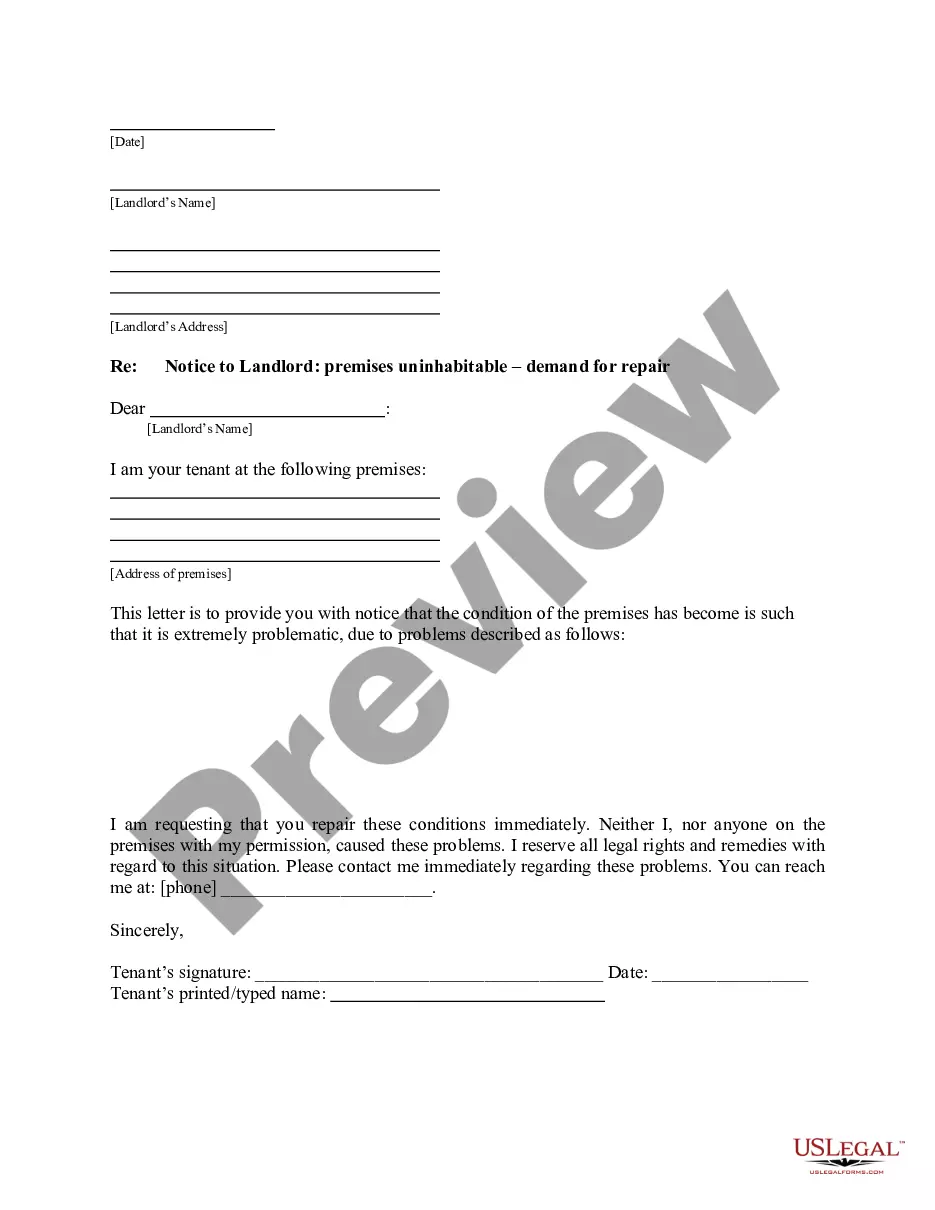
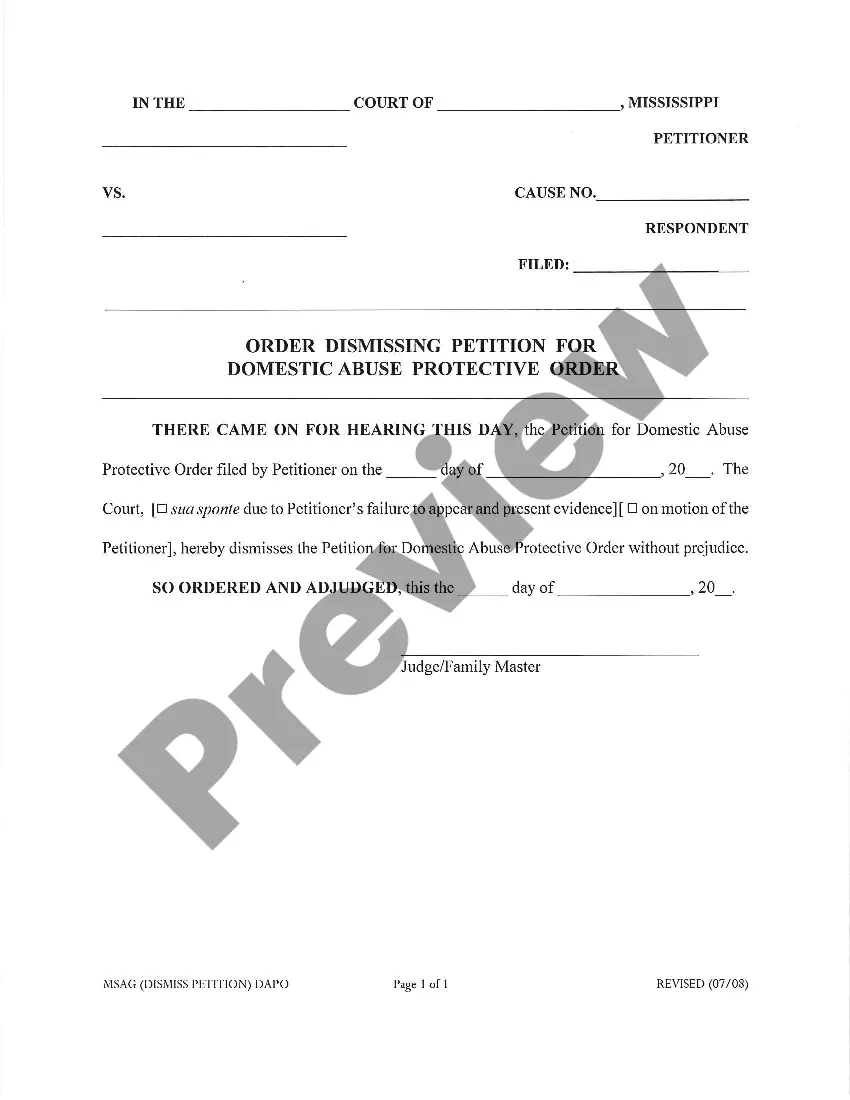
Mississippi Order Dismissing Petition for Domestic Abuse Protective Order
What is this form?
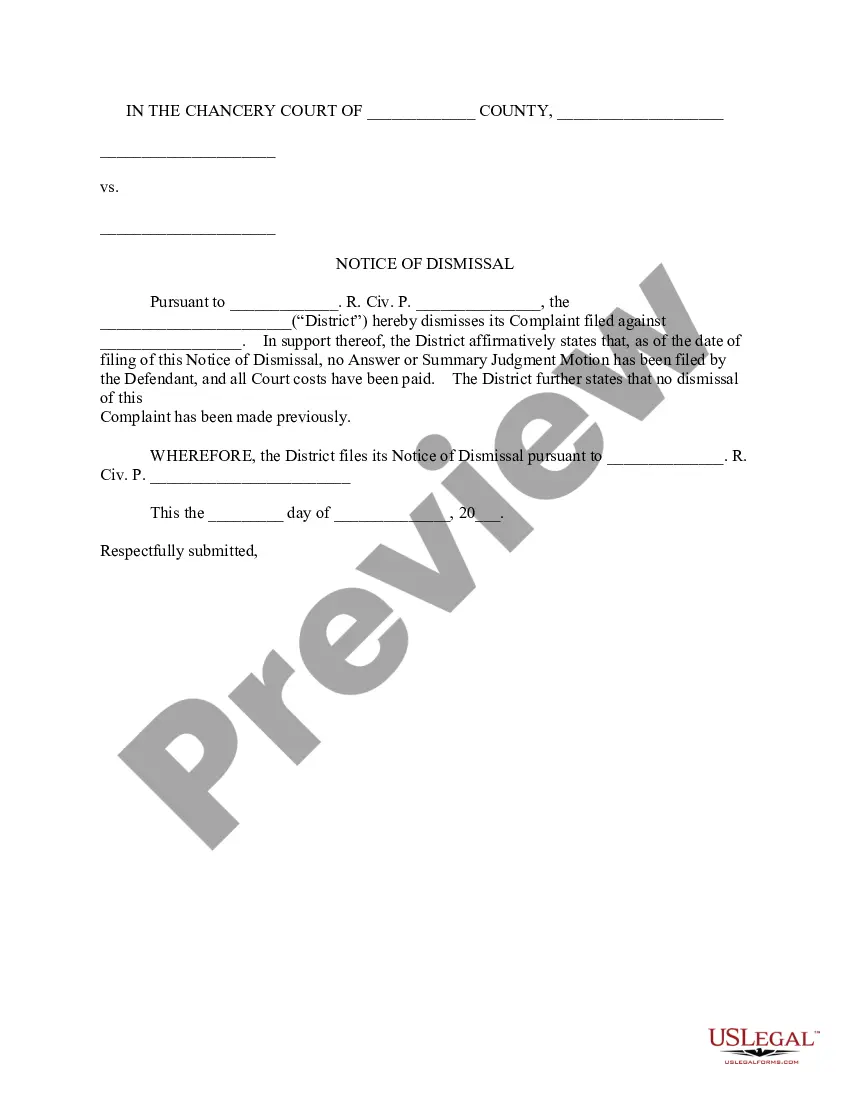
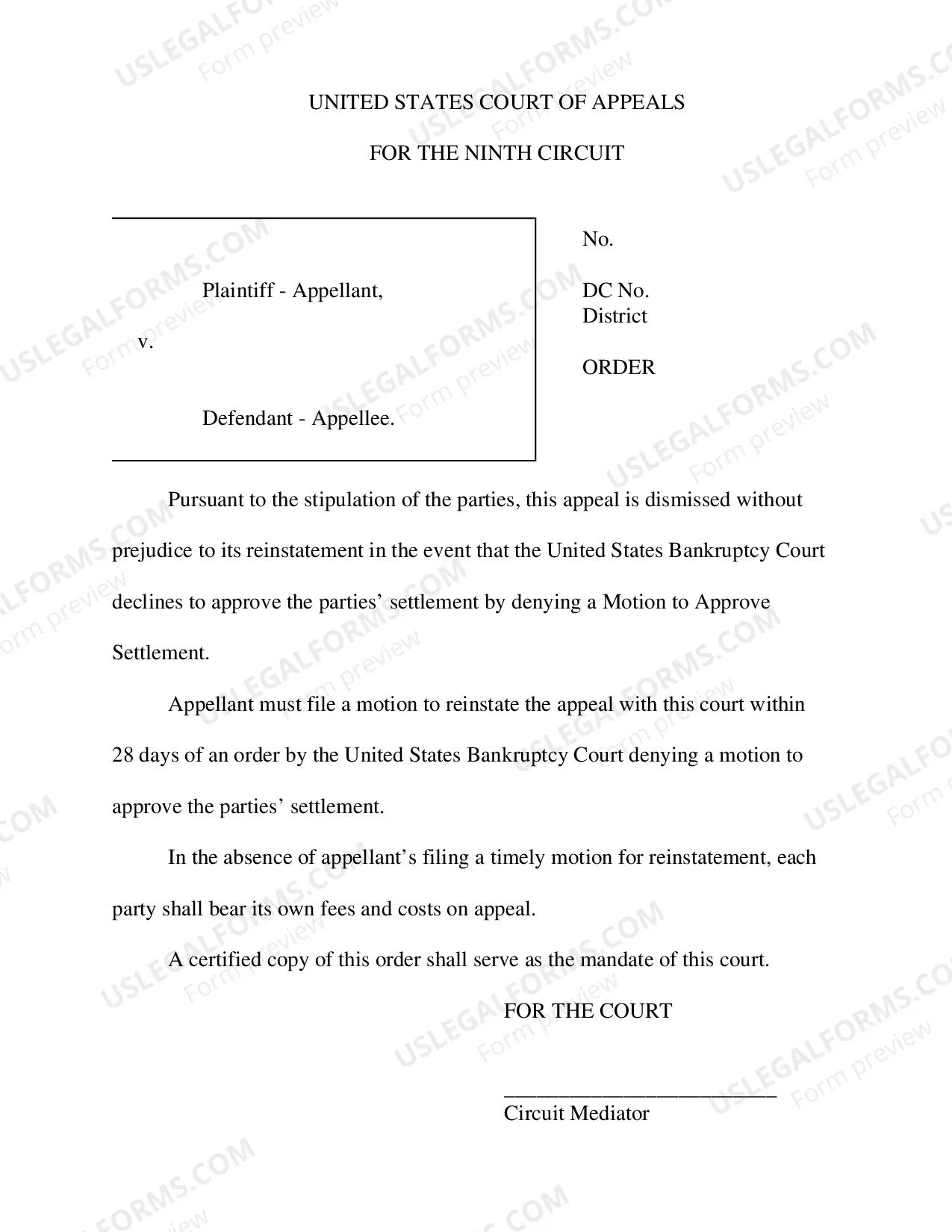
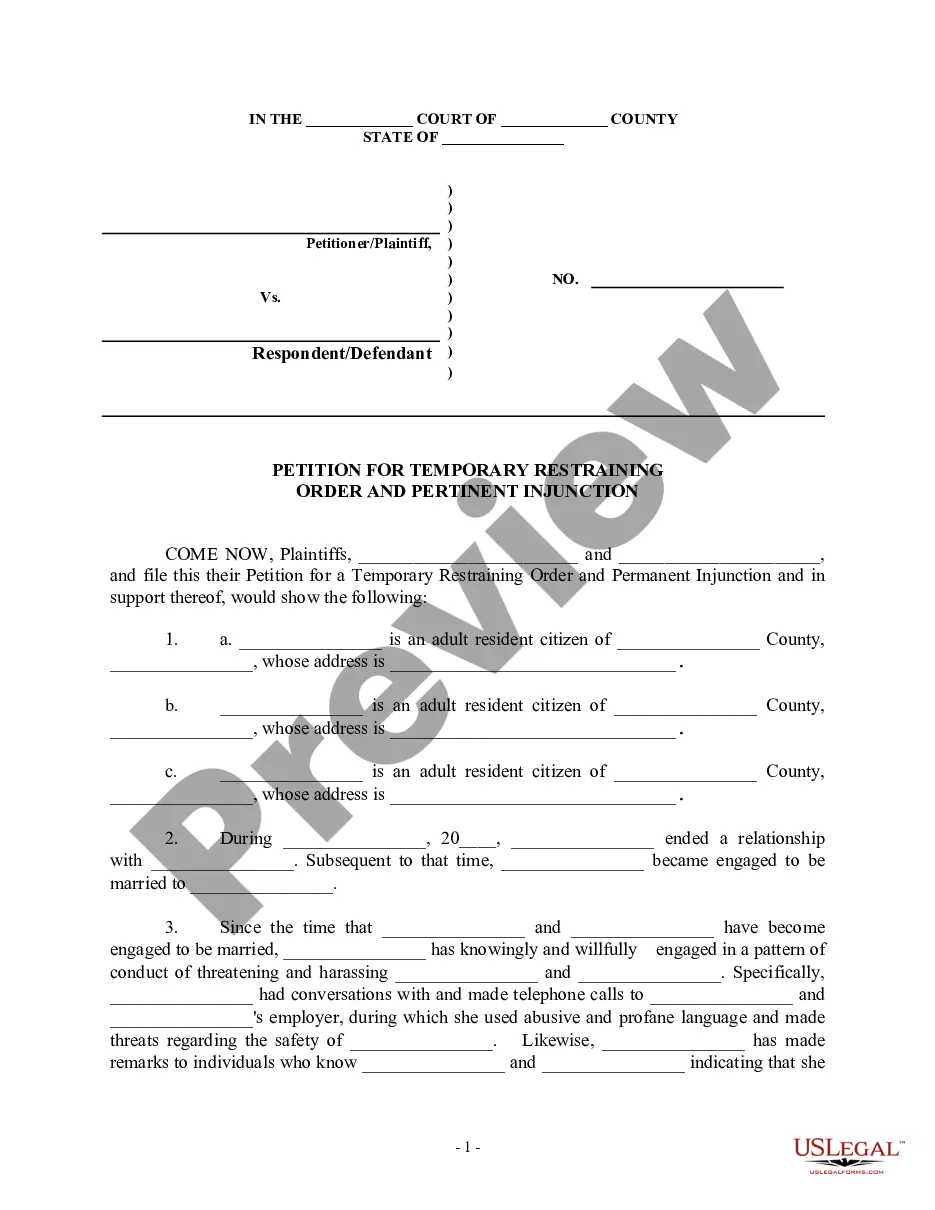
The Order Dismissing Petition for Domestic Abuse Protective Order is a legal document used to formally dismiss a petition for protection against domestic abuse. This order is specifically relevant when the petitioner does not appear at the scheduled hearing or actively requests to withdraw the petition. It is distinct from other protective orders, as it focuses on the dismissal process rather than the issuance of a protective order itself.
What’s included in this form
- Case caption: Identifies the court and the parties involved in the petition.
- Petitioner's status: Acknowledges the petitioner's request for dismissal or their absence from the hearing.
- Order specifics: Clearly states the ruling to dismiss the petition for a protective order.
- Date and signature: Requires the judge's signature and the date to finalize the order.
When to use this document
This form should be used when a petitioner fails to attend the scheduled court hearing to obtain a domestic abuse protective order or actively requests the court to dismiss their petition. Common scenarios for using this form include situations where the petitioner no longer feels the need for protection or has reconciled with the alleged abuser.
Who this form is for
- The petitioner who filed the original petition for a domestic abuse protective order.
- Individuals involved in a domestic abuse case where protection is not needed anymore.
- Legal representatives assisting the petitioner in withdrawing their request for protection.
Completing this form step by step
- Identify the court and parties involved: Fill in the case caption with accurate details.
- Indicate the reason for dismissal: Specify whether it's due to the petitioner's absence or an active request.
- Provide any relevant dates: Include the date of the scheduled hearing and the date of signing the order.
- Obtain signatures: Ensure the judge signs the order to validate the dismissal.
Does this form need to be notarized?
This form does not typically require notarization unless specified by local law. Always check local regulations to confirm notarization requirements for court documents.
Get your form ready online
Our built-in tools help you complete, sign, share, and store your documents in one place.
Make edits, fill in missing information, and update formatting in US Legal Forms—just like you would in MS Word.
Download a copy, print it, send it by email, or mail it via USPS—whatever works best for your next step.
Sign and collect signatures with our SignNow integration. Send to multiple recipients, set reminders, and more. Go Premium to unlock E-Sign.
If this form requires notarization, complete it online through a secure video call—no need to meet a notary in person or wait for an appointment.
We protect your documents and personal data by following strict security and privacy standards.

Make edits, fill in missing information, and update formatting in US Legal Forms—just like you would in MS Word.

Download a copy, print it, send it by email, or mail it via USPS—whatever works best for your next step.

Sign and collect signatures with our SignNow integration. Send to multiple recipients, set reminders, and more. Go Premium to unlock E-Sign.

If this form requires notarization, complete it online through a secure video call—no need to meet a notary in person or wait for an appointment.

We protect your documents and personal data by following strict security and privacy standards.
Mistakes to watch out for
- Failing to attend the court hearing and not submitting the form in advance.
- Not providing a clear reason for the dismissal.
- Leaving out necessary dates or signatures.
Benefits of completing this form online
- Convenience: Easily access and download the form from anywhere.
- Editability: Customize the form to fit your specific case needs.
- Reliability: Forms are drafted by licensed attorneys to ensure legality.
Looking for another form?
Form popularity
FAQ
Ask the court to change the order. The court can drop the "no contact" part of the order but keep the "no abuse" part of the order. Get the 209A protective order "terminated." This will end the order completely.
Consult with a family law attorney experienced in defending people against false restraining orders. You must go to court for the final restraining order hearing and present your evidence proving why the accusations against you are false. The evidence can be police reports, witnesses, text messages and or emails.
Explain your position to the judge. Since it's your motion, the judge typically has you speak first. Using your notes, tell the judge in your own words why you want the no-contact order dropped. Stick to the facts, and focus on the future rather than the past. Keep in mind that the no-contact order is preventative.
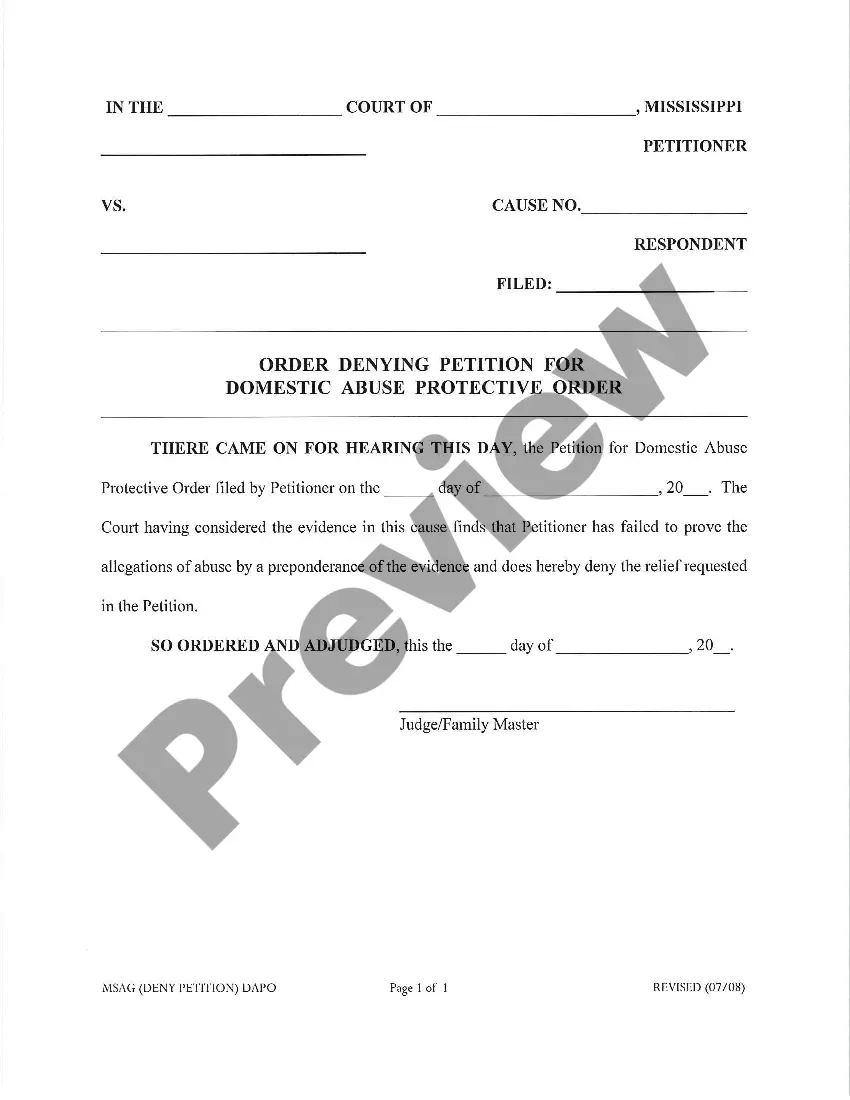
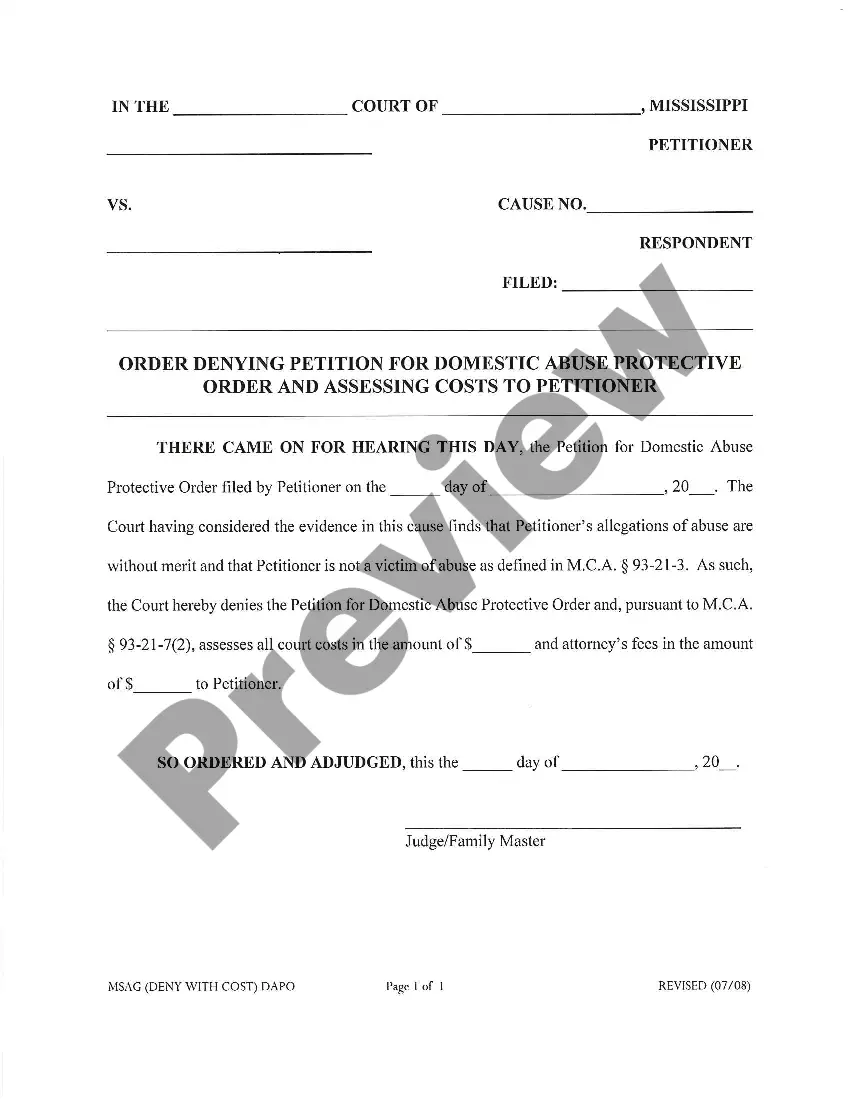
There are typically two reasons for a denied restraining order petition: Petitioner did not establish a claim for relief. Petitioner did not appear at the time set for the ex parte hearing on the petition.
1Reconciliation. Strangers do not perpetrate DV, someone they love does. When someone you love is the perpetrator, leaving for good is the hardest part.2Children. Kids miss their parents, and parents miss their kids. There is a constant pressure for a parent to return to being a "family."
If you believe the protection order was granted improperly or that it is no longer needed, you can file a motion asking the court to dissolve (terminate or cancel) the protection order.If the court schedules a hearing and grants the motion, the protection order will become immediately void and unenforceable.
Be punctual. Make sure your witnesses are present and prepared. Ensure your evidence is ready. If witnesses or documents that have been subpoenaed and are not in the court, let the judge know. Dress in a manner similar to that as you would for a job interview.
If you're the person who asked for the no contact order, you can ask the judge in your case to drop it. While there's no guarantee that the judge will do so, if you can show that you're not being forced or coerced into doing it, you'll have a better chance of getting it dropped.