Mississippi Pre-Deposition Conference
Understanding this form
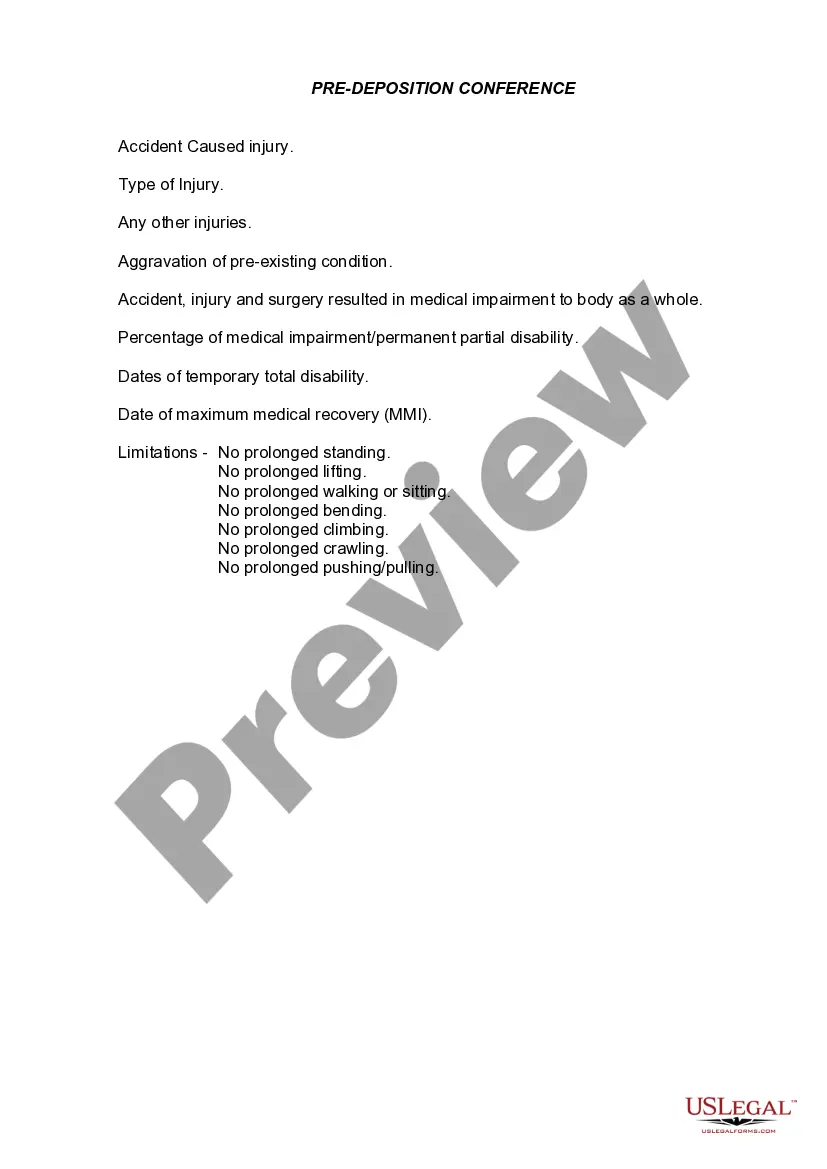
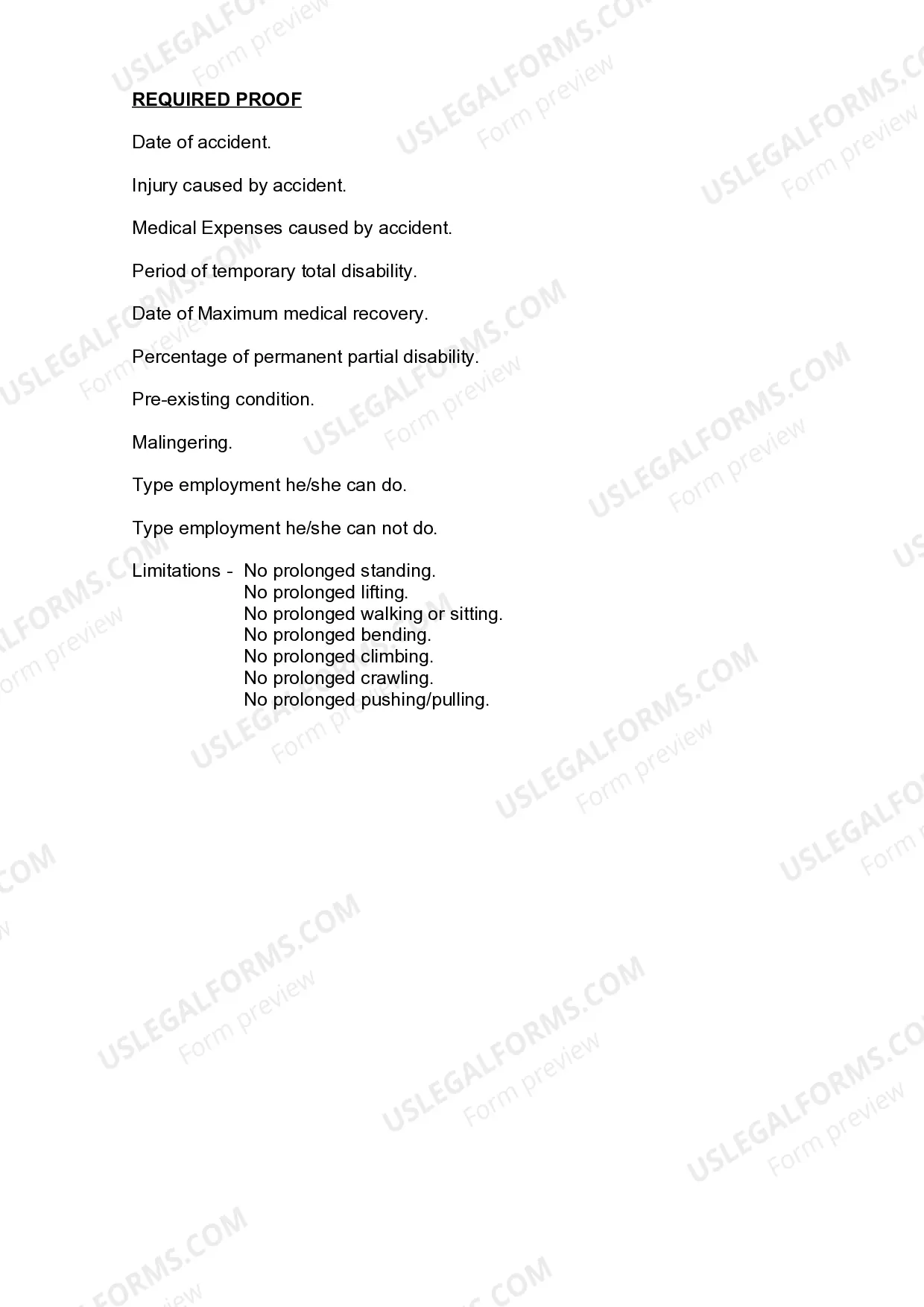
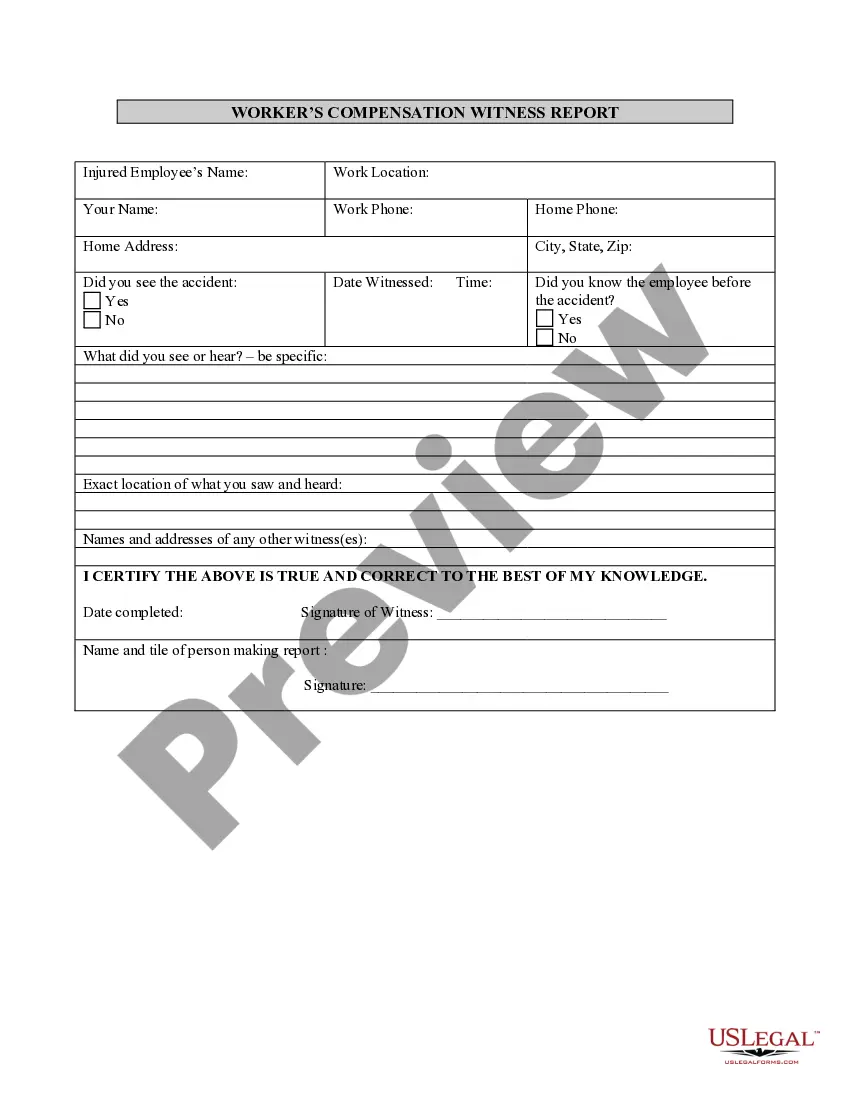
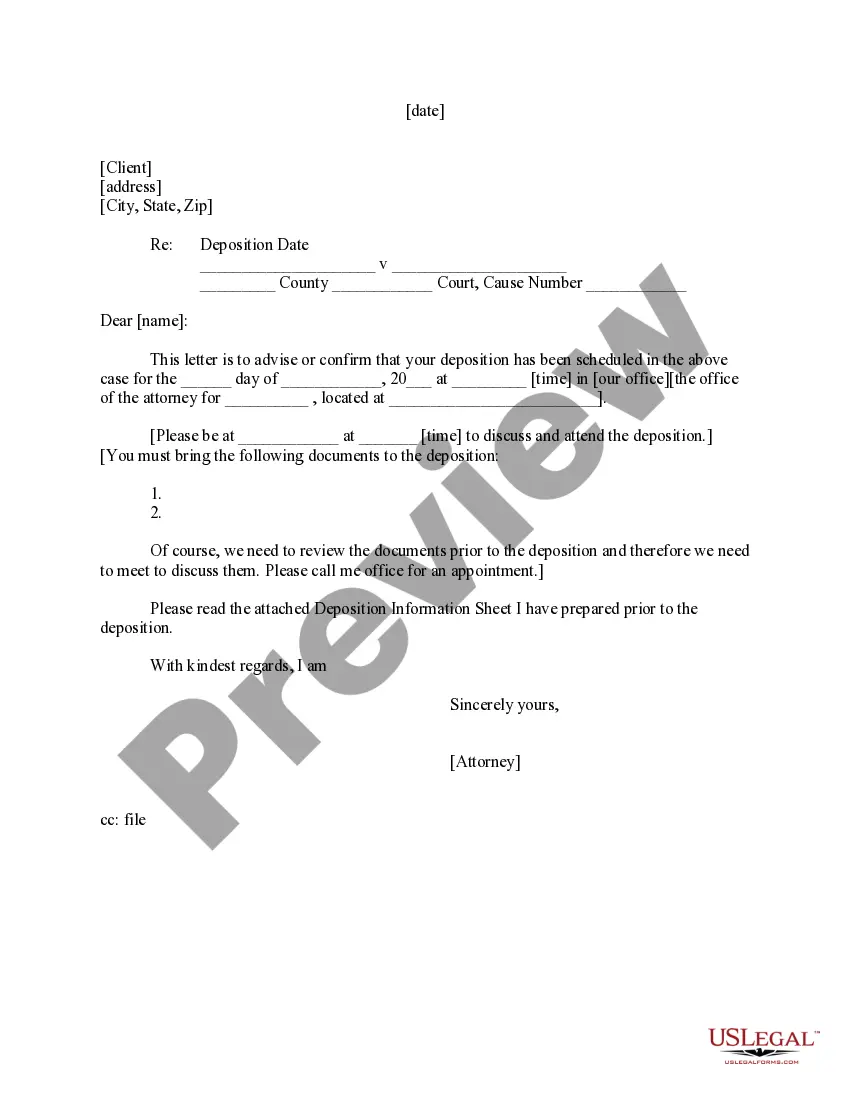
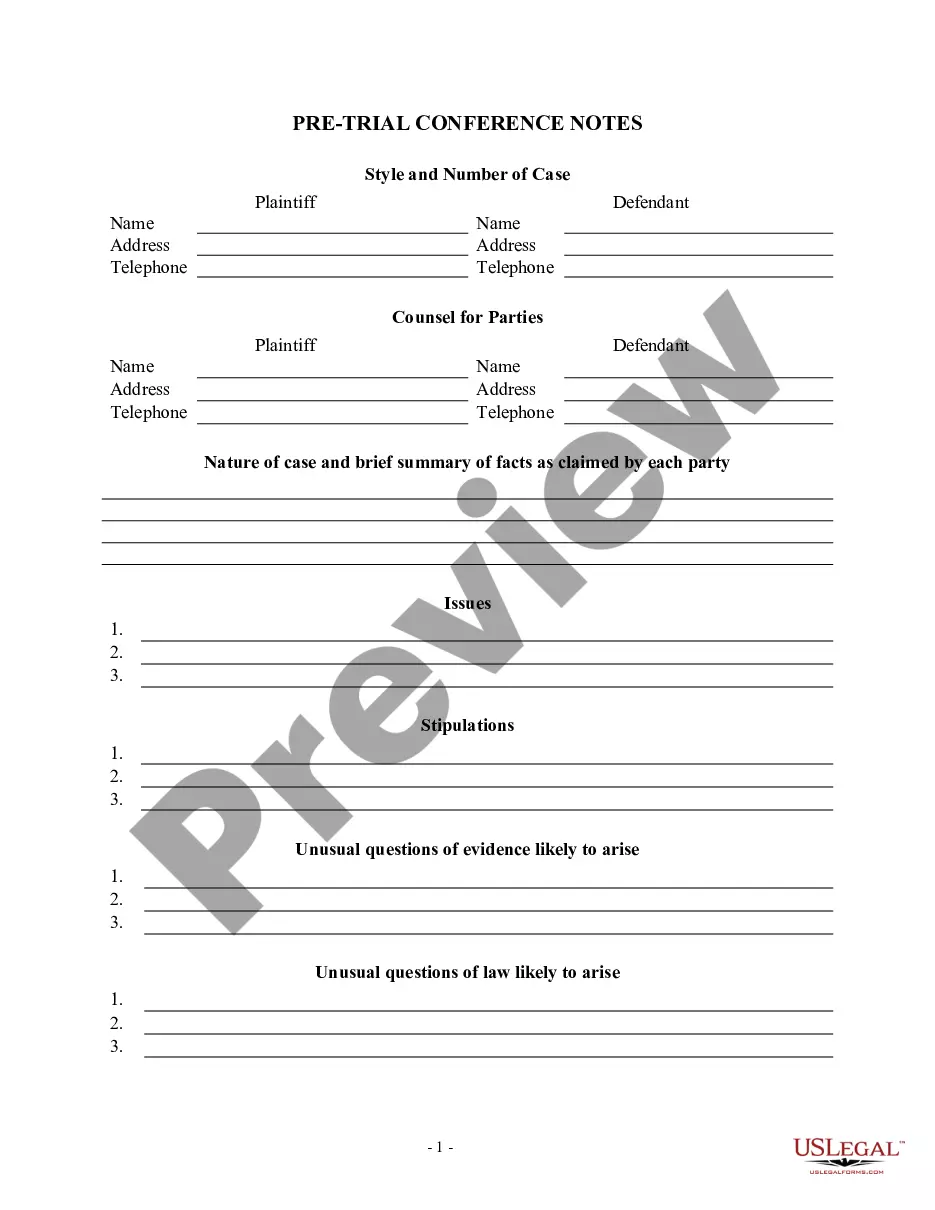
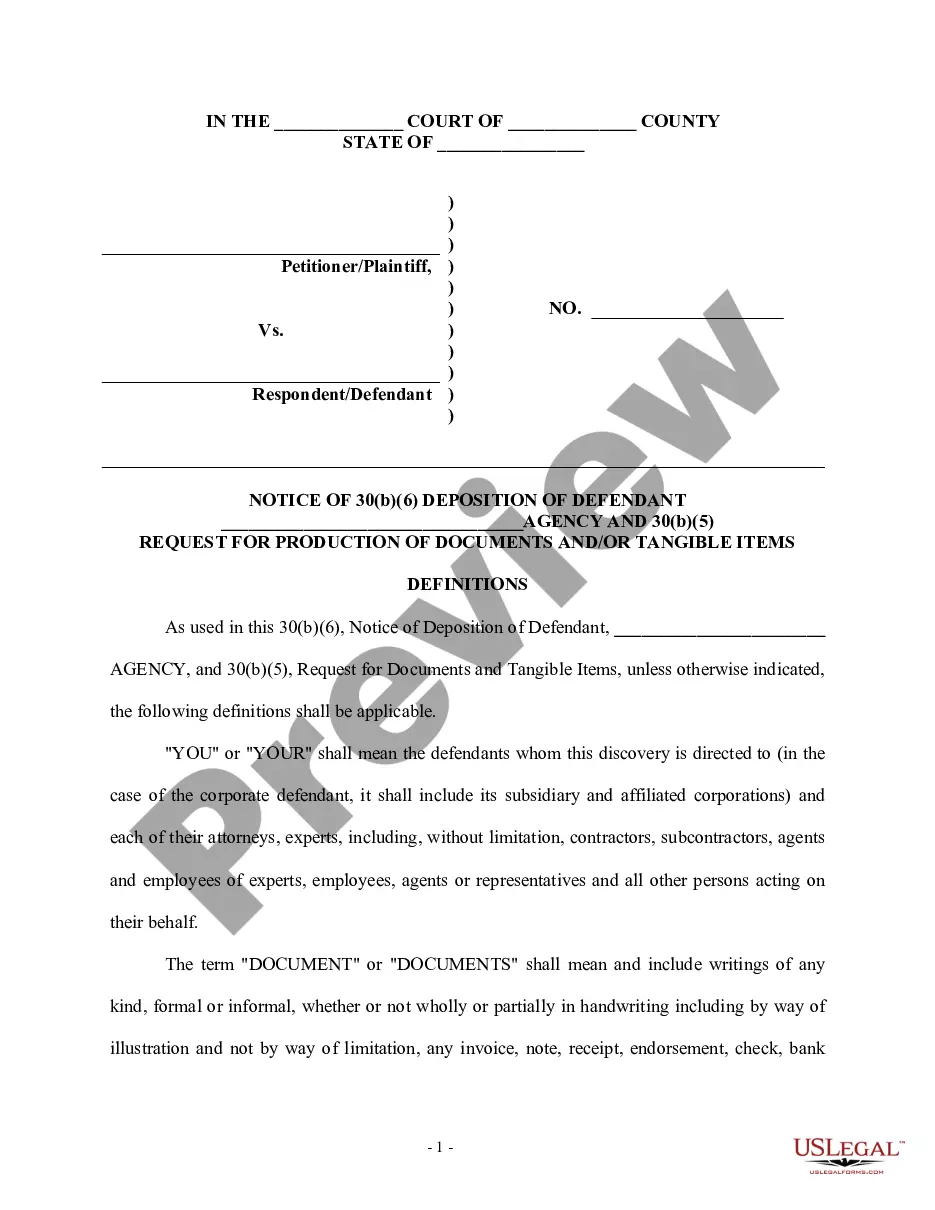
The Pre-Deposition Conference form is a crucial legal document used to organize and record information prior to a deposition. It serves as a note-taking device that outlines various topics to be addressed during the deposition. This form is essential for ensuring that all pertinent areas, such as medical impairment and limitations due to injuries, are covered, making it distinct from other deposition-related forms.
What’s included in this form
- Accident details and injuries sustained
- Medical impairment assessment percentages
- Temporary total disability dates
- Maximum medical improvement date
- Specific limitations on physical activities
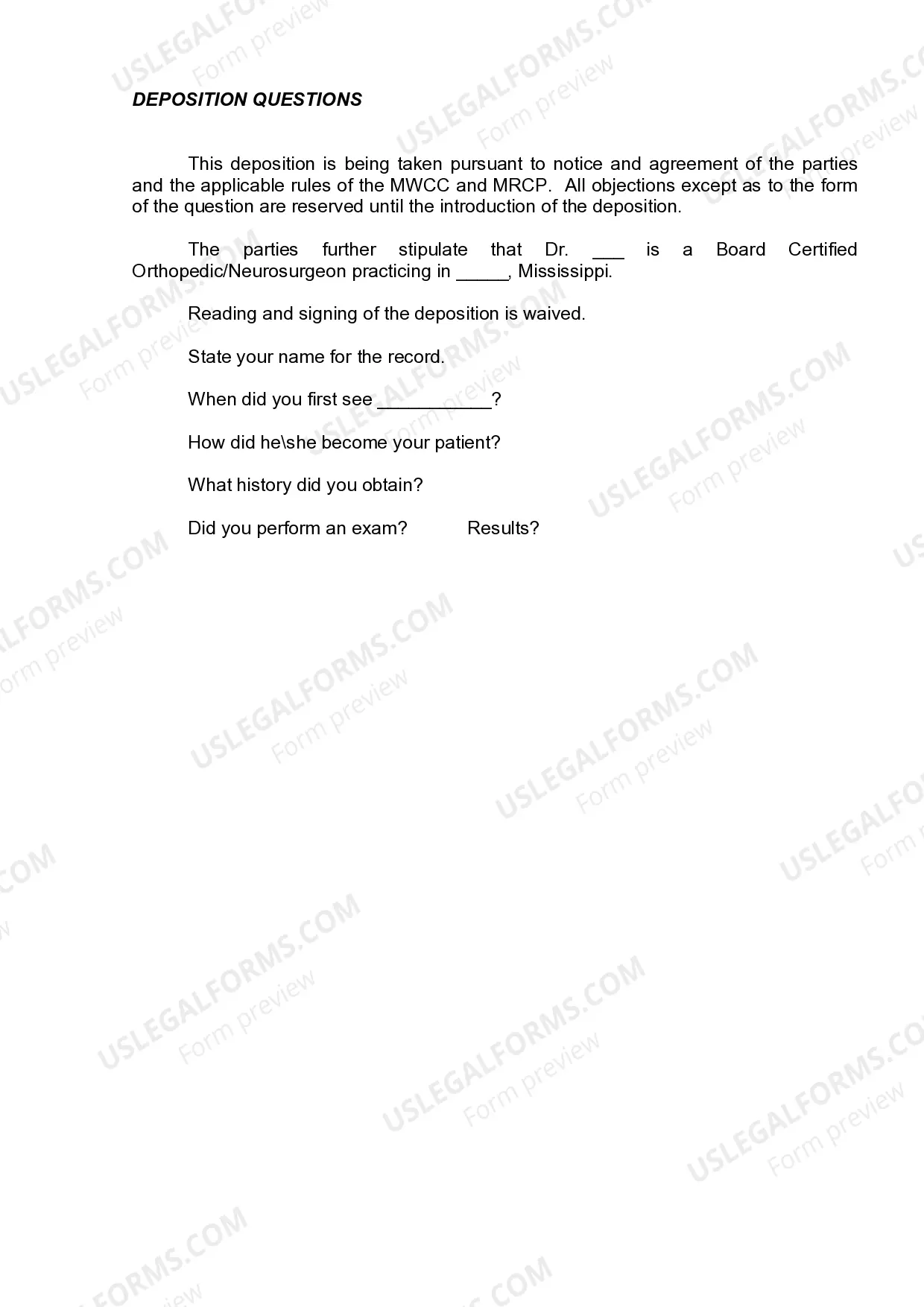
- Deposition questions to be addressed
Common use cases
This form should be used in preparation for a deposition, particularly in cases involving personal injury, workers' compensation, or medical malpractice. Specifically, it is valuable when discussing the impacts of an accident on an individual's health and ability to work. Utilizing this form can help clarify details that are critical to the case's outcome.
Intended users of this form
The following individuals and groups should utilize the Pre-Deposition Conference form:
- Attorneys preparing for a deposition
- Clients involved in personal injury claims
- Medical professionals providing expert testimony
- Insurance adjusters and claim representatives
How to prepare this document
- Identify and document details of the accident, including date and type of injury.
- Assess and enter any medical impairments and the percentage of permanent disability.
- Specify any limitations on physical activities related to the injury.
- Include temporary disability periods to provide a complete picture of the injury's impact.
- Prepare and list deposition questions that need to be answered during the session.
Is notarization required?
In most cases, this form does not require notarization. However, some jurisdictions or signing circumstances might. US Legal Forms offers online notarization powered by Notarize, accessible 24/7 for a quick, remote process.
Get your form ready online
Our built-in tools help you complete, sign, share, and store your documents in one place.
Make edits, fill in missing information, and update formatting in US Legal Forms—just like you would in MS Word.
Download a copy, print it, send it by email, or mail it via USPS—whatever works best for your next step.
Sign and collect signatures with our SignNow integration. Send to multiple recipients, set reminders, and more. Go Premium to unlock E-Sign.
If this form requires notarization, complete it online through a secure video call—no need to meet a notary in person or wait for an appointment.
We protect your documents and personal data by following strict security and privacy standards.

Make edits, fill in missing information, and update formatting in US Legal Forms—just like you would in MS Word.

Download a copy, print it, send it by email, or mail it via USPS—whatever works best for your next step.

Sign and collect signatures with our SignNow integration. Send to multiple recipients, set reminders, and more. Go Premium to unlock E-Sign.

If this form requires notarization, complete it online through a secure video call—no need to meet a notary in person or wait for an appointment.

We protect your documents and personal data by following strict security and privacy standards.
Mistakes to watch out for
- Failing to include all relevant medical details and limitations.
- Neglecting to specify dates accurately.
- Overlooking the importance of listing deposition questions clearly.
- Using vague language that may lead to misunderstandings.
Why complete this form online
- Conveniently download and print from home or office.
- Edit and customize the form to suit individual case needs.
- Access to forms drafted by licensed attorneys, ensuring compliance with legal standards.
Quick recap
- The Pre-Deposition Conference form is vital for effective deposition preparation.
- It includes critical information regarding injuries and impairments.
- Accurate completion ensures clarity and comprehensiveness during depositions.
Looking for another form?

Form popularity
FAQ
Yes, it can. Most depositions won't be used for more than leverage to reach a settlement before a case goes to trial. A deposition can be used as evidence in court, but a settlement is usually the goal.
A deposition is a statement made in court. A deposition can be made outside of court, too after a crime, a witness might give a deposition. Then that written or recorded deposition can be used as evidence in the courtroom.And in the sense of depose, a deposition can refer to getting rid of a person of authority.
After a lawsuit is filed, attorneys begin what is known as the discovery phase of the trial. This is where they learn every detail of what happened, who was involved, who said what and who witnessed the events.
A deposition is a witness's sworn out-of-court testimony. It is used to gather information as part of the discovery process and, in limited circumstances, may be used at trial. The witness being deposed is called the "deponent."
A deposition is the legal term for a formal, recorded, question and answer session which occurs when the witness is under oath. A deposition generally serves two purposes: (1) find out what you know; and (2) preserve your testimony for later use (either in motions to be filed with the Court or at trial).
Predeposition (uncountable) The act of depositing something in advance.
Private information. You have a right to refuse any questions about a person's health, sexuality, or religious beliefs (including your own). Privileged information. Irrelevant information.
Many cases settle just before trial which usually takes place between 12 and 24 months after the suit is filed. Some judges set settlement conferences shortly before trial to encourage settlement as opposed to trial. If the case isn't settled before trial, the case will go to trial.
Lie. Begin an answer with Well to be honest with you2026. Guess and speculate. Engage in casual conversations with the court reporter and other people present in the depositions. Volunteer information. Don't review documents carefully. Lose your temper. Don't take breaks.