Mississippi Answer to the Complaint - Motion to Modify Child Custody, Child Support, Alimony and Related Relief
Understanding this form
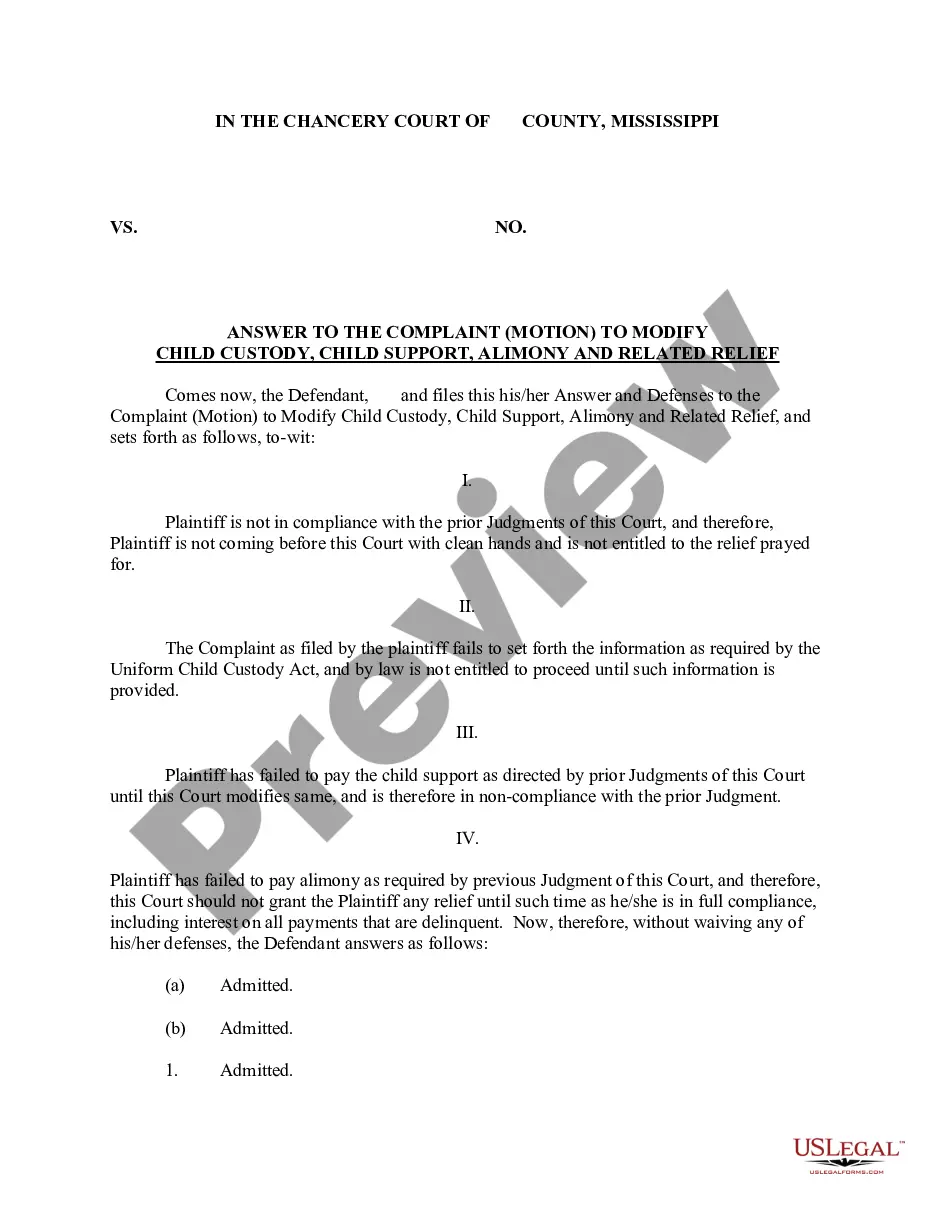
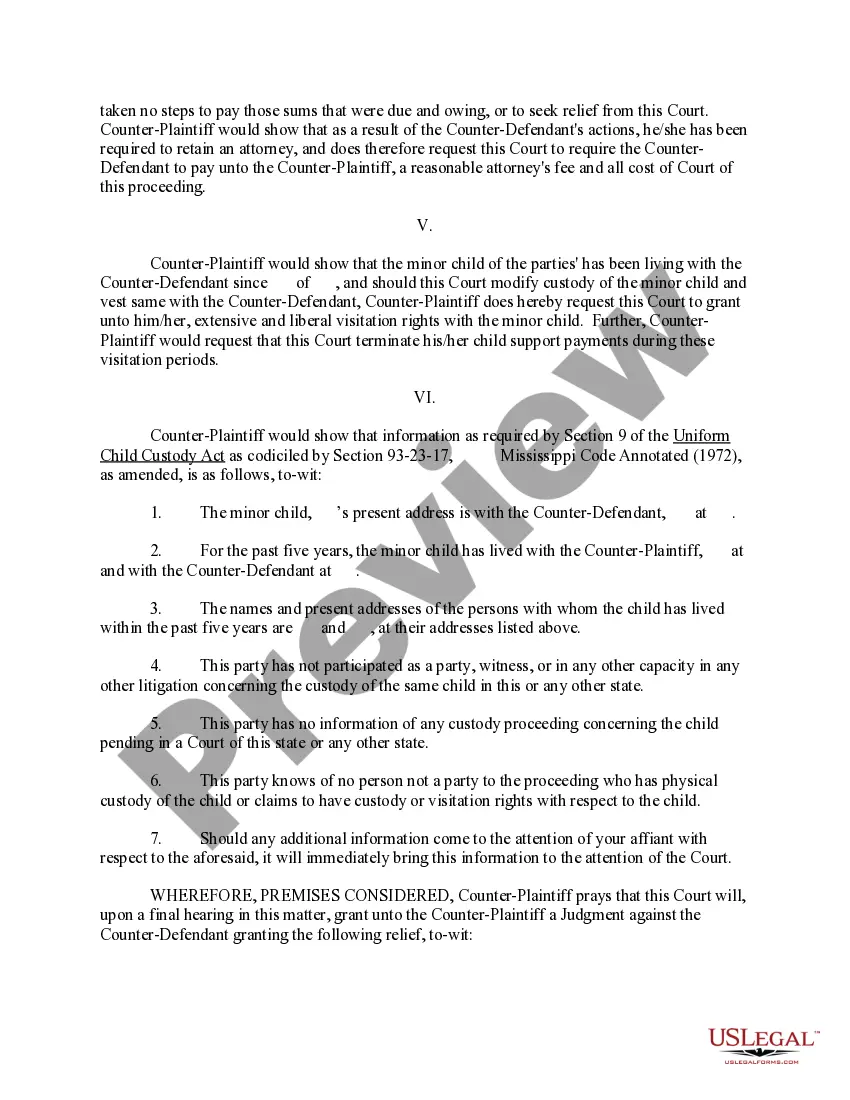
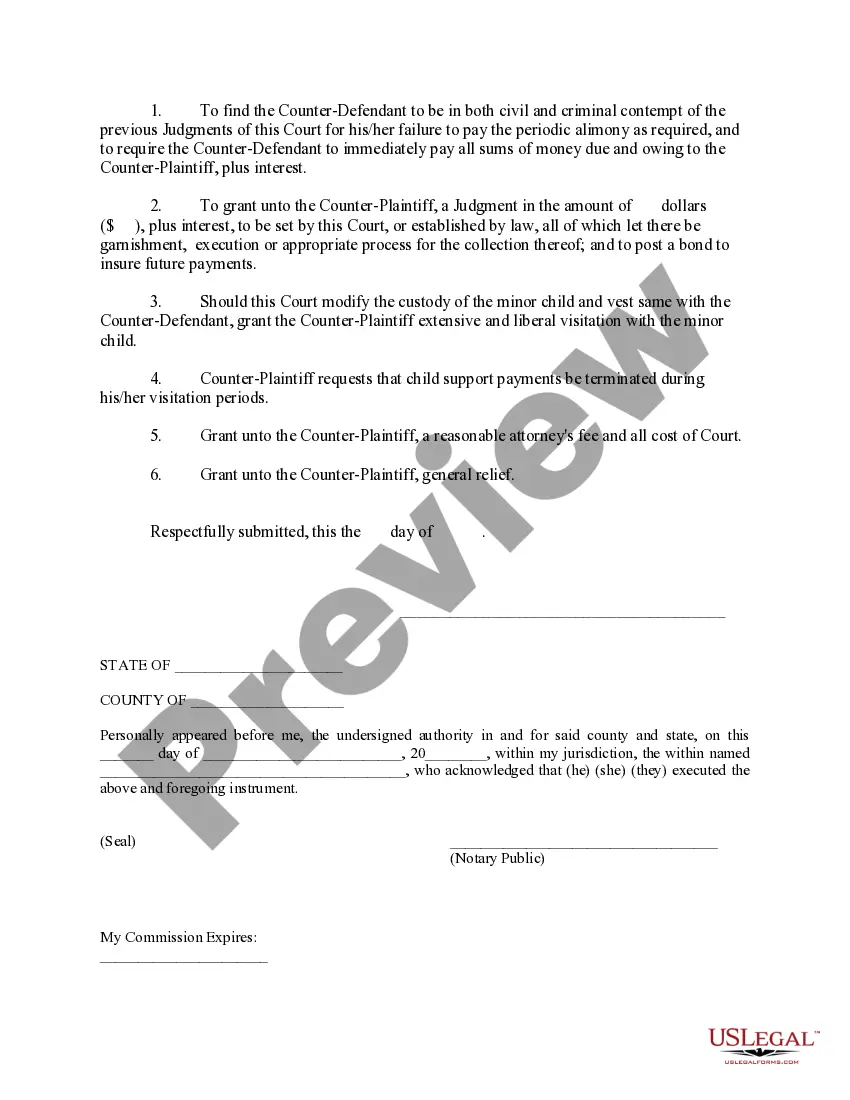
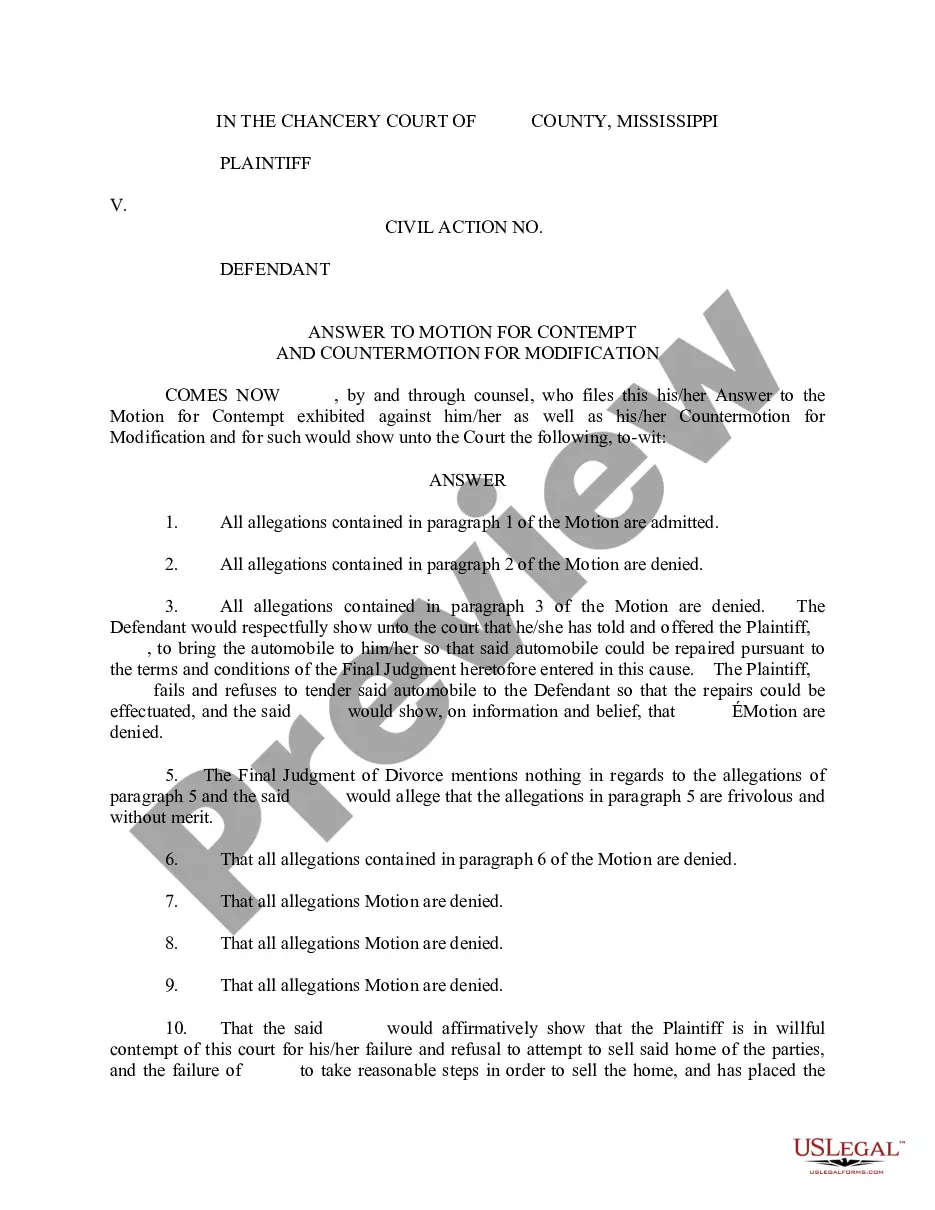
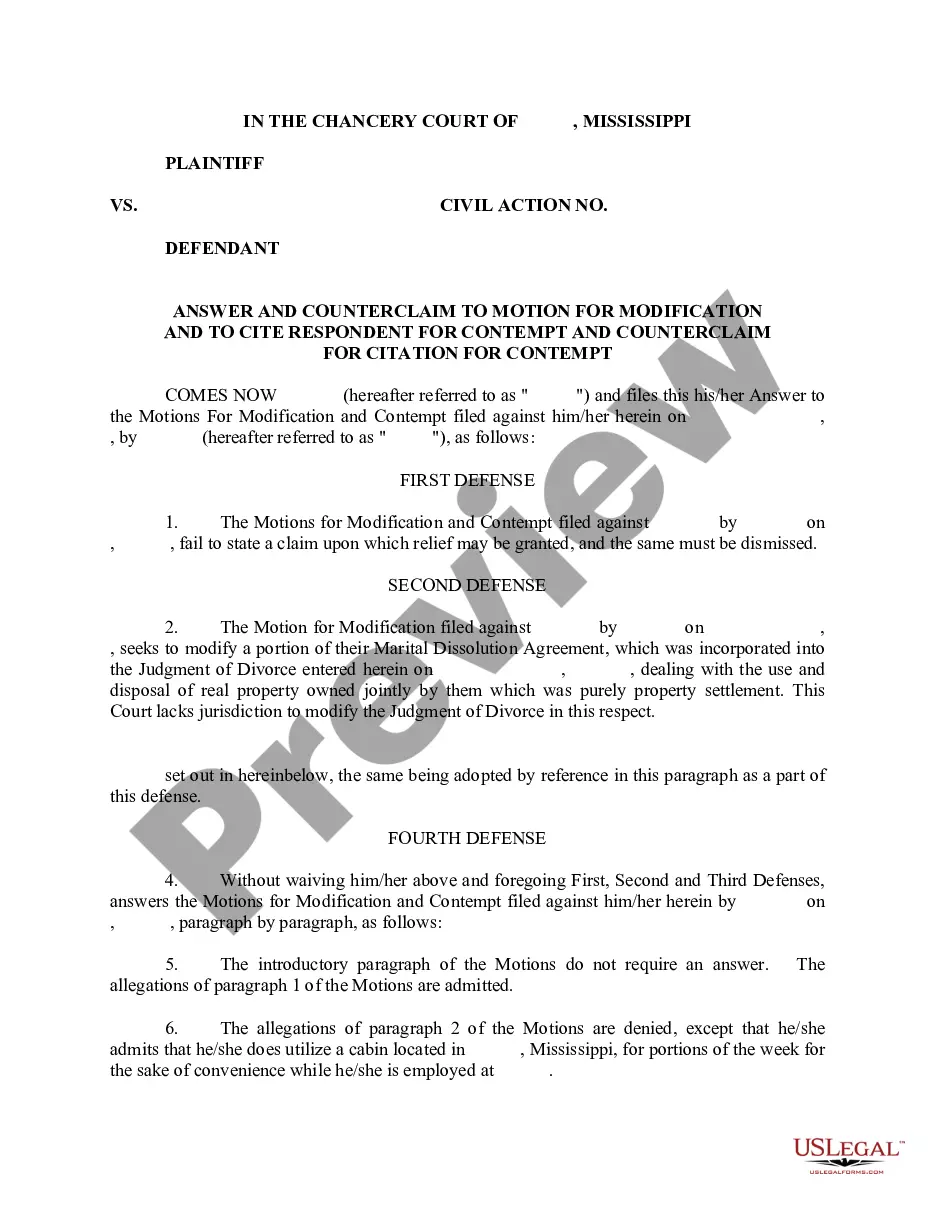
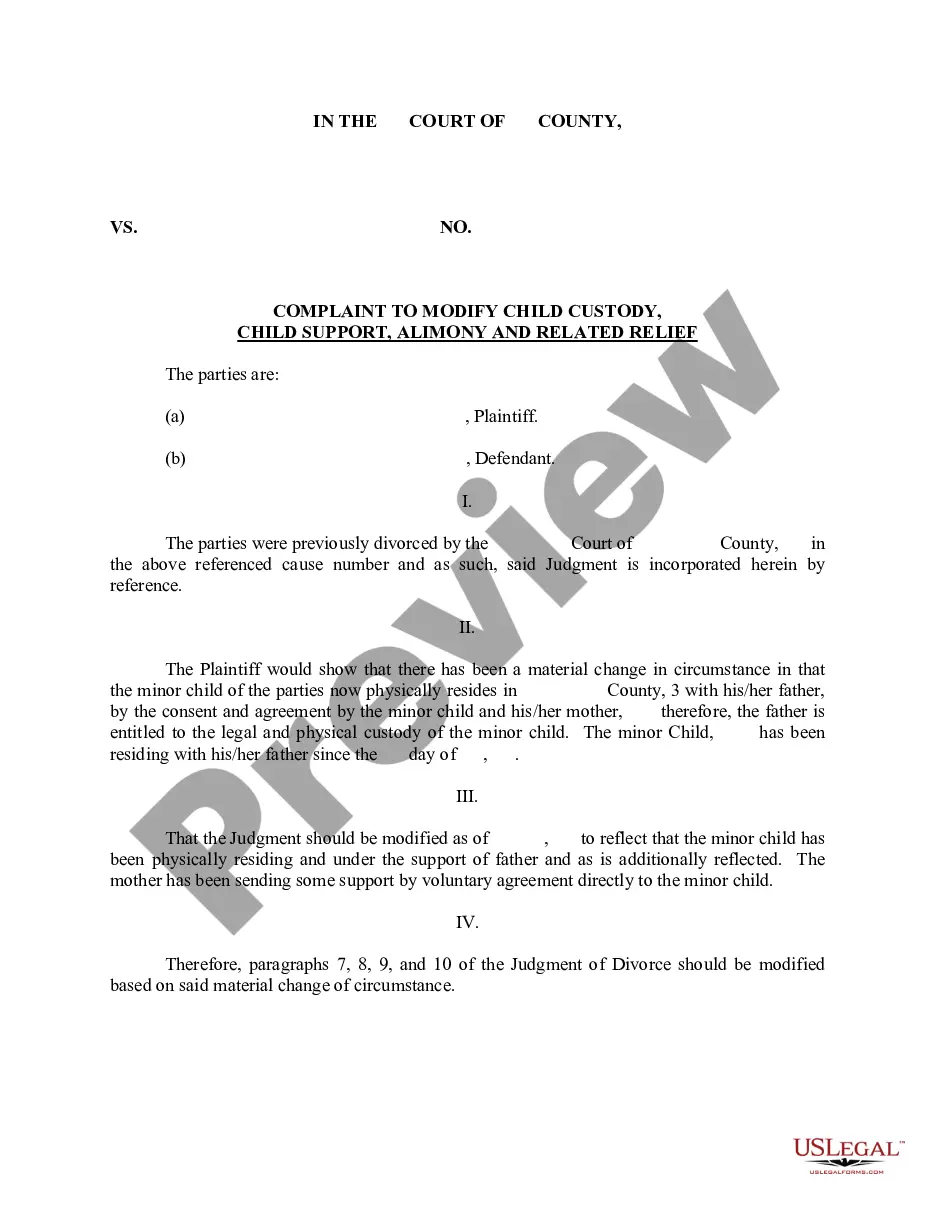
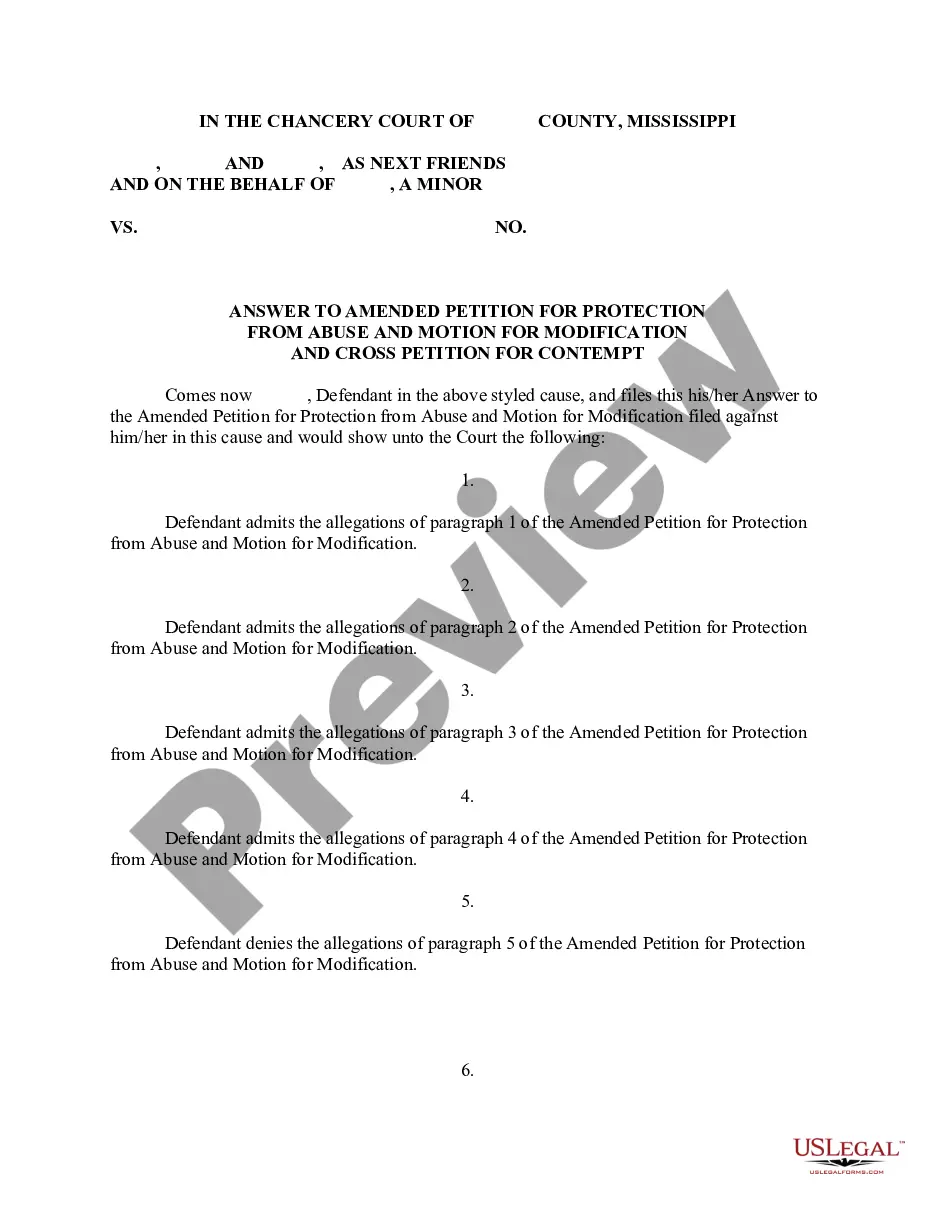
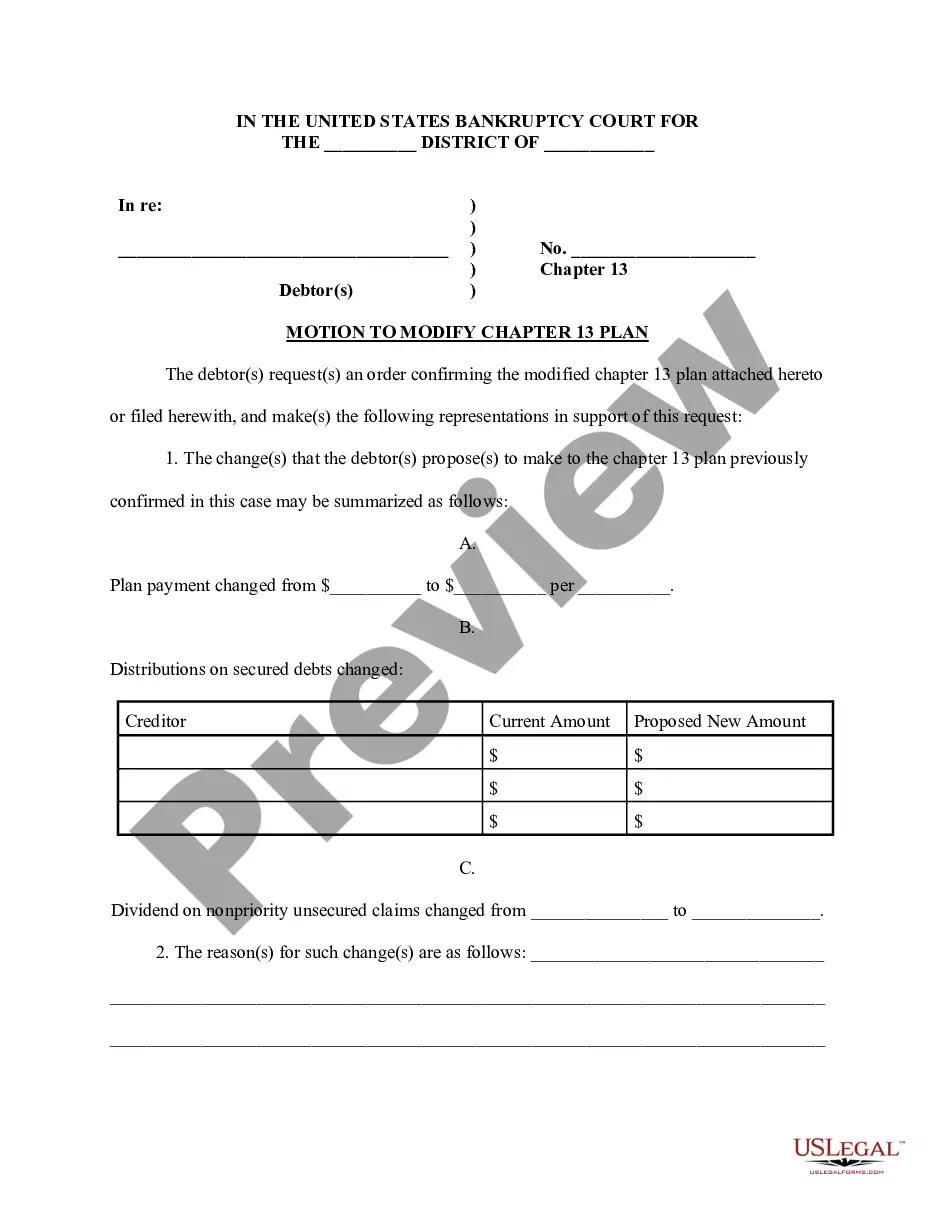
The Answer to the Complaint - Motion to Modify Child Custody, Child Support, Alimony and Related Relief is a legal document used in family court. This form allows a defendant to respond to a plaintiff's request for modification of child custody, child support, or alimony. Unlike a regular complaint, this motion specifically addresses changes to existing court orders based on new circumstances or non-compliance with prior judgments.
Key parts of this document
- Defendantâs information: Identifies the party responding to the motion.
- Plaintiff's compliance issues: Outlines allegations of the plaintiff's non-compliance with prior court orders.
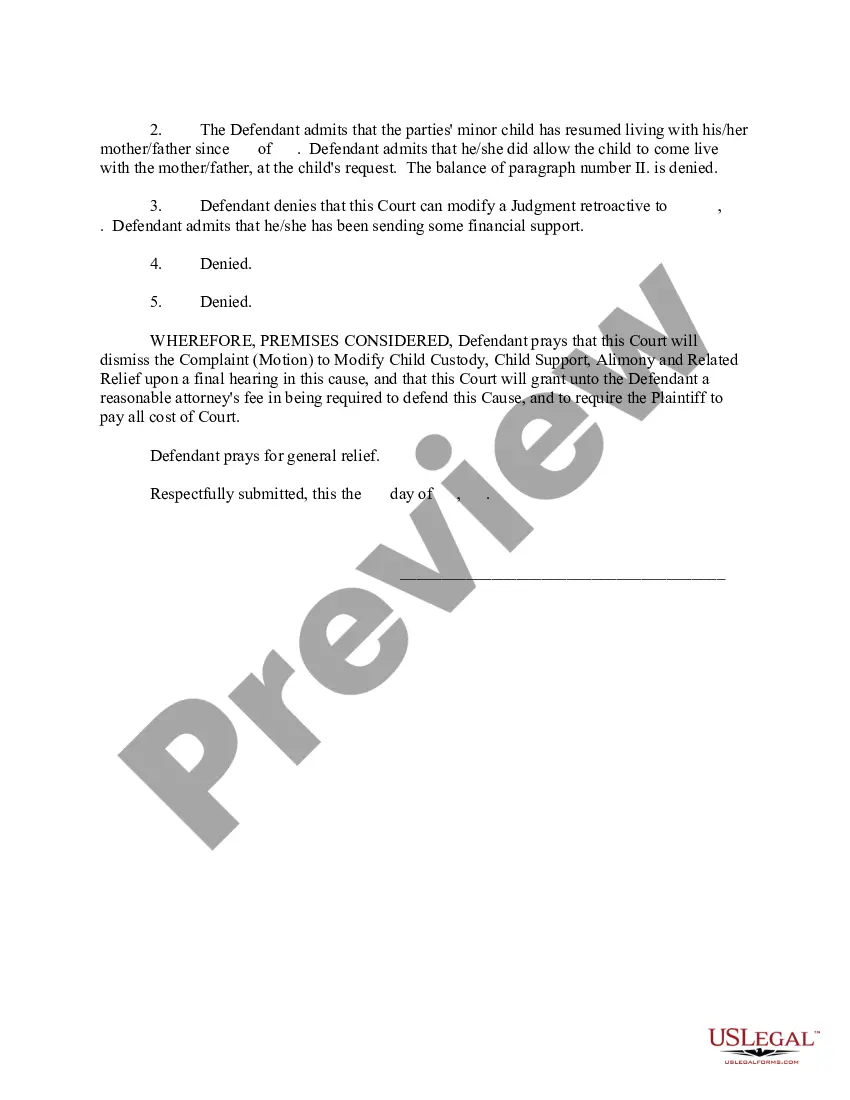
- Admitted and denied claims: States which claims made by the plaintiff are accepted and which are contested.
- Relief sought: Specifies what the defendant is asking the court to do, including dismissal of the plaintiff's motion and potential award of attorney's fees.
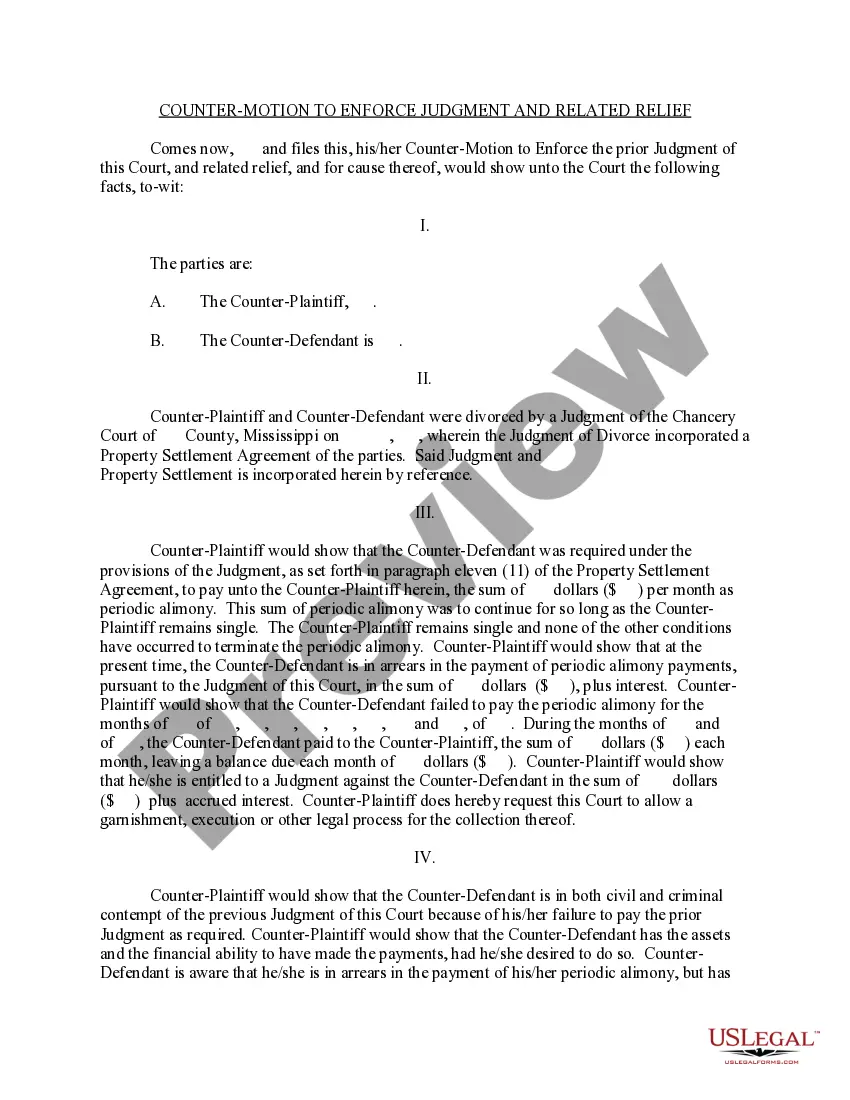
- Counter-motion details: Includes information if the defendant is filing a counter-motion to enforce the original judgment.
Common use cases
This form is used when a defendant wishes to formally respond to a motion filed by a plaintiff that seeks to change the terms of child custody, child support, or alimony. Scenarios may include instances where the plaintiff fails to comply with previous court orders, changes in financial circumstances, or other relevant changes in the child's living situation.
Intended users of this form
- Defendants in family court facing motions to modify custody or support.
- Individuals seeking to challenge claims made by a plaintiff in an ongoing family law case.
- Parents looking to respond to allegations of non-compliance with court orders regarding child-related matters.
Steps to complete this form
- Identify the parties involved: Include the names and addresses of the plaintiff and defendant.
- State your answers: Clearly outline which claims you admit or deny from the plaintiff's motion.
- Detail any non-compliance: Provide facts regarding the plaintiffâs compliance with previous court orders.
- Include specific requests: Indicate what you want the court to do, such as dismissing the motion or awarding fees.
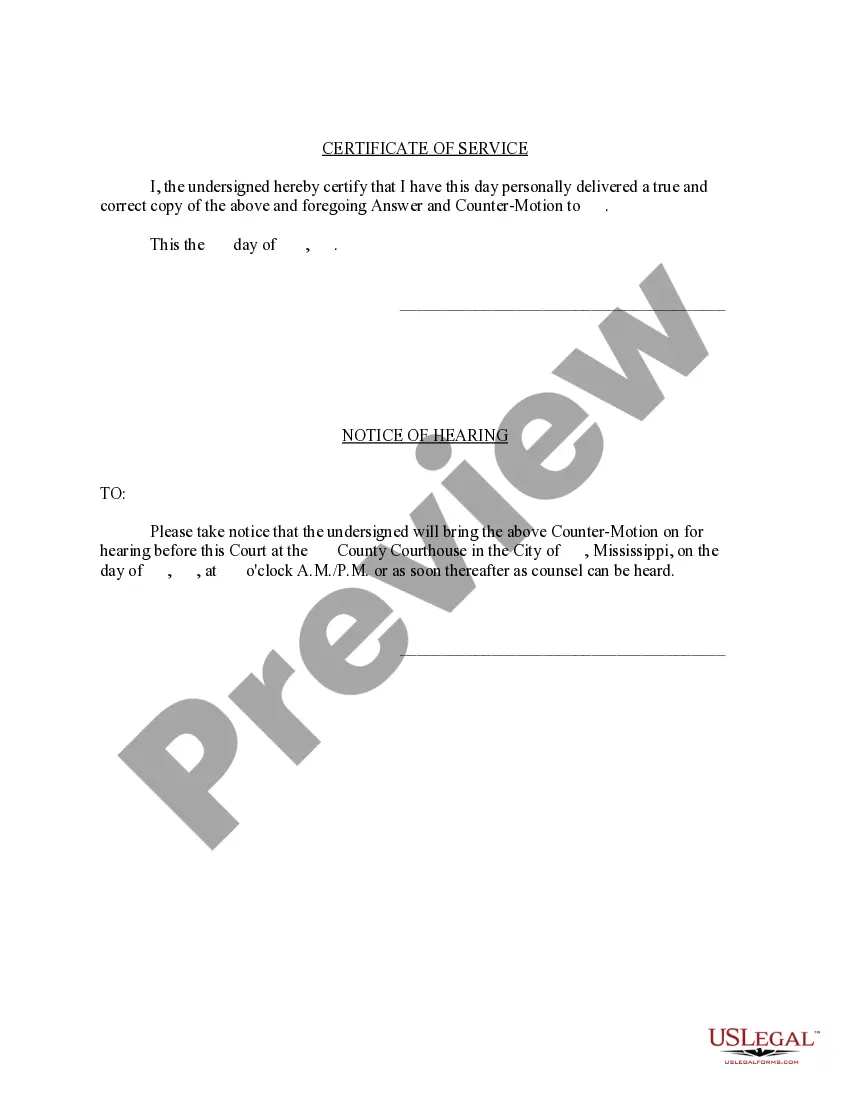
- File the form: Ensure you file the form at the appropriate court and serve copies to the plaintiff.
Is notarization required?
This form does not typically require notarization unless specified by local law. However, adding a notary signature can enhance the document's legal standing.
Get your form ready online
Our built-in tools help you complete, sign, share, and store your documents in one place.
Make edits, fill in missing information, and update formatting in US Legal Forms—just like you would in MS Word.
Download a copy, print it, send it by email, or mail it via USPS—whatever works best for your next step.
Sign and collect signatures with our SignNow integration. Send to multiple recipients, set reminders, and more. Go Premium to unlock E-Sign.
If this form requires notarization, complete it online through a secure video call—no need to meet a notary in person or wait for an appointment.
We protect your documents and personal data by following strict security and privacy standards.

Make edits, fill in missing information, and update formatting in US Legal Forms—just like you would in MS Word.

Download a copy, print it, send it by email, or mail it via USPS—whatever works best for your next step.

Sign and collect signatures with our SignNow integration. Send to multiple recipients, set reminders, and more. Go Premium to unlock E-Sign.

If this form requires notarization, complete it online through a secure video call—no need to meet a notary in person or wait for an appointment.

We protect your documents and personal data by following strict security and privacy standards.
Mistakes to watch out for
- Failing to respond within the required time frame can result in default judgment.
- Not clearly stating the admissions and denials can lead to misunderstandings in court.
- Overlooking the need for supporting documentation when alleging non-compliance.
Why complete this form online
- Immediate availability: Download and complete the form at your convenience.
- Customizable: Adapt the form to fit your specific legal situation easily.
- Cost-effective: Avoid the higher costs associated with hiring an attorney just for document preparation.
Key takeaways
- The form is crucial for defendants responding to modifications in child custody or support cases.
- Completing the form accurately can significantly impact the outcome of your case.
- Utilizing online legal forms provides convenience and confidence in your legal responses.
Looking for another form?


Form popularity
FAQ
Fill out your court forms. Have your forms reviewed. Make at least 2 copies of all your forms. File your forms with the court clerk. Serve your papers on the other parent. File your Proof of Service. Go to your court hearing.
There is no set time. I have seen it as quick as 3 days and as long as 3 months. It depends mostly on how busy the Judge is. I genrally calendar a reminder to follow up in 30 days, and usually it gets done before then...
Write clearly, and use your own words. Use bulleted lists for your major points. Don't insult or bash your ex. Attach evidence such as pay stubs or bank statements, but redact SSN and account numbers. Affirm that you are making your statement under oath, and under penalty of perjury.
In order to get a temporary order in place during a divorce proceeding, an official request for that order must be made to the court.While either party in a divorce can file a motion for a temporary order, when these motions have been filed, the court will set a hearing date for the motion.
Typically, a temporary orders hearing will be handled in one of two ways, either by calling witnesses (including the parties) to the stand and asking them questions aimed at eliciting direct testimony from them (referred to as an evidentiary hearing) or by your attorney offering summaries of what witnesses would say,
What Is Temporary Relief? After a case is filed, but before it is resolved, sometimes it is necessary to ask the court for an award of temporary relief. This usually happens when the parties have a dispute about payment of ongoing bills, support, or issues involving children.
If a family court lawsuit is administratively dismissed, all temporary orders become void and any outstanding obligations under the temporary order also become void. If there is a prior final order between the parties, that final order regains its effect (to the extent a temporary order in the new action modified it).
Relief in a divorce is everything that you request in your divorce complaint. You are permitted to ask the court for a number of different types of relief.This means that your spouse would be required to make you payments in order to assist you in remaining financially stable after the divorce.
To get a contempt finding, you must usually file a court document called a "motion for an order to show cause." That puts the burden on the parent who isn't following the custody or visitation order to explain to the court the reasons why he or she should not be held in contempt.