Mississippi Answer to Motion for Contempt and Counterclaim for Modification
Overview of this form
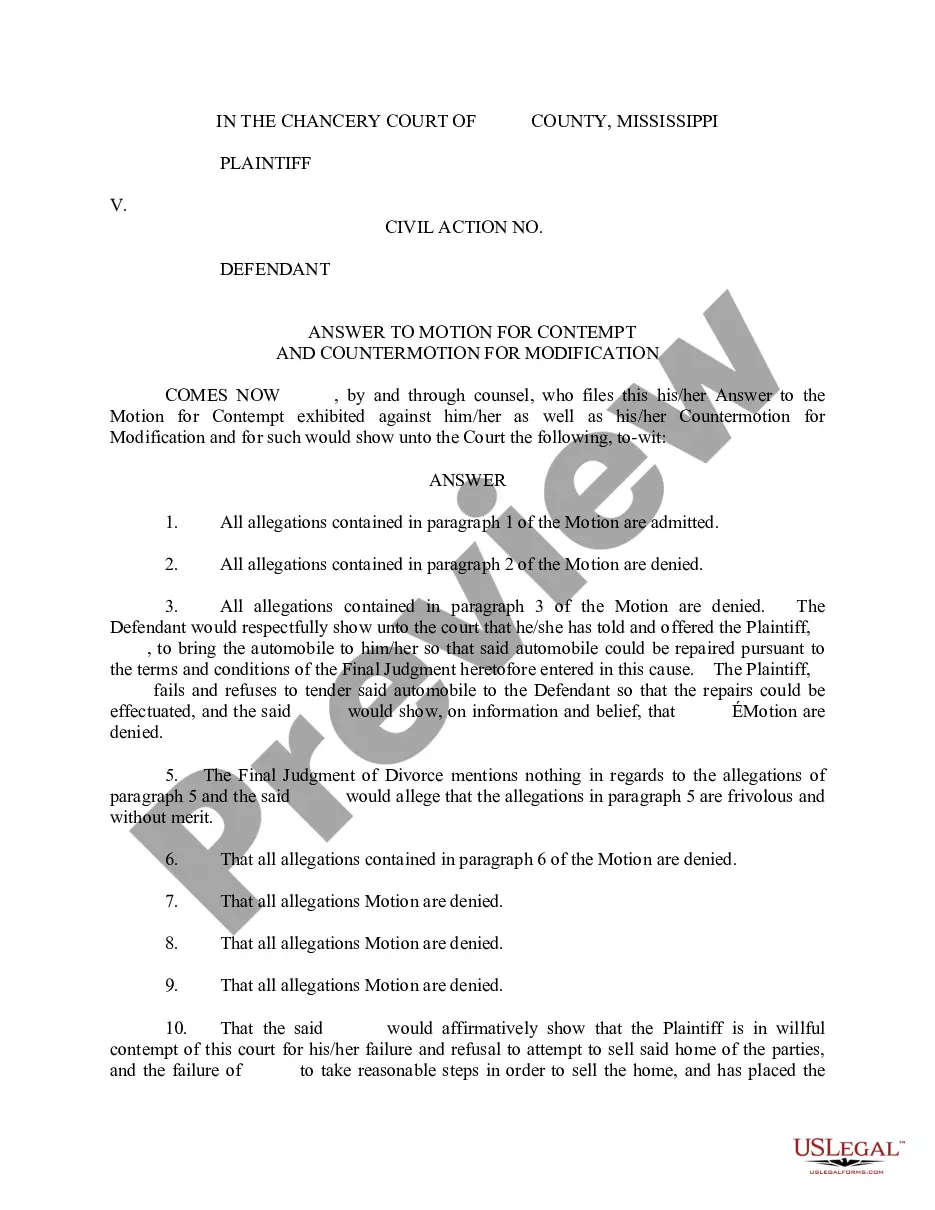
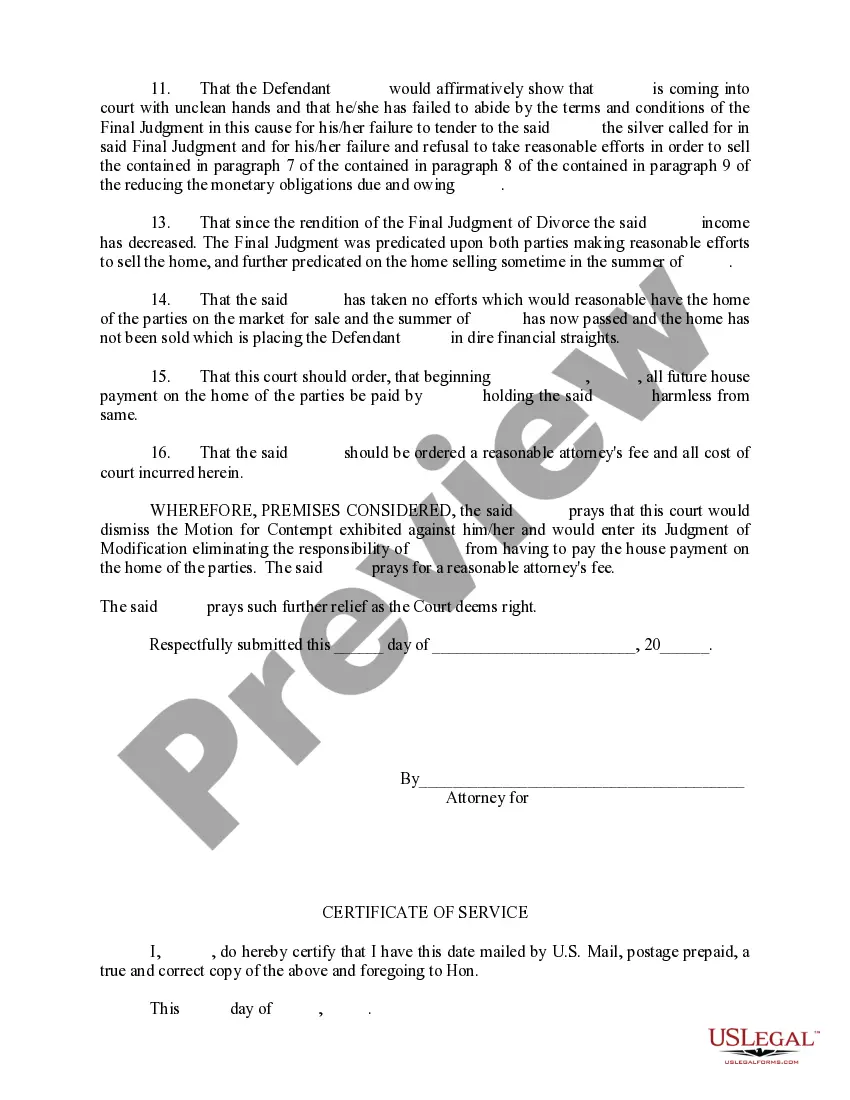
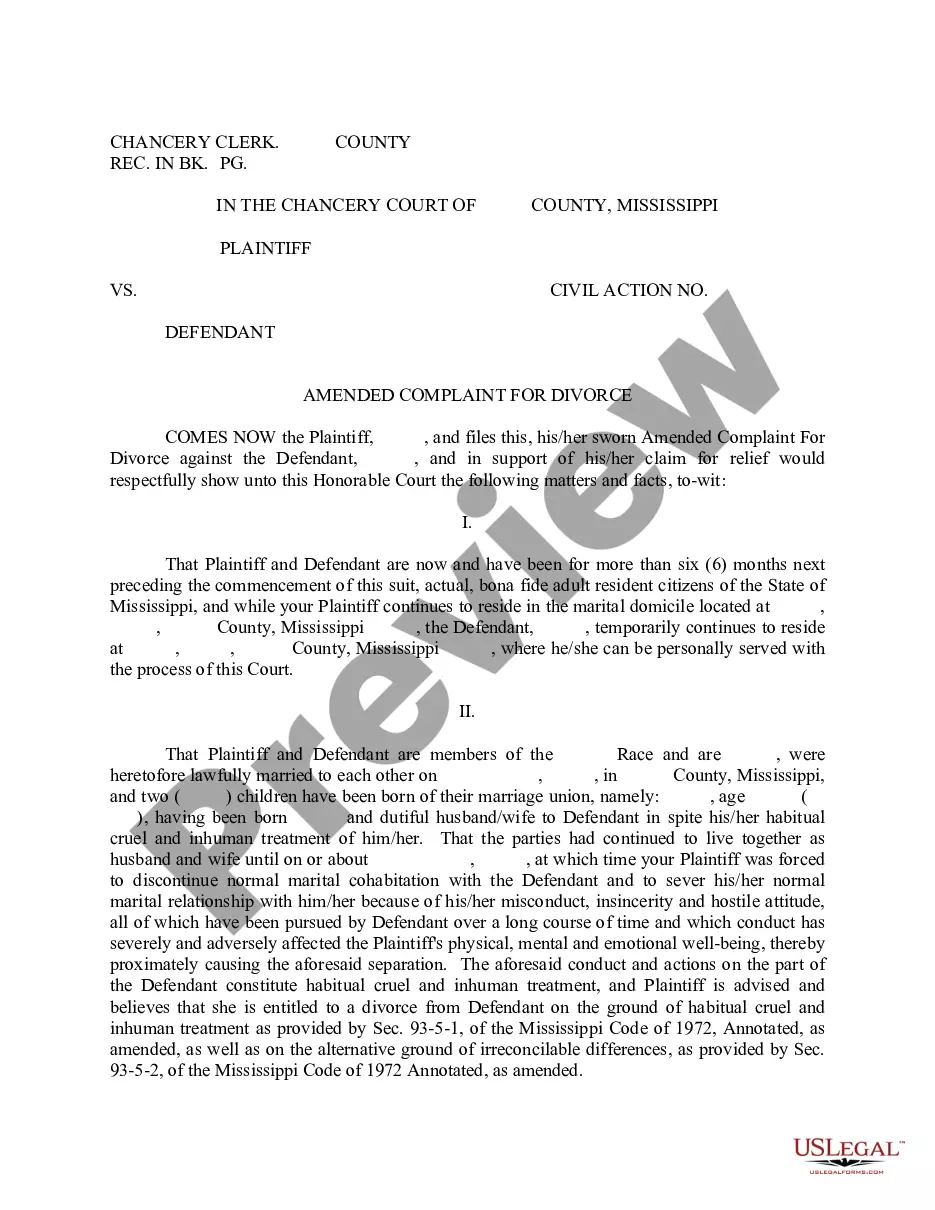
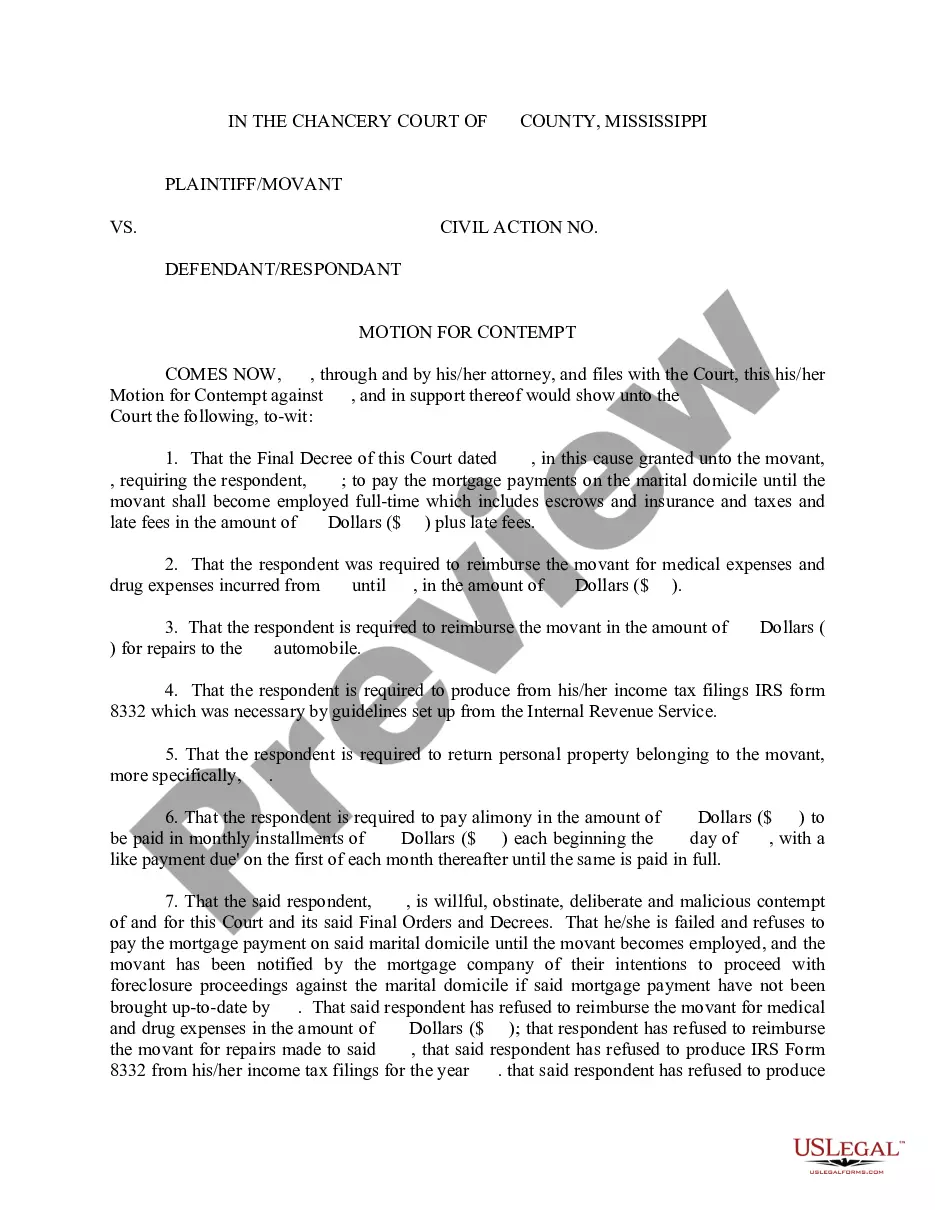
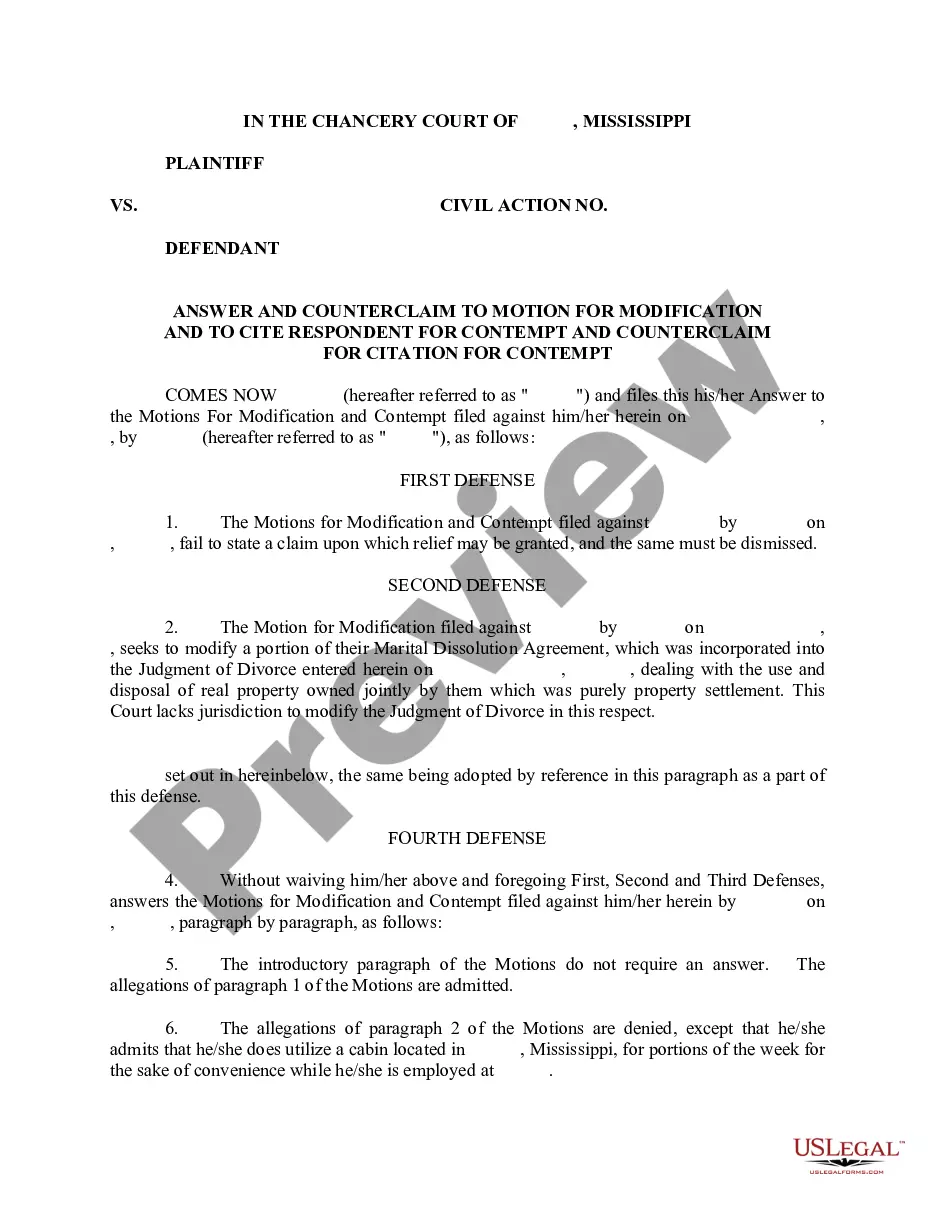
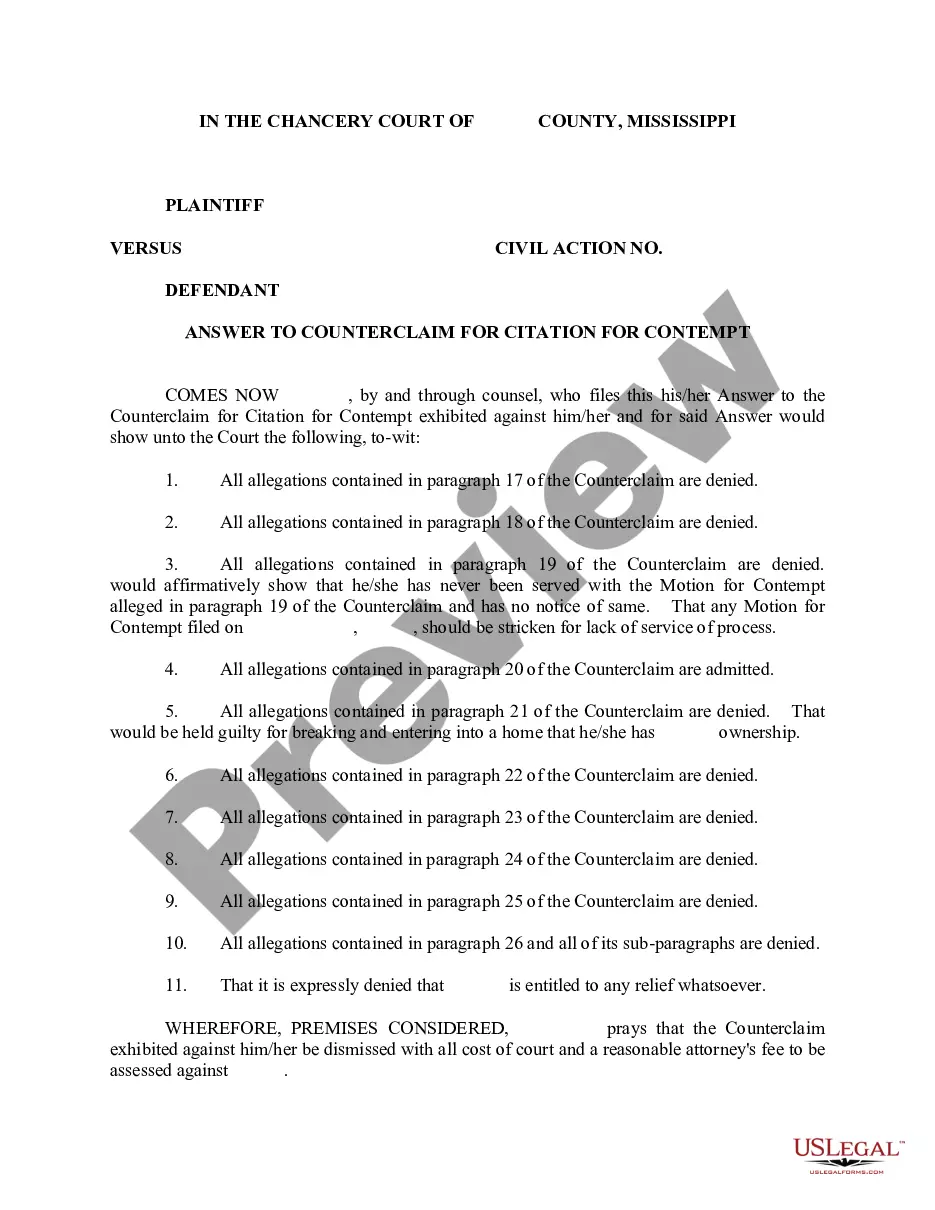
The Answer to Motion for Contempt and Counterclaim for Modification is a legal document used in response to a motion filed in court. This form allows an individual to officially respond to allegations of contempt and simultaneously present a request to modify existing court orders. Unlike a standard motion, this form combines both a response and a counterclaim, making it essential for individuals facing contempt allegations while seeking modifications to prior rulings.
What’s included in this form
- Admission or denial of allegations from the motion.
- A counterclaim stating the modifications requested.
- Identification of the parties involved in the case.
- Space for signatures and dates.

When to use this document
This form is used when a party has received a motion for contempt and wishes to respond to the claims made against them. It is also applicable if the responding party seeks to modify an existing court order, such as custody or support arrangements. Common scenarios include disputes over child support payments or violation of visitation agreements.
Intended users of this form
- Individuals who are named in a motion for contempt.
- Parties seeking to modify a court order.
- Those who want to present their side of the story in court.
Instructions for completing this form
- Review the allegations in the motion carefully.
- Decide which allegations you admit or deny and respond accordingly.
- Outline your request for modifications clearly in the counterclaim section.
- Provide your name and contact information, as well as that of the opposing party.
- Sign and date the form, ensuring compliance with local law requirements.
Notarization guidance
In most cases, this form does not require notarization. However, some jurisdictions or signing circumstances might. US Legal Forms offers online notarization powered by Notarize, accessible 24/7 for a quick, remote process.
Get your form ready online
Our built-in tools help you complete, sign, share, and store your documents in one place.
Make edits, fill in missing information, and update formatting in US Legal Forms—just like you would in MS Word.
Download a copy, print it, send it by email, or mail it via USPS—whatever works best for your next step.
Sign and collect signatures with our SignNow integration. Send to multiple recipients, set reminders, and more. Go Premium to unlock E-Sign.
If this form requires notarization, complete it online through a secure video call—no need to meet a notary in person or wait for an appointment.
We protect your documents and personal data by following strict security and privacy standards.

Make edits, fill in missing information, and update formatting in US Legal Forms—just like you would in MS Word.

Download a copy, print it, send it by email, or mail it via USPS—whatever works best for your next step.

Sign and collect signatures with our SignNow integration. Send to multiple recipients, set reminders, and more. Go Premium to unlock E-Sign.

If this form requires notarization, complete it online through a secure video call—no need to meet a notary in person or wait for an appointment.

We protect your documents and personal data by following strict security and privacy standards.
Common mistakes to avoid
- Failing to respond to all allegations can weaken your case.
- Not including all necessary personal information, such as addresses.
- Missing deadlines for filing the response.
Benefits of using this form online
- Instant access to professionally drafted legal documents.
- Easy to customize to fit your specific circumstances.
- Convenient download options for immediate use.
Quick recap
- The Answer to Motion for Contempt and Counterclaim for Modification is essential for responding to contempt motions in family law.
- Using this form effectively protects your rights and seeks needed modifications to existing court orders.
- Filling out the form accurately and completely is crucial for an effective response.
Looking for another form?
Form popularity
FAQ
If you do not respond to your spouse or partner's petition for divorce or separation or you file a response but reach an agreement, your case will be considered either a "default" or an "uncontested case." In a true default case, you are giving up your right to have any say in your divorce or legal separation case.
Fill out your court forms. Have your forms reviewed. Make at least 2 copies of all your forms. File your forms with the court clerk. Serve your papers on the other parent. File your Proof of Service. Go to your court hearing.
Read the summons and make sure you know the date you must answer by. Read the complaint carefully. Write your answer. Sign and date the answer. Make copies for the plaintiff and yourself. Mail a copy to the plaintiff. File your answer with the court by the date on the summons.
Contact the clerk's office of the court where the lawsuit was filed. You'll find a phone number and address for the clerk's office on your summons. The clerk will be able to tell you exactly what documents you should file with your answer and whether any filing fee is required.
Fill out your court forms. Have your forms reviewed. Make at least 2 copies of all your forms. File your forms with the court clerk. Serve your papers on the other parent. File your Proof of Service. Go to your court hearing.
Don't ignore it. If you do this, the court will simply rule in the issuer or debt collector's favor. Try to work things out. Answer the summons. Consult an attorney. Go to court. Respond to the ruling.
You can file an answer or a general denial. Filing an answer. You can file a motion In certain situations, you can respond to the lawsuit by filing a motion (a request) that usually tells the court that the plaintiff made a mistake in the lawsuit. Talk to a lawyer!
Provide the name of the court at the top of the Answer. You can find the information on the summons. List the name of the plaintiff on the left side. Write the case number on the right side of the Answer. Address the Judge and discuss your side of the case. Ask the judge to dismiss the case.
If you do not respond to your spouse or partner's petition for divorce or separation or you file a response but reach an agreement, your case will be considered either a "default" or an "uncontested case." In a true default case, you are giving up your right to have any say in your divorce or legal separation case.