Mississippi Reply to Motion to Cite Plaintiff for Contempt and Counterclaim
What this document covers
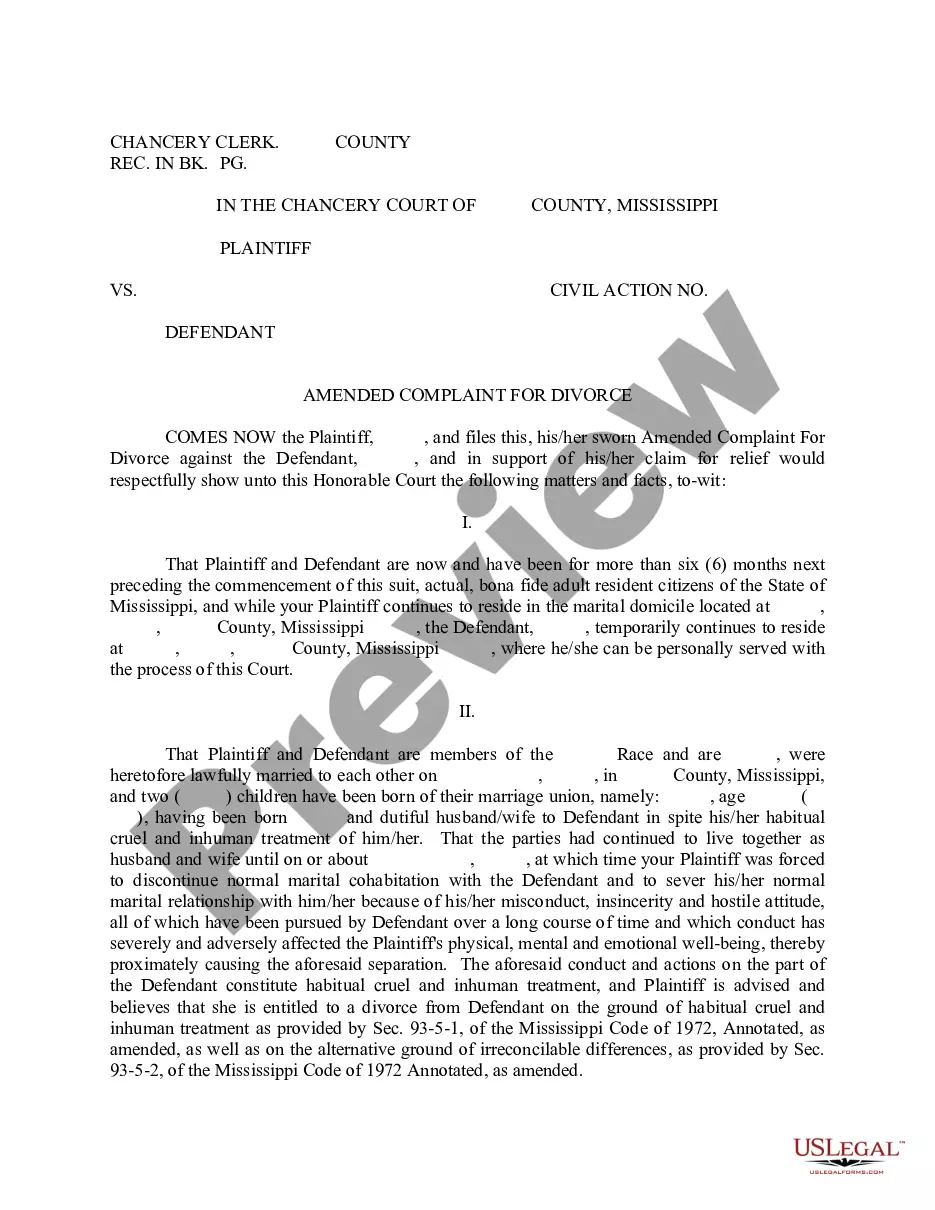
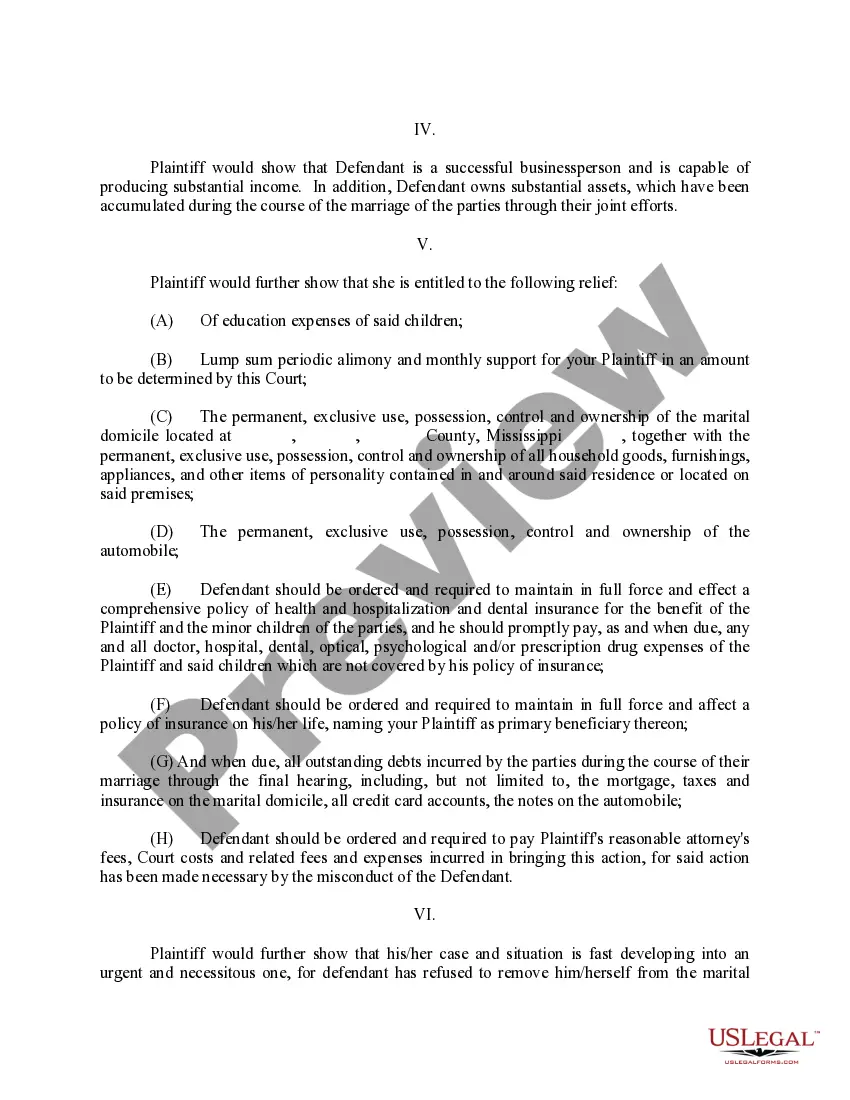
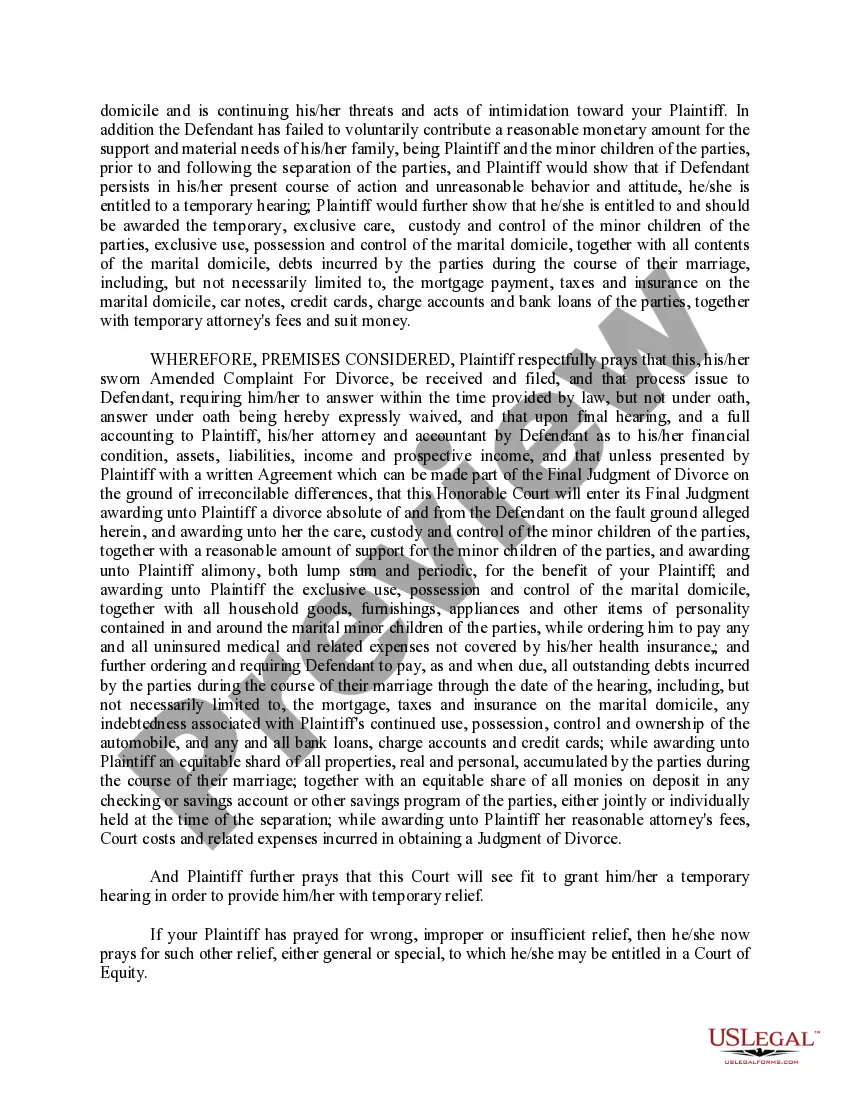
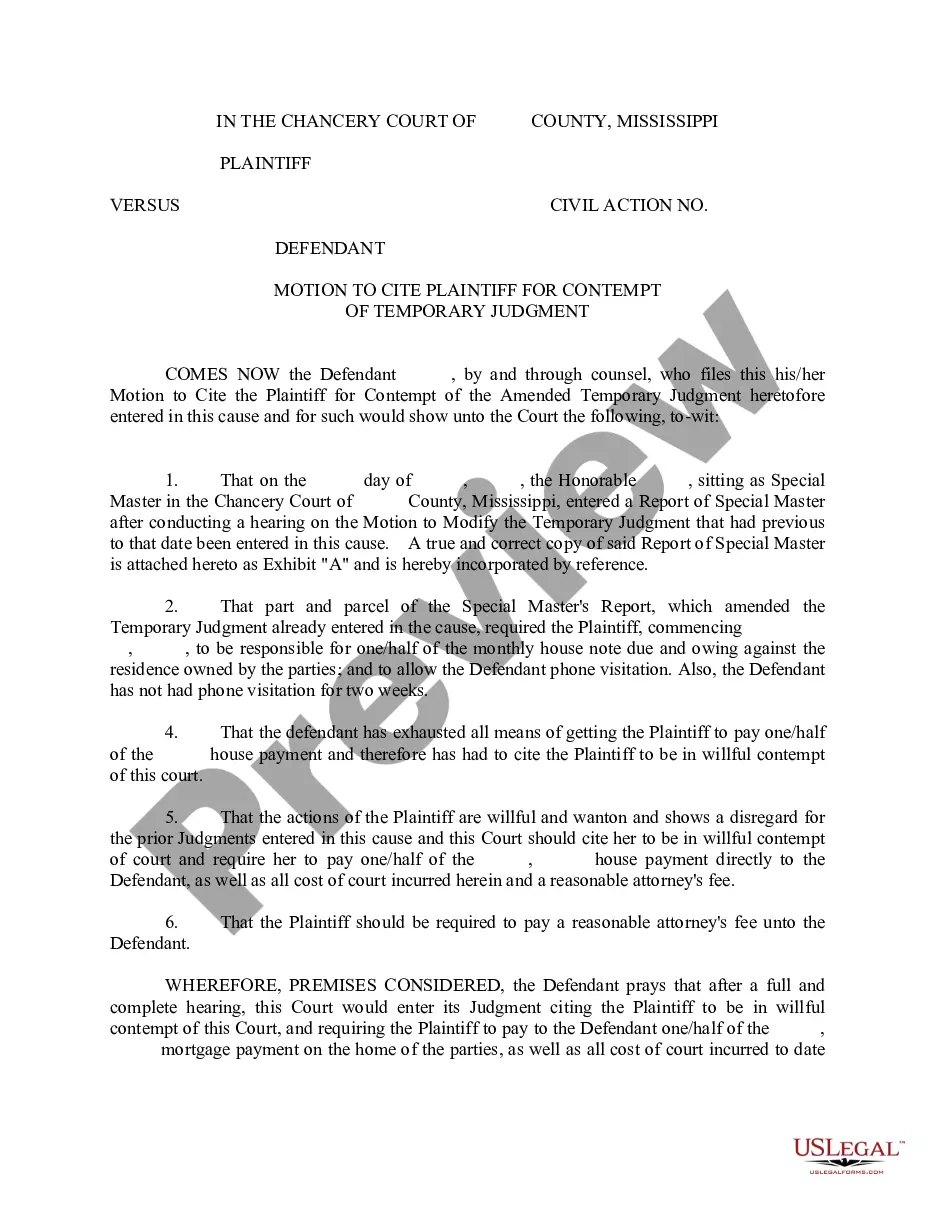
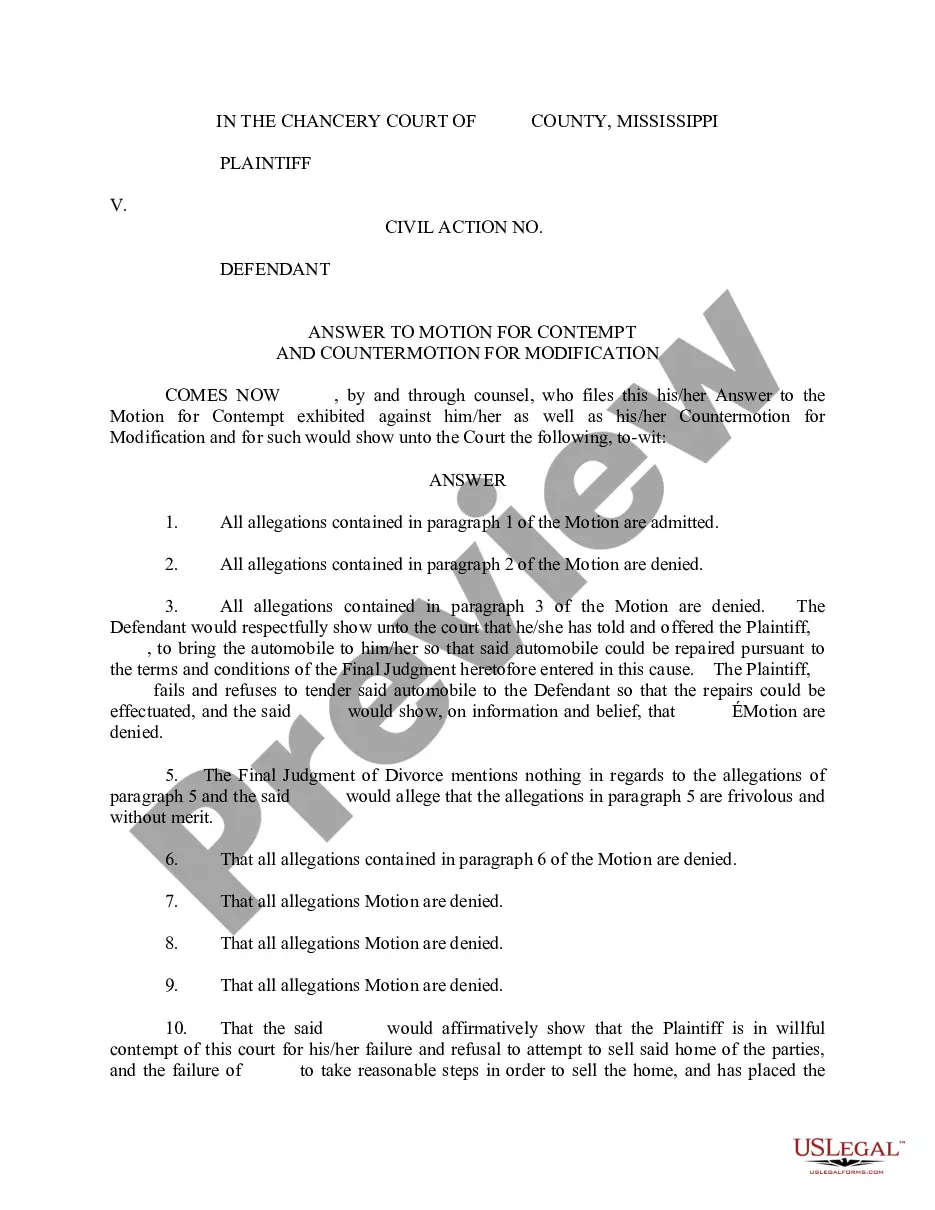
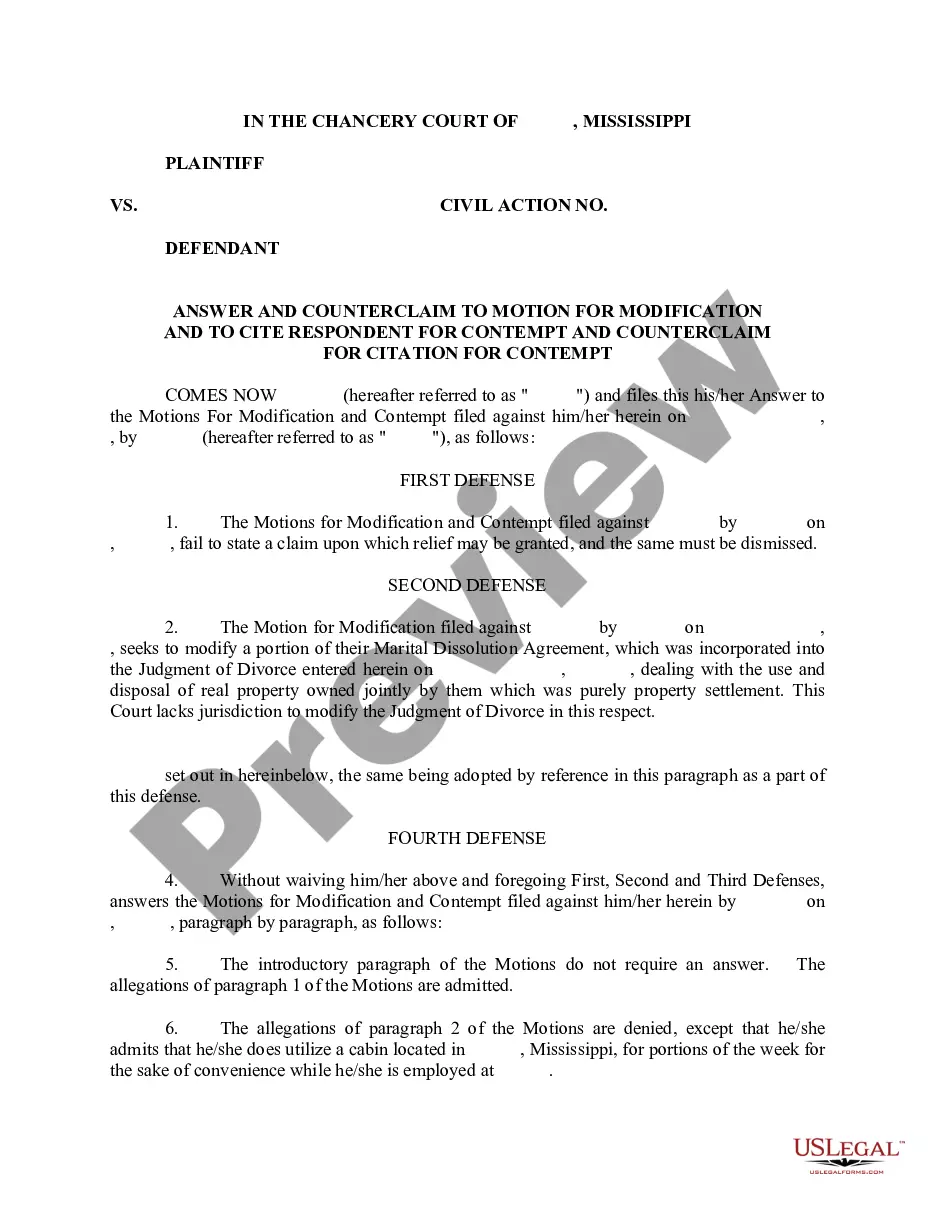
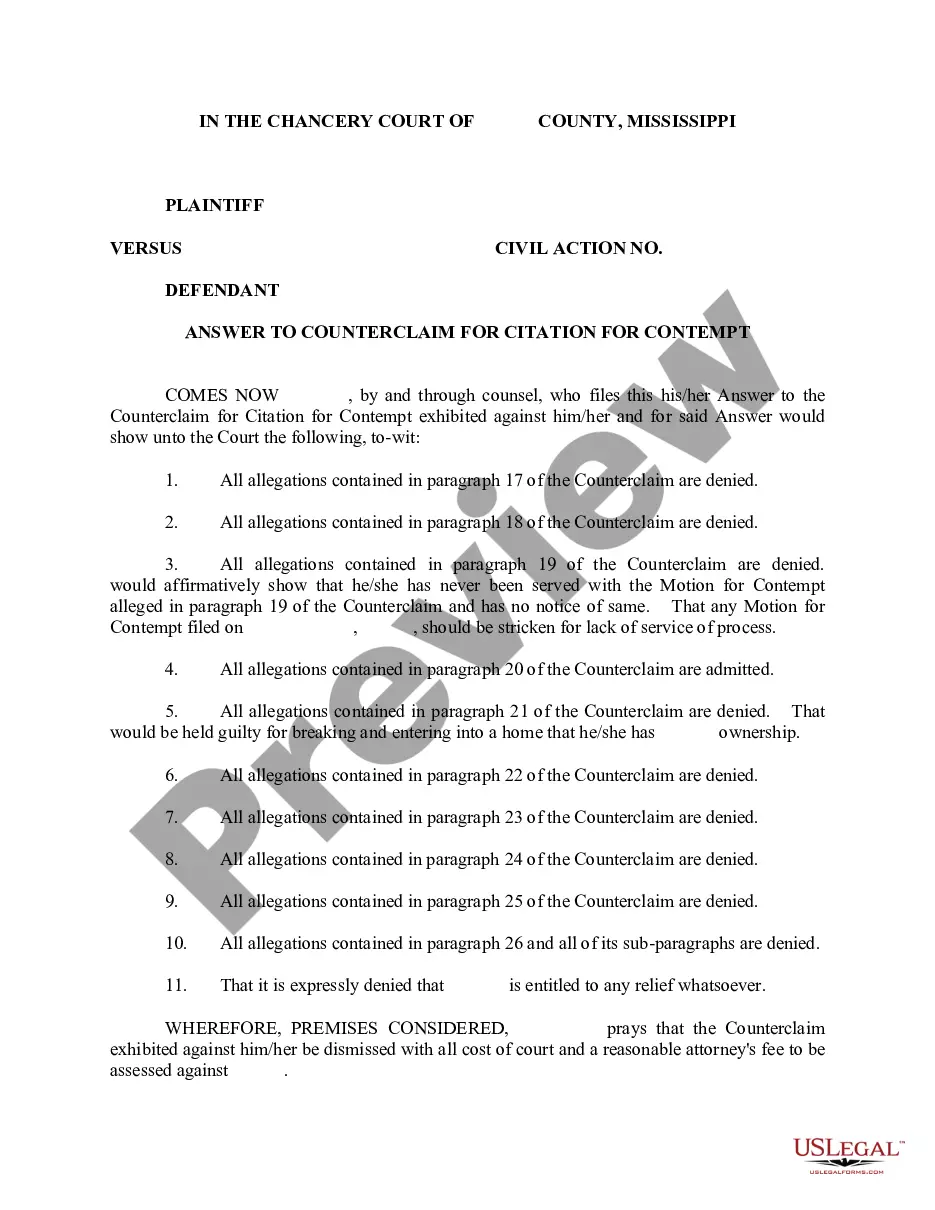
The Reply to Motion to Cite Plaintiff for Contempt and Counterclaim is a legal document drafted to respond to a motion filed by a plaintiff in a court case. This form allows the defendant to present their arguments against the plaintiff's claims of contempt, while also submitting their counterclaims. Unlike a standard motion, this form serves the dual purpose of both replying to the original motion and asserting the defendant's own legal rights and requests in the case.
What’s included in this form
- Introduction of the case and parties involved.
- Response to the plaintiff's allegations of contempt.
- Details of the defendantâs financial situation, including assets and income.
- Requests for specific relief, such as alimony and child support.
- Statement of urgent circumstances necessitating immediate court action.
- Legal basis for requesting exclusive custody and possession of shared property.
When to use this form
This form should be used in situations where the plaintiff has filed a motion to find the defendant in contempt of court. It is particularly relevant when the defendant believes that the allegations are unfounded and needs to assert their own claims, such as the need for temporary financial support or custody of children. Use this form to ensure that your response is well-structured and legally sound, particularly when critical family law issues are at stake.
Who should use this form
- Individuals who have been served with a motion alleging contempt.
- Defendants in family law cases, including divorce or child custody disputes.
- Persons seeking to assert counterclaims in response to a plaintiff's motion.
- Anyone needing to inform the court of urgent circumstances related to their case.
How to prepare this document
- Identify all parties involved, including the plaintiff and defendant.
- Respond to each allegation made by the plaintiff regarding contempt.
- Clearly outline your financial situation and list any relevant assets.
- Specify the type of relief you are seeking from the court, such as custody or financial support.
- Sign and date the document, and prepare it for submission to the court.
Notarization requirements for this form
This form does not typically require notarization unless specified by local law. Always check your jurisdiction's specific regulations to ensure proper compliance.
Get your form ready online
Our built-in tools help you complete, sign, share, and store your documents in one place.
Make edits, fill in missing information, and update formatting in US Legal Forms—just like you would in MS Word.
Download a copy, print it, send it by email, or mail it via USPS—whatever works best for your next step.
Sign and collect signatures with our SignNow integration. Send to multiple recipients, set reminders, and more. Go Premium to unlock E-Sign.
If this form requires notarization, complete it online through a secure video call—no need to meet a notary in person or wait for an appointment.
We protect your documents and personal data by following strict security and privacy standards.

Make edits, fill in missing information, and update formatting in US Legal Forms—just like you would in MS Word.

Download a copy, print it, send it by email, or mail it via USPS—whatever works best for your next step.

Sign and collect signatures with our SignNow integration. Send to multiple recipients, set reminders, and more. Go Premium to unlock E-Sign.

If this form requires notarization, complete it online through a secure video call—no need to meet a notary in person or wait for an appointment.

We protect your documents and personal data by following strict security and privacy standards.
Common mistakes
- Failing to respond to each specific claim made by the plaintiff.
- Omitting required signatures or dates from the form.
- Not including relevant evidence or documentation to support your claims.
- Neglecting to follow local court rules for filing and formatting.
Why complete this form online
- Convenience of downloading and completing the form at your own pace.
- Editability allows you to customize the form to meet your specific needs.
- Access to templates drafted by licensed attorneys ensures legal compliance.
- Instant access to essential documents needed for court proceedings.
Key takeaways
- This form allows a defendant to respond to a contempt motion while also filing counterclaims.
- Completing this form correctly is crucial to ensure your legal rights are protected.
- Be mindful of state-specific rules and deadlines when filing.
Looking for another form?
Form popularity
FAQ
Depending on the infraction, contempt of court consequences can include fines, compensatory visitation, a modification to the custody arrangement, and in some instances even jail time. In most cases, if someone is held in contempt, the court will first give them the opportunity to make amends for the violation.
Proof of contempt Being found in contempt of a court order is extremely serious, and the sanctions imposed can be severe. The court will require clear and concrete evidence of willful disobedience of the court order.
File a motion for contempt of court Respond to the violation of the terms of the divorce decree by filing a motion for contempt of court. This process may be initiated pro-se litigant, and the injured party should call the court clerk for information about what forms to independently file.
If a person is found to be in contempt, the court is able to impose sanctions, which may include the following: jail time (usually 1-30 days) ordering the party held in contempt to pay the money owed. ordering the party held in contempt to pay the other party's attorney's fees.
There is a valid court order in effect. The other person knows about the court order. The facts show a plain violation of the order. You have given the person notice of the contempt hearing and a chance to be heard. Contempt is an appropriate remedy for the violation.
Proceedings for contempt of court are proceedings for a criminal offence. It might be thought therefore that such proceedings cannot succeed unless they establish an intention on the part of the person charged to interfere in the administration of justice.
Depending on the infraction, contempt of court consequences can include fines, compensatory visitation, a modification to the custody arrangement, and in some instances even jail time. In most cases, if someone is held in contempt, the court will first give them the opportunity to make amends for the violation.
If your spouse fails to abide by the divorce decree after your divorce is final, you could wind up without your rightful properties, child support funds, or alimony payments. Not only is this inconvenient and frustrating, but it could lead to serious financial hardship or issues with your children.
Penal Code 166 PC is the California statute that defines the offense of contempt of court. A person commits this crime if he or she engages in any behavior that is disrespectful to the court process. This is a misdemeanor that carries a penalty of up to 6 months in jail.