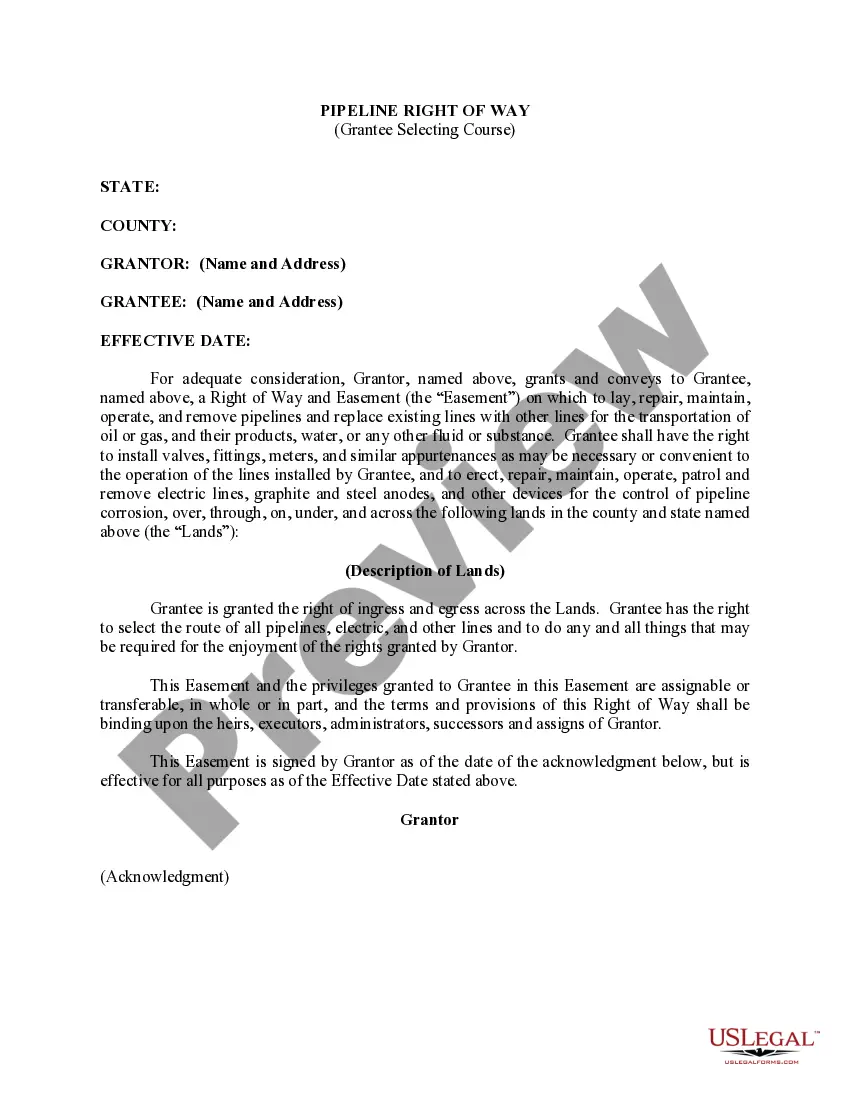
Roommate Agreement for Utilities
What this document covers
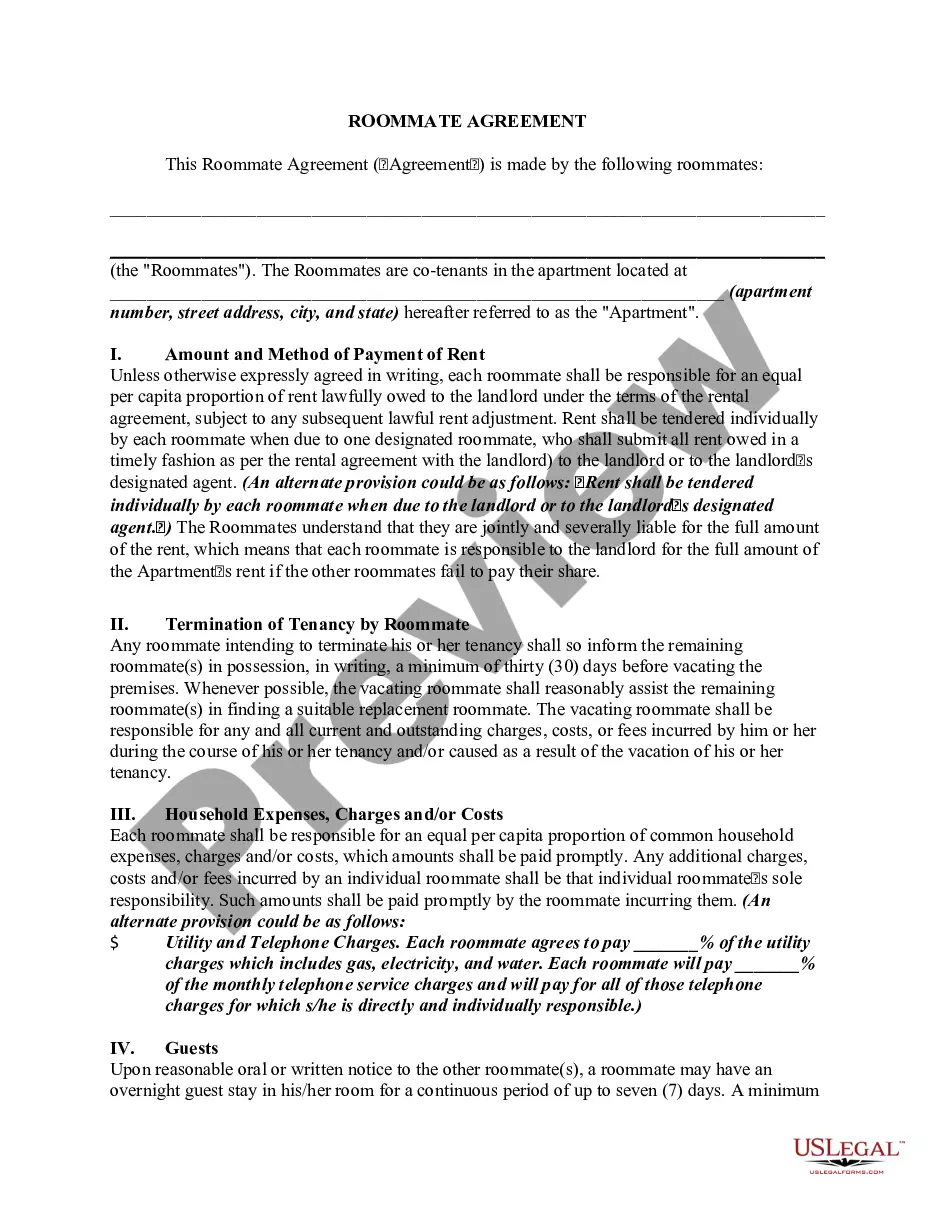
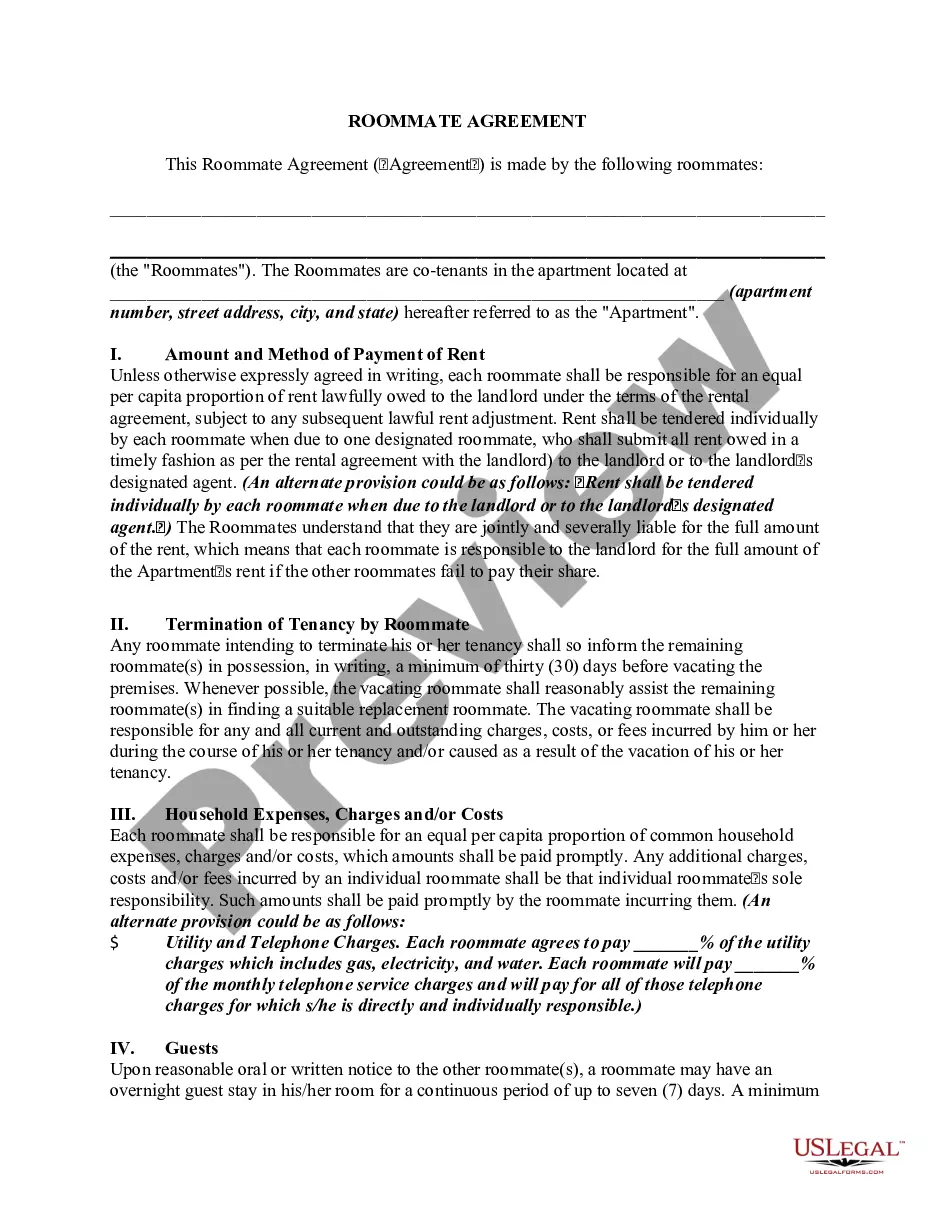
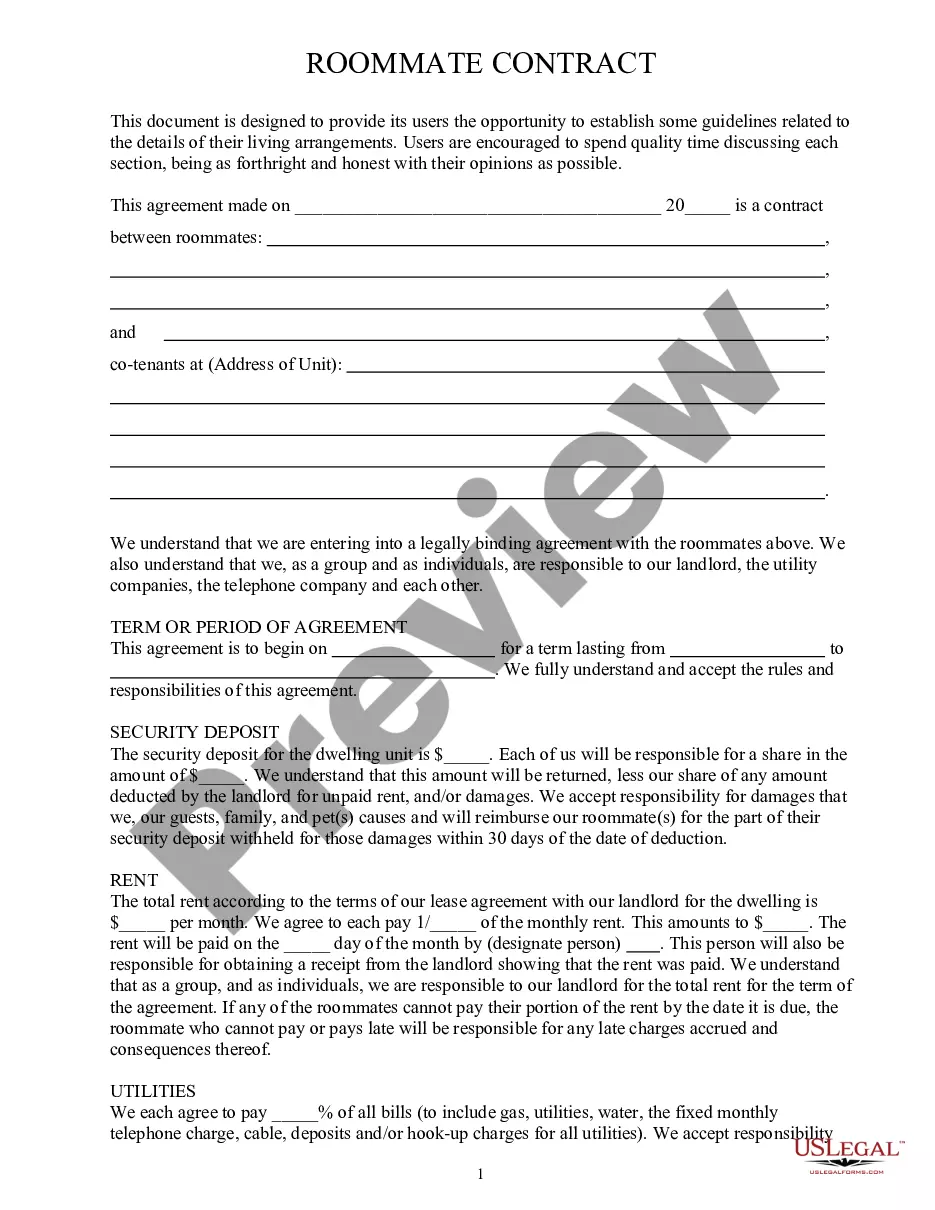
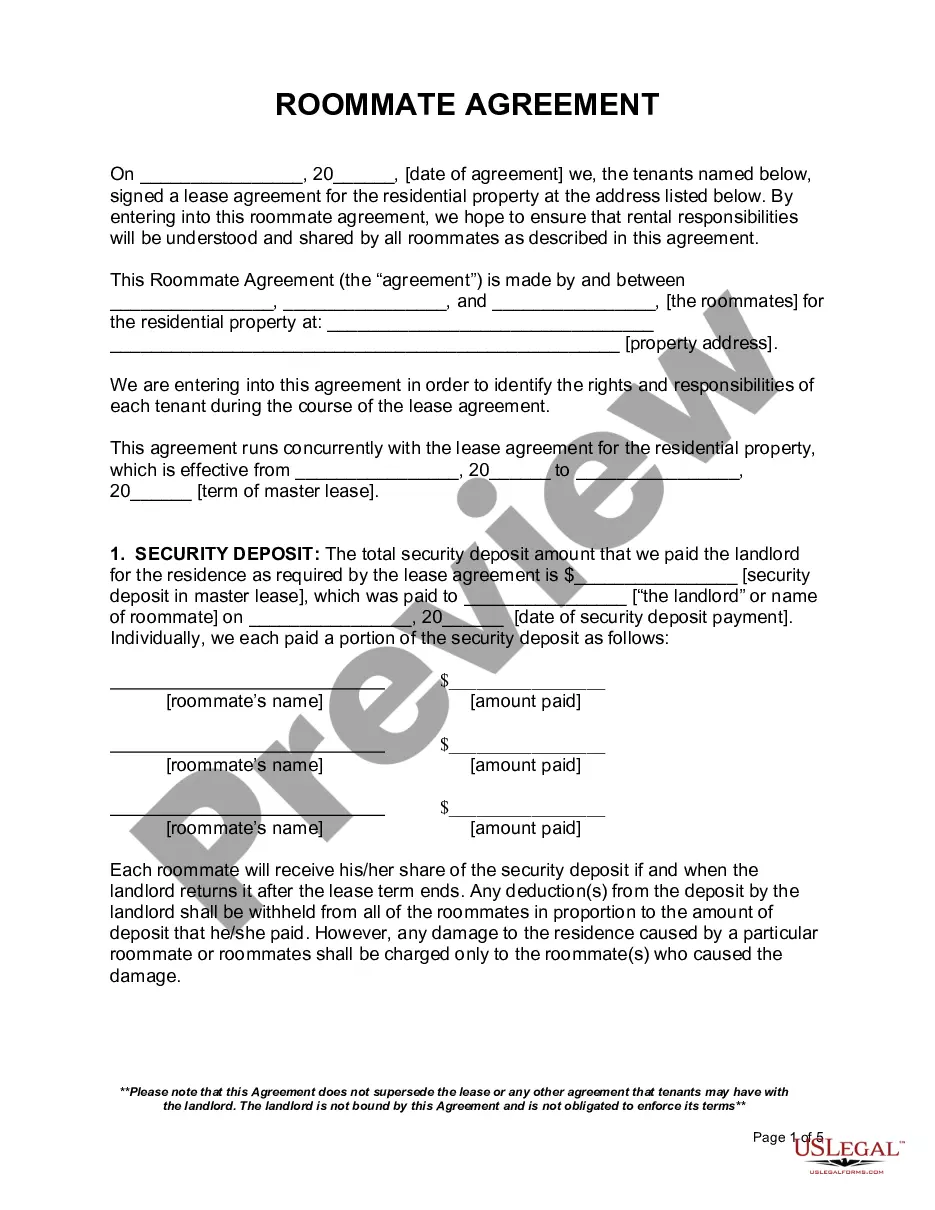
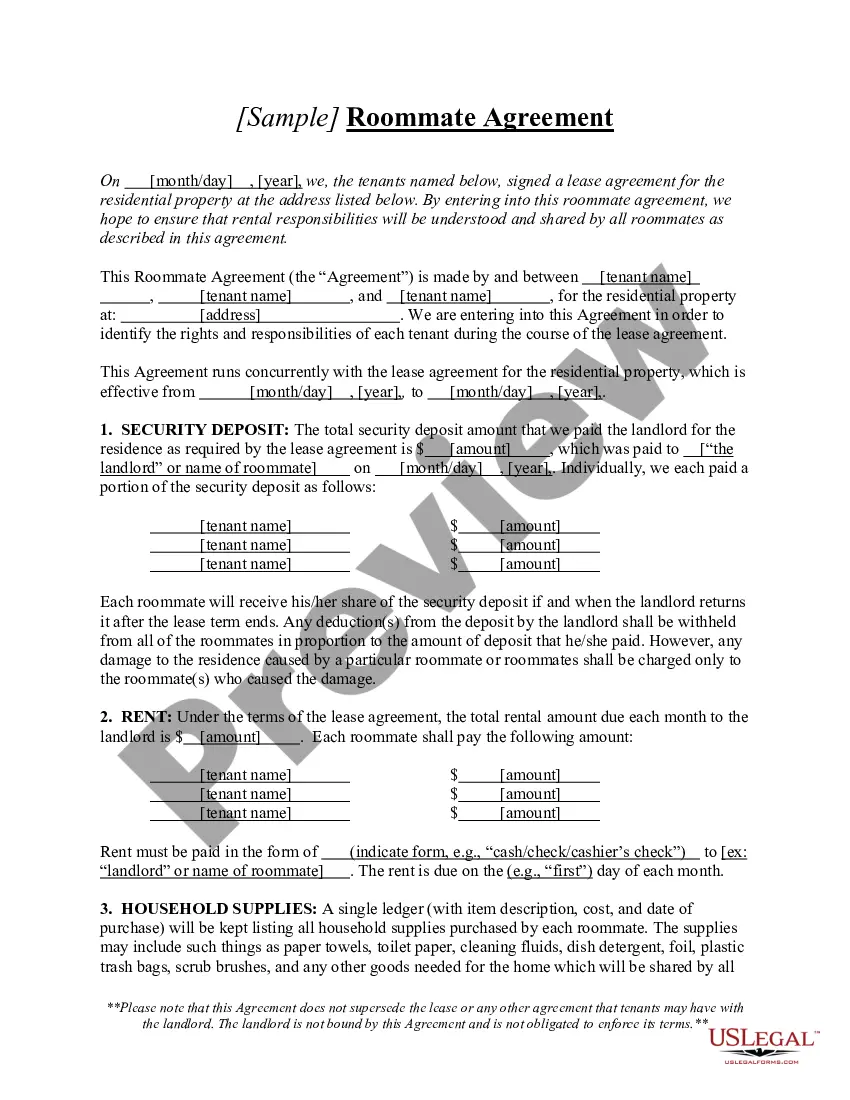
The Roommate Agreement for Utilities is a legal document designed to outline the responsibilities and expectations of roommates sharing living expenses. This agreement is particularly useful for students or individuals sharing a household, helping to prevent misunderstandings about rent, utility payments, and household chores. This form serves to clarify the terms of occupancy and financial arrangements between roommates, differing from generic rental agreements by focusing specifically on utility and shared costs among co-tenants.
Key parts of this document
- Identification of the roommates and the rental property.
- Details on rent payments and the responsibilities of each roommate.
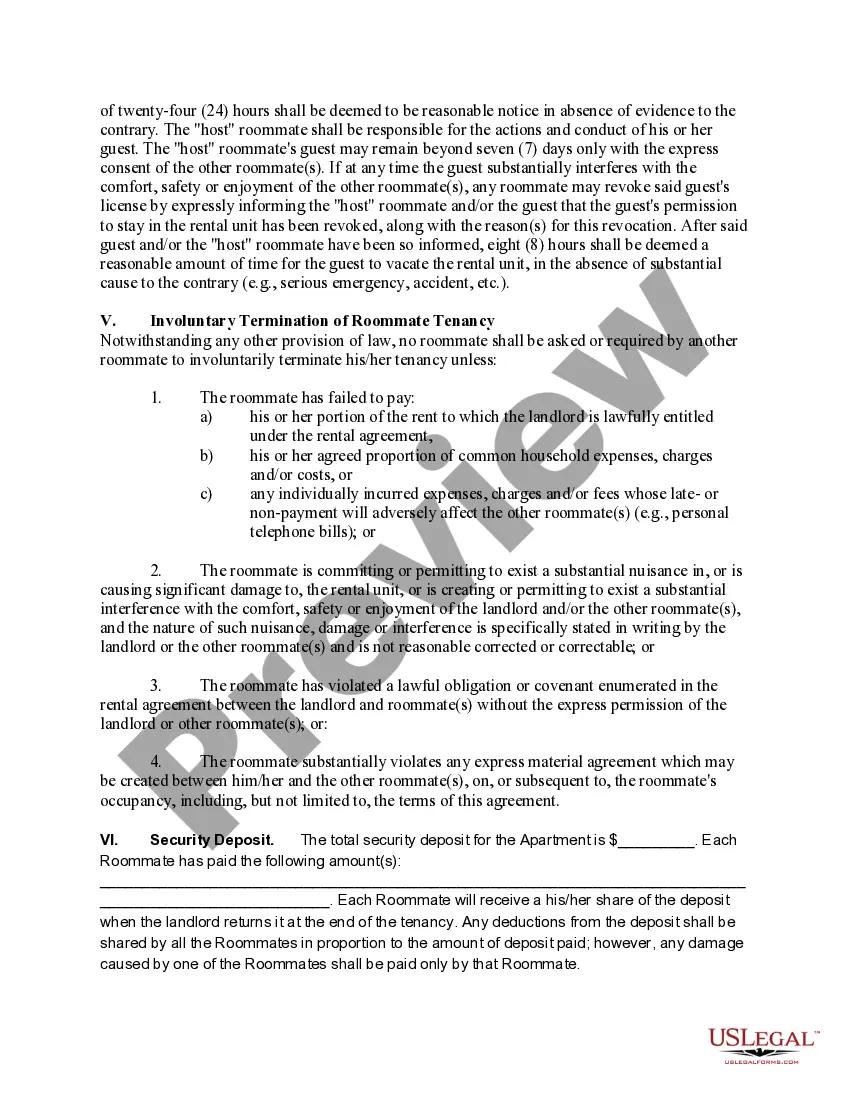
- Provisions regarding termination of tenancy and finding a replacement roommate.
- Agreement on the division of household expenses and which costs are individual responsibilities.
- Rules for guests and their impact on other roommates.
- Security deposit provisions and how it will be handled at tenancy's end.
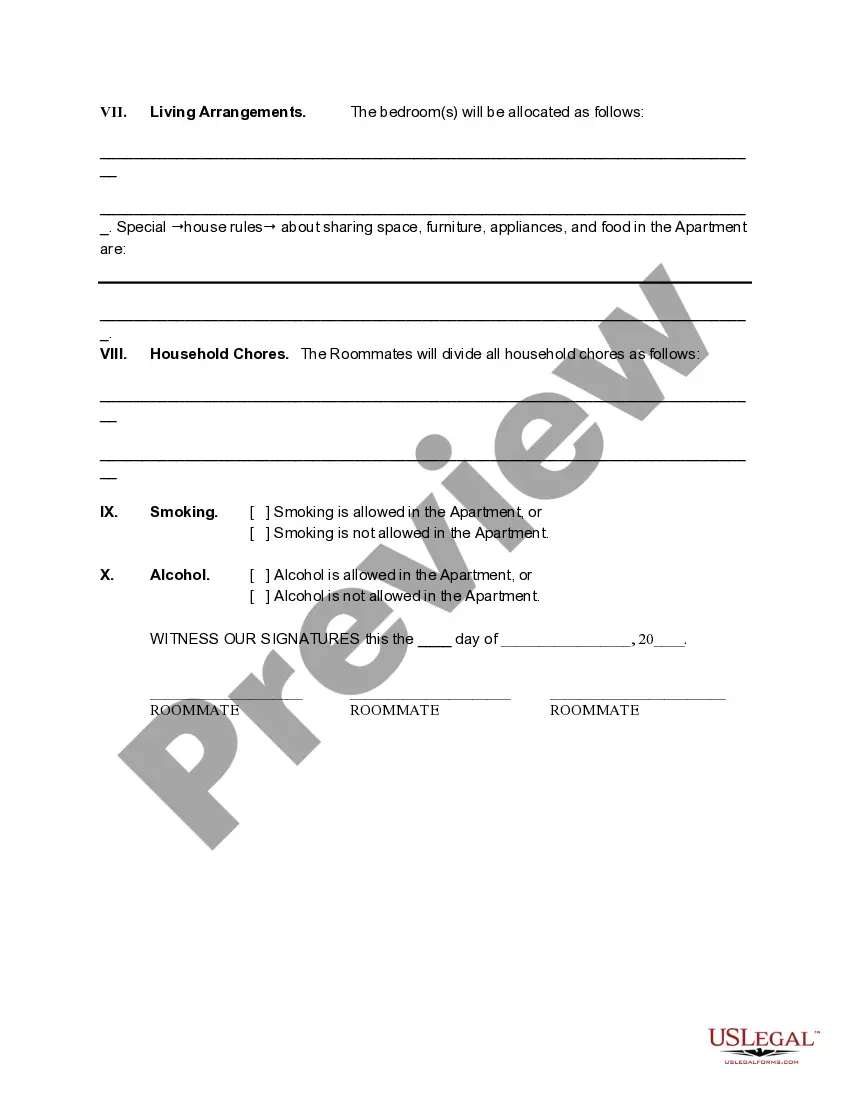
- Allocation of living arrangements and special house rules.
- Specifications regarding smoking and alcohol consumption in the apartment.

When to use this form
This form is essential when you and your roommates want to establish clear expectations for living together. Use it when moving into a shared residence, particularly in situations where multiple individuals are contributing to rental and utility expenses. It aids in formalizing agreements about financial responsibilities and household rules, preventing conflicts over payments and shared living arrangements.
Who can use this document
- Individuals sharing an apartment or house with roommates.
- College students who will live together in dormitories or off-campus housing.
- Friends or family members entering into a shared living arrangement.
- Anyone seeking to formalize financial responsibilities and household guidelines with co-tenants.
Completing this form step by step
- Identify all roommates by entering their names in the designated sections.
- Specify the address of the rental property to ensure clarity on the location covered by the agreement.
- Detail the amount of rent and how it will be paid between roommates.
- Outline the division of household expenses and any individual charges.
- Record any specific house rules or agreements regarding smoking and alcohol consumption.
- Lastly, have all roommates sign and date the agreement to make it legally binding.
Is notarization required?
This form does not typically require notarization to be legally valid. However, some jurisdictions or document types may still require it. US Legal Forms provides secure online notarization powered by Notarize, available 24/7 for added convenience.
Get your form ready online
Our built-in tools help you complete, sign, share, and store your documents in one place.
Make edits, fill in missing information, and update formatting in US Legal Forms—just like you would in MS Word.
Download a copy, print it, send it by email, or mail it via USPS—whatever works best for your next step.
Sign and collect signatures with our SignNow integration. Send to multiple recipients, set reminders, and more. Go Premium to unlock E-Sign.
If this form requires notarization, complete it online through a secure video call—no need to meet a notary in person or wait for an appointment.
We protect your documents and personal data by following strict security and privacy standards.

Make edits, fill in missing information, and update formatting in US Legal Forms—just like you would in MS Word.

Download a copy, print it, send it by email, or mail it via USPS—whatever works best for your next step.

Sign and collect signatures with our SignNow integration. Send to multiple recipients, set reminders, and more. Go Premium to unlock E-Sign.

If this form requires notarization, complete it online through a secure video call—no need to meet a notary in person or wait for an appointment.

We protect your documents and personal data by following strict security and privacy standards.
Avoid these common issues
- Not discussing or agreeing on the payment method for bills beforehand.
- Failing to include all roommatesâ names, which may lead to disputes about responsibility.
- Neglecting to update the agreement if a roommate moves out or new roommates move in.
- Overlooking the need for clear communication regarding household rules and guest policies.
- Assuming that verbal agreements can replace written terms, leading to misunderstandings.
Advantages of online completion
- Convenience of immediate access and download from anywhere.
- Editability allows customization to fit specific household needs.
- Reliability of professionally drafted agreements reduces legal risks.
- Easy-to-follow instructions guide you through completion.
Legal use & context
- This form is a legally binding contract that can be enforced in court.
- It helps clearly outline each roommate's responsibilities, minimizing potential disputes.
- Adhering to this agreement is essential for maintaining a positive roommate relationship.
Looking for another form?


Form popularity
FAQ
The price of rent. Splitting bills: Who pays what and when? Moving out early. How the security deposit will be handled. Roommates who have pets (or want one) Lay out your schedules on paper. When private time should be respected. Guests and significant others.
A roommate agreement is a legally binding document that you and whomever you share your living space with will sign.A rental agreement between roommates is separate from the lease agreement and doesn't include the landlord.
Start the agreement by writing the names of both roommates and the complete address of the residence, including the unit number of the apartment if you are living in an apartment building. Agree on the division of the rent payment. Specify the exact amount of rent each roommate will pay each month.
Having a written roommate agreement makes everyone take their responsibilities more seriously, and helps avoid the misinterpretations and memory lapses that come with oral understandings. Much of your agreement won't be legally bindingfor example, a judge likely wouldn't order your roommate to clean the bathroom.
Even if your roommate is a co-tenant, having a roommate agreement is wise because it explains what's allowed, what's not allowed, and who's responsible for certain payments. A roommate agreement is also important because, if your roommate vacates early, it can help you avoid having to pay all of the rent and utilities.
If you and your roommate are both named on the lease, you are considered co-tenants and both pay rent to the landlord. You cannot evict a co-tenant.If your roommate is not paying rent, doing something illegal in the unit, or damaging the apartment, your landlord may step in to evict them for you.
Assuming that your roommate agreement otherwise is legally sufficient, it does not need to be notarized to be legally binding.
A roommate agreement is a legally binding document that you and whomever you share your living space with will sign. It spells out how you will split bills, share items or food, use and maintain common areas and eventually move out.
If you're a month-to-month tenant, give the required amount of written notice (usually 30 days) immediately. If you have a lease, let the landlord know in writing that you plan to move because you cannot afford the rent without your cotenant.