Final Warning Before Dismissal
What is this form?
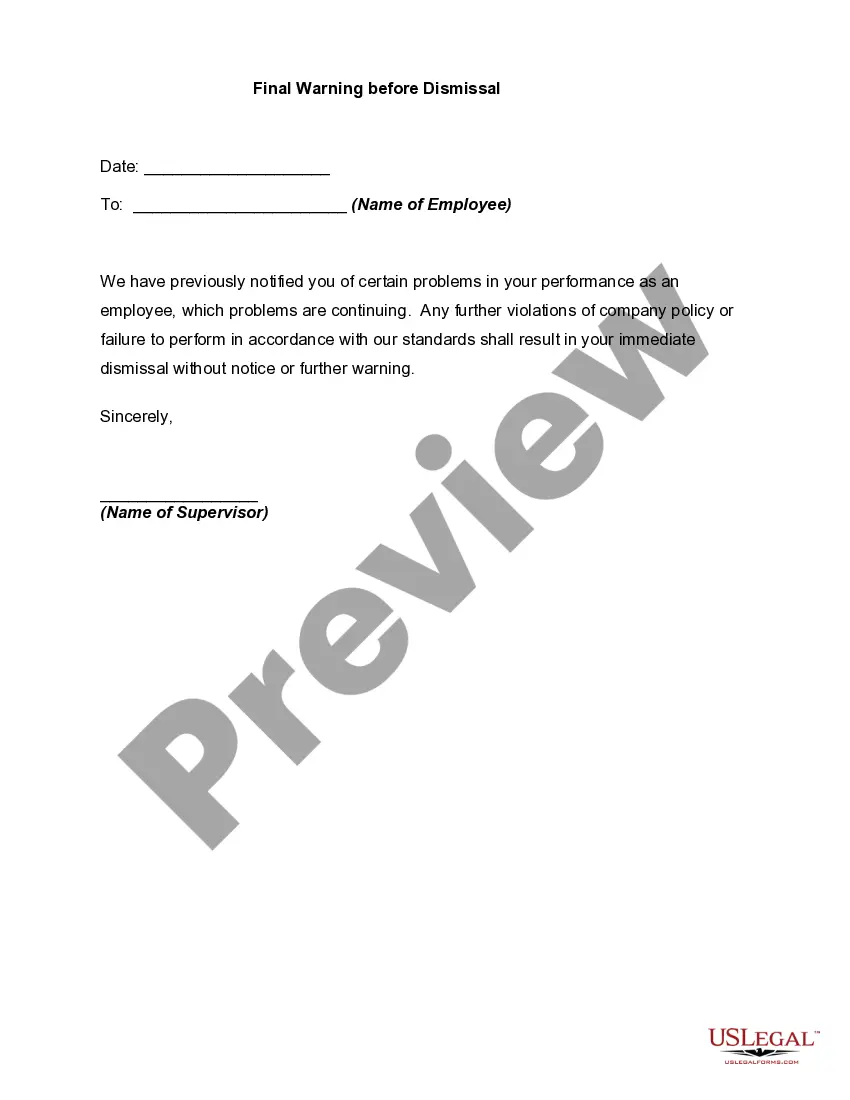
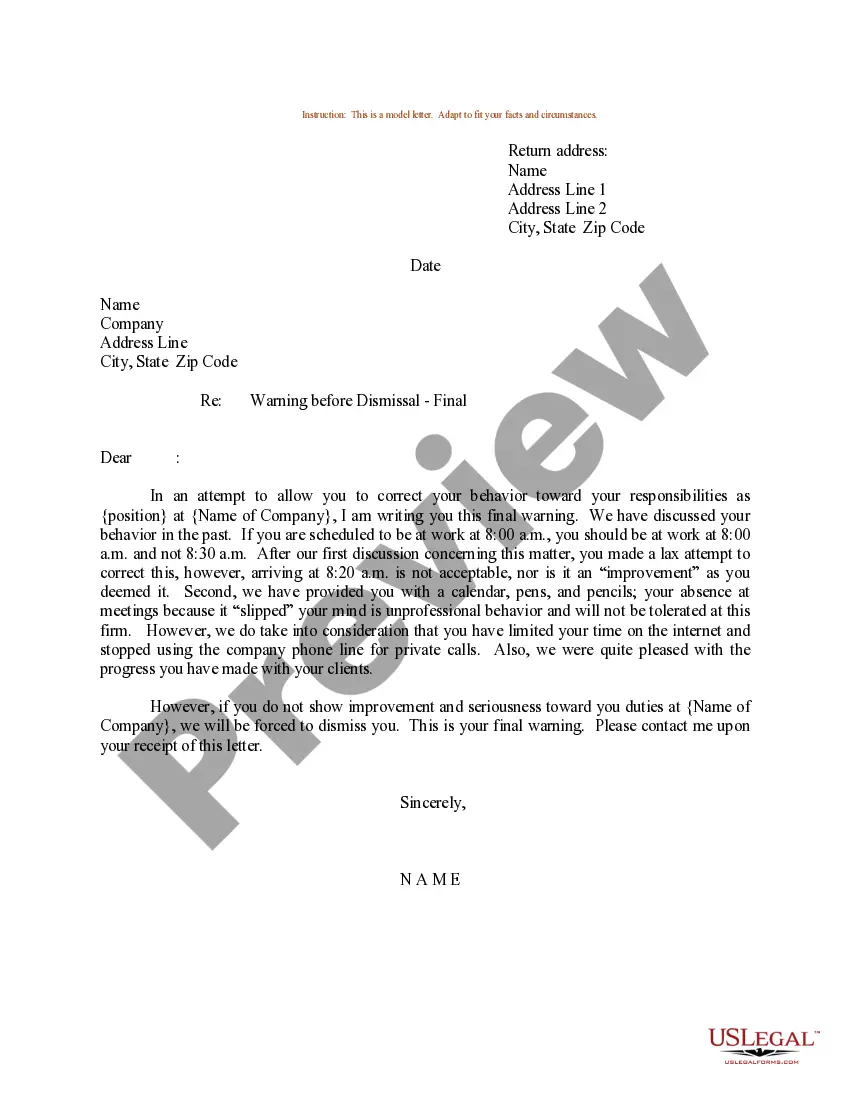
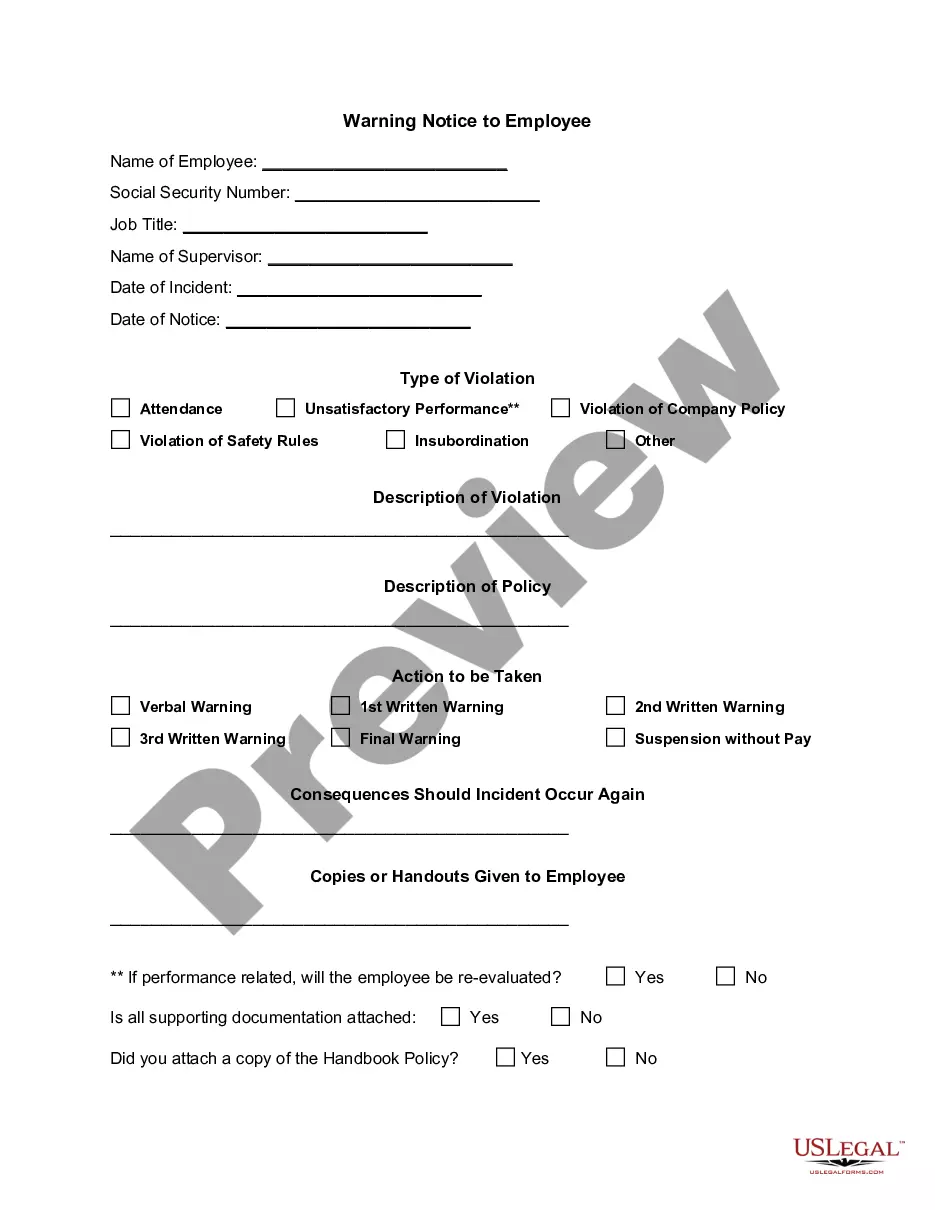
The Final Warning Before Dismissal form serves as a crucial communication tool for employers implementing a progressive discipline system. This form notifies an employee of ongoing performance issues and the consequences of further violations. Unlike standard warning notices, this form clearly states that dismissal will occur without further notice if there are additional infractions. It aims to ensure employees understand the seriousness of their situation before termination action is taken.
Key parts of this document
- Date of issuance
- Name of the employee receiving the warning
- Reference to previous notifications regarding performance issues
- Statement of consequences for ongoing issues
- Signature of the supervisor issuing the warning
When to use this document
This form should be used when an employee continues to perform poorly despite prior warnings. It serves as a critical last opportunity for the employee to correct their actions before facing termination. Typical situations include repeated misconduct, failure to meet performance standards, or violations of company policies that have already been addressed.
Who needs this form
- Employers looking to document final disciplinary action before dismissal
- Human resources professionals managing employee performance issues
- Supervisors responsible for maintaining workplace standards
- Managers implementing a structured progressive discipline policy
Completing this form step by step
- Enter the date of issuance in the designated space.
- Fill in the name of the employee who is receiving the final warning.
- Clearly outline the specific performance issues that led to this warning.
- Indicate the consequences of continued non-compliance.
- Have the supervisor sign the form to validate it.
Does this document require notarization?
Notarization is generally not required for this form. However, certain states or situations might demand it. You can complete notarization online through US Legal Forms, powered by Notarize, using a verified video call available anytime.
Get your form ready online
Our built-in tools help you complete, sign, share, and store your documents in one place.
Make edits, fill in missing information, and update formatting in US Legal Forms—just like you would in MS Word.
Download a copy, print it, send it by email, or mail it via USPS—whatever works best for your next step.
Sign and collect signatures with our SignNow integration. Send to multiple recipients, set reminders, and more. Go Premium to unlock E-Sign.
If this form requires notarization, complete it online through a secure video call—no need to meet a notary in person or wait for an appointment.
We protect your documents and personal data by following strict security and privacy standards.

Make edits, fill in missing information, and update formatting in US Legal Forms—just like you would in MS Word.

Download a copy, print it, send it by email, or mail it via USPS—whatever works best for your next step.

Sign and collect signatures with our SignNow integration. Send to multiple recipients, set reminders, and more. Go Premium to unlock E-Sign.

If this form requires notarization, complete it online through a secure video call—no need to meet a notary in person or wait for an appointment.

We protect your documents and personal data by following strict security and privacy standards.
Common mistakes to avoid
- Failing to document previous warnings clearly.
- Not providing sufficient details about the performance issues.
- Neglecting to include a signature from the supervisor.
- Forgetting to deliver the warning to the employee properly.
- Using vague language that may not clearly communicate the issues.
Why complete this form online
- Easy and immediate access to the form for prompt action.
- Editable template allows customization to fit specific situations.
- Reliable and professionally drafted, ensuring legal sufficiency.
- Convenience of digital storage and easy retrieval of documentation.
Legal use & context
- This form helps establish a paper trail that can be vital in case of disputes over termination.
- While it serves as a warning, employers must still adhere to any relevant employment laws.
- The document should be clear and precise to prevent misunderstandings about its implications.
Quick recap
- The Final Warning Before Dismissal is essential for employees facing serious performance issues.
- Utilizing this form helps document the final opportunity for improvement before termination.
- Proper completion and delivery of the form are critical to its effectiveness.
Looking for another form?
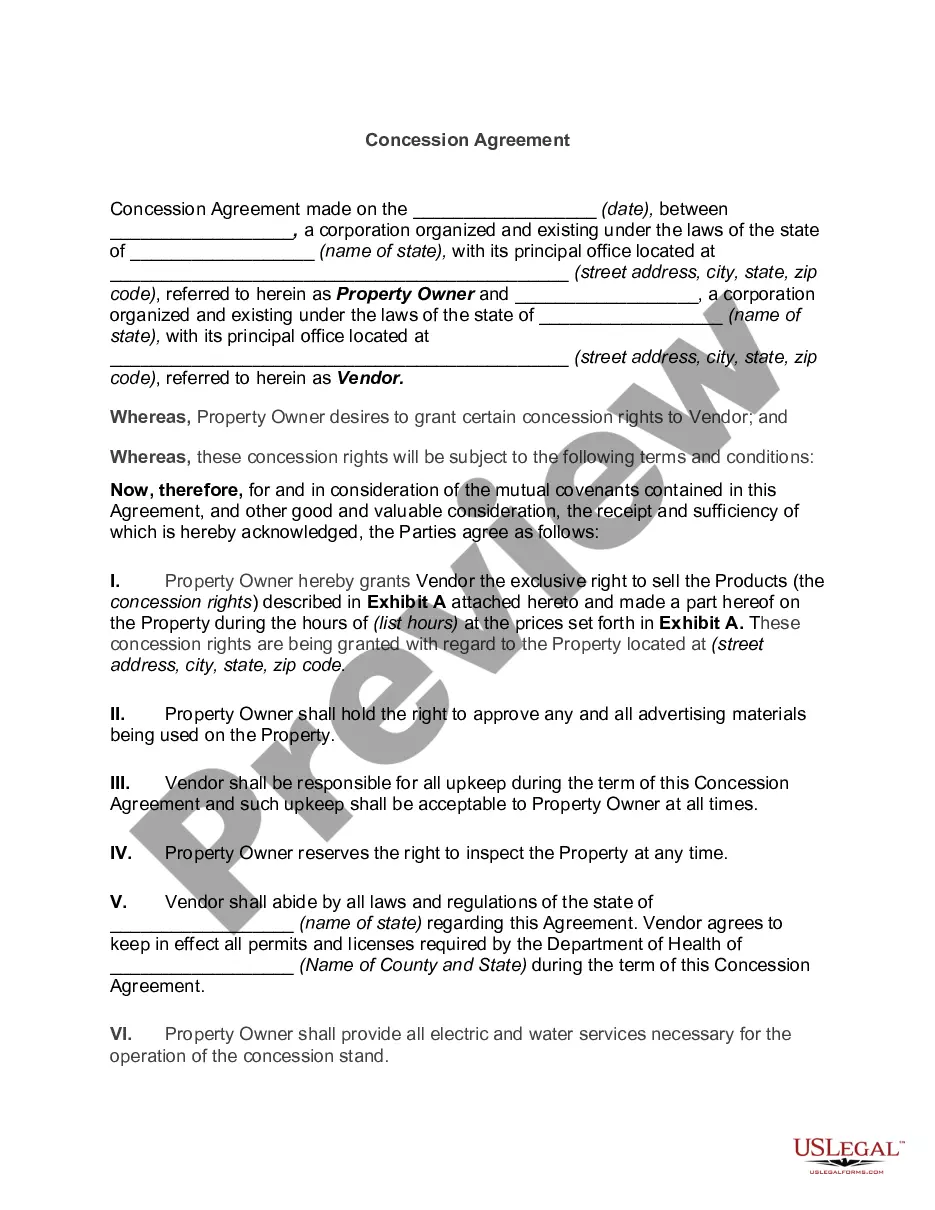
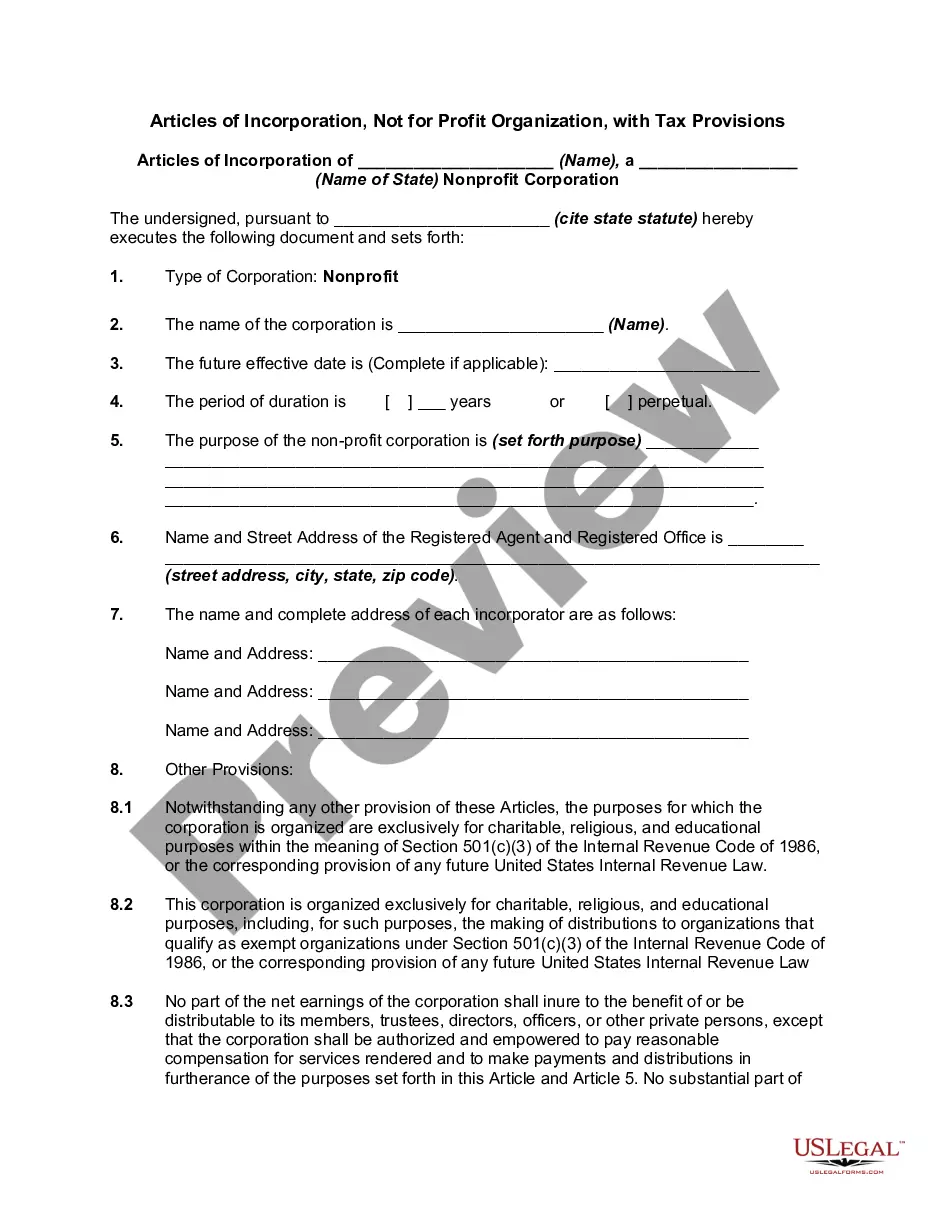

Form popularity
FAQ
There is no legislative requirement specifying that an employee must be given a certain number of written warnings before being dismissed for poor performance. For example, there is no rule that an employee must receive three written warnings.
Confirm the decision in writing. Explain the nature of the misconduct. Set out the improvement required. Point out the possible consequences of a failure to improve. Specify the length of the warning. Confirm the right of appeal. Keep a record of the warning.
A dismissal with the appropriate notice will be a contractually lawful dismissal. (although it may still be unfair).A dismissal without the appropriate notice is a wrongful dismissal (in other words, it is a breach of contract) unless it is in response to the employee's gross misconduct.
There are no specific numbers of warnings which must be given before an employer can justify termination of your employment. Generally, three written warnings are considered acceptable provided they are within a reasonable time of one another and are about the same issue or related issues.
If an employee does not meet the requirements of their final written warning in the timeframe set, it could lead to dismissal. The employer should make this clear to the employee.
No, generally firing an employee without a warning is not considered illegal. However, it mainly depends on the type of employment contract you signed with the employer.Your employer does not need a good cause to fire you. At-will employees can also quit anytime without a reason and with or without notice .
Your company's disciplinary procedure should include how many verbal or written warnings are needed before a final warning or dismissal. You should be given a written warning, or if the warning was verbal a written confirmation of it, saying what it was for and how long it will remain in force.
Address the concerned employee in the letter. State the issue you want to address in the letter. Explain the corrective measures for their behavior or, their poor performance. State why you want him/her to take actions on their behavior or, improve their performances positively.
1Address the concerned employee in the letter.2State the issue you want to address in the letter.3Explain the corrective measures for their behavior or, their poor performance. State why you want him/her to take actions on their behavior or, improve their performances positively.