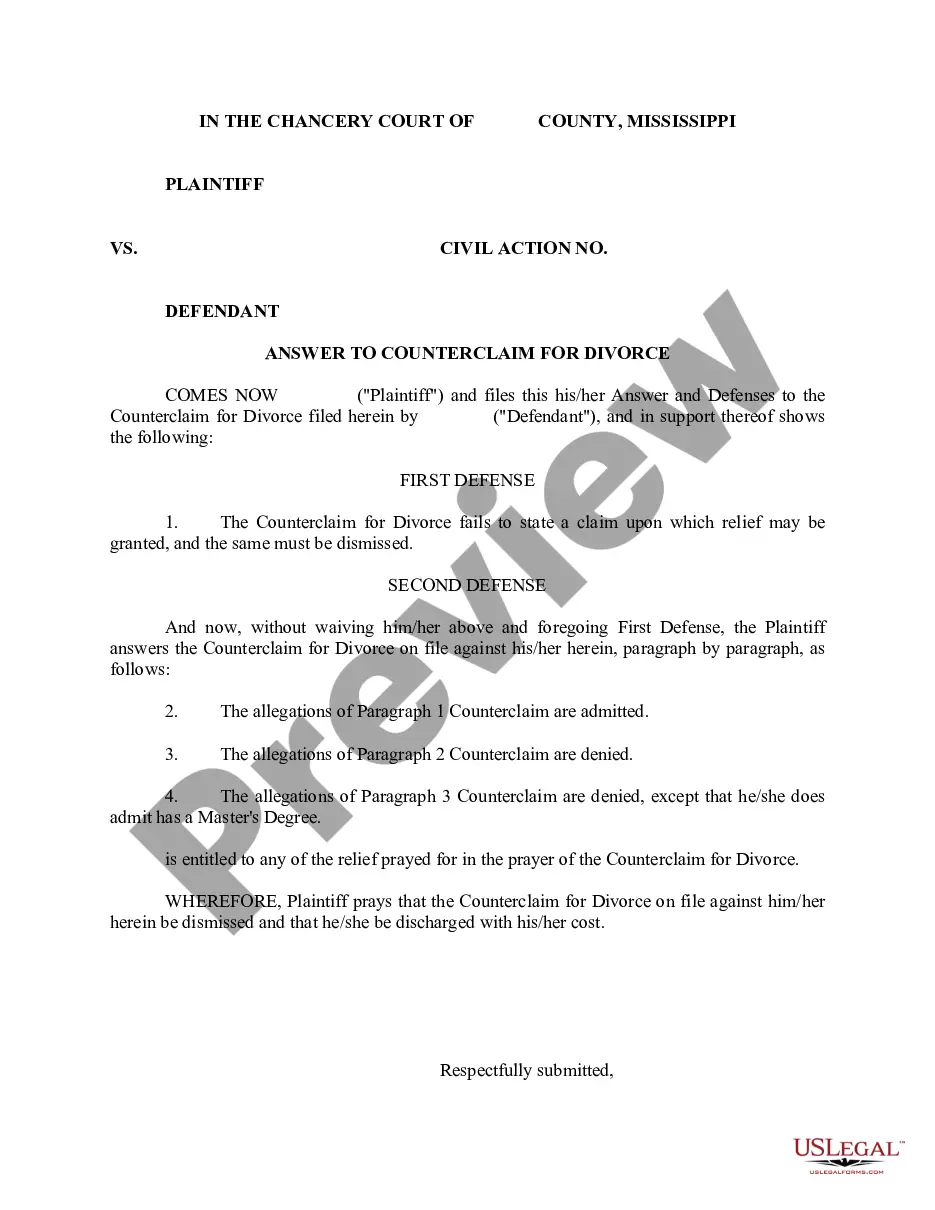
Mississippi Answer to Counterclaim for Divorce
Understanding this form
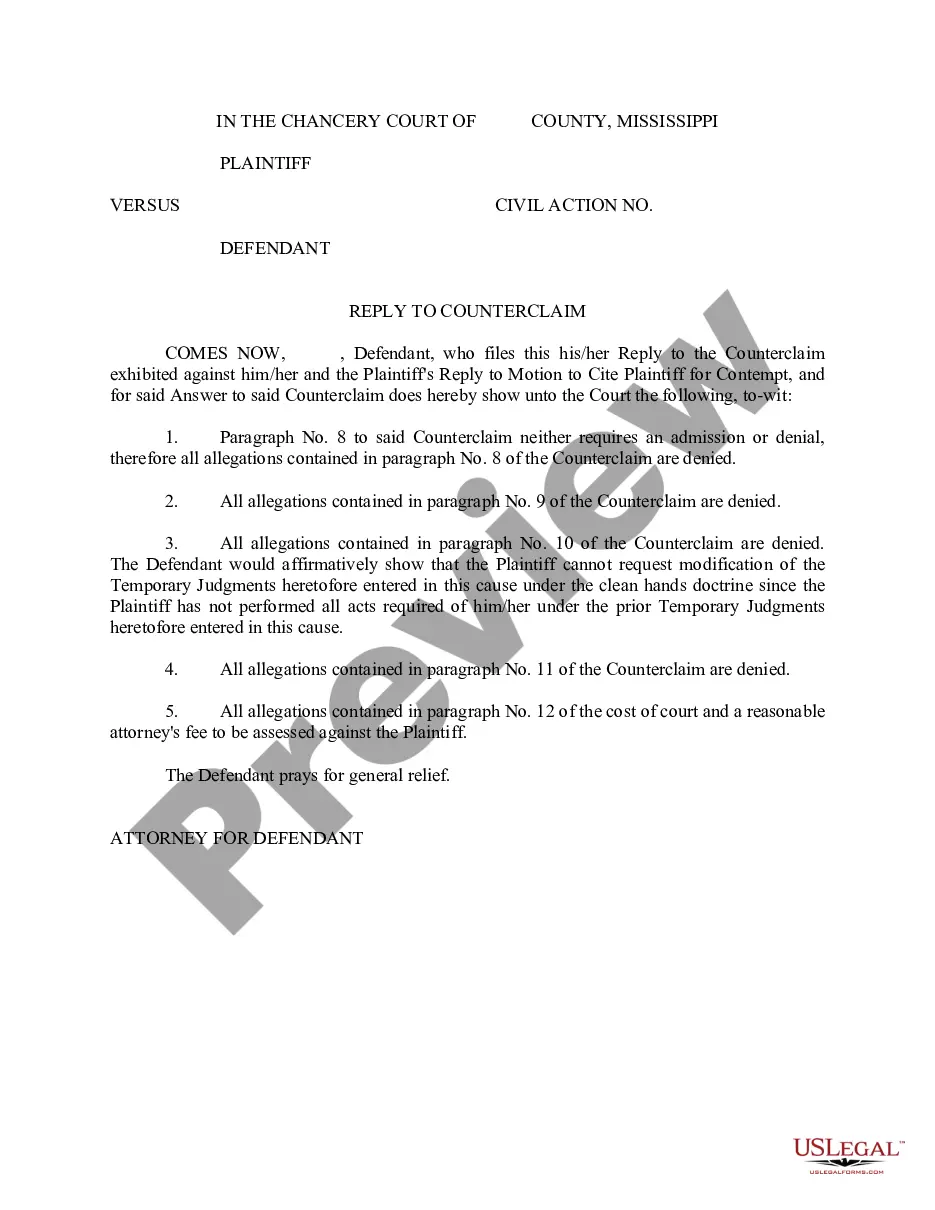
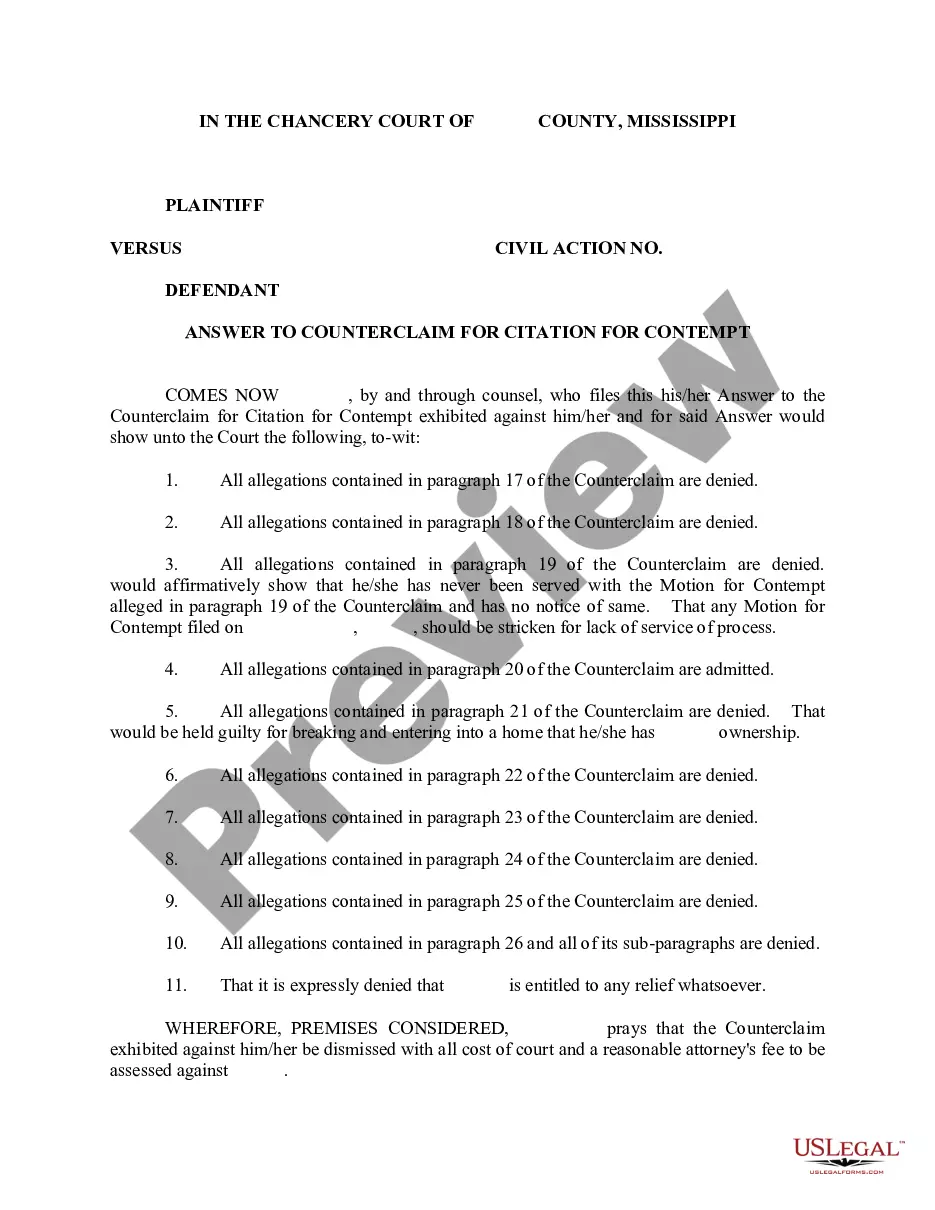
The Answer to Counterclaim for Divorce is a legal document used to respond to a counterclaim made by the other party in a divorce proceeding. This form outlines the plaintiff's defenses against the claims made in the counterclaim and helps ensure their position is formally noted in the court record. It is distinct from initial divorce petitions, focusing instead on rebutting the claims and asserting defenses to those claims.
Form components explained
- Introduction identifying the parties involved in the case.
- Sections for responding to each paragraph of the counterclaim.
- Affirmative defenses outlining reasons the counterclaim should be dismissed.
- Request for dismissal of the counterclaim and discharge of costs.
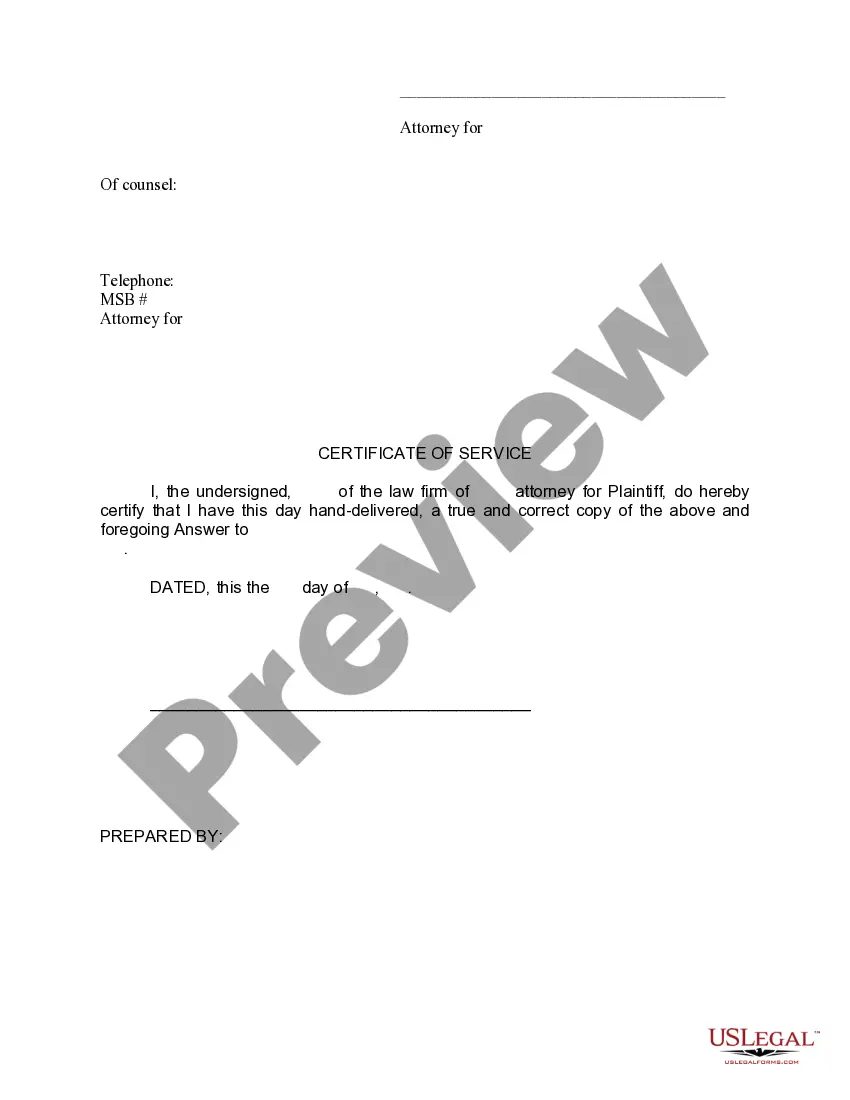
- Certification of service confirming that relevant parties received the document.
Situations where this form applies
This form should be used when the plaintiff in a divorce case receives a counterclaim filed by the defendant. It is essential for providing a formal response, denying or admitting the claims made, and asserting any defenses. If you are contested on your divorce grounds or if the defendant seeks additional relief, it is vital to use this form to protect your legal rights and interests.
Who needs this form
- Individuals who have been served with a counterclaim for divorce.
- Plaintiffs seeking to respond formally to claims made by the defendant in a divorce proceeding.
- Parties involved in contested divorce cases that require a legal acknowledgment of defenses.
How to complete this form
- Identify the plaintiff and defendant's names and case number at the top of the document.
- Answer each paragraph of the counterclaim by marking whether the allegations are admitted or denied.
- Outline any additional defenses in the affirmative defenses section of the form.
- Sign the document in the designated area, and provide your contact information as the attorney for the plaintiff.
- Complete the certificate of service confirming that the opposing party has received a copy of the response.
Does this document require notarization?
This form does not typically require notarization unless specified by local law. However, it is advisable to check your stateâs requirements to ensure compliance with any relevant notary regulations.
Get your form ready online
Our built-in tools help you complete, sign, share, and store your documents in one place.
Make edits, fill in missing information, and update formatting in US Legal Forms—just like you would in MS Word.
Download a copy, print it, send it by email, or mail it via USPS—whatever works best for your next step.
Sign and collect signatures with our SignNow integration. Send to multiple recipients, set reminders, and more. Go Premium to unlock E-Sign.
If this form requires notarization, complete it online through a secure video call—no need to meet a notary in person or wait for an appointment.
We protect your documents and personal data by following strict security and privacy standards.

Make edits, fill in missing information, and update formatting in US Legal Forms—just like you would in MS Word.

Download a copy, print it, send it by email, or mail it via USPS—whatever works best for your next step.

Sign and collect signatures with our SignNow integration. Send to multiple recipients, set reminders, and more. Go Premium to unlock E-Sign.

If this form requires notarization, complete it online through a secure video call—no need to meet a notary in person or wait for an appointment.

We protect your documents and personal data by following strict security and privacy standards.
Typical mistakes to avoid
- Failing to respond to all allegations in the counterclaim.
- Not including necessary affirmative defenses.
- Missing signatures or dates in the appropriate sections.
- Not properly certifying service of the document to the opposing party.
Why use this form online
- Immediate access to a downloadable and editable form, allowing for quick completion.
- Drafted by licensed attorneys to ensure legal compliance and accuracy.
- Convenience in managing and storing your legal documents securely online.
Legal use & context
- The form should be filed in the appropriate court along with any required fees.
- This document allows the plaintiff to formally contest the claims made in the counterclaim.
- Failure to respond may result in a default judgment against the plaintiff.
Summary of main points
- The Answer to Counterclaim for Divorce is essential for responding to a counterclaim.
- It provides the plaintiff with a chance to defend against claims made by the defendant.
- Ensure that the form is completed accurately and filed timely to maintain legal standing.
Looking for another form?
Form popularity
FAQ
An answer to a counterclaim is a written response by a Plaintiff to a Defendant's counterclaim. The answer to counterclaim must also state defenses to each of the Defendant's counterclaims in short, plain statements.
An Answer & Counterclaim for Divorce responds to the Complaint for Divorce and gives you an opportunity to tell the court what you want to happen with the divorce. Admit or Deny.
A counterclaim allows you to ask the court to resolve issues that your spouse failed to include in the complaint. For example, if your spouse failed to list all your rental properties in the divorce petition, you can ask the court to resolve these issues in your counterclaim.
If you filed an answer and a counterclaim, the Plaintiff will likely file a response to your counterclaim.If you filed a motion, a hearing will be scheduled for the court to make a decision. After your motion is resolved (and assuming the case is not dismissed), the case will move forward from there.
Overview of Divorce Process A court can grant your spouse everything asked for in the complaint if you don't respond. Responding by filing an answer or a counterclaim can preserve your rights in a divorce.A counterclaim allows you to ask the court to resolve issues that your spouse failed to include in the complaint.
A counterclaim allows you to ask the court to resolve issues that your spouse failed to include in the complaint. For example, if your spouse failed to list all your rental properties in the divorce petition, you can ask the court to resolve these issues in your counterclaim.
Once the divorce papers have been served in compliance with the notice and service requirements of the state, the person who is served is then tasked with filing an answer. An answer is essentially what it sounds like: a chance for the respondent to begin to explain their side of the story and ask for legal relief.
Mail or physically take your written response to the clerk of courts in the county where your spouse filed the initial divorce petition. Check your state's and county's requirements, as you may need to file additional forms such as a financial disclosure form when you file your written response.