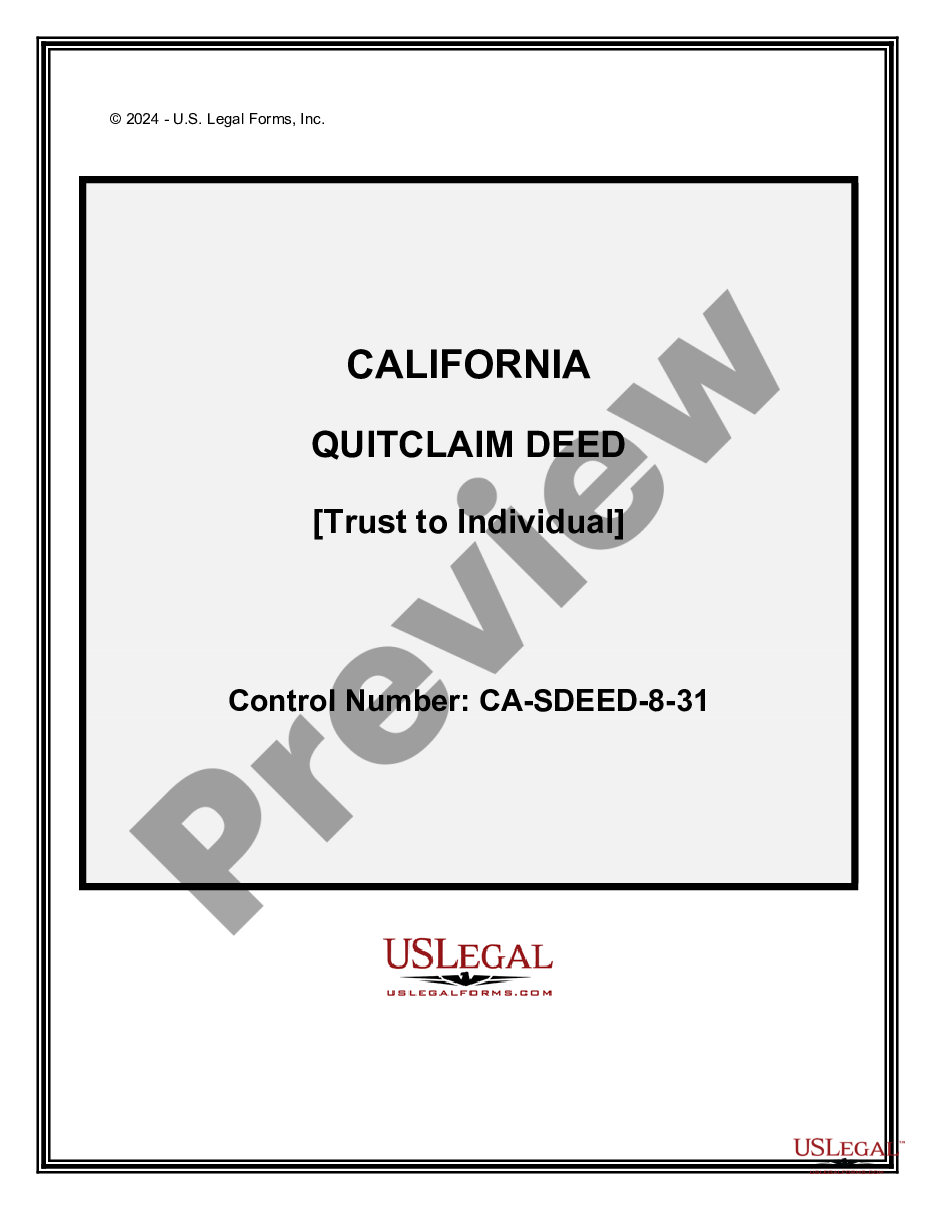
California Quitclaim Deed - Trust to Individual
About this form
A Quitclaim Deed - Trust to Individual is a legal document used to transfer ownership of property from a trust to an individual. Unlike other types of deeds, a quitclaim deed does not guarantee that the grantor has clear title to the property; it simply relinquishes any interest the trust may have in the property. This makes it particularly useful in situations where the parties know each other and trust the information provided.
Key components of this form
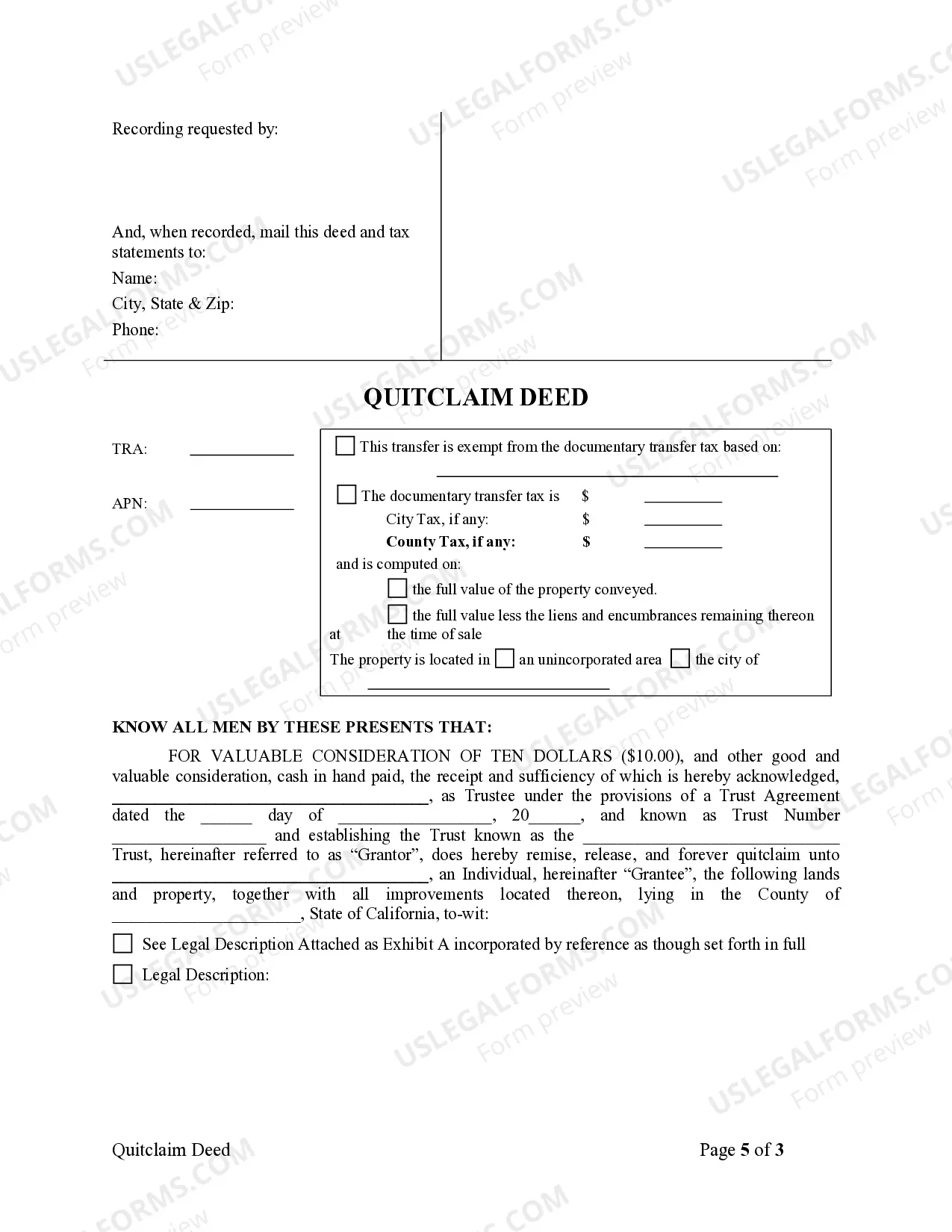
- Identifies the grantor as a trust and the grantee as an individual.
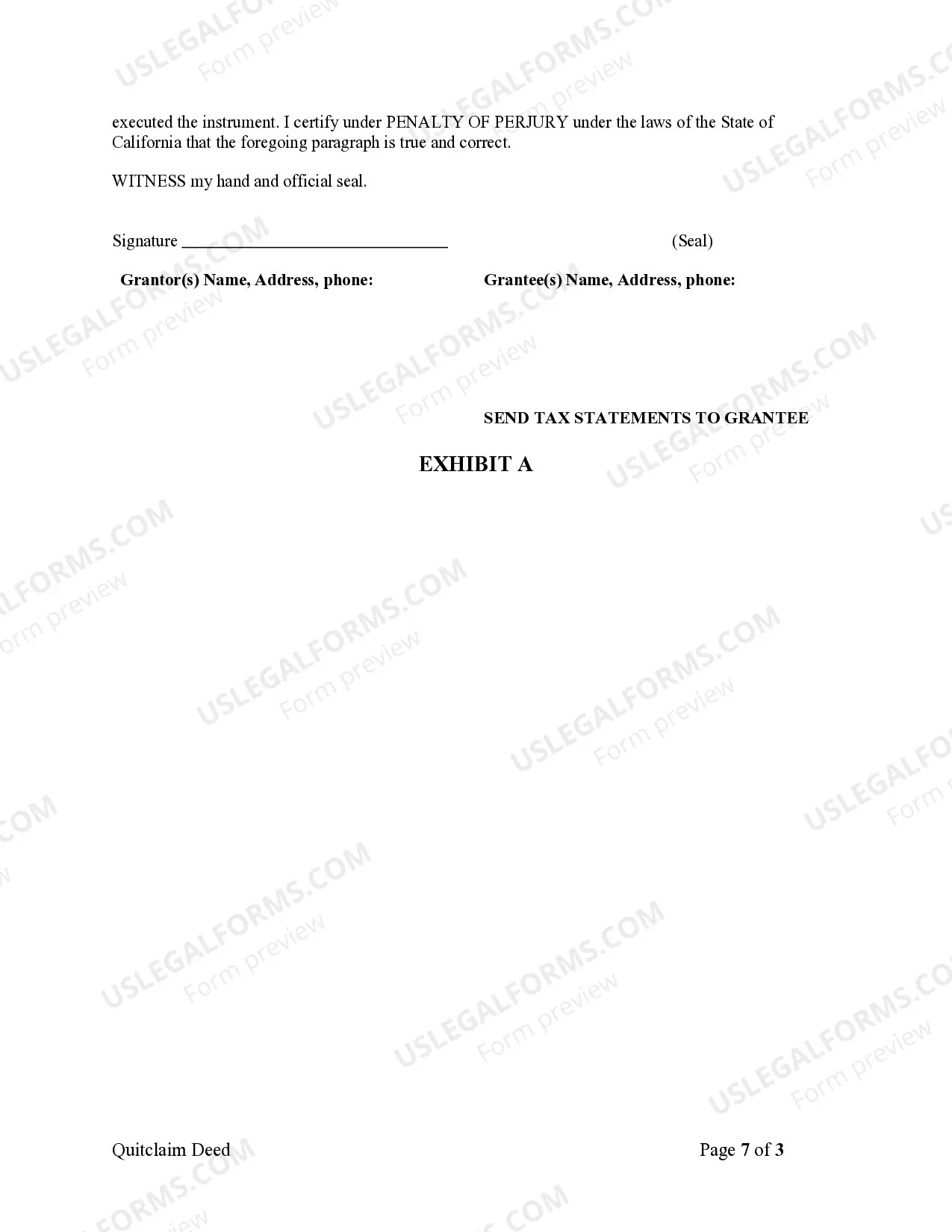
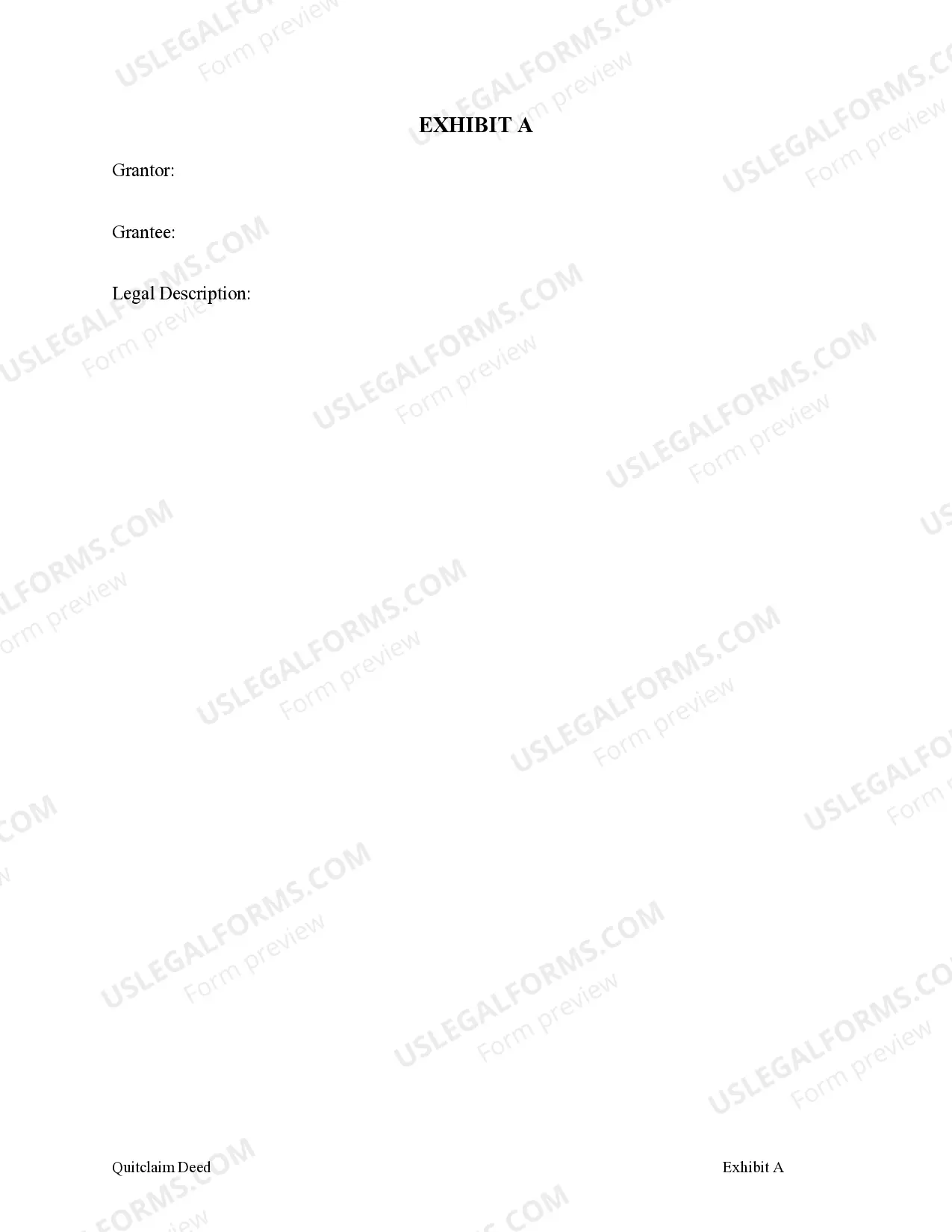
- Includes a legal description of the property being transferred.
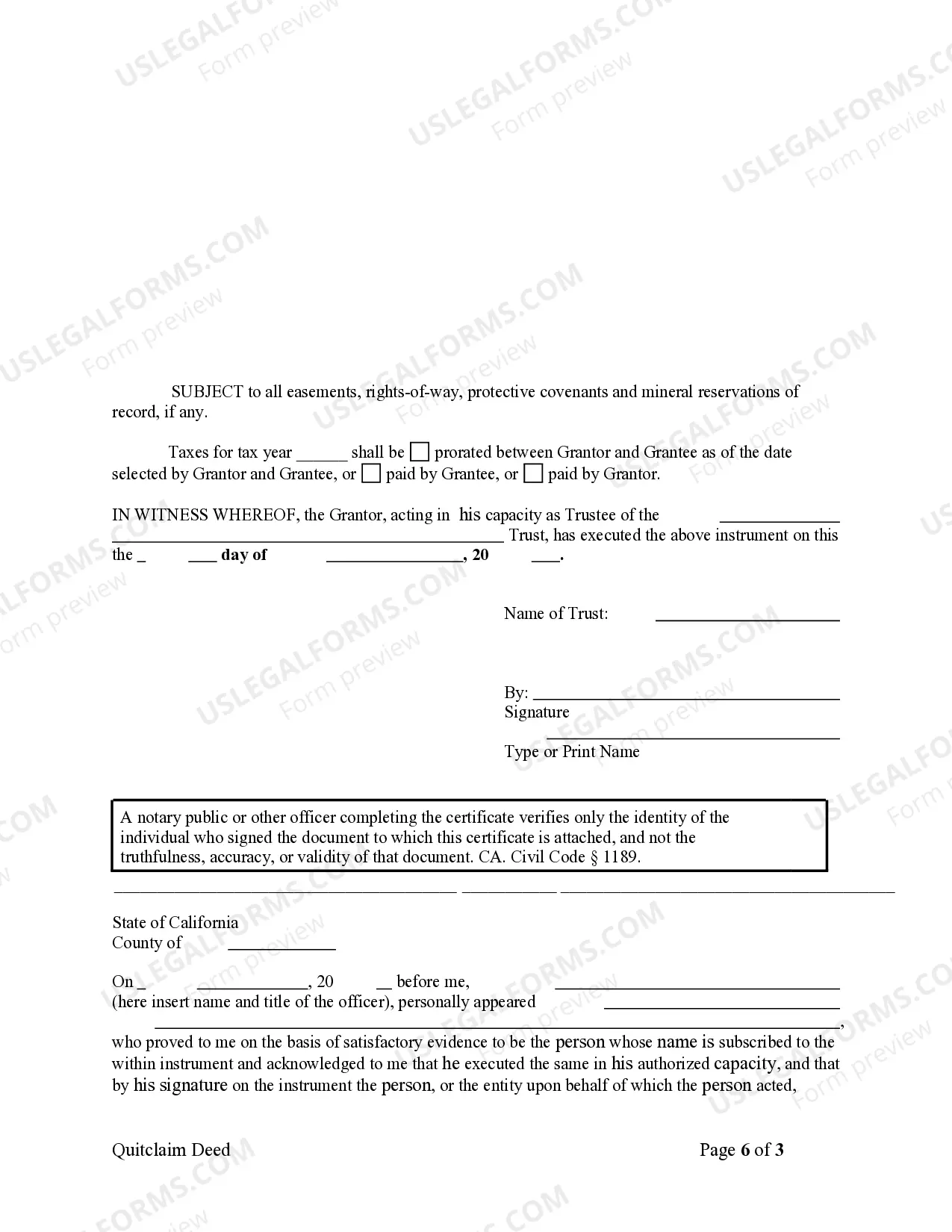
- Specifies the date of execution.
- Contains sections for notarization if required.
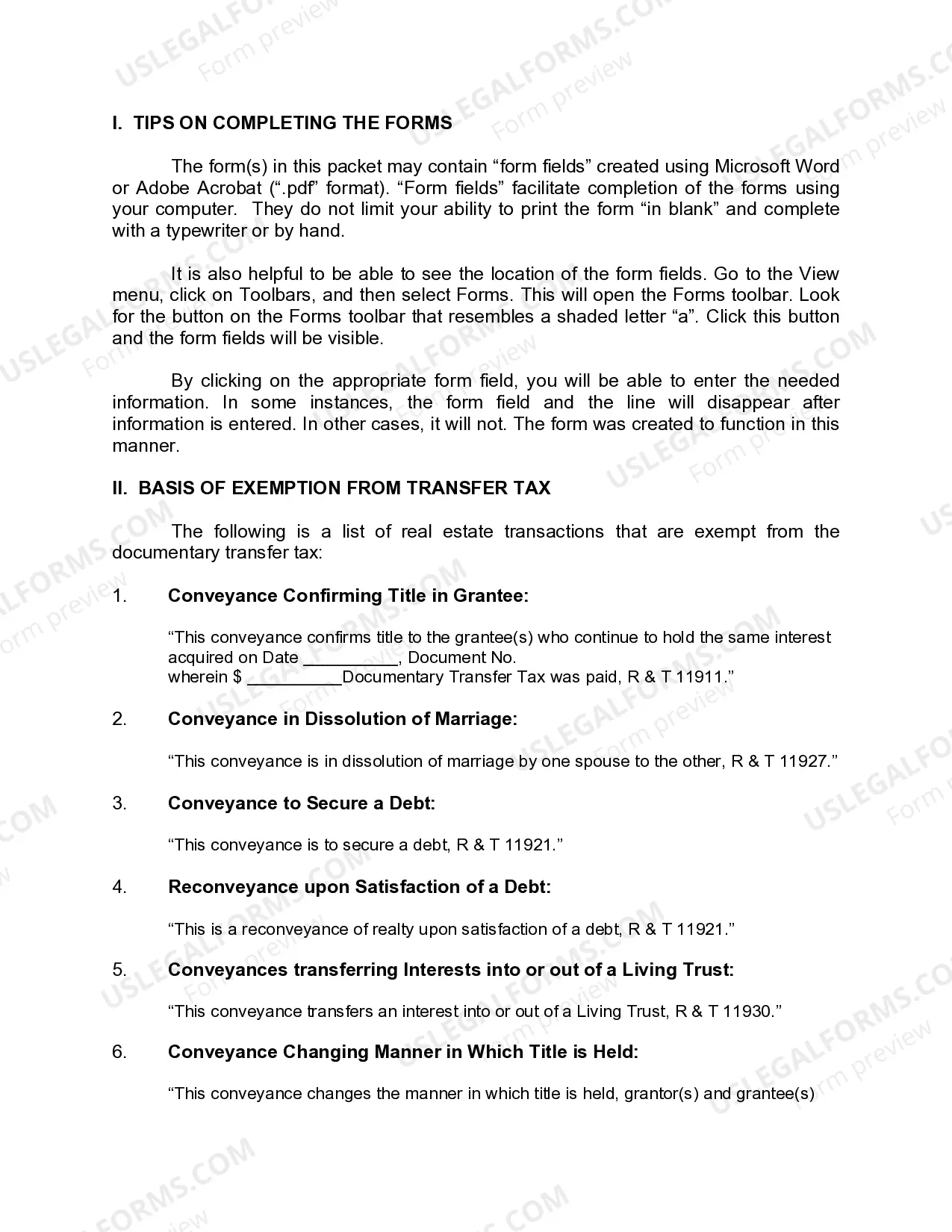
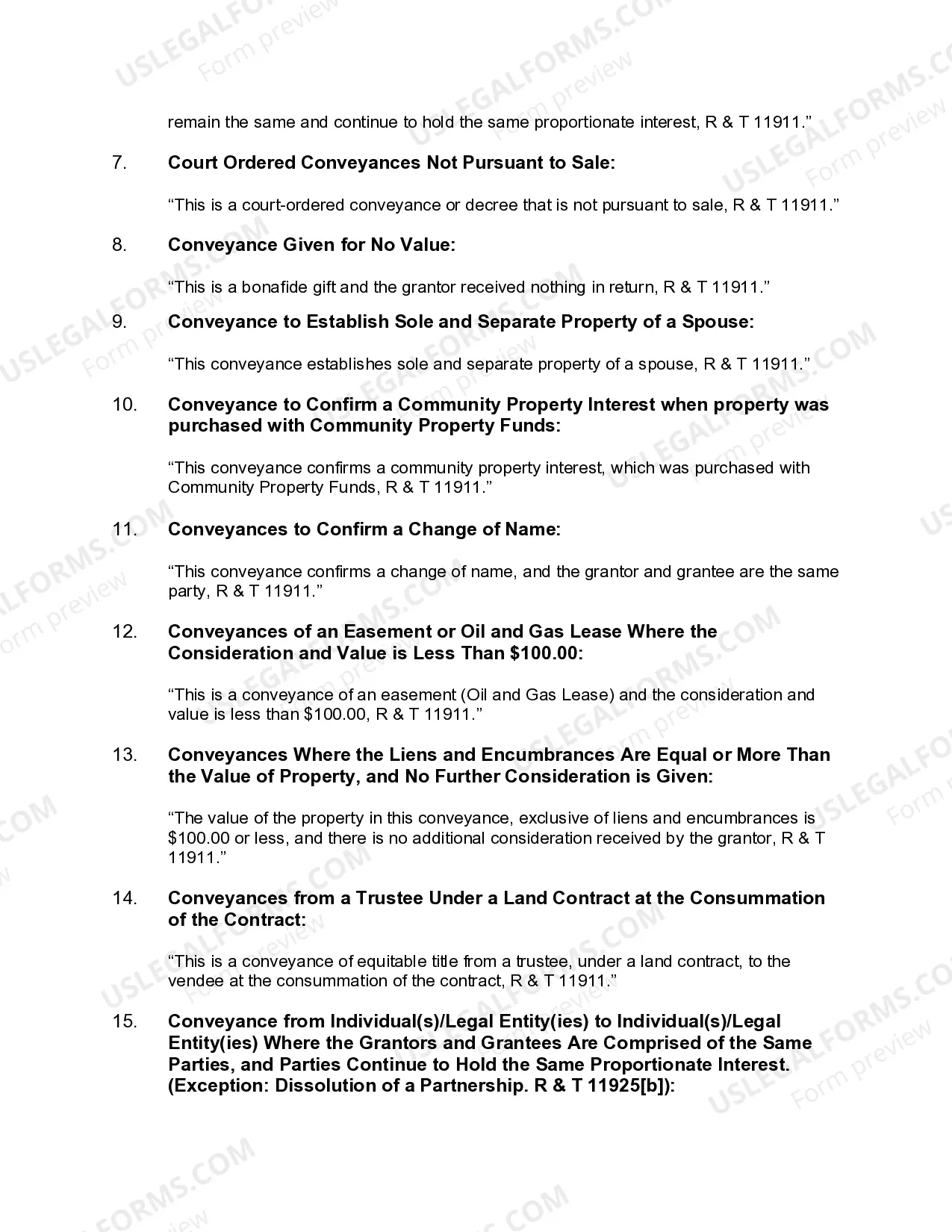
- Indicates any exemptions from transfer tax if applicable.





Situations where this form applies
This form is typically used when a property held in a trust is being transferred to an individual. Common scenarios include simplifying inheritance processes, finalizing estate planning, or facilitating property division between family members or beneficiaries. It's also helpful when the grantor wishes to clarify ownership without the complications of a warranty deed.
Who this form is for
This quitclaim deed is intended for:
- Trustees who need to transfer property owned by the trust.
- Individuals receiving property as part of a trust distribution.
- Estate planners managing property transfers.
- Beneficiaries who are transitioning property out of the trust to personal ownership.
Steps to complete this form
- Identify the parties involved: specify the name of the trust as the grantor and the name of the individual as the grantee.
- Provide a legal description of the property being transferred, often found in existing property documents.
- Enter the date on which the deed is being executed.
- Include exemption details if applicable, particularly if the transfer is exempt from documentary transfer tax.
- Sign and date the form in the presence of a notary if required.
Does this document require notarization?
This form does not typically require notarization unless specified by local law. However, including notarization can lend additional validity to the deed, especially when transferring property between significant parties.
Get your form ready online
Our built-in tools help you complete, sign, share, and store your documents in one place.
Make edits, fill in missing information, and update formatting in US Legal Forms—just like you would in MS Word.
Download a copy, print it, send it by email, or mail it via USPS—whatever works best for your next step.
Sign and collect signatures with our SignNow integration. Send to multiple recipients, set reminders, and more. Go Premium to unlock E-Sign.
If this form requires notarization, complete it online through a secure video call—no need to meet a notary in person or wait for an appointment.
We protect your documents and personal data by following strict security and privacy standards.

Make edits, fill in missing information, and update formatting in US Legal Forms—just like you would in MS Word.

Download a copy, print it, send it by email, or mail it via USPS—whatever works best for your next step.

Sign and collect signatures with our SignNow integration. Send to multiple recipients, set reminders, and more. Go Premium to unlock E-Sign.

If this form requires notarization, complete it online through a secure video call—no need to meet a notary in person or wait for an appointment.

We protect your documents and personal data by following strict security and privacy standards.
Avoid these common issues
- Failing to include a complete legal description of the property.
- Not specifying the correct grantee name which may lead to ownership disputes.
- Neglecting to notarize the deed if required in your jurisdiction.
- Overlooking details regarding exemptions from transfer tax.
Why use this form online
- Immediate access to legally drafted templates ensures compliance with local laws.
- Ability to edit and customize the form according to specific needs before downloading.
- Convenient access from anywhere without the need for physical paperwork.
- Cost-effective solution without the need for attorney visits for standard transactions.
Looking for another form?
Form popularity
FAQ
Yes, a quitclaim deed can give you ownership in California, but it's important to note that it transfers whatever interest the grantor has in the property. This means if the grantor has complete ownership, that transfer is effective. Using a California Quitclaim Deed - Trust to Individual can ensure that the intended recipient gets the right to the property, making it a straightforward option to handle property transfers. However, it does not guarantee that the grantor has clear title, so due diligence is essential.
A quitclaim deed in California transfers ownership interest in a property without guaranteeing the validity of that interest. Essentially, it allows a property owner to convey their rights to another person. When you utilize a California Quitclaim Deed - Trust to Individual, it enables the smooth transition of property from a trust to a named individual, simplifying the process. This can be particularly useful for estate planning or family transfers.
To prove ownership of a house in California, you typically need a copy of the title deed. This document shows who legally owns the property. Additionally, if you use a California Quitclaim Deed - Trust to Individual, it can help clarify ownership by transferring the title from a trust to an individual. Always consider consulting with a legal expert to ensure that your ownership is documented correctly.
Filling out a California Quitclaim Deed - Trust to Individual requires attention to detail. Include the names of both the grantor and grantee, the property description, and the signatures with dated notarization. Check that you have included all necessary information to ensure validity. For assistance, uslegalforms offers a variety of resources and templates that can simplify this task.
Yes, a California Quitclaim Deed - Trust to Individual can indeed transfer property from a trust. The trustee can execute the deed to transfer the property to an individual. This allows for a straightforward transfer while maintaining the trust's other benefits. Just ensure that all parties follow the proper procedures to complete the process.
Several factors can void a California Quitclaim Deed - Trust to Individual. These include fraud, lack of proper signatures, or not adhering to state recording laws. Also, if the grantor transfers ownership without legal authority, or if the deed contains significant errors, the transfer may be voided. Understanding these factors can help you avoid complications.
The choice between a quitclaim deed and a trust depends on your needs. A California Quitclaim Deed - Trust to Individual transfers property rights without warranties, while a trust can provide more protection and management of assets. If you seek simplicity and quick transfer, a quitclaim deed may suffice. However, for long-term asset protection, consider a trust.
To record a California Quitclaim Deed - Trust to Individual, first, complete the form accurately. Then, take your signed deed to your local county recorder's office. They will file it and give you a stamped copy for your records. This process ensures that the property transfer is official and recognized.
In California, a trustee can sell trust property to himself, but this must be done with caution. The transaction must be fair and in the best interest of all beneficiaries. It is essential to follow proper procedures and document the sale through a California Quitclaim Deed - Trust to Individual to maintain transparency.
Transferring property out of an irrevocable trust can be complex, often requiring legal assistance. You will need to prepare a California Quitclaim Deed - Trust to Individual to initiate the transfer. It's advisable to consult with a legal expert to ensure compliance with trust terms and state laws throughout the process.