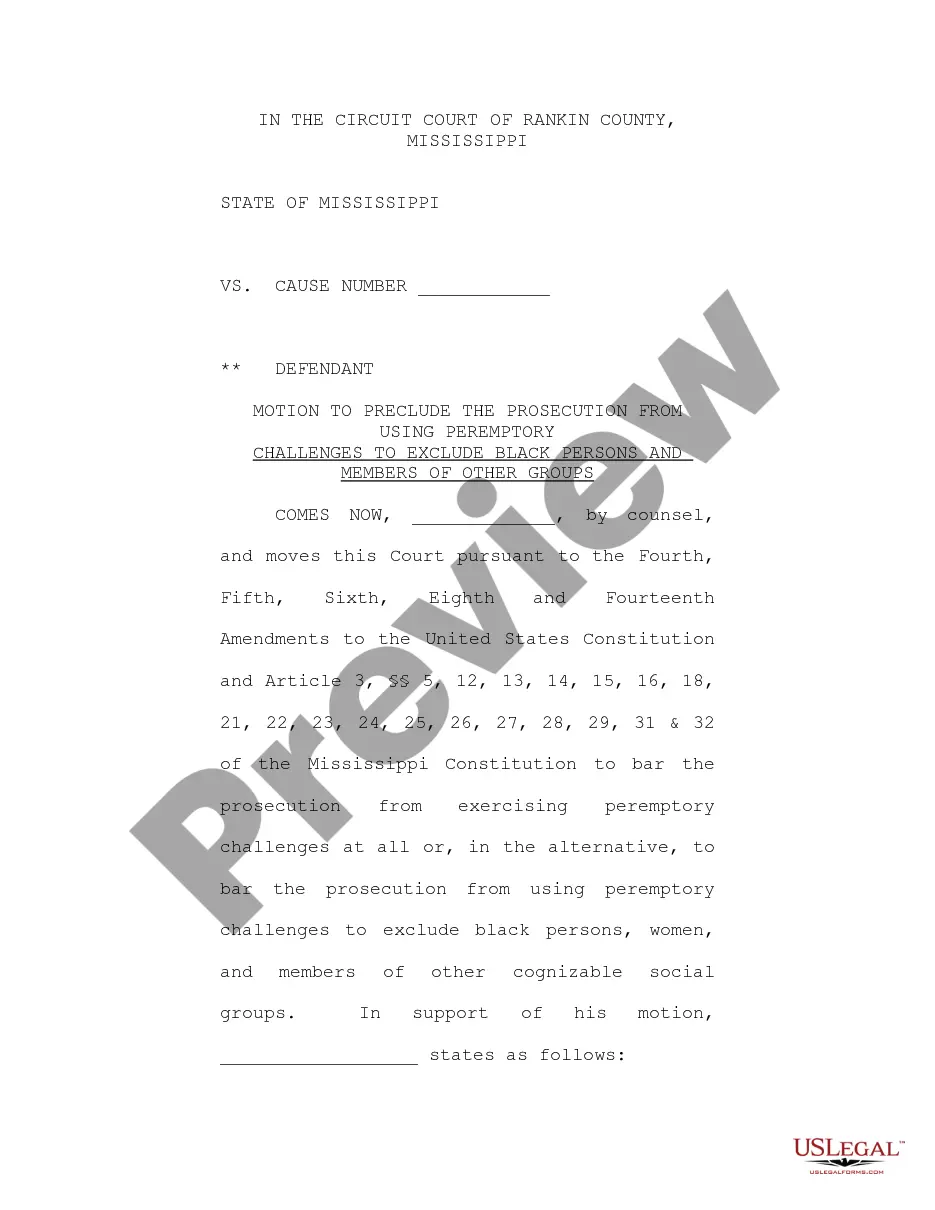
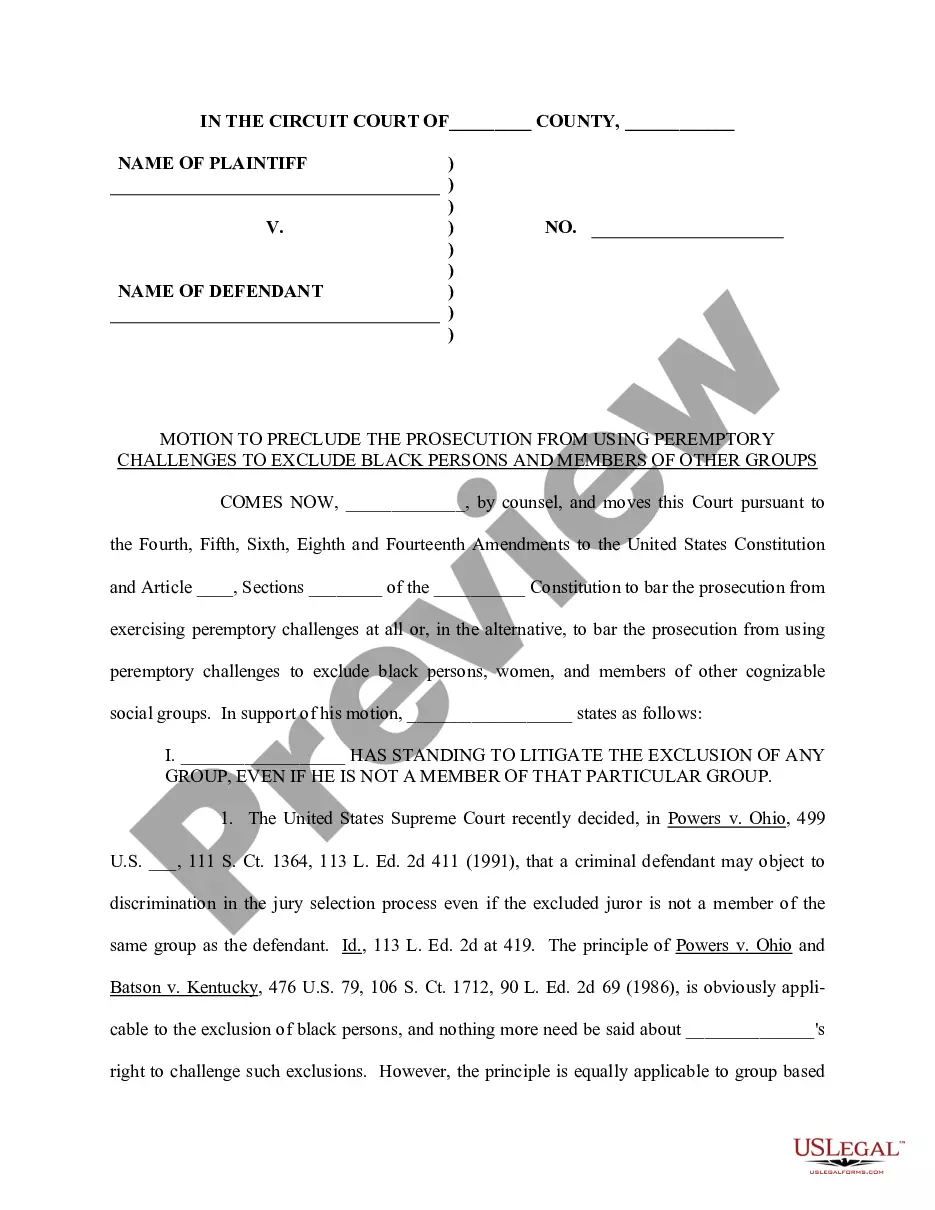
Mississippi Motion to Preclude the Prosecution from Using Peremptory Challenges to Exclude Black Persons and Members of Other Groups
What this document covers
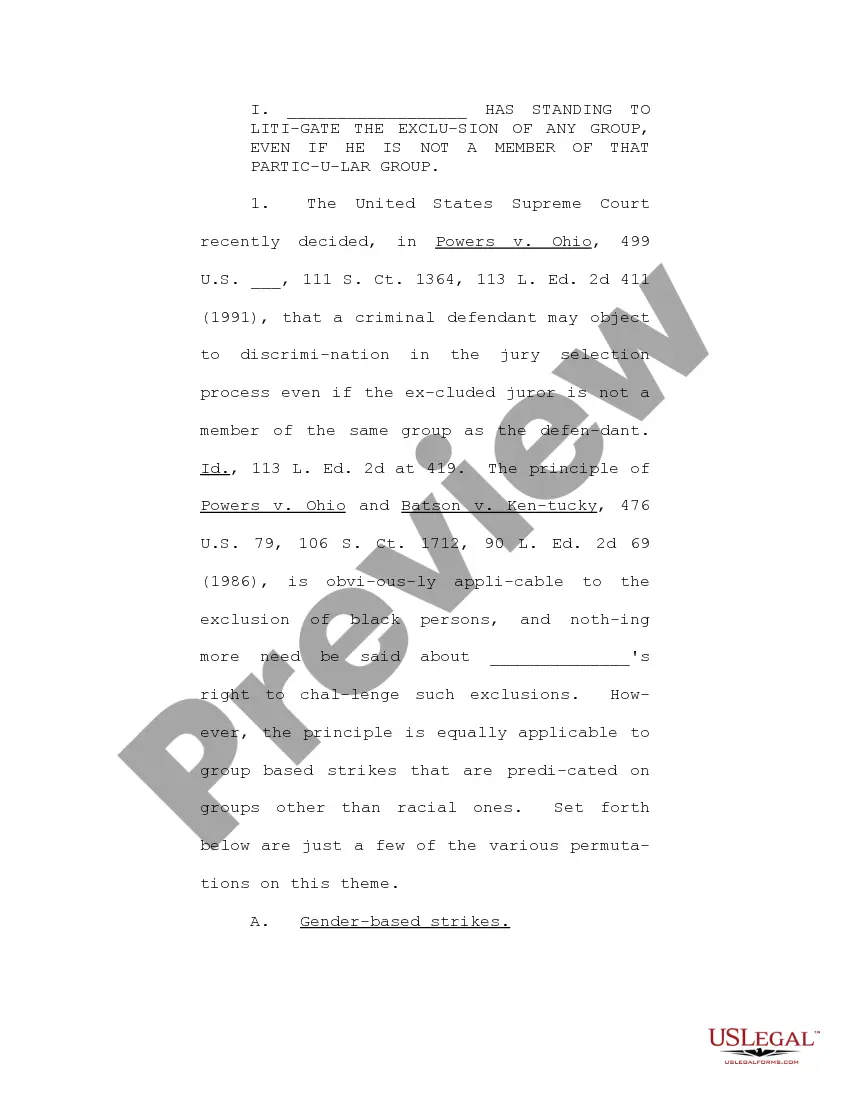
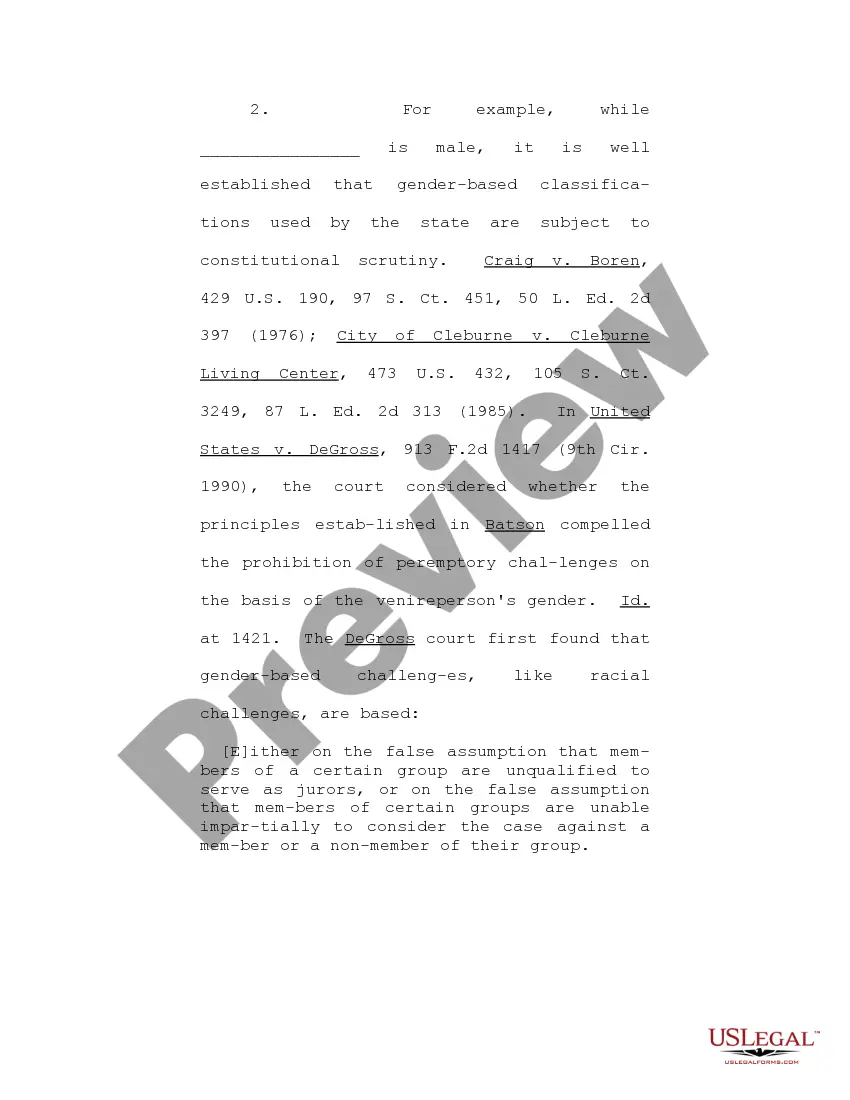
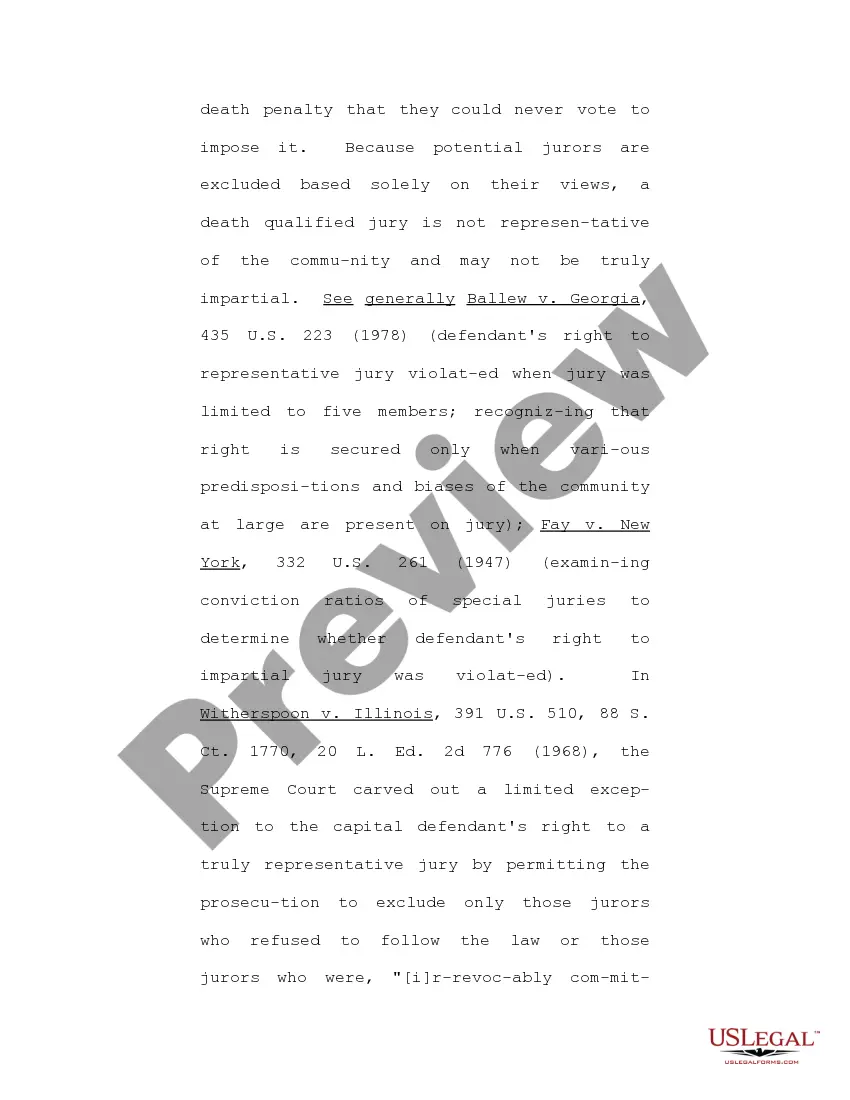
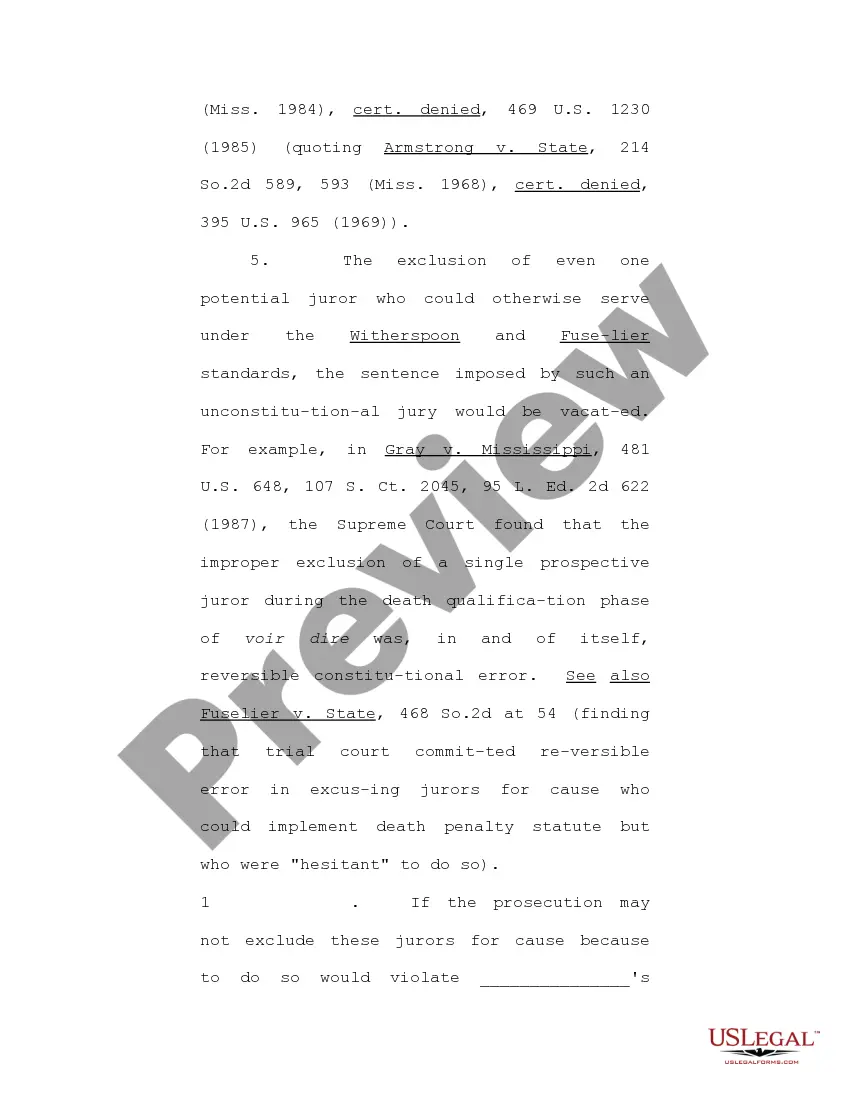
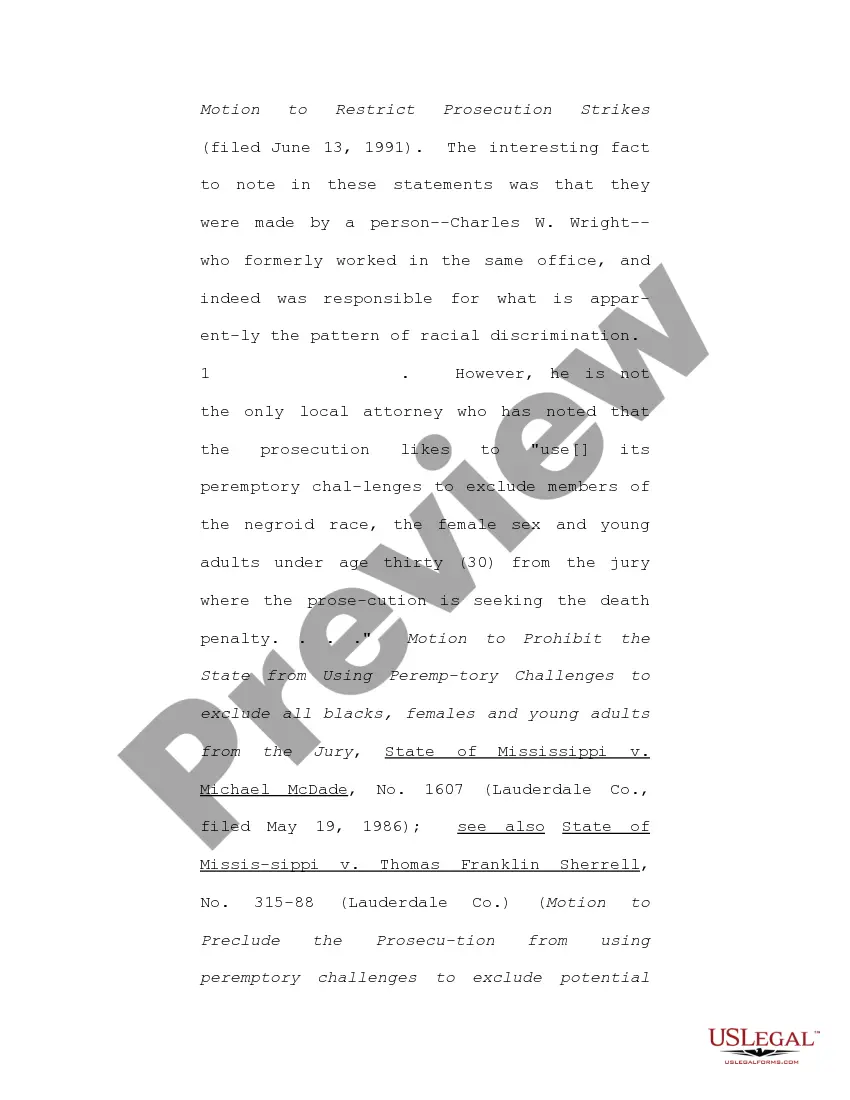
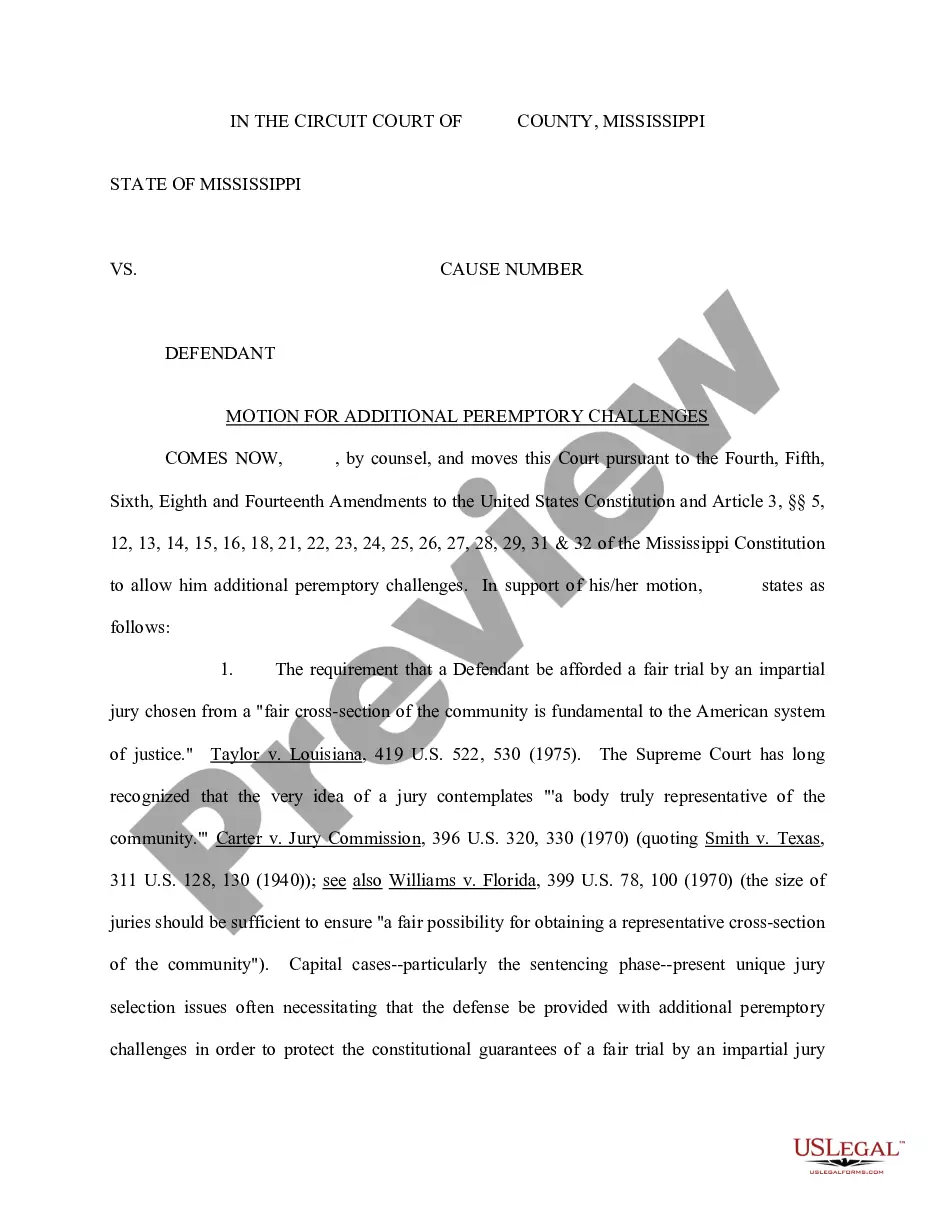
The Motion to Preclude the Prosecution from Using Peremptory Challenges to Exclude Black Persons and Members of Other Groups is a legal document through which a defendant requests the court to prevent the prosecution from excluding jurors based on race or other demographic factors. This motion aims to uphold the constitutional rights to a fair trial and an impartial jury. It is critical in situations where the defense believes that discriminatory practices in jury selection are being employed, particularly against African-Americans and other marginalized groups.
Form components explained
- Case caption, including names of parties and court jurisdiction.
- Statement of facts supporting the motion.
- Legal basis for the motion, referencing relevant amendments and case law.
- Claims of historical discrimination impacting jury selection.
- Request for specific relief from the court.





When this form is needed
This form is typically used in criminal cases when the defendant suspects that the prosecution is excluding jurors based on race, gender, or other identifiable groups that could lead to an unrepresentative jury. The motion is crucial in scenarios involving capital offenses, where the stakes are particularly high, and a diverse jury is essential for impartiality and fairness.
Intended users of this form
- Defendants in criminal cases facing potential jury selection issues.
- Defense attorneys advocating for the rights of their clients regarding jury composition.
- Individuals concerned about systemic discrimination in the judicial process.
Completing this form step by step
- Identify the defendant and case information including names and cause number.
- Articulate the grounds for the motion in clear and concise language.
- Include relevant legal citations to support your claims.
- Offer any evidence or historical context that demonstrates a pattern of discrimination.
- Specify the type of relief you are requesting from the court.
- Ensure proper formatting and signatures according to court rules.
Notarization requirements for this form
Notarization is generally not required for this form. However, certain states or situations might demand it. You can complete notarization online through US Legal Forms, powered by Notarize, using a verified video call available anytime.
Get your form ready online
Our built-in tools help you complete, sign, share, and store your documents in one place.
Make edits, fill in missing information, and update formatting in US Legal Forms—just like you would in MS Word.
Download a copy, print it, send it by email, or mail it via USPS—whatever works best for your next step.
Sign and collect signatures with our SignNow integration. Send to multiple recipients, set reminders, and more. Go Premium to unlock E-Sign.
If this form requires notarization, complete it online through a secure video call—no need to meet a notary in person or wait for an appointment.
We protect your documents and personal data by following strict security and privacy standards.

Make edits, fill in missing information, and update formatting in US Legal Forms—just like you would in MS Word.

Download a copy, print it, send it by email, or mail it via USPS—whatever works best for your next step.

Sign and collect signatures with our SignNow integration. Send to multiple recipients, set reminders, and more. Go Premium to unlock E-Sign.

If this form requires notarization, complete it online through a secure video call—no need to meet a notary in person or wait for an appointment.

We protect your documents and personal data by following strict security and privacy standards.
Common mistakes
- Failing to adequately cite relevant case law or constitutional provisions.
- Omitting necessary background information regarding discrimination.
- Not providing sufficient evidence to support claims of past jury exclusion practices.
- Leaving out key details regarding the specific relief sought from the court.
Why use this form online
- Convenience of accessing a legally sound template available for immediate download.
- Editable format allows for customization according to specific case facts.
- Ensures compliance with legal requirements by providing structured guidelines.
Looking for another form?

Form popularity
FAQ
To establish a prima facie showing, a party making a Batson challenge must prove that 1) the stricken juror is in a protected group; 2) the opposing party used a peremptory strike against a member of that protected group; and 3) the facts and circumstances create an inference that the opposing party struck the juror
A peremptory challenge results in the exclusion of a potential juror without the need for any reason or explanation - unless the opposing party presents a prima facie argument that this challenge was used to discriminate on the basis of race, ethnicity, or sex. See Batson challenge. criminal procedure. wex definitions.
The peremptory challenge should be abolished for prosecutors. Prosecutors are meant to be stewards of justice.Eliminating peremptory strikes for prosecutors will still allow jurors to be struck for cause if they indicate they cannot be fair. The jury panel, therefore, would comprise only qualified impartial jurors.
An objection to the validity of a peremptory challenge, on grounds that the other party used it to exclude a potential juror based on race, ethnicity, or sex. The result of a Batson challenge may be a new trial. The name comes from Batson v.
A Batson challenge is a challenge made by one party in a case to the other party's use of peremptory challenges to eliminate potential jurors from the jury on the basis of sex, race, ethnicity, or religion. A trial usually begins with jury selection.
Kentucky, 476 U.S. 79 (1986), was a landmark decision of the US Supreme Court ruling that a prosecutor's use of a peremptory challenge in a criminal casethe dismissal of jurors without stating a valid cause for doing somay not be used to exclude jurors based solely on their race.
Batson, a black man, was on trial charged with second-degree burglary and receipt of stolen goods. During the jury selection, the prosecutor used his peremptory challenges to strike the four black persons on the venire, resulting in a jury composed of all whites. Batson was convicted on both of the charges against him.
If a juror has provided little or no case-specific information, a Batson challenge may very well prove successful.