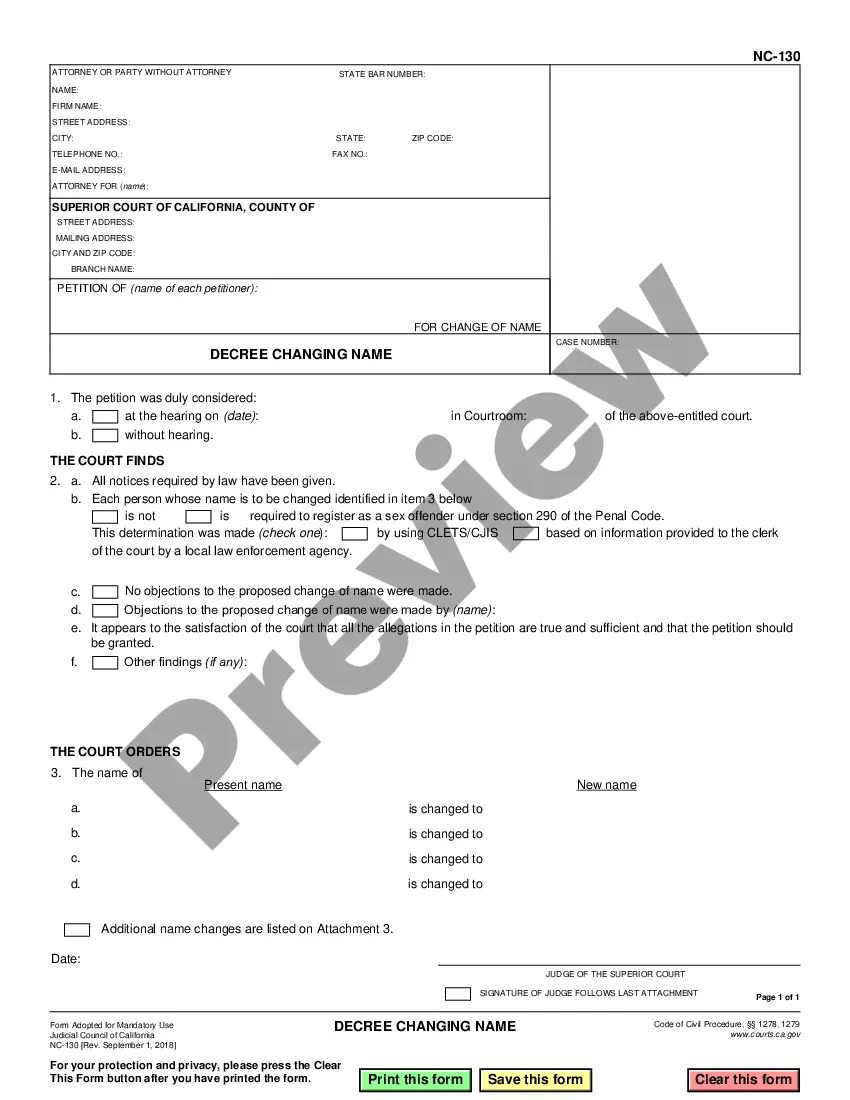
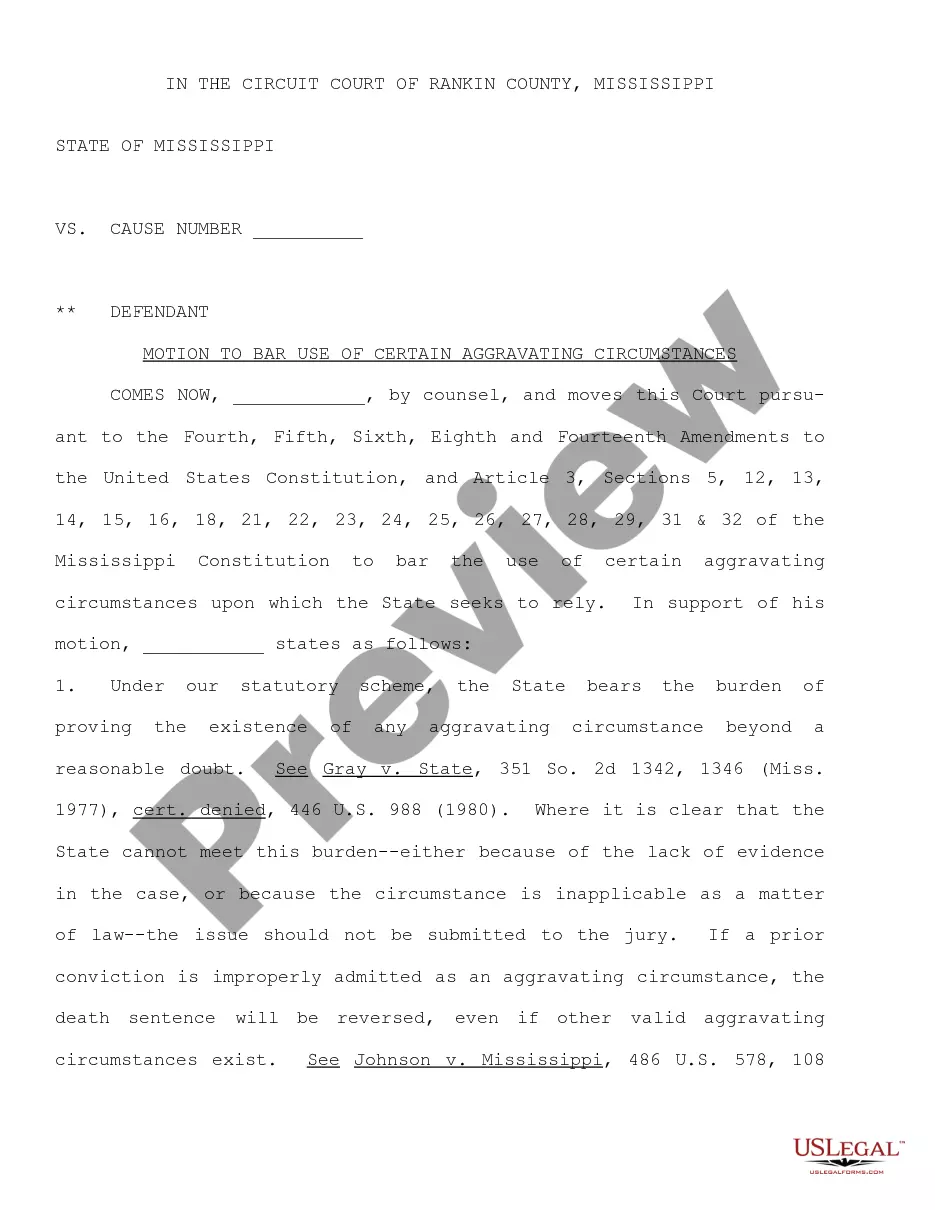
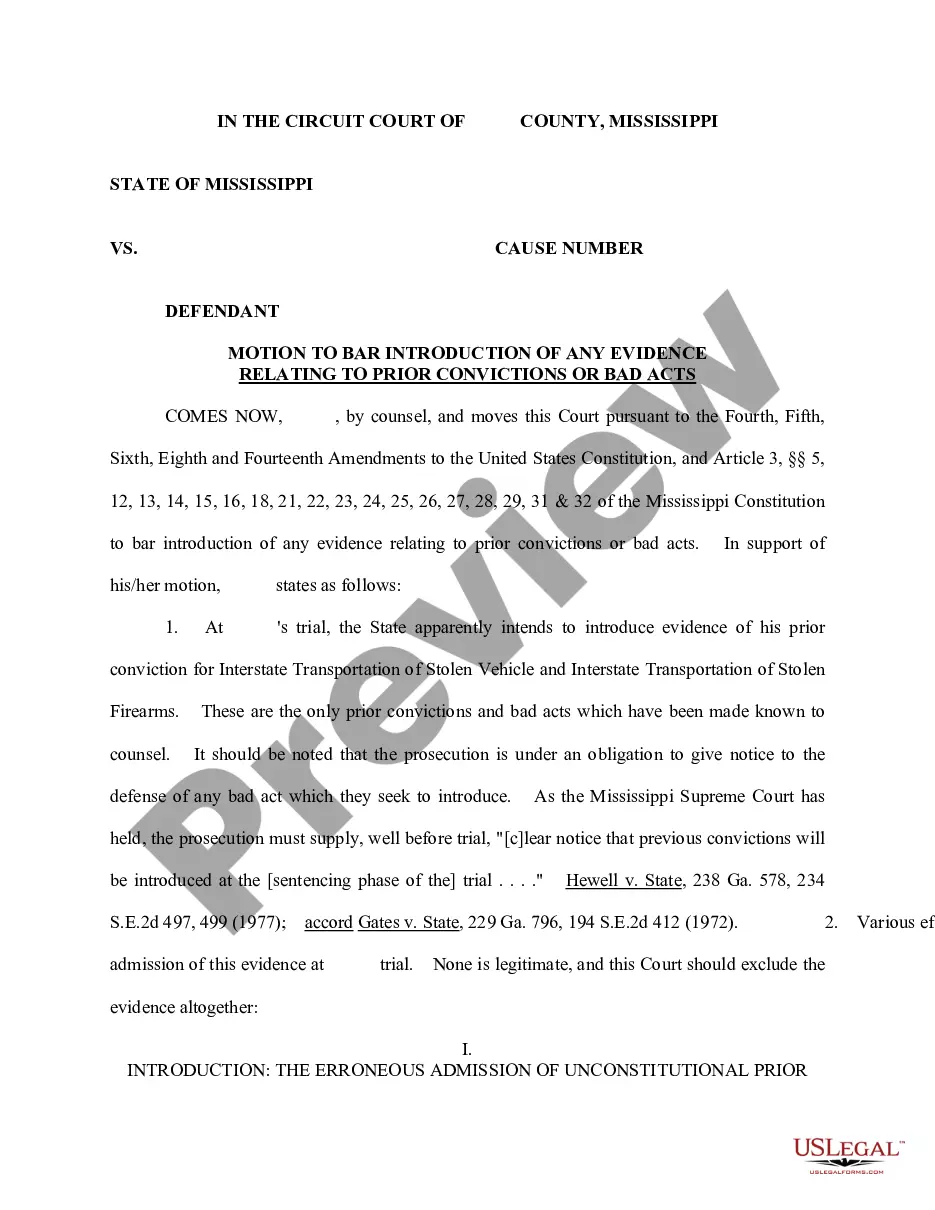
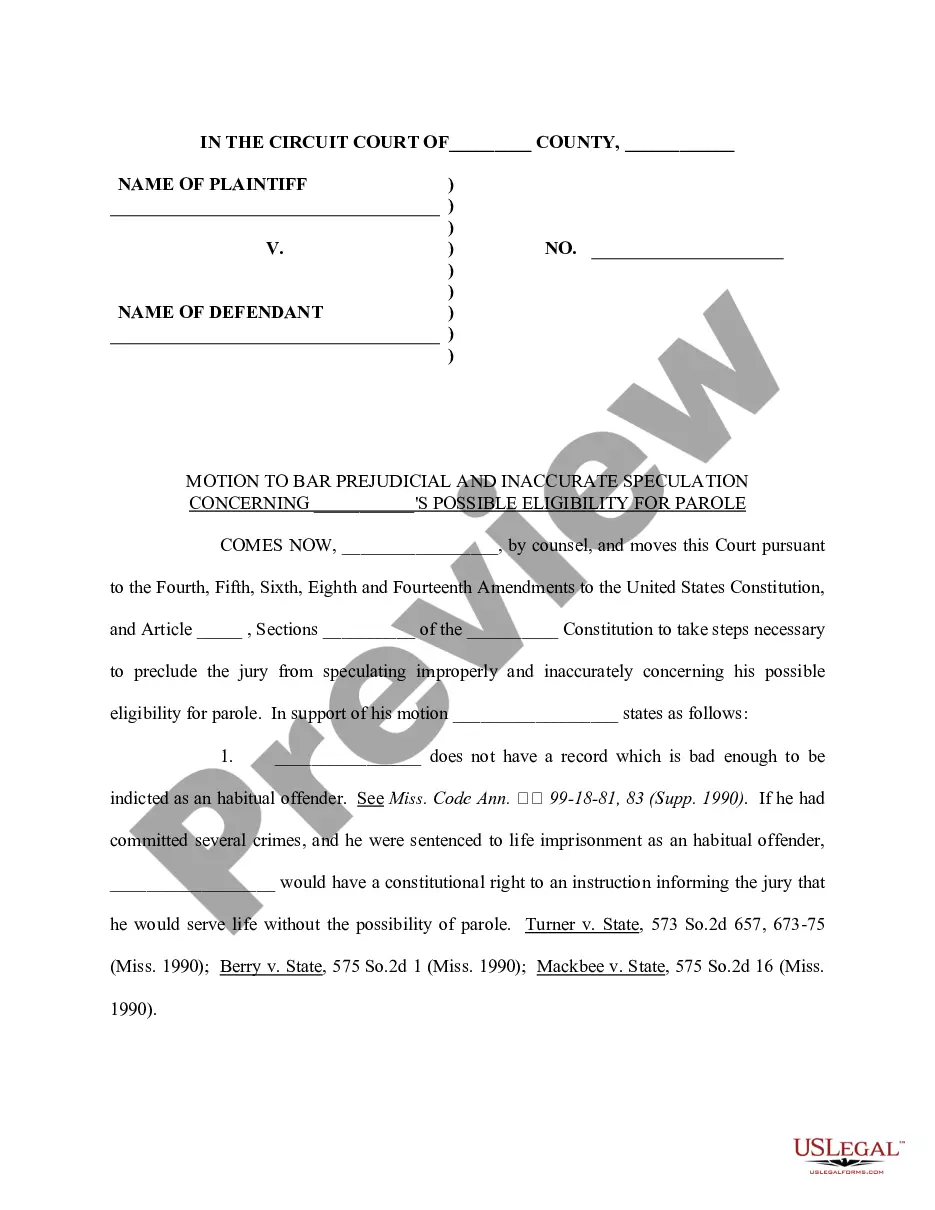
Mississippi Motion to Bar Prejudicial and Inaccurate Speculation Concerning Defendant's Possible Eligibility for Parole
Overview of this form
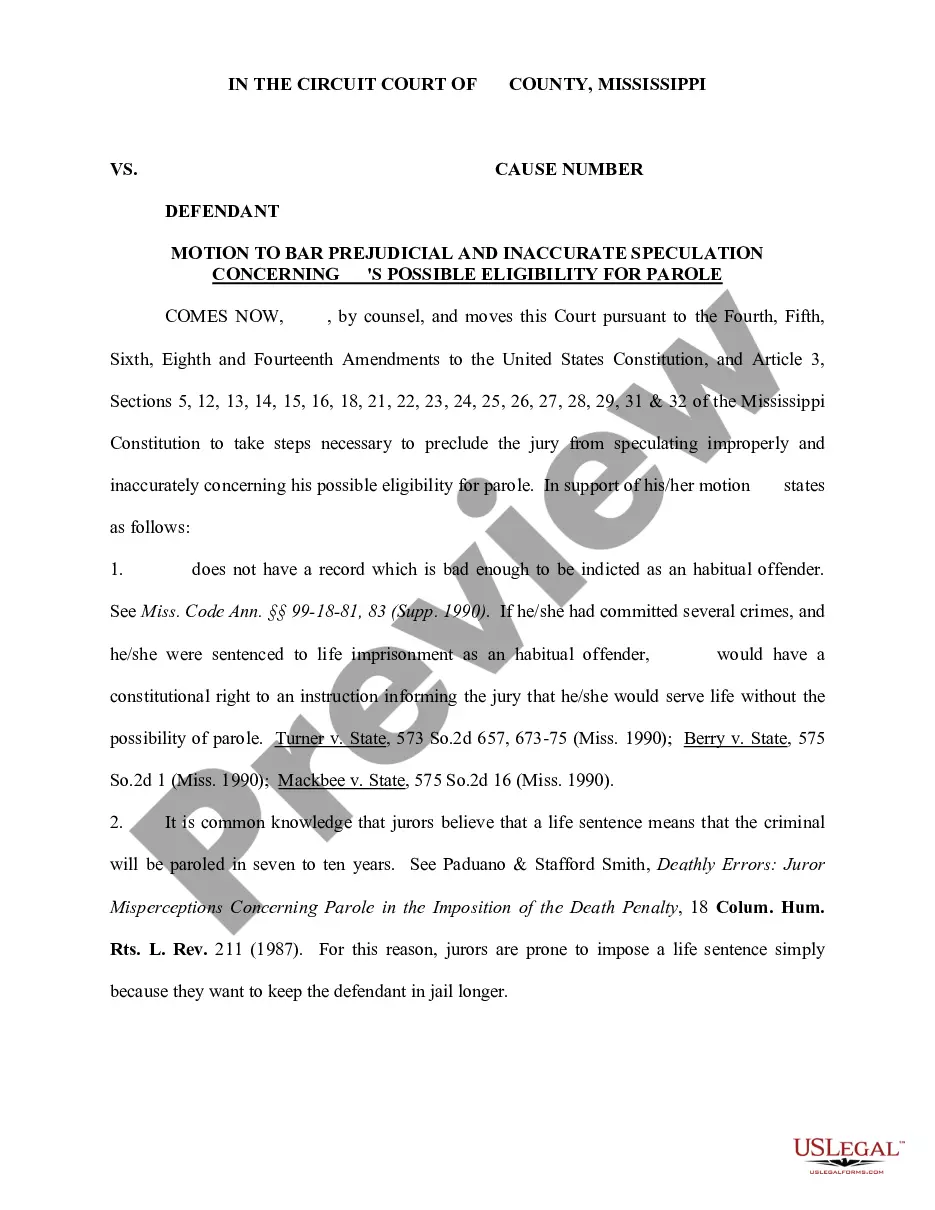
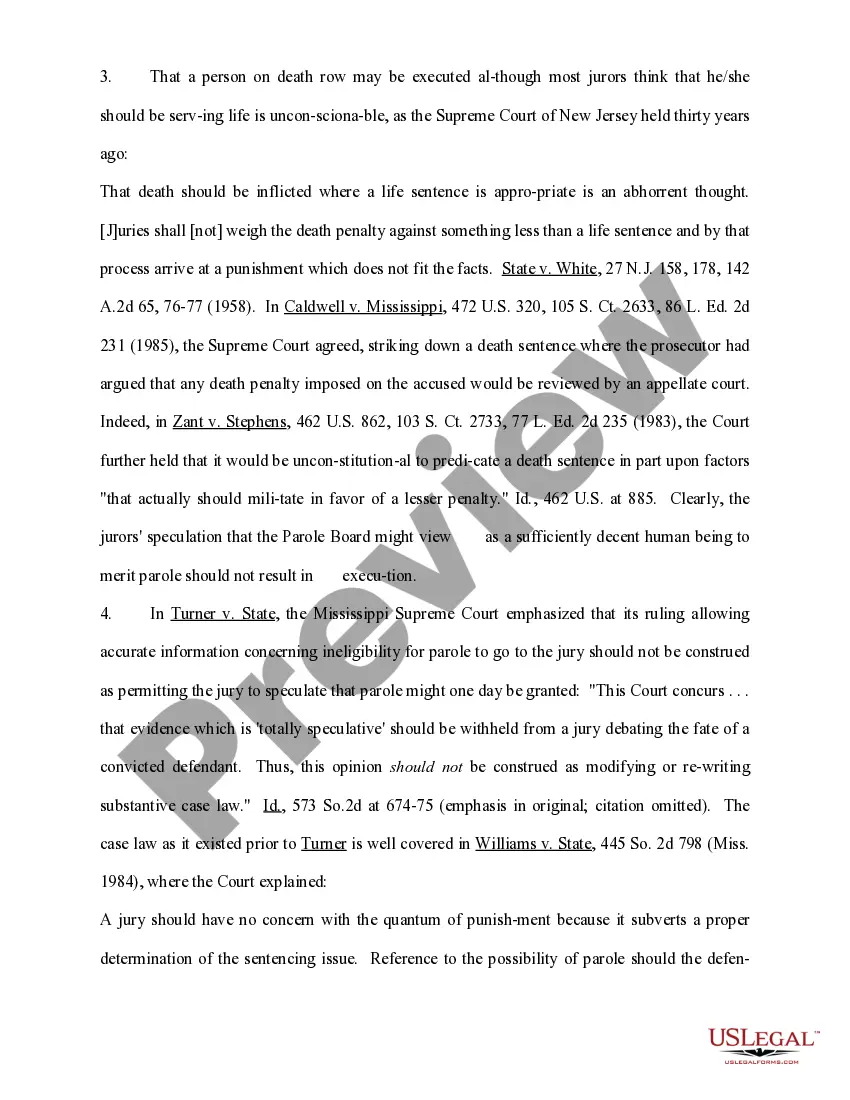
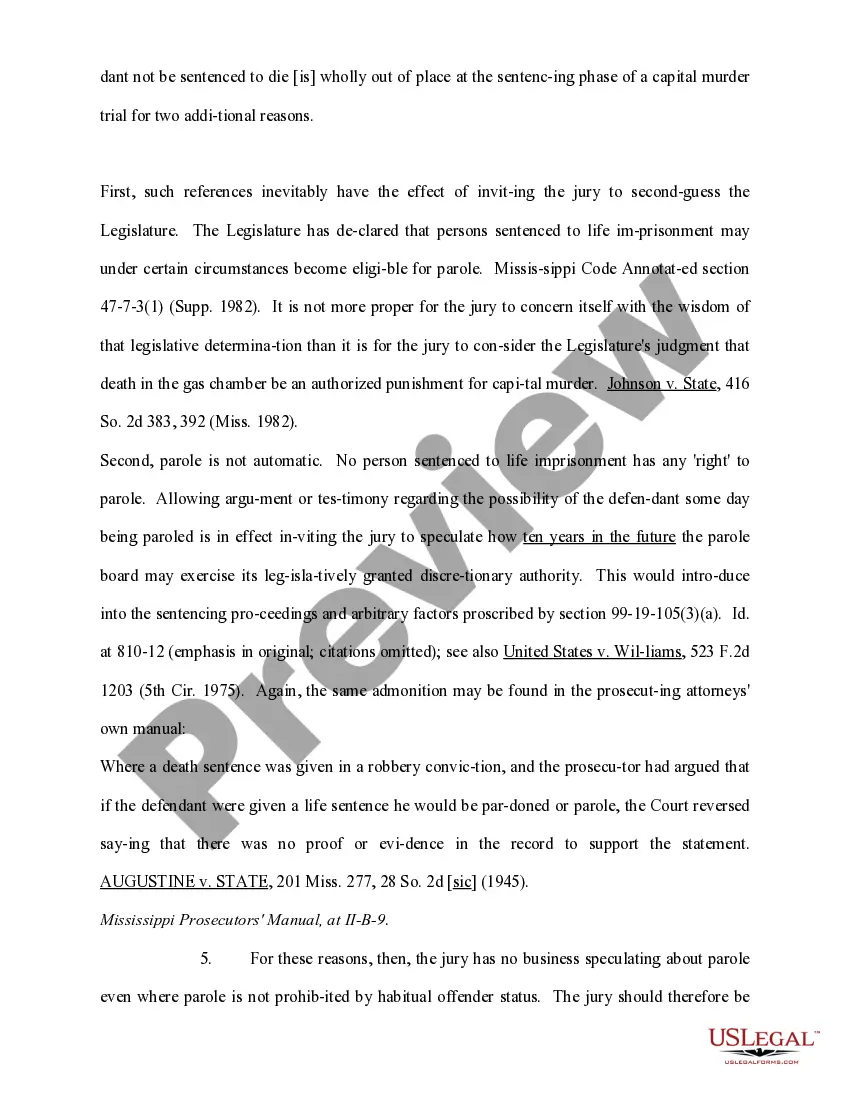
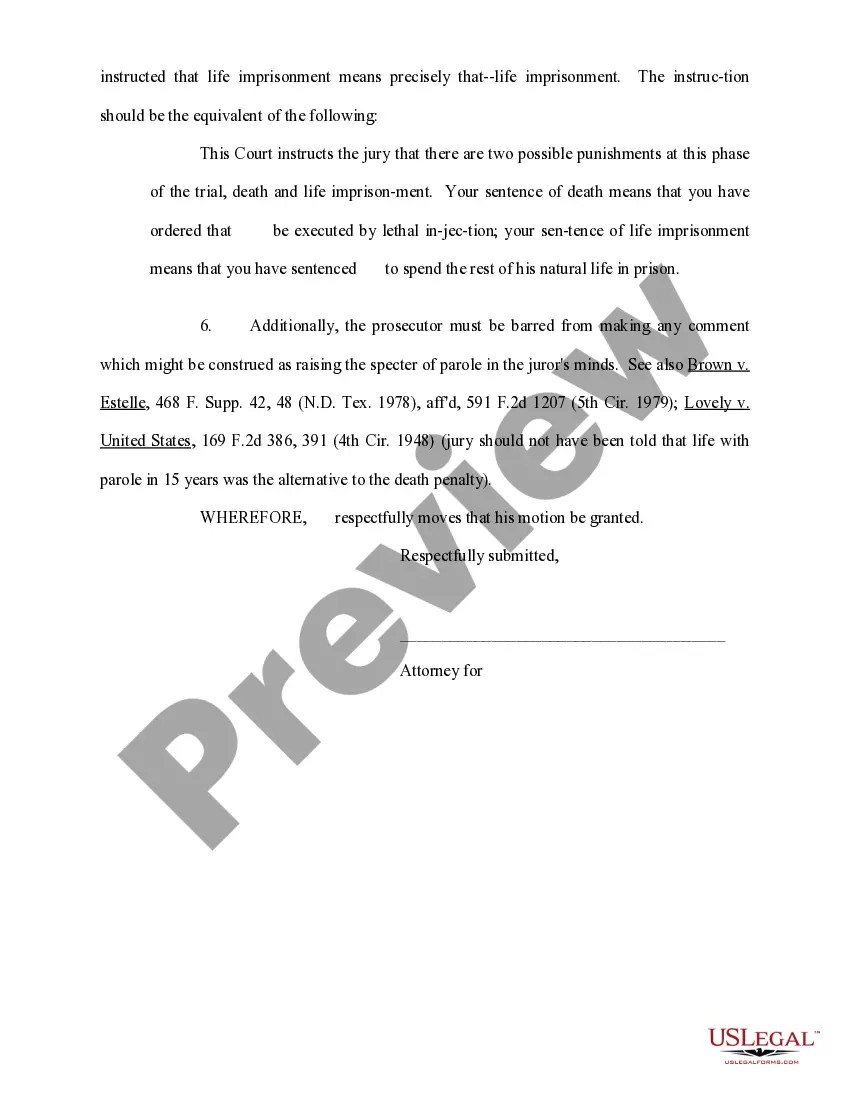
The Motion to Bar Prejudicial and Inaccurate Speculation Concerning Defendant's Possible Eligibility for Parole is a legal request aimed at preventing jurors from considering improper information regarding a defendant's potential for parole during trial. This form is crucial in ensuring that the focus remains solely on the facts of the case, rather than unsubstantiated speculation that could bias jurors' decisions. It falls within the category of motion forms that request specific actions from the court, distinguishing it from general legal documents.
Form components explained
- Introduction stating the motion's purpose and constitutional basis.
- Arguments outlining the prejudicial nature of parole speculation.
- Legal precedents supporting the request to bar such speculation.
- Request for clear jury instructions regarding the definitions of sentences.
- Certification of service indicating delivery of the motion to relevant parties.
When this form is needed
This motion should be utilized during criminal trials where the defendant faces possible sentencing that includes the death penalty or life imprisonment. It is particularly relevant when there is concern that jurors may improperly speculate about the candidateâs eligibility for parole, which could influence their verdict. Implementing this motion helps ensure a fair trial, grounded in the specifics of the case rather than unfounded assumptions about future parole opportunities.
Who can use this document
- Defendants facing serious criminal charges, such as capital murder.
- Defense attorneys seeking to protect their clients from prejudicial jury speculation.
- Legal advocates focused on preserving the integrity of trial proceedings.
Steps to complete this form
- Identify the defendant's name and the case number at the top of the form.
- Clearly articulate the main arguments for preventing speculation on parole eligibility.
- Cite relevant legal cases and statutes that support the motion's claims.
- Include a section for the jury instruction that clarifies the definitions of life imprisonment and death sentences.
- Sign and date the motion, ensuring all necessary parties receive a copy.
Does this form need to be notarized?
This form does not typically require notarization unless specified by local law. Ensure to check specific state guidelines to confirm any requirements related to notarization for motions.
Get your form ready online
Our built-in tools help you complete, sign, share, and store your documents in one place.
Make edits, fill in missing information, and update formatting in US Legal Forms—just like you would in MS Word.
Download a copy, print it, send it by email, or mail it via USPS—whatever works best for your next step.
Sign and collect signatures with our SignNow integration. Send to multiple recipients, set reminders, and more. Go Premium to unlock E-Sign.
If this form requires notarization, complete it online through a secure video call—no need to meet a notary in person or wait for an appointment.
We protect your documents and personal data by following strict security and privacy standards.

Make edits, fill in missing information, and update formatting in US Legal Forms—just like you would in MS Word.

Download a copy, print it, send it by email, or mail it via USPS—whatever works best for your next step.

Sign and collect signatures with our SignNow integration. Send to multiple recipients, set reminders, and more. Go Premium to unlock E-Sign.

If this form requires notarization, complete it online through a secure video call—no need to meet a notary in person or wait for an appointment.

We protect your documents and personal data by following strict security and privacy standards.
Common mistakes to avoid
- Failing to explicitly cite relevant legal precedents.
- Omitting the case number or defendant's name.
- Using vague language that does not clearly define the motion's purpose.
- Neglecting to provide a proper certificate of service.
Benefits of using this form online
- Convenience of instant download and edits according to specific case needs.
- Access to professionally drafted content that meets legal standards.
- Time-saving option compared to seeking legal documentation through traditional means.
Legal use & context
- This motion plays a critical role in maintaining the integrity of the jury's decision-making process in serious criminal cases.
- The motion is grounded in constitutional protections against improper speculation affecting a defendant's rights.
- It is essential to file this form correctly to ensure the court understands the arguments for barring speculative evidence regarding parole.
Looking for another form?

Form popularity
FAQ
Only adult inmates sentenced to life in prison or an indeterminate term with the possibility of parole may have a parole hearing.Under current California law, inmates are now eligible for parole after serving half of their sentence2. The exception is if you committed a violent or serious felony such as: PC 261 Rape.
Only 34% or 790 of the total prison population of 2,353 in 2016 were eligible for parole at that time. However, the grant rate in 2015 or the percentage of individuals given a hearing who were actually released was a very respectable 65%.
To be parole eligible, an offender must serve the greater of 25% of his sentence or the following statutory minimums: If the sentence is from one (1) to two (2) years he must serve at least nine (9) months. If the sentence is two (2) to five (5) years he must serve at least ten (10) months.
Parole Conditions avoid criminal activity and contact with any victims. refrain from drugand sometimes alcoholuse. attend drug or alcohol recovery meetings, and. not leave a specified geographic area without permission from the parole officer.
It can take around six months for the whole process to be dealt with and for the parole board to make a decision. Once a decision has been made the prisoner will usually be told within a few days. The prisoner should receive the decision in writing along with the reasons for it.
There are many U.S. states in which a convict can be released on parole after a decade or more has passed, but in California, people sentenced to life imprisonment can normally apply for parole after seven years.
Members of the public can search for inmates using the Inmate Search Tool available on the MDOC website. In order to locate an inmate using the tool, the user must provide the parameters required to conduct the search, such as the full name of the inmate or their designated ID number.
If the board revokes parole for a technical violation the board shall impose a period of imprisonment to be served in a technical violation center operated by the department not to exceed ninety (90) days for the first technical violation and not to exceed one hundred twenty (120) days for the second technical