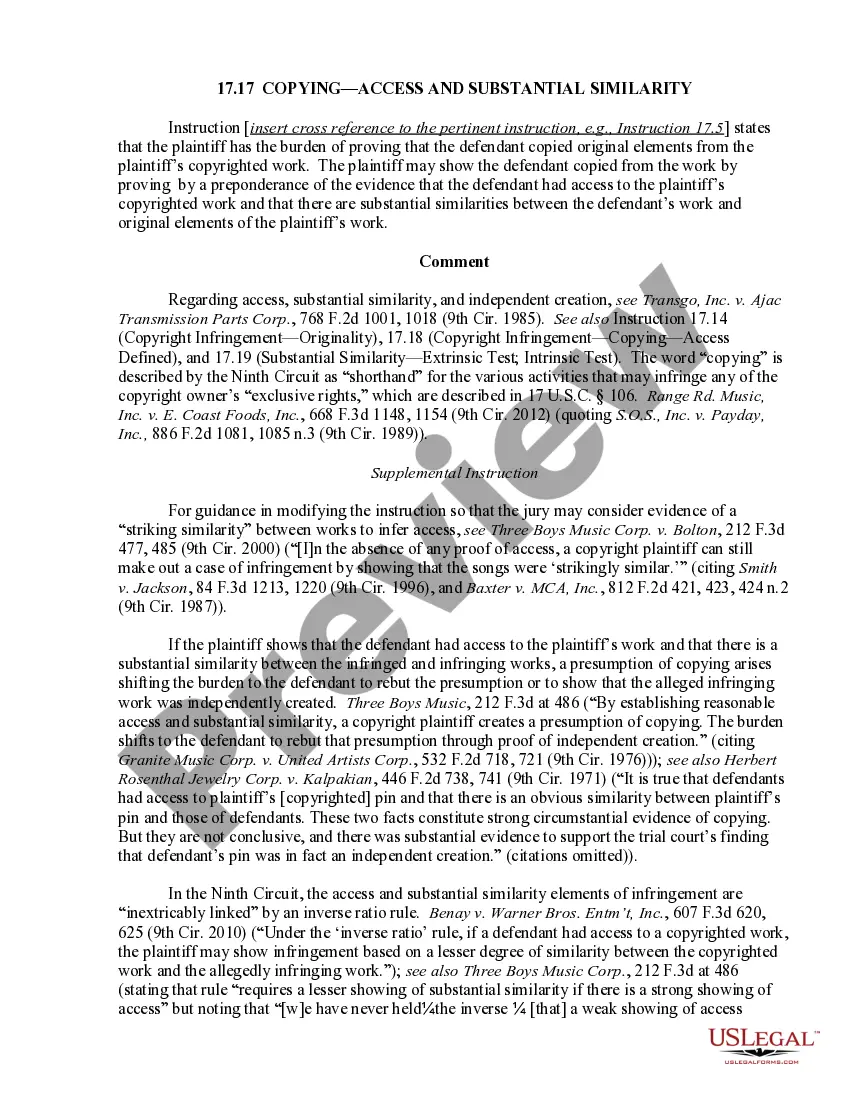
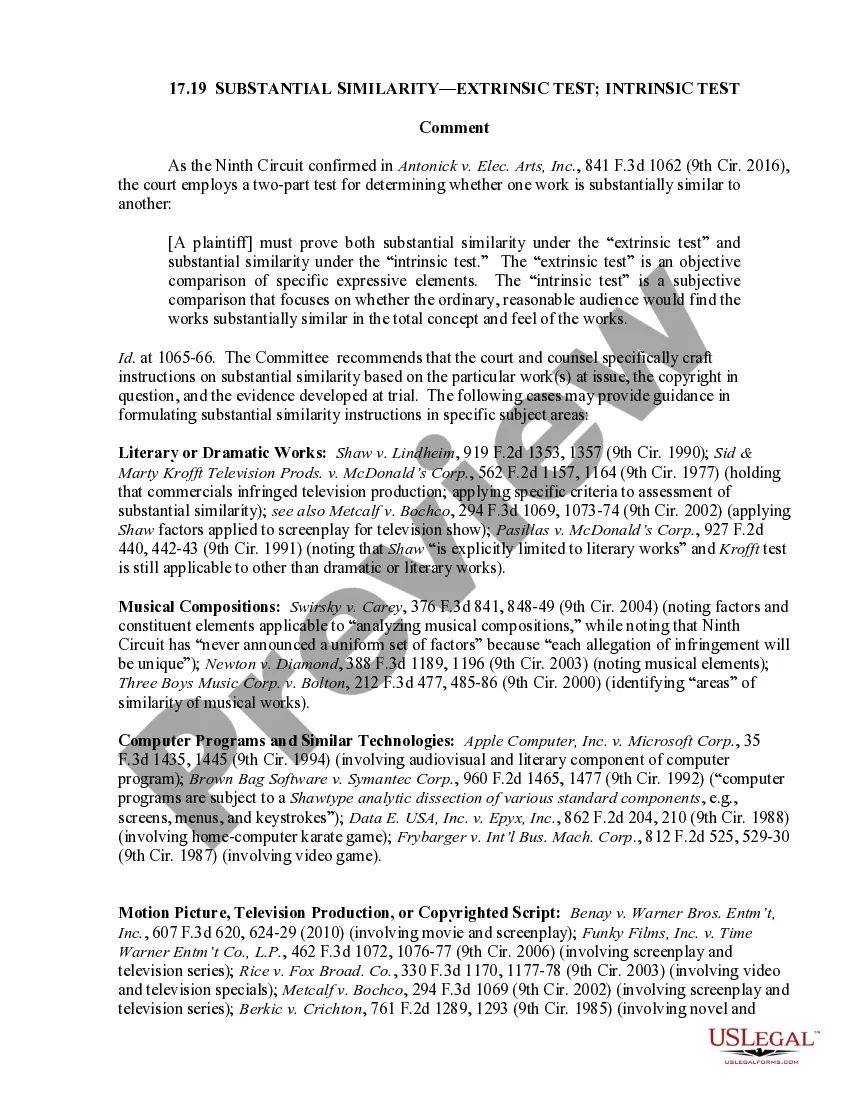
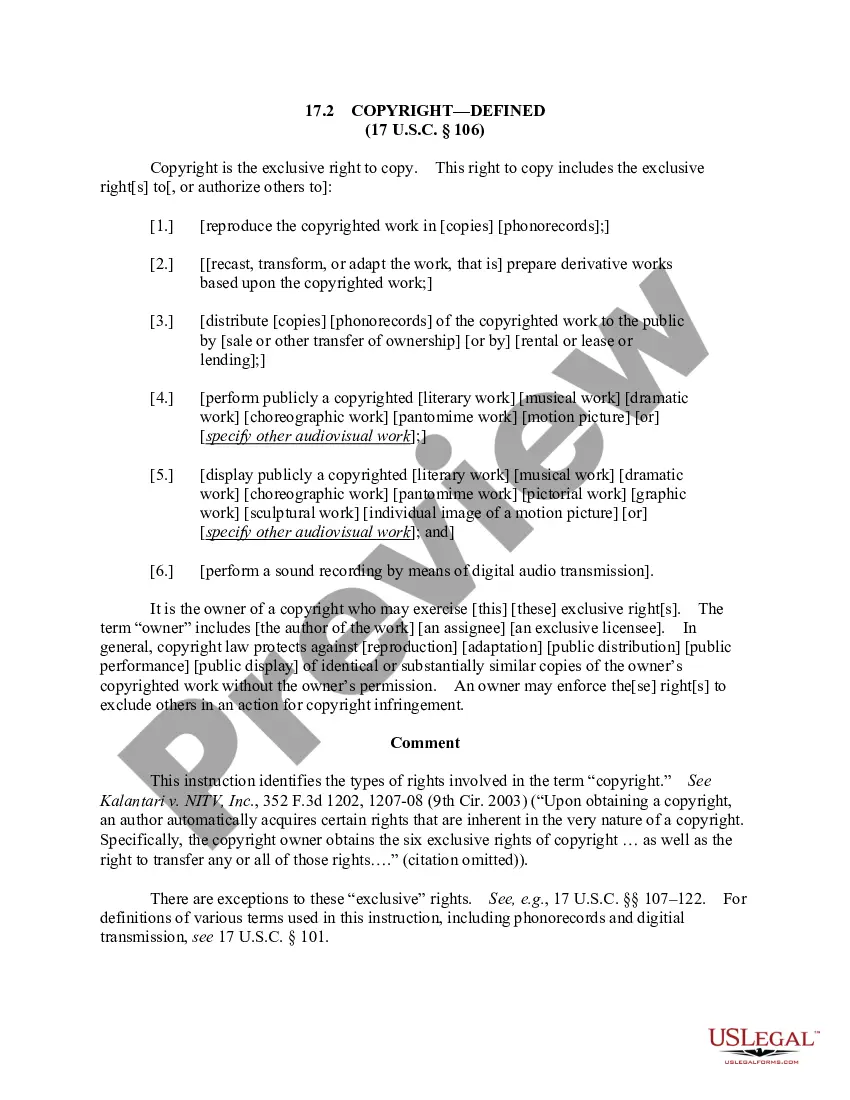
17.17 Copying-Access and Substantial Similarity
Notarization requirements for this form
Notarization is not commonly needed for this form. However, certain documents or local rules may make it necessary. Our notarization service, powered by Notarize, allows you to finalize it securely online anytime, day or night.
Get your form ready online
Our built-in tools help you complete, sign, share, and store your documents in one place.
Make edits, fill in missing information, and update formatting in US Legal Forms—just like you would in MS Word.
Download a copy, print it, send it by email, or mail it via USPS—whatever works best for your next step.
Sign and collect signatures with our SignNow integration. Send to multiple recipients, set reminders, and more. Go Premium to unlock E-Sign.
If this form requires notarization, complete it online through a secure video call—no need to meet a notary in person or wait for an appointment.
We protect your documents and personal data by following strict security and privacy standards.

Make edits, fill in missing information, and update formatting in US Legal Forms—just like you would in MS Word.

Download a copy, print it, send it by email, or mail it via USPS—whatever works best for your next step.

Sign and collect signatures with our SignNow integration. Send to multiple recipients, set reminders, and more. Go Premium to unlock E-Sign.

If this form requires notarization, complete it online through a secure video call—no need to meet a notary in person or wait for an appointment.

We protect your documents and personal data by following strict security and privacy standards.
Looking for another form?

Form popularity
FAQ
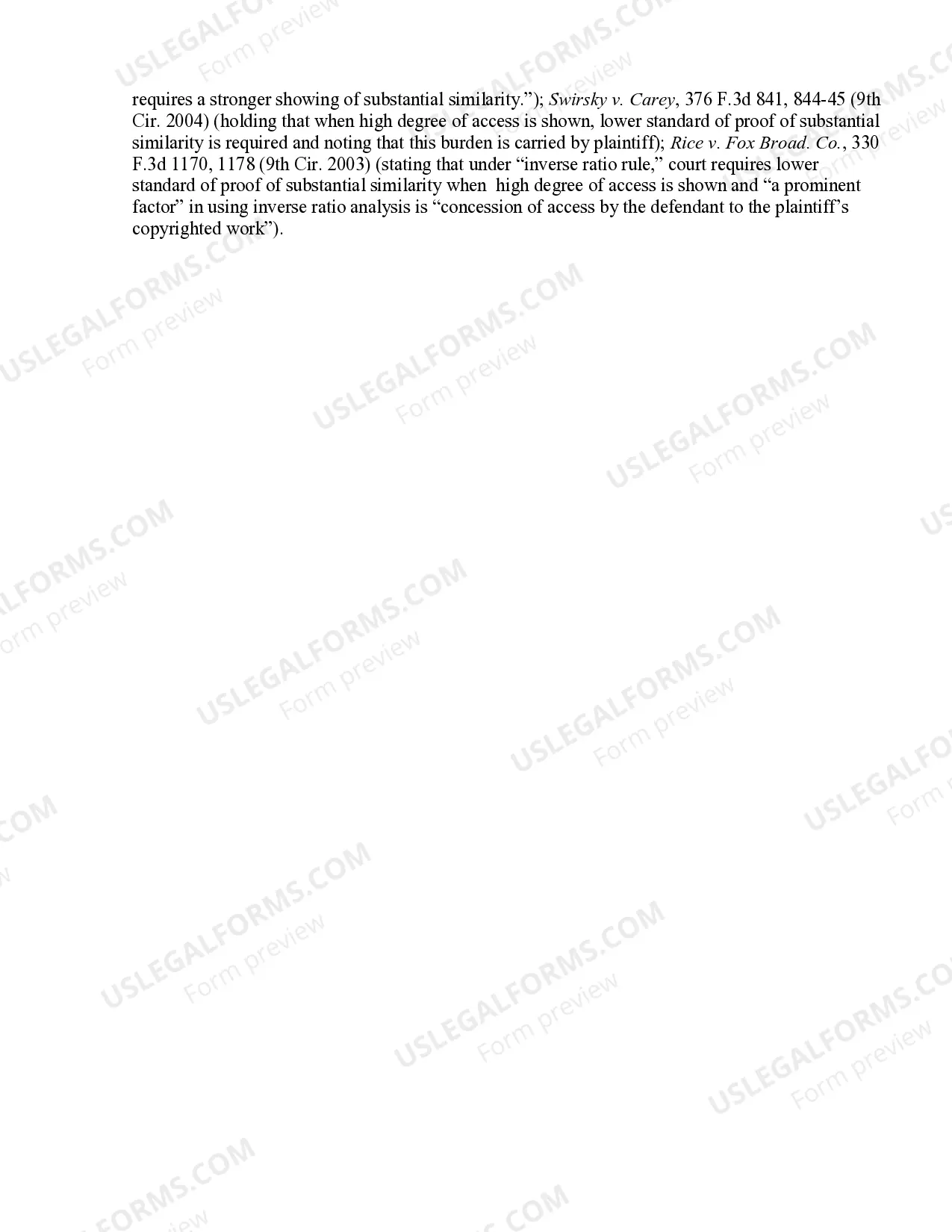
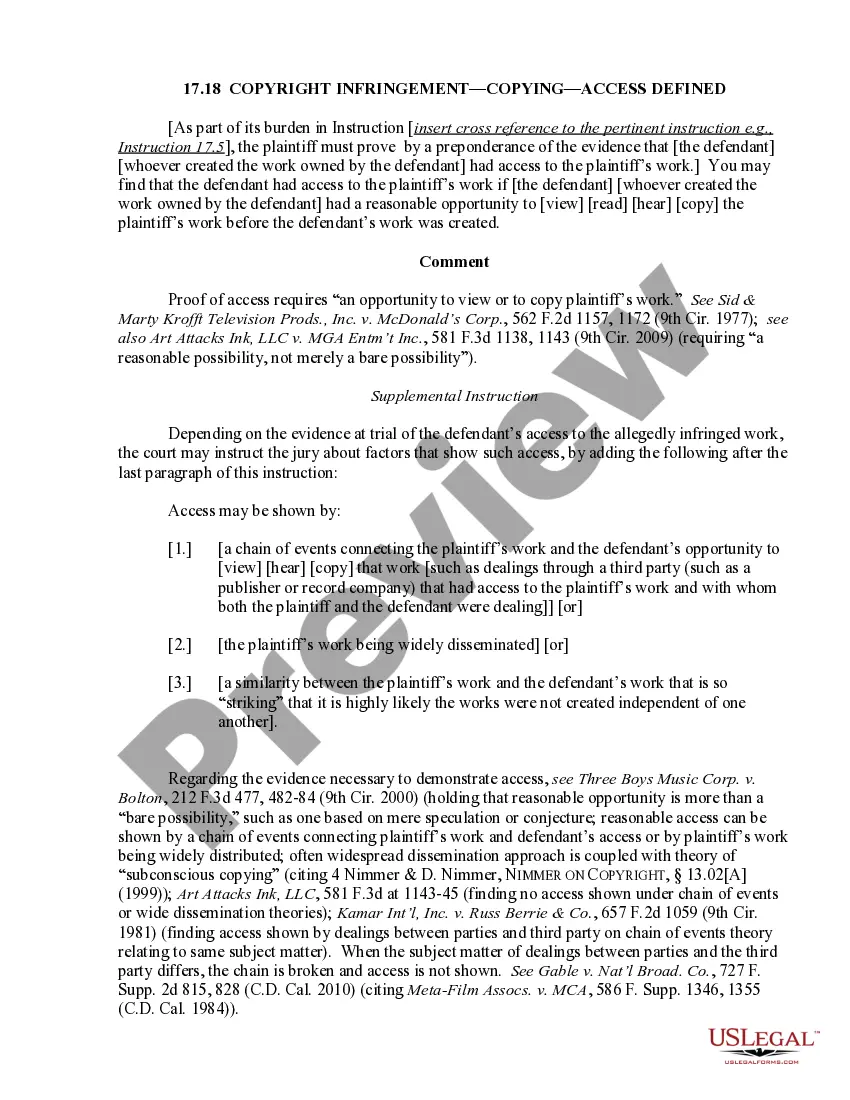
To prove copyright infringement, the plaintiff must show (1) that the defendant had access to the plaintiff's work and (2) that the defendant's work is substantially similar to protected aspects of the plaintiff's work.
The substantial similarity test is copyright law's dominant means by which courts determine whether a party has infringed another party's copyright rights. Despite this, we have very little empirical evidence about what the test is and how courts apply it.
Copyright law's requirement of substantial similarity requires a court to satisfy itself that a defendant's copying, even when shown to exist as a factual matter, is quantitatively and qualitatively enough to render it actionable as infringement.
To prove copyright infringement, the plaintiff must show (1) that the defendant had access to the plaintiff's work and (2) that the defendant's work is substantially similar to protected aspects of the plaintiff's work.
Substantial copying simply refers to more than just copying. The term substantial copy is often used in the context of Intellectual property. Substantial copy is a copy of a full, important, significant, or considerable amount of any work.
The substantial similarity test is copyright law's dominant means by which courts determine whether a party has infringed another party's copyright rights. Despite this, we have very little empirical evidence about what the test is and how courts apply it.
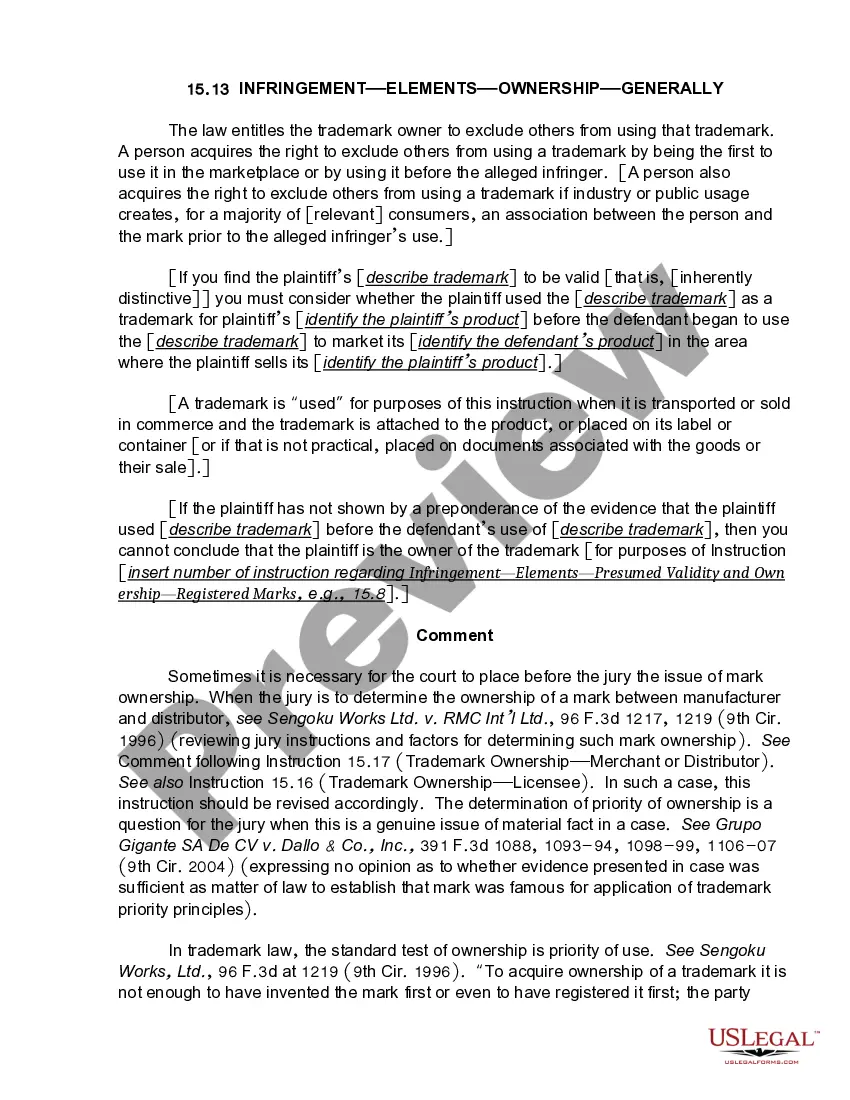
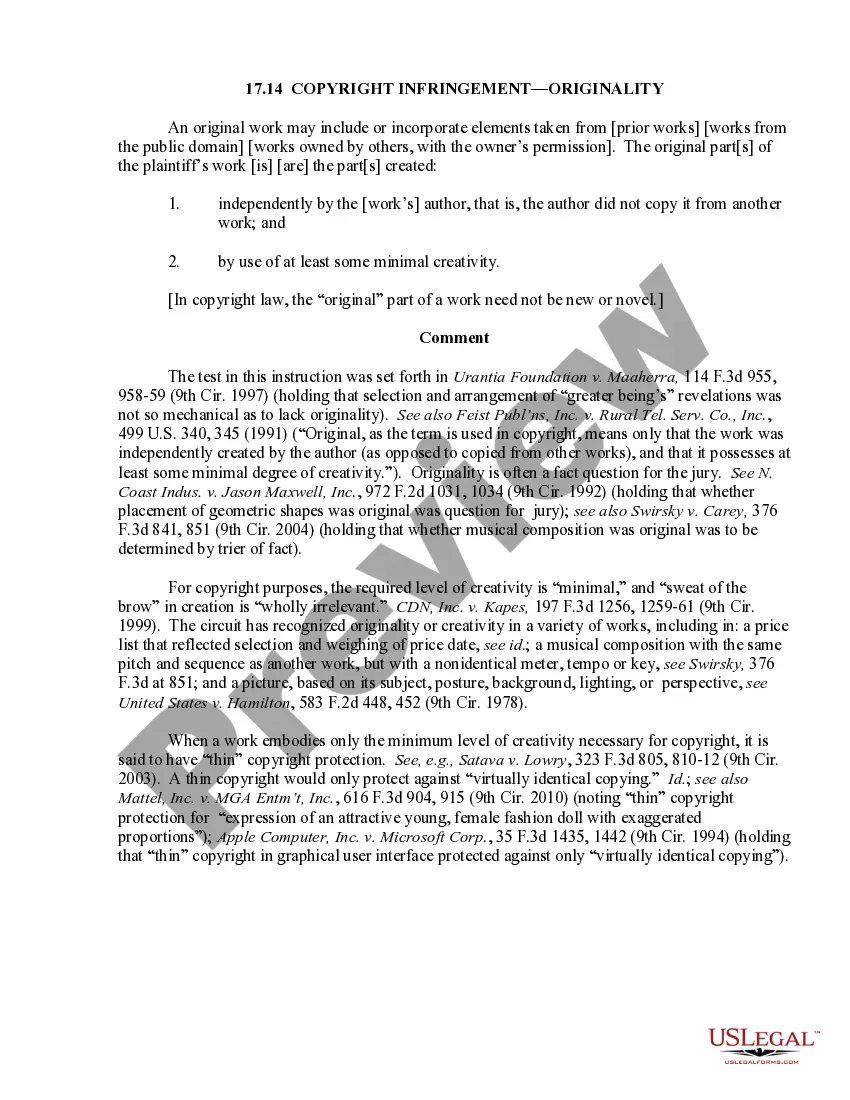
Substantial similarity refers to how much one thing looks or sounds like another thing that is protected by a trademark or copyright. If something is too similar to a protected work, it may be considered infringement.
Substantial similarity is not a defense at all but rather a test that courts use to determine whether or not an alleged new work actually copies another copyrighted work that was created first.