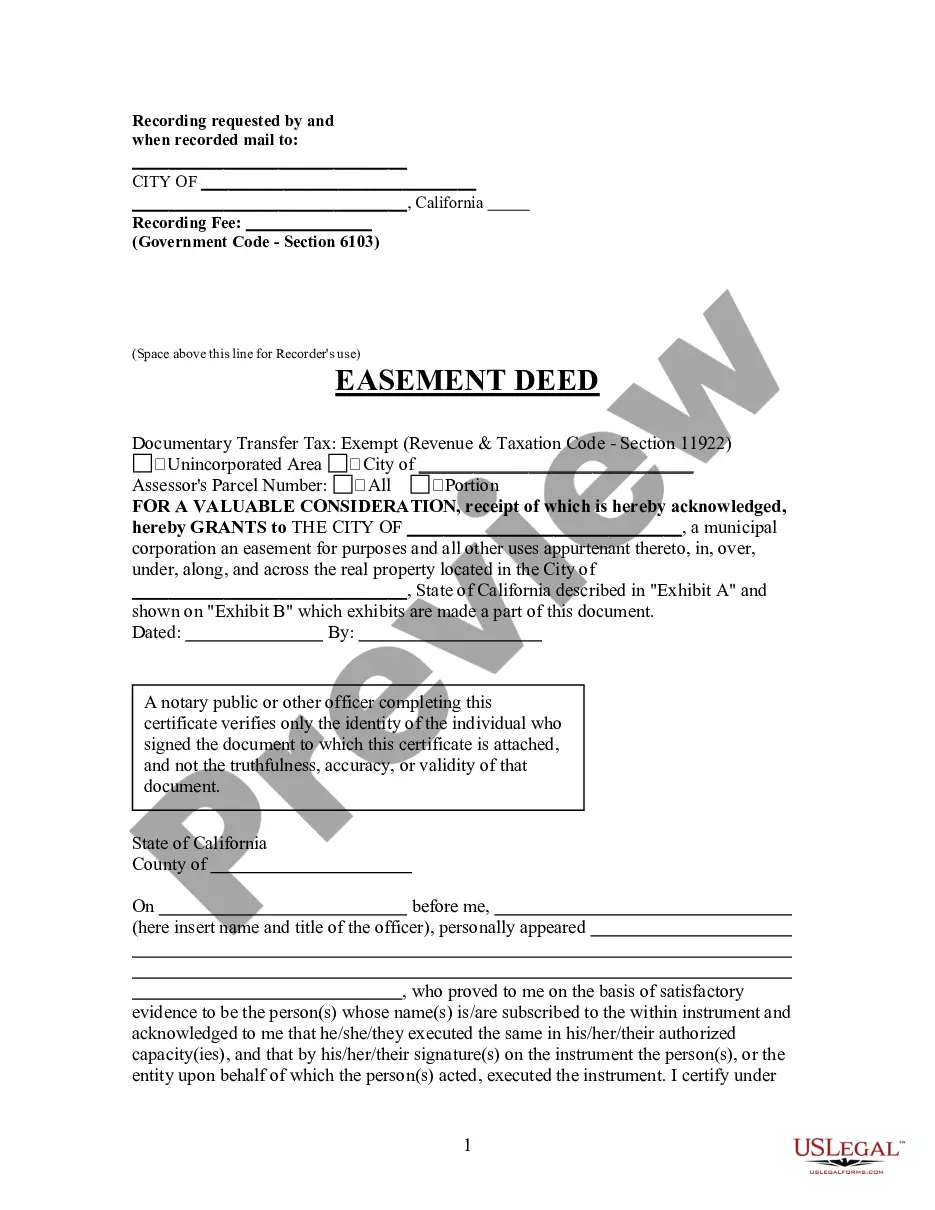
California General Easement Deed for Municipal Corporation Grantee
Overview of this form
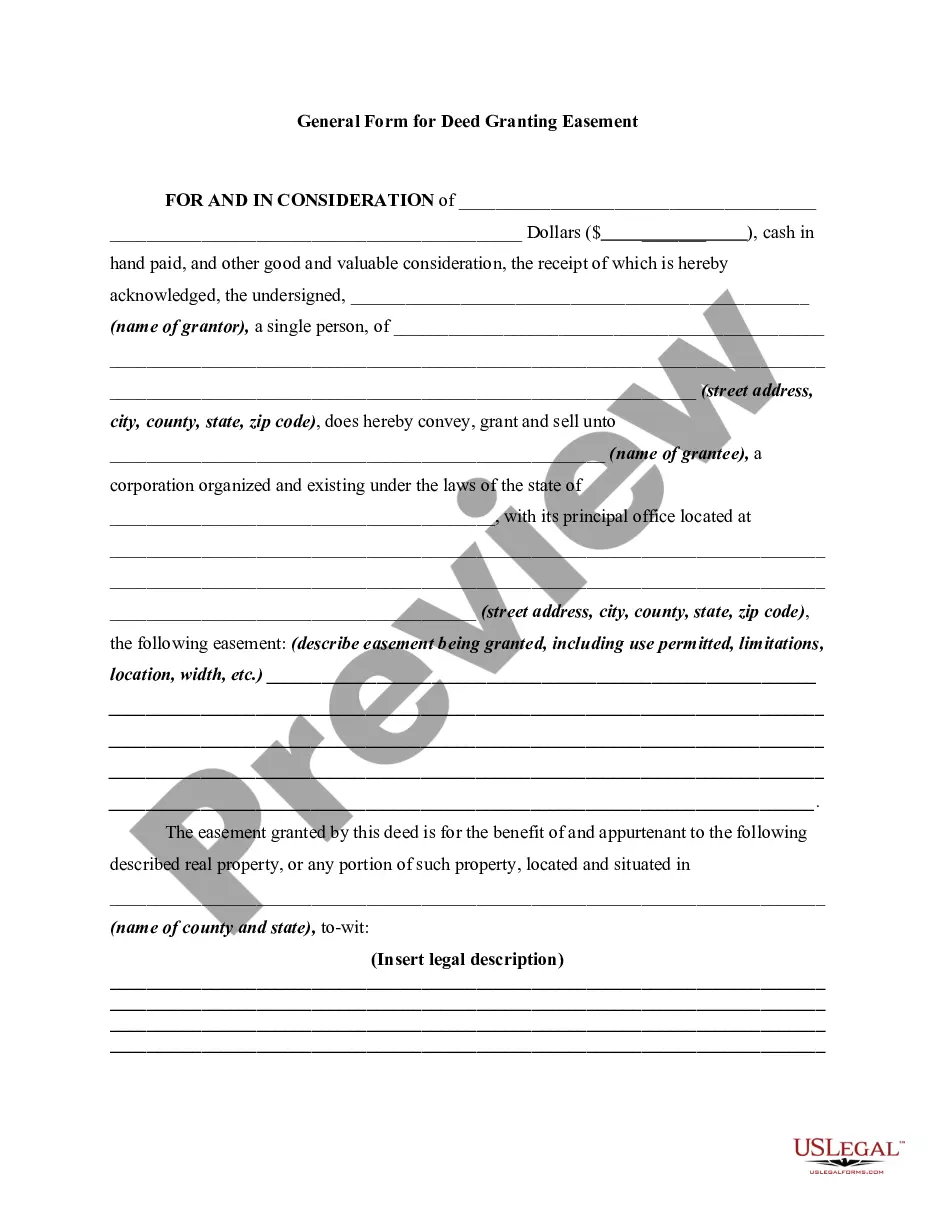
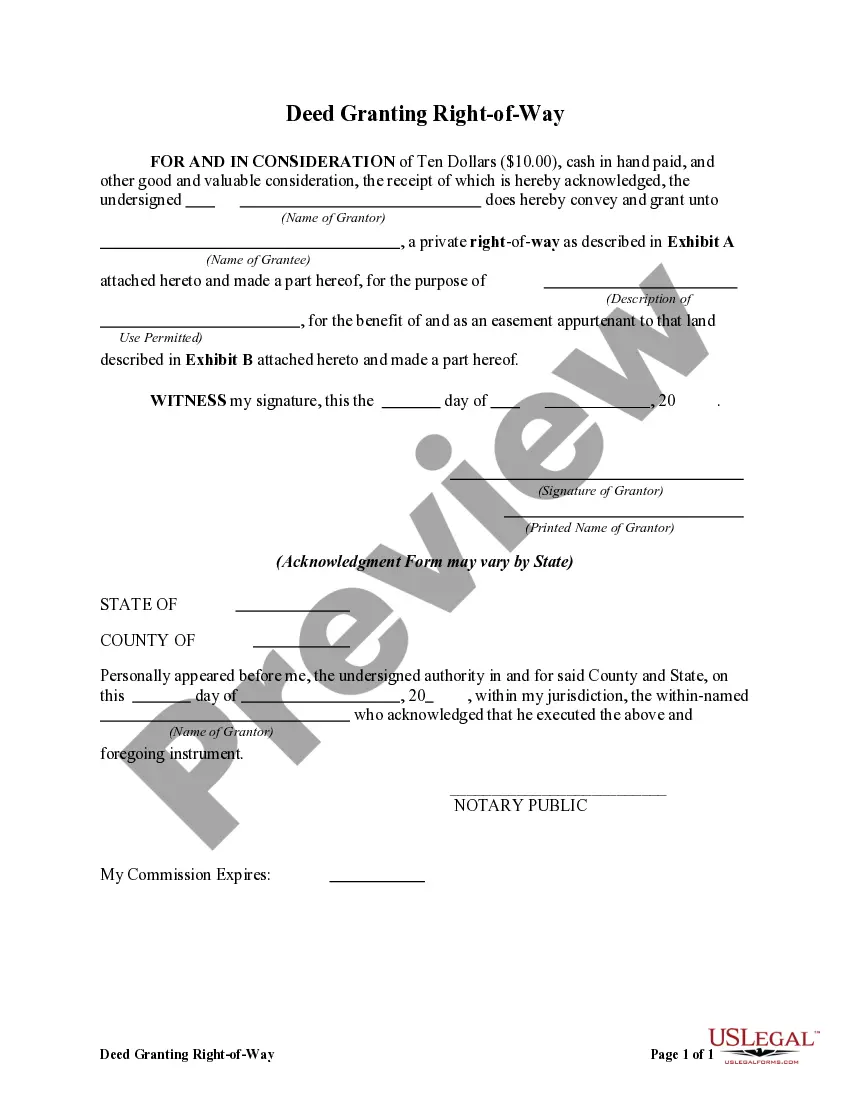
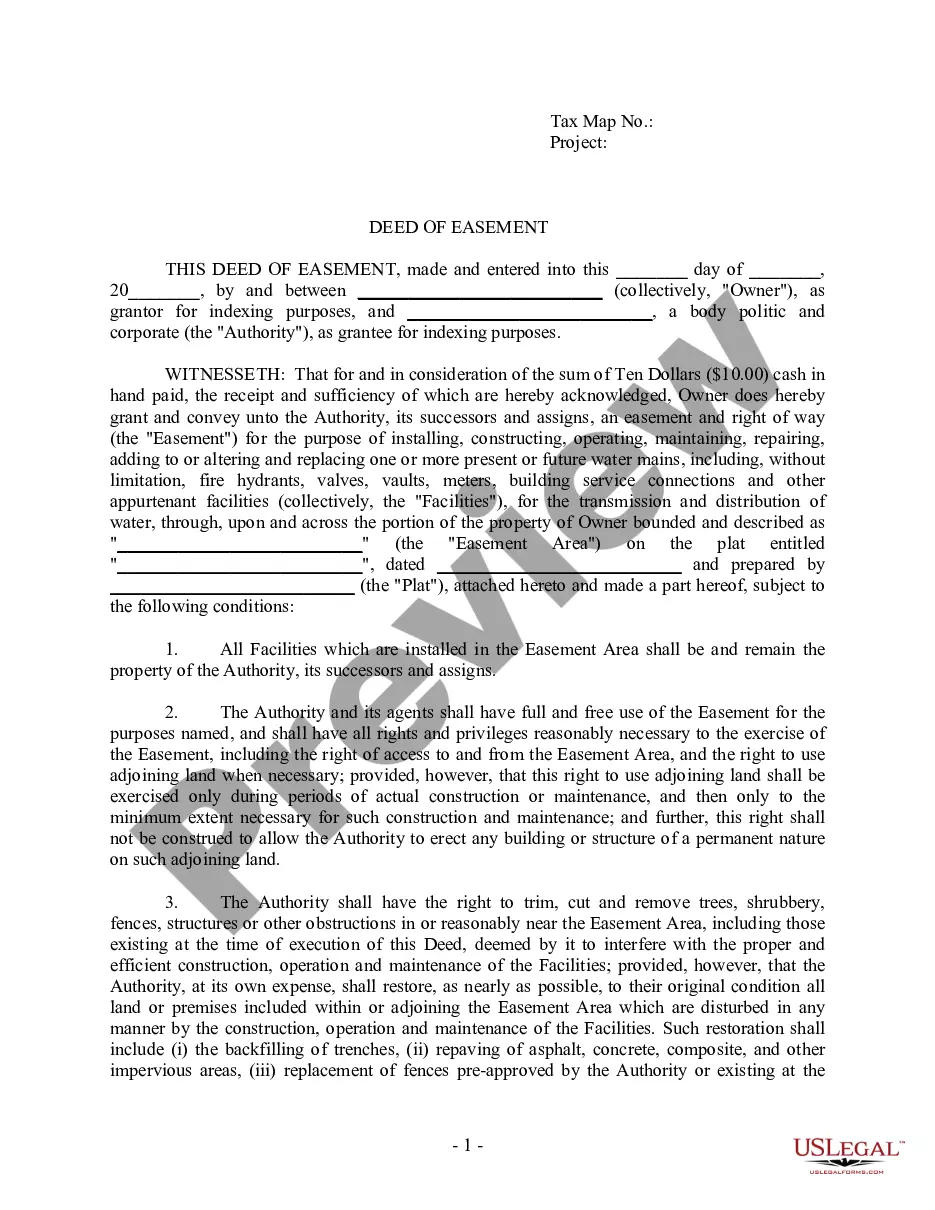
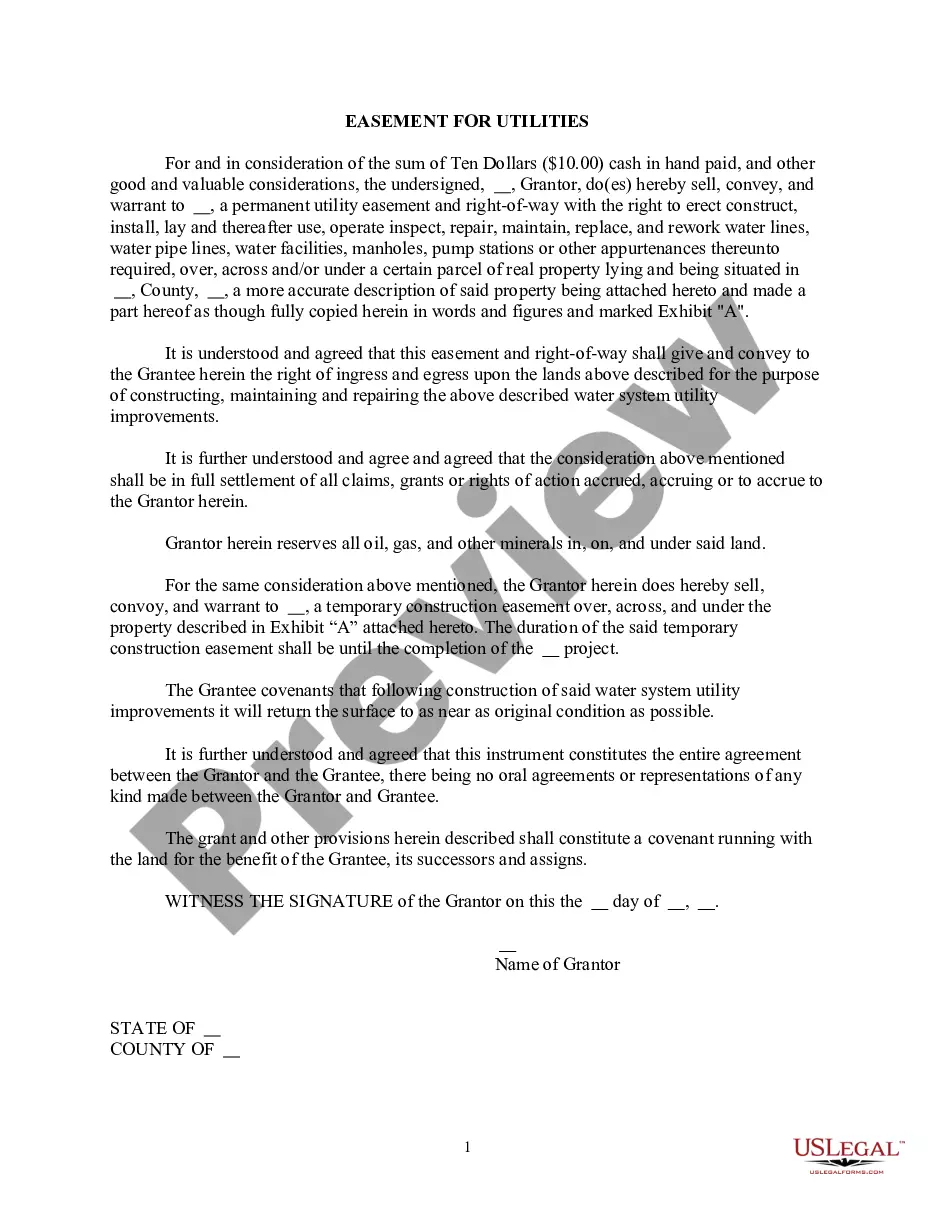
The General Easement Deed for Municipal Corporation Grantee is a legal document that grants a municipal corporation the right to use another party's property for specific purposes that can be detailed within the form. This easement allows utilities or other entities to access and utilize an area of land without transferring ownership. Unlike other property agreements, easements focus on granting usage rights rather than title or ownership, making this form essential for municipalities that require access for services or infrastructure.
What’s included in this form
- Identification of the grantor (property owner) and grantee (municipal corporation).
- Description of the property where the easement is granted.
- Specific purpose or use of the easement.
- Duration of the easement, if applicable.
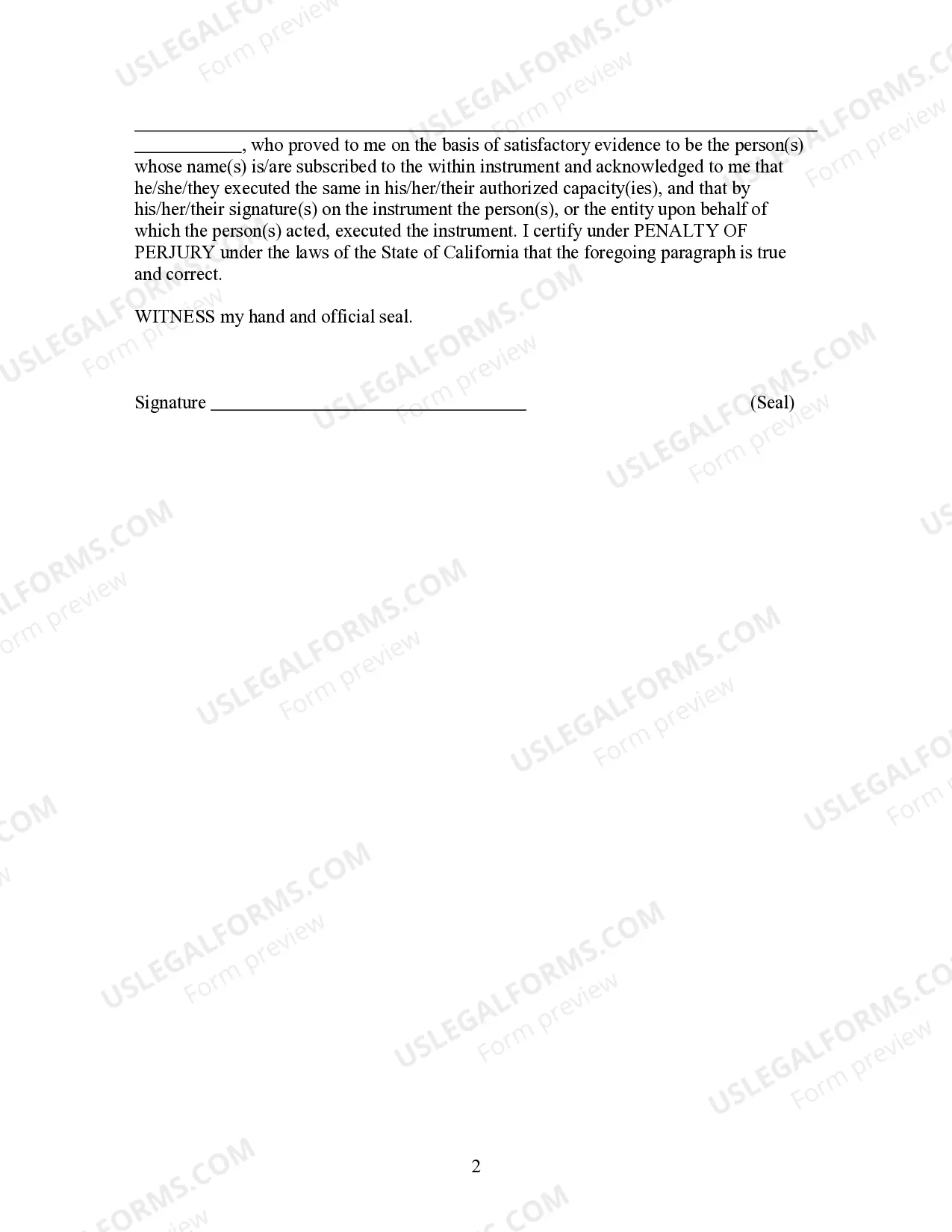
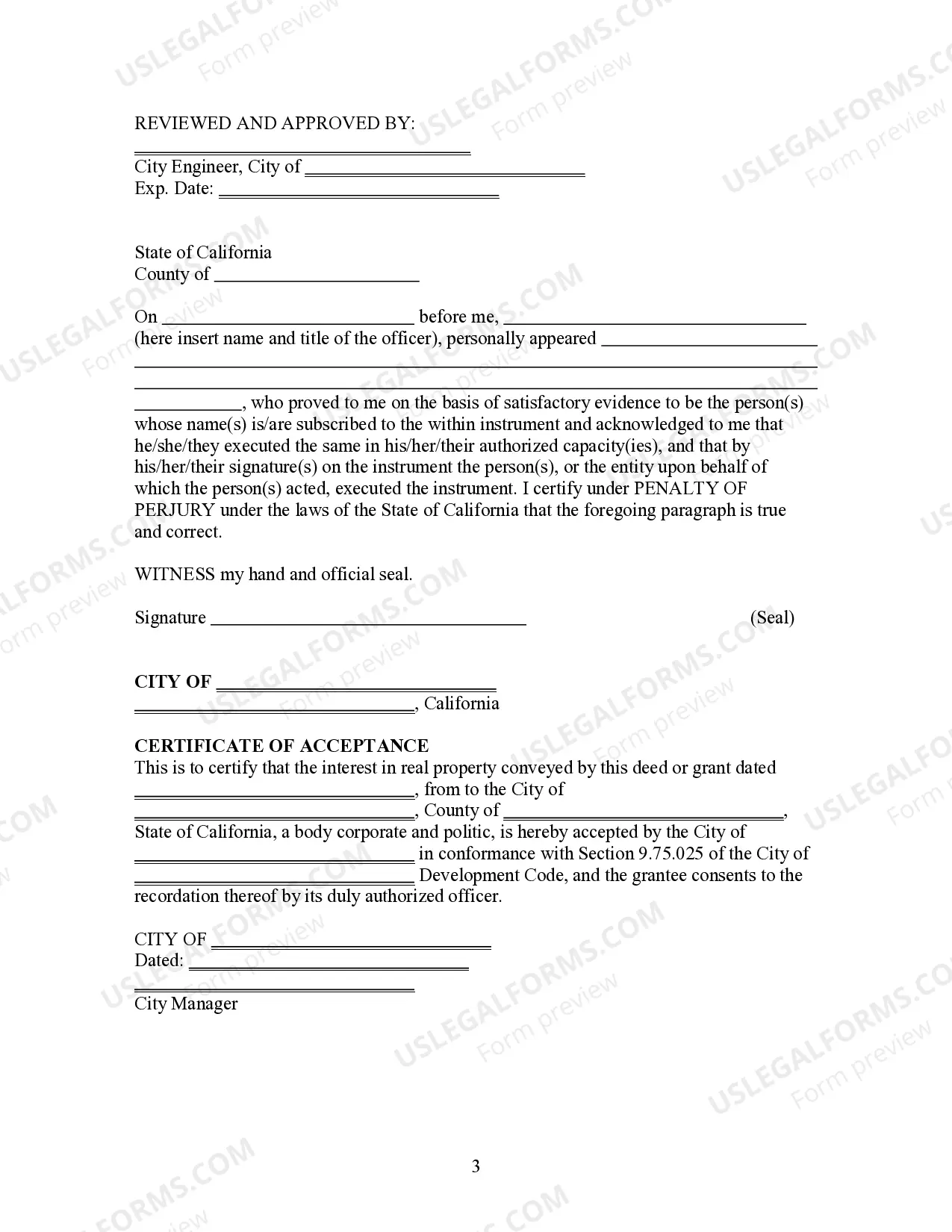
- Signatures of the parties involved, affirming the agreement.
When to use this form
This form is used when a municipal corporation needs to establish a right of way on private property for purposes such as installing or maintaining utilities, road access, or emergency services. You should use this form if you are a property owner approached by a municipal entity requesting access to your property for specified usage without transferring ownership of the land.
Who should use this form
- Property owners who are approached by a municipal corporation for an easement.
- Municipal corporations seeking to establish a legal easement for essential services.
- Real estate professionals involved in property transactions requiring easement provisions.
Instructions for completing this form
- Identify the parties involved by providing the names of the grantor and grantee.
- Specify the property details where the easement will be applicable.
- Clearly outline the purpose of the easement.
- Indicate the duration of the easement if there are specific time limits.
- Have both parties sign the document to validate the agreement.
Notarization requirements for this form
To make this form legally binding, it must be notarized. Our online notarization service, powered by Notarize, lets you verify and sign documents remotely through an encrypted video session.
Get your form ready online
Our built-in tools help you complete, sign, share, and store your documents in one place.
Make edits, fill in missing information, and update formatting in US Legal Forms—just like you would in MS Word.
Download a copy, print it, send it by email, or mail it via USPS—whatever works best for your next step.
Sign and collect signatures with our SignNow integration. Send to multiple recipients, set reminders, and more. Go Premium to unlock E-Sign.
If this form requires notarization, complete it online through a secure video call—no need to meet a notary in person or wait for an appointment.
We protect your documents and personal data by following strict security and privacy standards.

Make edits, fill in missing information, and update formatting in US Legal Forms—just like you would in MS Word.

Download a copy, print it, send it by email, or mail it via USPS—whatever works best for your next step.

Sign and collect signatures with our SignNow integration. Send to multiple recipients, set reminders, and more. Go Premium to unlock E-Sign.

If this form requires notarization, complete it online through a secure video call—no need to meet a notary in person or wait for an appointment.

We protect your documents and personal data by following strict security and privacy standards.
Mistakes to watch out for
- Failing to provide a clear description of the property involved in the easement.
- Not specifying the purpose of the easement, leading to ambiguity.
- Omitting signatures or dates, which may render the form invalid.
Why complete this form online
- Convenience of downloading the form anytime without visiting a law office.
- Editability allows for customization to fit specific needs.
- Access to reliable documents drafted by licensed attorneys, ensuring legal soundness.
Looking for another form?
Form popularity
FAQ
This form creates a non-possessory right of use for a municipal corporation on a described property, without transferring ownership. It documents the grantor and grantee, the property, the specific use, any duration, and the parties’ signatures, so the municipality can install or maintain utilities or access needed services.
In California, the easement created by this form is a non-possessory interest granted to the municipal corporation (the grantee). The grantor (the landowner) retains ownership of the property, while the grantee has the right to use a described portion for the specified purpose for the duration stated.
The rules described by this form include identifying the grantor and grantee, describing the property, specifying the use, and obtaining signatures. It creates a non-ownership-transfer easement for municipal use and may include a duration. It is used when a municipal entity needs rights of way for utilities, roads, or emergency access.
Easements can limit how the property is used or developed in the easement area, create ongoing maintenance or access obligations for the landowner, and may require future negotiations if the easement needs to be altered or terminated. The form helps define the scope to reduce disputes and clarify responsibilities.
This form is a template and does not specify costs. Actual expenses depend on drafting, attorney review, and recording fees in the county. For a precise estimate, consult a licensed professional who can tailor the deed to the property and jurisdiction.
This form is tailored for a municipal corporation as the grantee, with fields naming the grantor and grantee, a property description, a defined purpose, a duration (if applicable), and required signatures. It emphasizes rights of way for municipal use and does not transfer ownership, distinguishing it from a more general easement deed.