Mississippi Irrevocable Trust Agreement
Understanding this form
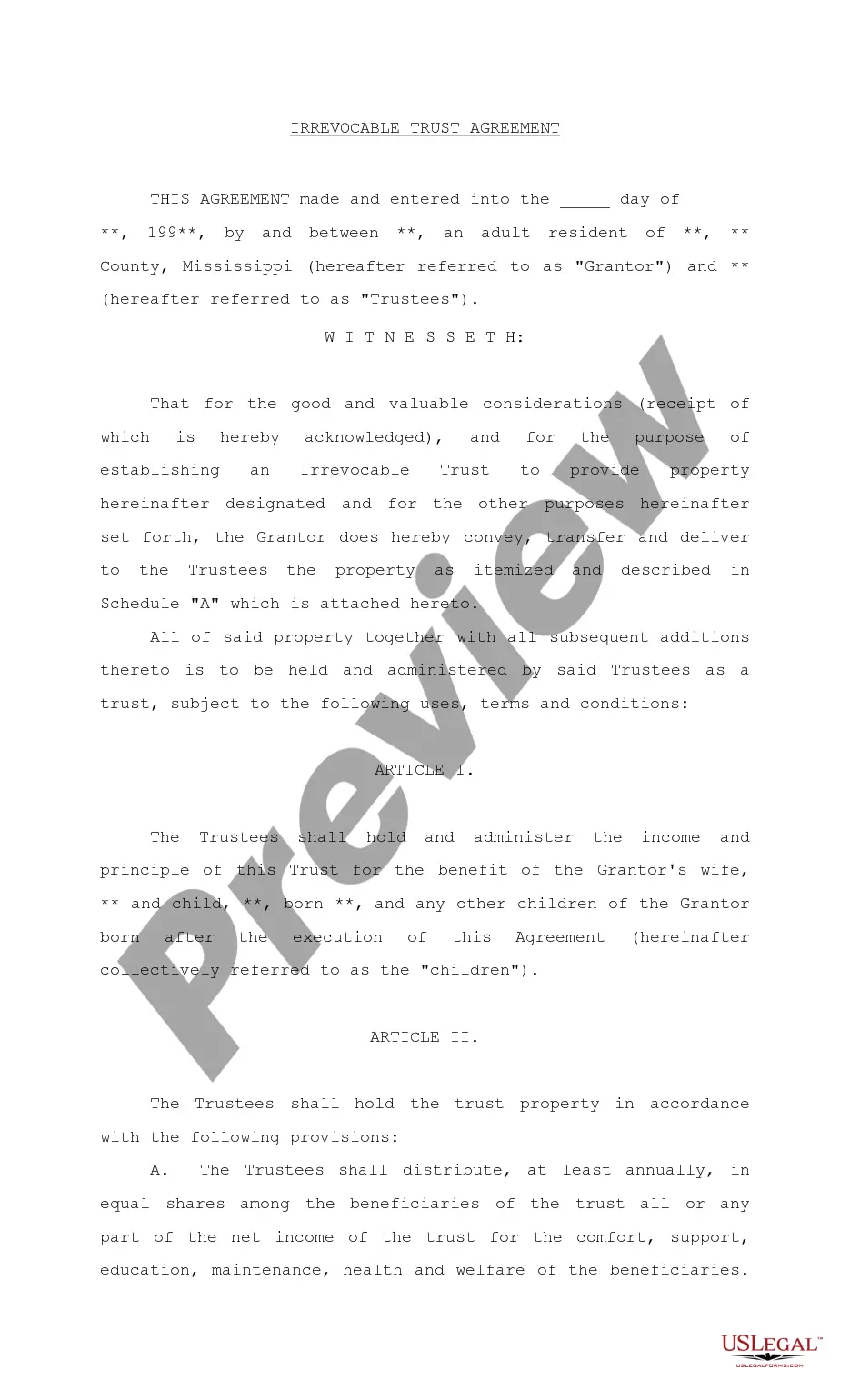
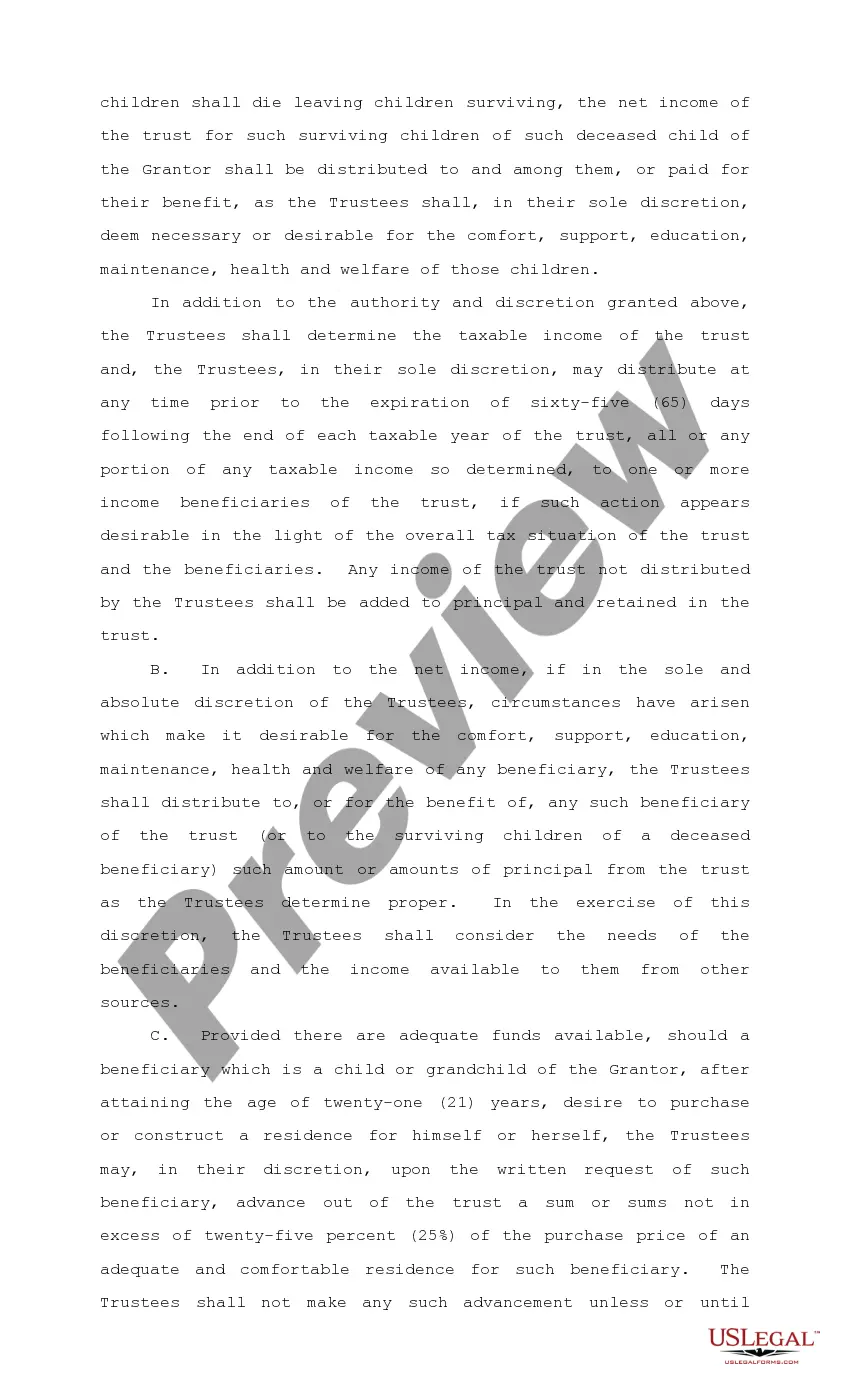
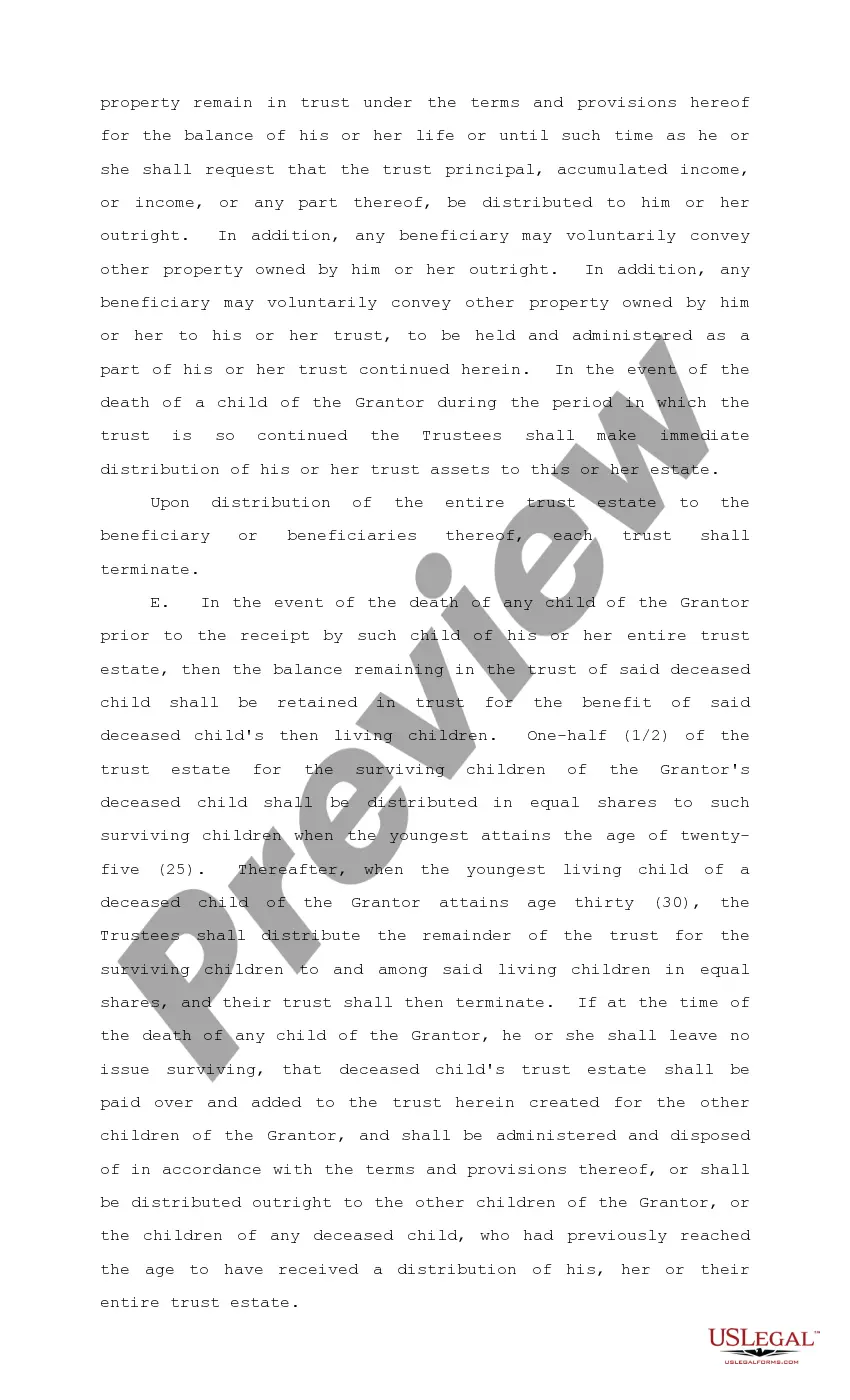
The Irrevocable Trust Agreement is a legal document that establishes a trust in which assets are transferred to a trustee for the benefit of specified beneficiaries. Once created, this type of trust cannot be altered or revoked by the grantor. Its primary purpose is to manage and protect the assets for the beneficiaries, ensuring they are distributed according to the grantor's wishes upon their death.
What’s included in this form
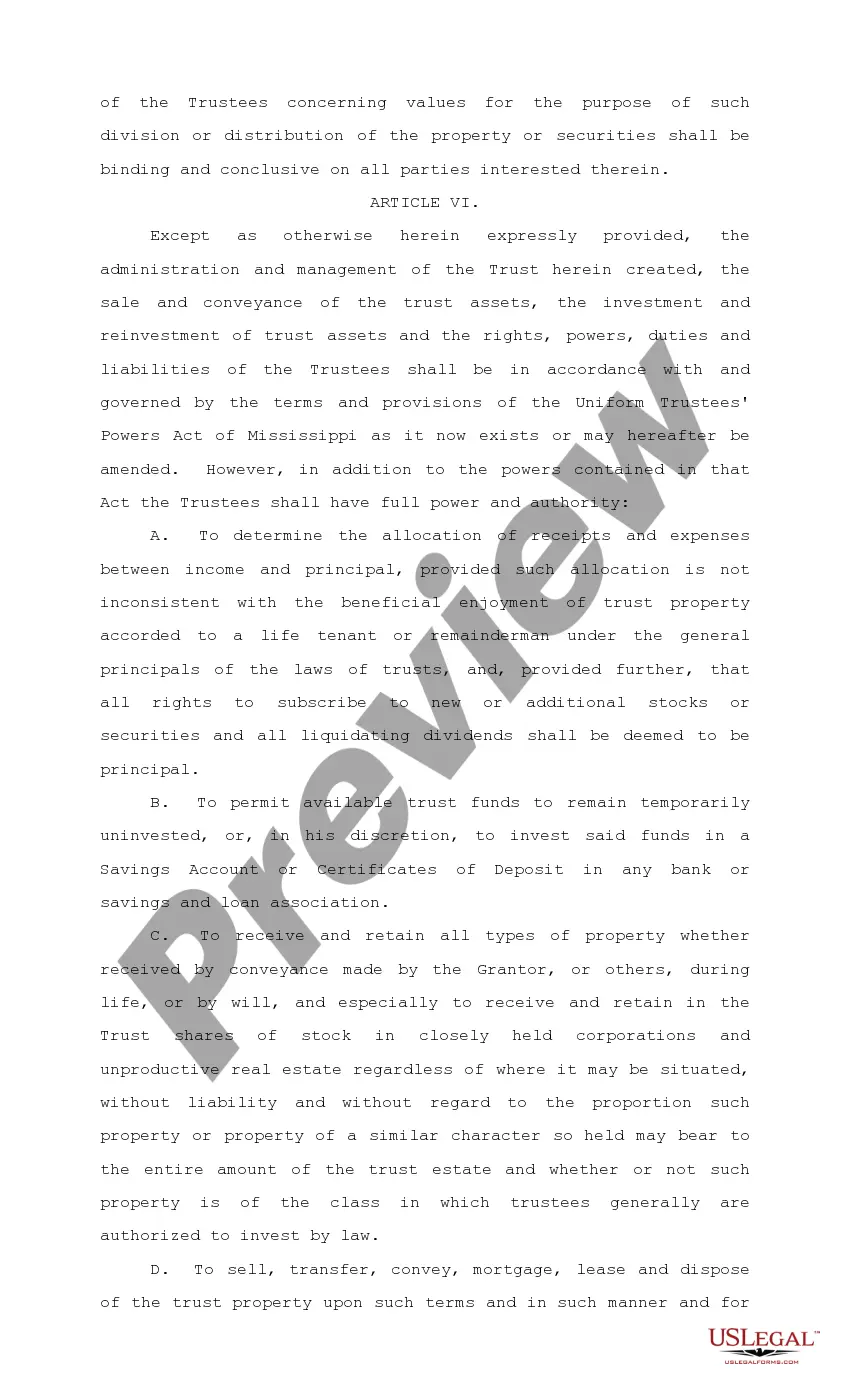
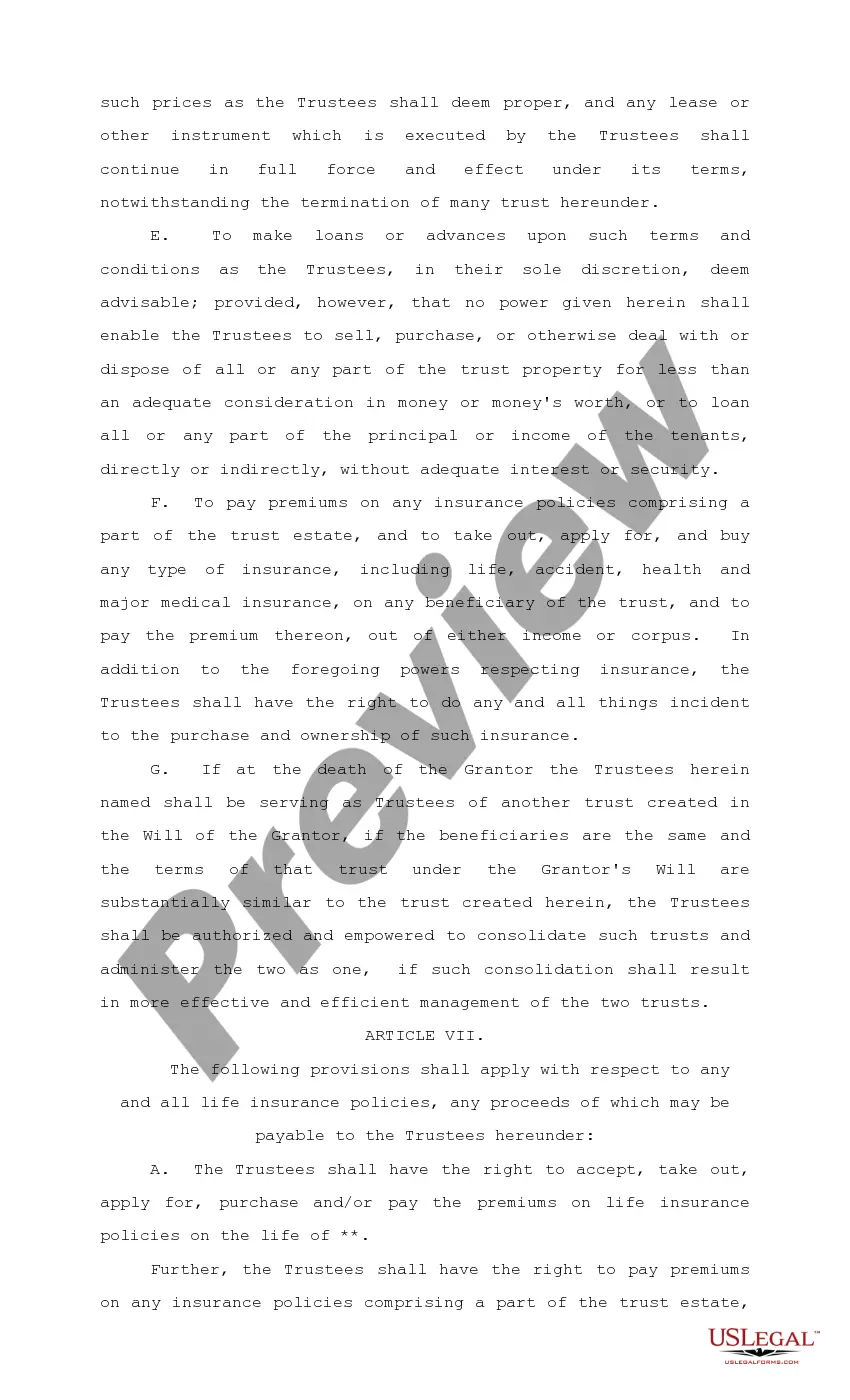
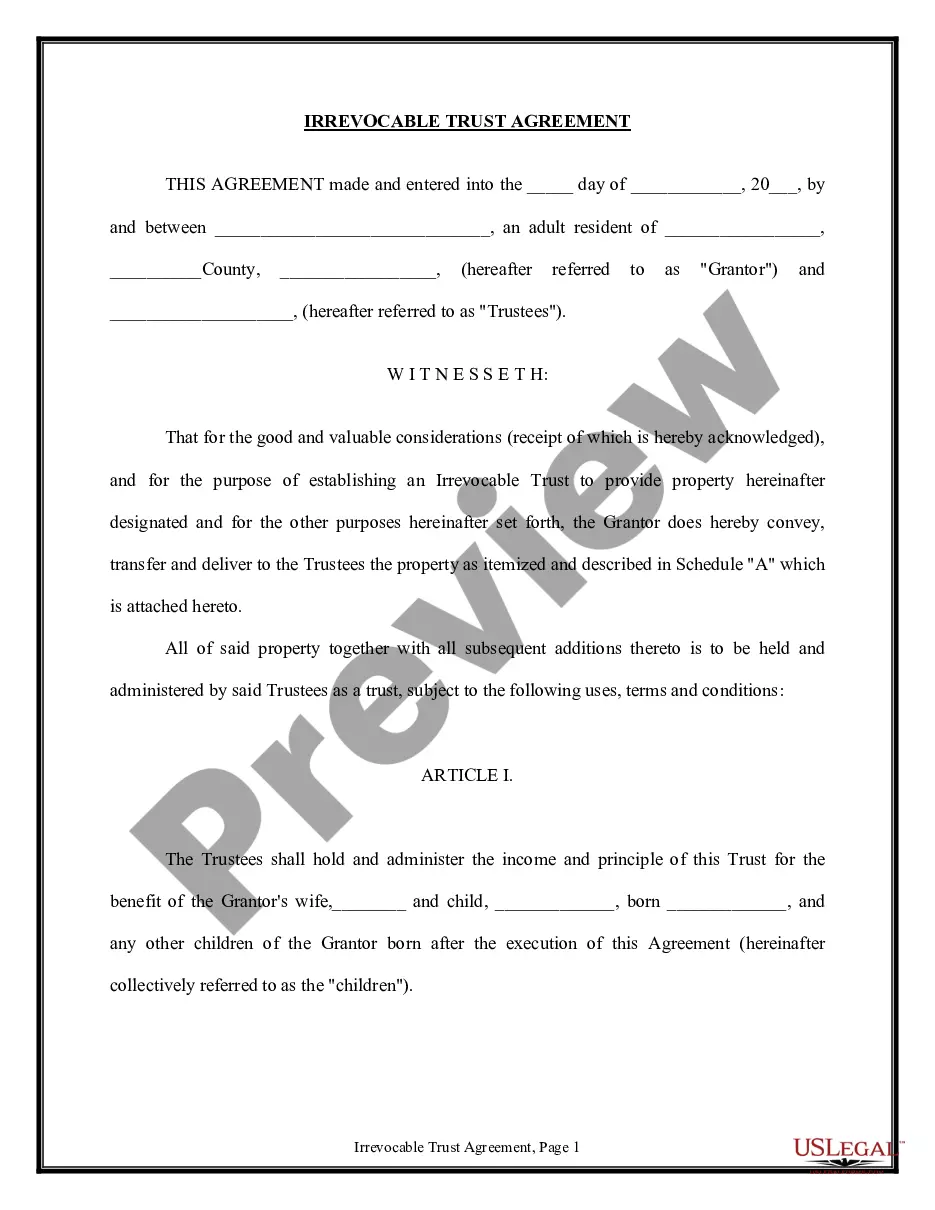
- Identification of the grantor and trustees responsible for managing the trust.
- Details outlining the specific assets placed into the trust.
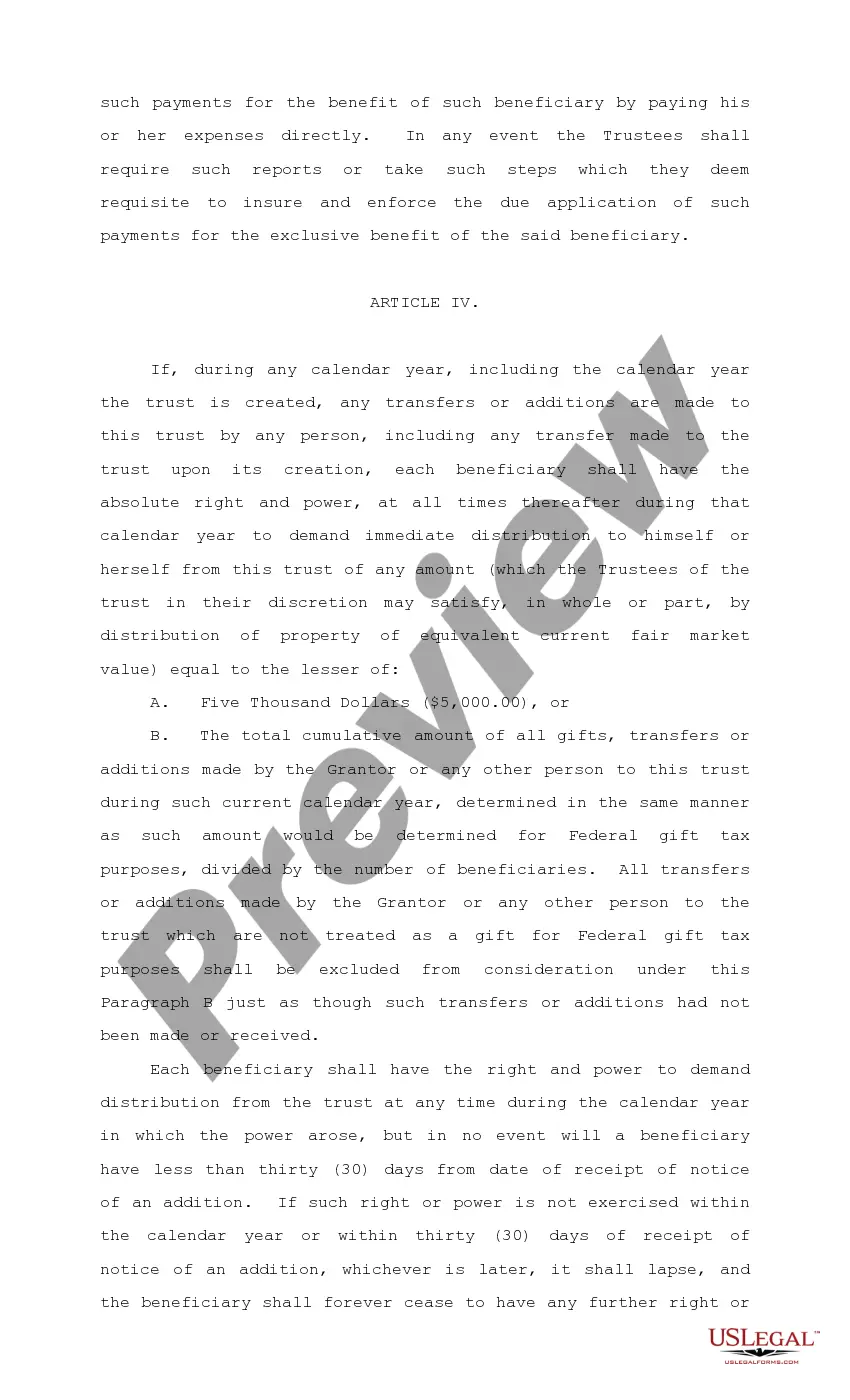
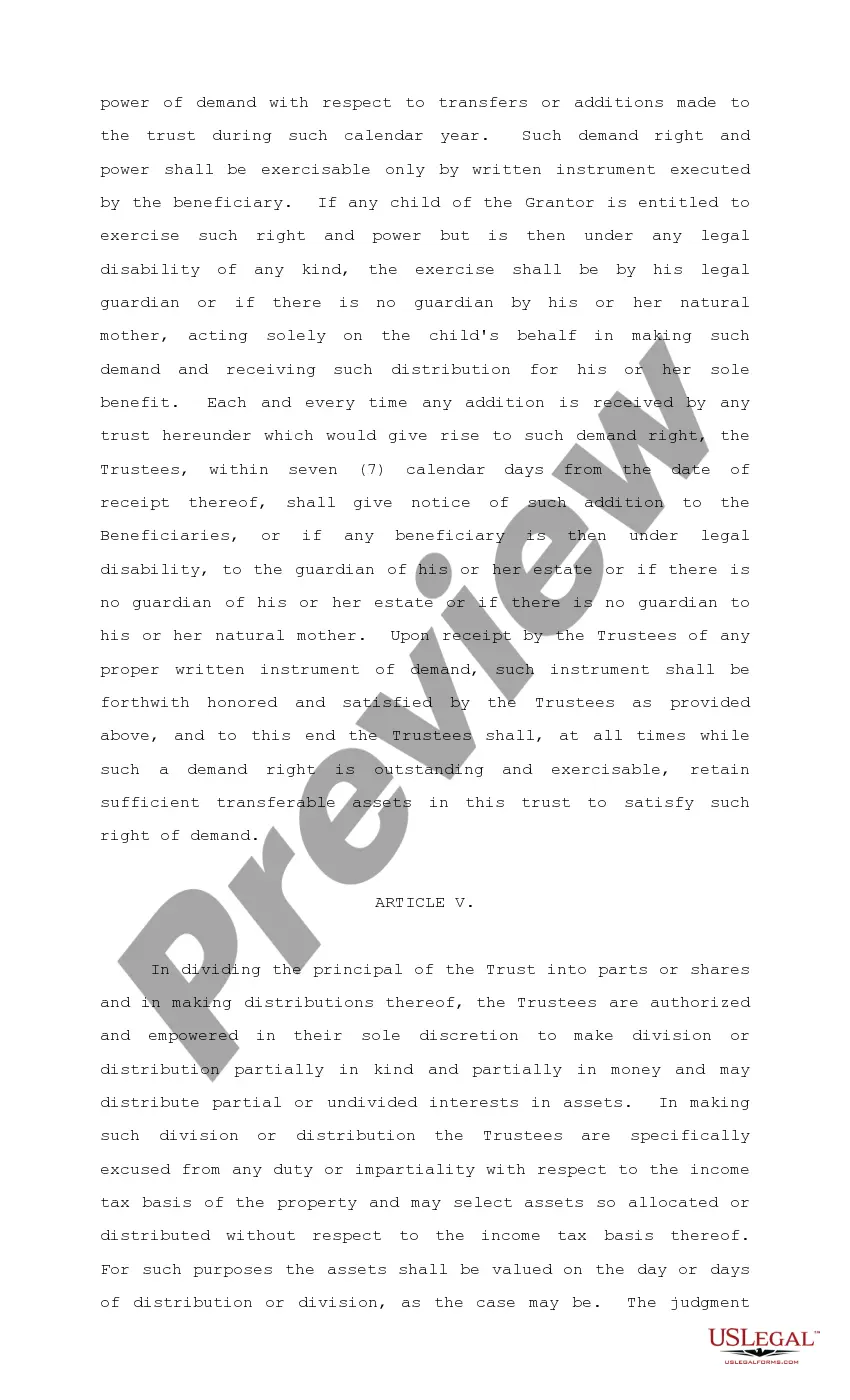
- Provisions for the distribution of income and principal to beneficiaries.
- Conditions under which beneficiaries may receive advancements for personal needs or property purchases.
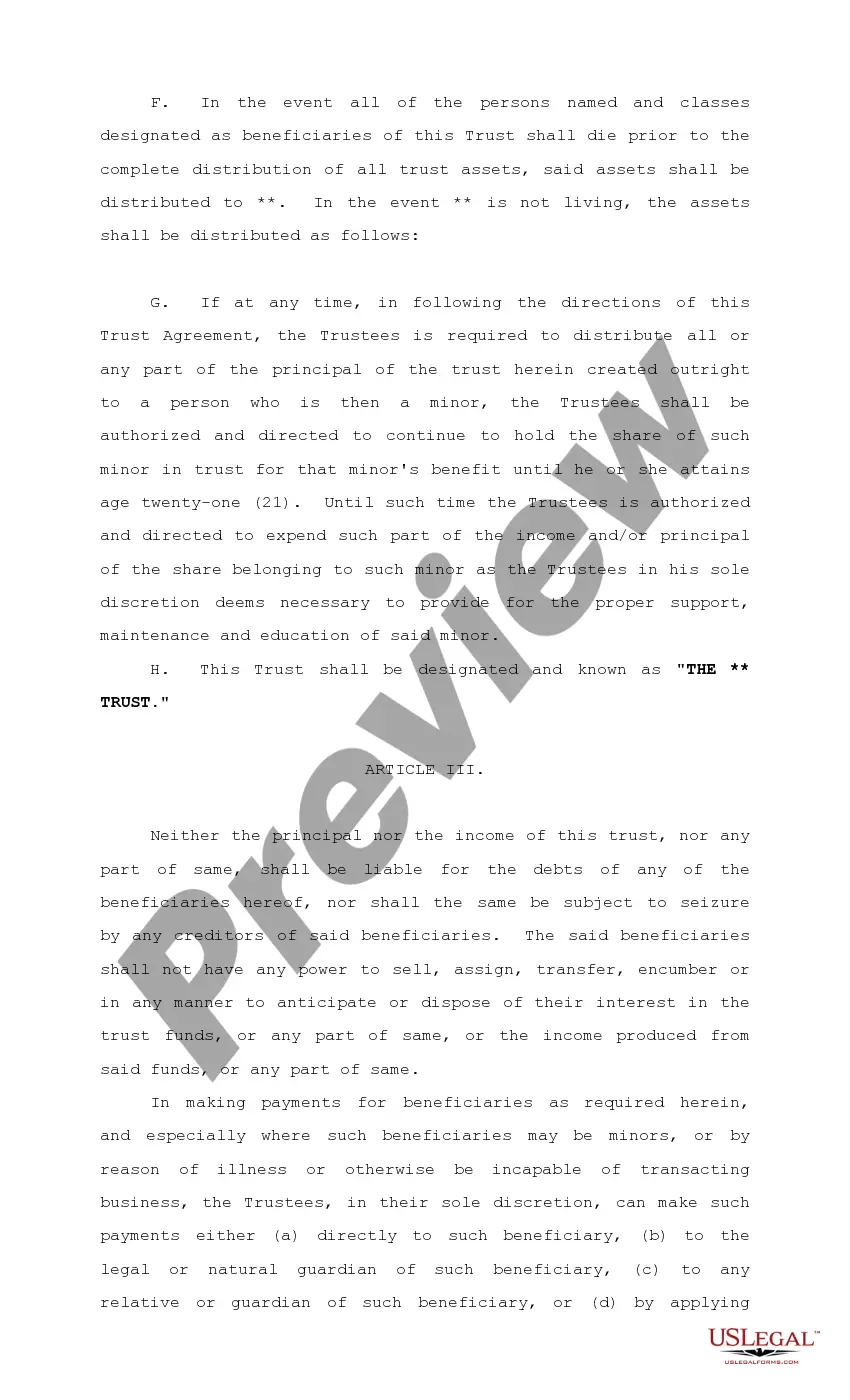
- Legal protections for the trust assets against creditors of the beneficiaries.



When to use this document
This form is beneficial for individuals looking to securely allocate their assets for their family members without retaining control over those assets after death. It is particularly useful for estate planning when the grantor desires to ensure that assets are managed professionally and according to specific terms, especially in cases involving minor children or beneficiaries with special needs.
Intended users of this form
- Individuals residing in Mississippi who wish to create a trust for their beneficiaries.
- Parents looking to provide for their children through a structured and legally binding agreement.
- Individuals with substantial assets who want to ensure their estate is handled according to their wishes after death.
- Anyone considering long-term financial planning strategies to benefit heirs or dependents.
How to complete this form
- Identify the parties involved: the Grantor (who creates the trust) and the Trustees (who manage the trust).
- Specify the assets being transferred into the trust in Schedule A attached to the document.
- Clearly outline the beneficiaries who will benefit from the trust, including any conditions for distribution.
- Include necessary provisions for the management and distribution of the trust assets.
- Sign and date the agreement in the presence of a notary public to ensure legal validity.
Does this document require notarization?
Notarization is required for this form to take effect. Our online notarization service, powered by Notarize, lets you verify and sign documents remotely through an encrypted video session, available 24/7.
Get your form ready online
Our built-in tools help you complete, sign, share, and store your documents in one place.
Make edits, fill in missing information, and update formatting in US Legal Forms—just like you would in MS Word.
Download a copy, print it, send it by email, or mail it via USPS—whatever works best for your next step.
Sign and collect signatures with our SignNow integration. Send to multiple recipients, set reminders, and more. Go Premium to unlock E-Sign.
If this form requires notarization, complete it online through a secure video call—no need to meet a notary in person or wait for an appointment.
We protect your documents and personal data by following strict security and privacy standards.

Make edits, fill in missing information, and update formatting in US Legal Forms—just like you would in MS Word.

Download a copy, print it, send it by email, or mail it via USPS—whatever works best for your next step.

Sign and collect signatures with our SignNow integration. Send to multiple recipients, set reminders, and more. Go Premium to unlock E-Sign.

If this form requires notarization, complete it online through a secure video call—no need to meet a notary in person or wait for an appointment.

We protect your documents and personal data by following strict security and privacy standards.
Common mistakes to avoid
- Failing to specify all intended beneficiaries, leading to potential disputes later.
- Not clearly defining the assets included in the trust, which can create confusion.
- Neglecting to have the document notarized when required.
- Leaving out important provisions about the management of the trust assets.
Why complete this form online
- Convenience of completing the form from home without needing legal office visits.
- Editable templates that allow for quick adjustments to tailor the trust to specific needs.
- Secure access to legally compliant documents prepared by licensed attorneys.
- Immediate download ensures you have the documents ready for signature and filing.
Looking for another form?

Form popularity
FAQ
4. The Trust creator may still be considered the owner of the assets in the Irrevocable Trust. When you transfer assets to an Irrevocable Trust, you may or may not still be the owner of the assets in the trust for tax purposes. Sometimes it is advantageous to be deemed to be the owner and sometimes it is not.
Irrevocable trusts require a legally enforceable trust agreement.Once the trust agreement is ready for signature, the parties must sign in the presence of witnesses and the document should be notarized.
Assets that have been conveyed into a revocable living trust do get a step-up in basis when they are distributed to the beneficiaries after the passing of the grantor. We should point out the fact that the beneficiaries would be responsible for any future appreciation from a capital gains perspective.
The irrevocable trust must receive a tax identification number and needs to file its own tax returns. Unlike a revocable trust, an irrevocable trust is treated as an entity that is legally independent of its grantor for tax purposes.Irrevocable trusts are taxed on income in much the same way as individuals.
Appreciated property held in an irrevocable (non-grantor) trust does not generally benefit from a step-up in cost basis at the death of the grantor.
Definition and Examples of the Stepped-Up Basis LoopholeTax laws in the United States allow qualified stocks, real estate and other appreciable assets you leave to your heirs to have their original cost basis adjusted. This adjustment lowers capital gains taxes if the asset is sold after it is passed on.
The step-up in basis is equal to the fair market value of the property on the date of death. In our example, if the parents had put their home in this irrevocable income only trust, and the fair market value upon their demise was $300,000, the children would receive the home with a basis equal to this $300,000 value.
What assets can I transfer to an irrevocable trust? Frankly, just about any asset can be transferred to an irrevocable trust, assuming the grantor is willing to give it away. This includes cash, stock portfolios, real estate, life insurance policies, and business interests.
The main downside to an irrevocable trust is simple: It's not revocable or changeable. You no longer own the assets you've placed into the trust. In other words, if you place a million dollars in an irrevocable trust for your child and want to change your mind a few years later, you're out of luck.