Mississippi Final Judgment Confirming Tax Title
About this form
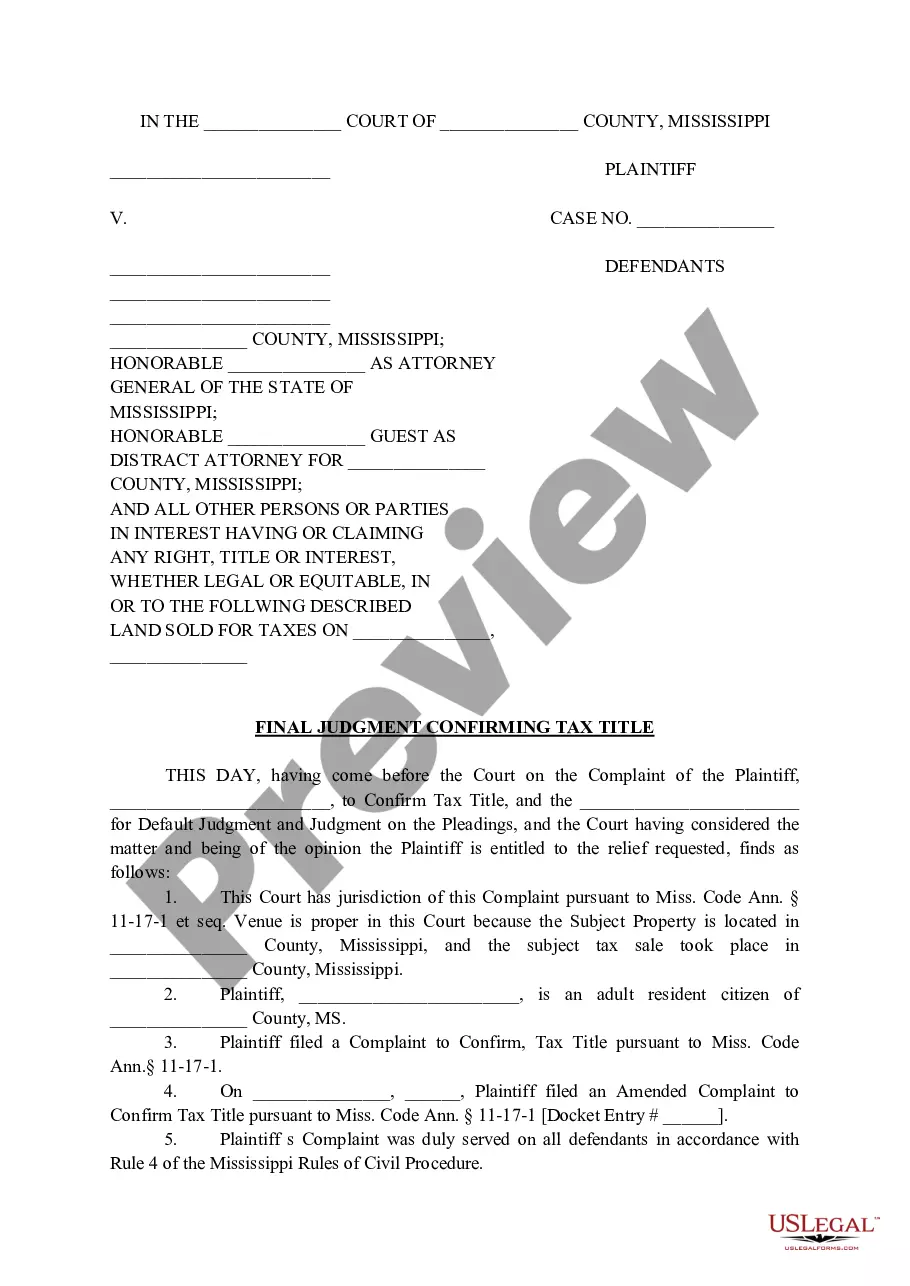
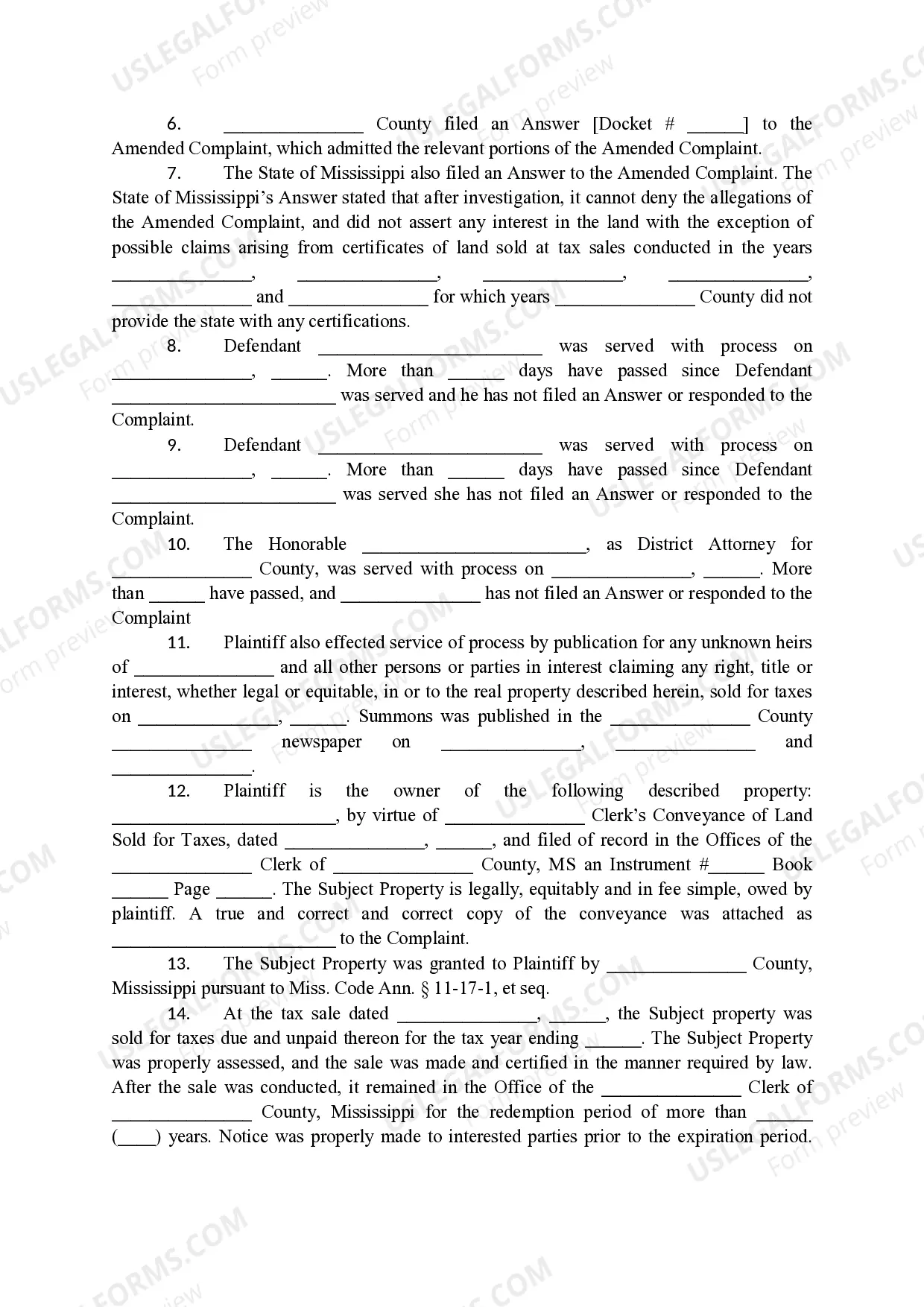
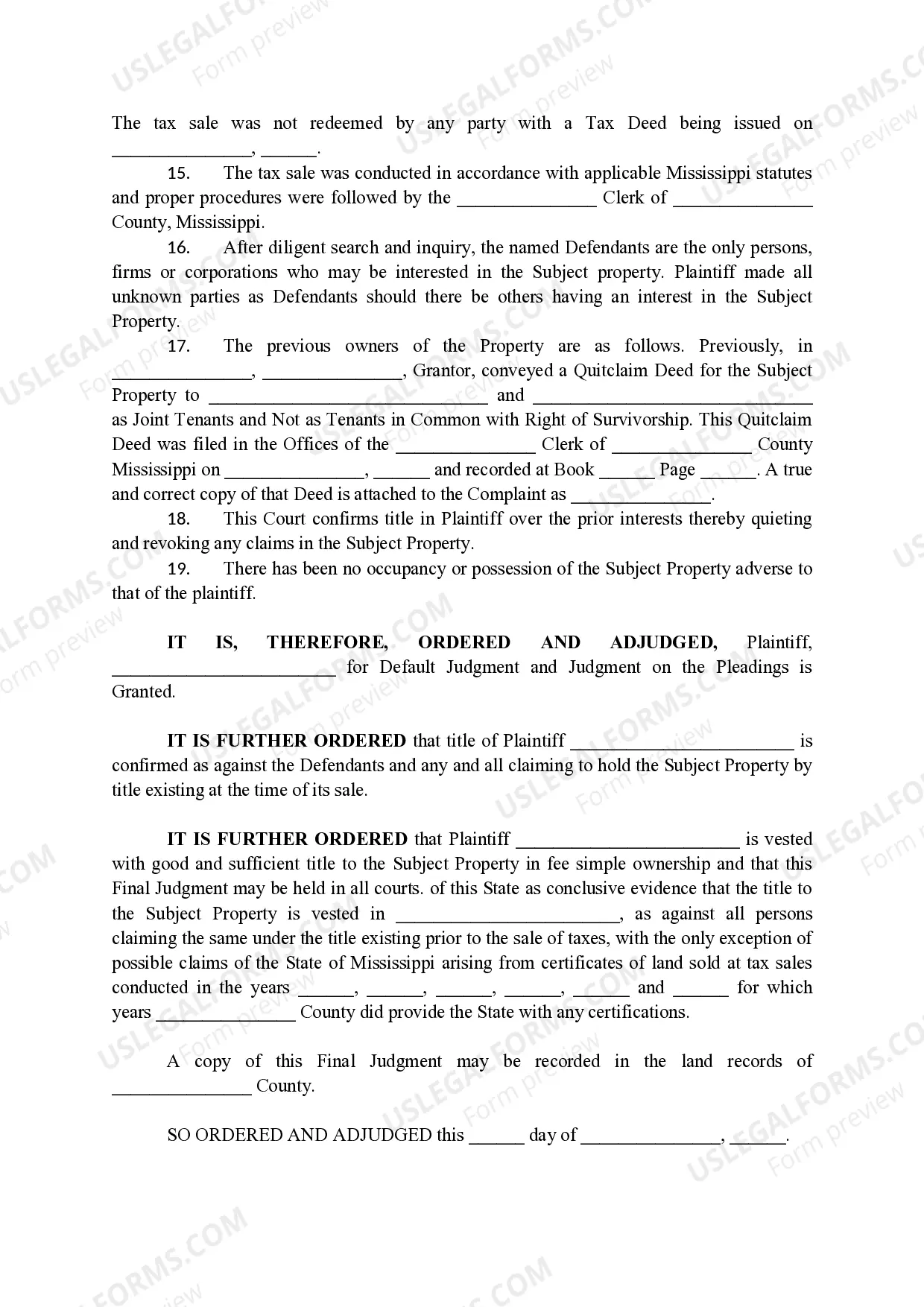
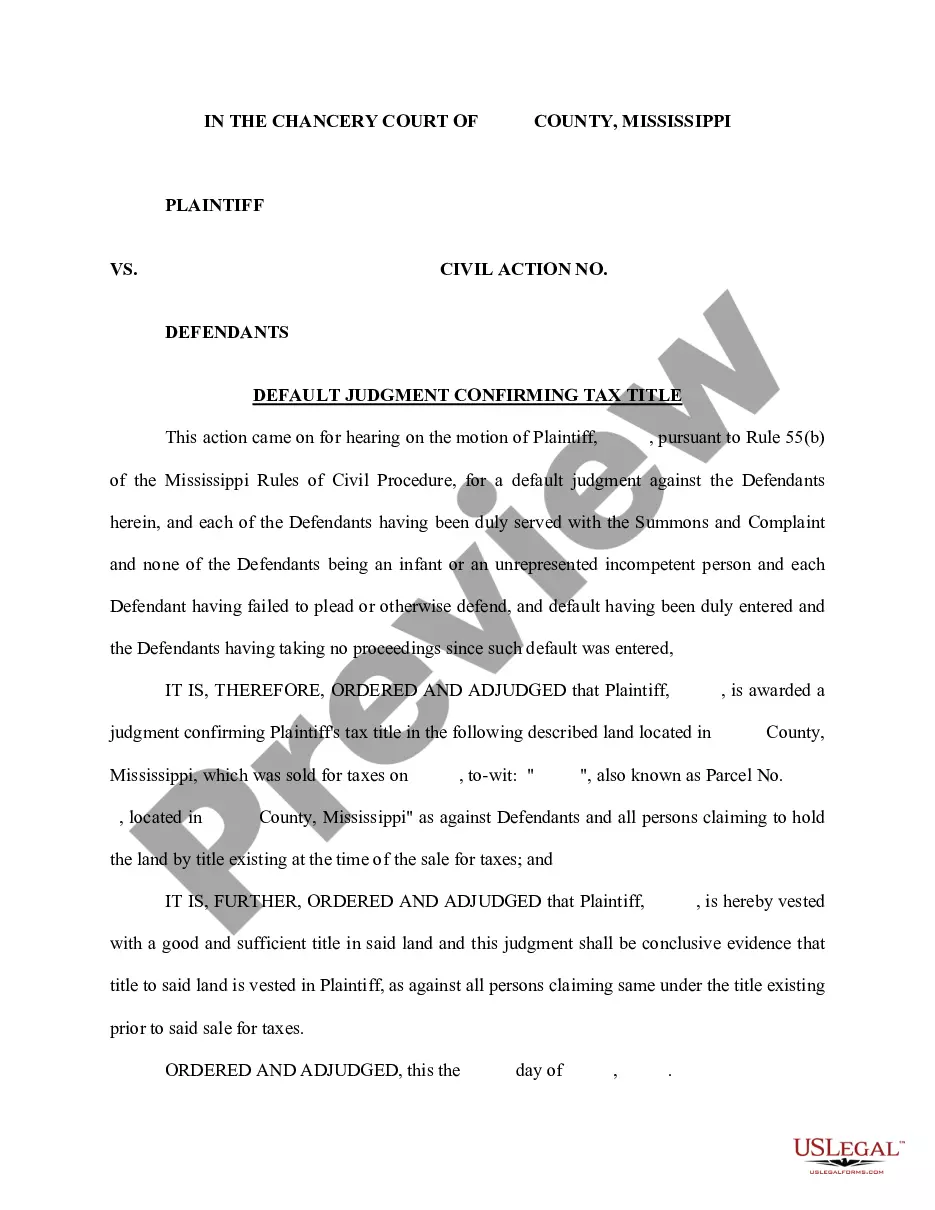
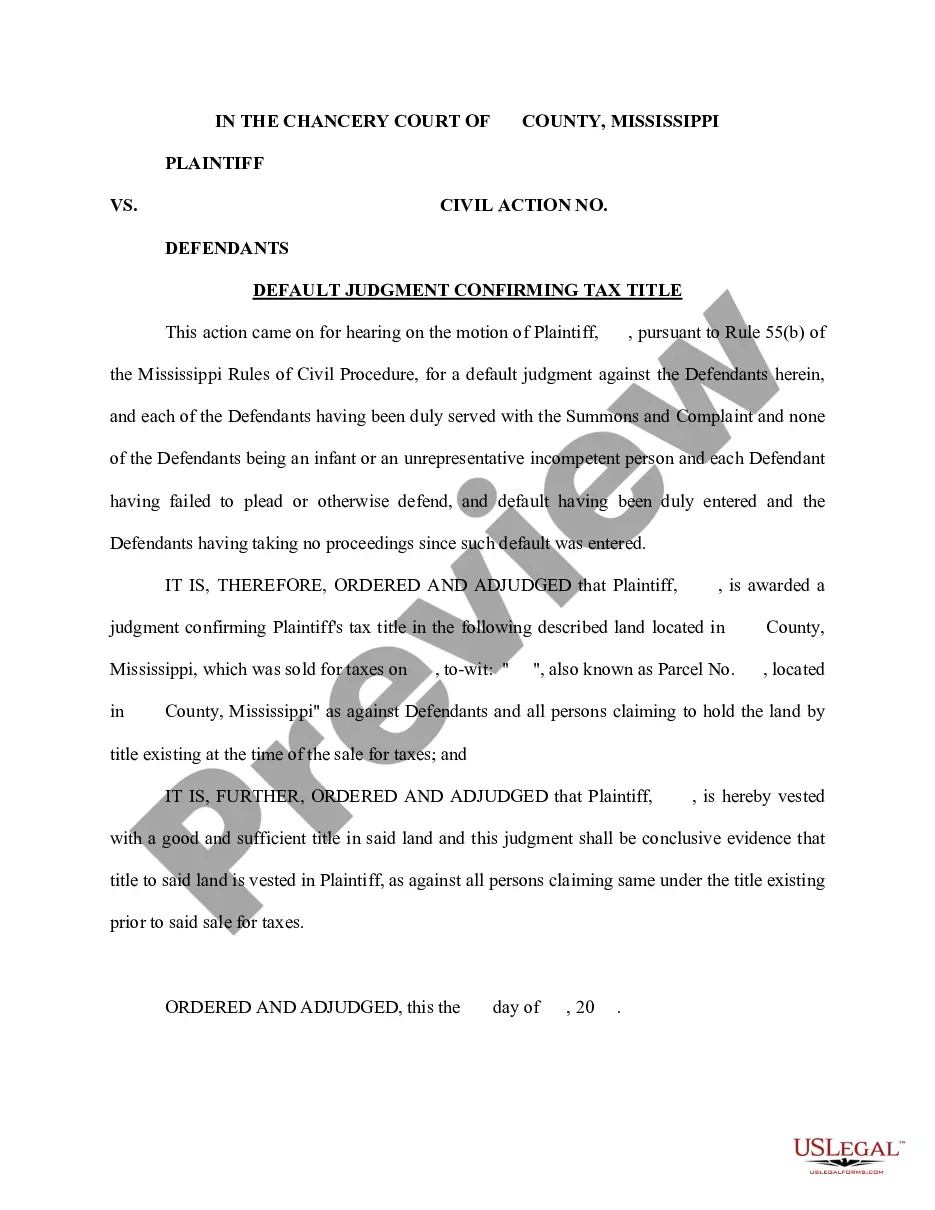
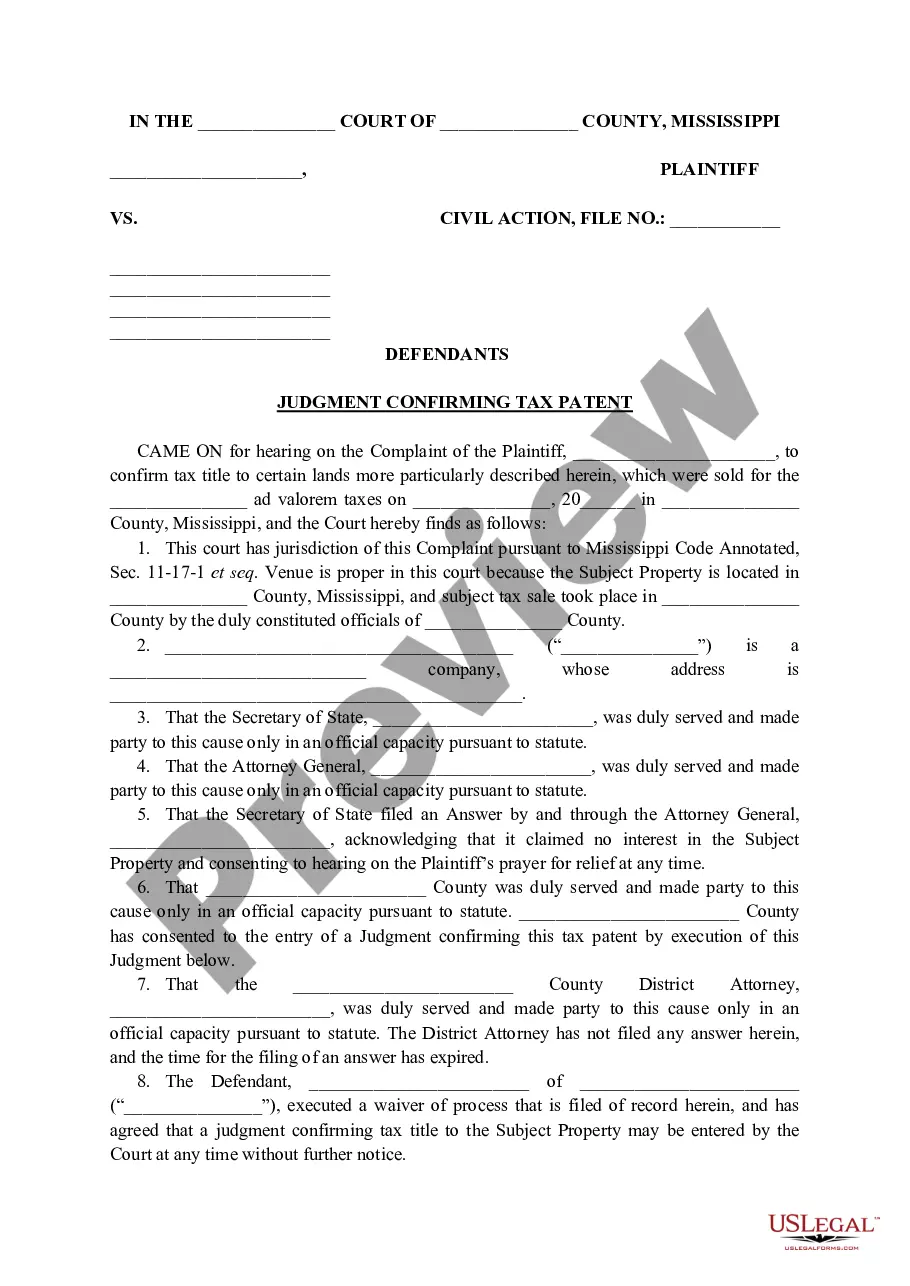
The Final Judgment Confirming Tax Title is a legal document that formalizes the ownership of a property following a tax sale, particularly when a default judgment has been granted to the plaintiff. This form is essential for confirming that the plaintiff has acquired the title to the property free of any previous claims, which is vital for establishing clear ownership and preventing disputes.
What’s included in this form
- Identification of the court and county in Mississippi where the case is filed.
- Details about the plaintiff and defendants involved in the case.
- Jurisdiction and venue justification for the court hearing.
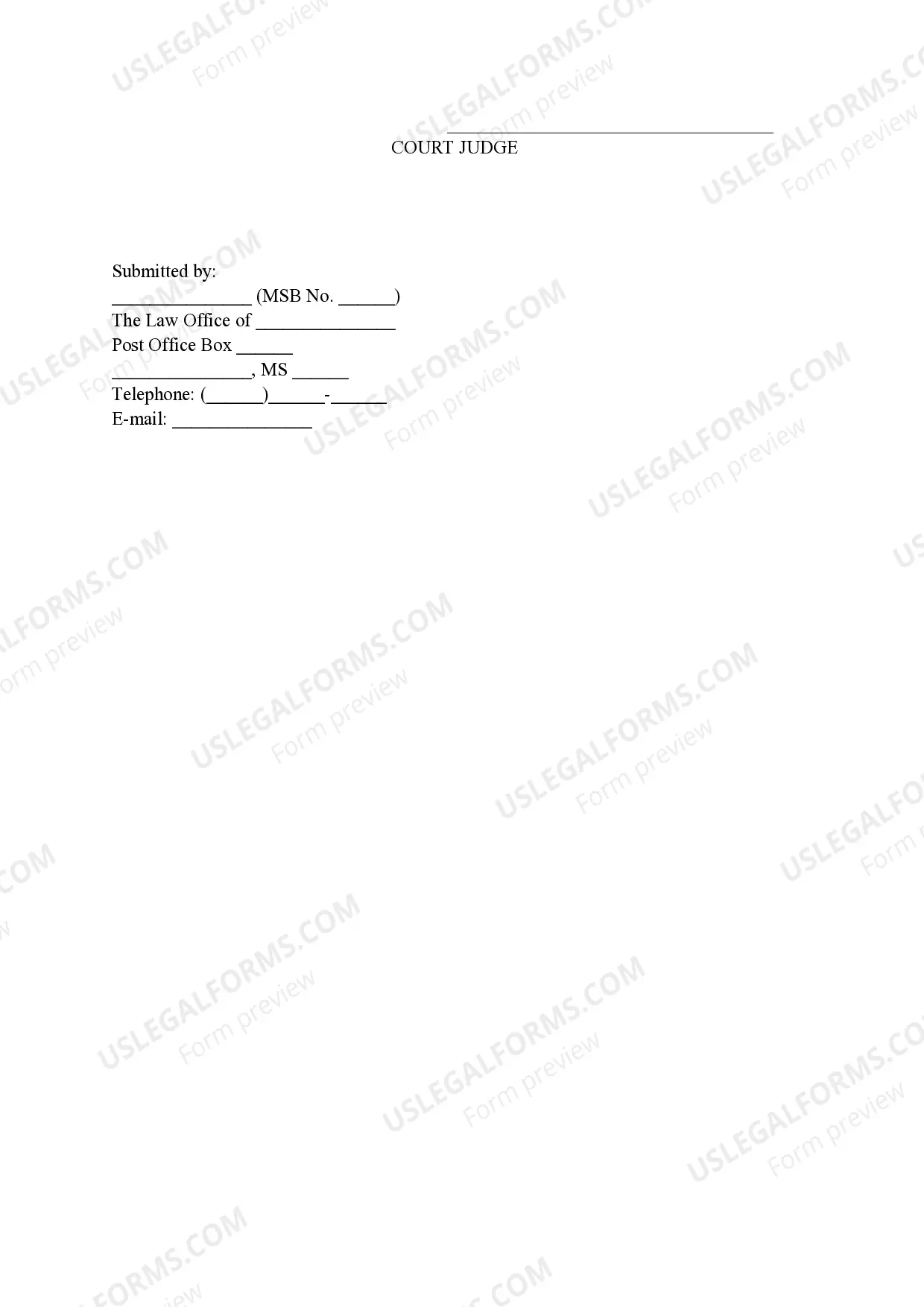
- Confirmation of service of the complaint to all necessary parties.
- A statement verifying tax sale procedures and the absence of redemption by previous owners.
- Final judgment awarding title to the plaintiff.
When to use this form
This form should be used when a property has been sold for unpaid taxes and a default judgment has been entered. It is required to confirm the plaintiff's title to the property, especially if previous owners or parties with potential claims have not responded to legal notices or have failed to redeem the property within the designated period.
Who needs this form
This form is intended for:
- Property owners who have purchased a property at a tax sale.
- Attorneys representing plaintiffs in tax title confirmation cases.
- Individuals or entities looking to confirm ownership and eliminate claims related to a property sold for taxes.
Steps to complete this form
- Identify the court and county where the complaint is being filed.
- Fill out the names and addresses of the plaintiff and defendants accurately.
- Provide details of the tax sale, including the date and conditions of the sale.
- Include the jurisdiction claim and any necessary docket entries.
- Ensure that all required signatures are obtained for the court's approval.
Notarization requirements for this form
Notarization is generally not required for this form. However, certain states or situations might demand it. You can complete notarization online through US Legal Forms, powered by Notarize, using a verified video call available anytime.
Get your form ready online
Our built-in tools help you complete, sign, share, and store your documents in one place.
Make edits, fill in missing information, and update formatting in US Legal Forms—just like you would in MS Word.
Download a copy, print it, send it by email, or mail it via USPS—whatever works best for your next step.
Sign and collect signatures with our SignNow integration. Send to multiple recipients, set reminders, and more. Go Premium to unlock E-Sign.
If this form requires notarization, complete it online through a secure video call—no need to meet a notary in person or wait for an appointment.
We protect your documents and personal data by following strict security and privacy standards.

Make edits, fill in missing information, and update formatting in US Legal Forms—just like you would in MS Word.

Download a copy, print it, send it by email, or mail it via USPS—whatever works best for your next step.

Sign and collect signatures with our SignNow integration. Send to multiple recipients, set reminders, and more. Go Premium to unlock E-Sign.

If this form requires notarization, complete it online through a secure video call—no need to meet a notary in person or wait for an appointment.

We protect your documents and personal data by following strict security and privacy standards.
Avoid these common issues
- Failing to include all necessary defendants in the complaint.
- Neglecting to confirm proper service of the complaint to all parties involved.
- Omitting crucial details about the tax sale or property description.
- Using incorrect jurisdiction references or codes not applicable to Mississippi.
Benefits of using this form online
- Convenience: Download the form anytime and anywhere.
- Editability: Customize the form easily to fit specific case details.
- Reliability: Ensure the use of up-to-date legal language and requirements.
Legal use & context
- This form serves as conclusive evidence of title ownership in Mississippi courts.
- It assists in resolving any potential disputes regarding property ownership following a tax sale.
- The final judgment may be recorded in county land records, ensuring clarity of title for future transactions.
Looking for another form?

Form popularity
FAQ
The answer is simple no. In Mississippi, paying the property taxes on someone else's land does not affect ownership in any manner. You simply cannot obtain title to someone's land by paying their taxes for them.
The Tax-Forfeited Inventory200b link provides access to the properties available for sale or you may contact the Public Lands Division in the Secretary of State's Office at 601-359-5156 or toll free (in-state) at 1-866-TFLANDS(835-2637). Approximately how long does the process take?
Purchasing a tax lien does not obligate you to pay any future property taxes that become delinquent or pay for other property liabilities.Unlike an investment in a tax lien, an investment in a tax deed requires that your adequately maintain the property until you are able to sell it.
According to Ted Thomas, an authority on tax lien certificates and tax deeds, 21 states and the District of Columbia are tax lien states: Alabama, Arizona, Colorado, Florida, Illinois, Indiana, Iowa, Kentucky, Maryland, Mississippi, Missouri, Montana, Nebraska, New Jersey, North Dakota, Ohio, Oklahoma, South Carolina,
In Mississippi, a tax sale will eventually take place if you don't pay the property taxes on your home. At the sale, the winning bidder buys the tax debt and gets a lien on the property. The purchaser receives a receipt along with the right to eventually get ownership of your property if you don't pay off the debt.
A tax lien recorded on the State Tax Lien Registry covers all property in Mississippi. To avoid having a tax lien filed against your property, send the Department of Revenue full payment before the due date as set forth in your Assessment Notice.
A tax lien recorded on the State Tax Lien Registry covers all property in Mississippi. To avoid having a tax lien filed against your property, send the Department of Revenue full payment before the due date as set forth in your Assessment Notice.
Use of land belonging to another. There must be a claim of ownership. The use must be adverse to the interests of the true owner. Open, notorious and visible. Continuous and uninterrupted. Exclusive use. Peaceful use. The fence or driveway exception.