Mississippi Order Substituting Counsel for Defendant
About this form
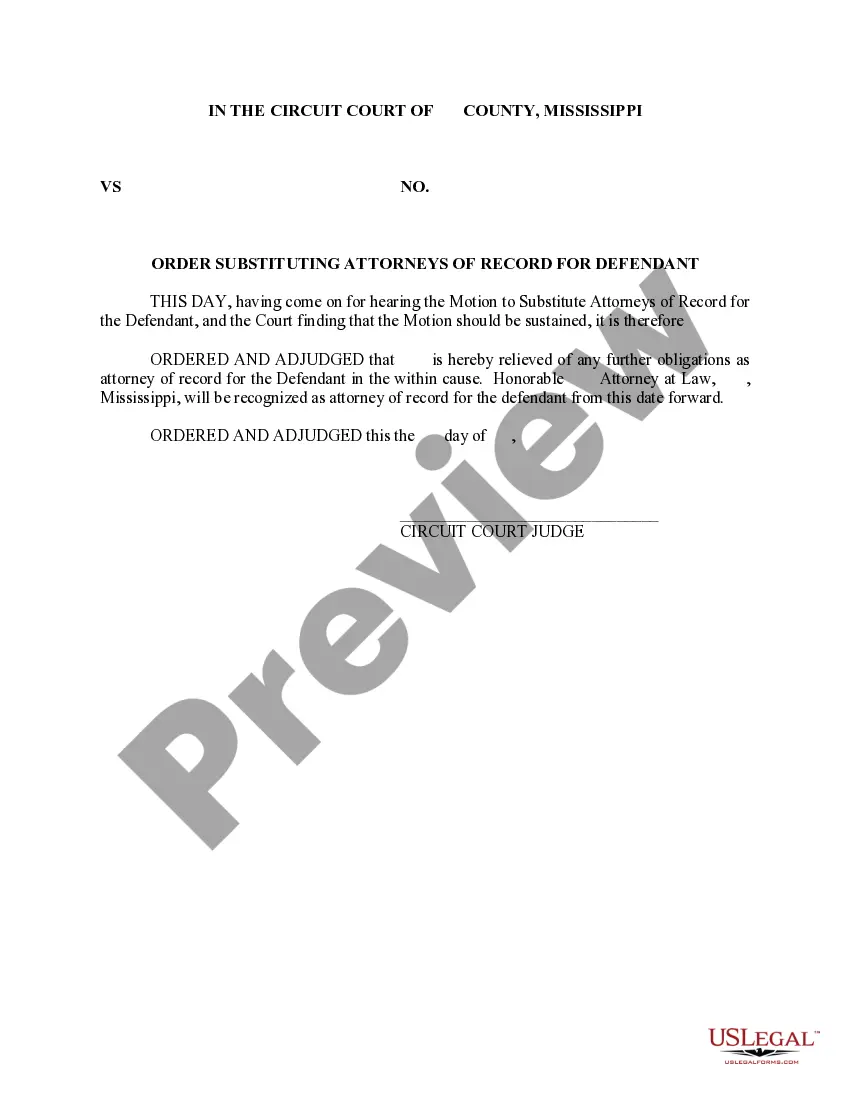
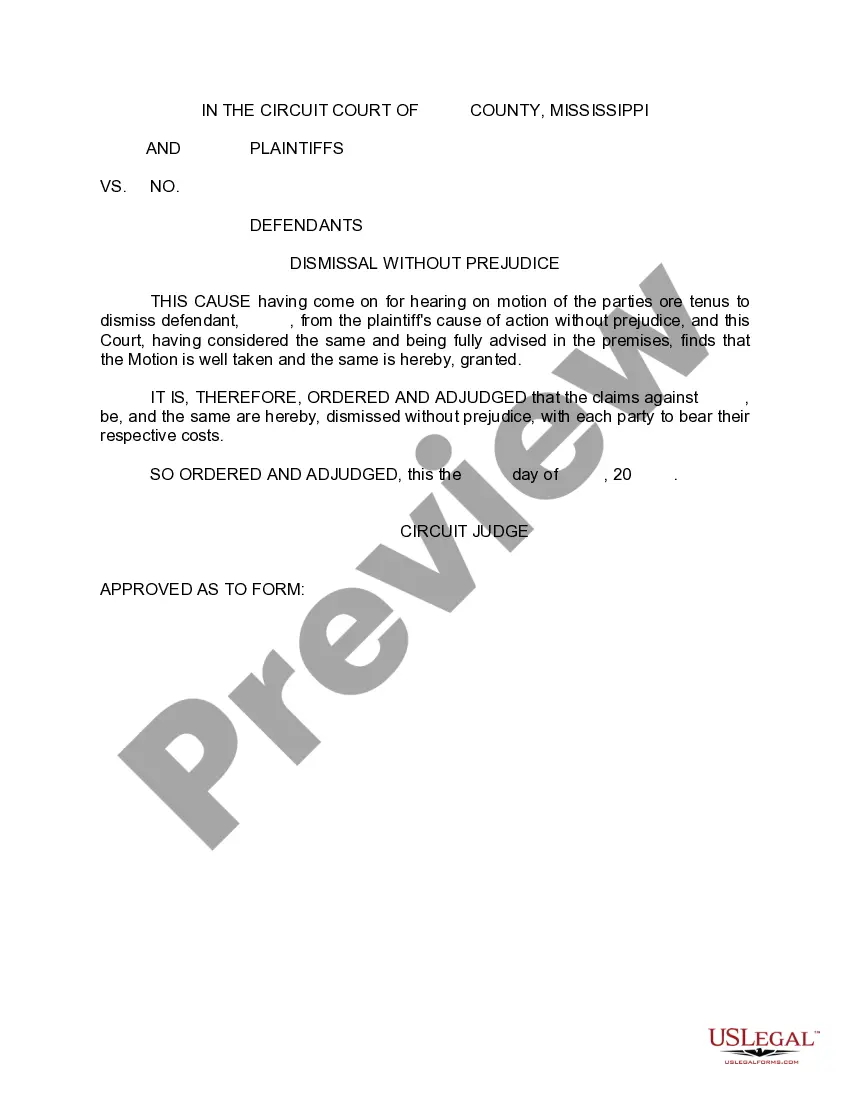
The Order Substituting Counsel for Defendant is a legal document issued by a court to officially replace one attorney with another for a defendant in a case. This order is signed by a judge and must be respected by the parties involved. It serves as a formal request for the court's approval of the change in representation, distinguishing it from informal notifications or requests between attorneys. This form is essential for ensuring that representation is clear and legally recognized in court proceedings.
Key parts of this document
- Caption: Identifies the court, case number, and parties involved.
- Order statement: Clearly states the substitution of counsel.
- Signatures: Requires the signatures of the current and new counsel, along with the judge.
- Date: Indicates when the order is issued.
- Notice provisions: Ensures that all involved parties are notified of the change.
When this form is needed
This form should be used when a defendant wishes to change their legal representation. Situations may include when an attorney leaves a law firm, when a defendant feels their interests are not being adequately represented, or when a strategic change in legal counsel is needed for the progression of a case. Completing this form ensures the court recognizes the change, preventing potential issues arising from representation disputes.
Who this form is for
Eligible users of this form include:
- Defendants in ongoing legal proceedings
- Current attorneys seeking to withdraw their representation
- New attorneys taking over the representation
- Court clerks processing changes in counsel
How to complete this form
- Identify the parties involved in the case, including the defendant and both attorneys.
- Fill in the court's name and the case number at the top of the form.
- Clearly state the order substituting counsel, indicating who is replacing whom.
- Secure signatures from both the current and new attorneys, along with the judge.
- Enter the date when the order is submitted to the court.
Does this form need to be notarized?
Notarization is not commonly needed for this form. However, certain documents or local rules may make it necessary. Our notarization service, powered by Notarize, allows you to finalize it securely online anytime, day or night.
Get your form ready online
Our built-in tools help you complete, sign, share, and store your documents in one place.
Make edits, fill in missing information, and update formatting in US Legal Forms—just like you would in MS Word.
Download a copy, print it, send it by email, or mail it via USPS—whatever works best for your next step.
Sign and collect signatures with our SignNow integration. Send to multiple recipients, set reminders, and more. Go Premium to unlock E-Sign.
If this form requires notarization, complete it online through a secure video call—no need to meet a notary in person or wait for an appointment.
We protect your documents and personal data by following strict security and privacy standards.

Make edits, fill in missing information, and update formatting in US Legal Forms—just like you would in MS Word.

Download a copy, print it, send it by email, or mail it via USPS—whatever works best for your next step.

Sign and collect signatures with our SignNow integration. Send to multiple recipients, set reminders, and more. Go Premium to unlock E-Sign.

If this form requires notarization, complete it online through a secure video call—no need to meet a notary in person or wait for an appointment.

We protect your documents and personal data by following strict security and privacy standards.
Common mistakes
- Failing to notify opposing counsel about the substitution of counsel.
- Not including all necessary signatures before submission.
- Omitting the case number or court details in the caption.
- Not following state-specific rules for formatting or submission timelines.
Why complete this form online
- Convenience of downloading at any time.
- Ability to fill out and edit the form easily before finalizing.
- Access to templates drafted by licensed attorneys to ensure legal compliance.
- Faster processing times when submitted electronically, where applicable.
Legal use & context
- This order serves as a formal acknowledgment of the change in legal representation.
- Failure to follow this procedure may result in complications in court proceedings.
- Valid representation is crucial for protecting the defendant's rights and interests.
What to keep in mind
- The Order Substituting Counsel for Defendant is essential for legally recognizing a change in representation.
- Proper completion and submission of this form prevent potential legal issues.
- Always consult jurisdiction-specific requirements to ensure compliance.
Looking for another form?




Form popularity
FAQ
The Mississippi Order Substituting Counsel for Defendant is a court-issued document that officially replaces the defendant’s attorney in a case. It must be signed by the judge and serves as the court’s formal approval of a change in representation. The form includes a caption, an order statement, the required signatures, a date, and notice provisions to inform all parties.
Eligible users include defendants in ongoing proceedings, current attorneys seeking to withdraw, new attorneys taking over representation, and court clerks processing changes in counsel. The form is used to obtain the court’s formal approval to substitute the defendant’s attorney of record, making the change legally recognized in the case.
Use this form when a defendant wants to change counsel. Situations include an attorney leaving a firm, a defendant seeking different representation, or a strategic reason to switch lawyers as a case progresses. It ensures the court recognizes the change and prevents potential disputes over representation.
Key parts include the caption identifying the court, case number, and parties; an order statement substituting counsel; signatures from the current counsel, the new counsel, and the judge; the date of issue; and notice provisions to inform all involved parties of the change.
The order must include a clear caption, an order statement substituting counsel, signatures of the current and new counsel and the judge, the issue date, and notice provisions ensuring all involved parties are notified of the substitution. These elements together create a formal, legally recognized change in representation.
This form is tailored for substituting counsel for a defendant in Mississippi civil proceedings. It uses a defendant-focused caption, requires the judge’s signature, and includes notice provisions to inform all parties of the change. A similar form for a plaintiff would follow the same structure but applies to the plaintiff’s counsel.