Mississippi Order Dismissing One Defendant
Overview of this form
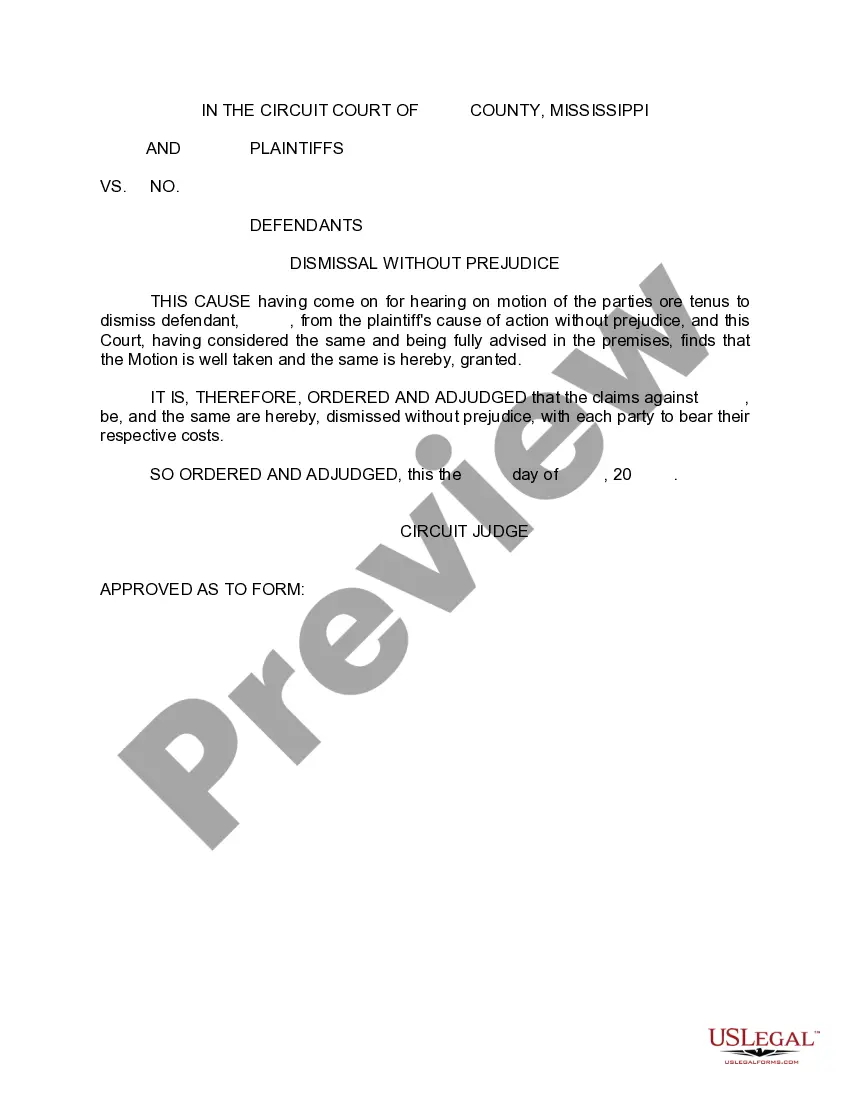
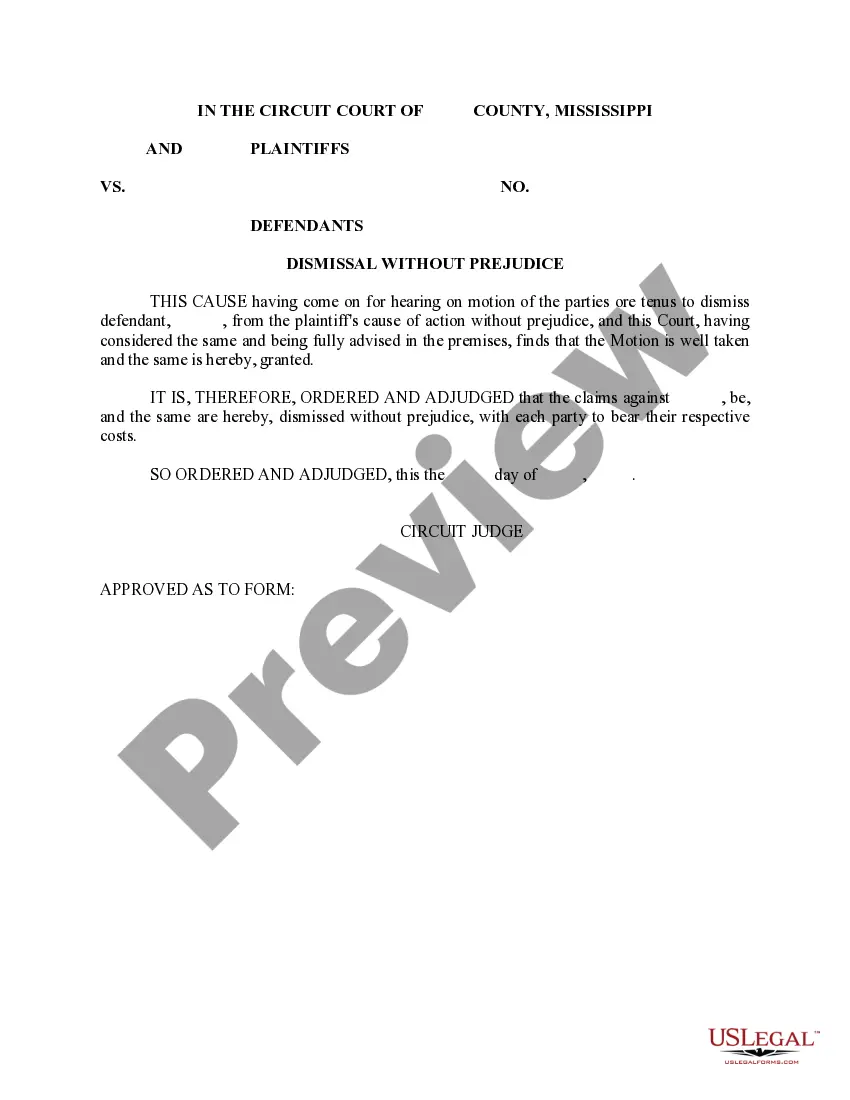
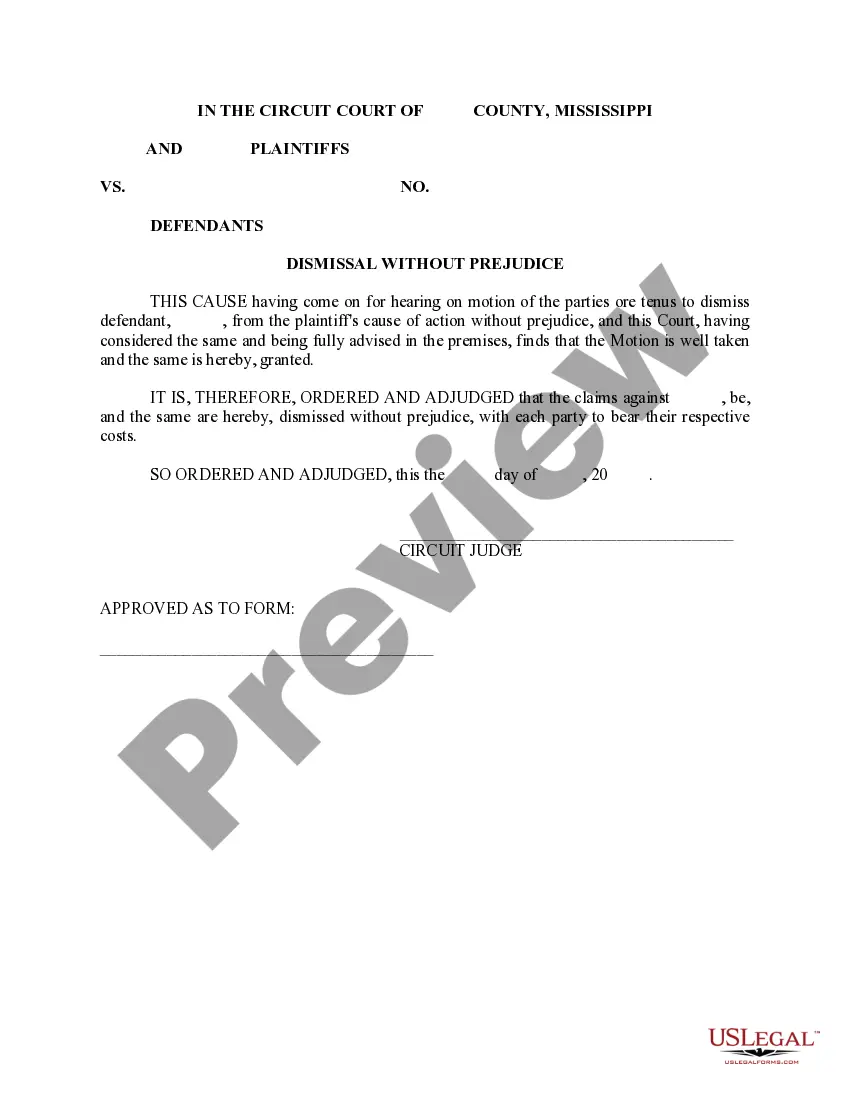
The Order Dismissing One Defendant is an official legal document issued by the court that instructs the dismissal of a specific defendant from a case. This type of order is distinct from other orders as it specifically addresses the removal of a party from ongoing litigation, often initiated by a request from one of the involved parties. Utilizing this form can help clarify the court's decision and contribute to the efficient resolution of your case.
What’s included in this form
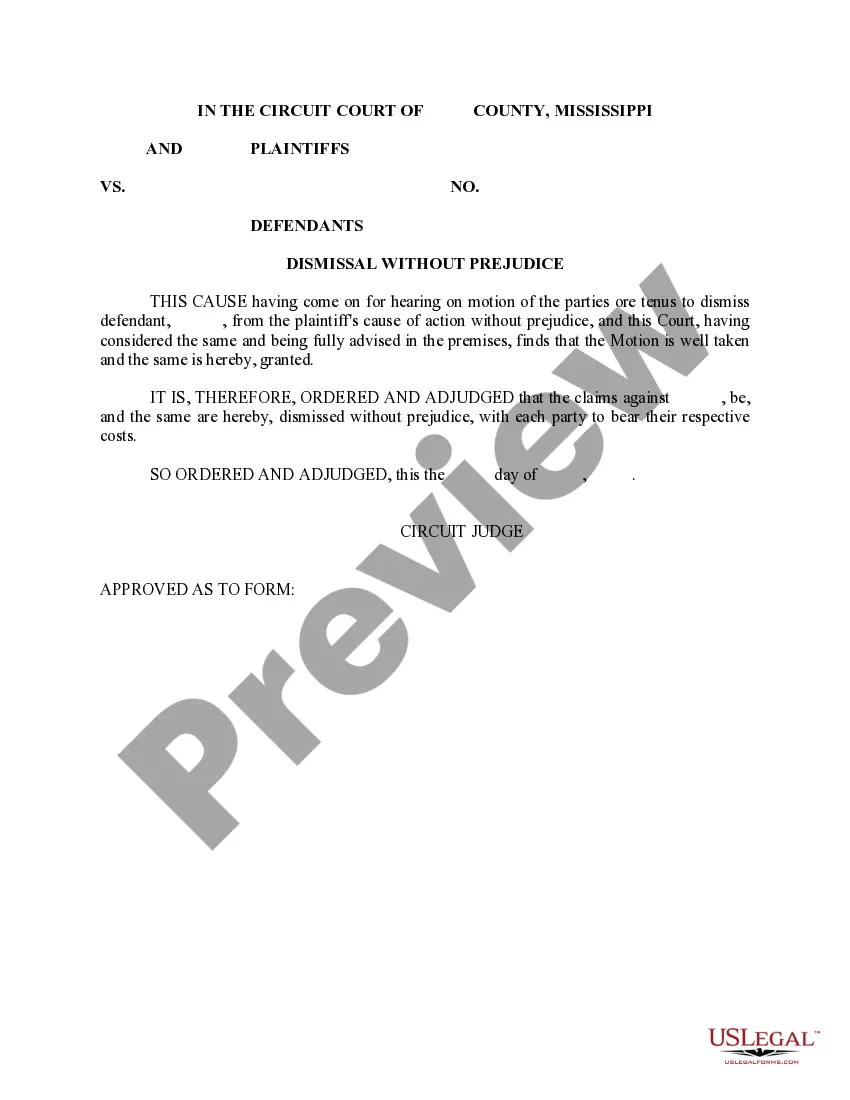
- Heading: Identifies the order as an official court document.
- Case information: Provides details about the case, including court name, case number, and parties involved.
- Statement of dismissal: Clearly states which defendant is being dismissed from the case.
- Judge's signature: Validates the order with the judge's official signature.
- Date of issuance: Indicates when the order was signed by the judge.
When to use this form
This form is typically used when a party involved in a legal case wishes to dismiss one of the defendants officially. Situations may include instances where the defendant is deemed no longer necessary for the proceedings, has settled the matter outside of court, or if there are jurisdictional issues. Submitting this order facilitates clarity in the case and ensures that all parties are aware of the current status of litigation.
Who should use this form
- Parties involved in a civil litigation process, who wish to have one defendant dismissed.
- Attorneys representing clients in need of formal dismissal of a party.
- Individuals pursuing self-representation and requiring a formal means to notify the court of a defendant's dismissal.
How to prepare this document
- Identify the case: Include necessary details like court name and case number.
- Specify the party: Indicate the full name of the defendant being dismissed.
- Draft the statement of dismissal: Clearly articulate the reasons for the dismissal, if required.
- Have the judge review: Submit the form for the judge's approval and signature.
- File the order: Ensure the order is filed with the court clerk for official record-keeping.
Does this document require notarization?
Notarization is not commonly needed for this form. However, certain documents or local rules may make it necessary. Our notarization service, powered by Notarize, allows you to finalize it securely online anytime, day or night.
Get your form ready online
Our built-in tools help you complete, sign, share, and store your documents in one place.
Make edits, fill in missing information, and update formatting in US Legal Forms—just like you would in MS Word.
Download a copy, print it, send it by email, or mail it via USPS—whatever works best for your next step.
Sign and collect signatures with our SignNow integration. Send to multiple recipients, set reminders, and more. Go Premium to unlock E-Sign.
If this form requires notarization, complete it online through a secure video call—no need to meet a notary in person or wait for an appointment.
We protect your documents and personal data by following strict security and privacy standards.

Make edits, fill in missing information, and update formatting in US Legal Forms—just like you would in MS Word.

Download a copy, print it, send it by email, or mail it via USPS—whatever works best for your next step.

Sign and collect signatures with our SignNow integration. Send to multiple recipients, set reminders, and more. Go Premium to unlock E-Sign.

If this form requires notarization, complete it online through a secure video call—no need to meet a notary in person or wait for an appointment.

We protect your documents and personal data by following strict security and privacy standards.
Avoid these common issues
- Failing to include all relevant case information.
- Not specifying which defendant is being dismissed.
- Omitting the judge's signature, which is necessary for validity.
- Not filing the order with the court after obtaining the signature.
Benefits of using this form online
- Convenience of downloading and accessing the form anytime.
- Editability allows customization to fit your specific case details.
- Reliability of having attorney-drafted content, ensuring legal compliance.
Looking for another form?
Form popularity
FAQ
The court may dismiss a case in response to a defendant's motion to dismiss or do so sua sponte. According to FRCP 41(a), a plaintiff may also voluntarily dismiss an action by choosing to drop the case or by reaching an out of court settlement with the defendant.
It means the case was dismissed, either because plaintiff dismissed it or plaintiff didn't show up for the trial.
WHAT IS A DISMISSED CASE? A dismissed criminal case is one in which you were not convicted. When a criminal charge is dismissed, you are not guilty and the case is concluded.
Thus, just as a summary judgment is not a dismissal meaning a summary judgment should not be sought through a motion to dismiss a dismissal is not a summary judgment, and should not be sought thereby.
When a small claims case is dismissed, the court terminates the case without a trial and prior to the case's completion. A dismissal, in effect, denies the plaintiff's claim to the money requested in the Small Claims Complaint (or a counterclaim), even though the merits of the case have never been heard by the court.