Mississippi Order of Dismissal - Settled
What is this form?
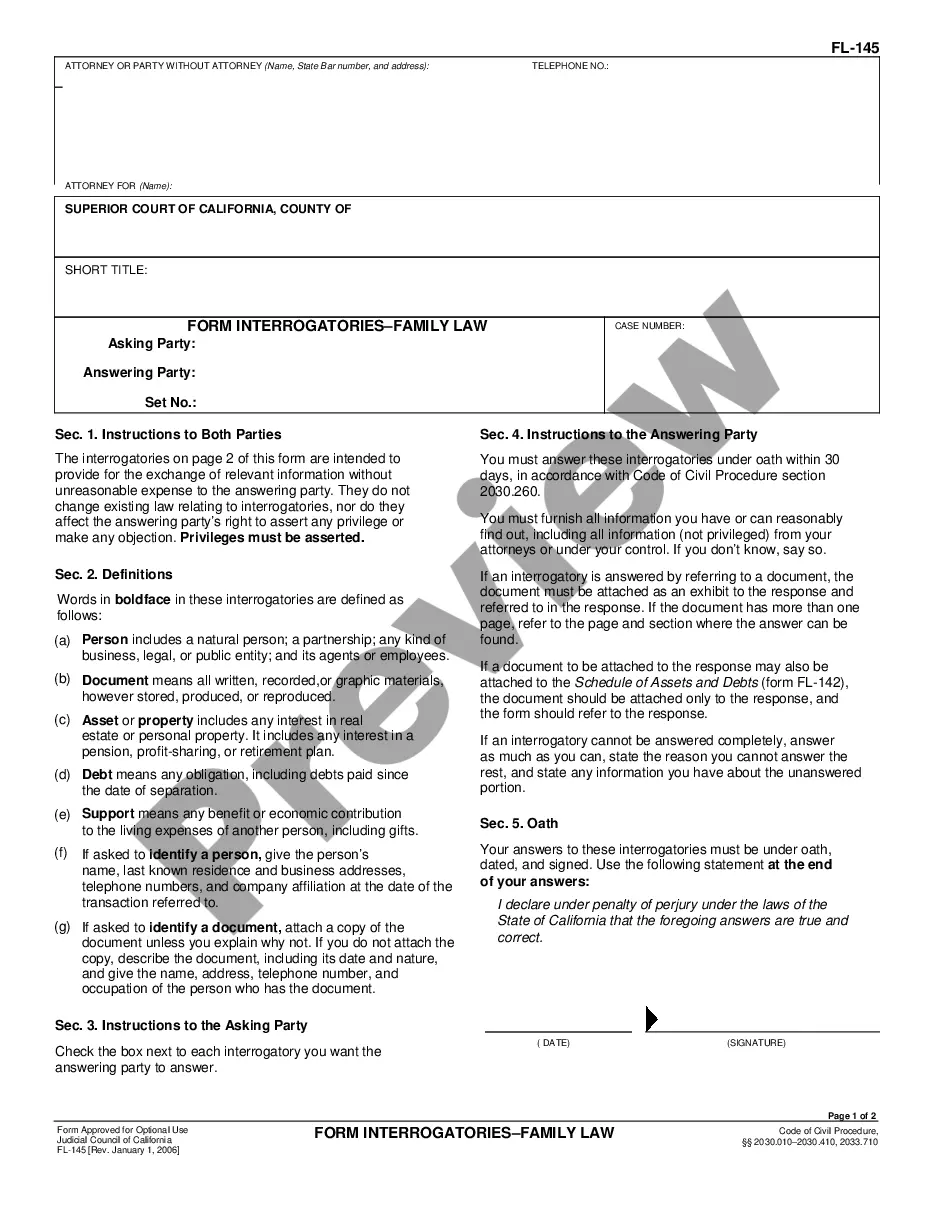
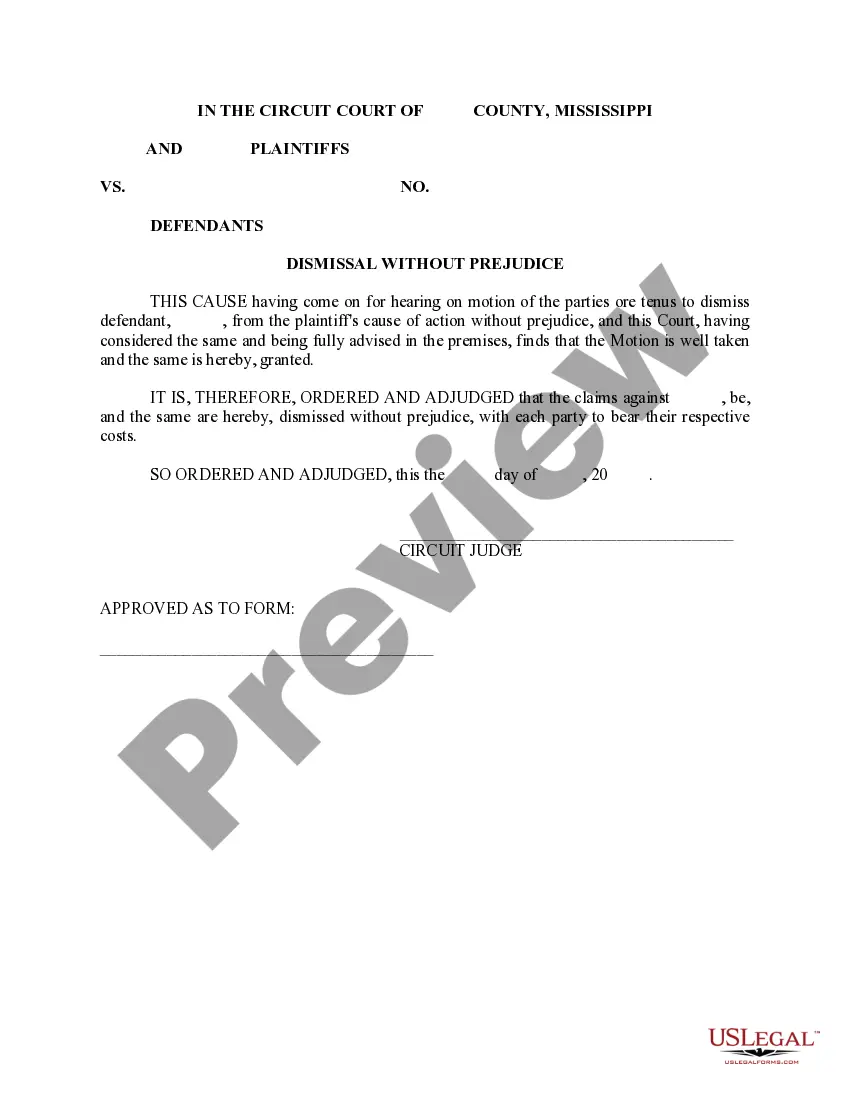
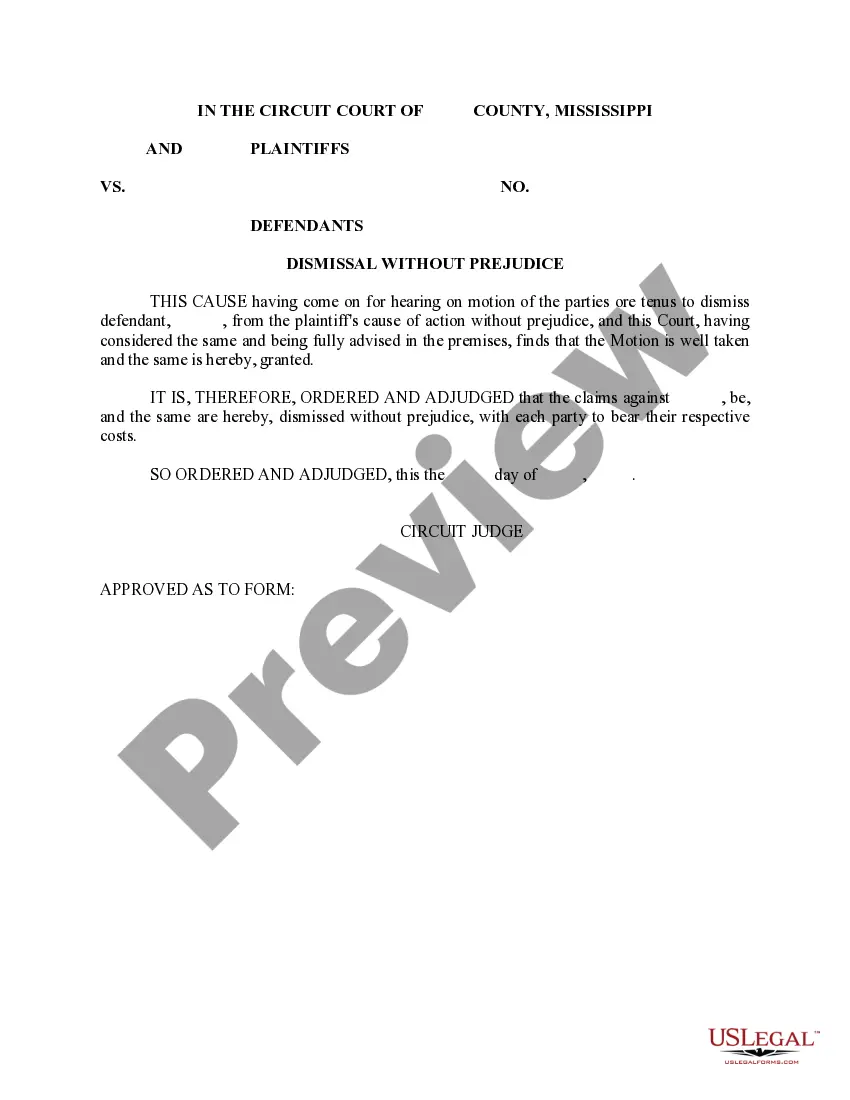
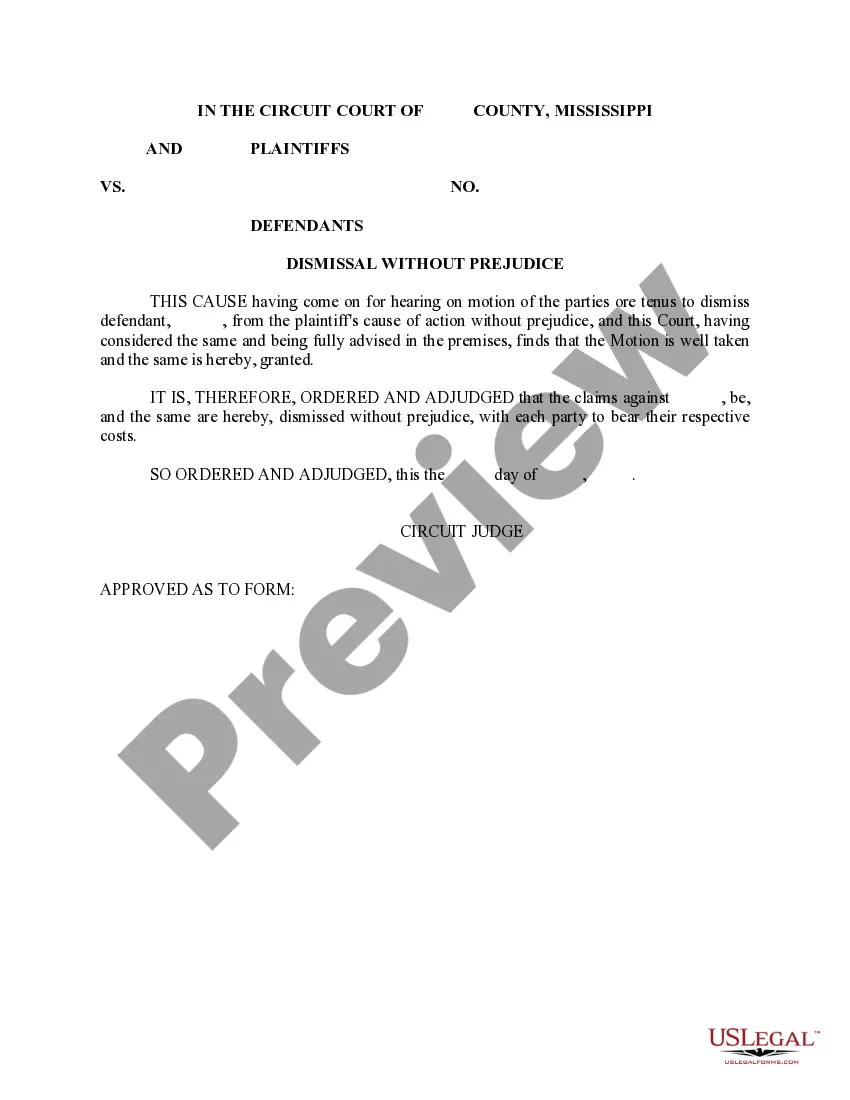
The Order of Dismissal - Settled is an official written directive issued by a court that finalizes the resolution of a case, confirming that the parties have settled their disputes. This form serves to document the court's acknowledgment that the matter has been resolved without further legal proceedings. This differs from other orders, such as those that simply postpone or continue a case, as it formally concludes the litigation process.
What’s included in this form
- Caption: The title of the case including parties involved.
- Order declaration: A statement confirming the dismissal of the case due to a settlement.
- Signature line: Space for the judge's signature, which is required for the order to be valid.
- Date: The date on which the order is signed and entered into the court record.
- Notice of entry: A section detailing how the order will be communicated to involved parties.
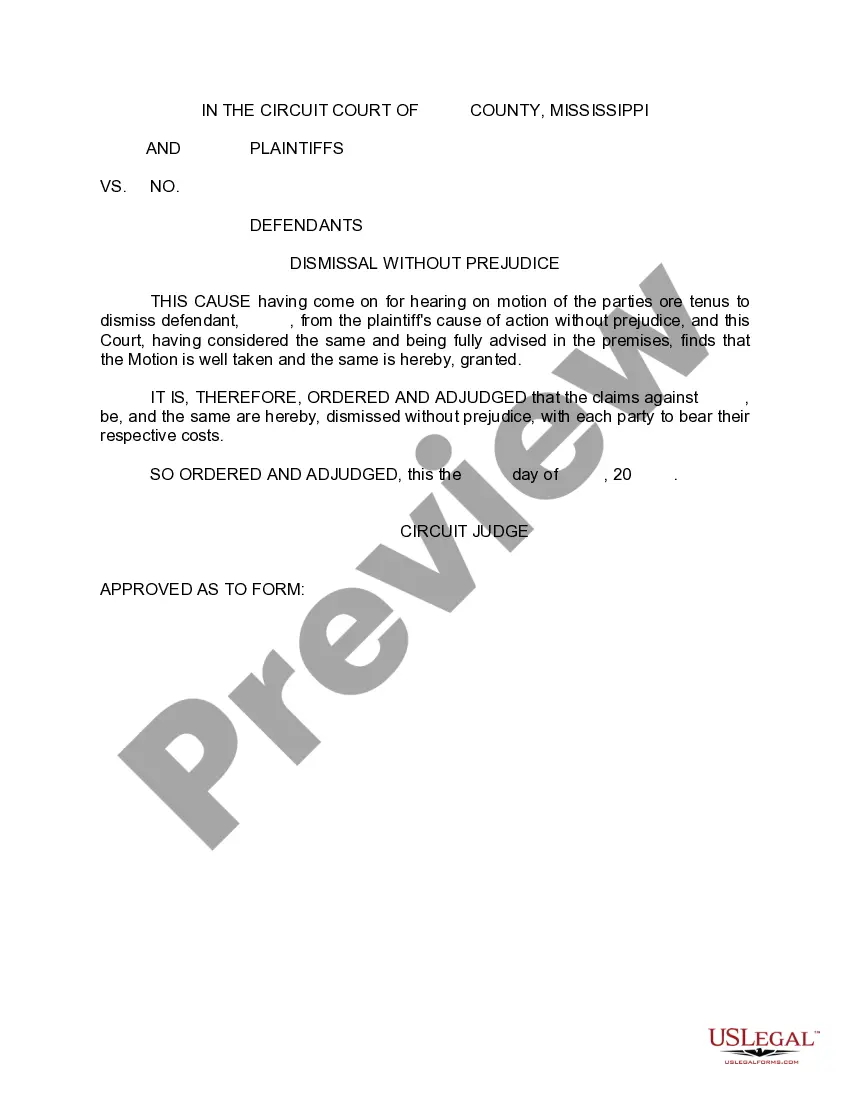
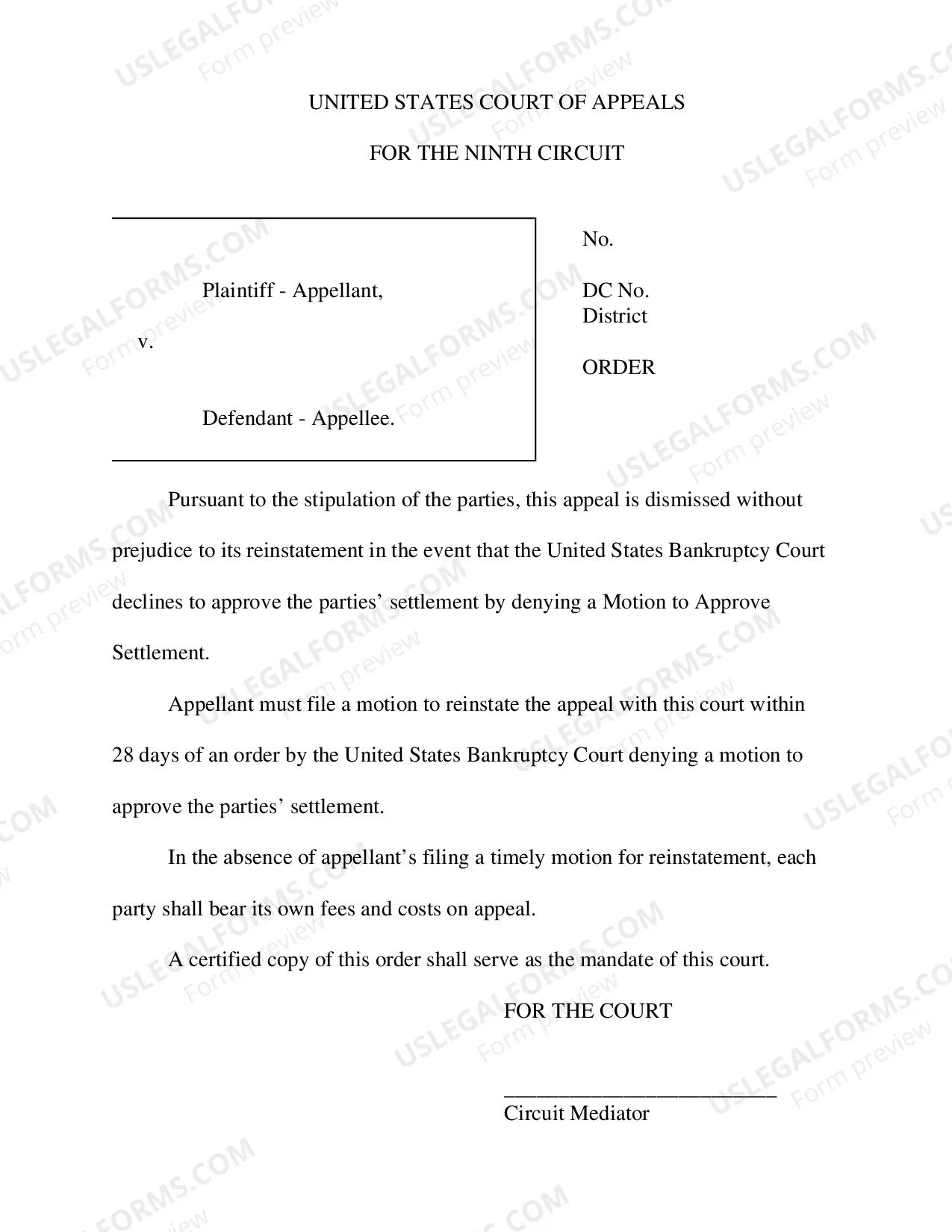
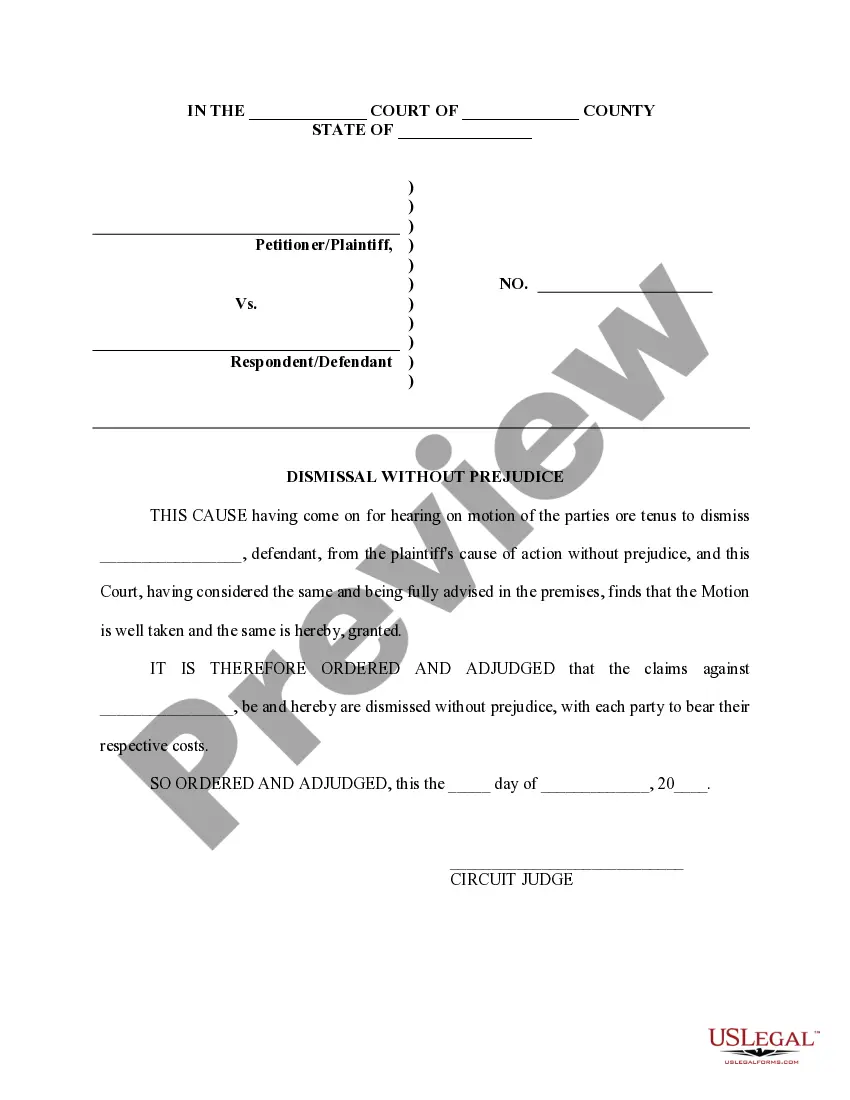
Common use cases
This form is used once the parties involved in a legal dispute have reached a settlement agreement. It is appropriate to file this order with the court to formally dismiss the case after all terms of the settlement have been fulfilled. Situations might include disputes in civil court, family court, or other legal matters where a resolution has been reached and documented.
Who needs this form
- Individuals or parties involved in a legal dispute who have reached a settlement.
- Attorneys representing clients in a case that is being dismissed due to a settlement.
- Any party directed by the court to submit an order of dismissal after resolution.
How to complete this form
- Identify the parties involved and ensure their names match the case caption.
- Clearly state the order of dismissal and include reference to the settlement.
- Fill in the date the judge is expected to sign the order.
- Have the judge sign in the designated area to validate the order.
- File the completed order with the court and provide notice to all parties involved.
Does this form need to be notarized?
This form does not typically require notarization unless specified by local law. Always check with your jurisdiction for any specific notarization requirements.
Get your form ready online
Our built-in tools help you complete, sign, share, and store your documents in one place.
Make edits, fill in missing information, and update formatting in US Legal Forms—just like you would in MS Word.
Download a copy, print it, send it by email, or mail it via USPS—whatever works best for your next step.
Sign and collect signatures with our SignNow integration. Send to multiple recipients, set reminders, and more. Go Premium to unlock E-Sign.
If this form requires notarization, complete it online through a secure video call—no need to meet a notary in person or wait for an appointment.
We protect your documents and personal data by following strict security and privacy standards.

Make edits, fill in missing information, and update formatting in US Legal Forms—just like you would in MS Word.

Download a copy, print it, send it by email, or mail it via USPS—whatever works best for your next step.

Sign and collect signatures with our SignNow integration. Send to multiple recipients, set reminders, and more. Go Premium to unlock E-Sign.

If this form requires notarization, complete it online through a secure video call—no need to meet a notary in person or wait for an appointment.

We protect your documents and personal data by following strict security and privacy standards.
Common mistakes
- Failing to include the correct names of parties or case number.
- Omitting the judge's signature line.
- Not filing the order with the court in a timely manner.
- Neglecting to provide notice of the order to all involved parties.
Benefits of using this form online
- Convenience: Download the form anytime, from anywhere.
- Editability: Tailor the form to meet your specific needs.
- Reliability: Access templates vetted by licensed attorneys.
Looking for another form?
Form popularity
FAQ
It means the case was dismissed, either because plaintiff dismissed it or plaintiff didn't show up for the trial.
Dismissal with prejudice is a final judgment and the case becomes res judicata on the claims that were or could have been brought in it; dismissal without prejudice is not.
The ruling by a judge that all or a portion (one or more of the causes of action) of the plaintiff's lawsuit is terminated (thrown out) at that point without further evidence or testimony.A defendant may be "dismissed" from a lawsuit, meaning the suit is dropped against that party.
When a small claims case is dismissed, the court terminates the case without a trial and prior to the case's completion. A dismissal, in effect, denies the plaintiff's claim to the money requested in the Small Claims Complaint (or a counterclaim), even though the merits of the case have never been heard by the court.
Thus, just as a summary judgment is not a dismissal meaning a summary judgment should not be sought through a motion to dismiss a dismissal is not a summary judgment, and should not be sought thereby.