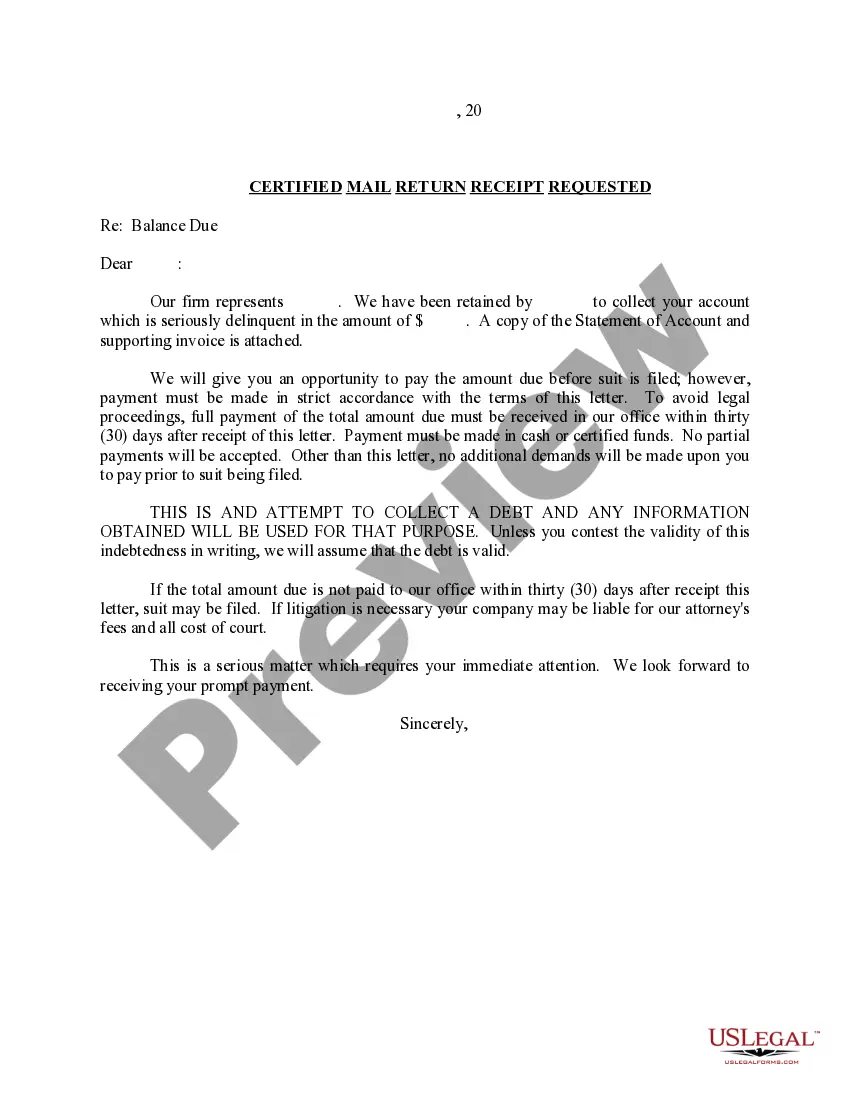
Mississippi Demand Letter on Open Account
Understanding this form
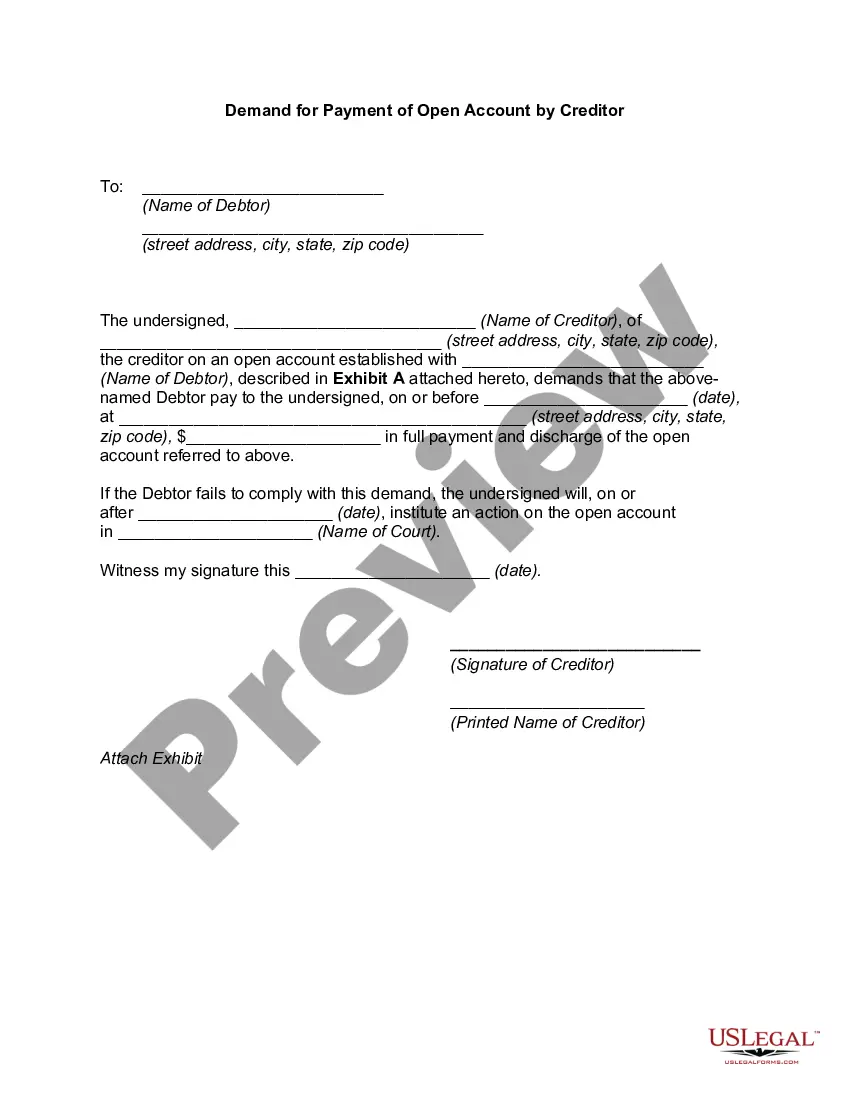
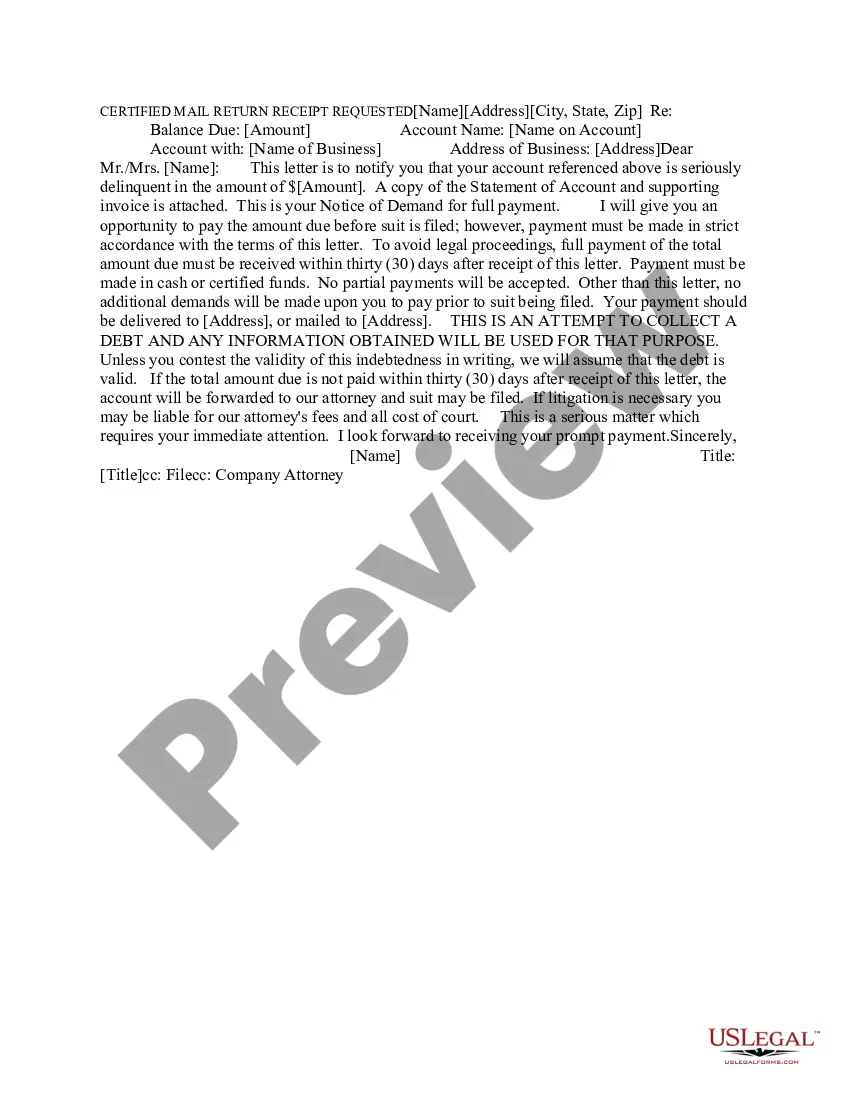
The Demand Letter on Open Account is a legal document used primarily by businesses in Mississippi to request payment from customers who have failed to settle their debts. This form serves as a formal communication that outlines the amount owed and the necessity for immediate payment, serving as a key step before pursuing further legal action. Unlike other collection letters, this demand is specific to open accounts and establishes a clear intent to collect the outstanding balance.
Form components explained
- Statement regarding the debt collection attempt.
- Assumption of debt validity unless contested in writing.
- Payment due date of thirty (30) days.
- Notification of potential litigation and costs if not addressed.
- Signature line for the sender.
Common use cases
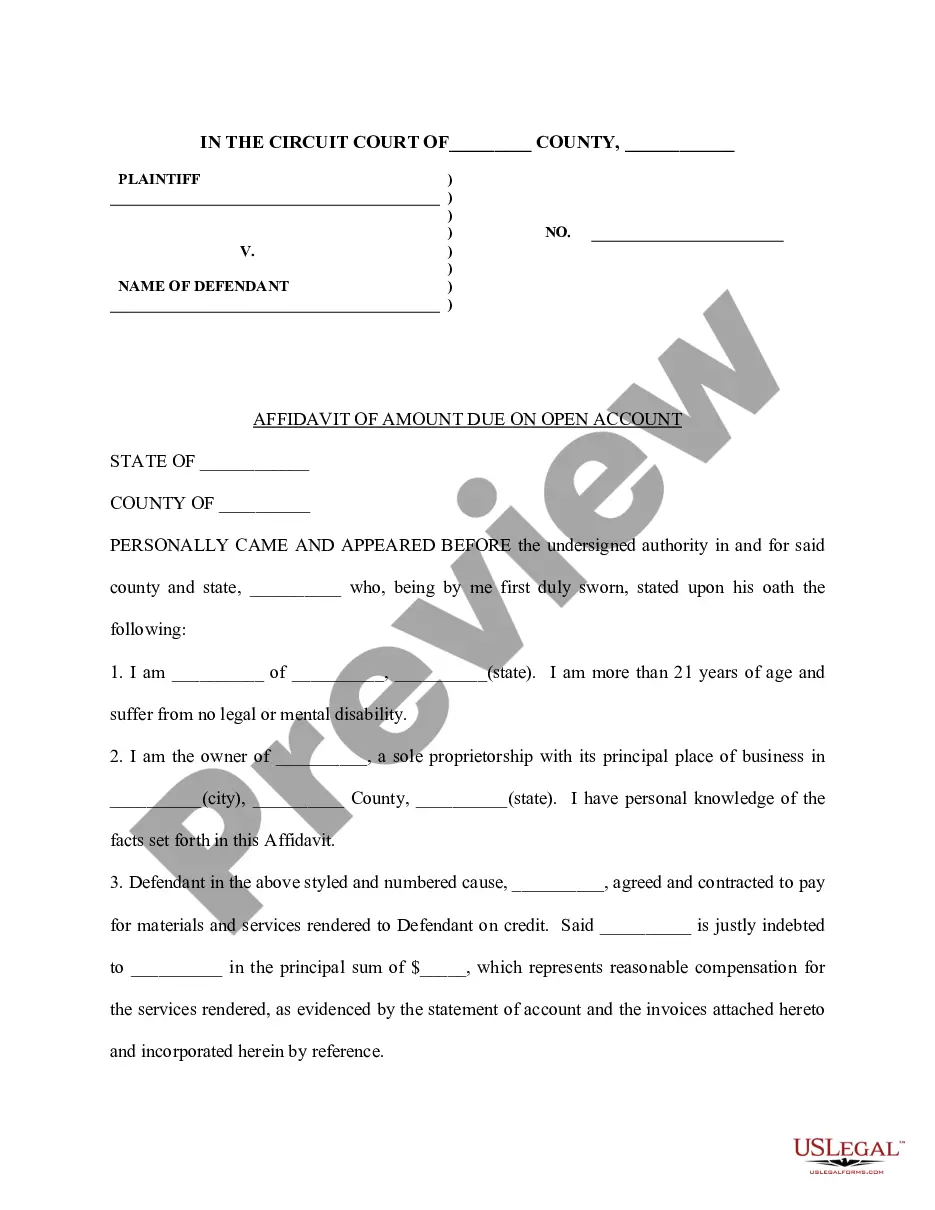
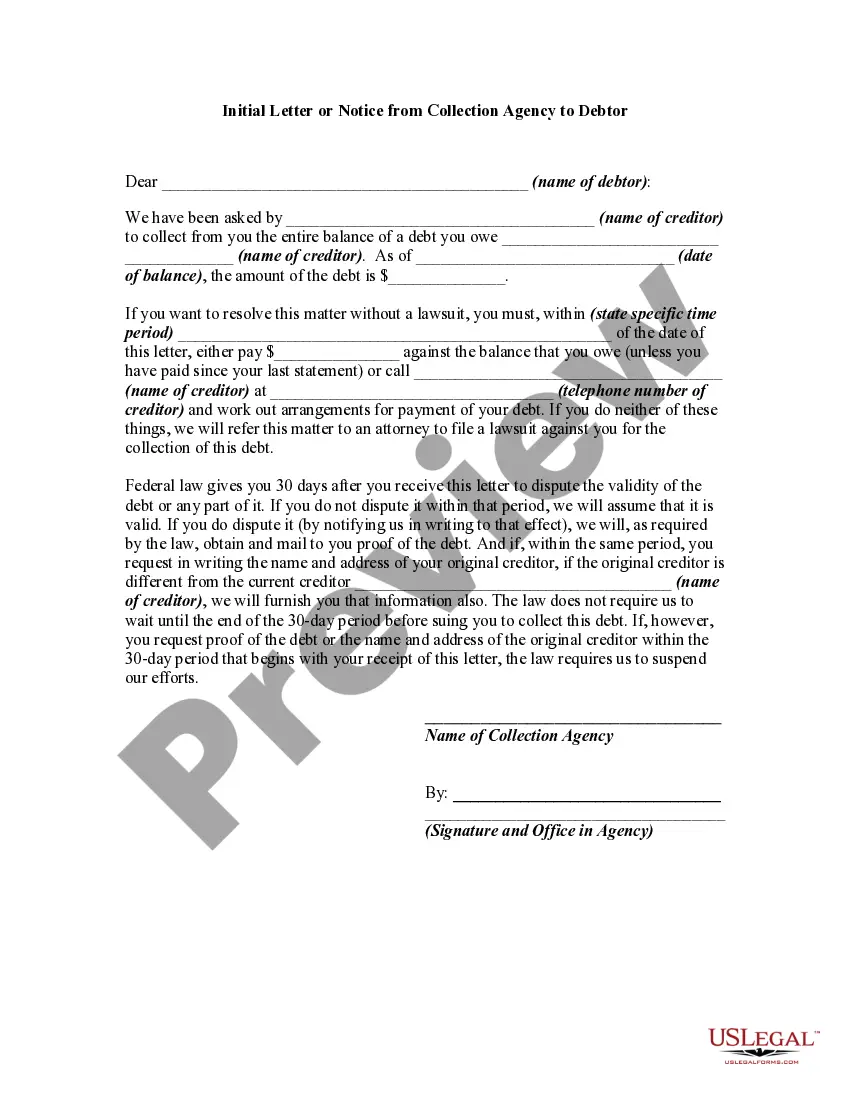
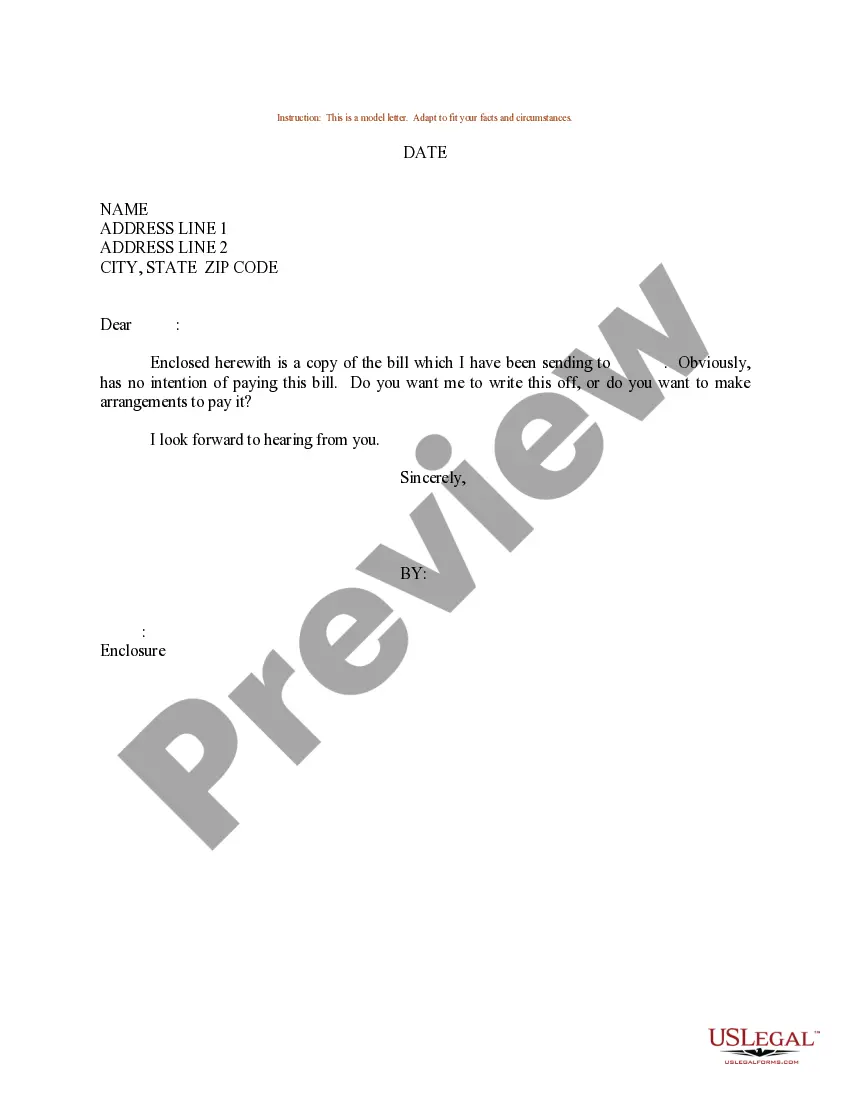
This form should be used when a business needs to formally notify a customer about an outstanding payment on an open account. It is applicable when a customer is late on a payment and serves as a final reminder before legal action is considered. Use this letter when you want to document your efforts to collect the debt and establish a timeline for resolution.
Who this form is for
- Business owners needing to collect debts from customers.
- Accounts receivable departments in organizations.
- Freelancers or independent contractors who are owed payments.
Instructions for completing this form
- Identify the creditor's name and contact information.
- Clearly state the debtor's name and address.
- Specify the total amount owed and any relevant account details.
- Include the due date for payment and emphasize the consequences of non-payment.
- Sign and date the letter to formalize it.
Notarization requirements for this form
This form does not typically require notarization to be legally valid. However, some jurisdictions or document types may still require it. US Legal Forms provides secure online notarization powered by Notarize, available 24/7 for added convenience.
Get your form ready online
Our built-in tools help you complete, sign, share, and store your documents in one place.
Make edits, fill in missing information, and update formatting in US Legal Forms—just like you would in MS Word.
Download a copy, print it, send it by email, or mail it via USPS—whatever works best for your next step.
Sign and collect signatures with our SignNow integration. Send to multiple recipients, set reminders, and more. Go Premium to unlock E-Sign.
If this form requires notarization, complete it online through a secure video call—no need to meet a notary in person or wait for an appointment.
We protect your documents and personal data by following strict security and privacy standards.

Make edits, fill in missing information, and update formatting in US Legal Forms—just like you would in MS Word.

Download a copy, print it, send it by email, or mail it via USPS—whatever works best for your next step.

Sign and collect signatures with our SignNow integration. Send to multiple recipients, set reminders, and more. Go Premium to unlock E-Sign.

If this form requires notarization, complete it online through a secure video call—no need to meet a notary in person or wait for an appointment.

We protect your documents and personal data by following strict security and privacy standards.
Common mistakes
- Failing to include complete and accurate debtor information.
- Not providing a clear payment deadline.
- Omitting details about potential legal action if the debt remains unpaid.
Benefits of completing this form online
- Convenience of downloading and customizing the form quickly.
- Access to updated legal templates compliant with current laws.
- Ability to edit the content as needed without legal jargon.
Legal use & context
- This form is a legally recognized instrument for initiating debt collection processes in Mississippi.
- It may serve as evidence in court if litigation becomes necessary for collecting the owed amount.
- Using this letter appropriately can help mitigate conflicts and facilitate negotiated settlements before escalating to legal actions.
Quick recap
- The Demand Letter on Open Account is a crucial first step in debt collection.
- This letter helps clarify the amount owed and the deadline for payment.
- Using a formal demand letter can increase the likelihood of receiving payment.
- Ensure all information is accurate and presented clearly to avoid misunderstandings.
Looking for another form?

Form popularity
FAQ
After you send a demand letter, one of several things can happen: The insurance company accepts your demand, and the settlement goes forward. You'll receive the compensation you asked for and sign a release of liability in exchange.
Establish facts. Don't assume everyone knows the facts. Refer to evidence. If there's evidence (like a contract), you don't need to include it, but you should refer to it. Make a demand. Be specific as to what you want. Set a deadline and establish method of payment. Offer a consequence.
Don't Blow It Off. You or your business can suffer consequences from failing to answer a demand letter in a timely fashion. Assess the Validity of the Arguments. Understand the Obligee's Motives. Determine Whether or Not You Need a Lawyer. Respond Formally, Factually, and Professionally. Get Verification of Receipt.
Once you've written your demand letter and sent it on to the insurance company, the response time may vary. Typically, you can expect an answer within a few weeks. However, sometimes this process can take as long as a few months.
Never ignore a demand letter.If you receive one, contact your attorney immediately. Some people think if they don't respond, the sender will go away. This is usually not the case especially if the other party has retained an attorney. Respond and try to resolve the issue or you run the risk of going to court.
Establish facts. Don't assume everyone knows the facts. Refer to evidence. If there's evidence (like a contract), you don't need to include it, but you should refer to it. Make a demand. Be specific as to what you want. Set a deadline and establish method of payment. Offer a consequence.
Type your letter. Concisely review the main facts. Be polite. Write with your goal in mind. Ask for exactly what you want. Set a deadline. End the letter by stating you will promptly pursue legal remedies if the other party does not meet your demand. Make and keep copies.
Never ignore a demand letter.If you receive one, contact your attorney immediately. Some people think if they don't respond, the sender will go away. This is usually not the case especially if the other party has retained an attorney. Respond and try to resolve the issue or you run the risk of going to court.
200badmit you owe some or all of the money. deny you owe the money and explain why you don't owe it. ask for more information, without admitting or denying you owe the money. offer to pay a different amount. offer to pay some or all of the money in instalments.