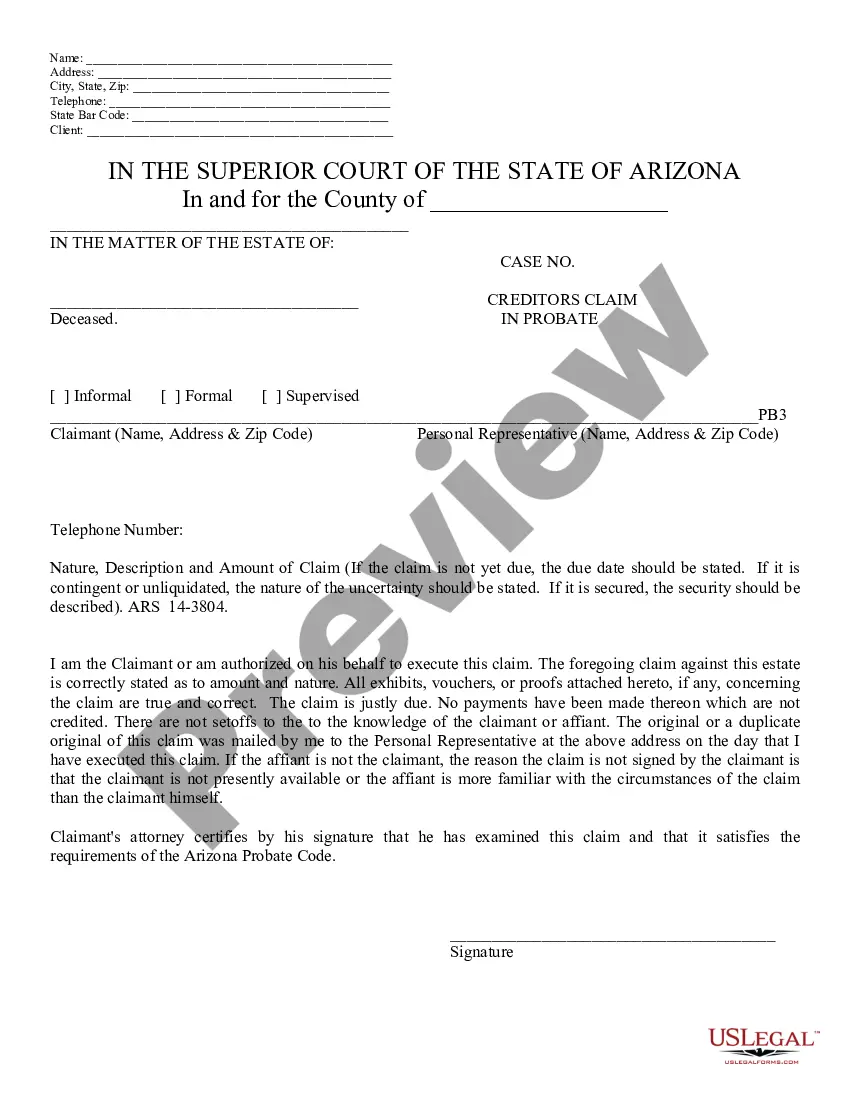
Mississippi Substitution of Trustee
What is this form?
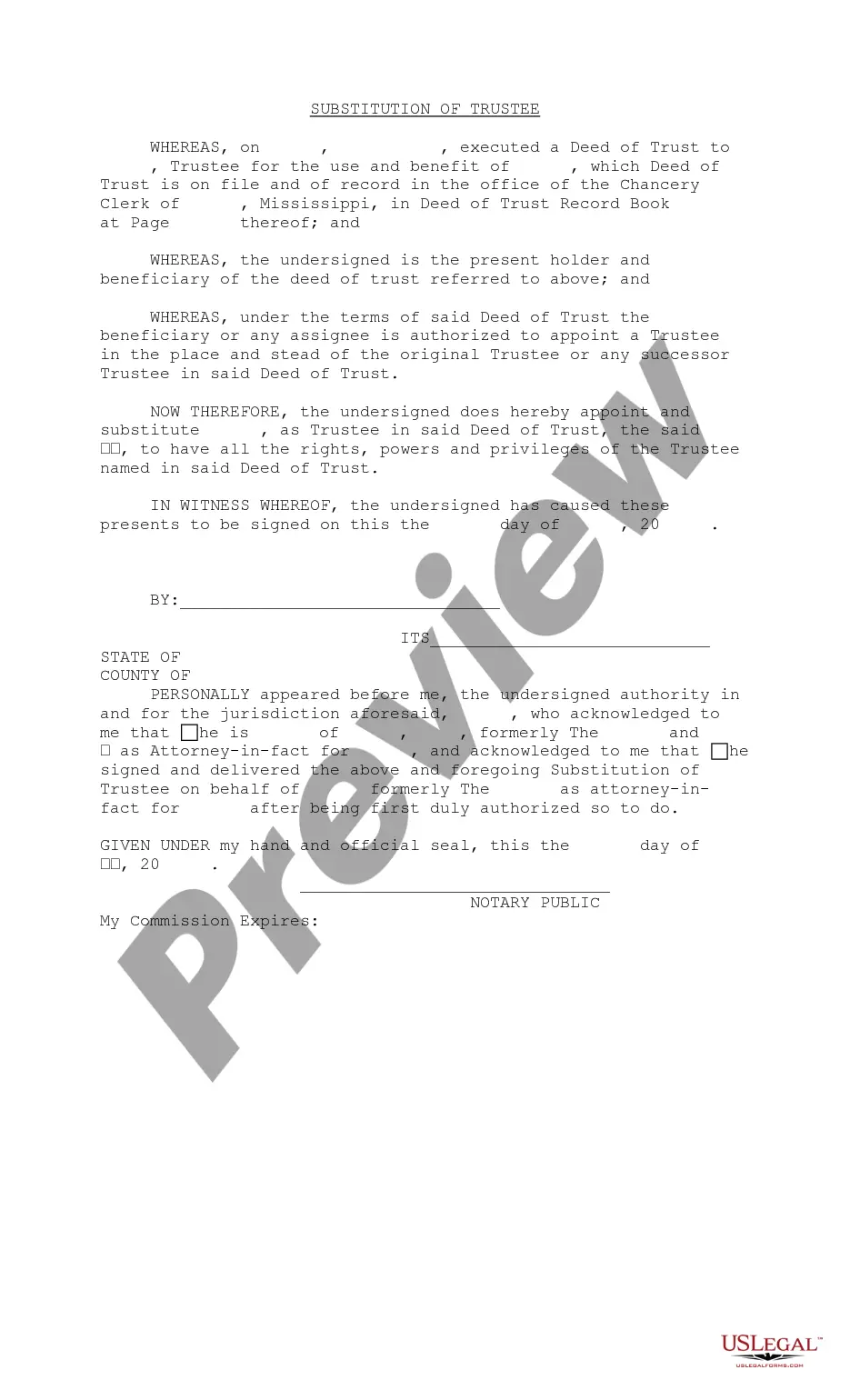
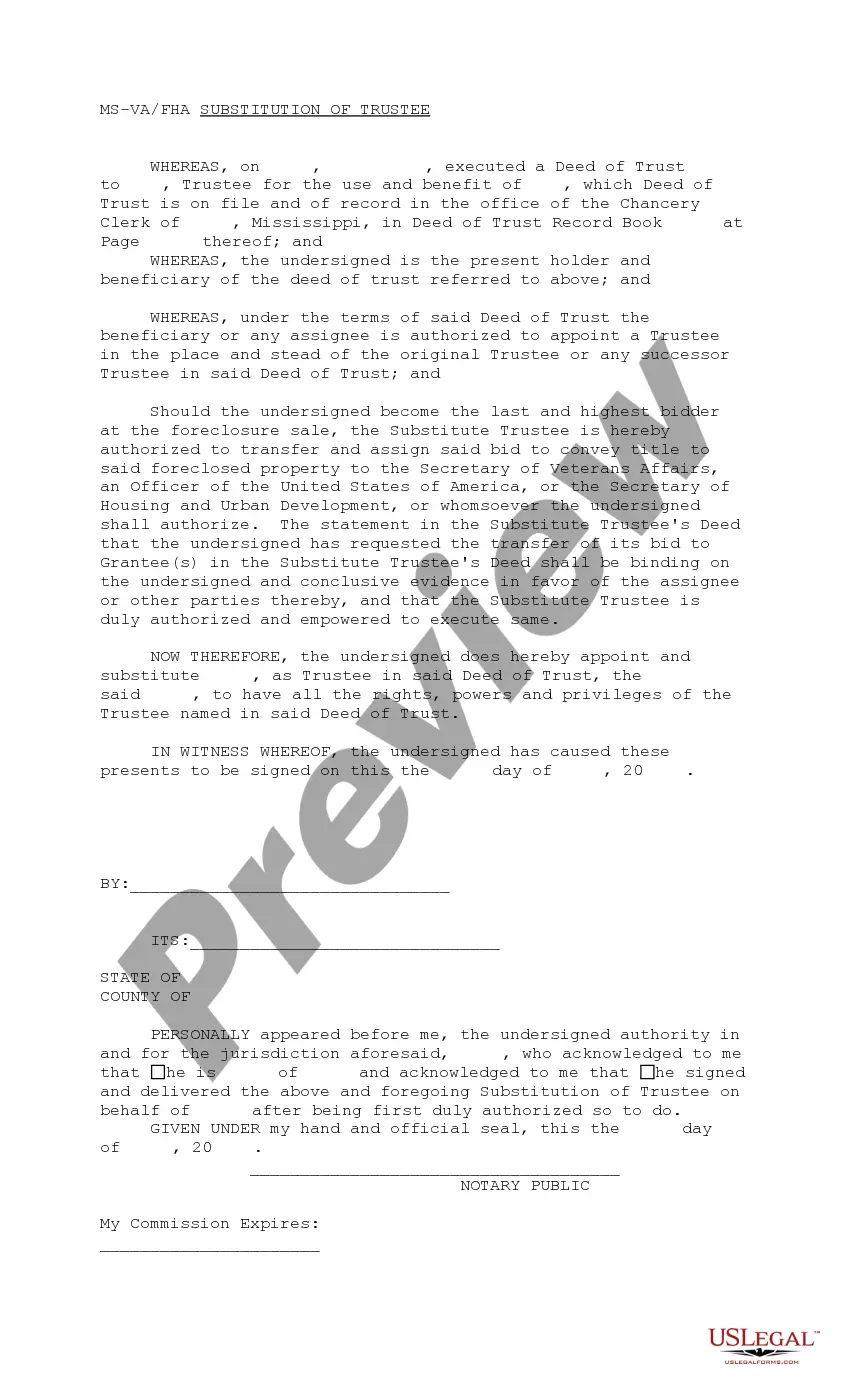
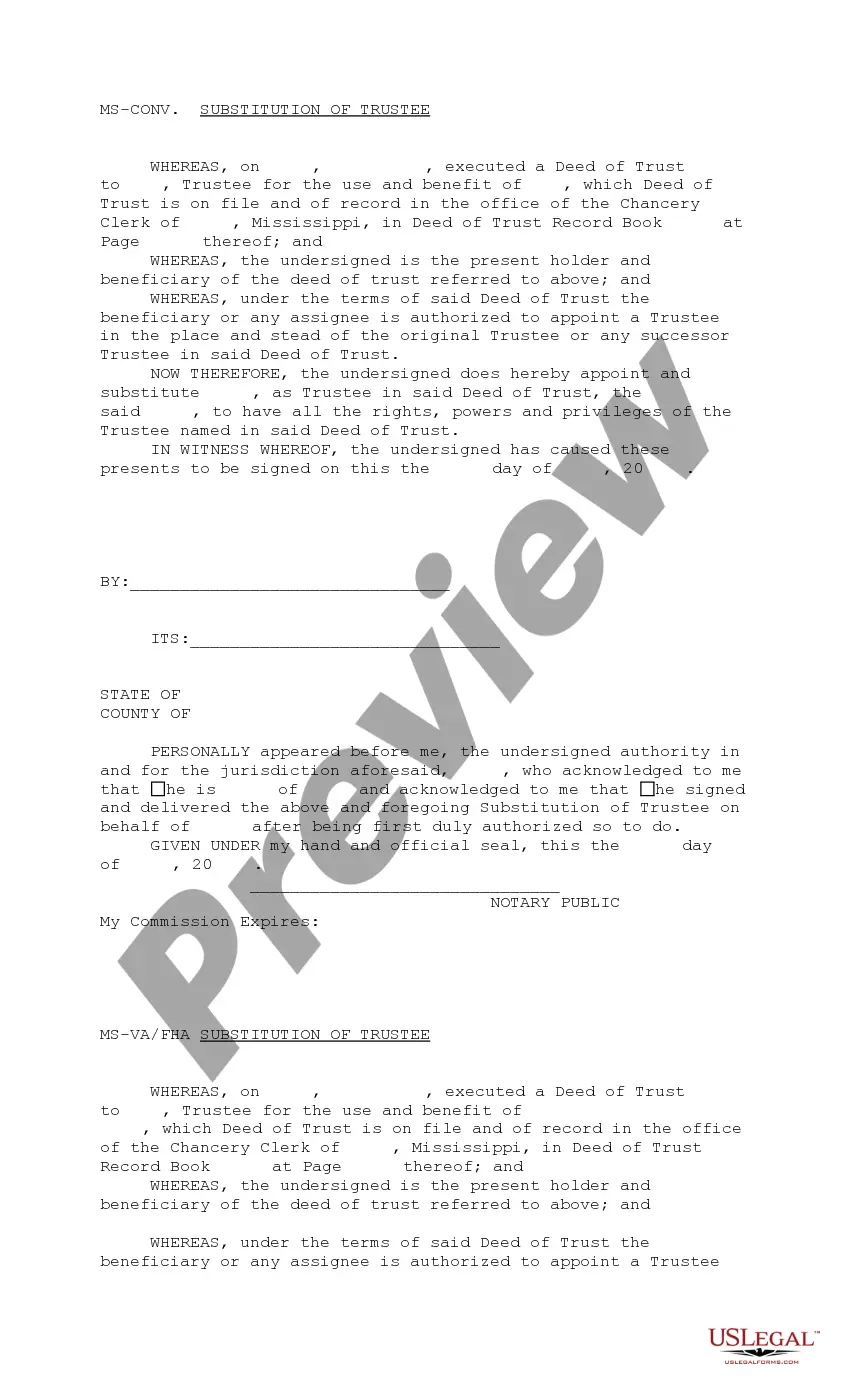
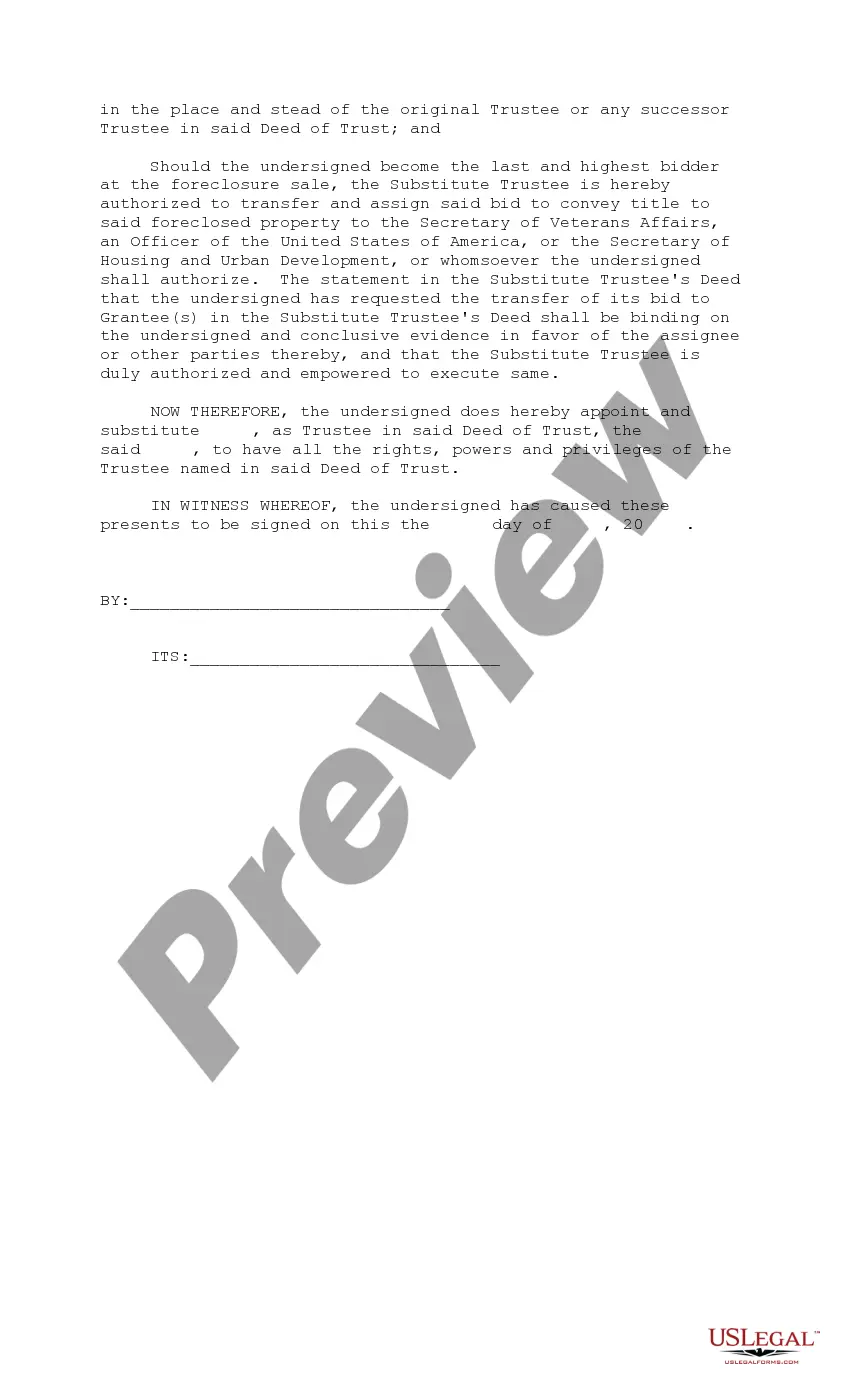
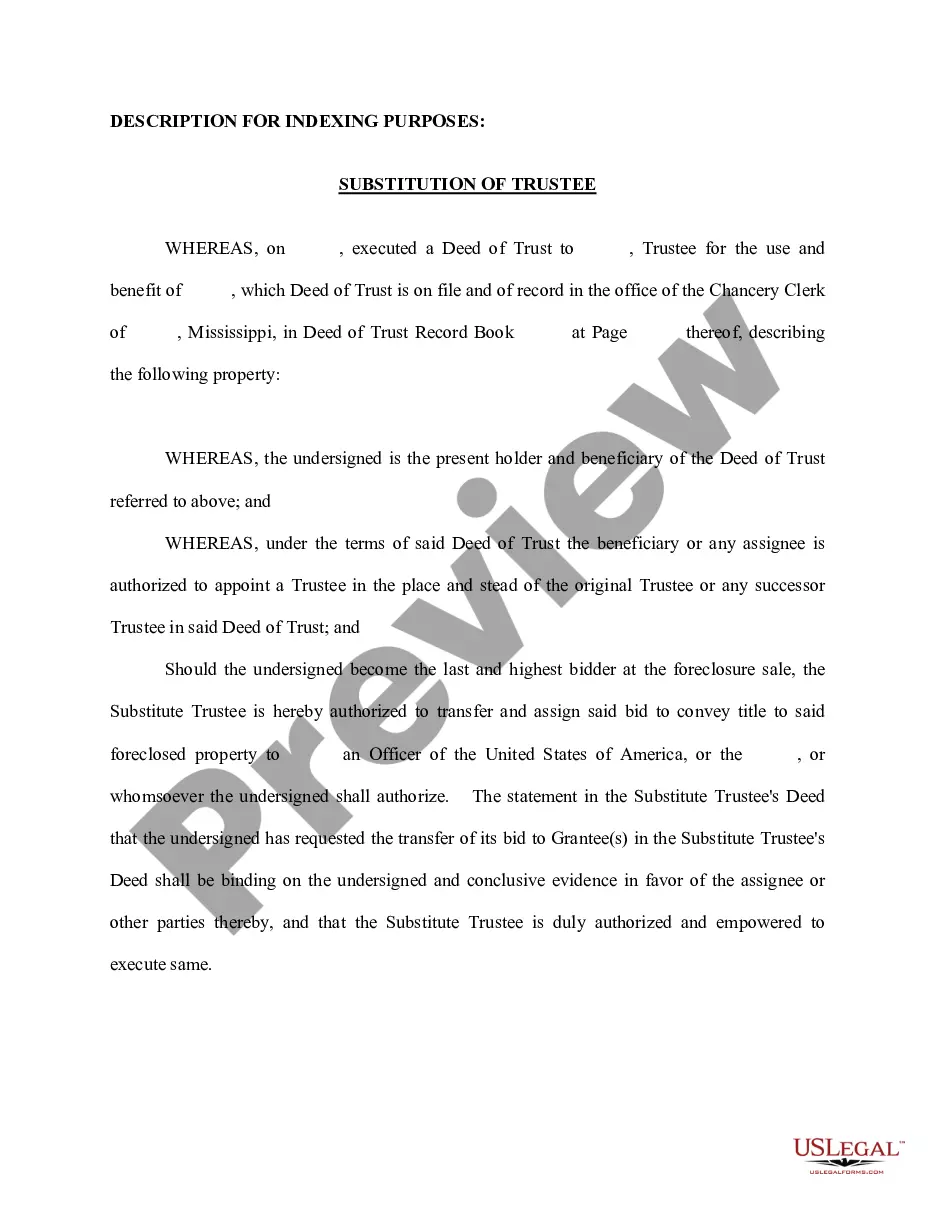
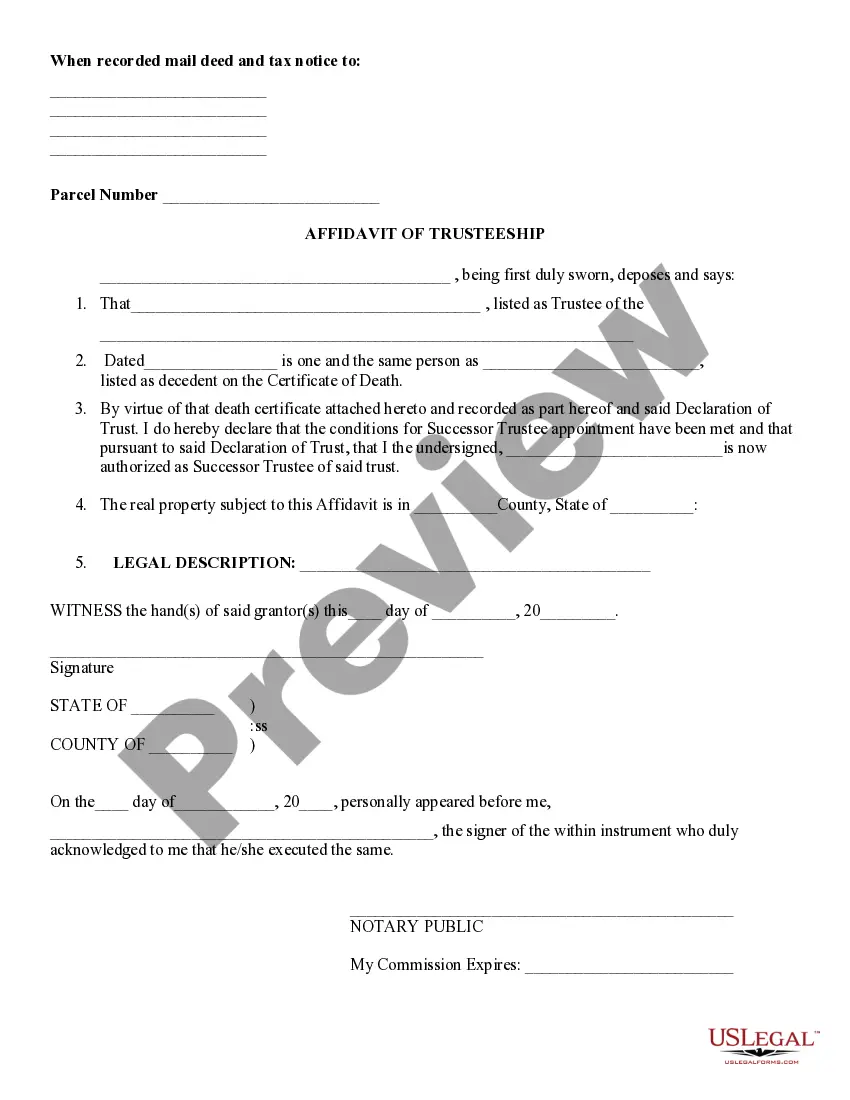
A Substitution of Trustee is a legal document required when the assigned Trustee can no longer fulfill their duties for a Trust. This form ensures that a new Trustee can be appointed to manage the property in the Trust effectively. Unlike other forms related to Trust management, this document specifically enables a beneficiary or an assignee to officially replace the original Trustee, thereby retaining proper governance of the Trust's assets.
What’s included in this form
- Authority of beneficiary to appoint a new Trustee.
- Details regarding the property involved in the Trust.
- Identification of the original Trustee and the new Substitute Trustee.
- Authorization for the Substitute Trustee to transfer property titles.
- Binding statements ensuring the validity of actions taken by the Substitute Trustee.
Situations where this form applies
Use this form when the original Trustee is unable or unwilling to carry out their responsibilities, such as in cases of incapacity, resignation, or conflict of interest. It is also necessary when the Trustee is a beneficiary of the property, where they cannot retain that dual role. This ensures continuity in managing and distributing Trust assets.
Who can use this document
- Beneficiaries of a Trust who need to appoint a new Trustee.
- Assignors who hold legal authority over the Trust and wish to make adjustments.
- Legal representatives acting on behalf of beneficiaries or Trustees.
How to complete this form
- Identify the original Trustee and the circumstances prompting the substitution.
- Provide the name and details of the new Substitute Trustee.
- Specify the Trust property that is subject to the Trustee's authority.
- Include any relevant dates, signatures, and contact information for all involved parties.
- Ensure that the form is signed in accordance with local laws and any requirements for validity.
Does this document require notarization?
This document requires notarization to meet legal standards. US Legal Forms provides secure online notarization powered by Notarize, allowing you to complete the process through a verified video call, available 24/7.
Get your form ready online
Our built-in tools help you complete, sign, share, and store your documents in one place.
Make edits, fill in missing information, and update formatting in US Legal Forms—just like you would in MS Word.
Download a copy, print it, send it by email, or mail it via USPS—whatever works best for your next step.
Sign and collect signatures with our SignNow integration. Send to multiple recipients, set reminders, and more. Go Premium to unlock E-Sign.
If this form requires notarization, complete it online through a secure video call—no need to meet a notary in person or wait for an appointment.
We protect your documents and personal data by following strict security and privacy standards.

Make edits, fill in missing information, and update formatting in US Legal Forms—just like you would in MS Word.

Download a copy, print it, send it by email, or mail it via USPS—whatever works best for your next step.

Sign and collect signatures with our SignNow integration. Send to multiple recipients, set reminders, and more. Go Premium to unlock E-Sign.

If this form requires notarization, complete it online through a secure video call—no need to meet a notary in person or wait for an appointment.

We protect your documents and personal data by following strict security and privacy standards.
Avoid these common issues
- Failing to provide accurate identification of all parties involved.
- Not including the exact details of the Trust property.
- Leaving spaces blank that are required for understanding the substitution.
- Neglecting to obtain necessary signatures and dates.
- Overlooking state-specific regulations that may affect the execution of the form.
Benefits of using this form online
- Convenient access to the form at any time, allowing for easy completion and storage.
- Editability to customize the document to meet specific needs without hassle.
- Reliability by using forms drafted by licensed attorneys, ensuring compliance with legal standards.
Looking for another form?



Form popularity
FAQ
A document known as a substitution of trustee and full reconveyance identifies the person who has the authority to reconvey the property and remove the lien.Once the document is registered, it establishes the borrower as the sole owner of the property, which is now free and clear of the previous mortgage.
Can trustees be held personally liable:Trustees must be aware that they can be held personally liable, even if only one trustee has signing power on behalf of the trust and that person makes a poor decision that finds all the trustees liable for his/her negligence. This is, in itself, an onerous provision.
The trustee acts as the legal owner of trust assets, and is responsible for handling any of the assets held in trust, tax filings for the trust, and distributing the assets according to the terms of the trust. Both roles involve duties that are legally required.
A trustee cannot comingle trust assets with any other assets.If the trustee is not the grantor or a beneficiary, the trustee is not permitted to use the trust property for his or her own benefit. Of course the trustee should not steal trust assets, but this responsibility also encompasses misappropriation of assets.
A trustee is a person or firm that holds and administers property or assets for the benefit of a third party.Trustees are trusted to make decisions in the beneficiary's best interests and often have a fiduciary responsibility, meaning they act in the best interests of the trust beneficiaries to manage their assets.
The trustee will then issue a reconveyance deed, which gives the legal title of the property to you.Instead, the original trustee, or sometimes the loan servicing company, will appoint a new Substitute Trustee to handle the foreclosure. To do this, they must file an Appointment of Substitute Trustees.
Although the trustees of a trust may change, a trust must always have at least one trustee. The beneficiary may be a person, an entity (for example, a charity organisation), or something else (for example, a pet or a cause). The settlor may also specify multiple beneficiaries.
The trustee is under a duty to the beneficiaries to invest and mange the funds of the trust as a prudent investor would, in light of the purposes, terms, distribution requirements, and other circumstances of the trust.(5) Trustees may have a duty as well as having the authority to delegate as prudent investors would.
In a nutshell, the Substitution of Trustee and Deed of Reconveyance is a legal document that evidences security interest is being release by a lender.If the bank chooses to appoint a new trustee at the time the loan is paid and/or the obligation is satisfied, they will substitute a new trustee.
A substitution of trustee under a trust deed is a legal document that allows the mortgage lender to change the person or business entity that will carry out the private trustee's foreclosure sale.