Mississippi Escrow Agreement
About this form
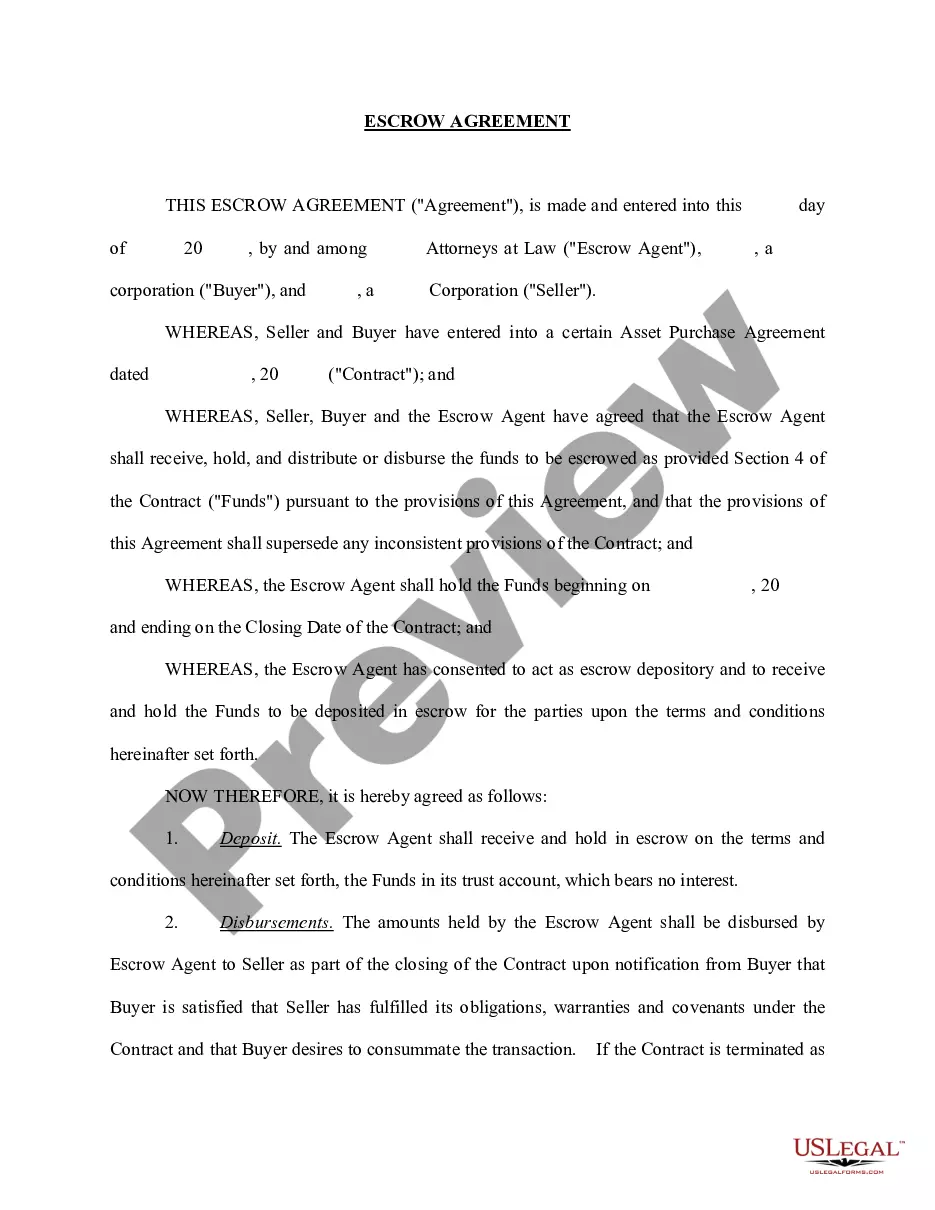
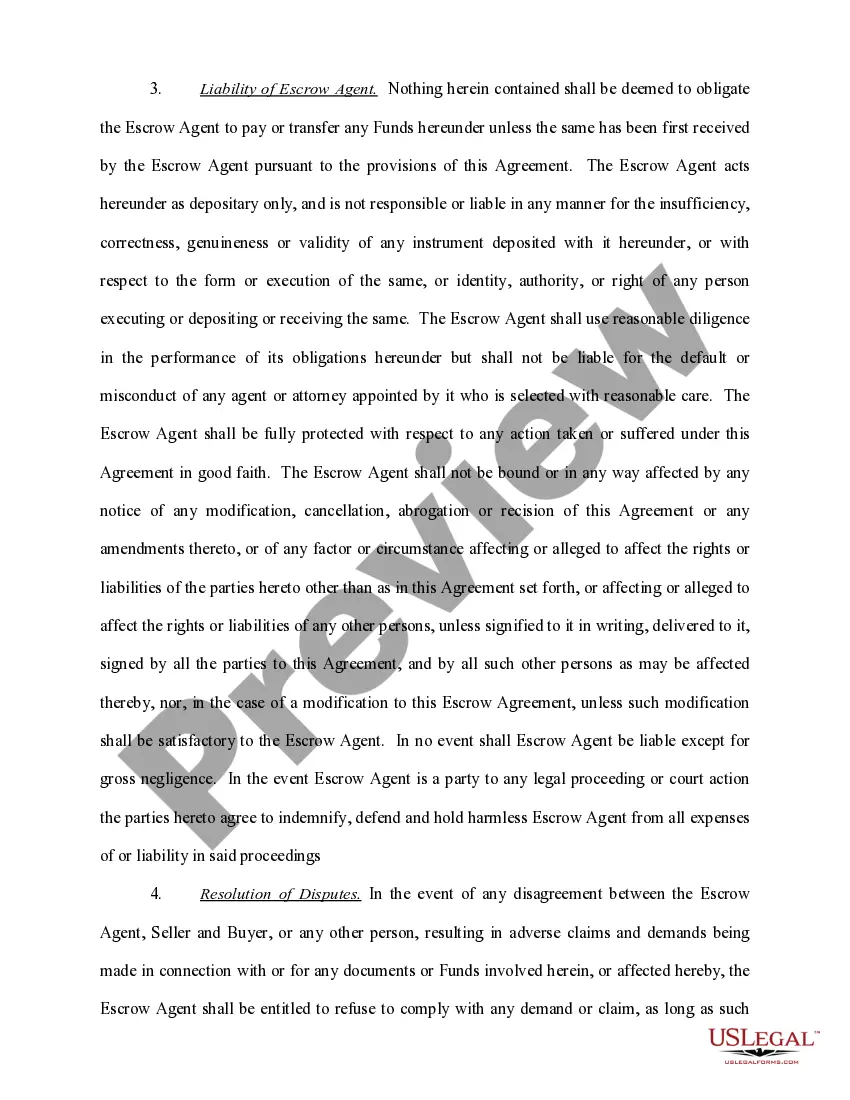
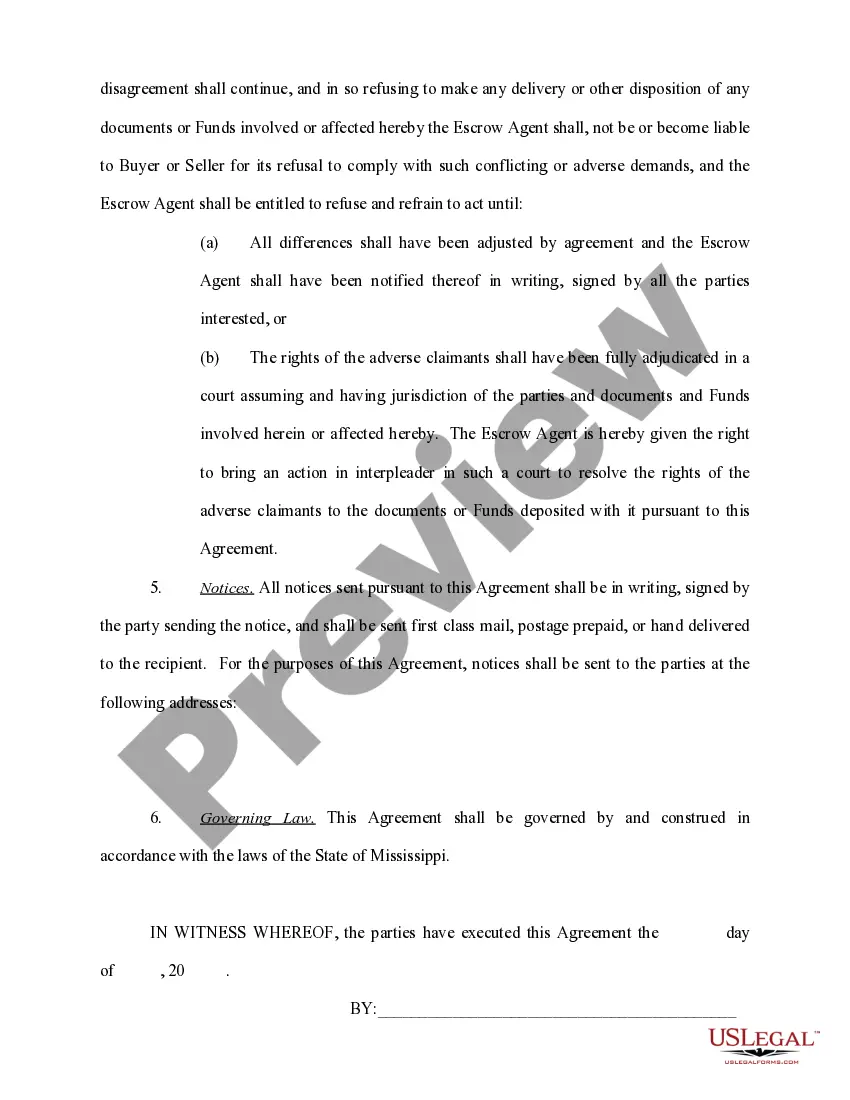
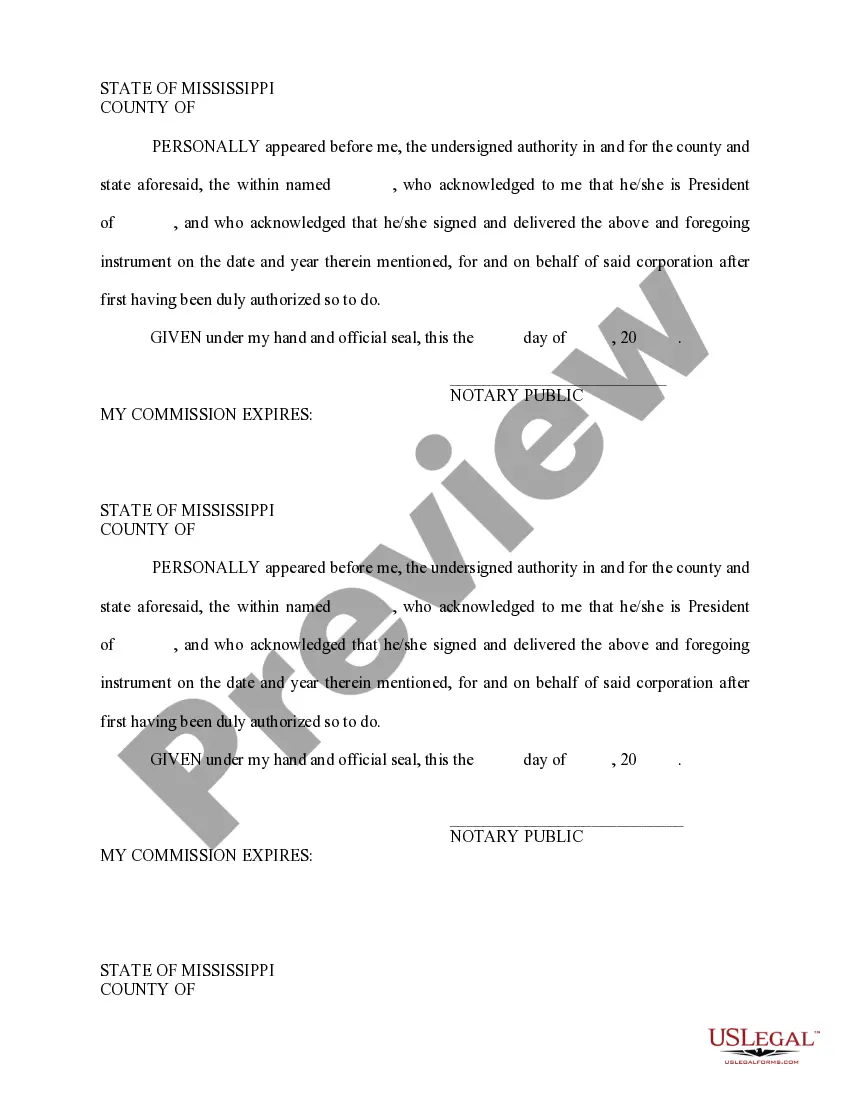
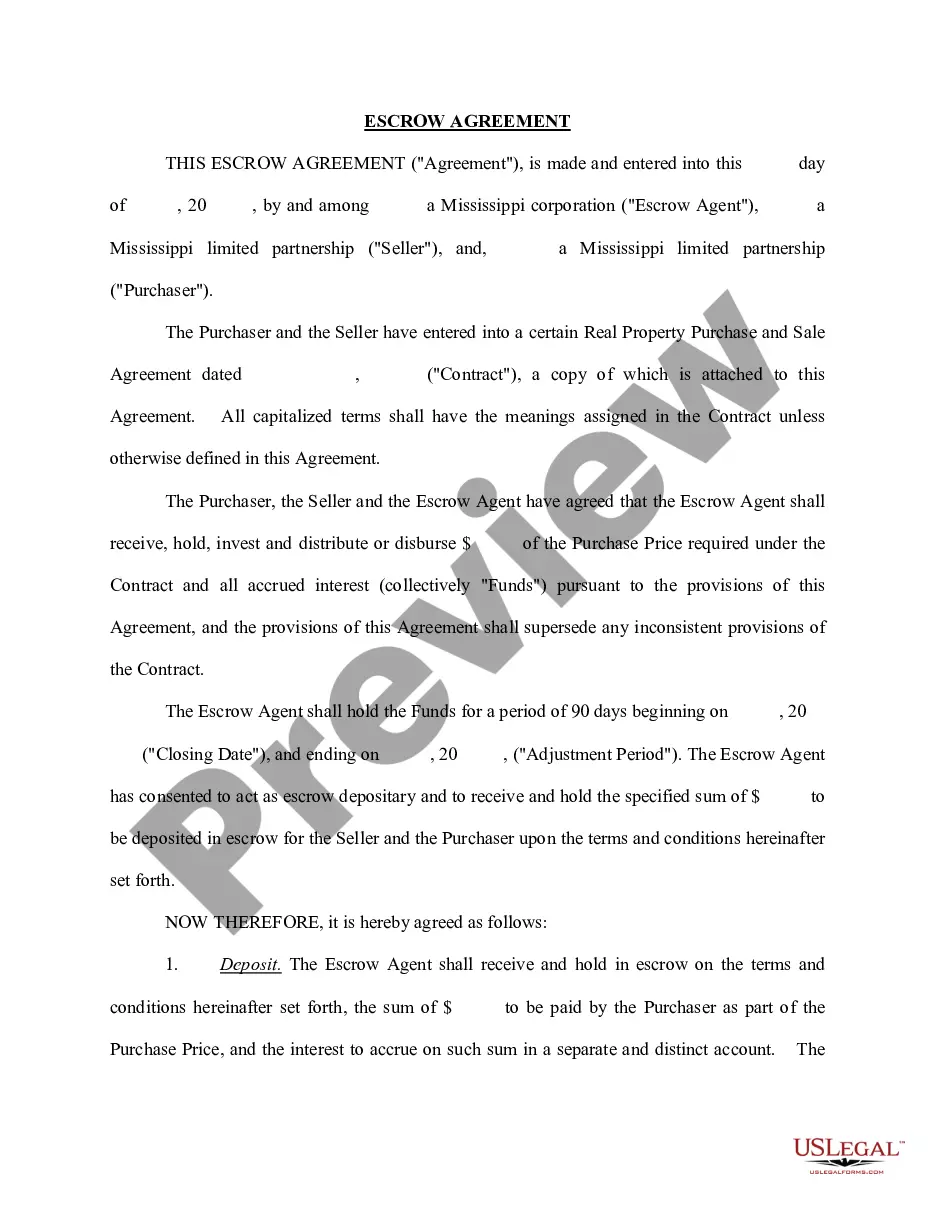
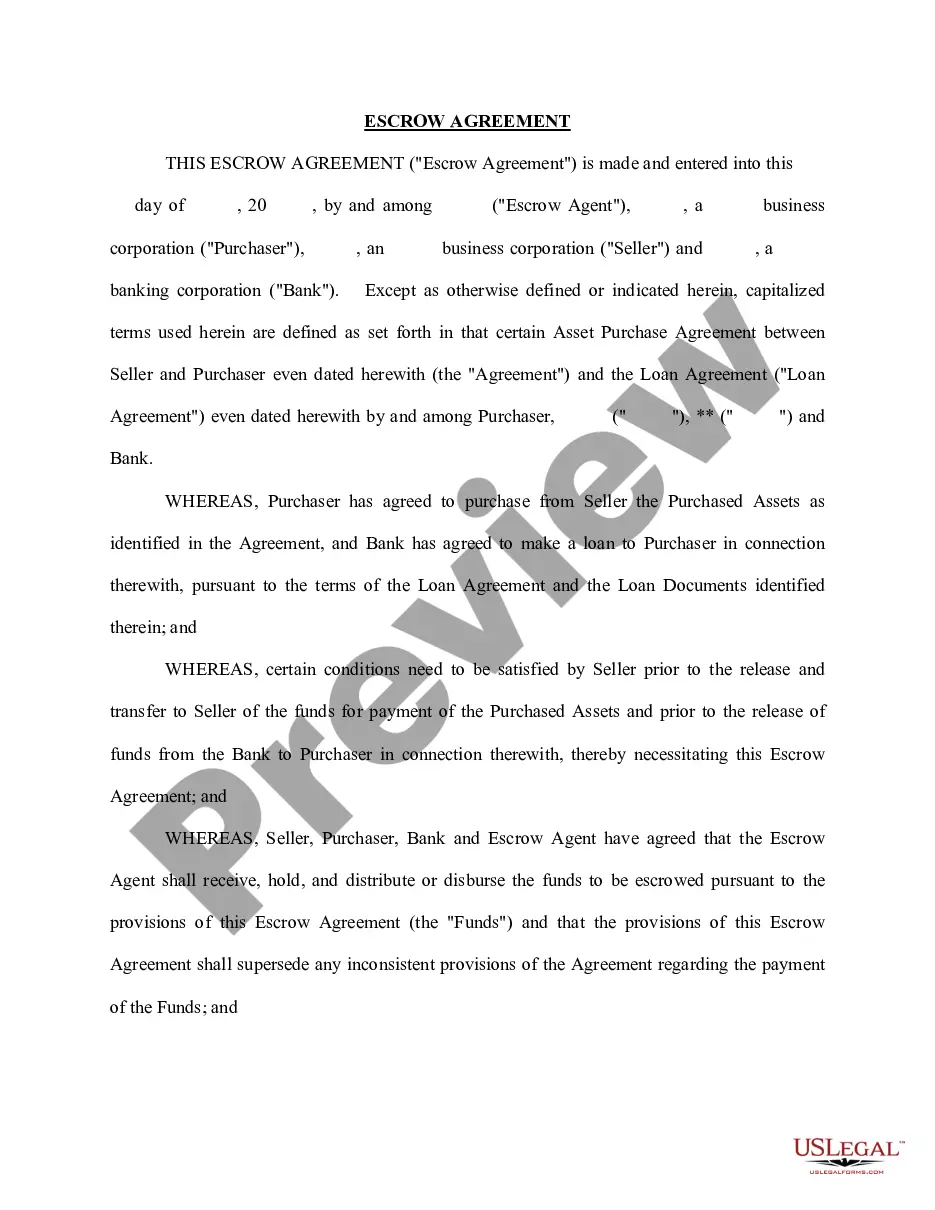
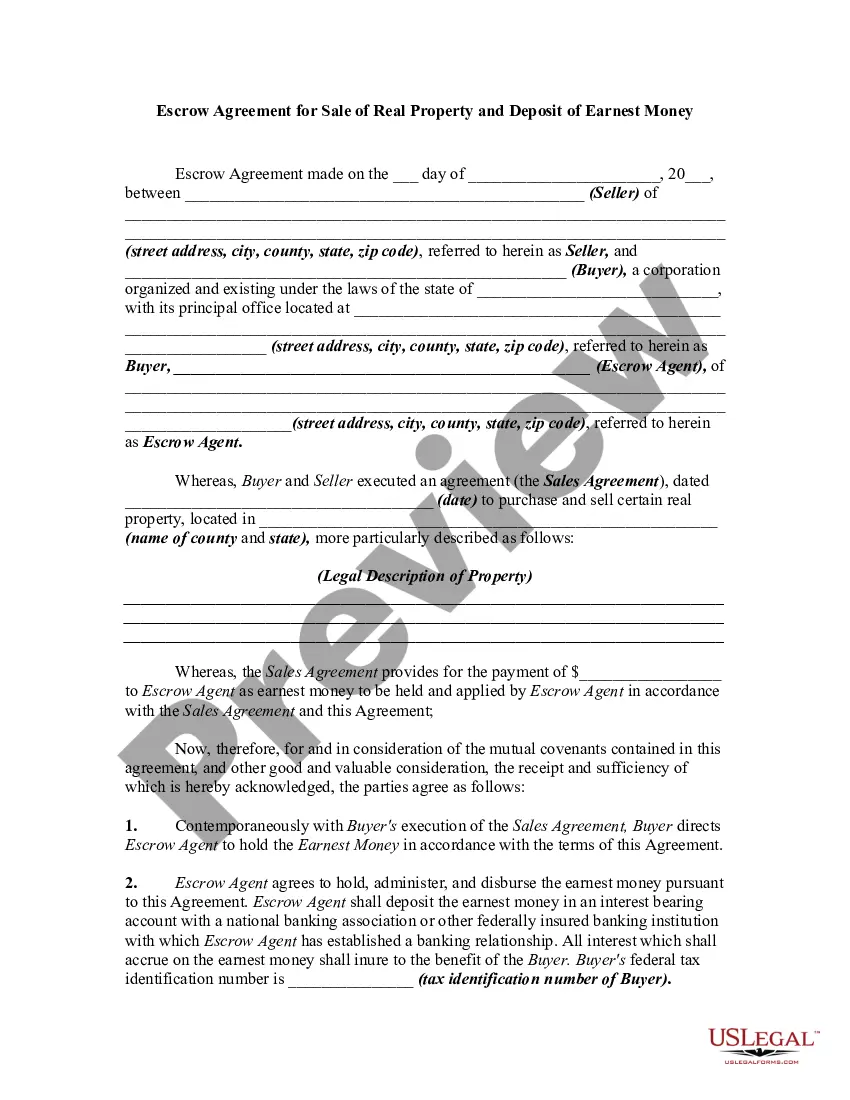
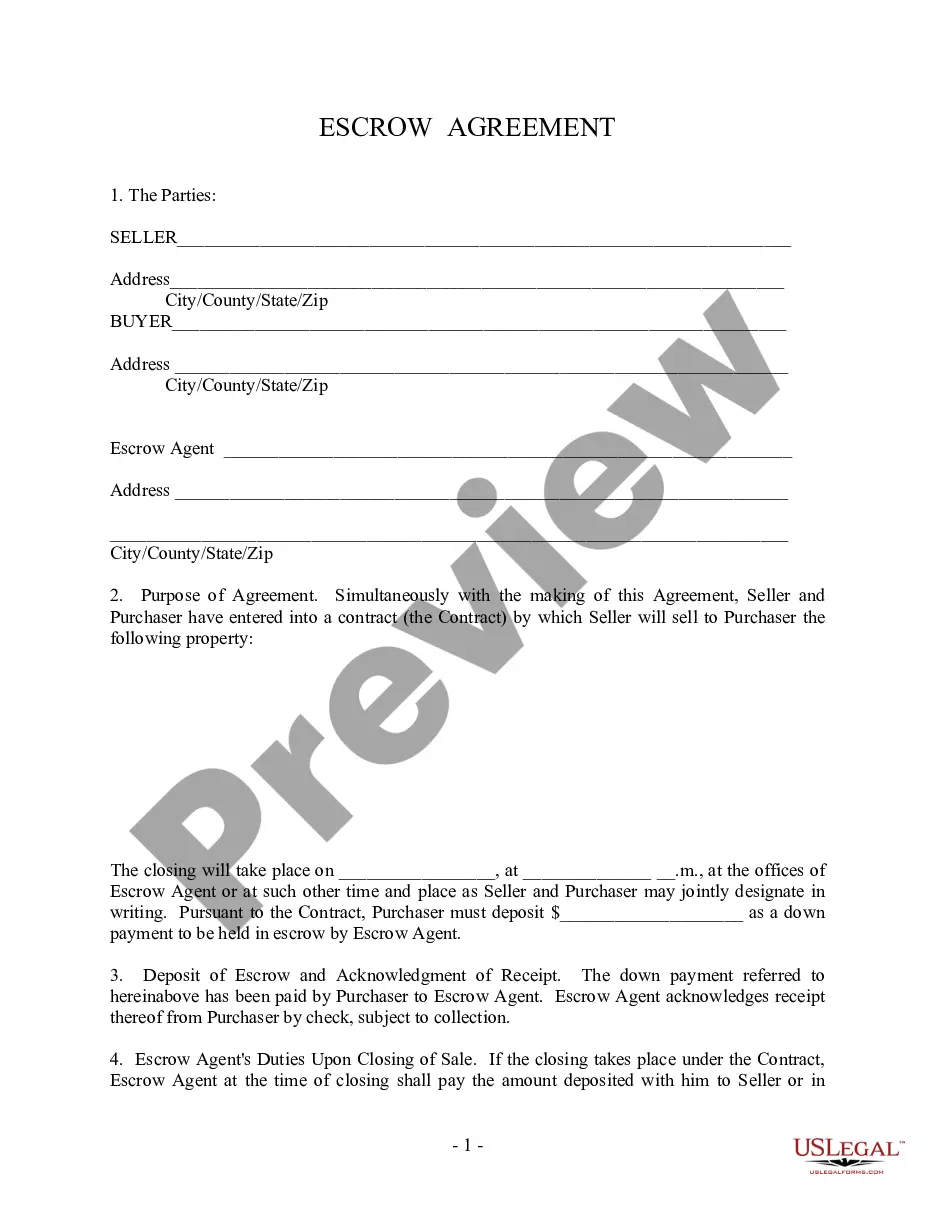
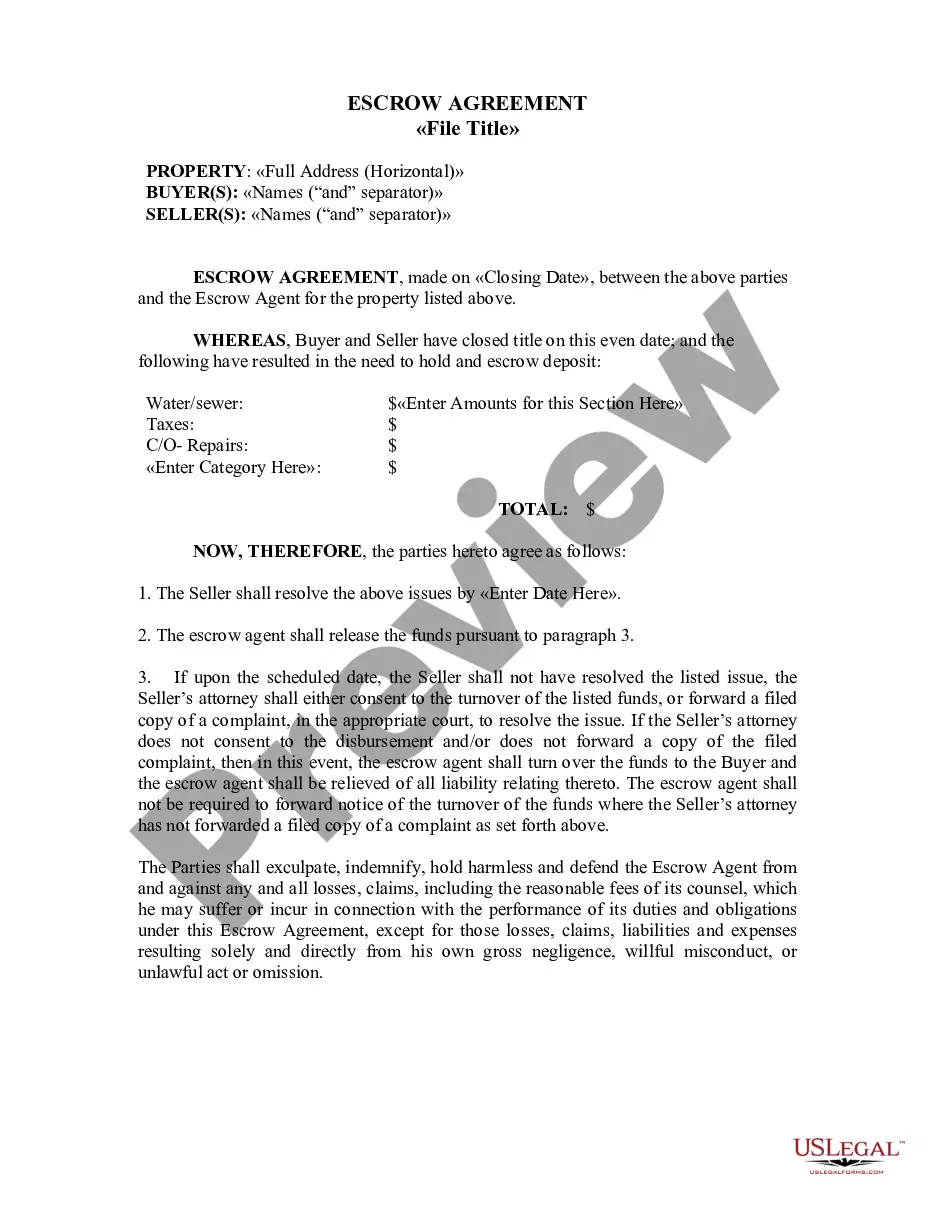
An Escrow Agreement defines the terms and conditions under which an escrow agent, buyer, and seller agree to hold and manage funds during a transaction. This form outlines the responsibilities of each party, ensuring that funds are disbursed only when specific conditions are met. Unlike other agreements, it focuses on the role of the escrow agent as a neutral third party to safeguard the funds until the terms of the underlying contract are fulfilled.
Key components of this form
- Deposit clause: Details how the escrows funds are held by the Escrow Agent.
- Disbursement conditions: Specifies when the Escrow Agent will release the funds to the seller.
- Liability of the Escrow Agent: Outlines the limitations of the agent's liability regarding the escrowed funds.
- Dispute resolution: Provides procedures for handling disagreements between the parties involved.

When this form is needed
An Escrow Agreement is essential in real estate transactions or business deals where funds need to be secured until certain contractual obligations are met. Use this form when you require a neutral party to hold funds during the transaction process, ensuring all parties adhere to the terms of the agreement before the funds are transferred.
Who needs this form
This form is suitable for:
- Buyers seeking reassurance that their funds are protected until the seller meets contractual obligations.
- Sellers wanting assurance that they will receive payment upon fulfillment of their terms.
- Escrow agents acting as the impartial party managing the funds during the transaction.
How to complete this form
- Identify the parties involved: Clearly state the names of the buyer, seller, and escrow agent.
- Enter the deposit amount: Specify the funds being held in escrow.
- Outline disbursement conditions: Include the conditions under which funds will be released to the seller.
- Define liabilities: Clarify the responsibilities and limitations of the escrow agent.
- Include signatures: All parties must sign the agreement to validate it.
Notarization guidance
This form does not typically require notarization to be legally valid. However, some jurisdictions or document types may still require it. US Legal Forms provides secure online notarization powered by Notarize, available 24/7 for added convenience.
Get your form ready online
Our built-in tools help you complete, sign, share, and store your documents in one place.
Make edits, fill in missing information, and update formatting in US Legal Forms—just like you would in MS Word.
Download a copy, print it, send it by email, or mail it via USPS—whatever works best for your next step.
Sign and collect signatures with our SignNow integration. Send to multiple recipients, set reminders, and more. Go Premium to unlock E-Sign.
If this form requires notarization, complete it online through a secure video call—no need to meet a notary in person or wait for an appointment.
We protect your documents and personal data by following strict security and privacy standards.

Make edits, fill in missing information, and update formatting in US Legal Forms—just like you would in MS Word.

Download a copy, print it, send it by email, or mail it via USPS—whatever works best for your next step.

Sign and collect signatures with our SignNow integration. Send to multiple recipients, set reminders, and more. Go Premium to unlock E-Sign.

If this form requires notarization, complete it online through a secure video call—no need to meet a notary in person or wait for an appointment.

We protect your documents and personal data by following strict security and privacy standards.
Typical mistakes to avoid
- Failing to clearly define the conditions for fund disbursement.
- Not including all required signatures before finalizing the agreement.
- Overlooking state-specific requirements related to escrow agreements.
Benefits of using this form online
- Convenience: Easily download and complete the form online, without the need for physical paperwork.
- Editable: Fill out the form directly on your device, allowing for quick modifications.
- Reliable: Access forms drafted by licensed attorneys and tailored to meet legal standards.
Looking for another form?
Form popularity
FAQ
Buyers stand to lose their earnest money if they jump ship on a real estate transaction.But, if a buyer decides to cancel the contract for a reason not covered by a contract contingency, earnest money is generally forfeited to the seller.
Closing costs: ~1-3% While the buyers will typically be responsible for the lion's share, sellers should expect to pay between 1-3% of the home's final sale price at closing. Based on the average home value in Mississippi of $136,000, that roughly translates to $1,000 to $4,000.
You pay escrow to seal the deal after a property owner accepts your offer. While these funds show the seller you're serious about purchasing the dwelling, if you can't close the loan, you could lose your escrow money.
Funds in Escrow Earnest money is refundable, but you might receive a partial refund or no refund under certain circumstances.Buyers must ensure that they understand the circumstances under which they forfeit the earnest money deposit before entering into a purchase agreement.
The contract terms will determine when you can move in after closing. In some cases, it will be immediately after the closing appointment. You will receive the keys and head straight to your new home. In other situations, the seller may request 30, 45 or even 60 days of occupancy after the closing of the home.
Does the Seller Ever Keep the Earnest Money? Yes, the seller has the right to keep the money under certain circumstances. If the buyer decides to cancel the sale without a valid reason or doesn't stick to an agreed timeline, the seller gets to keep the money.
Upon the close of escrow, the earnest money deposit is applied to the balance of the down payment.That doesn't mean you can't get your deposit back or lose it, if you aren't careful. From the time you put up the deposit until you close escrow, a lot can happen.
An escrow agreement is a contract that outlines the terms and conditions between parties involved, and the responsibility of each. Escrow agreements generally involve an independent third party, called an escrow agent, who holds an asset of value until the specified conditions of the contract are met.
The real estate commission is usually the biggest fee a seller pays 5 percent to 6 percent of the sale price. If you sell your house for $250,000, say, you could end up paying $15,000 in commissions. The commission is split between the seller's real estate agent and the buyer's agent.