Mississippi Quitclaim Deed Retaining Vendors Lien
Overview of this form
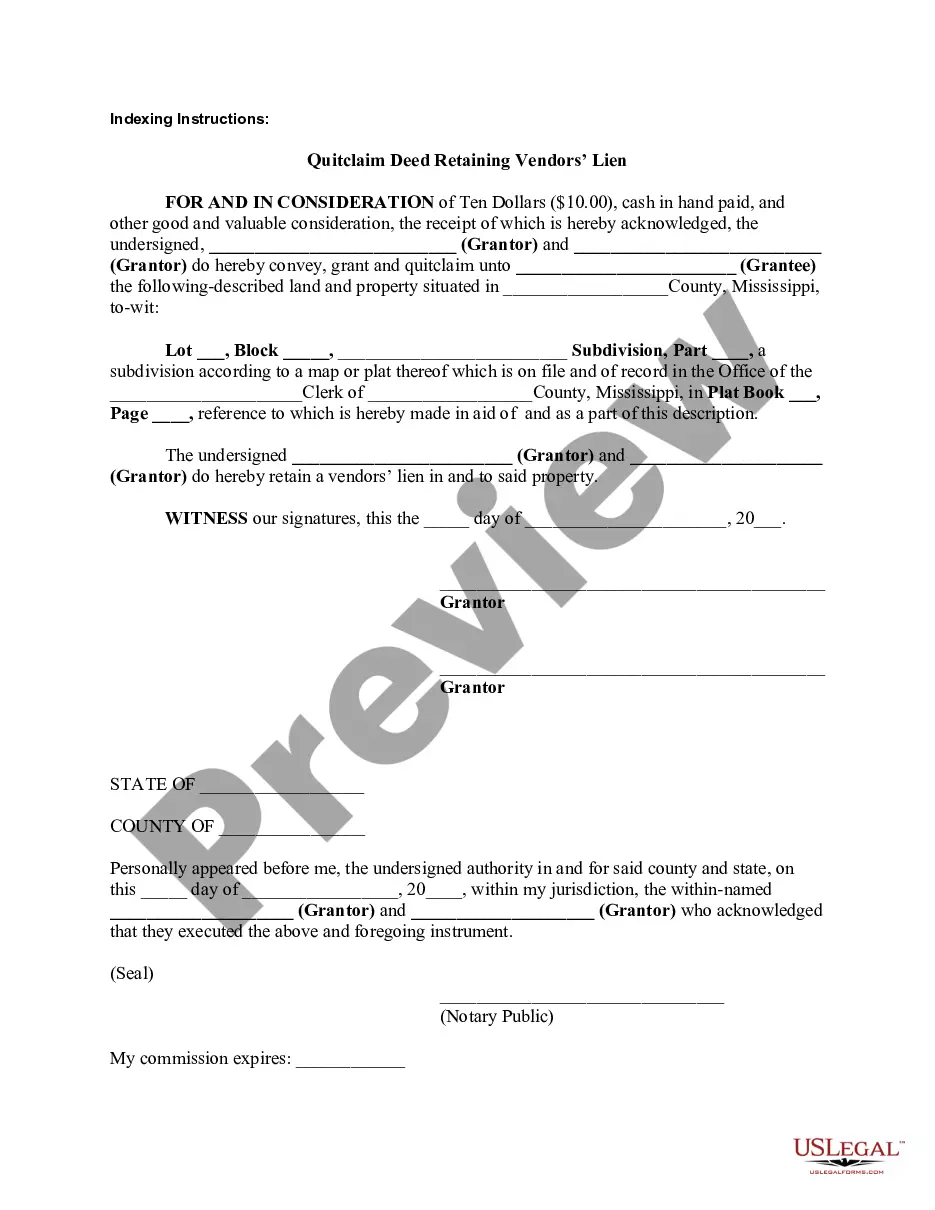
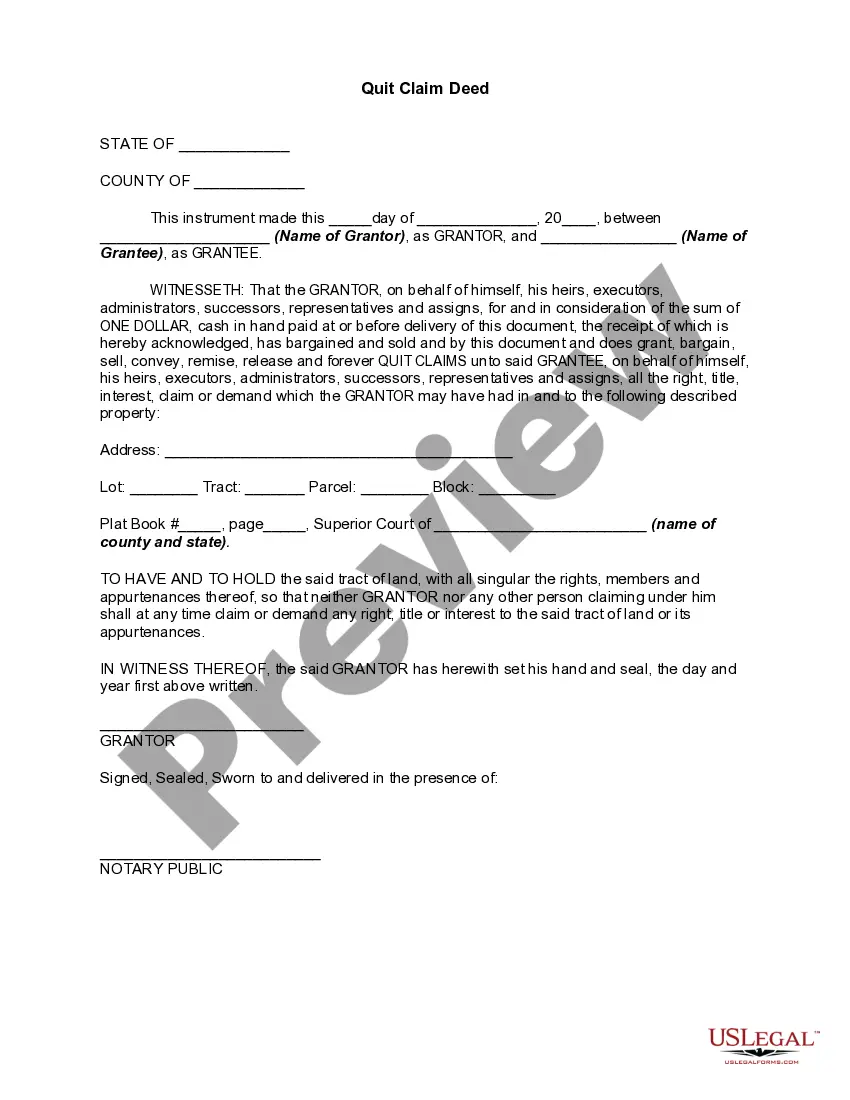
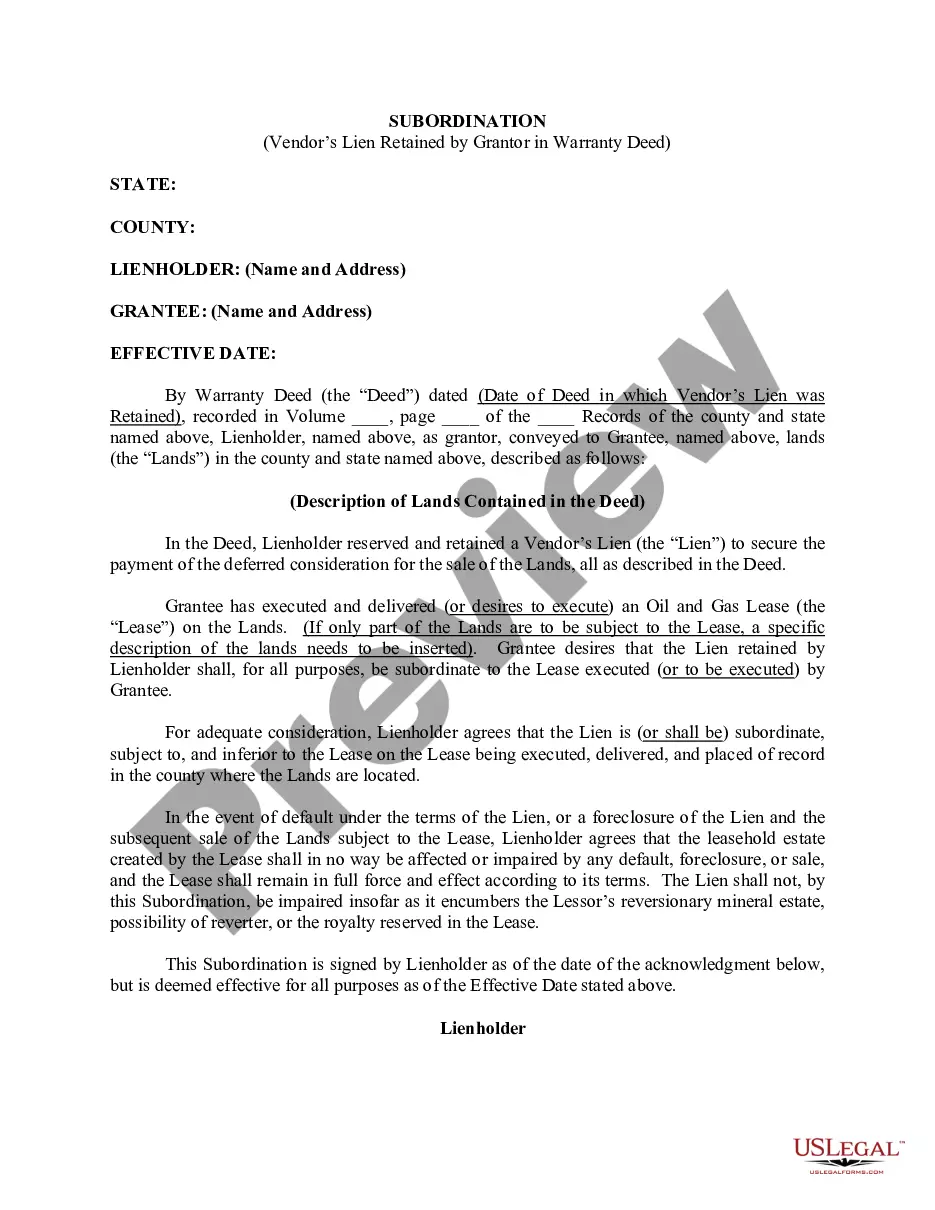
The Quitclaim Deed Retaining Vendors Lien is a legal document that allows a seller to convey property to a buyer while retaining a lien on the property until the buyer completes payment. This deed differs from other types of deeds because it specifically preserves the seller's right to reclaim the property if the buyer fails to make full payment, securing the seller's financial interest in the transaction.
Main sections of this form
- Grantor's information: Names of the sellers transferring the property.
- Grantee's information: Name of the buyer receiving the property.
- Description of the property: Detailed location and legal description of the property being conveyed.
- Retention of vendor's lien: A clause stating that the seller retains the right to reclaim the property until full payment is made.
- Notary acknowledgment: Required section where a notary public verifies the identities of the grantors.


Common use cases
This form is used in real estate transactions where the seller wants to sell property but also wishes to ensure that the buyer makes all payments due before the title fully transfers. It is particularly useful in situations involving seller financing or when the purchase does not involve a traditional mortgage.
Who needs this form
- Sellers who want to retain a financial interest in the property until the purchase price is paid.
- Buyers who are purchasing property under a seller financing arrangement.
- Real estate professionals and attorneys facilitating property transactions involving vendor's liens.
Steps to complete this form
- Identify the parties: Enter the names of the grantors (sellers) and the grantee (buyer) in the designated fields.
- Specify the property: Provide a complete legal description of the property, including lot number, block number, and subdivision details.
- State the consideration: Document the amount being paid, typically a nominal figure that signifies the exchange.
- Include the vendor's lien provision: Ensure the clause retaining the vendor's lien is correctly stated to protect the seller's interest.
- Sign and date the document: All parties must sign in the appropriate areas and date the document for validation.
- Notarization: Have the form notarized by a qualified official to make it legally enforceable.
Notarization guidance
This form needs to be notarized to ensure legal validity. US Legal Forms provides secure online notarization powered by Notarize, allowing you to complete the process through a verified video call, available anytime.
Get your form ready online
Our built-in tools help you complete, sign, share, and store your documents in one place.
Make edits, fill in missing information, and update formatting in US Legal Forms—just like you would in MS Word.
Download a copy, print it, send it by email, or mail it via USPS—whatever works best for your next step.
Sign and collect signatures with our SignNow integration. Send to multiple recipients, set reminders, and more. Go Premium to unlock E-Sign.
If this form requires notarization, complete it online through a secure video call—no need to meet a notary in person or wait for an appointment.
We protect your documents and personal data by following strict security and privacy standards.

Make edits, fill in missing information, and update formatting in US Legal Forms—just like you would in MS Word.

Download a copy, print it, send it by email, or mail it via USPS—whatever works best for your next step.

Sign and collect signatures with our SignNow integration. Send to multiple recipients, set reminders, and more. Go Premium to unlock E-Sign.

If this form requires notarization, complete it online through a secure video call—no need to meet a notary in person or wait for an appointment.

We protect your documents and personal data by following strict security and privacy standards.
Avoid these common issues
- Failing to provide a complete and accurate legal description of the property.
- Not including all required signatures, leading to an incomplete deed.
- Omitting to notarize the document, which may affect its validity.
- Leaving out the vendor's lien clause, which jeopardizes the seller's financial security.
Benefits of using this form online
- Convenience: Download and fill out the form at your own pace from the comfort of your home.
- Editability: Easily make changes to the document before finalizing it.
- Reliability: Access forms drafted by licensed attorneys, ensuring compliance with legal standards.
What to keep in mind
- The Quitclaim Deed Retaining Vendors Lien protects sellers until payment is fully satisfied.
- It is crucial for both parties to provide accurate information and signatures.
- Notarization is required for the document to be legally effective.
- This form is tailored for use in Mississippi and reflects local property transaction laws.
Looking for another form?
Form popularity
FAQ
The legal right a seller has to retain the title and possession of goods that are sold until the full price is paid.
But you might be wondering if an owner can transfer a deed to another person without a real estate lawyer. The answer is yes. Parties to a transaction are always free to prepare their own deeds.A quitclaim deed, for example, is far simpler than a warranty deed.
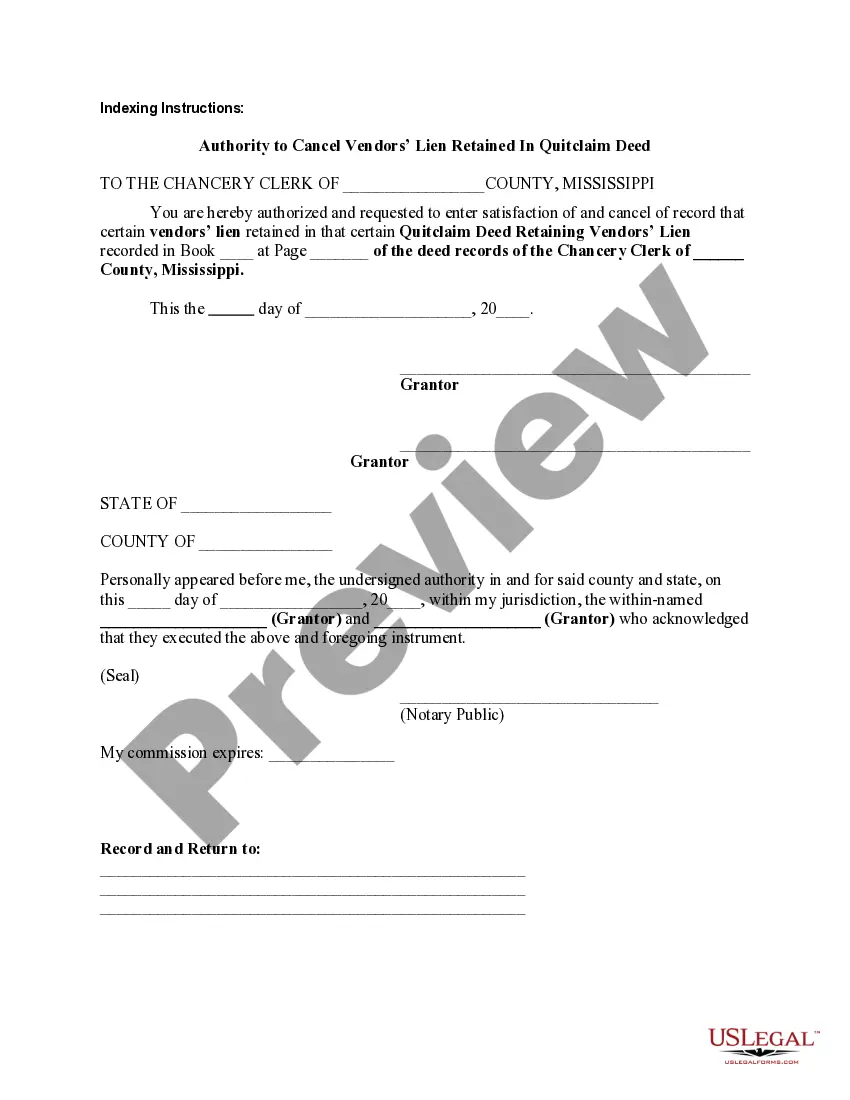
It is possible to obtain a quitclaim deed when there is a lien on the property. Whether you gain anything of value by virtue of the quitclaim deed will depend on the grantor's actual interest in the property as of the date he issues it to you.
When a warranty deed contains a vendor's lien, the buyer agrees to allow the seller to seize the property until the property is paid for in full.So, if a warranty deed includes a vendor's lien, it means the seller keeps the right to take possession of the property until the buyer finishes making payments.
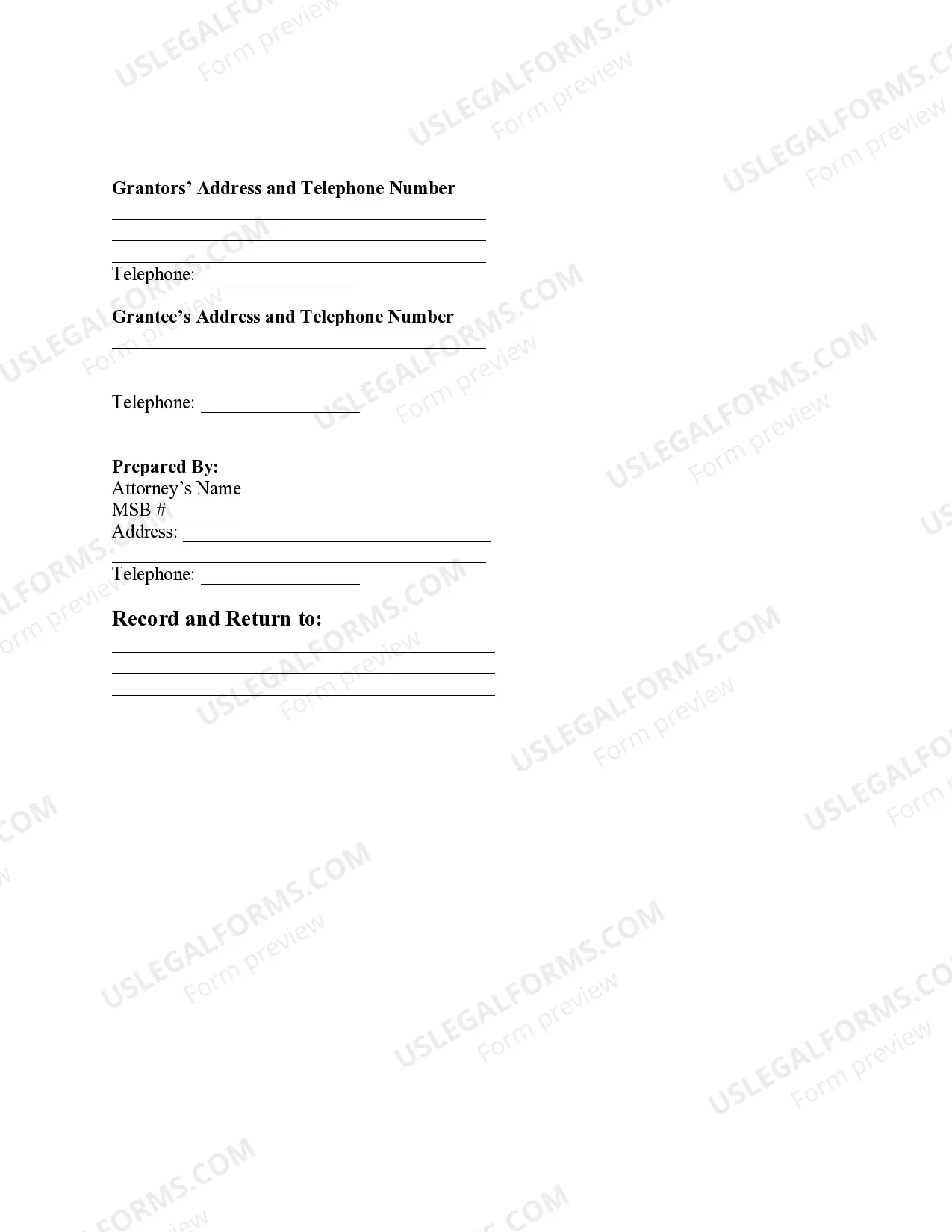
Before a quitclaim deed can be recorded with a county recorder in Mississippi, the grantor must sign and acknowledge it. The names, addresses, and telephone numbers of the grantors and grantees to the quit claim deed, along with a legal description of the real property should be provided on the first page (89-5-24).
It's usually a very straightforward transaction, but it's possible for a quitclaim deed to be challenged. If a quitclaim deed is challenged in court, the issue becomes whether the property was legally transferred and if the grantor had the legal right to transfer the property.
This release of mortgage is recorded or filed and gives notice to the world that the lien is no more. On the other hand, when you have a trust deed or deed of trust, the lender files a release deed.When you call the lender, ask for the release of lien department.
A "lien" is a notice that attaches to your property, telling the world that a creditor claims you owe it some money. A lien is typically a public record.A lien on your house, mobile home, car, or other property makes your title unclear. To clear up the title, you must pay off the lien.
A vendor's lien is the right of a seller to repossess the property sold until the buyer makes all payments for the full purchase price. The property is the collateral given as security to the seller for the purchase price. It is sometimes used in connection with a purchase money mortgage on real estate.