Missouri Written Revocation of Will
Overview of this form
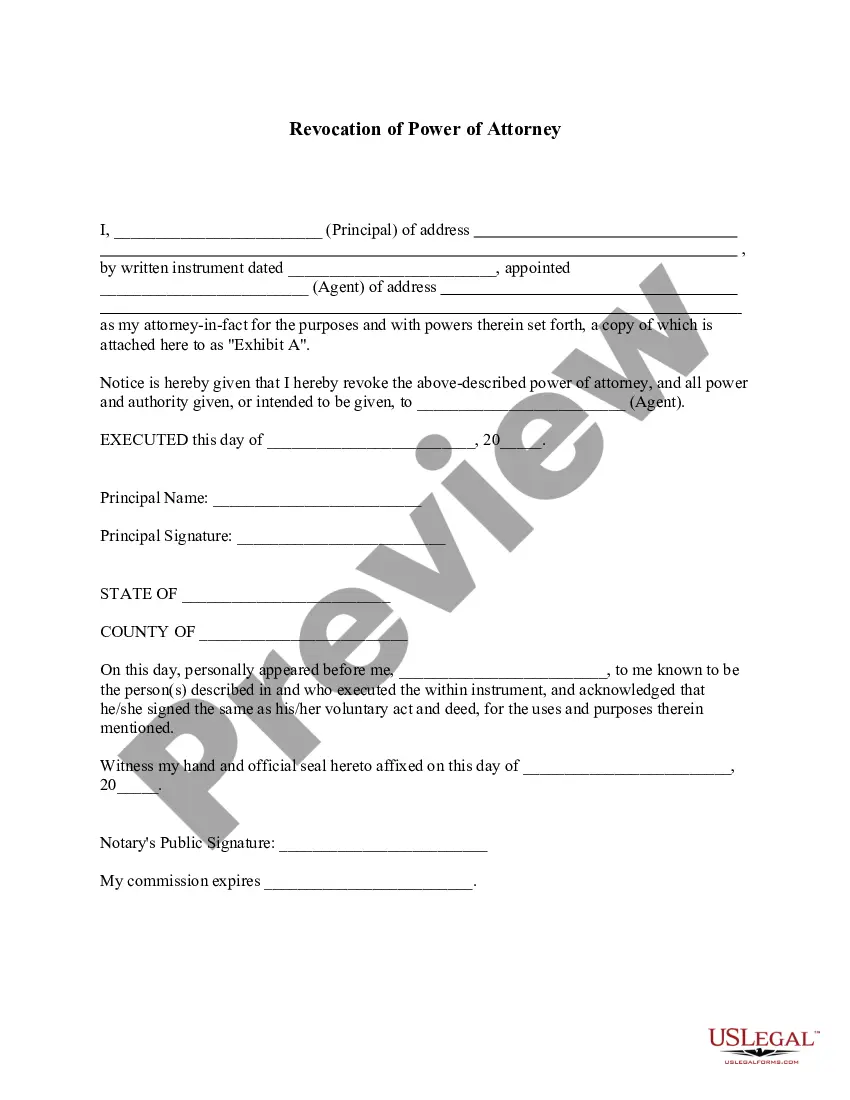
The Written Revocation of Will form is a legal document used to officially revoke any prior wills made by an individual. Unlike a new will that typically includes a clause revoking all previous wills, this separate written revocation ensures clarity about the testatorâs intentions. It is particularly important in cases where an earlier will may be more favorable to heirs than a new will that includes a revocation clause.
Key parts of this document
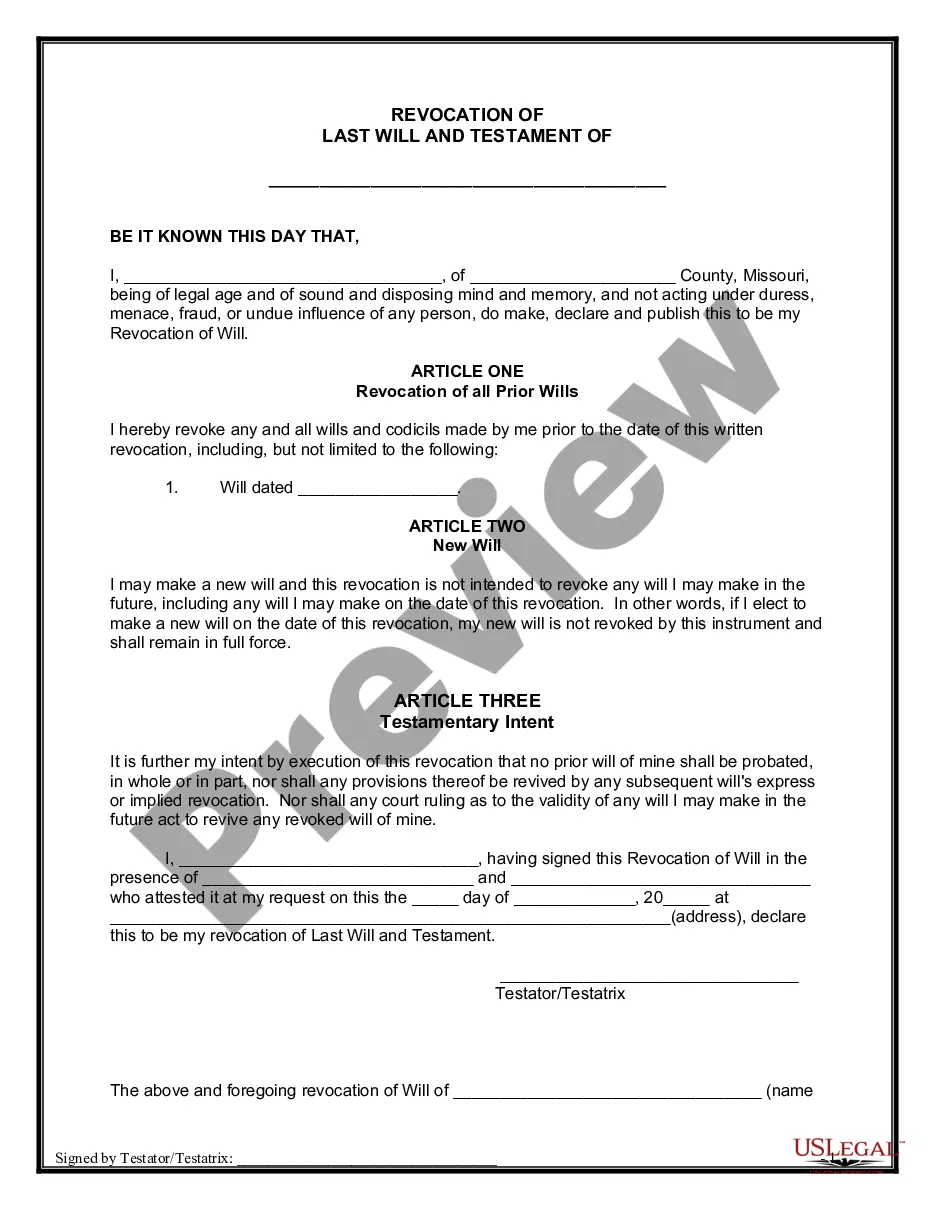
- Revocation of all prior wills: This section states that all previous wills and codicils are revoked.
- New will clause: It clarifies that creating a new will does not invalidate this revocation.
- Testamentary intent: This establishes the testator's intent to prevent any prior wills from being probated.
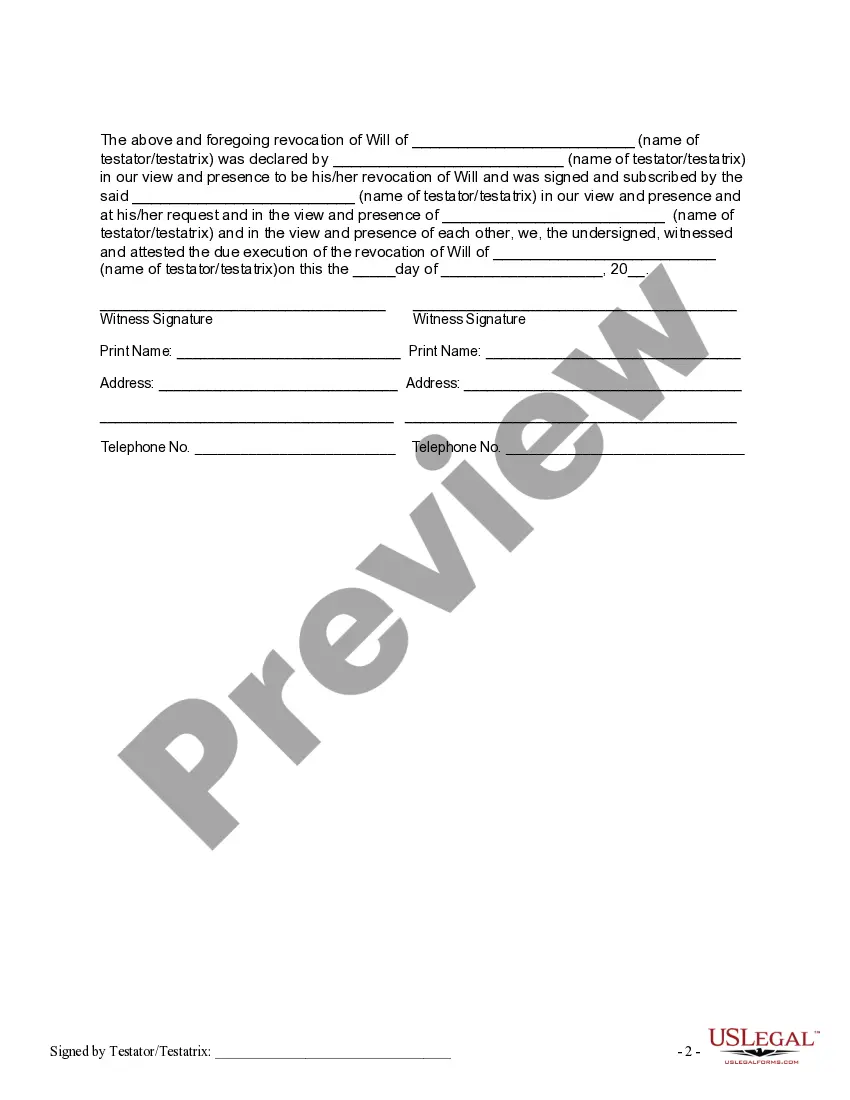
- Witness signatures: Requires signatures from two witnesses to validate the revocation.
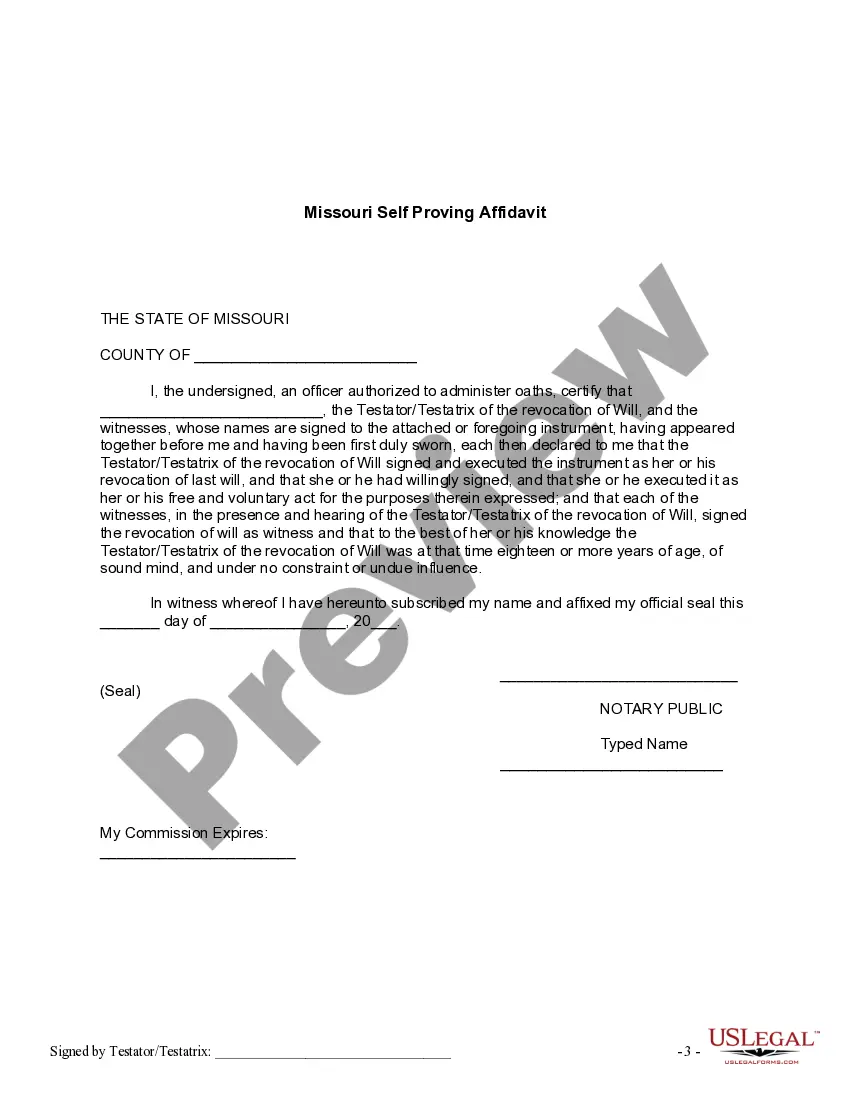
- Notary acknowledgment: Includes a section for notarization, ensuring the document is legally binding.

Situations where this form applies
You should use the Written Revocation of Will form when you want to cancel a previously made will and clarify that it should not be probated. This is essential when your circumstances change, such as getting married, divorced, or having children, and you wish to ensure that only your desired will is enforced after your passing.
Who needs this form
This form is ideal for:
- Individuals who have previously created a will and wish to revoke it.
- People who want to ensure their wishes are followed without ambiguity.
- Those looking to avoid legal disputes among heirs regarding multiple wills.
Completing this form step by step
To complete the Written Revocation of Will form, follow these steps:
- Enter your full name and county of residence at the top of the document.
- Clearly state the date of the prior will you are revoking.
- Sign the document in the presence of two witnesses.
- Have your witnesses sign and print their names and addresses on the form.
- Obtain notarization to confirm the validity of the document.
Notarization guidance
Yes, this form must be notarized to be legally valid in Missouri. US Legal Forms provides integrated online notarization, available 24/7 through secure video calls, ensuring the process is quick and convenient without the need to travel.
Get your form ready online
Our built-in tools help you complete, sign, share, and store your documents in one place.
Make edits, fill in missing information, and update formatting in US Legal Forms—just like you would in MS Word.
Download a copy, print it, send it by email, or mail it via USPS—whatever works best for your next step.
Sign and collect signatures with our SignNow integration. Send to multiple recipients, set reminders, and more. Go Premium to unlock E-Sign.
If this form requires notarization, complete it online through a secure video call—no need to meet a notary in person or wait for an appointment.
We protect your documents and personal data by following strict security and privacy standards.

Make edits, fill in missing information, and update formatting in US Legal Forms—just like you would in MS Word.

Download a copy, print it, send it by email, or mail it via USPS—whatever works best for your next step.

Sign and collect signatures with our SignNow integration. Send to multiple recipients, set reminders, and more. Go Premium to unlock E-Sign.

If this form requires notarization, complete it online through a secure video call—no need to meet a notary in person or wait for an appointment.

We protect your documents and personal data by following strict security and privacy standards.
Common mistakes
- Not including the date of the prior will being revoked.
- Failing to have the document signed in front of witnesses.
- Not providing correct information about the witnesses' identities.
- Overlooking the notarization requirement, if mandated.
Benefits of completing this form online
- Convenience of downloading and completing the form at your own pace.
- Editable format allows for personalized information input.
- Drafted by licensed attorneys, ensuring legal reliability.
What to keep in mind
- The Written Revocation of Will form effectively cancels any previous wills you have made.
- It is crucial to have the revocation witnessed and notarized to ensure its enforceability.
- This form helps prevent confusion among heirs regarding which will is valid.
Looking for another form?


Form popularity
FAQ
Missouri's Requirements for a Proper Holographic Will Despite their shortcomings, Missouri accepts holographic wills.The testator must sign the will. The testator's signature must be witnessed by two people who sign in the testator's presence.
Generally, you can revoke a will by (1) destroying the old will, (2) creating a new will or (3) making changes to an existing will. In some circumstances, simply giving away all or your property and assets before you die can have the effect of revoking a will (subject to estate tax penalties).
Capacity: The testator must be of sound mind. Signature: The will must be signed by the testator or by someone else in the testator's name in his presence, by his direction. Witnesses: A Missouri will must be signed by at least two witnesses who should not be beneficiaries, in the presence of the testator.
Self-written wills are typically valid, even when handwritten, as long as they're properly witnessed and notarized, or proven in court. A handwritten will that is not witnessed or notarized is considered a holographic will. Not all states accept holographic wills .
A will is revoked by a later will only to the extent that new provisions are inconsistent with it. But any confusion could motivate a 'losing' beneficiary to challenge your latest will.If you have made a more recent will (and signed it in the presence of witnesses), the old one is no longer valid.
While some states recognize handwritten wills, also known as holographic wills, Missouri does not recognize holographic wills as valid unless all of the statutory requirements are met, or the will is considered valid in the state where it was prepared and executed.552, 447 (Mo. 1920).
A testator can revoke a will by making changes to parts of an existing will. The newly-amended will, now called a codicil, has the effect of creating a new will because it can change key aspects of an existing will, including new beneficiaries and property designations.
Alberta Wills can be changed at any time simply by visiting your lawyer.In some situations, wills are automatically revoked, such as when you get married. Consider making an entirely new will when you need to make major changes and using a codicil for small changes.
Although Missouri does not require a will to be notarized, most Missouri practitioners use two witnesses and a notary to make the will self-proving (see Drafting Note, Self-Proving Affidavit).