Sample Letter per Employment Contract
About this form
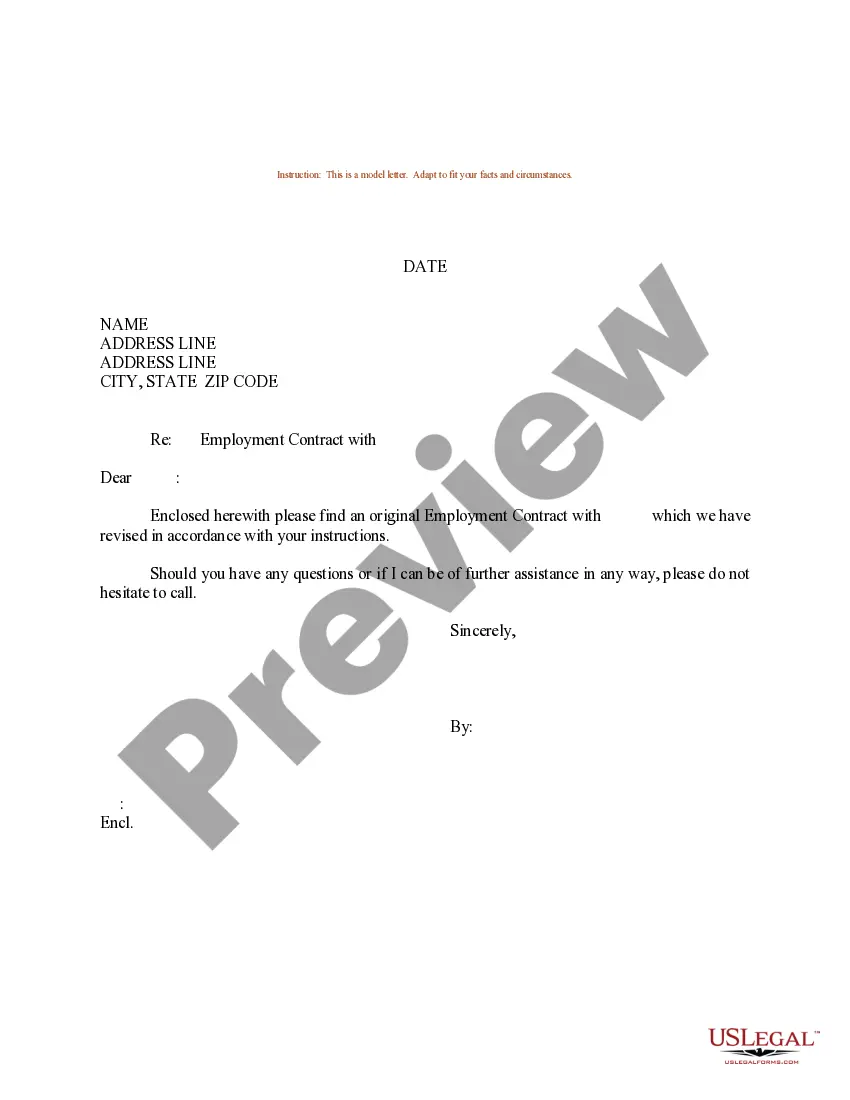
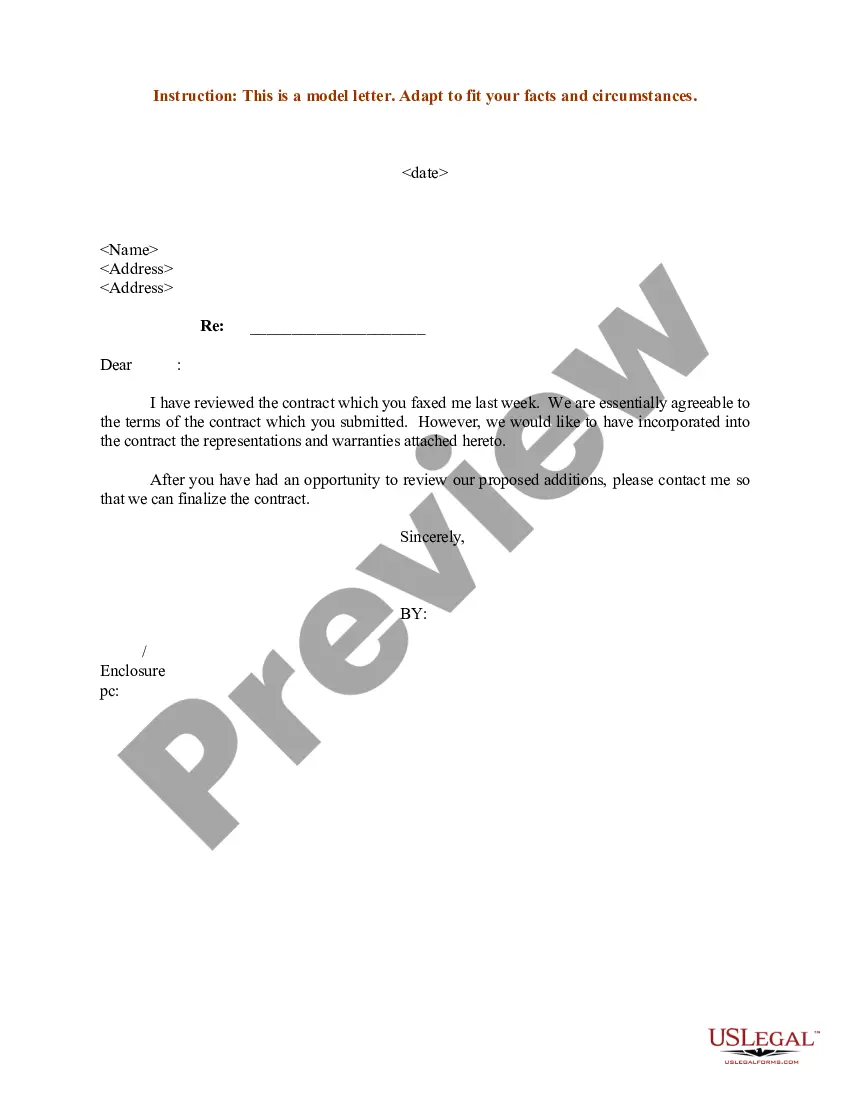
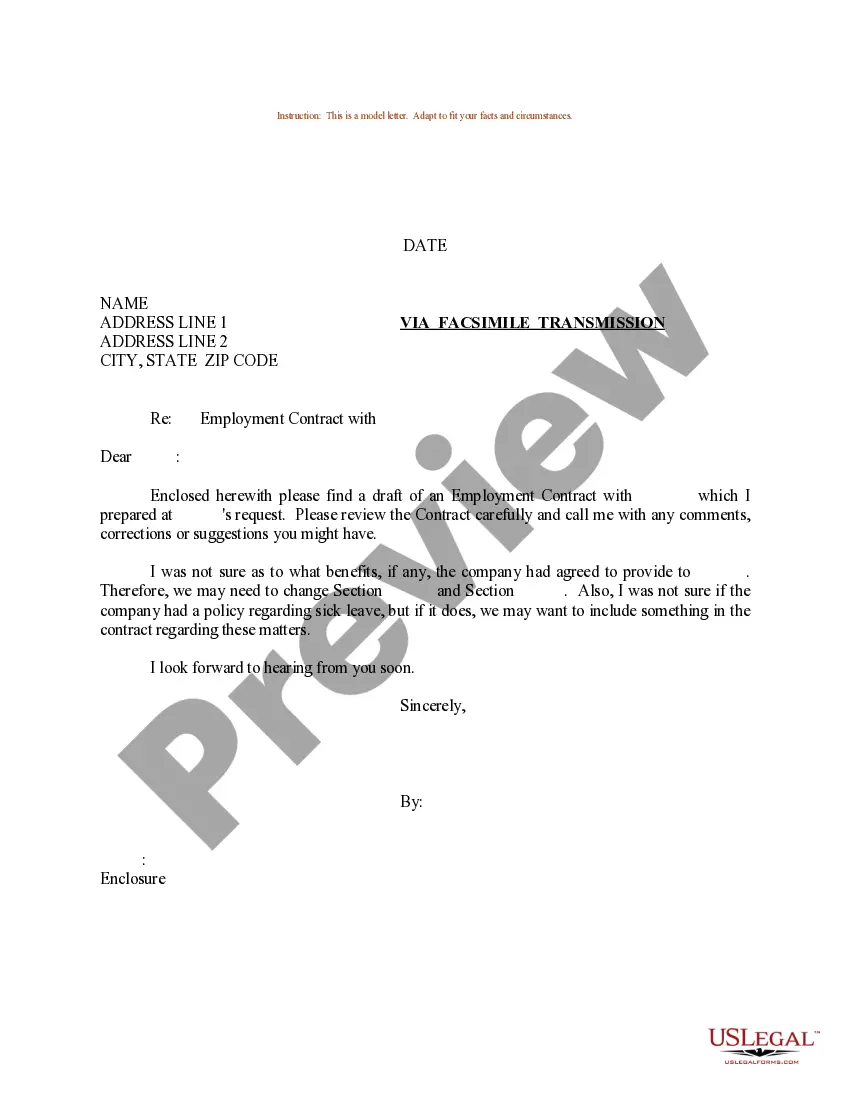
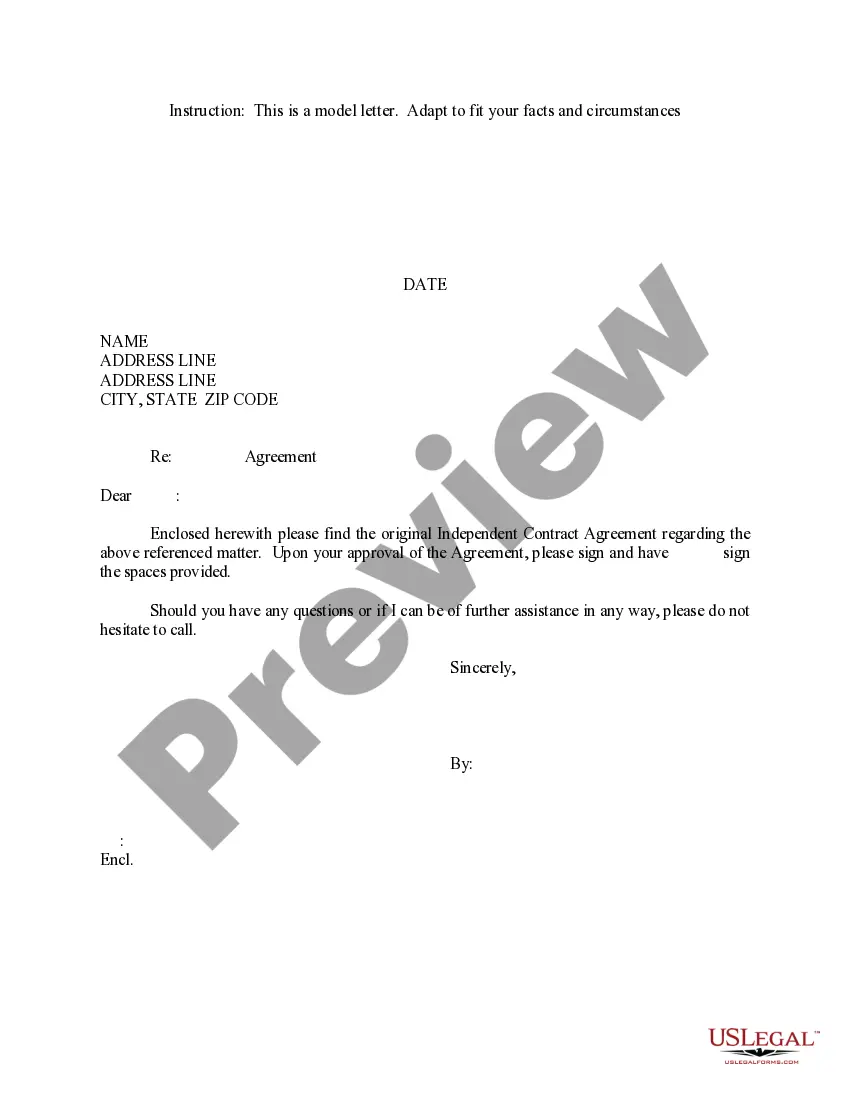
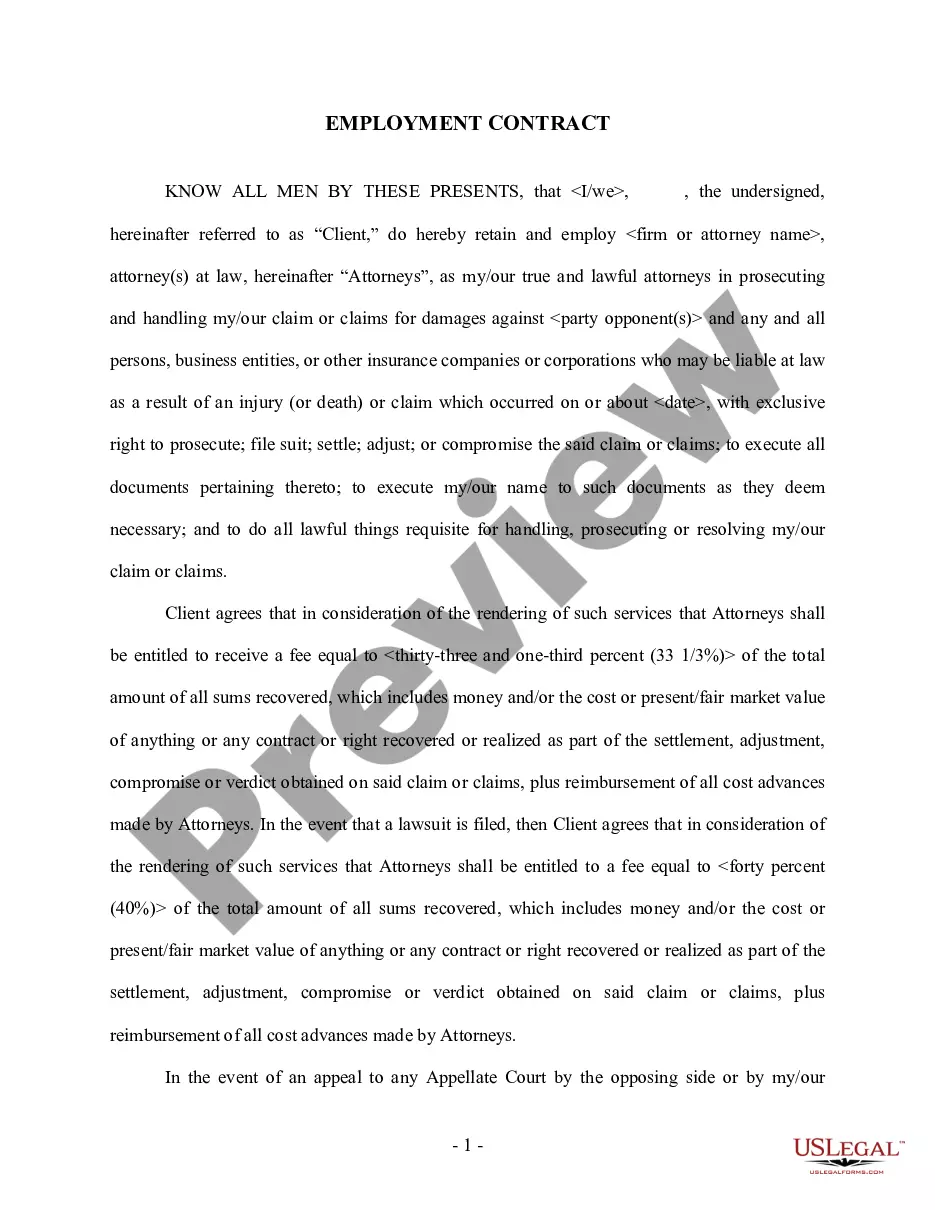
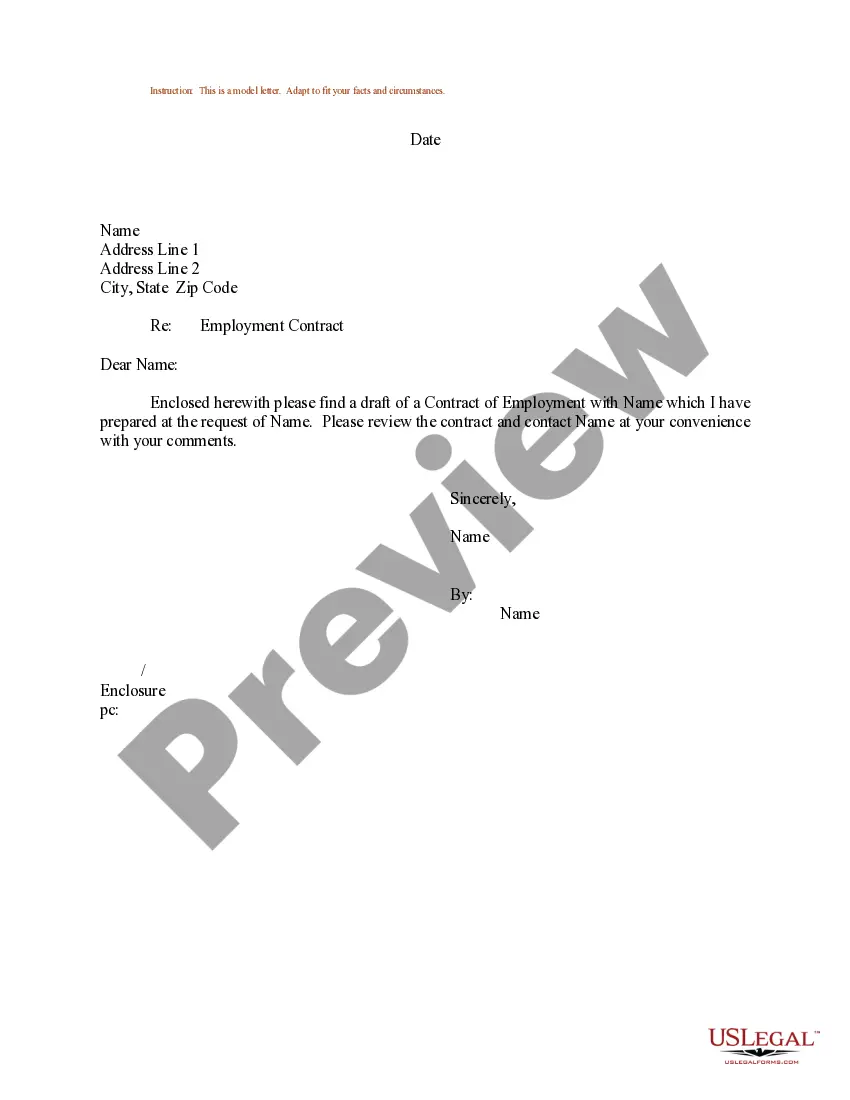
The Sample Letter per Employment Contract serves as a template for employees and employers to create a formal letter outlining the key terms of employment. This letter may be used to clarify the expectations and responsibilities of the parties involved. Unlike more detailed legal contracts, this form is concise and focuses primarily on the essential elements of the employment agreement.
Main sections of this form
- Date of the letter
- Name of the employee
- Address of the employee
- City, state, and ZIP code of the employee
When this form is needed
This form is useful when a new employee is being hired or when an existing employee's contract terms need to be outlined in writing. It helps clarify any uncertainties regarding the job role, salary, work hours, and other employment conditions, ensuring both parties have a mutual understanding of the arrangement.
Who needs this form
- Employers looking to formalize an employment agreement
- Employees seeking a clear understanding of their job terms
- HR professionals needing a standard template for employment letters
How to prepare this document
- Enter the date at the top of the letter.
- Add the employee's full name and address.
- Specify the city, state, and ZIP code of the employee.
- Review the template to ensure all relevant details regarding the employment are included.
- Save the document for both parties to sign and retain a copy of the finalized letter.
Notarization guidance
Notarization is not commonly needed for this form. However, certain documents or local rules may make it necessary. Our notarization service, powered by Notarize, allows you to finalize it securely online anytime, day or night.
Get your form ready online
Our built-in tools help you complete, sign, share, and store your documents in one place.
Make edits, fill in missing information, and update formatting in US Legal Forms—just like you would in MS Word.
Download a copy, print it, send it by email, or mail it via USPS—whatever works best for your next step.
Sign and collect signatures with our SignNow integration. Send to multiple recipients, set reminders, and more. Go Premium to unlock E-Sign.
If this form requires notarization, complete it online through a secure video call—no need to meet a notary in person or wait for an appointment.
We protect your documents and personal data by following strict security and privacy standards.

Make edits, fill in missing information, and update formatting in US Legal Forms—just like you would in MS Word.

Download a copy, print it, send it by email, or mail it via USPS—whatever works best for your next step.

Sign and collect signatures with our SignNow integration. Send to multiple recipients, set reminders, and more. Go Premium to unlock E-Sign.

If this form requires notarization, complete it online through a secure video call—no need to meet a notary in person or wait for an appointment.

We protect your documents and personal data by following strict security and privacy standards.
Common mistakes to avoid
- Forgetting to include the date of the letter.
- Leaving out important details such as job title and salary.
- Failing to proofread for grammatical or spelling errors.
- Not having both parties sign the letter after completion.
Benefits of completing this form online
- Convenient access to a professionally drafted template.
- Easy to customize and edit according to specific needs.
- Reliable format ensuring compliance with legal standards.
Legal use & context
- This letter serves as an essential framework for establishing clear employment agreements.
- While it may not require notarization, having it signed by both parties can help validate the terms.
- Ensure that the letter complies with local labor laws to avoid future disputes.
Quick recap
- The Sample Letter per Employment Contract formalizes employment terms.
- Properly completed letters can prevent potential misunderstandings.
- Always verify compliance with applicable state laws.
Looking for another form?
Form popularity
FAQ
Begin with the Date and the Address of the Other Party. Start with the Basic Details of the Planned Work. Include Special Stipulations. State Whether There Will be a Further Agreement. Create an Area for Signatures. Sign and Date the Contract Letter.
Write the company's information. Include a statement verifying that the employee does indeed work at this place of employment, as well as the date he or she began working. Sign the document. Current Employee. Past Employee. Best Practices.
Company Name. Nature of Work: Your duty hours will be 40 hours a week. Salary & Benefits: You will be drawing a salary of $8000 per month. Rules & Regulations: The company expects you to stick to all the rules and regulations effective at the time of your employment.
Get it in writing. Keep it simple. Deal with the right person. Identify each party correctly. Spell out all of the details. Specify payment obligations. Agree on circumstances that terminate the contract. Agree on a way to resolve disputes.
Provide details of the parties. Describe services or results. Set out payment details. Assign intellectual property rights. Explain how to treat confidential information. Identify who is liable indemnity. Provide insurance obligations. Outline any subcontracting agreements.
An employment verification letter, also called a letter of employment or proof of employment letter, is used to confirm a person's employment dates, salary, and job title. Similar letters are also used by lenders and other entities.
If you didn't use a job description, take an hour to sit down and write out the duties you want your employee to perform. Be as specific as possible. The job description also should have included the target wage. You should consider whether or not you are paying a fair rate.
Q1: A person A agrees to sell his house to a person B for 50 lakh. This is an example of: A contract. An agreement. Neither a Contract nor an Agreement.