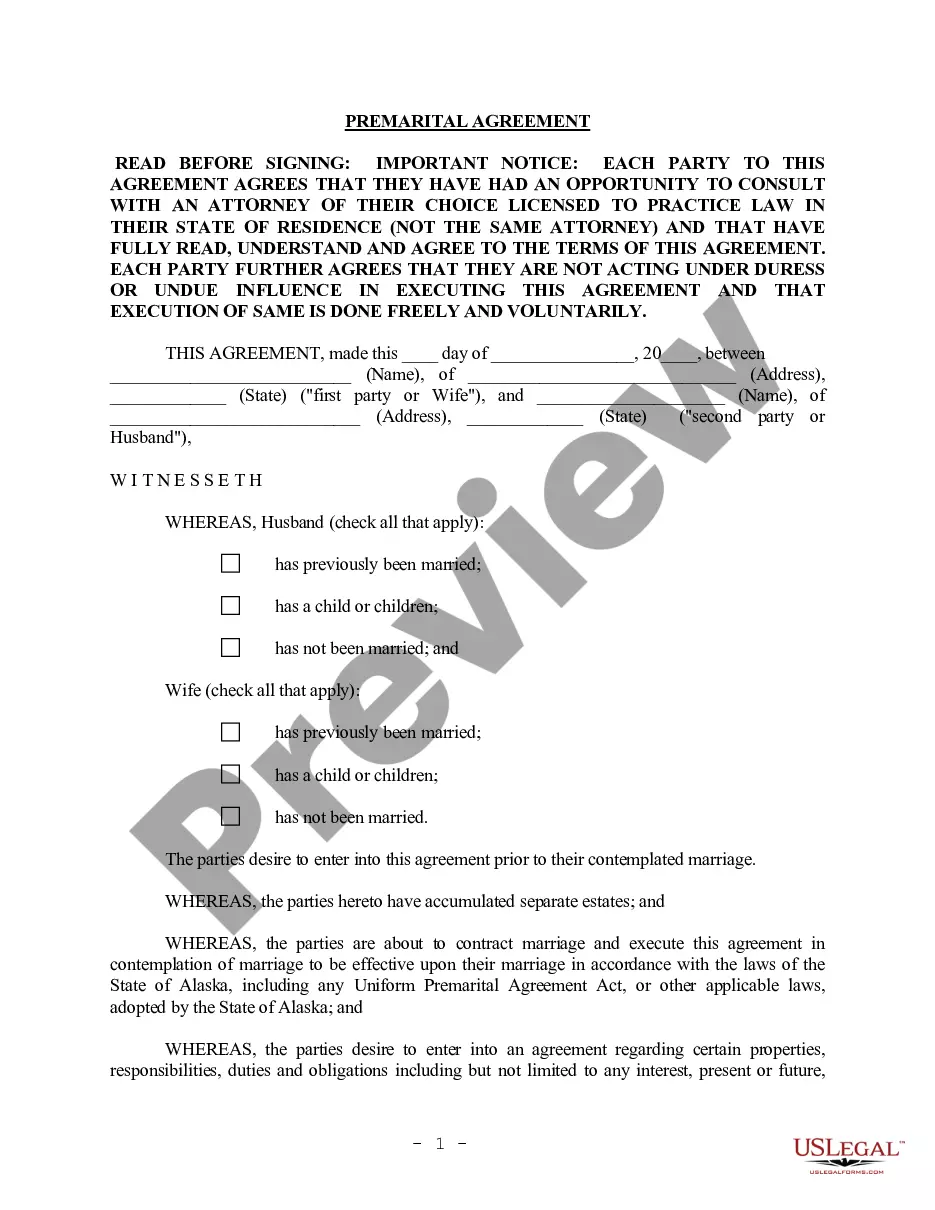
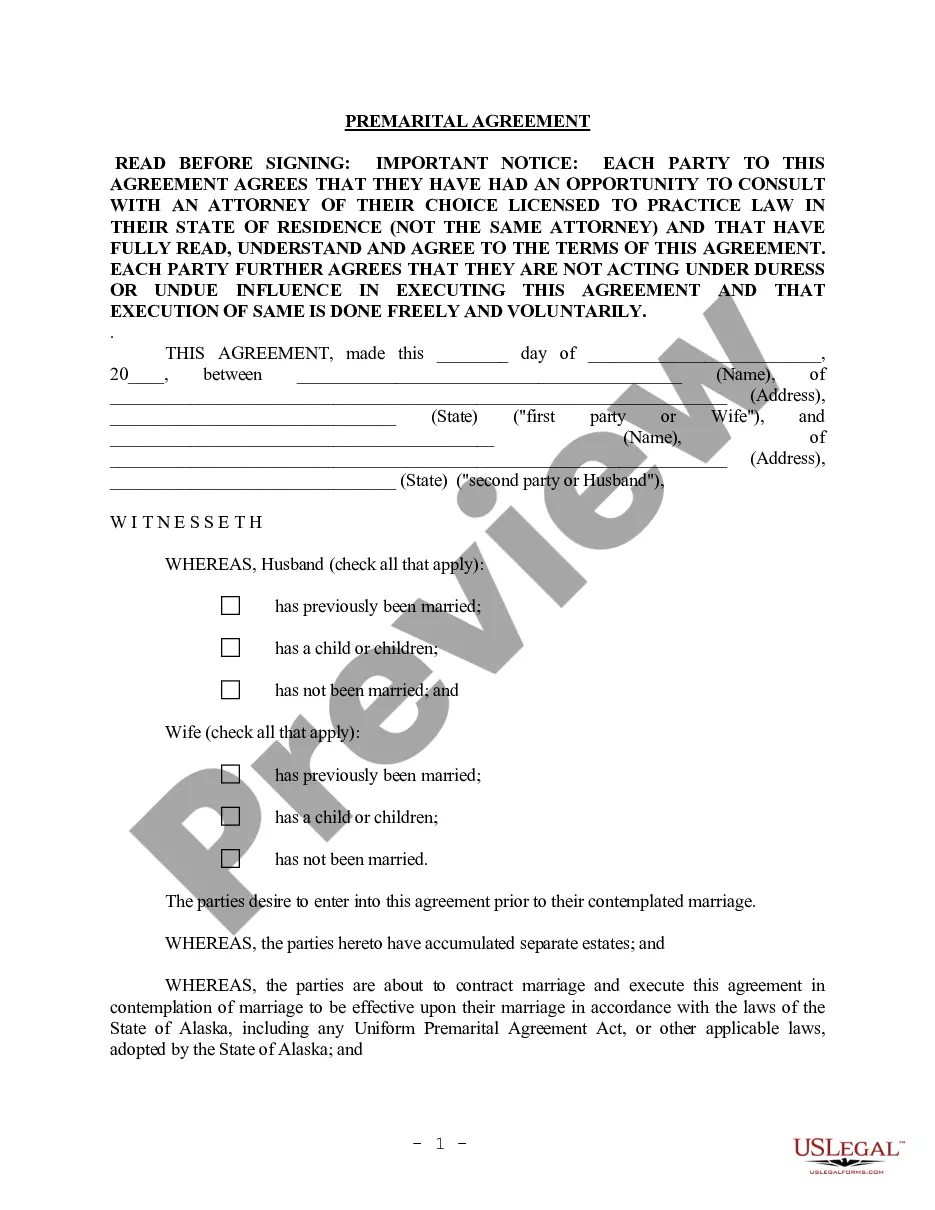
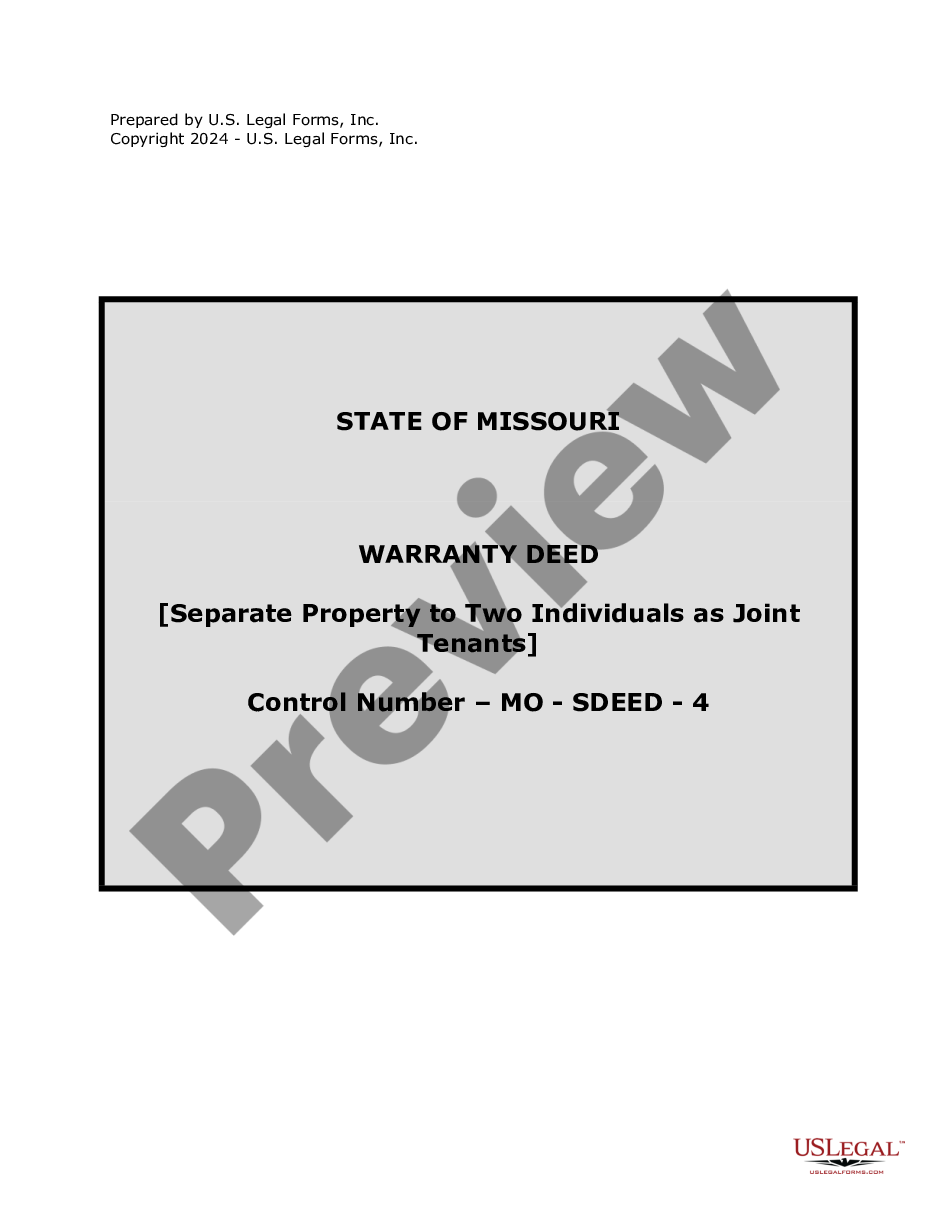
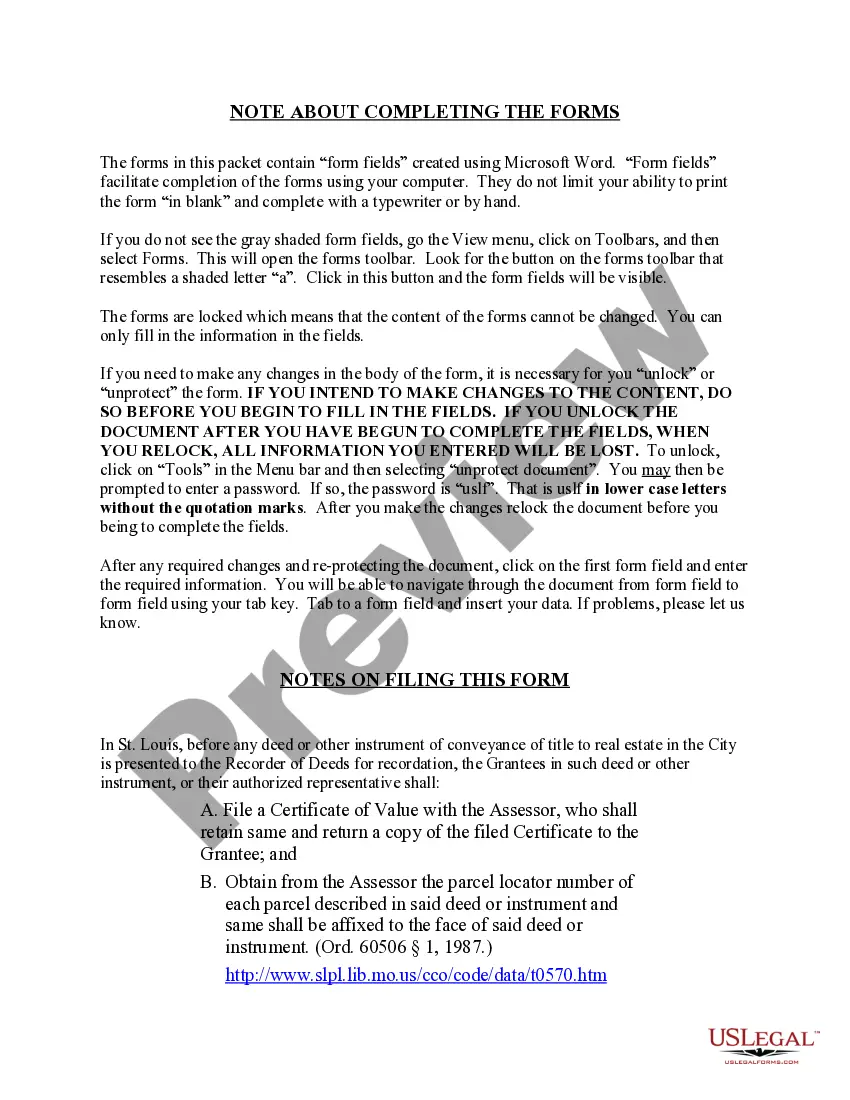
Missouri Warranty Deed for Separate or Joint Property to Joint Tenancy
Overview of this form
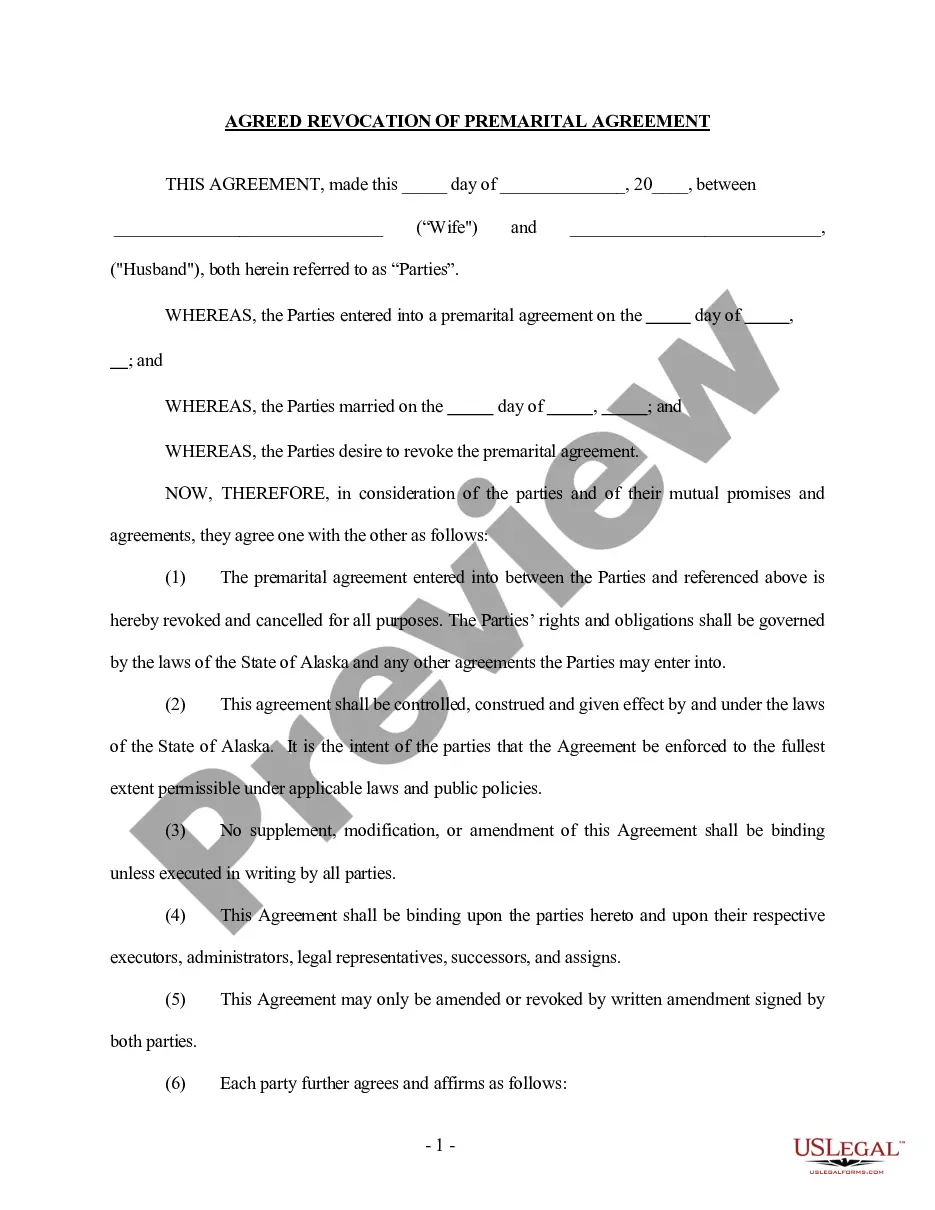
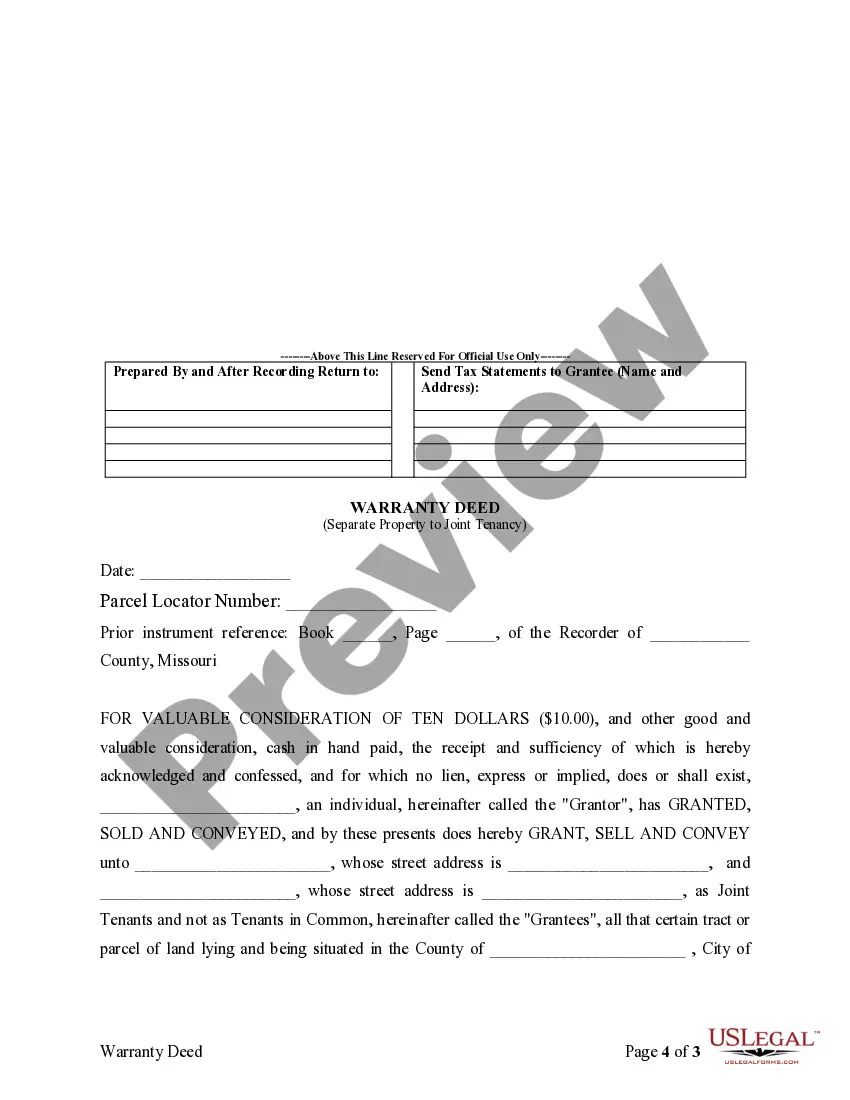
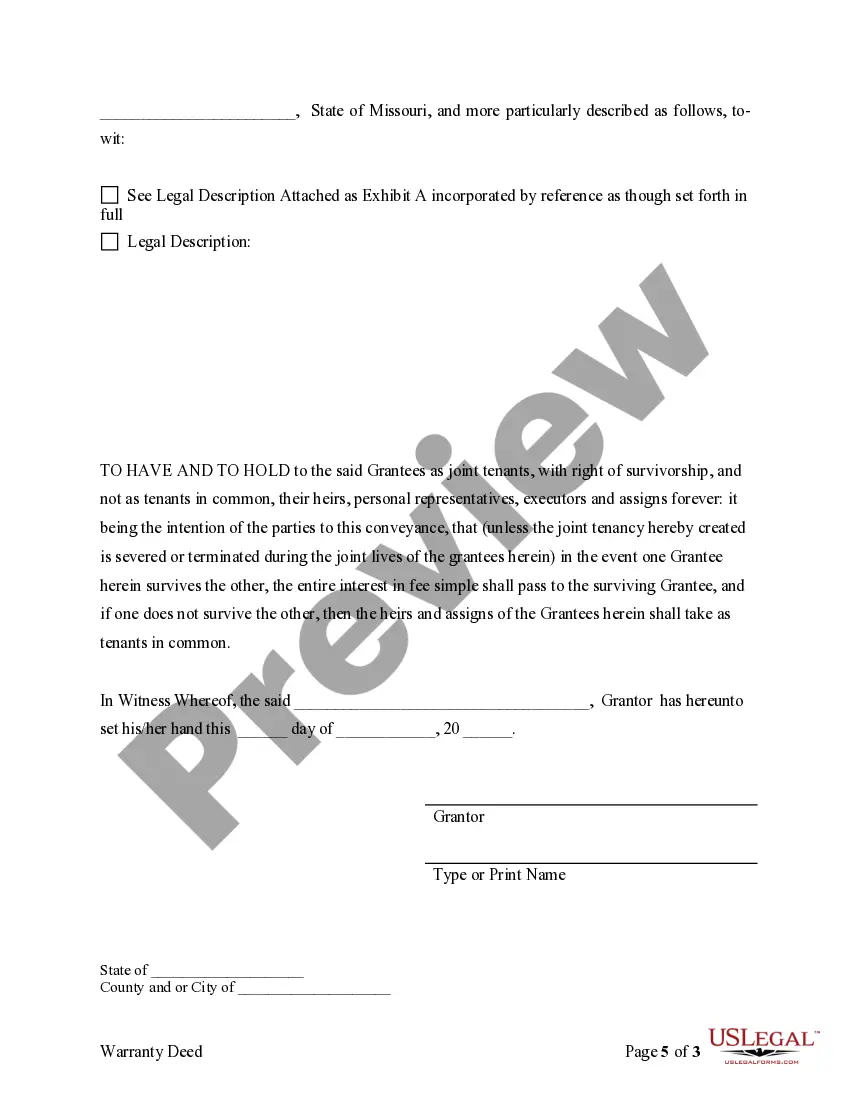
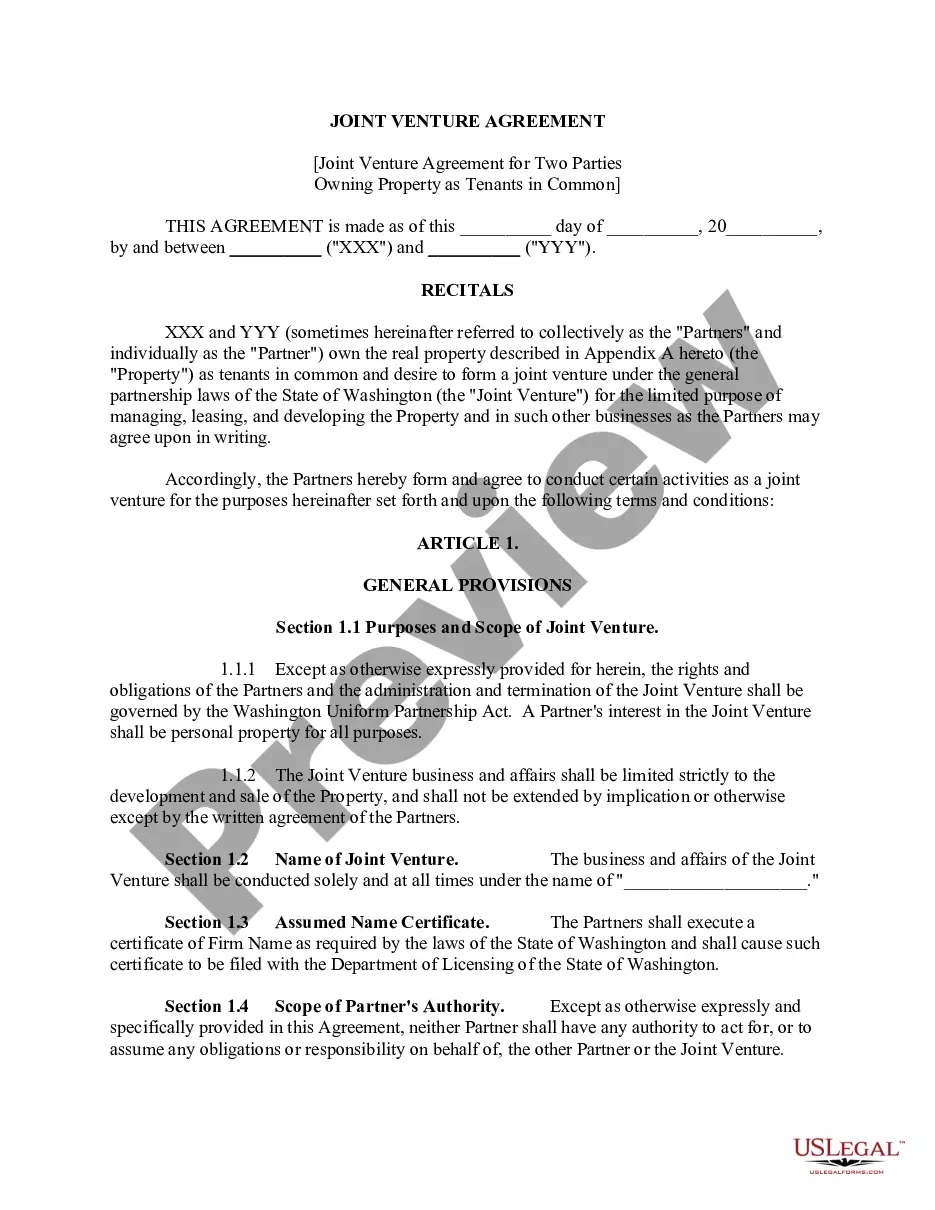
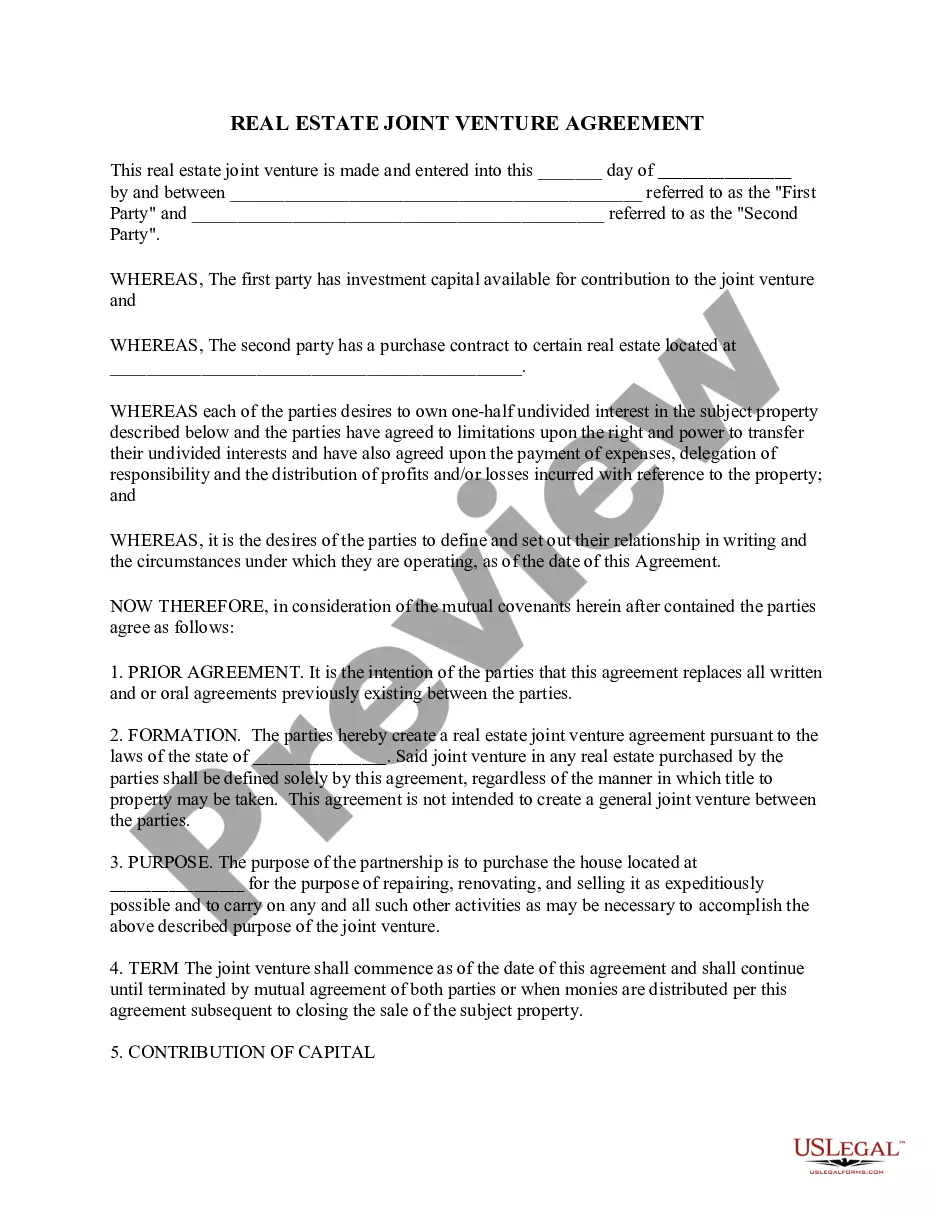
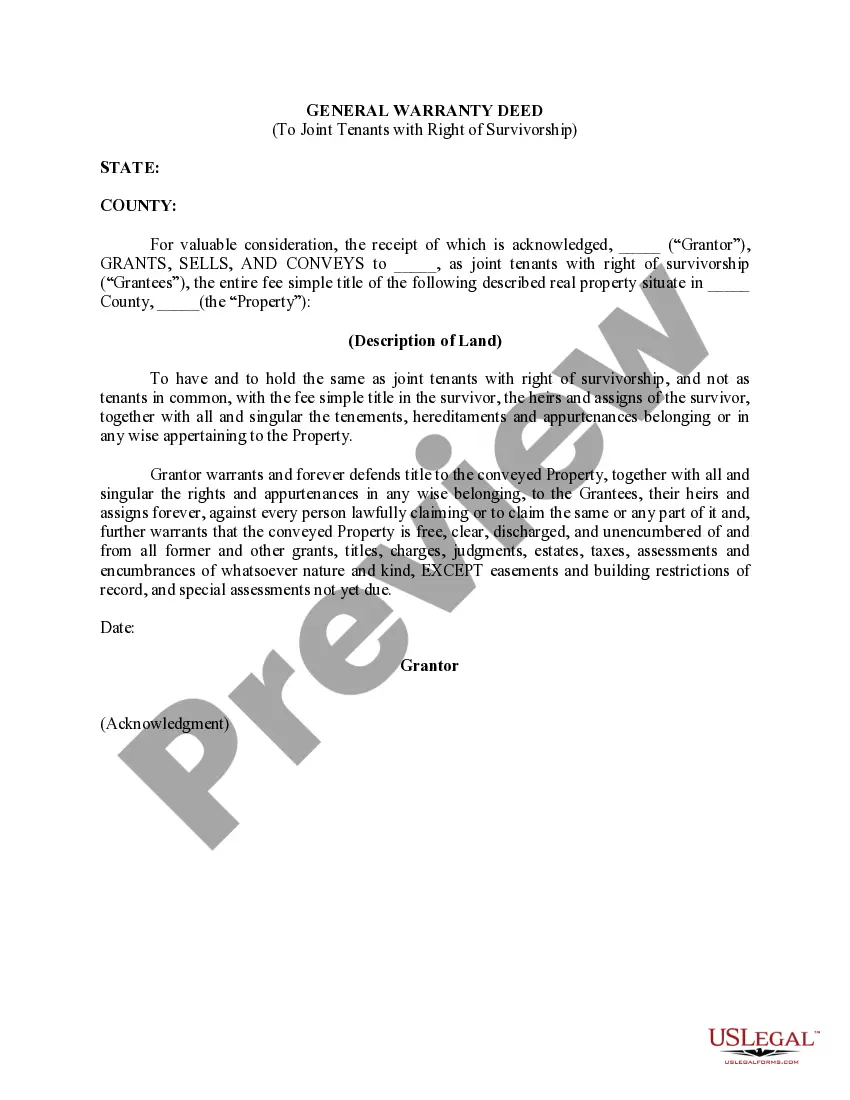
This Warranty Deed for Separate or Joint Property to Joint Tenancy is a legal document that facilitates the conversion of separate property or joint property into a joint tenancy holding. This form ensures that both parties hold the property equally and with rights of survivorship, distinguishing it from other types of property deeds.
Key parts of this document
- Identification of the Grantor (the person transferring the property).
- Identification of the Grantees (the individuals receiving the property).
- Description of the property being conveyed.
- Statement of consideration (the payment for the property).
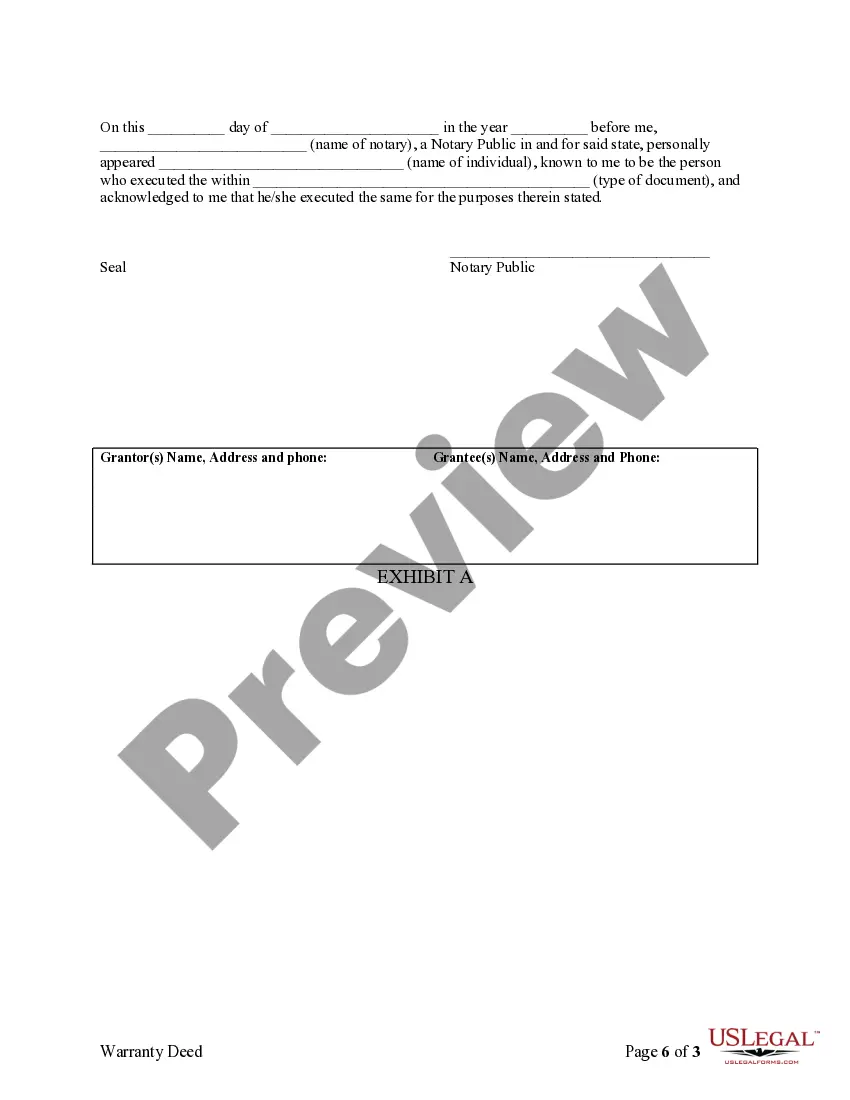
- Signature of the Grantor and necessary notary section for validation.


When to use this form
This form is typically used when two individuals wish to hold property together as joint tenants. This form is particularly useful in scenarios such as when spouses buy a home together or when family members decide to share ownership of a property, ensuring equitable ownership and rights of survivorship.
Who this form is for
- Individuals looking to convert separate or joint-owned property into joint tenancy.
- Spouses aiming to simplify property ownership and inheritance issues.
- Co-owners of property who wish to ensure equal rights in the ownership.
How to prepare this document
- Identify the Grantor and Grantees in the designated fields.
- Provide the full legal description of the property being conveyed.
- Enter the consideration amount, reflecting the payment for the property.
- Ensure the Grantor signs the document, including the date.
- Complete the notary section, securing a notarization where required.
Does this form need to be notarized?
To make this form legally binding, it must be notarized. Our online notarization service, powered by Notarize, lets you verify and sign documents remotely through an encrypted video session.
Get your form ready online
Our built-in tools help you complete, sign, share, and store your documents in one place.
Make edits, fill in missing information, and update formatting in US Legal Forms—just like you would in MS Word.
Download a copy, print it, send it by email, or mail it via USPS—whatever works best for your next step.
Sign and collect signatures with our SignNow integration. Send to multiple recipients, set reminders, and more. Go Premium to unlock E-Sign.
If this form requires notarization, complete it online through a secure video call—no need to meet a notary in person or wait for an appointment.
We protect your documents and personal data by following strict security and privacy standards.

Make edits, fill in missing information, and update formatting in US Legal Forms—just like you would in MS Word.

Download a copy, print it, send it by email, or mail it via USPS—whatever works best for your next step.

Sign and collect signatures with our SignNow integration. Send to multiple recipients, set reminders, and more. Go Premium to unlock E-Sign.

If this form requires notarization, complete it online through a secure video call—no need to meet a notary in person or wait for an appointment.

We protect your documents and personal data by following strict security and privacy standards.
Common mistakes
- Incomplete legal description of the property.
- Neglecting to have the document notarized if required.
- Not properly identifying all parties involved in the transfer.
Why complete this form online
- Convenience of downloading or printing the form directly from home.
- Editability allows for careful review and accurate completion.
- 24/7 access ensures you can complete the process at your convenience.
Main things to remember
- The Warranty Deed for Separate or Joint Property to Joint Tenancy facilitates joint ownership of property.
- Proper completion and notarization are essential for legal validity.
- This form is specifically designed for use in Missouri, adhering to local property laws.
- It can help avoid probate and ensure seamless transfer of property upon the death of one owner.
Looking for another form?
Form popularity
FAQ
To transfer property title to a family member in Missouri, you typically need to complete a Missouri Warranty Deed for Separate or Joint Property to Joint Tenancy. This deed should be properly filled out, signed, and notarized to ensure its legality. After that, you must file the deed with the county recorder's office. For those looking for a streamlined process, US Legal Forms provides easy-to-use templates and guidance to help you navigate the transfer accurately and efficiently.
One significant disadvantage of joint tenancy ownership is the risk of losing control over your share of the property. In a Missouri Warranty Deed for Separate or Joint Property to Joint Tenancy, all owners have equal rights, which means decisions require consensus. This shared ownership can lead to disputes among co-owners, especially during a sale or transfer of the property. Furthermore, if one co-owner faces financial issues, their creditors may target the property, affecting all owners.
A Missouri Warranty Deed for Separate or Joint Property to Joint Tenancy can become invalid for several reasons. If the deed lacks the necessary signatures, contains inaccurate property descriptions, or fails to adhere to state laws, it may not hold up in court. Additionally, if the property owner was under duress or lacked the mental capacity to sign, this can also render the deed invalid. It's essential to ensure that all legal requirements are met to maintain the validity of your warranty deed.
Obtaining a warranty deed in Missouri involves a few straightforward steps. First, you need to draft the warranty deed, which can be done using templates available on platforms like uslegalforms. This Missouri Warranty Deed for Separate or Joint Property to Joint Tenancy must include relevant details such as the property description and the names of the parties involved. After preparing the deed, you will need to sign it before a notary and then file it with your local county recorder's office to ensure it is legally recognized.
To change a deed from joint tenants to tenants in common, you will need to prepare a new deed that specifies the desired ownership structure. This involves drafting a Missouri Warranty Deed for Separate or Joint Property to Joint Tenancy that clearly outlines the change in ownership. Once you have the new deed, sign it in the presence of a notary, and then record it with the county recorder's office. This process ensures that the new ownership reflects your intentions and protects your property rights.
The most important clause in a Missouri Warranty Deed for Separate or Joint Property to Joint Tenancy is the granting clause. This clause specifies the intent of the grantor to transfer the property rights to the grantee. It clearly outlines the nature of the ownership, whether the property is held as separate or joint tenancy. Understanding this clause is crucial for ensuring that your property rights are properly established and protected.
Survivorship rights take precedence over any contrary terms in a person's will because property subject to rights of survivorship is not legally part of their estate at death and so cannot be distributed through a will.
A warranty deed, also known as a general warranty deed, is a legal real estate document between the seller (grantor) and the buyer (grantee). The deed protects the buyer by pledging that the seller holds clear title to the property and there are no encumbrances, outstanding liens, or mortgages against it.
What Is the Difference Between a Warranty Deed & a Survivorship Deed?A warranty deed is the most comprehensive and provides the most guarantees. Survivorship isn't so much a deed as a title. It's a way to co-own property where, upon the death of one owner, ownership automatically passes to the survivor.
A joint tenant can indeed sever the right of survivorship WITHOUT the consent of the other joint tenants.In order to sever the right of survivorship, a tenant must only record a new deed showing that his or her interest in the title is now held in a Tenancy-in-Common or as Community Property.