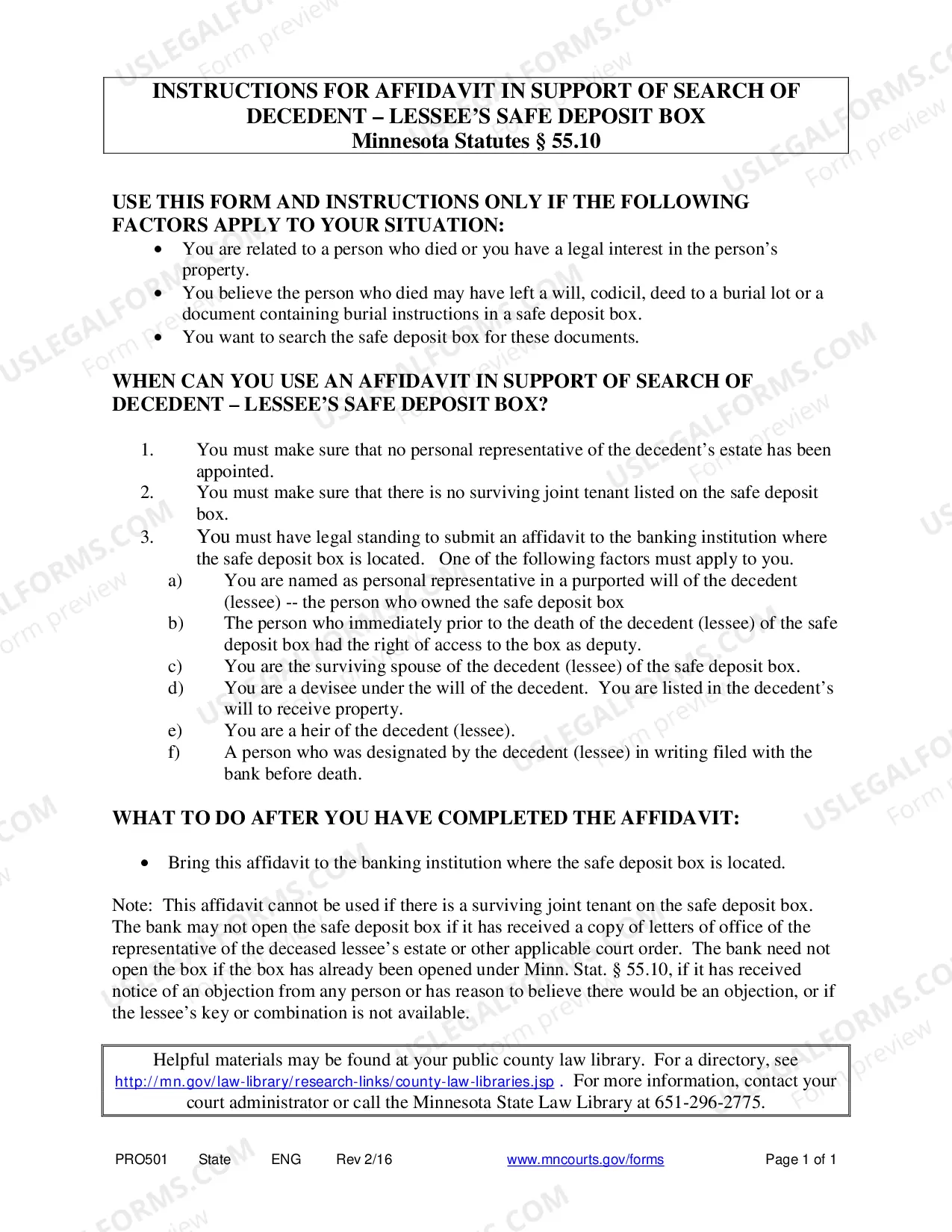
Minnesota Instructions - Affidavit in Support of Search of Decedent's Safe Deposit Box
Overview of this form
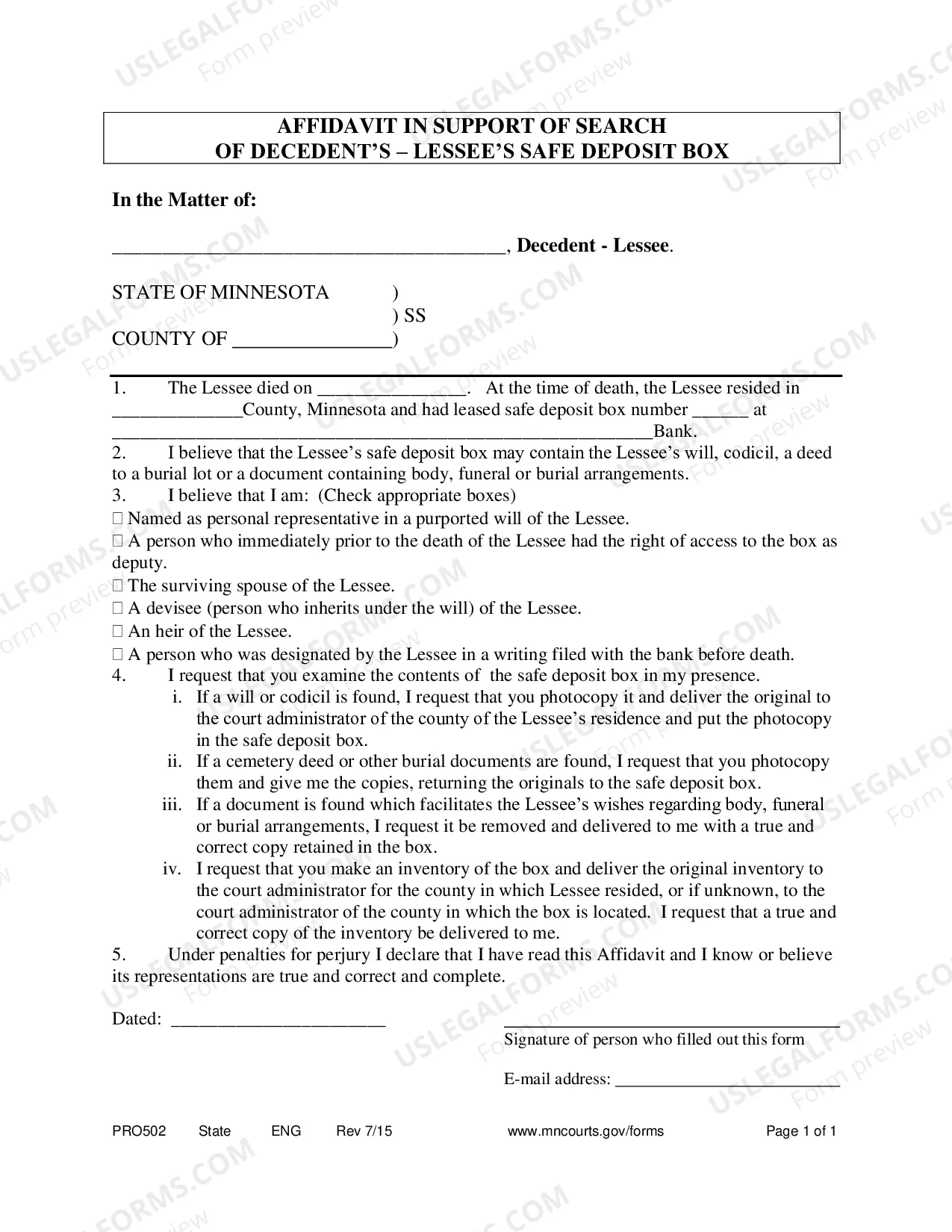
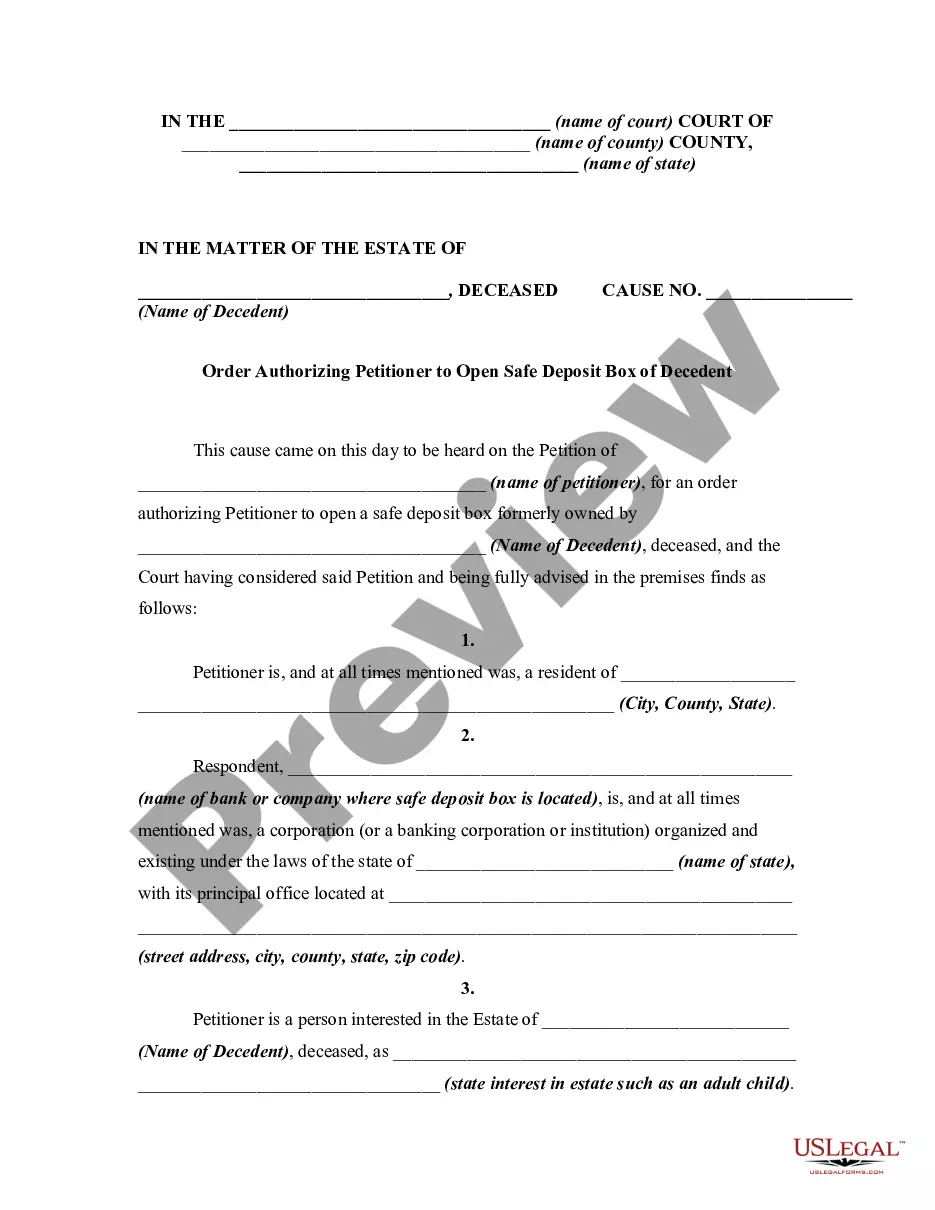
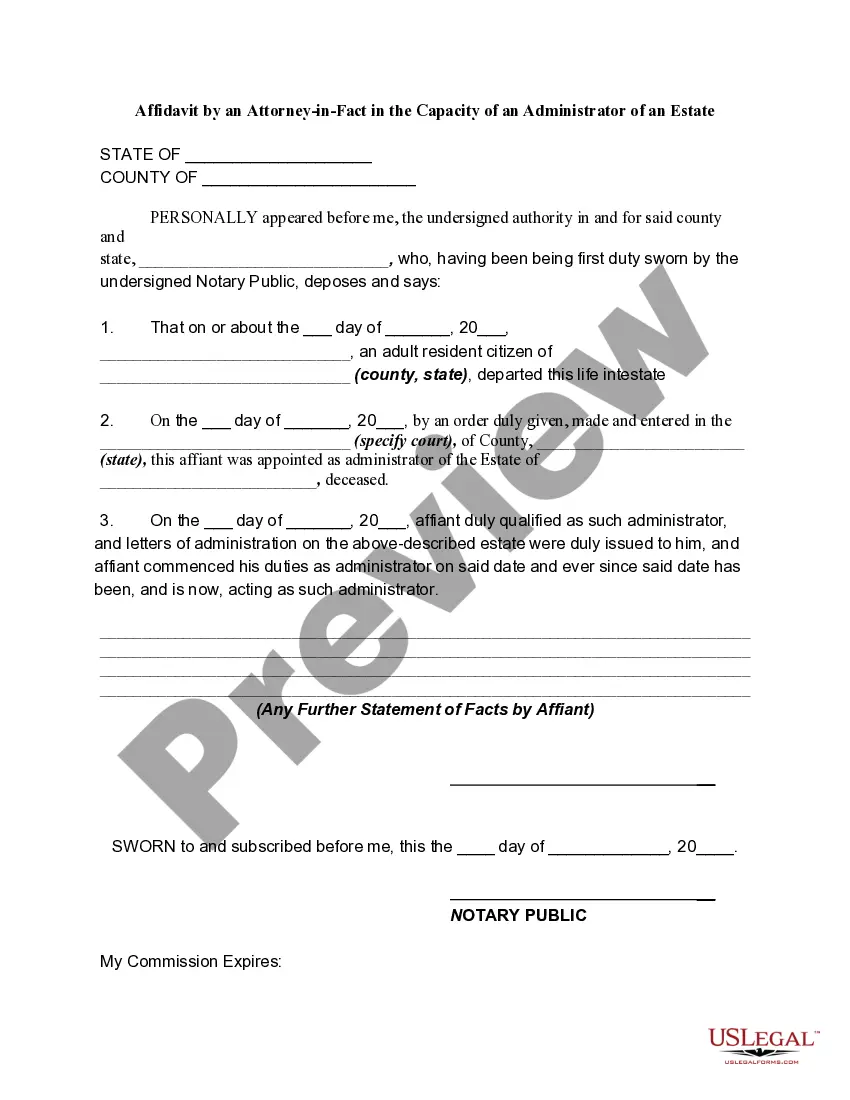
The Affidavit in Support of Search of Decedent's Safe Deposit Box is a legal document that allows heirs or other interested parties to search a deceased personâs safe deposit box for important documents, such as a will or burial instructions. This form differs from other estate planning documents by focusing specifically on accessing safe deposit boxes held by banks when no personal representative of the estate has been appointed.
Form components explained
- Identification of the decedent and their safe deposit box details.
- Statement of eligibility to access the safe deposit box.
- Specific legal grounds for the request based on the relationship to the decedent.
- A declaration affirming that no personal representative has been appointed.
- Instructions for submission to the banking institution.
Situations where this form applies
This affidavit is used when you have a legitimate reason to believe that the decedent may have left important documents in their safe deposit box. It is appropriate to use this form when you are related to the decedent or have legal standing to search for documents, and when no personal representative has been appointed to the decedentâs estate.
Who needs this form
- Individuals named as a personal representative in a purported will of the decedent.
- Surviving spouses of the decedent.
- Devisees or heirs under the decedent's will.
- Any individual designated in writing by the decedent before their death.
Instructions for completing this form
- Identify the decedent by providing their full name and details about the safe deposit box.
- Assert your legal standing by indicating your relationship to the decedent.
- Complete the affidavit by affirming that no personal representative has been appointed.
- Signature and date the affidavit in front of a witness if required.
- Submit the completed affidavit to the bank where the safe deposit box is held.
Notarization requirements for this form
This form does not typically require notarization unless specified by local law. However, verifying your identity and the authenticity of the document at the bank may be necessary during submission.
Get your form ready online
Our built-in tools help you complete, sign, share, and store your documents in one place.
Make edits, fill in missing information, and update formatting in US Legal Forms—just like you would in MS Word.
Download a copy, print it, send it by email, or mail it via USPS—whatever works best for your next step.
Sign and collect signatures with our SignNow integration. Send to multiple recipients, set reminders, and more. Go Premium to unlock E-Sign.
If this form requires notarization, complete it online through a secure video call—no need to meet a notary in person or wait for an appointment.
We protect your documents and personal data by following strict security and privacy standards.

Make edits, fill in missing information, and update formatting in US Legal Forms—just like you would in MS Word.

Download a copy, print it, send it by email, or mail it via USPS—whatever works best for your next step.

Sign and collect signatures with our SignNow integration. Send to multiple recipients, set reminders, and more. Go Premium to unlock E-Sign.

If this form requires notarization, complete it online through a secure video call—no need to meet a notary in person or wait for an appointment.

We protect your documents and personal data by following strict security and privacy standards.
Mistakes to watch out for
- Failing to confirm that no personal representative has been appointed.
- Not providing accurate details of the decedent's safe deposit box.
- Omitting necessary signatures or dates on the affidavit.
- Misunderstanding who has legal standing to complete the affidavit.
Why complete this form online
- Convenience of filling out the form from home without needing to visit a lawyer.
- Immediate access to downloadable templates drafted by licensed attorneys.
- Editability allows you to customize the form to fit your specific needs.
- Reliable resources and instructions to guide you through the process.
What to keep in mind
- The affidavit allows access to a decedent's safe deposit box for potential important documents.
- Eligibility requires a legal relationship to the decedent, as outlined in the form.
- Ensure that no personal representative has been appointed before using this form.
- Follow state-specific legal guidelines when submitting the affidavit to the bank.
Looking for another form?
Form popularity
FAQ
An executor in Ohio may access the decedent's safe deposit box by providing a certified copy of the death certificate and the decedent's will. If no will exists, or if the will is stored within the box, the executor may still be able to access the box by providing reasonable proof of their interest in the estate.
5 Ways To Find A Deceased Person's Safety Deposit Box Contact the Bank.Contact the Executor of the Will.Search Through Financial Records.Ask the Deceased One's Attorney.Contact Your State's Unclaimed Property Office.
You can give someone access to your safety deposit box. This is a common practice among couples and families. You will need to visit your bank with the person you want to give access to. The person will need to provide their ID and signature.
No safe deposit company shall be liable to any person by reason of having permitted access to a safe deposit box to an authorized agent of the tenant of such box, after the death of such tenant, until actual notice of such death has been received by the safe deposit company, nor shall any such company be liable to any
After the death of an owner, a safe deposit box must be properly inventoried by the Executor or Personal Representative ing to specific procedures that generally include the presence of the Clerk of Court, a Deputy Clerk, or other Qualified Person as defined by law.
If you are trying to find out if a deceased relative had a safety deposit box, your best bet is to search through their financial and legal documents for any clues or references to one. You can also contact the person's bank and ask if they had a safety deposit box.