Minnesota Letter to Client Enclosing Photocopies of Documents
What this document covers
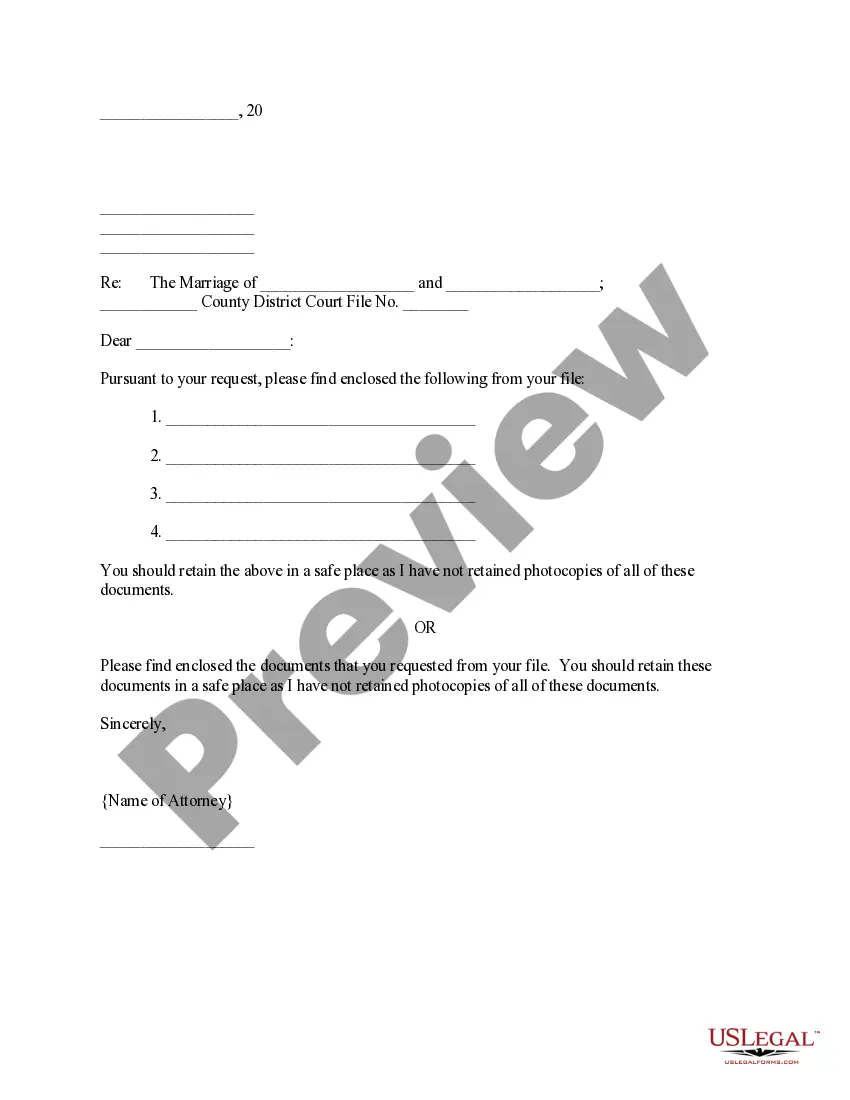
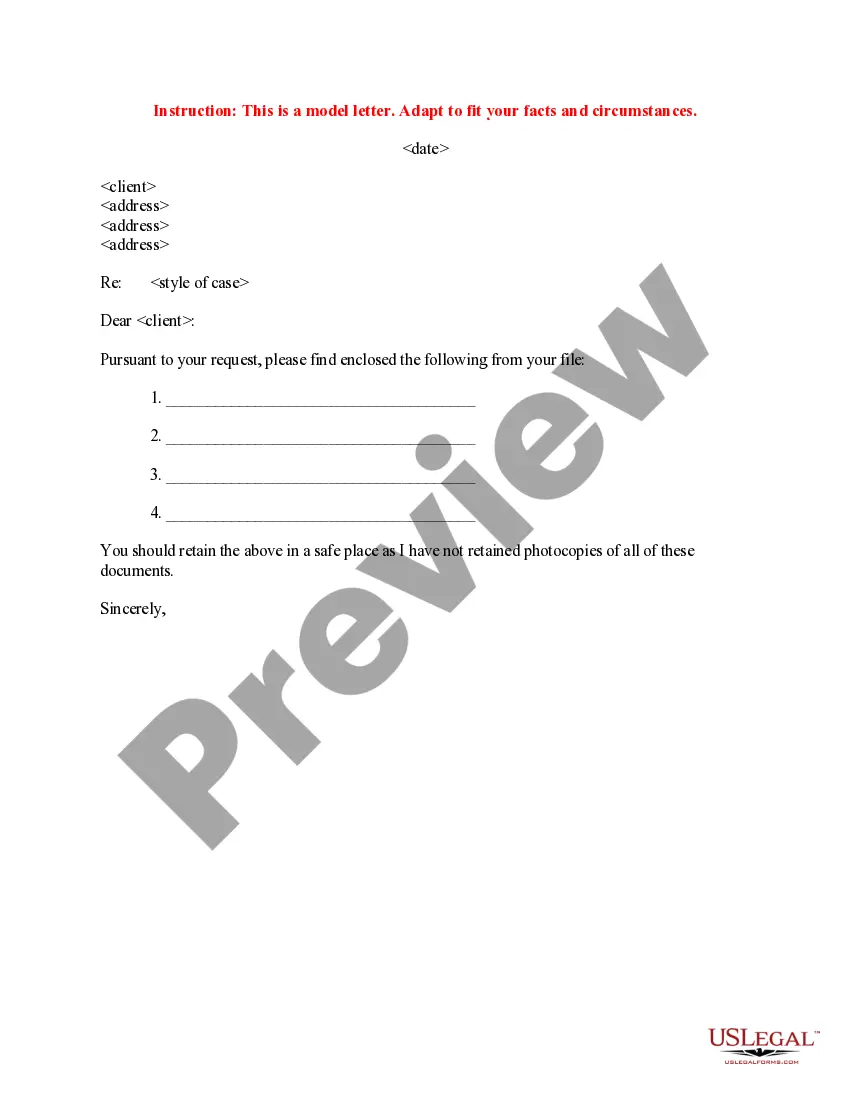
The Letter to Client Enclosing Photocopies of Documents is a formal communication used by attorneys to provide clients with requested copies of documents from their legal files. This cover letter ensures that clients receive essential information while documenting the delivery of these documents, thereby maintaining clarity and professionalism in legal communication. Unlike general letters, this specific form serves to accompany photocopies, highlighting its purpose and legal significance.
What’s included in this form
- File Number: Indicates the relevant court case number for tracking and reference.
- Recipient's Information: Specifies the name of the client receiving the documents.
- Enclosed Documents List: Details each document being sent, ensuring the client knows what is included.
- Storage Reminder: Advises the client to keep the documents in a safe place.
- Attorney's Signature: Confirms the authenticity of the letter and documents enclosed.
Common use cases
This form is used when a client requests copies of specific documents from their legal file, such as contracts, agreements, or court filings. It is appropriate to use this cover letter to provide essential communications about the documents being sent, ensuring transparency and proper documentation of the request process.
Who needs this form
- Attorneys providing services to clients who need copies of their legal documents.
- Law firms aiming to maintain clear and professional communication with clients.
- Legal assistants or paralegals tasked with delivering document copies to clients.
Steps to complete this form
- Fill in the county and court file number at the top of the letter.
- Enter the client's name in the designated field.
- List each document being sent, providing a brief description for clarity.
- Include a reminder for the client to retain the documents safely.
- Sign the letter with your name and title as the attorney.
Does this form need to be notarized?
This form does not typically require notarization unless specified by local law. It is a straightforward letter of communication between an attorney and client.
Get your form ready online
Our built-in tools help you complete, sign, share, and store your documents in one place.
Make edits, fill in missing information, and update formatting in US Legal Forms—just like you would in MS Word.
Download a copy, print it, send it by email, or mail it via USPS—whatever works best for your next step.
Sign and collect signatures with our SignNow integration. Send to multiple recipients, set reminders, and more. Go Premium to unlock E-Sign.
If this form requires notarization, complete it online through a secure video call—no need to meet a notary in person or wait for an appointment.
We protect your documents and personal data by following strict security and privacy standards.

Make edits, fill in missing information, and update formatting in US Legal Forms—just like you would in MS Word.

Download a copy, print it, send it by email, or mail it via USPS—whatever works best for your next step.

Sign and collect signatures with our SignNow integration. Send to multiple recipients, set reminders, and more. Go Premium to unlock E-Sign.

If this form requires notarization, complete it online through a secure video call—no need to meet a notary in person or wait for an appointment.

We protect your documents and personal data by following strict security and privacy standards.
Common mistakes to avoid
- Failing to include all requested documents in the enclosed list.
- Not providing a clear description of each document, making it difficult for clients to understand what they are receiving.
- Forgeting to sign the letter, which can lead to questions about authenticity.
Why use this form online
- Convenience of downloading and printing the form as needed.
- Editability to tailor the letter to specific client needs or document requests.
- Access to legally vetted content, ensuring compliance with legal standards.
Looking for another form?
Form popularity
FAQ
Attorneys are generally required to keep client files for a minimum of five years after the completion of a case, though this period can vary by jurisdiction. This retention period allows clients to access important documents, such as those included in the Minnesota Letter to Client Enclosing Photocopies of Documents, when needed. After this time, attorneys may dispose of files unless clients request otherwise. For a comprehensive understanding of file retention policies, consider utilizing resources from USLegalForms.
A termination of legal representation letter is a formal document that notifies a client and their attorney that the attorney-client relationship is ending. This letter often includes details about the closure of the case and may reference the Minnesota Letter to Client Enclosing Photocopies of Documents, which provides necessary copies of relevant materials. It's important for clients to receive this letter to understand their next steps and ensure they have all required documents. Using a reliable service like USLegalForms can help you draft this letter efficiently.
Closing a legal letter effectively is crucial for professionalism. You should summarize the key points of your correspondence and express your willingness to assist further. For instance, you might mention that the 'Minnesota Letter to Client Enclosing Photocopies of Documents' is part of your commitment to transparency. Sign off with an appropriate closing phrase, followed by your name and title, to maintain a formal tone.
To write a professional letter to a client, start with a clear subject line that reflects the content, such as 'Minnesota Letter to Client Enclosing Photocopies of Documents.' Begin with a courteous greeting and state the purpose of the letter in the opening paragraph. Use concise language to provide necessary details, and ensure you include any relevant document references. Finally, close with a polite sign-off, encouraging the client to reach out with any questions.