Minnesota Satisfaction of Lien on Real Property
What is this form?
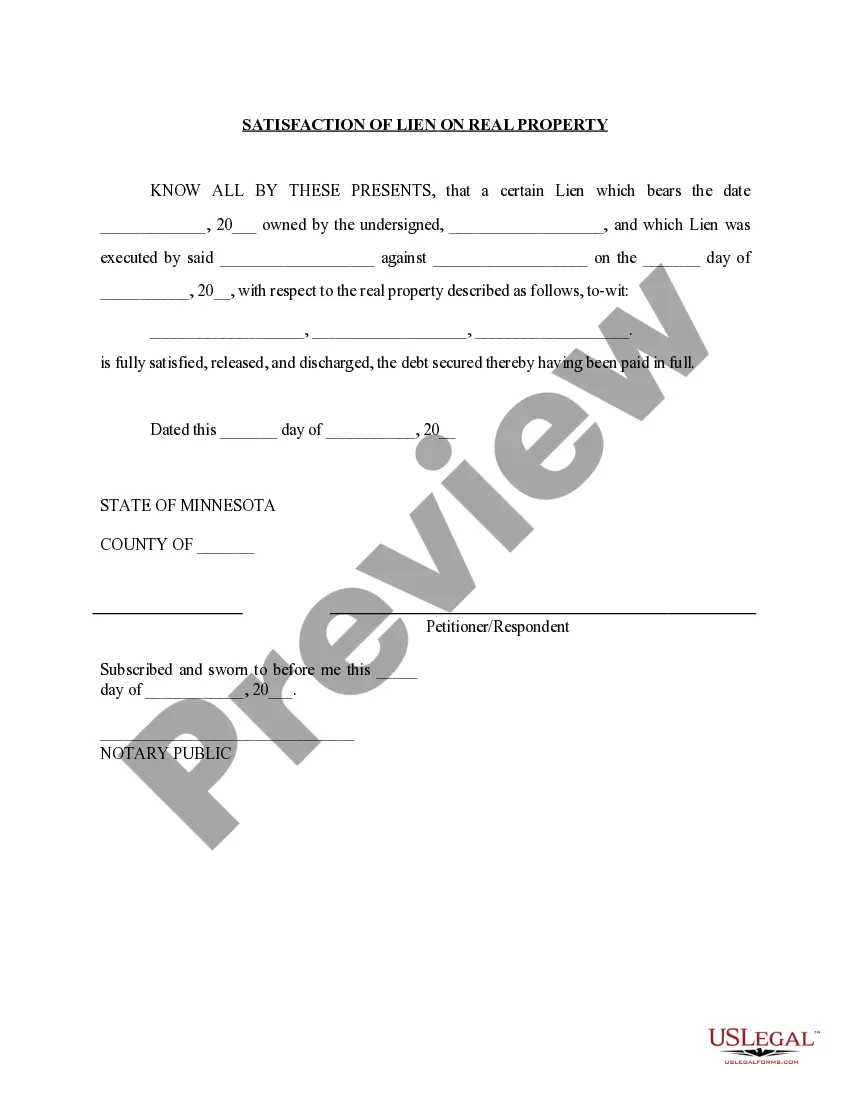
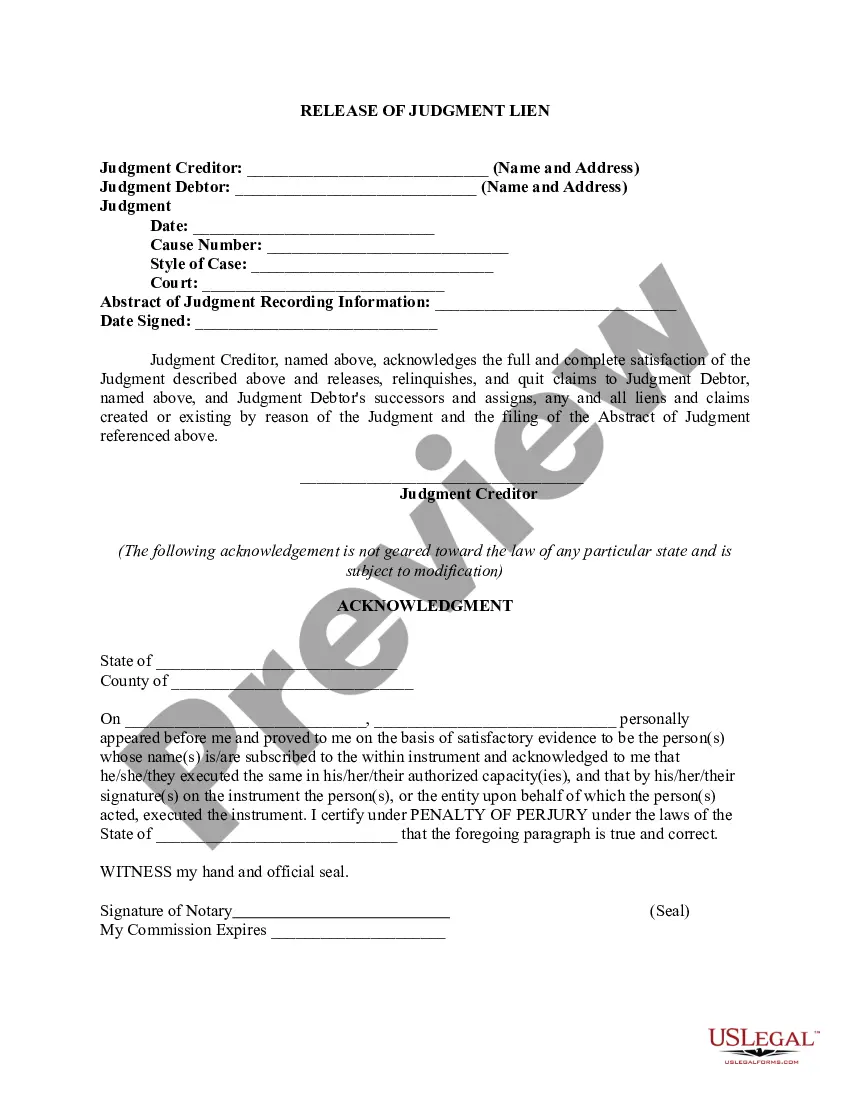
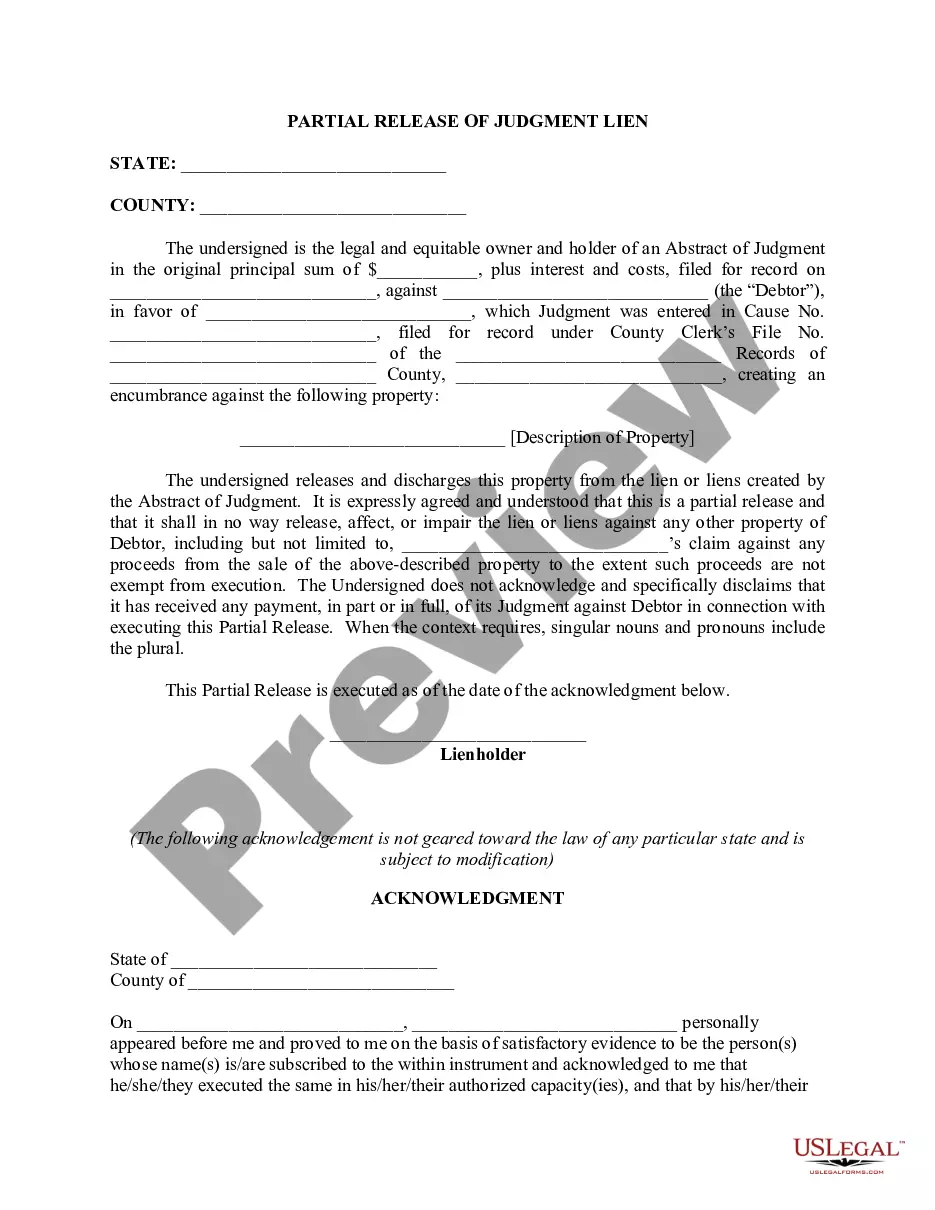
The Satisfaction of Lien on Real Property form serves as a formal declaration that a lien on a property has been fulfilled. This legal document is essential for clearing the title on real estate, indicating that the debt securing the lien has been fully paid. Unlike other forms related to liens, this document specifically confirms the satisfaction, allowing property owners to maintain clear ownership records.
Key components of this form
- Date of the lien
- Names of the parties involved in the lien
- Description of the real property
- Statement of satisfaction and release of the lien
- Signature of the party releasing the lien
- Notary acknowledgment section
When to use this document
This form should be used when a lien on real property has been satisfied, meaning that the property owner has paid the amount owed in full. It is typically used after mortgage payments are completed, or whenever a debt secured by a lien has been cleared. Filing this form helps ensure that the lien is officially removed from public property records.
Who should use this form
- Property owners who have paid off a lien
- Lien holders who need to document the lien's satisfaction
- Real estate professionals assisting clients in clearing property titles
How to prepare this document
- Identify the date of the original lien.
- Enter the names of the parties involved in creating the lien.
- Provide a detailed description of the real property associated with the lien.
- State that the lien is fully satisfied, indicating that the debt has been paid.
- Sign the document and include the date.
- Complete the notary section to have the form notarized, if required.
Notarization requirements for this form
This form needs to be notarized to ensure legal validity. US Legal Forms provides secure online notarization powered by Notarize, allowing you to complete the process through a verified video call, available anytime.
Get your form ready online
Our built-in tools help you complete, sign, share, and store your documents in one place.
Make edits, fill in missing information, and update formatting in US Legal Forms—just like you would in MS Word.
Download a copy, print it, send it by email, or mail it via USPS—whatever works best for your next step.
Sign and collect signatures with our SignNow integration. Send to multiple recipients, set reminders, and more. Go Premium to unlock E-Sign.
If this form requires notarization, complete it online through a secure video call—no need to meet a notary in person or wait for an appointment.
We protect your documents and personal data by following strict security and privacy standards.

Make edits, fill in missing information, and update formatting in US Legal Forms—just like you would in MS Word.

Download a copy, print it, send it by email, or mail it via USPS—whatever works best for your next step.

Sign and collect signatures with our SignNow integration. Send to multiple recipients, set reminders, and more. Go Premium to unlock E-Sign.

If this form requires notarization, complete it online through a secure video call—no need to meet a notary in person or wait for an appointment.

We protect your documents and personal data by following strict security and privacy standards.
Avoid these common issues
- Failing to provide an accurate property description
- Not including all required signatures
- Omitting the date of the satisfaction
- Not having the form notarized if required by state law
Benefits of completing this form online
- Convenience of downloading and completing the form at your own pace
- Access to attorney-drafted templates for accuracy and reliability
- Ability to edit the form as needed to fit your specific situation
Looking for another form?
Form popularity
FAQ
Statute 514.99 in Minnesota addresses the requirements and processes related to the enforcement of liens. It provides guidelines on how to handle claims related to unpaid obligations and offers protections for property owners. Understanding this statute is important for both lien claimants and property owners to navigate their rights and responsibilities effectively. Consulting with legal experts can clarify how this statute impacts Minnesota Satisfaction of Lien on Real Property.
The lien process in Minnesota typically starts with the creditor obtaining a legal judgment or having a contractual basis for the claim. Once you have that, you'll need to file the lien with the county recorder, ensuring all necessary information is accurate. After filing, there is a notification period where the property owner is informed about the lien. Understanding this process is essential for anyone dealing with Minnesota Satisfaction of Lien on Real Property.
To place a lien on someone's property in Minnesota, you must first obtain a legal judgment or have a valid contract that supports your claim. After that, you need to prepare and file a lien statement with the appropriate county office. This statement should include essential information such as the amount owed and the property description. Utilizing resources and guidance from platforms like US Legal Forms can help you navigate this process smoothly regarding Minnesota Satisfaction of Lien on Real Property.
Minnesota has specific rules governing liens, which include the requirement for proper documentation and filing with the county recorder. To be valid, a lien must typically include details such as the amount owed and the parties involved. Furthermore, there are deadlines for filing a lien, which can vary based on the type of lien. Familiarizing yourself with these rules is crucial for navigating issues related to Minnesota Satisfaction of Lien on Real Property.
Yes, it is possible for someone to place a lien on your property without your immediate knowledge. In Minnesota, a lien can be recorded without alerting the property owner beforehand. This can happen for various reasons, such as unpaid debts or legal judgments. To ensure you stay informed, regularly check property records and consider legal services that specialize in Minnesota Satisfaction of Lien on Real Property.
A mortgage creates a lien on your property that gives the lender the right to foreclose and sell the home to satisfy the debt. A deed of trust (sometimes called a trust deed) is also a document that gives the lender the right to sell the property to satisfy the debt should you fail to pay back the loan.
2. States where the lien law doesn't require a written contract. In these states, contractors and suppliers are generally allowed to file a lien even if they don't have a written contract.These states typically permit parties with verbal, oral, or even implied contracts to claim lien rights.
A lien is a legal right or claim against a property by a creditor. Liens are commonly placed against property, such as homes and cars, so creditors, such as banks and credit unions, can collect what is owed to them. Liens can also be removed, giving the owner full and clear title to the property.
If a lien is filed against your property (in the form of a lien statement), it must be filed with the county recorder and a copy delivered to you, the property owner, either personally or by certified mail, within 120 days after the last material or labor is furnished for the job.
While it's unlikely that just anyone can put a lien on your home or land, it's not unheard of for a court decision or a settlement to result in a lien being placed against a property.