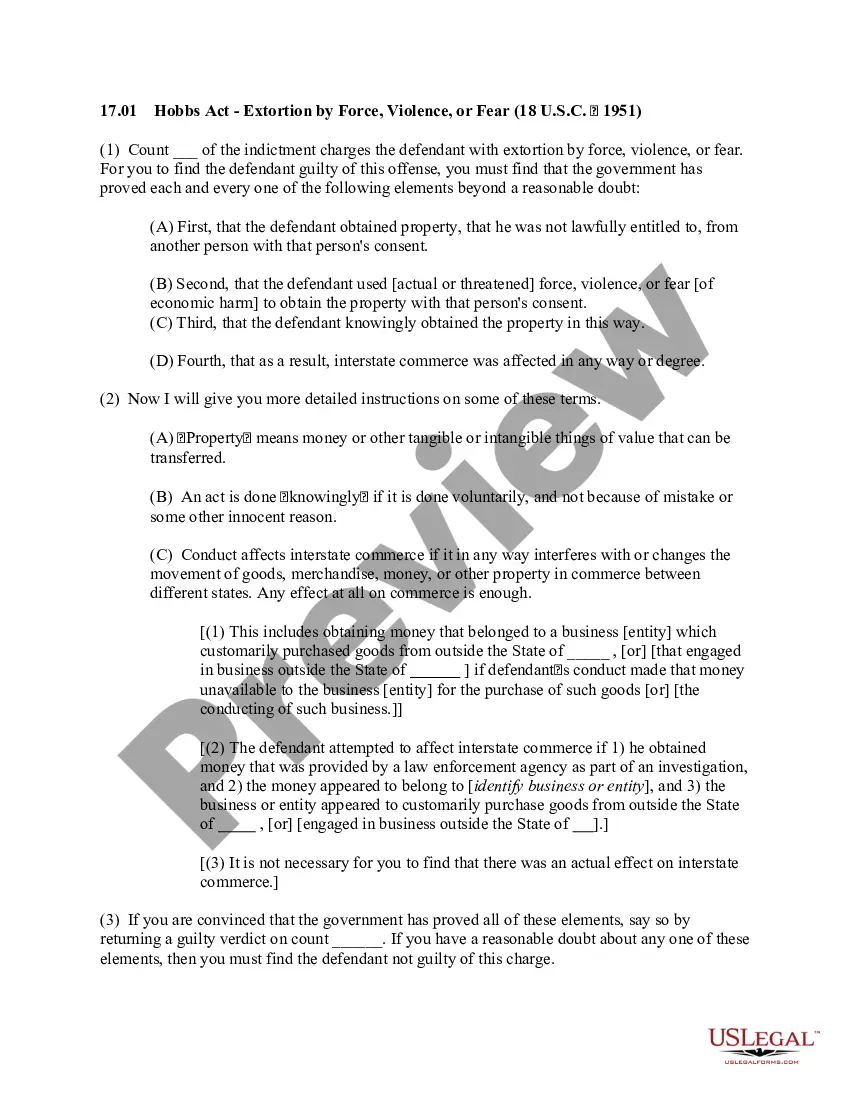
Minnesota Discovery - Request for Inspection and Copying of Documents
What is this form?
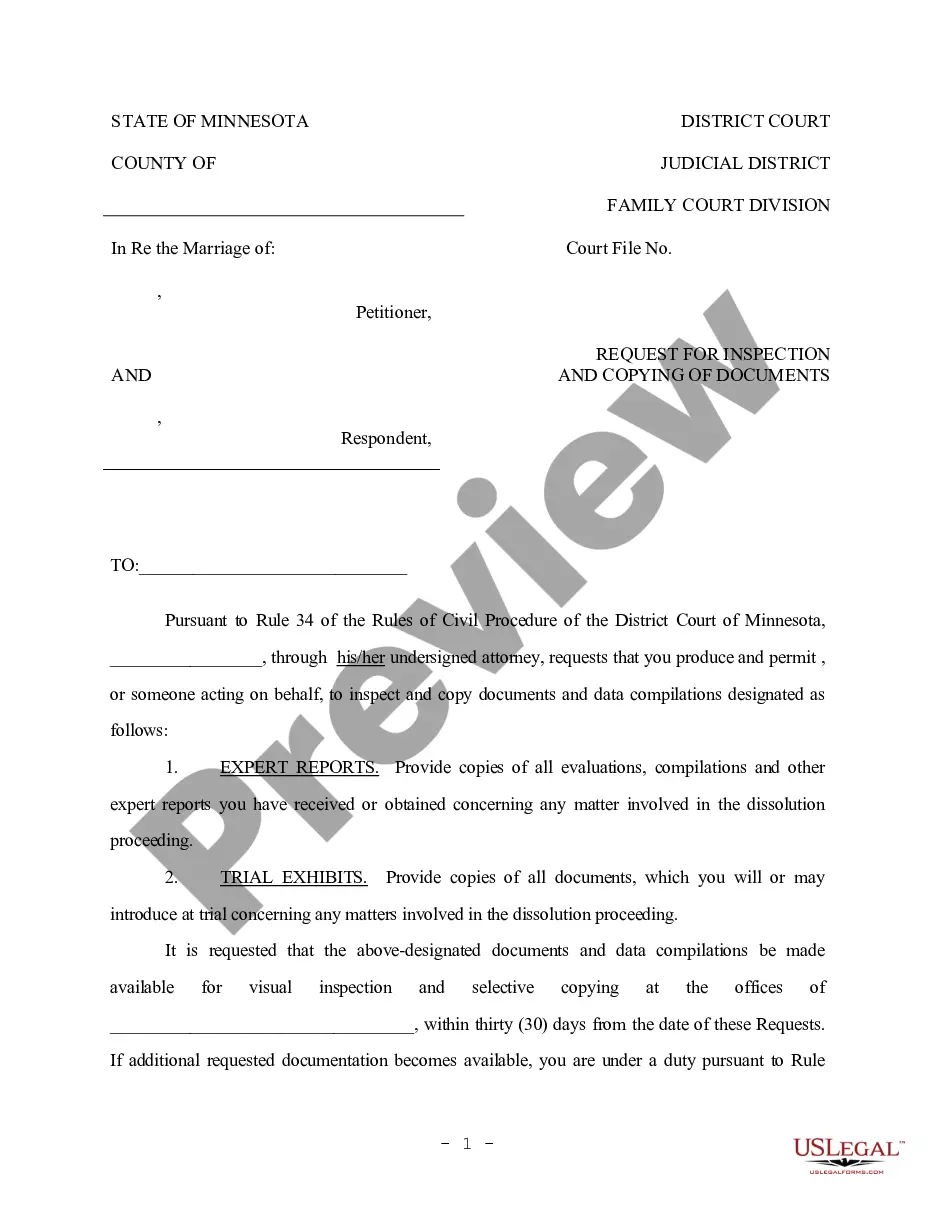
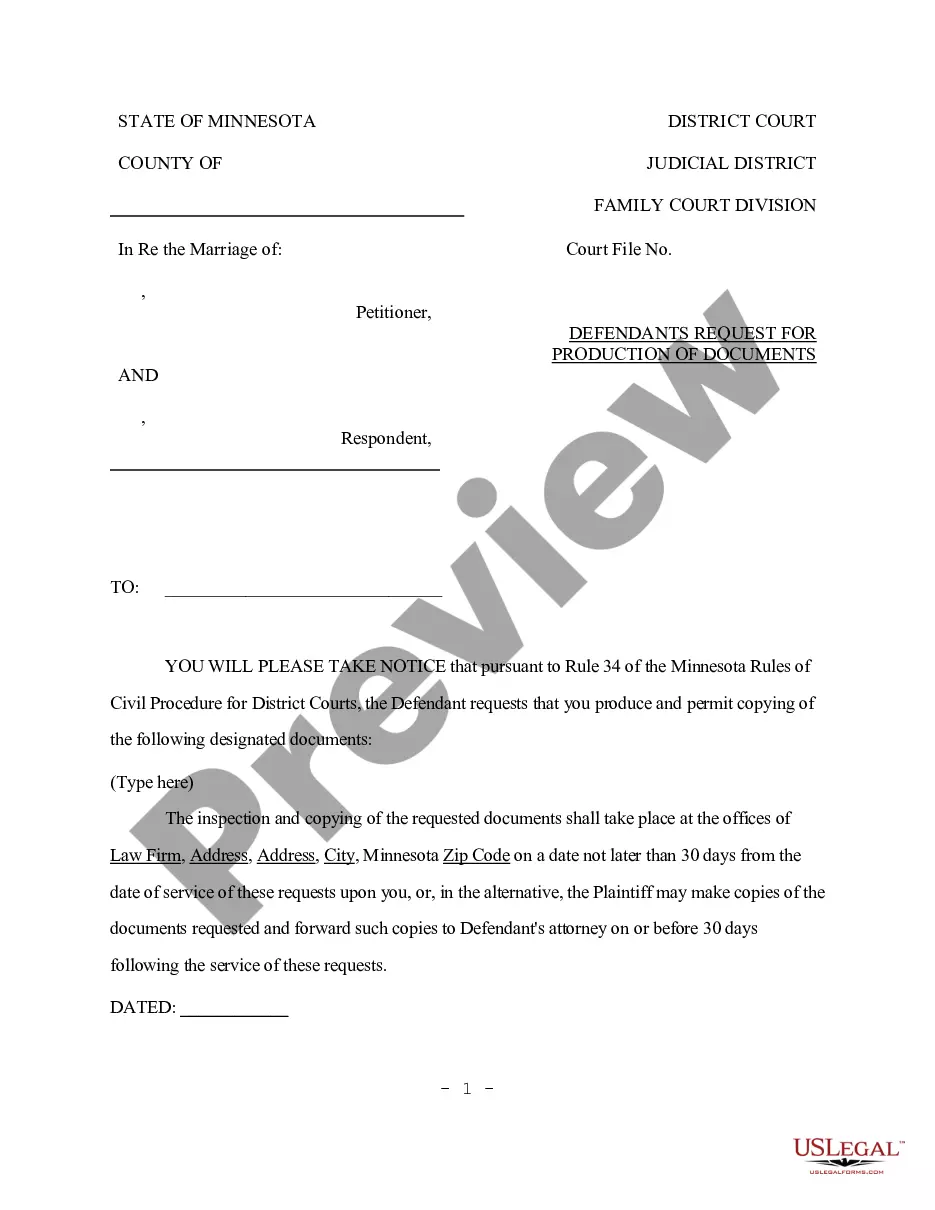
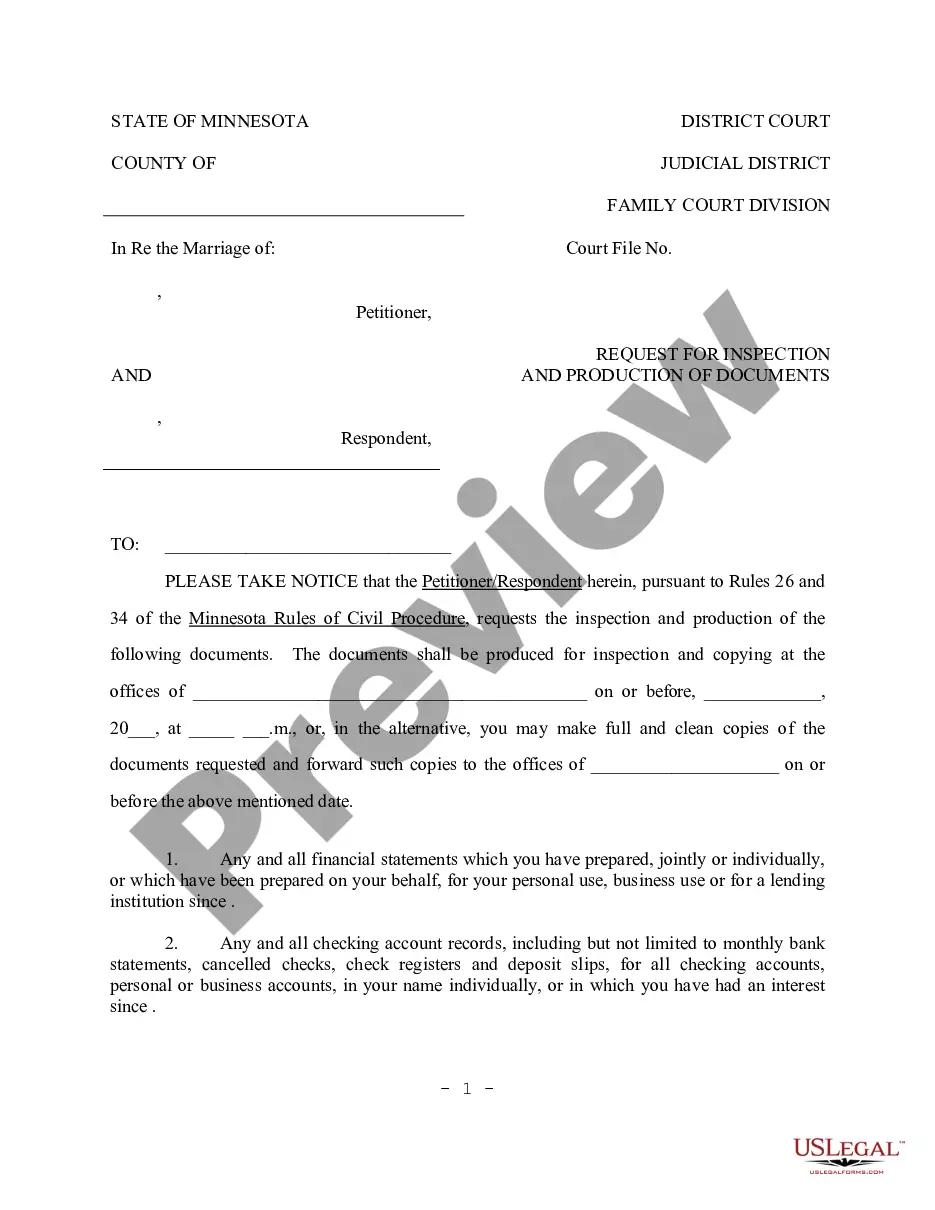
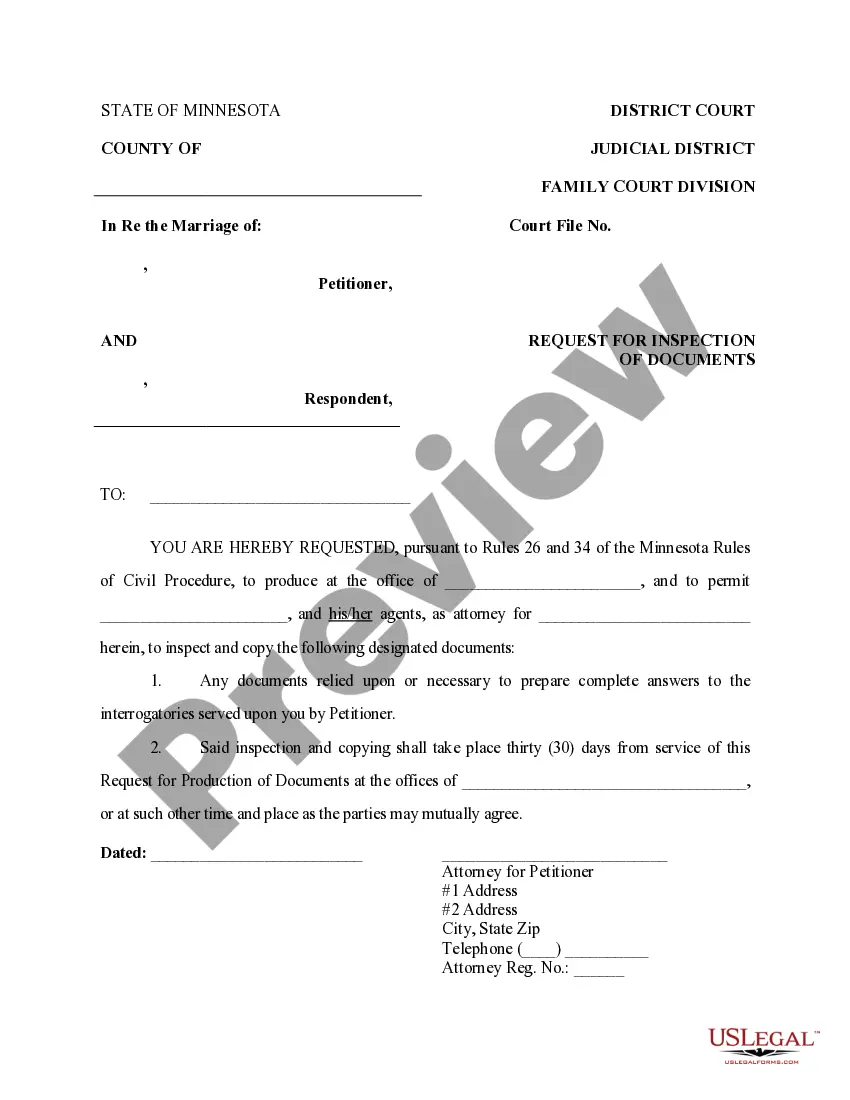
The Discovery - Request for Inspection and Copying of Documents is a legal document used during dissolution proceedings. This form allows one party to request inspection and copying of documents relevant to the case, which is essential for gathering evidence and ensuring a fair process. Unlike other discovery forms, this particular request focuses specifically on the inspection of documents rather than interrogatories or depositions.
Key components of this form
- Request for expert reports related to the dissolution proceeding.
- Request for trial exhibits that may be presented during court.
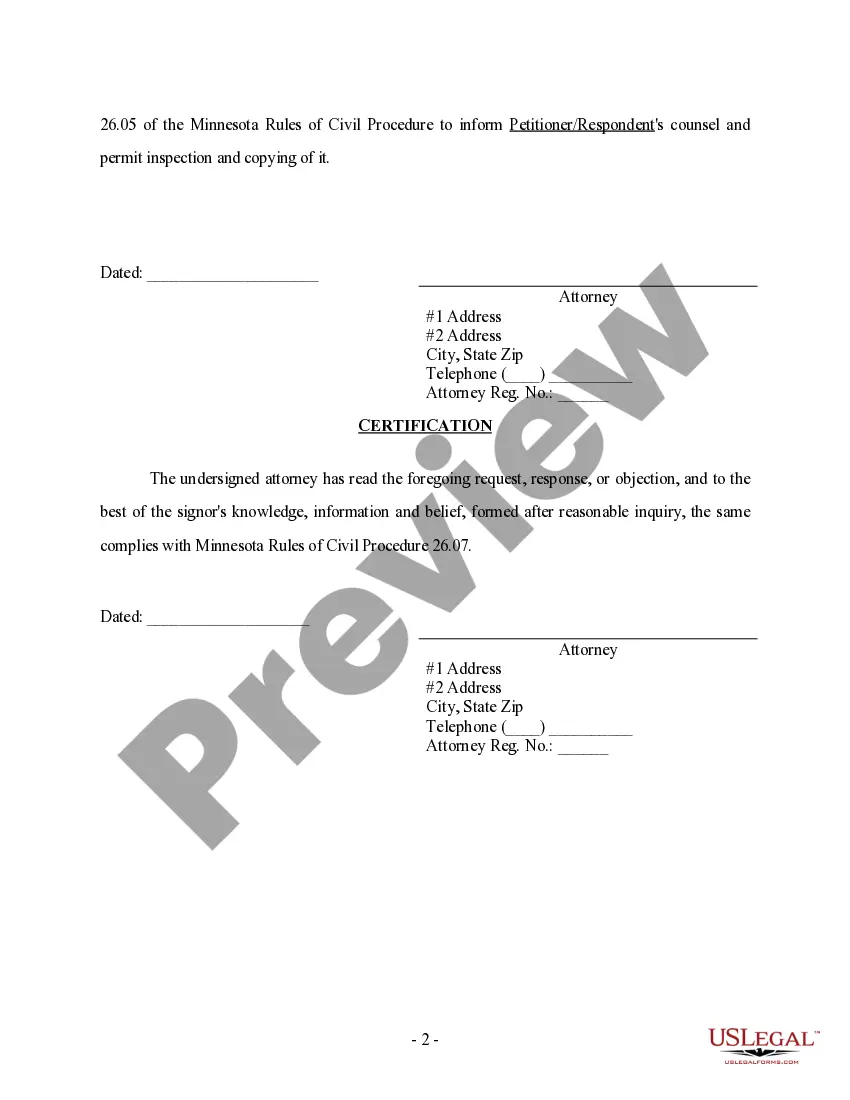
- Designated location and timeframe for document inspection.
- Certification by the attorney confirming compliance with relevant rules.
Situations where this form applies
This form should be used when one party in a dissolution proceeding wishes to gather and review documents owned by the other party. It is particularly useful in situations where specific evidence is necessary for building a case, such as financial records, communications, or expert evaluations that impact the dissolution outcome.
Intended users of this form
- Individuals involved in a dissolution proceeding who need access to documents from the other party.
- Attorneys representing parties in a dissolution case, seeking to ensure all relevant evidence is gathered.
- Respondents or petitioners looking to uphold their rights during the discovery process.
Instructions for completing this form
- Identify the parties involved in the dissolution proceeding and accurately fill in their names.
- List all expert reports and trial exhibits you are requesting for review.
- Specify the location and date when the documents should be available for inspection.
- Ensure the certification by the attorney is completed, affirming compliance with local rules.
Does this document require notarization?
This form does not typically require notarization unless specified by local law. However, it's essential to ensure all signatures are appropriately completed and all requirements are met to maintain the form's validity.
Get your form ready online
Our built-in tools help you complete, sign, share, and store your documents in one place.
Make edits, fill in missing information, and update formatting in US Legal Forms—just like you would in MS Word.
Download a copy, print it, send it by email, or mail it via USPS—whatever works best for your next step.
Sign and collect signatures with our SignNow integration. Send to multiple recipients, set reminders, and more. Go Premium to unlock E-Sign.
If this form requires notarization, complete it online through a secure video call—no need to meet a notary in person or wait for an appointment.
We protect your documents and personal data by following strict security and privacy standards.

Make edits, fill in missing information, and update formatting in US Legal Forms—just like you would in MS Word.

Download a copy, print it, send it by email, or mail it via USPS—whatever works best for your next step.

Sign and collect signatures with our SignNow integration. Send to multiple recipients, set reminders, and more. Go Premium to unlock E-Sign.

If this form requires notarization, complete it online through a secure video call—no need to meet a notary in person or wait for an appointment.

We protect your documents and personal data by following strict security and privacy standards.
Mistakes to watch out for
- Failing to include all relevant documents in the request.
- Not specifying the location for inspection clearly.
- Overlooking the requirement for certification by the attorney.
Why complete this form online
- Easy to download and customize the document to fit specific needs.
- Access to attorney-drafted forms ensuring compliance with legal standards.
- Convenient recovery and storage of forms for future use.
Summary of main points
- This form is crucial for accessing key documents during dissolution proceedings.
- It complies with specific Minnesota legal rules regarding discovery.
- Proper completion and attorney certification are vital for the form's effectiveness.
Looking for another form?
Form popularity
FAQ
To submit a request for discovery in Minnesota, prepare a written request that specifies the documents or information you need. Ensure that your request complies with the Minnesota Rules and serve it to the opposing party. After serving, keep a copy for your records. For assistance, consider using uslegalforms, which can help streamline the submission process.
Rule of Practice 521 in Minnesota primarily addresses the procedures for discovery in family law cases. It specifies how parties can request and exchange pertinent information and documents. This rule complements the Minnesota Discovery - Request for Inspection and Copying of Documents by ensuring that all parties have access to the necessary materials for a fair hearing.
While this FAQ focuses on Minnesota Discovery - Request for Inspection and Copying of Documents, it is good to note that discovery rules vary by state. Maryland’s discovery rules allow parties to request information that is relevant to their case, similar to Minnesota's rules. Understanding these differences can help you navigate your legal process more effectively.
To file a discovery request in Minnesota, start by drafting your request according to the guidelines set forth in the Minnesota Rules of Civil Procedure. Clearly state the documents or information you seek. After completing your request, serve it to the opposing party and file it with the court if required. Using platforms like uslegalforms can simplify this process and ensure compliance with legal standards.
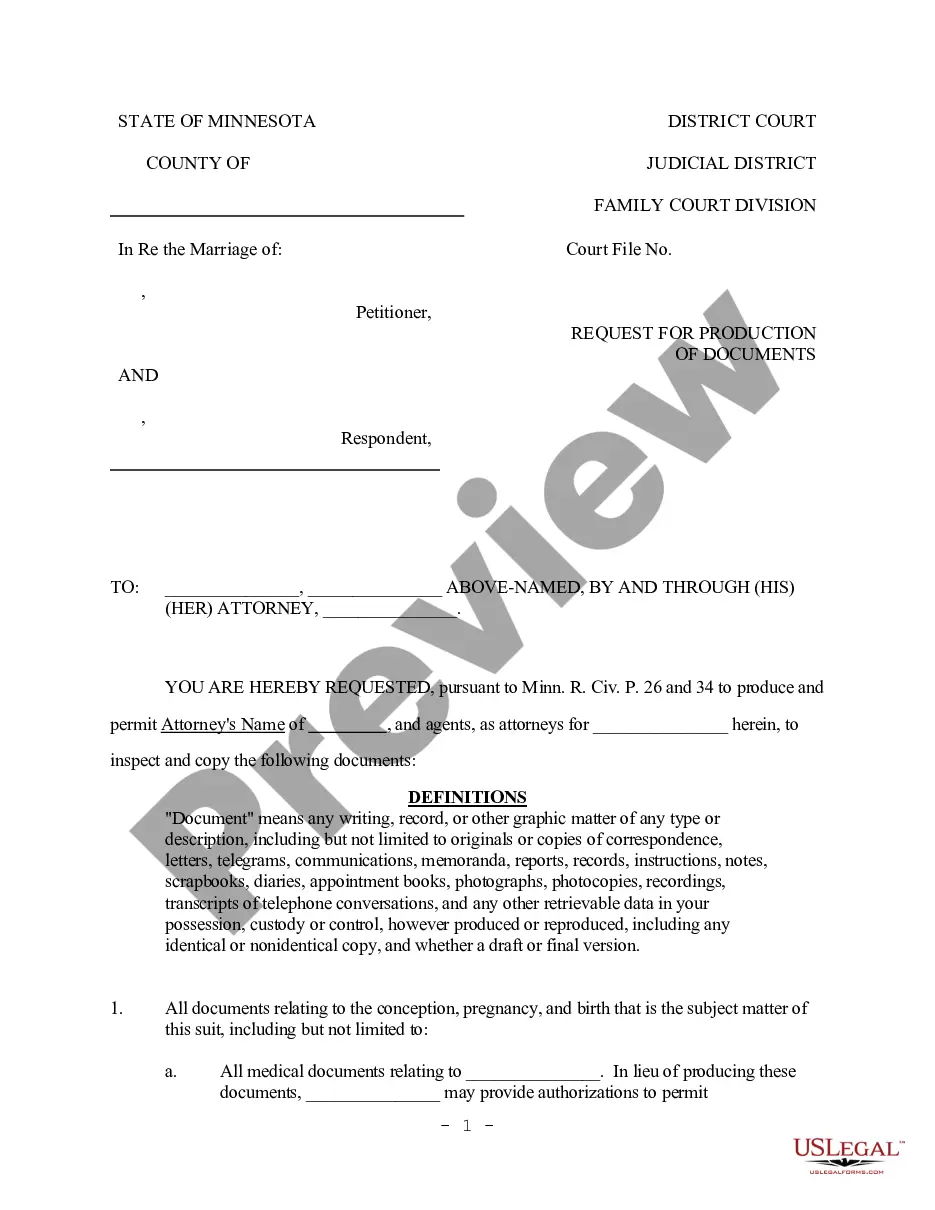
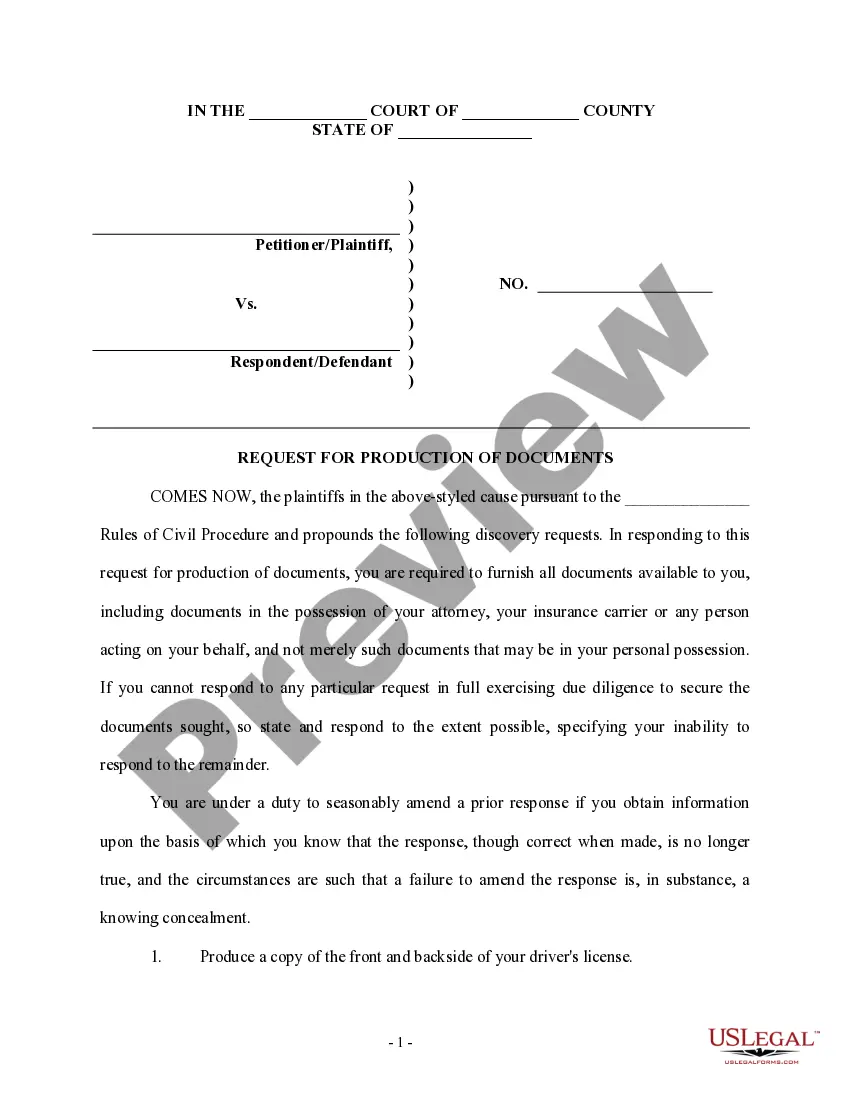
A request for production of documents in Minnesota is a formal request made by one party to another during litigation. This request seeks documents, electronically stored information, and other tangible items relevant to the case. Utilizing the Minnesota Discovery - Request for Inspection and Copying of Documents ensures you gather the necessary evidence to support your position.
Rule 26 in Minnesota governs the discovery process in civil cases. It outlines the scope of discovery, allowing parties to obtain information relevant to their claims or defenses. This is crucial for the Minnesota Discovery - Request for Inspection and Copying of Documents, as it sets the framework for what documents and information can be requested.
A request for production is a discovery device used to gain access to documents, electronic data, and physical items held by an opposing party in a legal matter. The aim is to gain insight into any relevant evidence that the opposing party holds.
R. Civ. P. 35) Although they can be used as a great discovery tool, it is considered limited because it is only allowed in those situations where the physical or mental condition of the person is at issue in the case.
(d) Filing.But disclosures under Rule 26(a)(1) or (2) and the following discovery requests and responses must not be filed until they are used in the proceeding or the court orders filing: depositions, interrogatories, requests for documents or tangible things or to permit entry onto land, and requests for admission.
In law, interrogatories (also known as requests for further information) are a formal set of written questions propounded by one litigant and required to be answered by an adversary in order to clarify matters of fact and help to determine in advance what facts will be presented at any trial in the case.