FIRST DEGREE MURDER / 18 U.S.C. Sec. 1111
Overview of this form
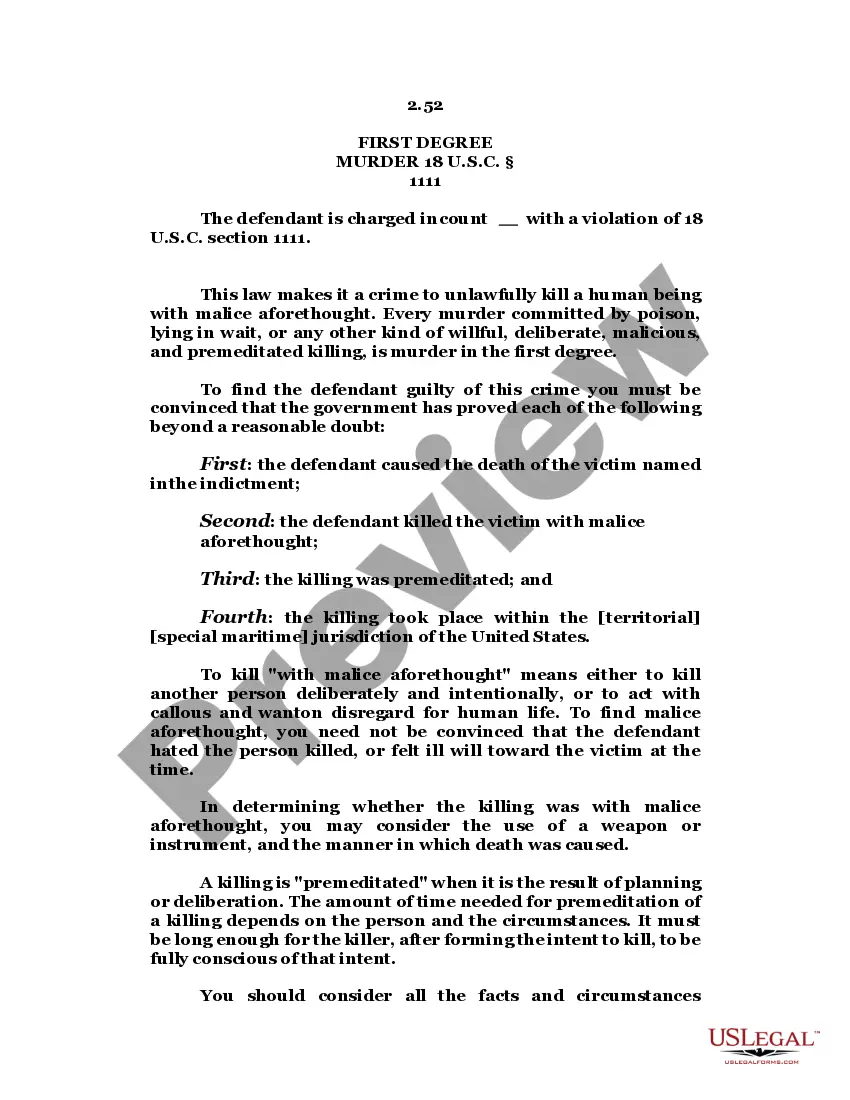
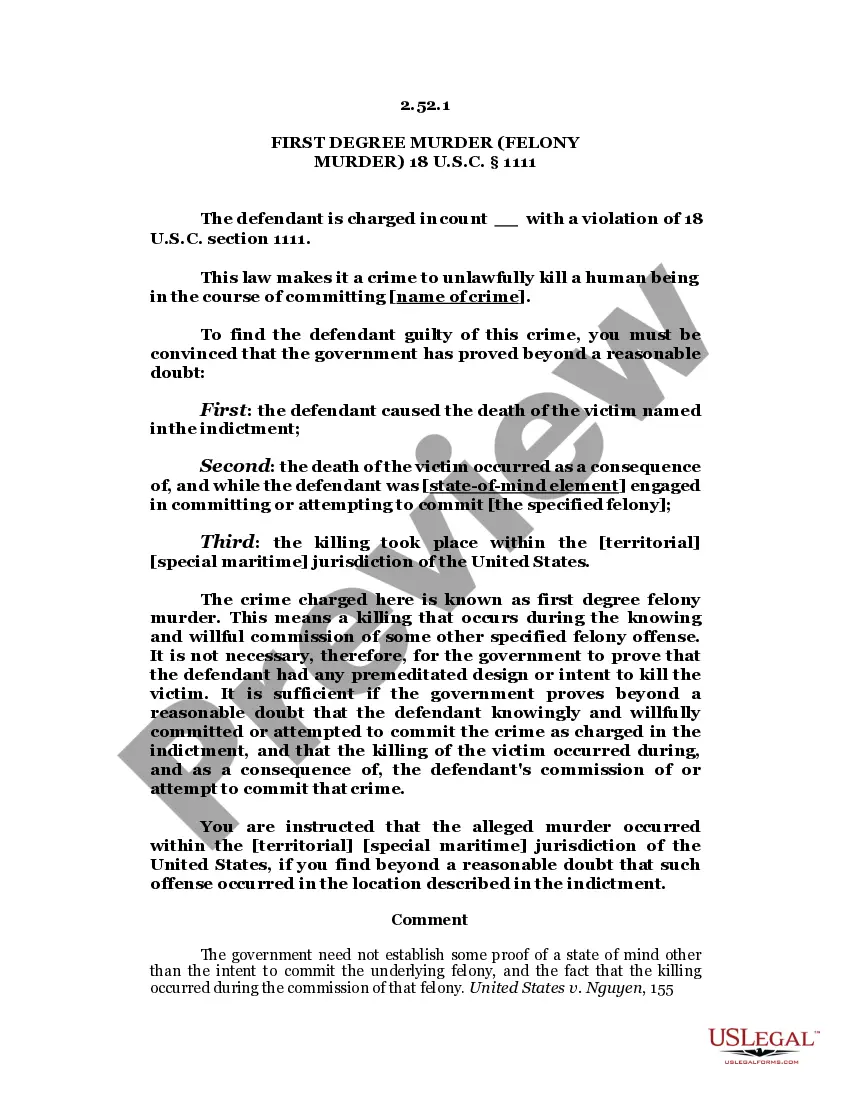
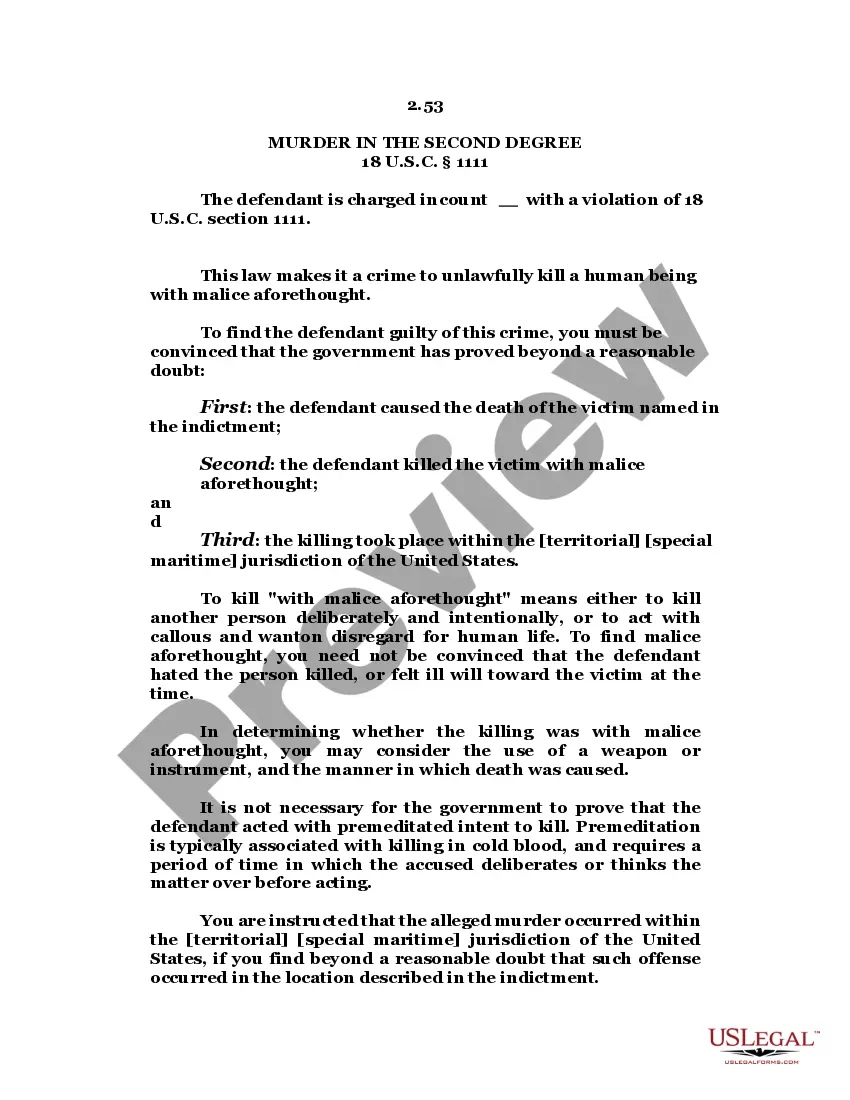
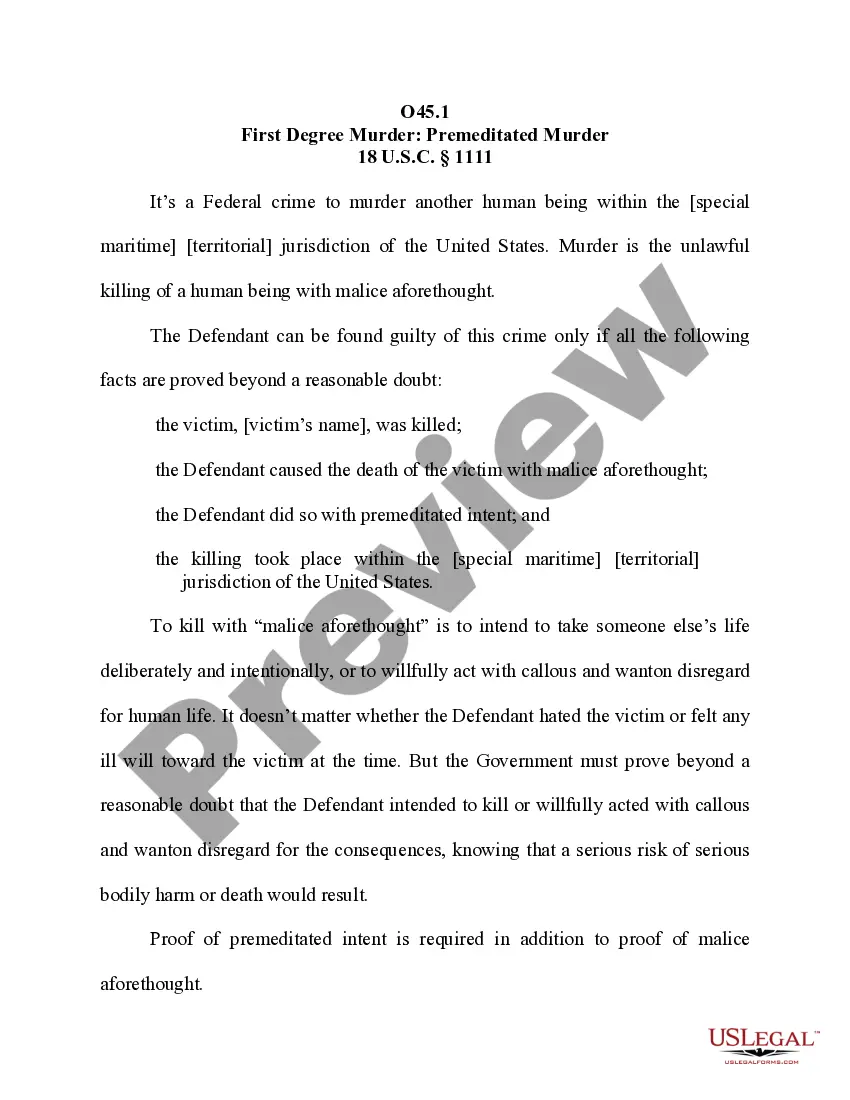
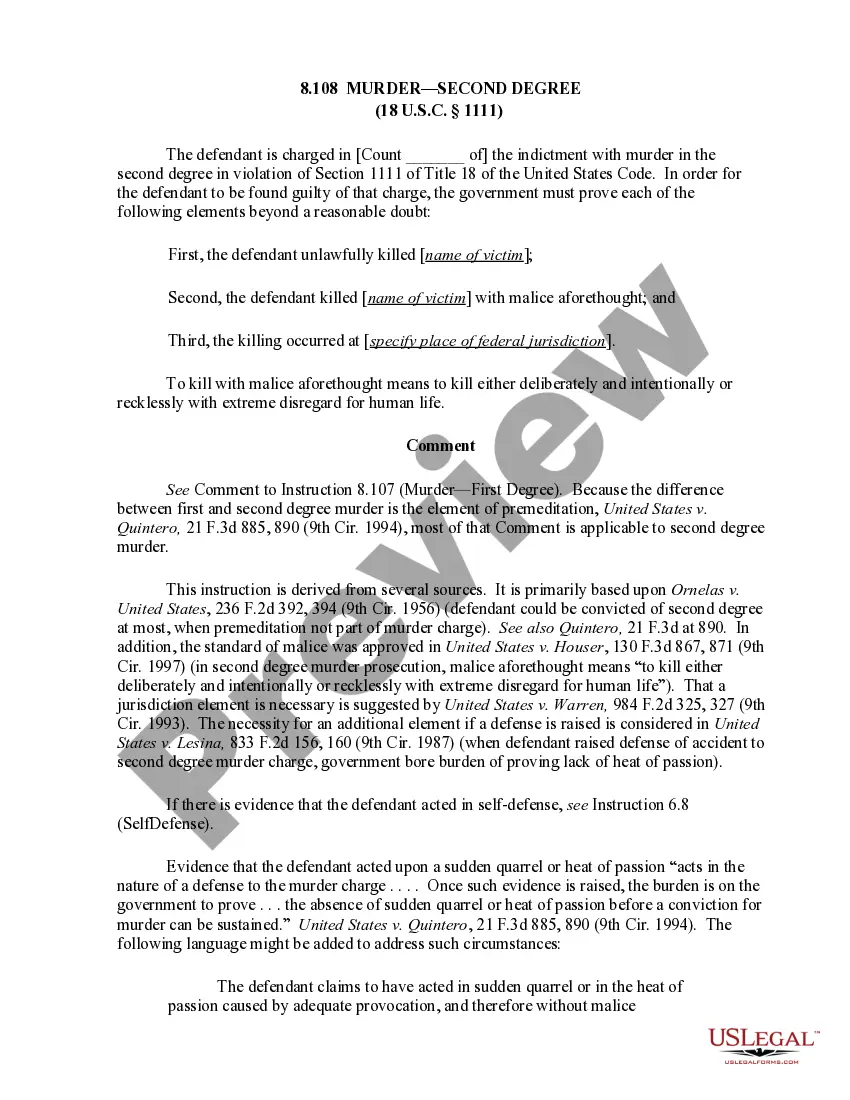
This form pertains to the charge of first degree murder under 18 U.S.C. Sec. 1111. It is used in cases where an individual is accused of intentionally and unlawfully killing another person with premeditated malice. First degree murder is distinct from other types of homicide due to its requirement of planning and specific intent to kill. Understanding this form is crucial for both defendants and legal professionals navigating serious criminal charges.
Main sections of this form
- Defendant's identification and charges related to first degree murder.
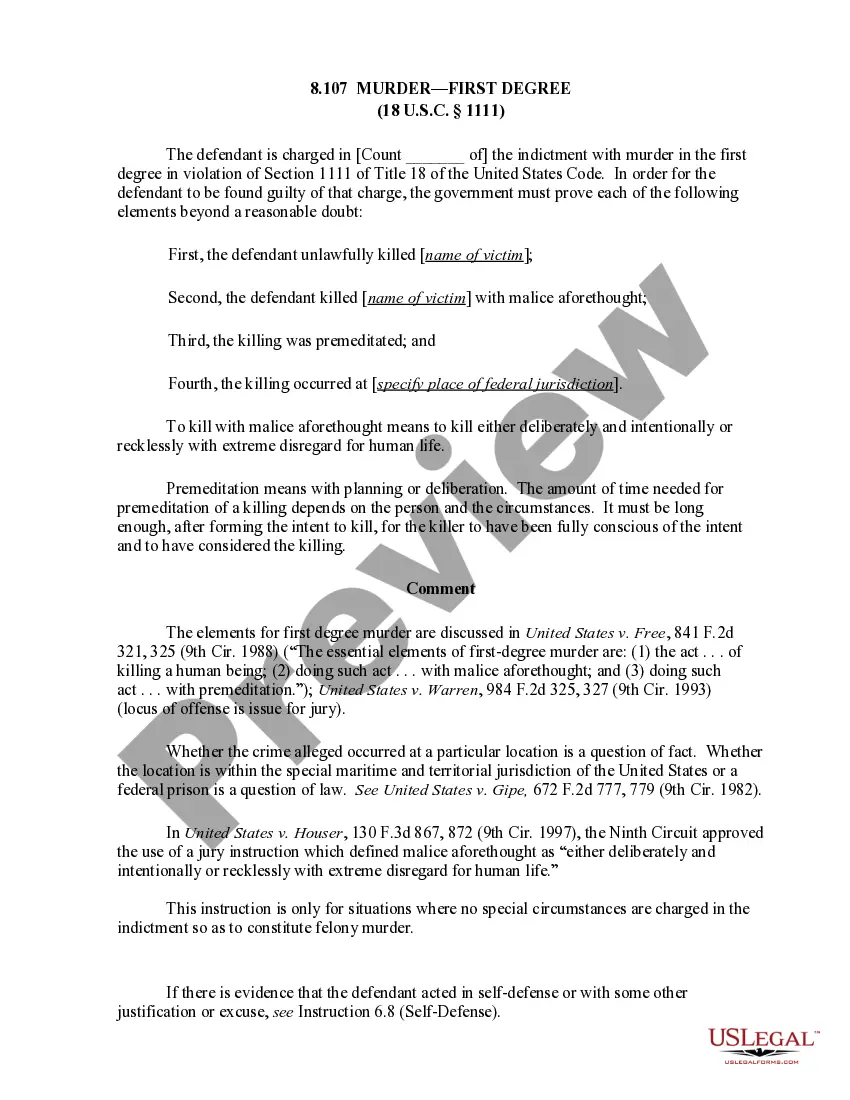
- Definition of malice aforethought and premeditated killing.
- Elements that the government must prove beyond a reasonable doubt.
- Jurisdictional information regarding where the crime was committed.
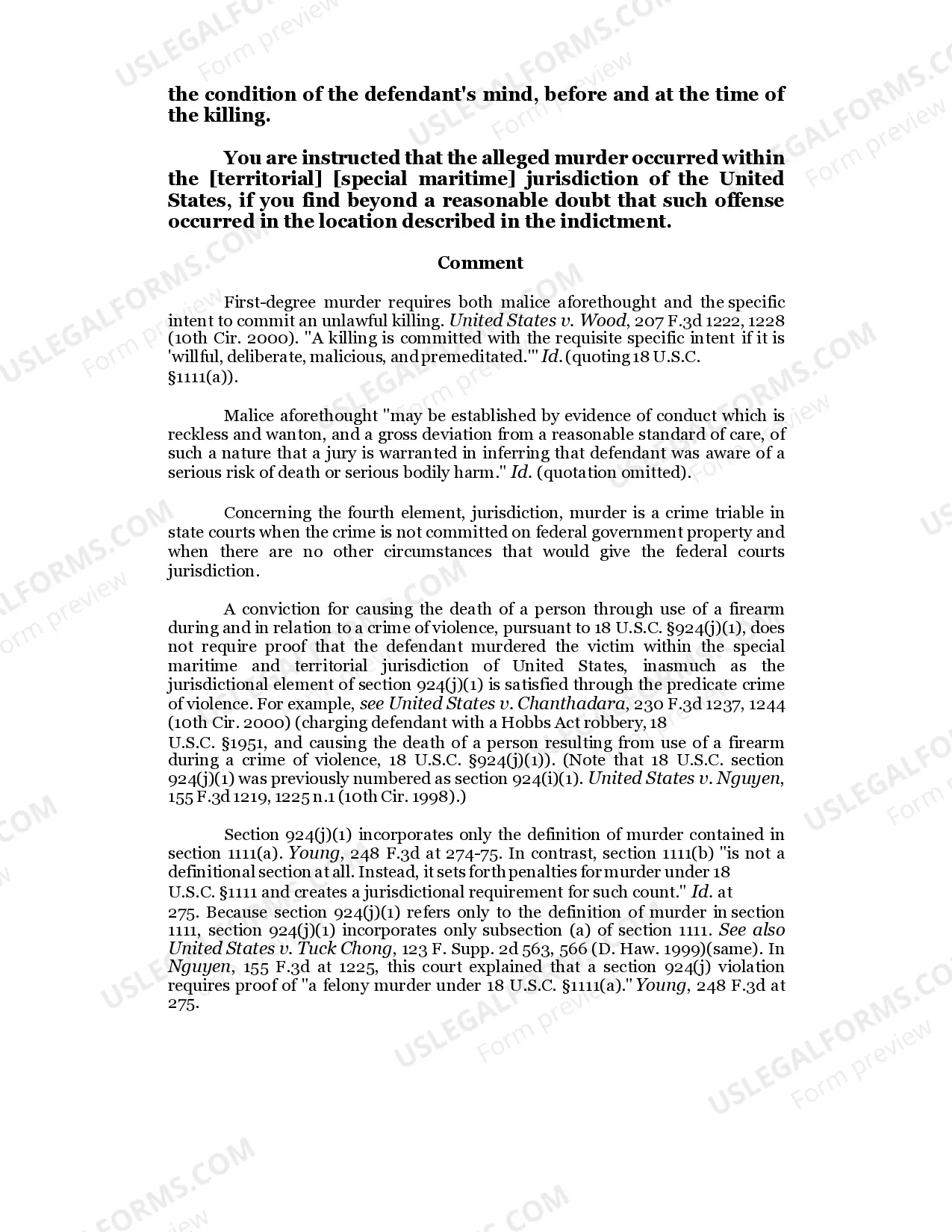
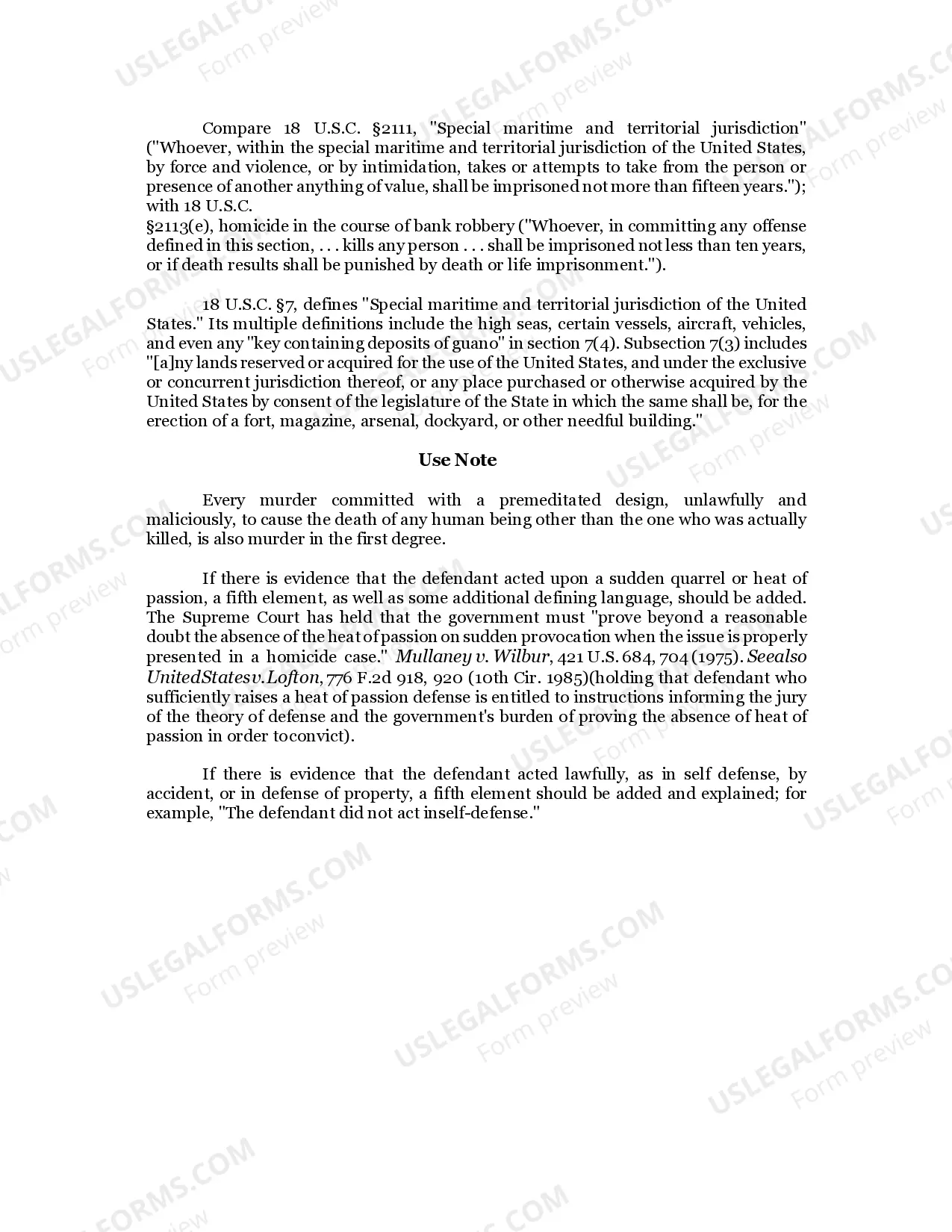
- Commentary on legal precedents and interpretations of first degree murder.

Common use cases
This form is utilized in situations where an individual is formally charged with first degree murder. This may arise in cases involving premeditated killings that occur within the United States' jurisdiction. Legal counsel typically employs this form as part of the defense strategy, ensuring that all elements of the charge are properly addressed during court proceedings.
Who can use this document
- Defendants facing first degree murder charges.
- Attorneys representing individuals accused of homicide.
- Legal aid organizations assisting defendants with serious criminal allegations.
- Judges and court officials involved in the adjudication of murder cases.
Instructions for completing this form
- Identify the defendant and detail the specific charge under 18 U.S.C. Sec. 1111.
- Outline the facts and circumstances surrounding the case of alleged murder.
- Include evidence supporting claims of premeditation and malice aforethought.
- Designate the jurisdiction where the crime occurred as described in the indictment.
- Review legal precedent and relevant case law that may apply to the charge.
Does this document require notarization?
In most cases, this form does not require notarization. However, some jurisdictions or signing circumstances might. US Legal Forms offers online notarization powered by Notarize, accessible 24/7 for a quick, remote process.
Get your form ready online
Our built-in tools help you complete, sign, share, and store your documents in one place.
Make edits, fill in missing information, and update formatting in US Legal Forms—just like you would in MS Word.
Download a copy, print it, send it by email, or mail it via USPS—whatever works best for your next step.
Sign and collect signatures with our SignNow integration. Send to multiple recipients, set reminders, and more. Go Premium to unlock E-Sign.
If this form requires notarization, complete it online through a secure video call—no need to meet a notary in person or wait for an appointment.
We protect your documents and personal data by following strict security and privacy standards.

Make edits, fill in missing information, and update formatting in US Legal Forms—just like you would in MS Word.

Download a copy, print it, send it by email, or mail it via USPS—whatever works best for your next step.

Sign and collect signatures with our SignNow integration. Send to multiple recipients, set reminders, and more. Go Premium to unlock E-Sign.

If this form requires notarization, complete it online through a secure video call—no need to meet a notary in person or wait for an appointment.

We protect your documents and personal data by following strict security and privacy standards.
Common mistakes to avoid
- Failing to clearly establish all four elements required for first degree murder.
- Neglecting to specify jurisdiction if the crime was committed on federal property.
- Omitting critical evidence that can support claims of intent or premeditation.
- Using overly complex language that may confuse jurors or defendants.
Why complete this form online
- Convenient access to legal forms for urgent criminal defense needs.
- Editable templates ensure that specific details can be accurately included.
- Reliable formatting that meets legal standards for court submissions.
- 24/7 availability allows users to complete the form at their convenience.
Looking for another form?

Form popularity
FAQ
A conviction for first-degree murder in California carries a sentence of up to 25 years in state prison. If the murder is judged to be a hate crime ? a crime based on the victim's religion, race, gender, disability or sexual orientation ? the defendant can face life in prison without parole.
First-degree murder is usually intentional and needs the accused person to have premeditated it. For instance, they could have stocked the victim for some time before committing the criminal act. A second degree might be intentional but could be unplanned.
At the time of the revolution, murder was illegal as a crime against common law. Over time mostly in the 19th century, the states and the Federal government codified the law in statute law.
First degree murder is the intentional killing of another person by someone who has acted willfully, deliberately, or with planning. Generally, there are two types of first-degree murder: premeditated intent to kill and felony murder.
Whoever is guilty of murder in the first degree shall be punished by death or by imprisonment for life; Whoever is guilty of murder in the second degree, shall be imprisoned for any term of years or for life.
Because manslaughter in the first degree is a class B felony, if you are convicted you could be sentenced to up to 25 years in state prison and be ordered to pay a substantial fine.
Section 1112 of Title 18 defines manslaughter as the unlawful killing of a human being without malice. Manslaughter is of two kinds: voluntary and involuntary.
When an U.S. citizen dies abroad, the Bureau of Consular Affairs assists the family and friends. The Bureau of Consular Affairs attempts to locate and inform the next-of-kin of the U.S. citizen's death.