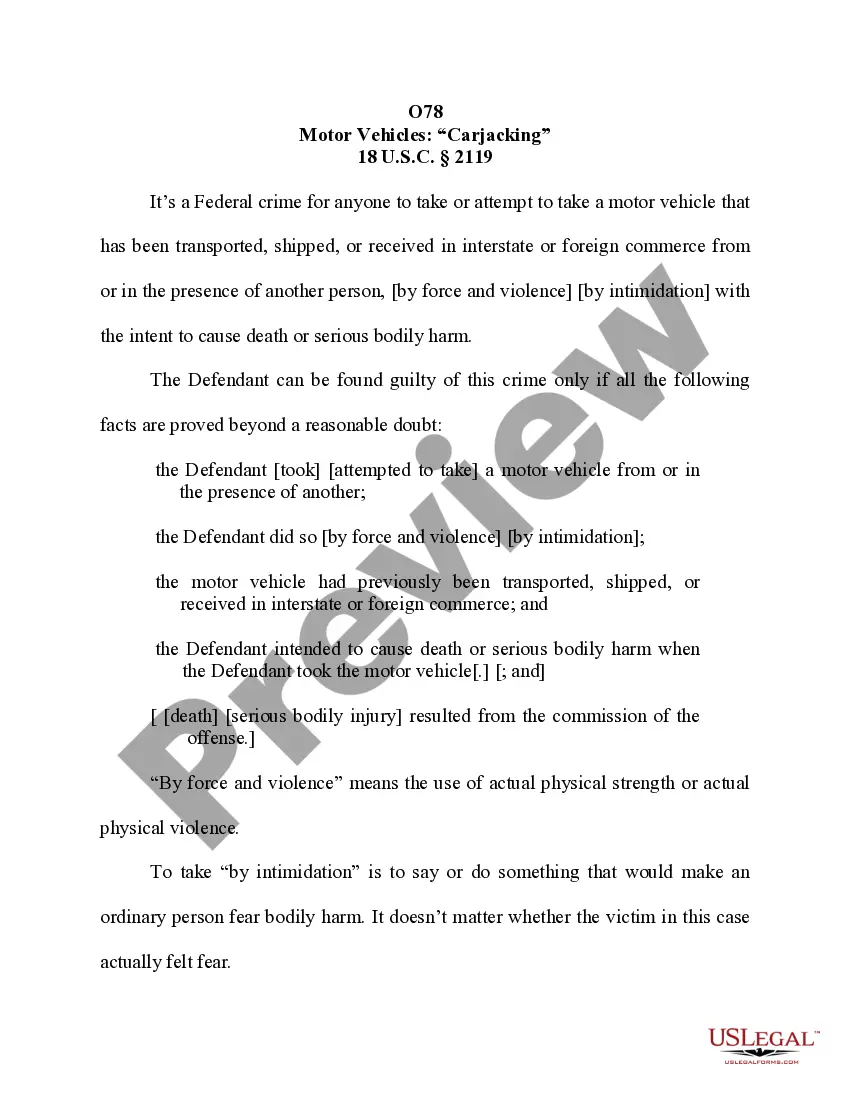
Minnesota Discovery - Defendant's Request For Production of Documents
What this document covers
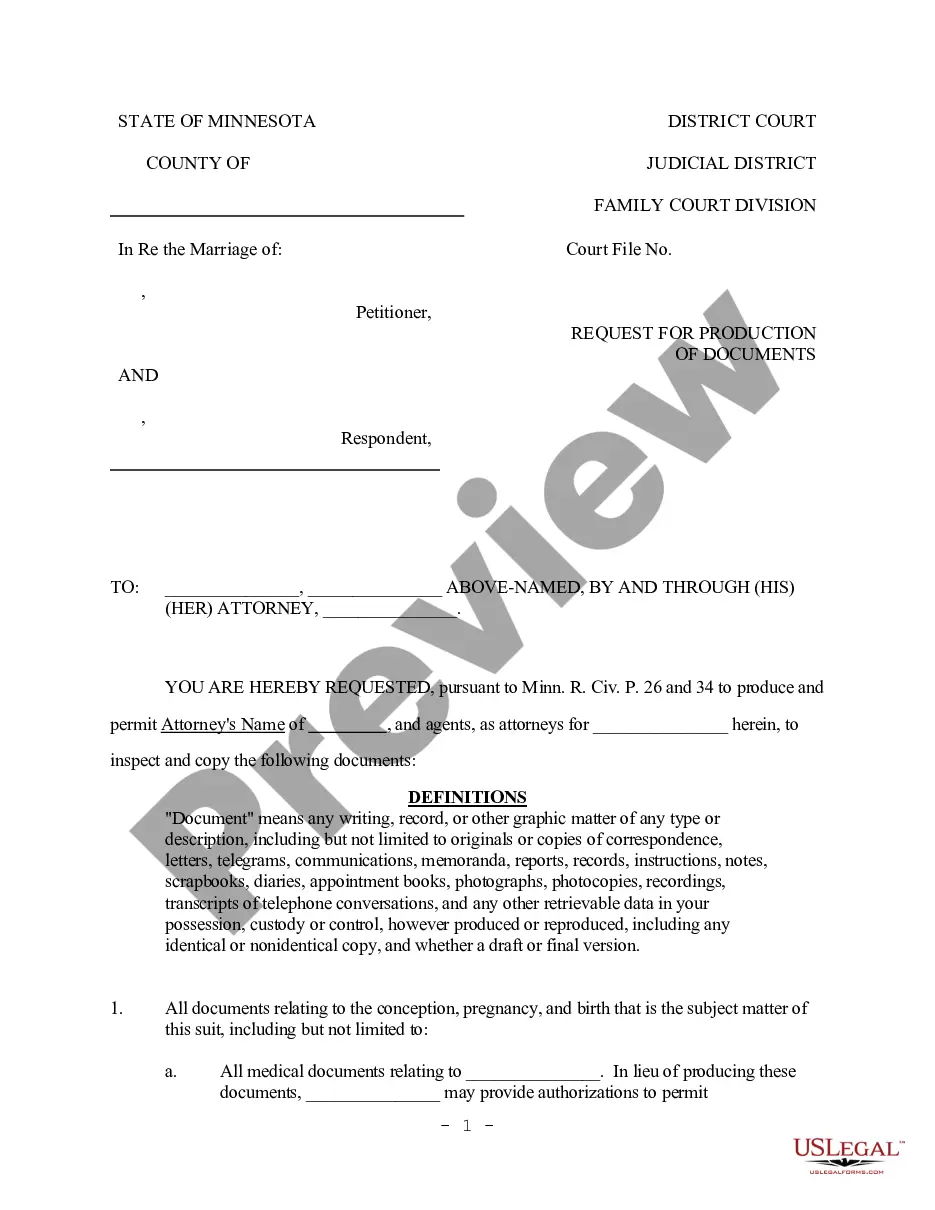
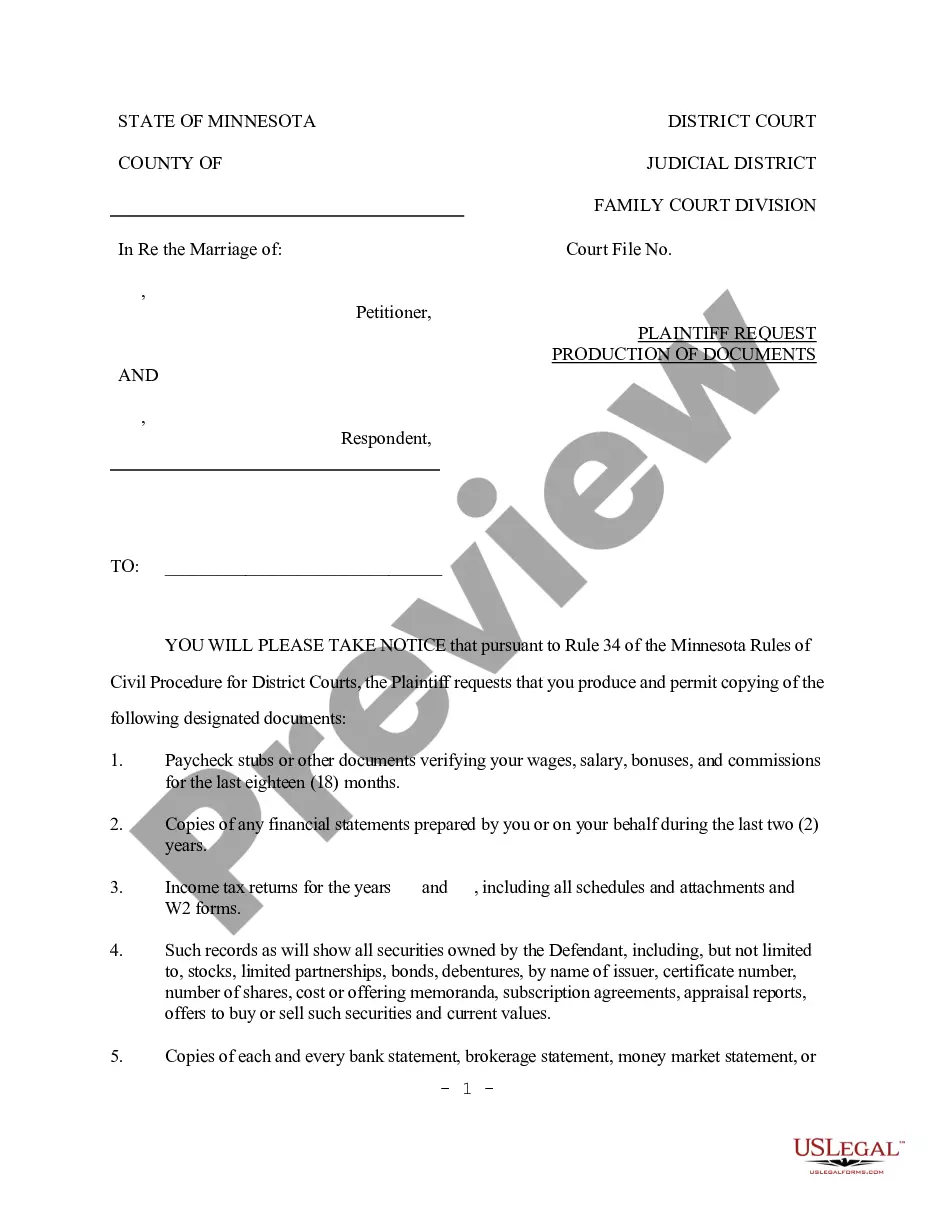
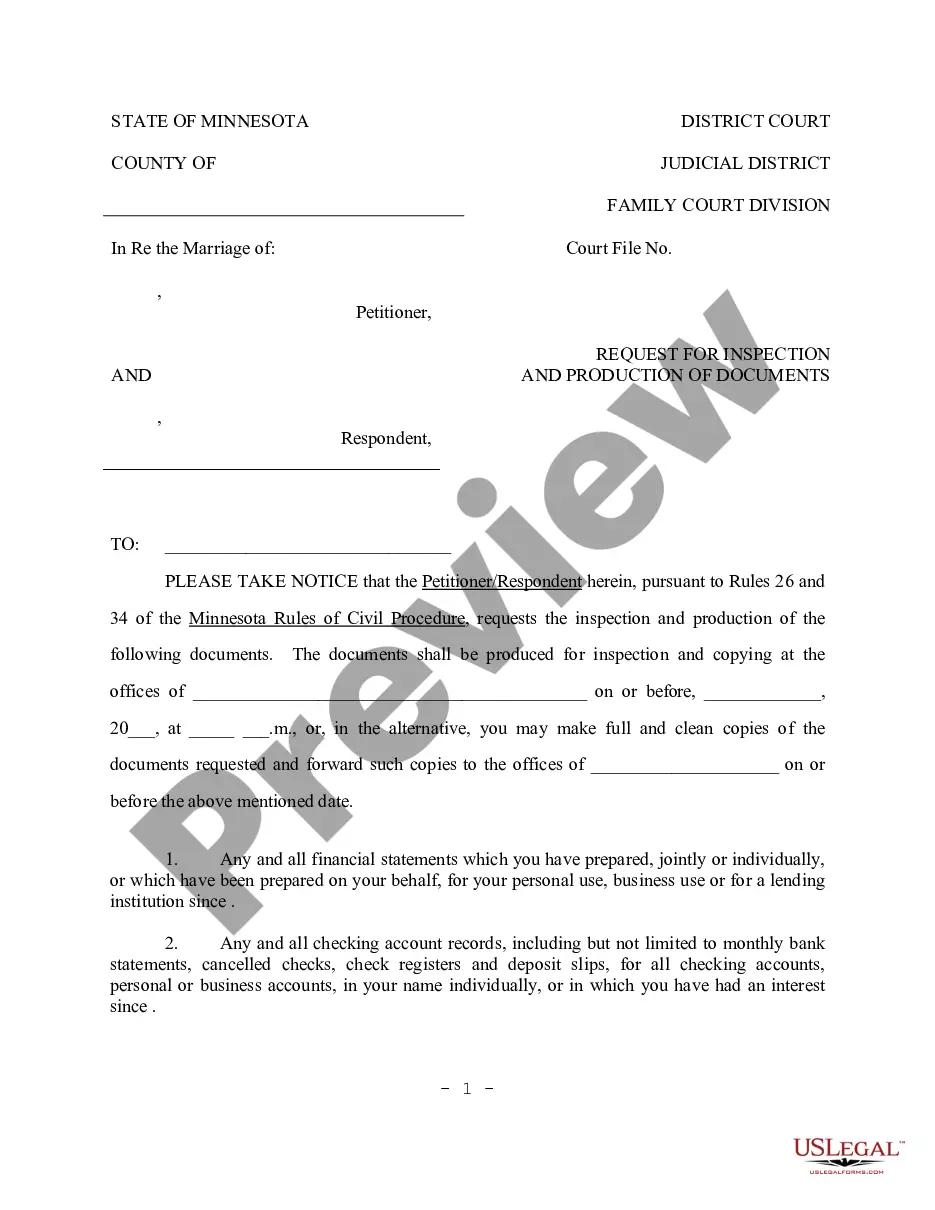
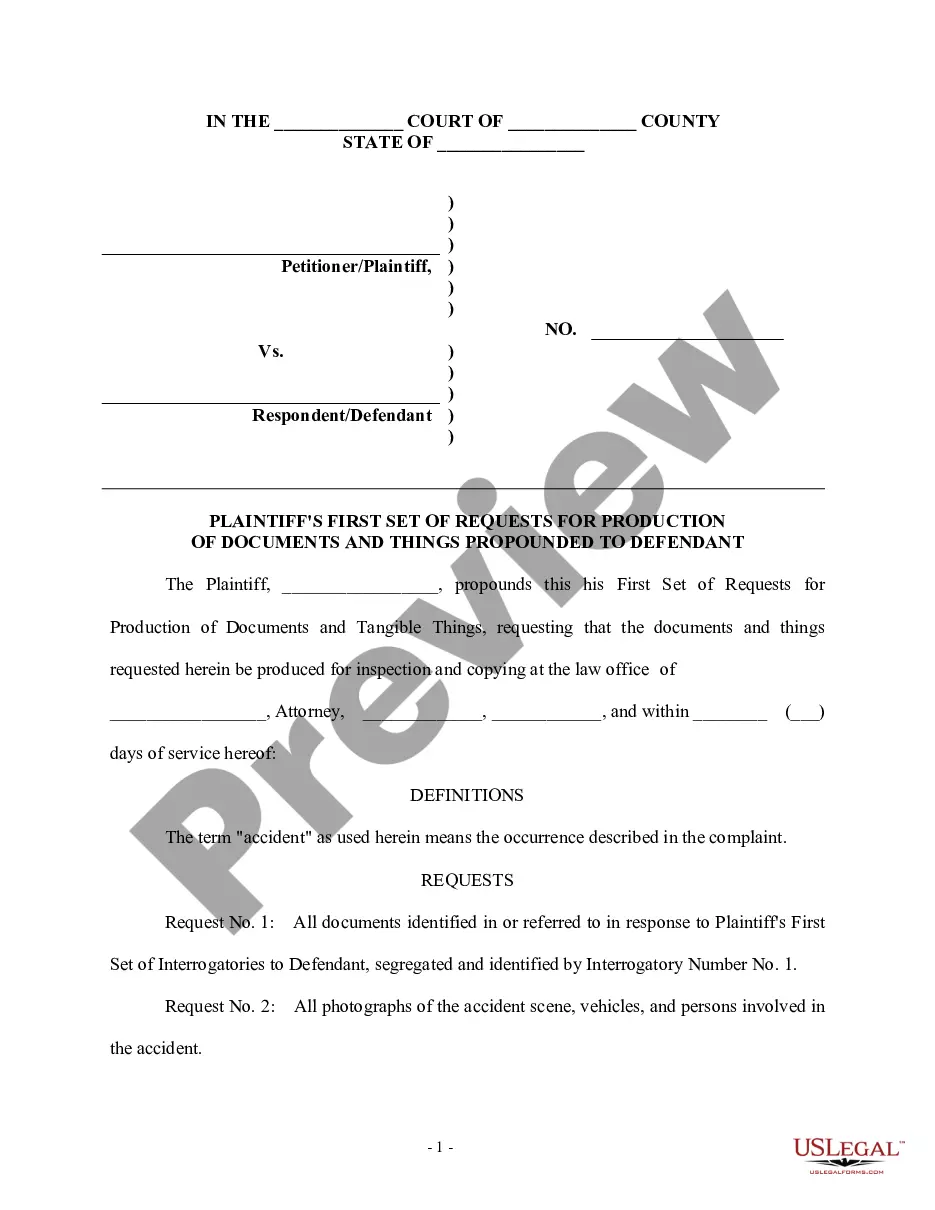
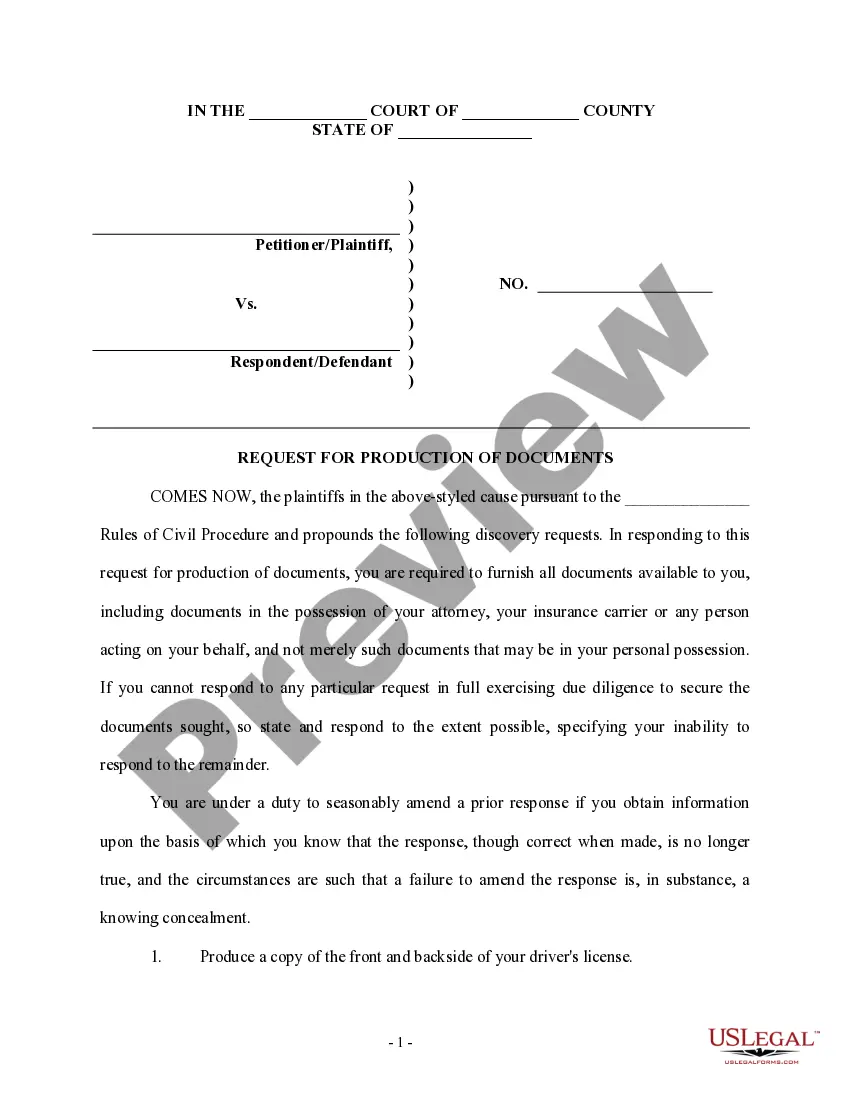
This form is a standardized template known as the Discovery - Defendant's Request For Production of Documents. It is used in family law proceedings to formally request specific documents from the opposing party for inspection and copying. This document ensures that defendants obtain necessary evidence to prepare their case, setting it apart from other discovery forms that may request different types of information or evidence.
What’s included in this form
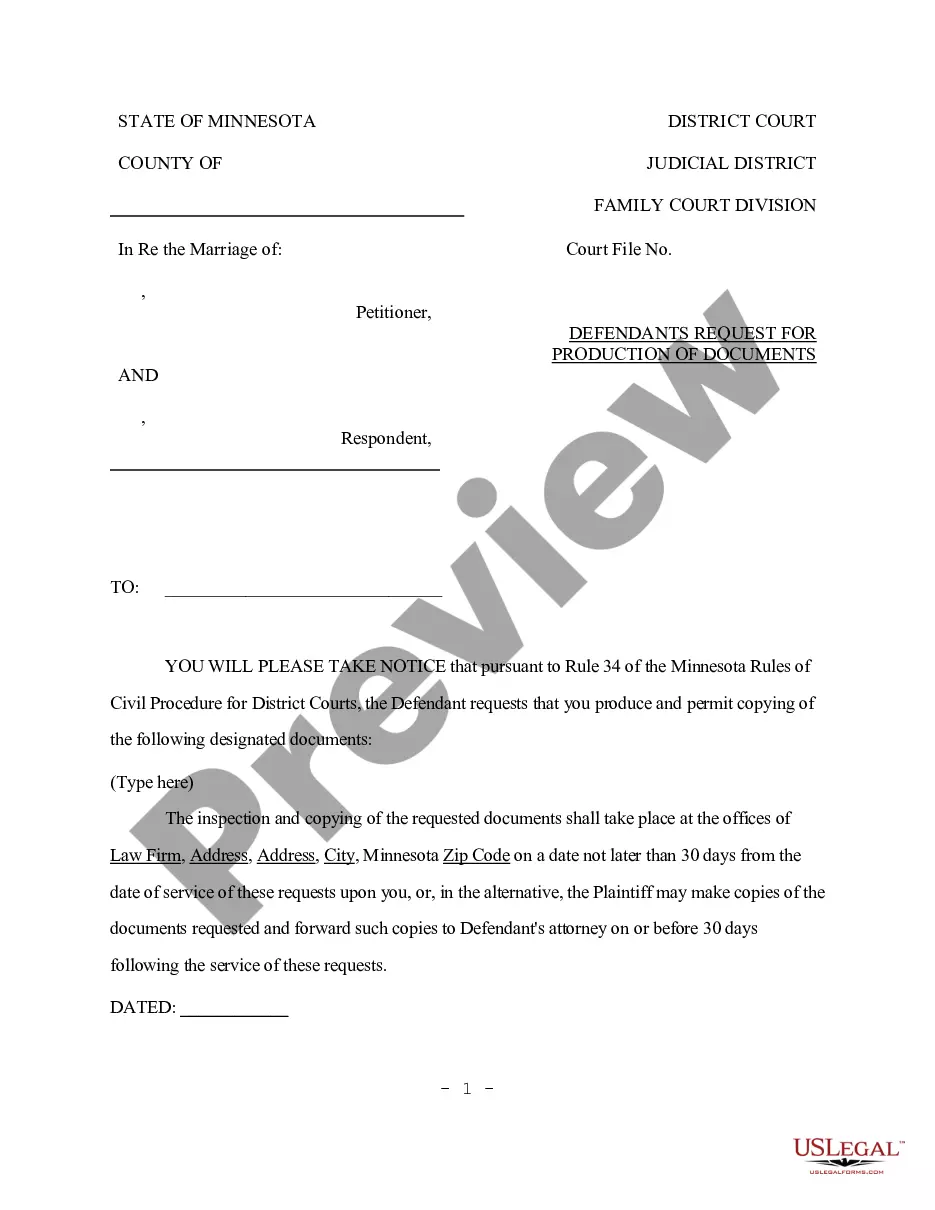
- Title section to identify the parties involved.
- Notice clause indicating the request for document production.
- Specification of documents to be produced, left blank for user input.
- Details regarding the location and timeframe for document inspection.
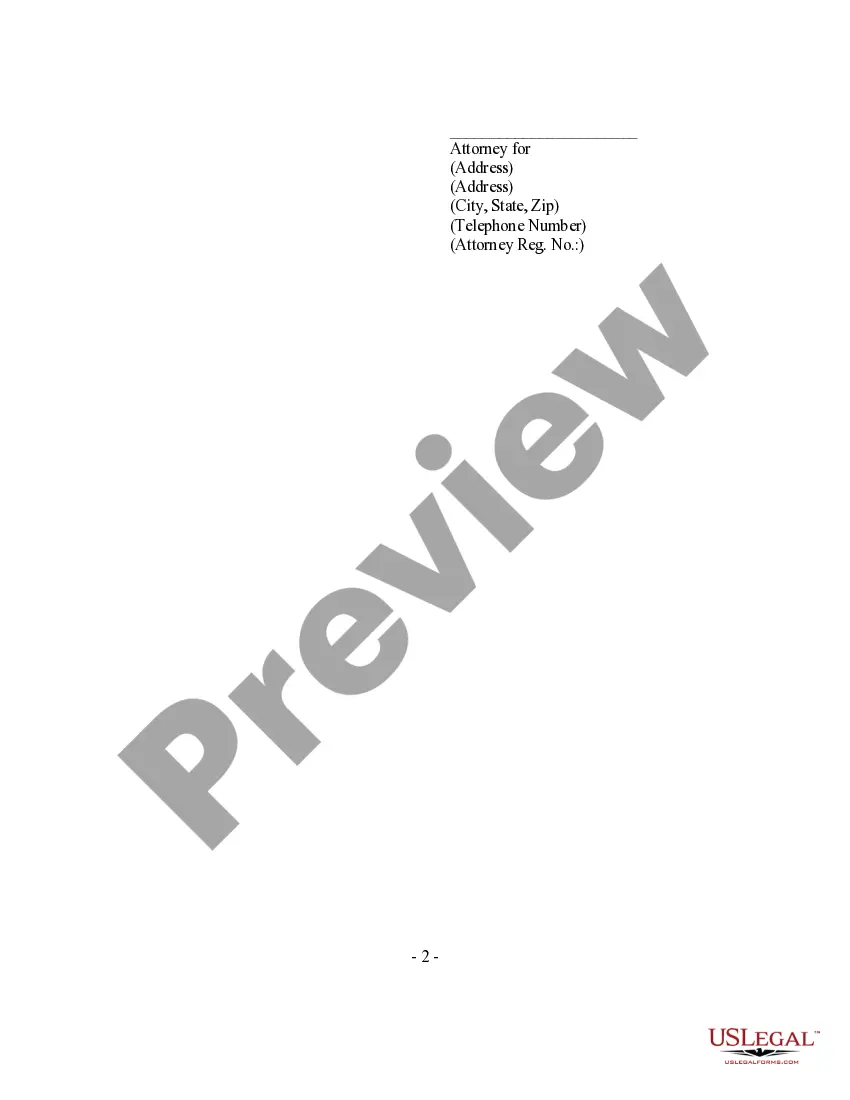
- Signature line for the attorney representing the defendant.
When to use this document
This form should be used in situations where a defendant in a family law case needs access to specific documents held by the plaintiff or another party. Common circumstances include seeking financial records, communication logs, or any relevant materials that may support the defendant's position in ongoing legal proceedings.
Who needs this form
- Defendants in family law cases.
- Attorneys representing defendants in such cases.
- Individuals seeking to gather documentation to support their legal arguments.
Steps to complete this form
- Identify the parties involved in the case and fill in their names in the designated area.
- Clearly specify the documents you are requesting by describing them comprehensively.
- Provide your attorney's office details where the document inspection will take place.
- Set a date for the document production, allowing at least 30 days for compliance.
- Include your signature and attorney registration number at the end of the document.
Notarization requirements for this form
In most cases, this form does not require notarization. However, some jurisdictions or signing circumstances might. US Legal Forms offers online notarization powered by Notarize, accessible 24/7 for a quick, remote process.
Get your form ready online
Our built-in tools help you complete, sign, share, and store your documents in one place.
Make edits, fill in missing information, and update formatting in US Legal Forms—just like you would in MS Word.
Download a copy, print it, send it by email, or mail it via USPS—whatever works best for your next step.
Sign and collect signatures with our SignNow integration. Send to multiple recipients, set reminders, and more. Go Premium to unlock E-Sign.
If this form requires notarization, complete it online through a secure video call—no need to meet a notary in person or wait for an appointment.
We protect your documents and personal data by following strict security and privacy standards.

Make edits, fill in missing information, and update formatting in US Legal Forms—just like you would in MS Word.

Download a copy, print it, send it by email, or mail it via USPS—whatever works best for your next step.

Sign and collect signatures with our SignNow integration. Send to multiple recipients, set reminders, and more. Go Premium to unlock E-Sign.

If this form requires notarization, complete it online through a secure video call—no need to meet a notary in person or wait for an appointment.

We protect your documents and personal data by following strict security and privacy standards.
Common mistakes to avoid
- Failing to specify the documents clearly, which can lead to disputes.
- Not providing adequate time for compliance as outlined by rules.
- Leaving out relevant attorney information, which is essential for legal correspondence.
Benefits of using this form online
- Easy access to customizable templates that can be downloaded immediately.
- Ability to edit and tailor the form to specific case needs without needing extensive legal knowledge.
- Reliable resources developed by licensed attorneys to ensure legal compliance.
Looking for another form?

Form popularity
FAQ
A motion to compel asks the court to enforce a request for information relevant to a case.The requesting party files a motion to compel discovery responses if the opposing party continues to deny the discovery request.
The motion to compel is used to ask the court to order the non-complying party to produce the documentation or information requested, and/or to sanction the non-complying party for their failure to comply with the discovery requests.
In certain cases, you might be able to write a letter to the other side and request the documents that you need. However, in more formal cases, you will likely have to draft more formal discovery demands. There are usually forms available for this in local law libraries, from the court clerk's office, or online.
Consequences of Refusing to Provide Evidence Requested in a Motion to Compel. If the court issues an order that compels your spouse to produce the discovery you are seeking but your spouse still refuses to provide evidence, the judge may impose further sanctions such as: A verdict in your favor.
The motion to compel further responses has to be brought within 45 days of service of the response. (C.C.P.
California written discovery generally consists of four methods: Request for Production of Documents, Form Interrogatories, Special Interrogatories, and Requests for Admissions.
A request for production is a legal request for documents, electronically stored information, or other tangible items made in the course of litigation.However, the requestor then may file a Motion to Compel discovery to ask the court to order the responding party to produce documents.
A request for production is a discovery device used to gain access to documents, electronic data, and physical items held by an opposing party in a legal matter. The aim is to gain insight into any relevant evidence that the opposing party holds.
There are basically six types of discovery in family court: 1) interrogatories; 2) requests for production of documents and inspection 3) requests for admissions; 4) depositions; 5) subpoenas duces tecum; 6) physical and mental examinations.