Minnesota Payment Plan Agreement for Delinquent Account
About this form
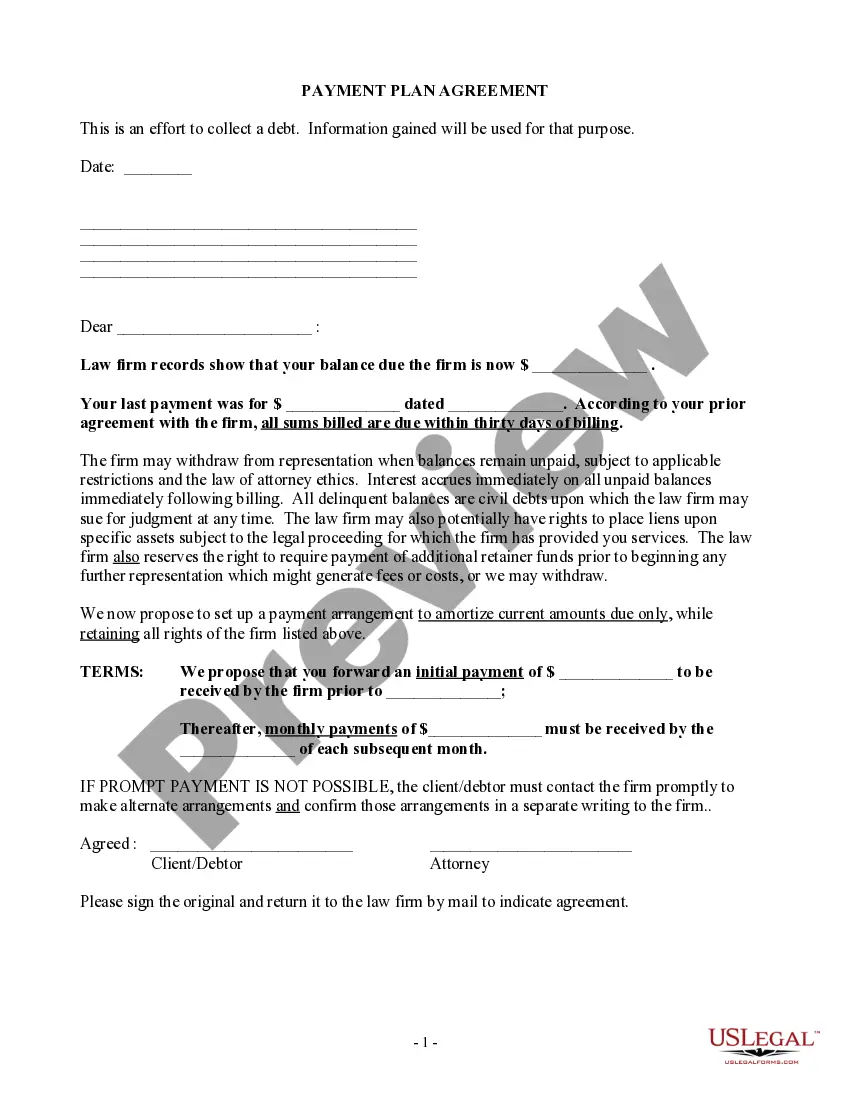
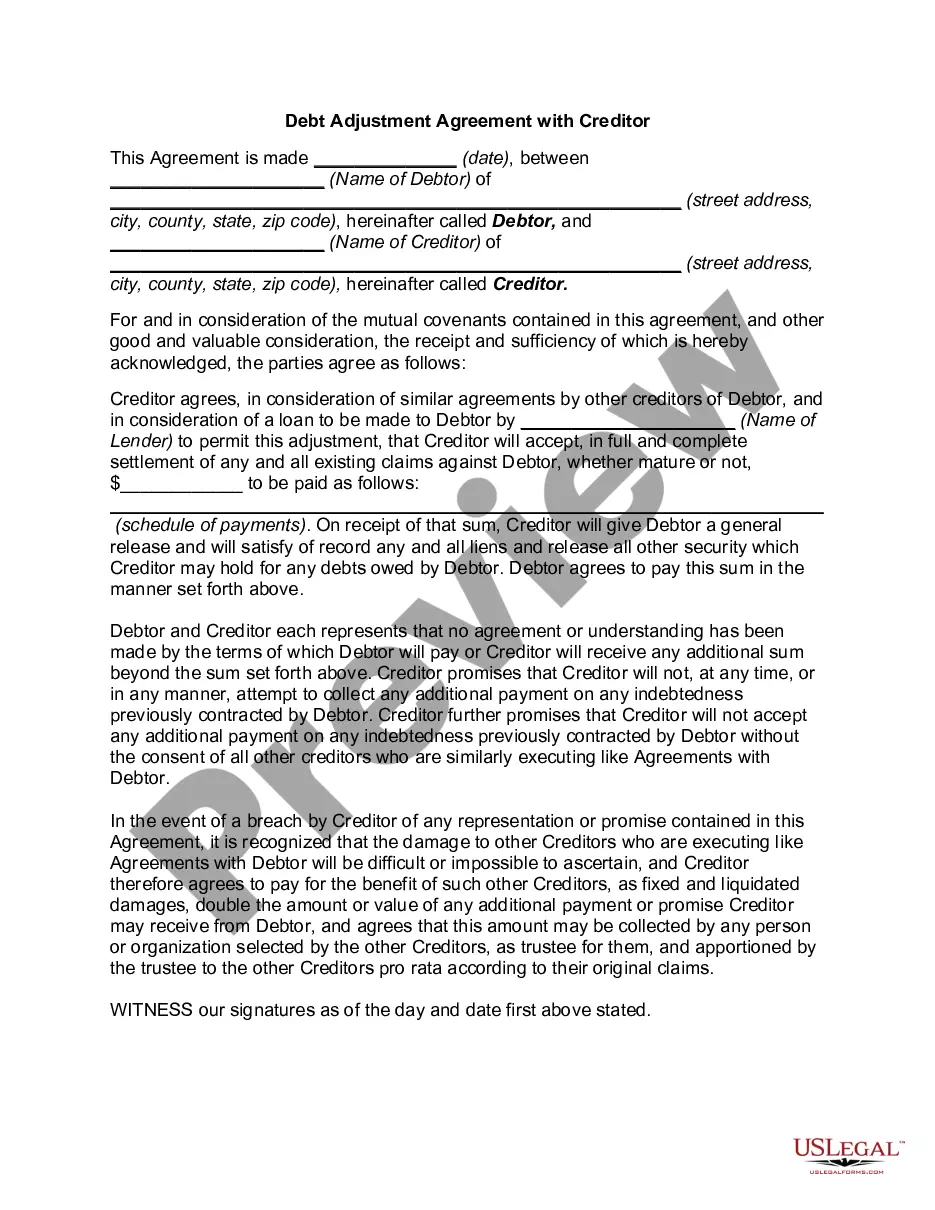
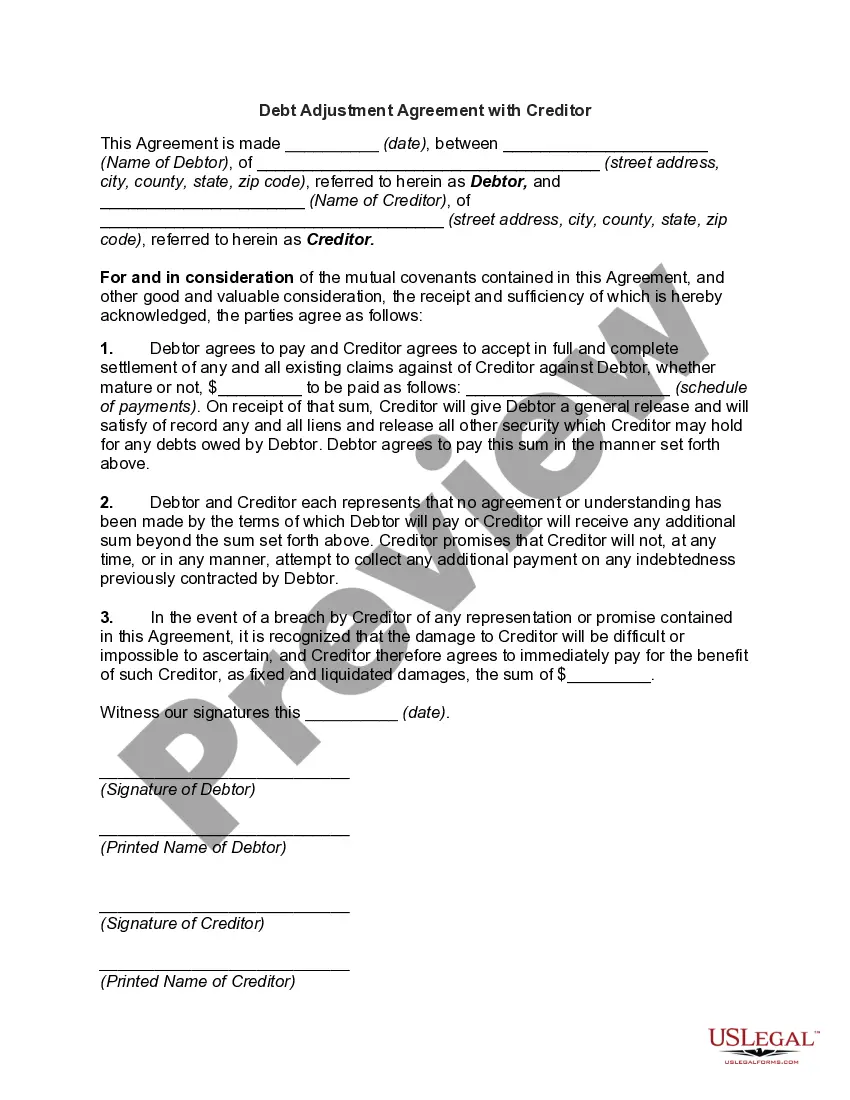
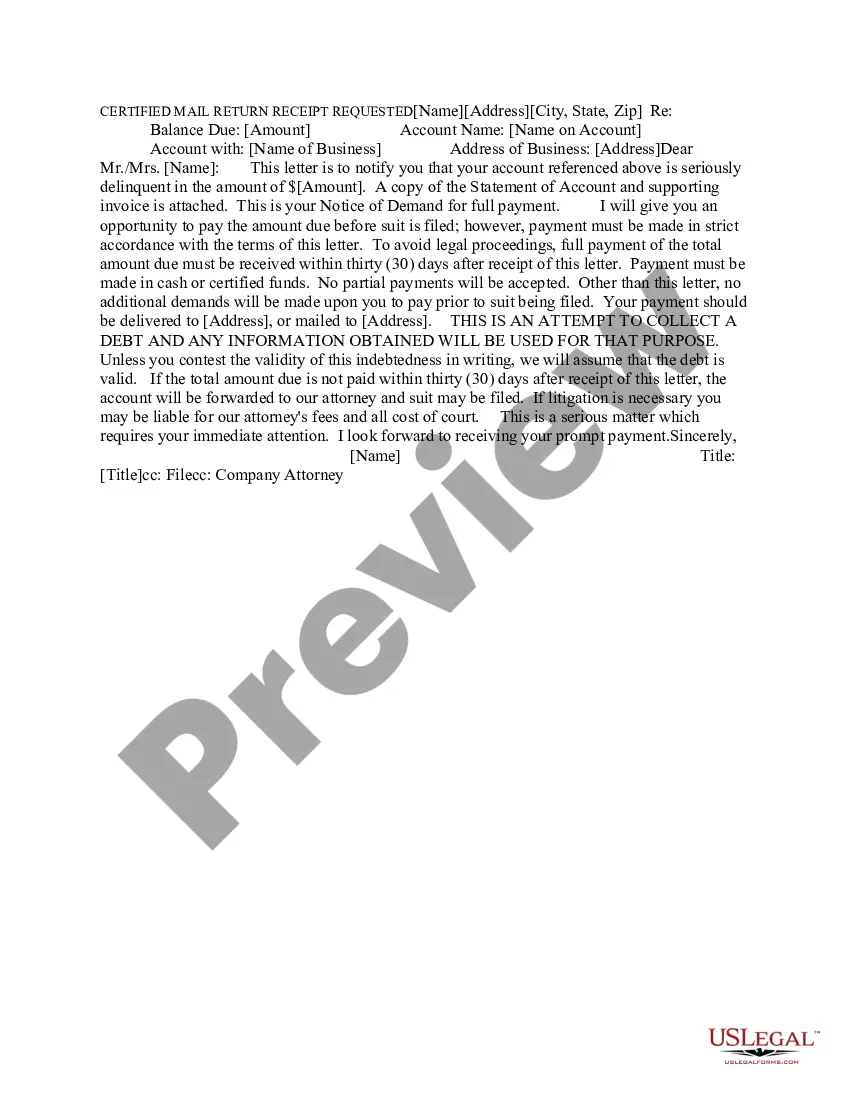
A Payment Plan Agreement for a Delinquent Account is a legal document that outlines how a client will repay overdue legal fees in monthly installments. This agreement is essential for law firms aiming to preserve their rights while allowing clients to settle their debts over time. Unlike other forms of payment agreements, this document specifically addresses the terms related to overdue legal fees and the potential consequences of non-payment.
Form components explained
- Date of the agreement
- Details of the outstanding balance due
- Agreed monthly payment amount
- Payment schedule and due dates
- Consequences of missed payments
- Signature lines for both the client and attorney
Situations where this form applies
This form is typically used when a client has fallen behind on paying legal fees and needs to establish a structured repayment plan with their attorney. It is appropriate in scenarios where the law firm wishes to recover overdue payments without withdrawing representation or initiating formal debt collection processes.
Intended users of this form
- Clients who owe overdue legal fees to a law firm
- Law firms seeking to formalize a payment arrangement with clients
- Individuals or businesses in financial difficulty but wanting to maintain legal representation
How to complete this form
- Enter the date of the agreement at the top of the form.
- Fill in the outstanding balance that is due to the law firm.
- Specify the initial payment amount and the date it is due.
- Outline the monthly payment amount and the due date for subsequent payments.
- Both the client and attorney should sign the agreement to acknowledge their consent.
Does this document require notarization?
This form does not typically require notarization to be legally valid. However, some jurisdictions or document types may still require it. US Legal Forms provides secure online notarization powered by Notarize, available 24/7 for added convenience.
Get your form ready online
Our built-in tools help you complete, sign, share, and store your documents in one place.
Make edits, fill in missing information, and update formatting in US Legal Forms—just like you would in MS Word.
Download a copy, print it, send it by email, or mail it via USPS—whatever works best for your next step.
Sign and collect signatures with our SignNow integration. Send to multiple recipients, set reminders, and more. Go Premium to unlock E-Sign.
If this form requires notarization, complete it online through a secure video call—no need to meet a notary in person or wait for an appointment.
We protect your documents and personal data by following strict security and privacy standards.

Make edits, fill in missing information, and update formatting in US Legal Forms—just like you would in MS Word.

Download a copy, print it, send it by email, or mail it via USPS—whatever works best for your next step.

Sign and collect signatures with our SignNow integration. Send to multiple recipients, set reminders, and more. Go Premium to unlock E-Sign.

If this form requires notarization, complete it online through a secure video call—no need to meet a notary in person or wait for an appointment.

We protect your documents and personal data by following strict security and privacy standards.
Mistakes to watch out for
- Failing to specify complete payment terms, including due dates.
- Not providing a clear method for contacting the firm if payment challenges arise.
- Omitting signatures from both parties, rendering the agreement invalid.
Benefits of using this form online
- Convenient access to the form that can be downloaded and filled out at your convenience.
- Clear structure that helps prevent misunderstandings regarding payment terms.
- Editable digital format that allows for customization to fit specific payment arrangements.
Legal use & context
- The payment plan establishes a formal agreement between the client and law firm.
- Failure to comply with the payment terms can lead to legal actions for debt recovery.
- Collects legal fees by creating a documented agreement that acknowledges outstanding debts.
What to keep in mind
- This form is essential for clients with overdue legal fees.
- It allows clients to manage their debt while preserving the law firm's rights.
- Completion and agreement of the form help prevent miscommunication regarding payment expectations.
Looking for another form?
Form popularity
FAQ
In Minnesota, property taxes become delinquent after one year of non-payment. Once a property tax payment is overdue for three years, the county can initiate the foreclosure process. To avoid this situation, consider a Minnesota Payment Plan Agreement for Delinquent Account. This agreement allows you to manage your payments effectively and prevent foreclosure.
To write a proposal for a payment plan, begin with a clear introduction stating the purpose of the proposal. Include a summary of the debt, along with your proposed payment terms and conditions. It’s beneficial to reference a Minnesota Payment Plan Agreement for Delinquent Account to ensure all necessary components are included, and USLegalForms can provide a helpful framework for this task.
Writing a payment plan agreement involves several key steps. First, identify the parties involved and specify the total amount due. Then, detail the payment terms, such as installment amounts and due dates. Utilizing resources from USLegalForms can help you create a thorough Minnesota Payment Plan Agreement for Delinquent Account that meets legal standards.
To write a simple payment agreement, start by clearly stating the names of both parties involved. Next, outline the total amount owed and the payment schedule, including dates and payment methods. Using a template from USLegalForms can streamline this process, especially for a Minnesota Payment Plan Agreement for Delinquent Account, ensuring you cover all necessary details.
A payment plan agreement is a formal arrangement between a creditor and a debtor that outlines the terms for repaying a delinquent account. This document specifies the total amount owed, the payment schedule, and any applicable interest rates. In the context of a Minnesota Payment Plan Agreement for Delinquent Account, this agreement helps both parties manage their financial commitments effectively.
In Minnesota, a debt typically becomes uncollectible after six years from the date of the last payment or acknowledgment. This timeframe is part of the statute of limitations, which protects consumers from being pursued for old debts. If you are considering a Minnesota Payment Plan Agreement for Delinquent Account, it may be beneficial to act before this period ends. For more information and resources on handling delinquent accounts, check out US Legal Forms for guidance.
To write a simple agreement, first define the purpose of the agreement and outline the responsibilities of each party involved. Use clear and concise language to avoid misunderstandings, and include essential details such as payment terms and deadlines. For added clarity and legal protection, consider utilizing templates from USLegalForms to create a Minnesota Payment Plan Agreement for Delinquent Account that is both effective and enforceable.
To make a payment plan legally binding, ensure that both parties sign the agreement and that it includes essential elements such as consideration, mutual consent, and a clear outline of the payment terms. It's also advisable to have the agreement notarized for added legal protection. A well-drafted Minnesota Payment Plan Agreement for Delinquent Account can help secure both parties' interests and prevent future disputes.
To write a payment plan agreement, start by identifying the parties involved and the total amount owed. Clearly outline the payment schedule, including due dates and amounts, and specify acceptable payment methods. Utilizing a template from USLegalForms can simplify the process, ensuring that your Minnesota Payment Plan Agreement for Delinquent Account is comprehensive and legally sound.
In Minnesota, the statute of limitations generally allows creditors to collect debts for up to six years, depending on the type of debt. After this period, the debt becomes uncollectible, meaning creditors can no longer sue for repayment. Understanding these time frames is essential when drafting a Minnesota Payment Plan Agreement for Delinquent Account, as it can influence your negotiating strategy.