Minnesota Objection to Referee Hearing Case
What this document covers
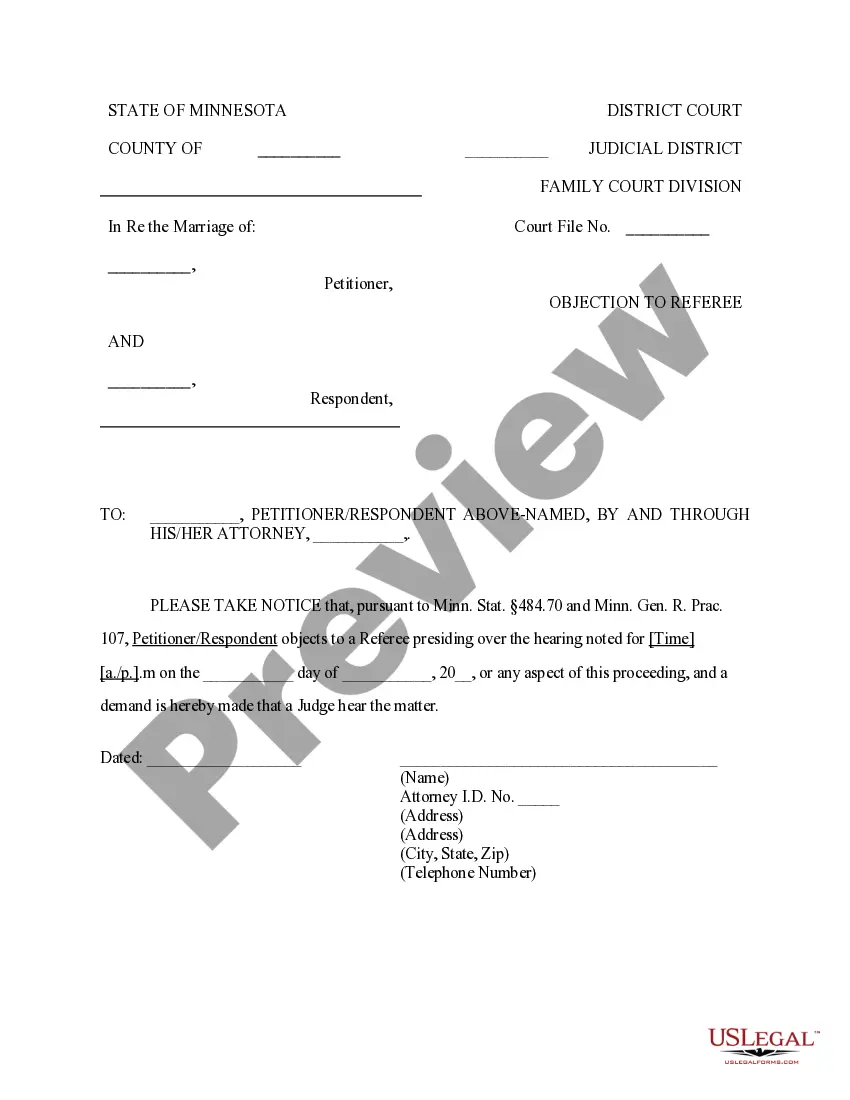
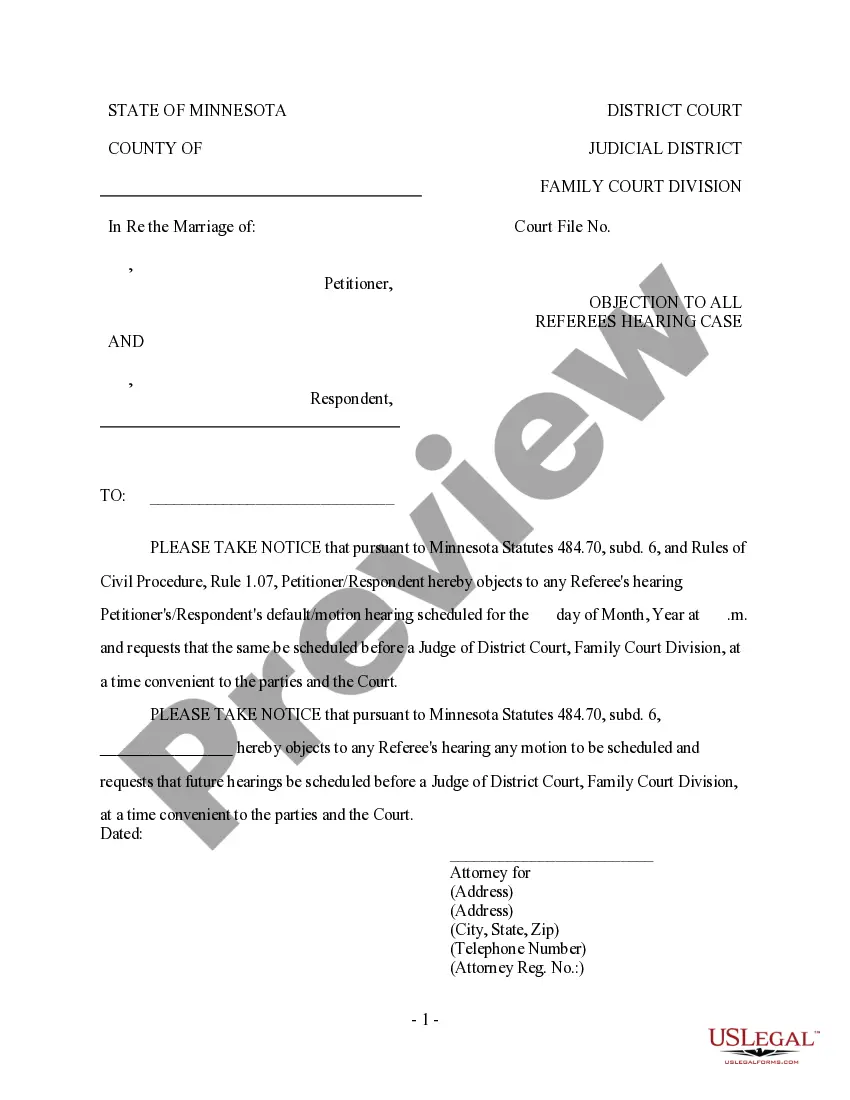
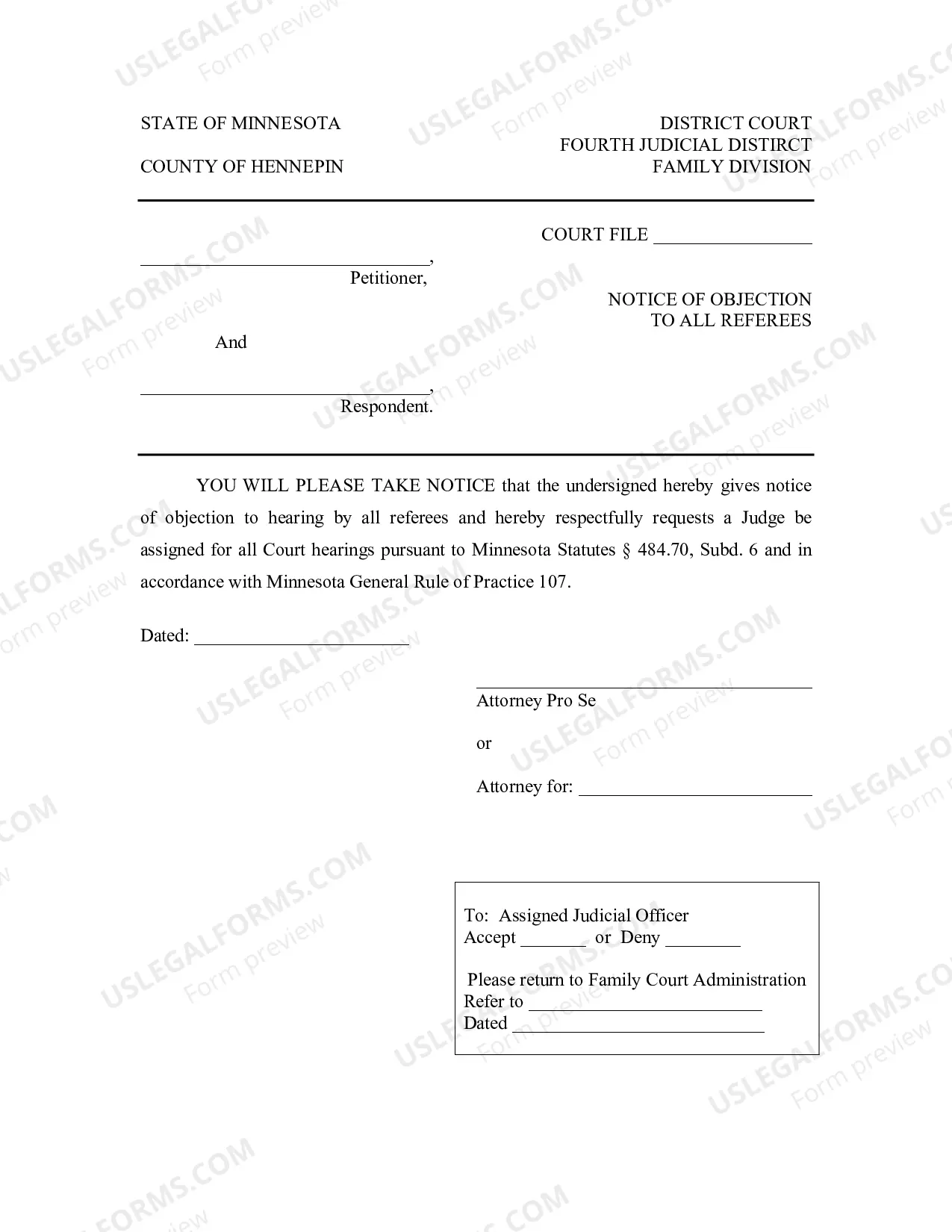
The Objection to Referee Hearing Case form is a legal document used to formally object to the appointment of a referee for a hearing. This form allows either the petitioner or respondent in a legal proceeding to request that a judge preside over the hearing instead of a referee. It serves as a key mechanism for parties wishing to dispute the referee's authority in specific matters, ensuring their case is heard by a judge rather than delegated to a referee, who may have different procedural rules or levels of authority.
What’s included in this form
- Identification of the petitioner or respondent involved in the case.
- Notice of objection to the referee, including specific details of the hearing time and date.
- Demand for a judge to preside over the hearing.
- Signature and attorney identification of the party submitting the objection.
- Contact information for the attorney representing the party.
Situations where this form applies
This form is used when a party in a legal proceeding wishes to contest the involvement of a referee in a hearing. It is appropriate to file this objection if you believe that a judge should handle your case instead, perhaps due to concerns about the referee's qualifications or the complexity of the legal issues at hand. Common scenarios include family law cases, civil disputes, or any matter where you feel a judge's scrutiny is necessary.
Who this form is for
- Individuals involved in a legal case who are petitioners or respondents.
- Parties who prefer a judge overseeing their case rather than a referee.
- Attorneys representing clients in cases where a referee has been appointed.
Completing this form step by step
- Enter the name of the petitioner or respondent and their attorney's name at the top of the form.
- Specify the date and time of the hearing you are objecting to.
- Complete the statement of objection and indicate the demand for a judge to handle the case.
- Sign the form, including your name and attorney identification number.
- Provide your contact information, including address and telephone number.
Does this form need to be notarized?
Notarization is not commonly needed for this form. However, certain documents or local rules may make it necessary. Our notarization service, powered by Notarize, allows you to finalize it securely online anytime, day or night.
Get your form ready online
Our built-in tools help you complete, sign, share, and store your documents in one place.
Make edits, fill in missing information, and update formatting in US Legal Forms—just like you would in MS Word.
Download a copy, print it, send it by email, or mail it via USPS—whatever works best for your next step.
Sign and collect signatures with our SignNow integration. Send to multiple recipients, set reminders, and more. Go Premium to unlock E-Sign.
If this form requires notarization, complete it online through a secure video call—no need to meet a notary in person or wait for an appointment.
We protect your documents and personal data by following strict security and privacy standards.

Make edits, fill in missing information, and update formatting in US Legal Forms—just like you would in MS Word.

Download a copy, print it, send it by email, or mail it via USPS—whatever works best for your next step.

Sign and collect signatures with our SignNow integration. Send to multiple recipients, set reminders, and more. Go Premium to unlock E-Sign.

If this form requires notarization, complete it online through a secure video call—no need to meet a notary in person or wait for an appointment.

We protect your documents and personal data by following strict security and privacy standards.
Common mistakes
- Failing to include the correct date and time of the hearing.
- Not signing the form or providing incomplete identification information.
- Using outdated or incorrect version of the form that does not comply with local rules.
Why use this form online
- Convenient access to the form from anywhere at any time.
- Editable format allows you to easily fill in the necessary information.
- Drafted by licensed attorneys to ensure legal compliance.
- Secure storage and easy download options for your records.
Looking for another form?


Form popularity
FAQ
Rule 33 covers interrogatories, which are written questions one party sends to another in a lawsuit. Parties must respond to these questions in writing, which aids in clarifying issues before trial. If your case involves a Minnesota Objection to Referee Hearing Case, knowing how to properly utilize interrogatories can strengthen your position. USLegalForms provides templates to help you create effective interrogatories.
Rule 52.02 addresses findings of fact and conclusions of law in civil cases. It requires the court to make explicit findings to support its decisions, which can be crucial in appeals. If you are engaged in a Minnesota Objection to Referee Hearing Case, understanding Rule 52.02 may help you challenge or uphold decisions made by referees. Use USLegalForms to find templates that assist with crafting findings of fact.
In Minnesota, you can refuse jury duty under certain circumstances. For instance, if you have a valid excuse such as a medical issue or financial hardship, you may be exempt. However, it's important to communicate this to the court promptly, especially if your case involves a Minnesota Objection to Referee Hearing Case, as it can affect your legal responsibilities. USLegalForms can assist you with the necessary documentation to address your jury duty obligations.
Rule of Practice 521 deals with the appointment of referees in civil matters. This rule outlines the criteria and procedures for appointing referees, which can significantly affect your case. If your situation involves a Minnesota Objection to Referee Hearing Case, it's essential to be informed about this rule to advocate for your interests. Explore USLegalForms for legal forms related to referee appointments.
Rule 69 focuses on the execution of judgments in Minnesota. This rule provides guidance on how a judgment can be enforced, including through writs of execution. If you have a Minnesota Objection to Referee Hearing Case, understanding Rule 69 is crucial for ensuring that your rights are protected during the enforcement process. Utilize USLegalForms to access forms and information related to judgment execution.
Statute 484.70 pertains to the powers and responsibilities of referees in Minnesota court cases. It defines the role of referees and their authority to make recommendations or decisions in certain matters. If you are facing a Minnesota Objection to Referee Hearing Case, knowing this statute may help you understand the referee's position. USLegalForms offers resources to help you navigate these legalities.
Rule 5.01 outlines the procedures for serving documents in civil cases. It specifies the methods of service and who may serve the documents. Understanding this rule is vital, especially if you are involved in a Minnesota Objection to Referee Hearing Case, as proper service can impact the outcome of your case. You can find useful templates on USLegalForms to assist with document preparation.
In Minnesota, you typically have 21 days to respond to a complaint after being served. If you fail to respond within this timeframe, you risk losing the case by default. It's crucial to address this matter promptly, especially in situations involving a Minnesota Objection to Referee Hearing Case. Consider using resources like USLegalForms to ensure your response is timely and effective.